Archives

TV7 Israel News 27.06

TV7 Israel News 27.06

TV7 Israel News


Ø 1) Israeli President Isaac Herzog warns Israel’s enemies not to test Jerusalem’s determination to protect its citizens.

Ø 2) Israel, the United States, Egypt, Bahrain, Morocco and the United Arab Emirates hold a meeting in Manama to deliberate paths forward on bolstering security cooperation.

Ø 3) Iranian President Ibrahim Raisi insists that Israel’s efforts to widen its circle of peace will not help guarantee Jerusalem’s security.


Zawartość publikowanych artykułów i materiałów nie reprezentuje poglądów ani opinii Reunion’68,
ani też webmastera Blogu Reunion’68, chyba ze jest to wyraźnie zaznaczone.
Twoje uwagi, linki, własne artykuły lub wiadomości prześlij na adres:
webmaster@reunion68.com


History of Israel Documentary

History of Israel Documentary


IntroBooks Education


the form of articles, ebooks, audiobooks and videos. We invest a lot of time and effort in creating well-researched videos to provide a wealth of information for anyone who yearns for knowledge.

Subscribe or join our channel so that you can easily get new updates and check our latest postings. Not only can you stay updated on topics like History and geography, but you can also increase your knowledge about concepts and methodologies used in Physics, Chemistry or Mathematics.

Furthermore, on our website: https://readintrobooks.com/ you can find many educational resources.

* * *

There are just so many of those things that #history is holding inside and whenever one tries to look over for the facts which are left behind, there is that amazing and astounded feeling of getting overwhelmed. So is the case with the history of #Israel which talks about so many of those things that happened with the existence of this country.


Zawartość publikowanych artykułów i materiałów nie reprezentuje poglądów ani opinii Reunion’68,
ani też webmastera Blogu Reunion’68, chyba ze jest to wyraźnie zaznaczone.
Twoje uwagi, linki, własne artykuły lub wiadomości prześlij na adres:
webmaster@reunion68.com


An ancient Jewish curse to keep grave robbers away revealed on tomb

An ancient Jewish curse to keep grave robbers away revealed on tomb

JUDITH SUDILOVSKY


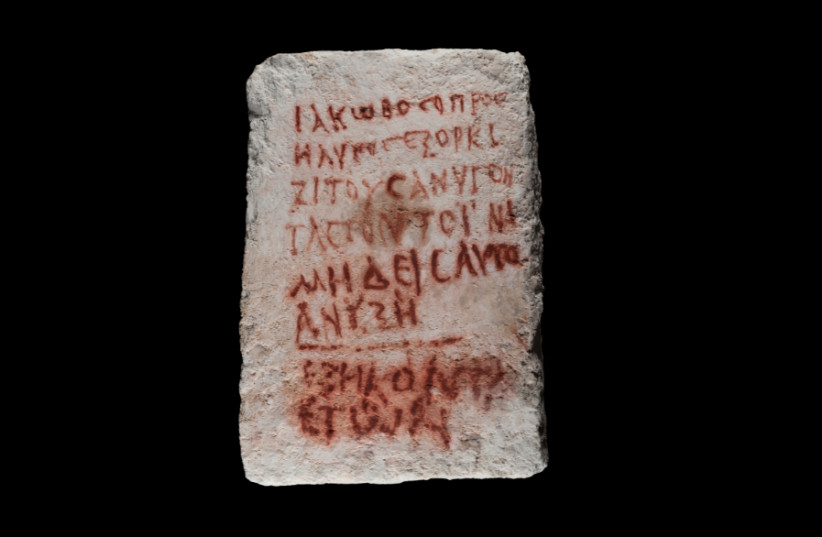
A convert to Judaism warned away tomb raiders by vowing to curse anybody who would dare to open his grave.

Jacob the convert’s ancient Jewish curse inscription / (photo credit: YEVGENY OSTROVSKY/ISRAEL ANTIQUITIES AUTHORITY.)

An ominous and bloody-looking burial inscription warning people to stay away and let the deceased rest in peace was found in an ancient cave tomb in Beit She’arim.

The ancient curse

Written in a red paint, the inscription reads: “Jacob the Convert vows to curse anybody who would open this grave, so nobody will open it. He was 60.” It was apparently meant to keep grave robbers away.

The full text and the story of its discovery were presented at the Northern Conference, held jointly on June 1, 2022 by the University of Haifa and the northern region of the Israel Antiquities Authority (IAA).

The last three words of the curse were written in a different script and the researchers believe that they may were written after his death possibly by relatives.

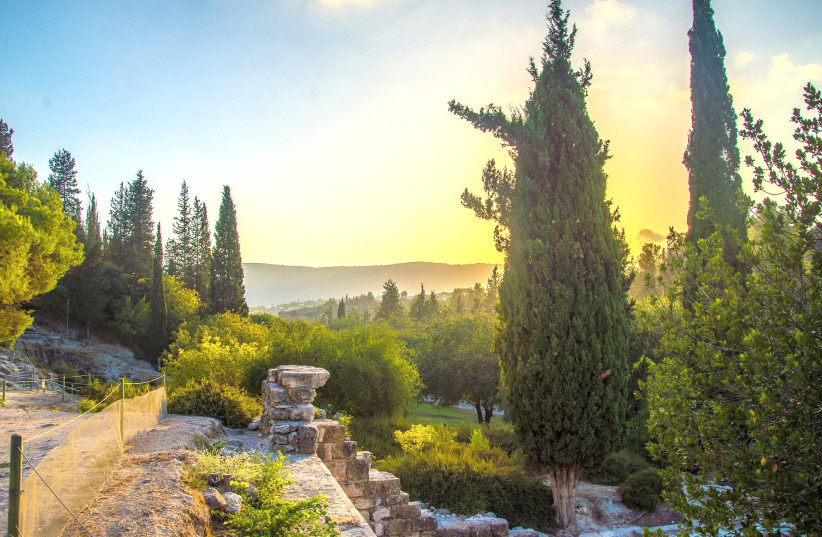
BEIT SHE’ARIM functioned as the second-century seat of Rabbi Yehuda Hanassi. (credit: MANU GREENSPAN)

Another small inscription, also painted in red, was on the limestone wall near a burial lodge, and simply said the name “Judah,” who archaeologists believe was the owner of the tomb. The larger inscription, written in red on a stone slab leaning against the opening of the same alcove, consisted of the eight lines warning people away from Jacob the Convert’s grave.

First inscription on deceased convert

 The Greek-language curse inscription, from around the year 1800 CE, is the first burial inscription to be found in the Beit She’arim burial caves in 65 years. It is also the first inscription discovered which specifically mentions that a deceased person had been a convert.

Researchers said that inscriptions attesting to converts are not common, and those that have been previously uncovered are mostly from the Second Temple period or the Early Roman period, times when Judaism was the dominant identity in Judea.

“The present find is one of the few mentioning a convert from the Late Roman Period.”

Researchers of Jacob’s curse inscription

“The inscription is from the Late Roman or Early Byzantine period, when Christianity is gaining strength. And yet, we find evidence that there are still people who choose to join the Jewish people, “said Prof. Adi Erlich of the Zinman Institute of Archeology and Haifa University’s School of Archeology, who is leading the excavations at Beit She’arim.

Christianity, which began to take root during the Late Roman Period (3rd and 4th centuries CE),  later became the dominant religion in the Roman Empire.

Beit She’arim site

Beit She’arim, located in the Lower Galilee, was a central Jewish settlement during the Mishnaic and Talmudic periods, in the 2nd to 5th centuries CE. The Jewish Sanhedrin Council moved there after the destruction of Jerusalem in 70 CE, the Jewish Sanhedrin Council moved there and it became an important center of Jewish learning and culture.

The most famous part of the settlement is its cemetery, which was excavated some 80 years ago.  Burial inscriptions in various languages, especially in Greek, which was the main spoken language at the time, have been found there. in the cemetery. Among the Jewish sages buried in the city’s cemetery is Rabbi Yehuda Hanasi, the second-century rabbi and chief redactor and editor of the Mishnah (Oral Law) who was a key leader of the Jewish community during the Roman occupation of Judea.

Beit She’arim is now a national park and the cemetery was recognized as a World Heritage Site by the UN several years ago.

Though the Beit She’arim burial caves were already well-known, two inscriptions were discovered by chance in a new burial cave a year ago by Jonathan Orlin, head of conservation in the north region of the Israel Nature and Parks Authority.

The researchers said the new inscription, which has been handed over to the IAA for preservation, provides important information about life in the Galilee during that period, which became the center of Jewish settlement after the destruction of Judah in the Bar Kochba revolt in 135 CE.


Zawartość publikowanych artykułów i materiałów nie reprezentuje poglądów ani opinii Reunion’68,
ani też webmastera Blogu Reunion’68, chyba ze jest to wyraźnie zaznaczone.
Twoje uwagi, linki, własne artykuły lub wiadomości prześlij na adres:
webmaster@reunion68.com


Hand Axes of Prehistoric Humans

Hand Axes of Prehistoric Humans

21see


An incredible archaeological find!

Photographer: Shmuel Magal, courtesy of the Israel Antiquities Authority


Zawartość publikowanych artykułów i materiałów nie reprezentuje poglądów ani opinii Reunion’68,
ani też webmastera Blogu Reunion’68, chyba ze jest to wyraźnie zaznaczone.
Twoje uwagi, linki, własne artykuły lub wiadomości prześlij na adres:
webmaster@reunion68.com


Israeli study shows olive trees were domesticated in Jordan Valley 7,000 years ago

Israeli study shows olive trees were domesticated in Jordan Valley 7,000 years ago

JUDITH SUDILOVSKY


Domestication may indicate initial steps in developing a socioeconomic hierarchy supported by administrative system.

.
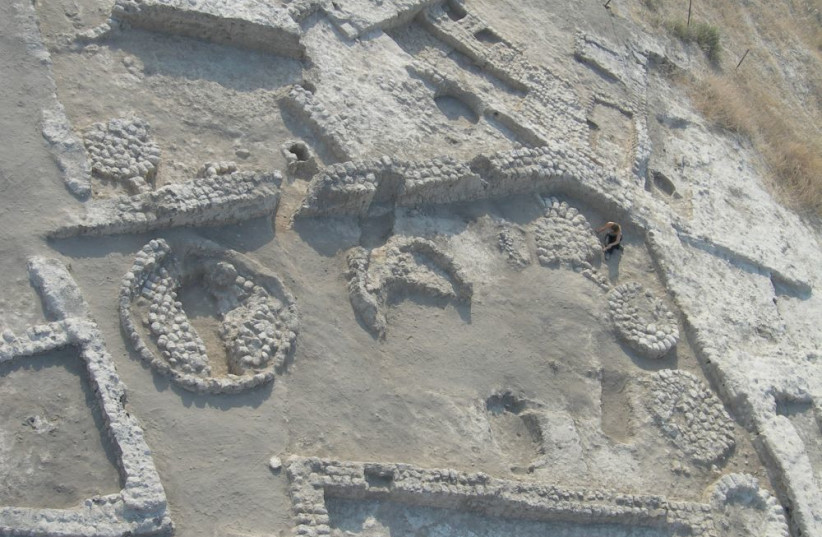
Buildings and rounded siloes at the village of Tel Tsaf. / (photo credit: YOSEF GARFINKEL)

Olive trees carry a deep, historical significance in this part of the world, and a recent Israeli study has found some of the earliest evidence for the domestication of the trees from 7,000 years ago.

Analyzing remnants of charcoal from the Chalcolithic site of Tel Tsaf in the Jordan Valley, researchers from Tel Aviv University and the Hebrew University of Jerusalem determined they came from olive trees. Since olive trees did not grow naturally in the Jordan Valley, this means the inhabitants of the site must have planted the trees intentionally about 7,000 years ago, said the researchers.

The discovery and its importance

“Wood was the ‘plastic’ of the ancient world,” a statement from lead researcher Dr. Dafna Langgut of the Jacob M. Alkow Department of Archaeology and Ancient Near Eastern Cultures and the Steinhardt Museum of Natural History at Tel Aviv University explained.

“It was used for construction, for making tools and furniture, and as a source of energy. That’s why identifying tree remnants found at archaeological sites, such as charcoal from hearths, is a key to understanding what kinds of trees grew in the natural environment at the time, and when humans began to cultivate fruit trees.”

Even when burned down to charcoal, trees can be identified by their anatomic structure, she added. As head of the Laboratory of Archaeobotany and Ancient Environments, she specializes in such microscopic identification of plant remains.
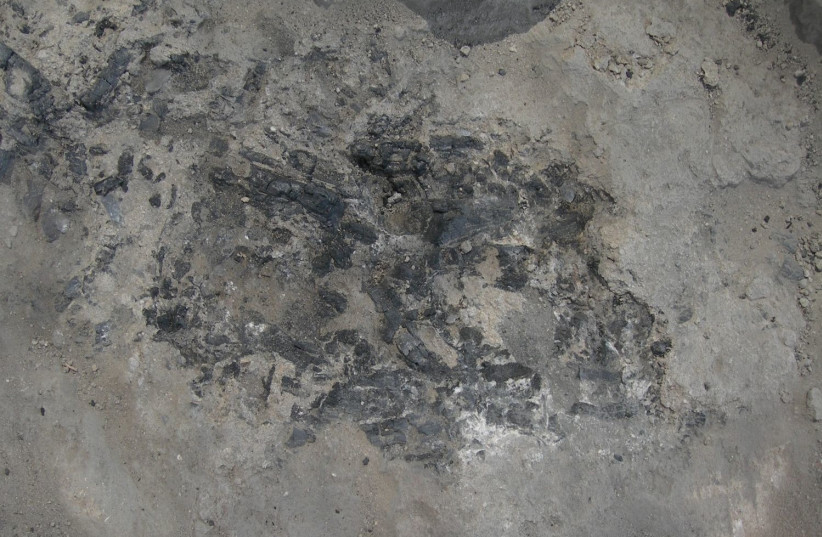
7,000 years-old hearth remains at the village of Tel Tsaf. (credit: YOSEF GARFINKEL)

The recent study consisted of analyzing charcoal remnants found in the archaeological excavation of Tel Tsaf directed by Prof. Yosef Garfinkel of the Institute of Archaeology at the Hebrew University. The findings were published in the journal Scientific Reports from the publishers of Nature.

Tel Tsaf was a large prehistoric village in the middle Jordan Valley south of Beit She’an, inhabited between 7,200 and 6,700 years ago, noted Garfinkel in the press statement. His excavation revealed large houses with courtyards, each with several granaries for storing crops.

“Storage capacities were up to 20 times greater than any single family’s calorie consumption, so clearly these were caches for storing great wealth. The wealth of the village was manifested in the production of elaborate pottery painted with remarkable skill. In addition, we found articles brought from afar: pottery of the Ubaid culture from Mesopotamia, obsidian from Anatolia, a copper awl from the Caucasus, and more,” he said.

In her lab, Langgut identified the charcoal from Tel Tsaf as belonging to olive and fig trees. Though olive trees grow in the wild in the Land of Israel, they are not native to the Jordan Valley, she said in the statement. So the discovery of olive tree remains in the charcoal indicates that someone brought the trees there intentionally and had enough knowledge about the plant to take it out of its natural habitat and plant it somewhere else, she said.

“In archaeobotany, this is considered indisputable proof of domestication,” she said.

BASED ON THEIR findings, the researchers suggested in their study that the Middle Chalcolithic Tel Tsaf site provides the earliest charred olive wood remains in the Central and Lower Jordan Valley.

In the paper they noted that archaeological and botanical evidence suggest that olive cultivation began in northern Israel along the Carmel coast and in the Galilee toward the end of the eighth millennium, during the Early Chalcolithic period, probably drawing on naturally occurring wild olive species. A few centuries later, according to their findings, at the beginning of the Middle Chalcolithic period around 7000 BCE, the settlers of Tel Tsaf were engaged in full-fledged olive cultivation, said the researchers in their report.

“To accomplish this geographical shift, a transfer of both knowledge and genetic olive material from northern Israel to the Central Jordan Valley must have occurred,” they wrote.

In addition to olive tree remnants, Langgut’s analysis identified many remnants of young fig branches. Fig trees did grow naturally in the Jordan Valley but were of little value for firewood or as raw material for tools or furniture, so there was no reason for people to gather large quantities of branches and bring them to the village, she said.

“Apparently, these fig branches resulted from pruning, a method still used today to increase the yield of fruit trees,” she said.Because of the evidence of exceptional wealth of the settlement exposed in Garfinkel’s excavations, the researchers were not surprised to discover that the inhabitants might have been among the first in the world to intentionally grow olive and fig groves, since growing fruit is an indication of luxury, according to the press statement.Langgut noted that domestication of fruit trees is a process that takes many years. It would therefore logically be used by wealthier societies rather than those struggling to survive and need crops that provide a relatively quick source of food.

“Trees give fruit only three to four years after being planted,” she added. “Since groves of fruit trees require a substantial initial investment, and then live on for a long time, they have great economic and social significance in terms of owning land and bequeathing it to future generations – procedures suggesting the beginnings of a complex society.”

Langgut suggested that the residents of Tel Tsaf might have traded in products derived from the fruit trees such as olives, olive oil and dried figs, all of which have a long shelf life and might have enabled long-distance trade that led to the accumulation of material wealth.
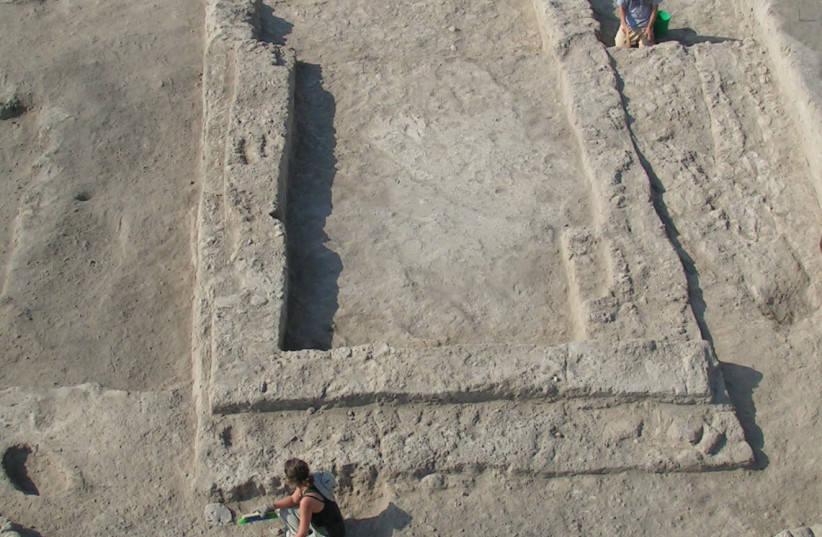
Rectangular room at Chalcolithic Tel Tsaf. (credit: YOSEF GARFINKEL)

Evidence of the earliest stamps was also found at the site, possibly even indicating a system of taxation and administrative procedures, she noted.

“These may have even been initial steps in turning the locals into a society with a socioeconomic hierarchy supported by an administrative system,” Langgut said. “As a whole, the findings indicate wealth and early steps toward the formation of a complex multilevel society, with the class of farmers supplemented by classes of clerks and merchants.”


Zawartość publikowanych artykułów i materiałów nie reprezentuje poglądów ani opinii Reunion’68,
ani też webmastera Blogu Reunion’68, chyba ze jest to wyraźnie zaznaczone.
Twoje uwagi, linki, własne artykuły lub wiadomości prześlij na adres:
webmaster@reunion68.com