Archives

New excavations could uncover final days of besieged Crusader fortress

New excavations could uncover final days of besieged Crusader fortress

JUDITH SUDILOVSKY


In 1261 the fortress was leased to the Crusader Knights Hospitaller who began its fortification. Just four years later, in 1265 CE the fortress fell to the Mamluks who razed it to the ground.

.Apollonia National Park. / (photo credit: MARC ISRAEL SELLEM/THE JERUSALEM POST)
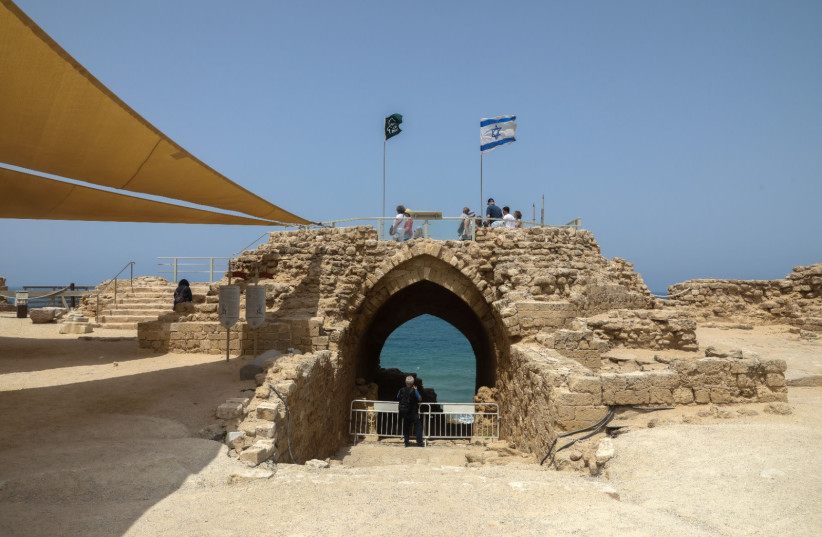
A new season of excavation work is scheduled to begin May 16 at the ruins of the Apollonia-Arsuf Crusader fortress. It was there that a final, fierce, three-day battle took place in 1265 between the besieged Crusaders of the Knights Hospitaller and the forces of Mamluk Sultan Baybars attacking from the sea.

The structure was built on a fossilized sandstone dune overlooking the Mediterranean Sea in the northwestern part of modern-day Herzliya. The fortress, where surviving defenders of the city had taken refuge, finally fell on April 26, 1265, after a 40-day siege.

With some 1,000 of their warriors, including 90 knights, killed in the battle, the Hospitallers negotiated their surrender on the condition that the survivors be permitted to leave. However, after initially agreeing to the terms, Baybars broke his word and all the Christian prisoners were taken into slavery. The sultan also forced them to participate in the systematic demolition of their own stronghold, razing the entire city of Arsur to be left in ruins.

In 2009, archaeologists were intrigued by a statue of a half-rooster, half-snake French medieval mythological creature called a Basilik, found on the lower level of the fort. Now, finally, they will begin excavating the area. The statue was found in excavations on the cliff on the west side of the crusader fort, just above the central hall.

The project at the Apollonia National Park will build on previous excavations to provide access from the primary floor of the fortress to the sea entrance and exterior sea wall. When complete, visitors will be able to experience a scenic path restored to historic accuracy. It will feature a stone donkey path/walkway and outlet to horse stables built on the cliff just above the sea, and the planned two new rooms. The room excavations are part of separate projects.
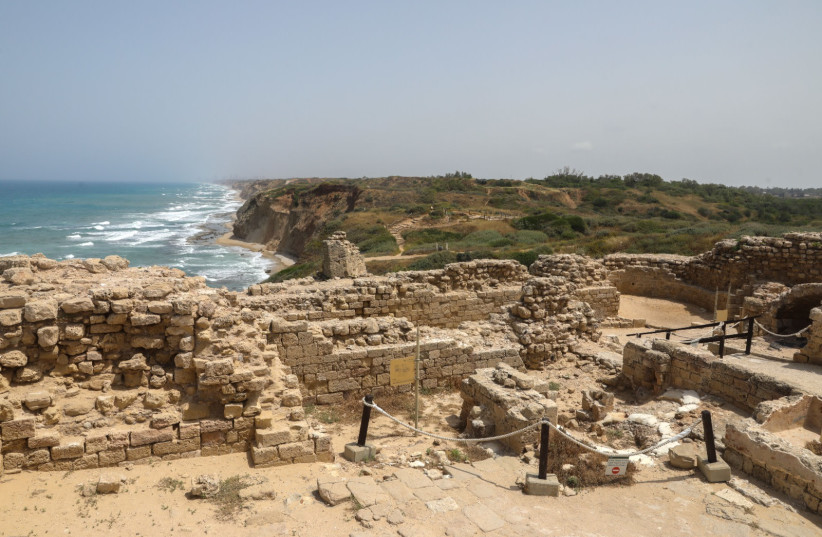
Apollonia National Park. (credit: MARC ISRAEL SELLEM/THE JERUSALEM POST)

The NIS 1.5-2 million project is being co-funded by the Israel Nature and Park Authority, which will provide NIS 900,000; and by the Israel Nature and Heritage Foundation of America, which teams up with tech entrepreneurs to help the INPA restore historical sites and which has donated NIS 650,000 for the project.

“We think there are a lot of artifacts buried in this room,” said archaeologist and tour guide Hagi Yohanan, pointing at the two meters of dirt they are expecting to excavate to reach the floor. “After we excavate to the floor, we want to reconstruct the arches.”

Yohanan is directing the excavation on behalf of Tel Aviv University under the lead of Prof. Oren Tal for the INPA.

.
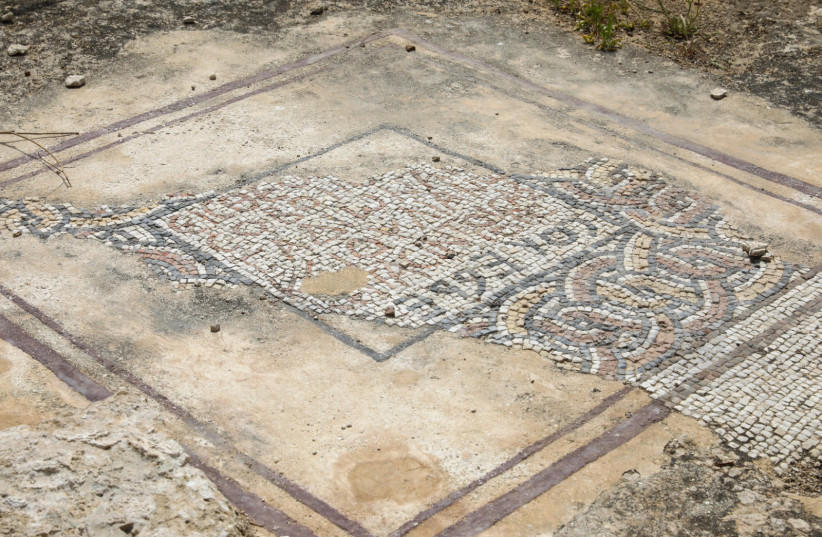
Apollonia National Park. (credit: MARC ISRAEL SELLEM/THE JERUSALEM POST)

Abutting the medieval arches of the outer wall are the remains of a perpendicular wall the Crusaders built as they prepared for battle against the Mamluks, transforming what had once been a dramatic open area to the sea into a closed protected hall, Yohanan said.

“The Hospitaller Knights were preparing themselves for war,” he said.

Standing at the sea cliff at the lower level, Yohanan points to protruding stones that he believes was a stairway leading down to a porch just above the sea. He dreams of someday reconstructing that as well.

AN ACADEMIC EXCAVATION at the site – previously used as a dumping ground for modern construction garbage – began in 1995 under Prof. Israel Roll of Tel Aviv University, who died in 2010. Following earlier excavations by Roll also with the Antiquities Authority, the main excavations of the site took place from 1998-2000. In 2001, the national park was opened, recalled Yohanan, who began working at the site in 1995 as Roll’s student.

Other finds at the site include a Roman villa; a Crusader residential quarter; semi-submerged remains of a Crusader-period anchorage harbor where small boats unloaded their wares; the city moat; and two mosaics including part of a mosaic floor from a Samaritan synagogue dating to the Byzantine period.

“We have only excavated about 5% of the site so far, with remains from the Crusader period being the most significant,” noted Yohanan. “During the Byzantine period, this was a mixed Christian-Samaritan community.”

The only mention of Apollonia in Jewish texts is in the Mishna, which mentions it as a place where the special blue tehelet dye used for ritual Jewish fringes, tzitzit, was made, said Yohanan.

The Crusader fortress of Arsour, where the newest excavations will take place, was built by Crusader leader Jean d’lbelin d’Arsour in 1241 as a fortified palace, dominating the harbor in the northern part of town. After his death in 1258 CE, control of the city passed to his son, Belian the First, who, finding it difficult to withstand attacks from Baybars’ forces, in 1261 leased the fortress to the Crusader Knights Hospitaller who began its fortification. Just four years later, in 1265 CE, the fortress fell to the Mamluks.

The fortress has three systems of fortification: a wide and deep moat; a first wall as the external fortification; and a second wall and donjon, or keep, which was a fortified tower built within a castle or fortress.

Also known as Tel Arshaf, the Apollonia site is rich in layers of archaeological history. Overlooking a natural harbor, it was founded by the Phoenicians who settled there at the end of the sixth century BCE, during the Persian period. They named it after Reshef, their war and thunder god. Here the Phoenicians produced their much-sought after purple dye from marine mollusks.

During the Hellenistic period, from the fourth to first centuries BCE, inhabitants of the site expanded the town, renaming it after the god Apollo. Apollonia flourished during the Roman and Byzantine periods when it was renamed Suzussa in the fifth to sixth century CE. It stretched over 70 acres with installations for processing agricultural products and manufacturing glass as well as a busy sea port.

During the Early Islamic Period, from the seventh to 11th century CE, a wall was built around the settlement which shrunk to 22 acres and was called Arsouf. In 1101 CE, the city fell to the Crusaders who changed the name to Arsour.

Following the defeat of the Crusaders at the battle of Hittin in 1187 CE, Muslims once again gained control of the city for four years, only to lose it in the Battle of Arsour in 1191 CE to the Crusaders as they swept to victory in the Holy Land.

“There is still a lot of work to do here,” said Yohanan. “There is a complete city underneath here. All you have to do is scratch the surface. In 1265, when it was destroyed, nobody rebuilt on top so today you don’t have to dig very deep to get to the archaeology.”


Zawartość publikowanych artykułów i materiałów nie reprezentuje poglądów ani opinii Reunion’68,
ani też webmastera Blogu Reunion’68, chyba ze jest to wyraźnie zaznaczone.
Twoje uwagi, linki, własne artykuły lub wiadomości prześlij na adres:
webmaster@reunion68.com

IDF confirms preparedness for war; IAEA warns ‘Iran racing to nuclear bomb’

IDF confirms preparedness for war; IAEA warns ‘Iran racing to nuclear bomb’

TV7 Israel News


1) The IDF month-long “Chariots of Fire’ exercise, in which it drilled multiple scenarios of a multi-sector all-out concludes – with Israel’s top military brass voicing their ‘preparedness for war.’

2) IAEA Director General Rafael Mariano Grossi confirms that Iran is very close to obtaining enough fissile material for one-or-two nuclear bombs.

3) Iranian Supreme Leader Ayatollah Ali Khamenei claims the capture of two-Greek oil tankers was a legitimate action.


Zawartość publikowanych artykułów i materiałów nie reprezentuje poglądów ani opinii Reunion’68,
ani też webmastera Blogu Reunion’68, chyba ze jest to wyraźnie zaznaczone.
Twoje uwagi, linki, własne artykuły lub wiadomości prześlij na adres:
webmaster@reunion68.com


Israel claims responsibility for assassination of IRGC officer – NYT

Israel claims responsibility for assassination of IRGC officer – NYT

JERUSALEM POST STAFF


Israel claimed the Quds Force officer was deputy commander of Unit 840, responsible for terror operations against Israeli targets.

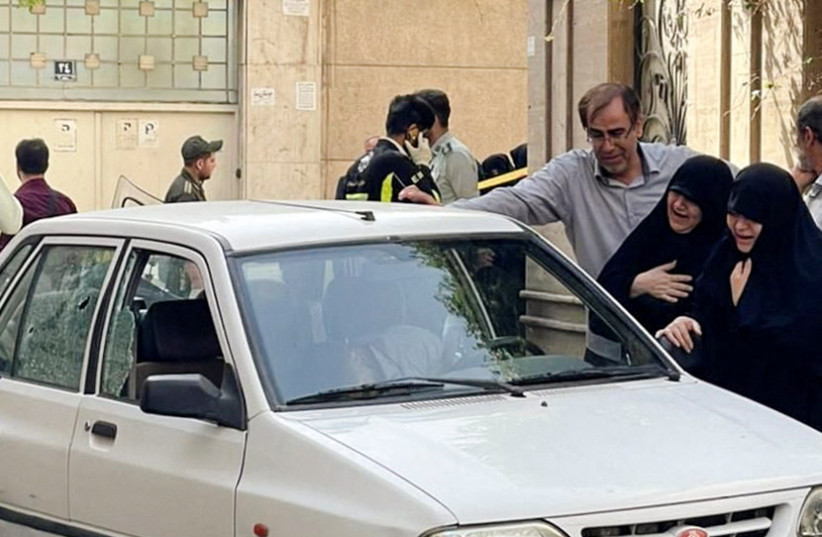
Family members of Colonel Sayad Khodai, a member of Iran’s Islamic Revolution Guards Corps, weep over his body in his car after he was reportedly shot by two assailants in Tehran, Iran, May 22, 2022. / (photo credit: IRGC/WANA (West Asia News Agency)/Handout via REUTERS)

Israel informed the United States it was responsible for assassinating an Islamic Revolutionary Guards Corps’ Quds Force officer in Tehran on Sunday, The New York Times reported.

In a briefing with American officials, Israel confirmed reports that Colonel Hassan Sayad Khodayari, who was shot dead in a vehicle, was deputy commander of the Quds Force’s Unit 840, a secretive unit responsible for terrorist operations against Israeli and Western targets outside of Iran.

Israel, according to the report, intended to send a warning to the Islamic Republic to halt the operations of the IRGC’s terrorist unit whose existence has never been confirmed by Iran.

According to Iran International, Khodayari was tasked with planning and executing strikes on Israeli citizens in Europe, Africa and mainly in eastern Asia, including the 2012 Bangkok bombing.

He was also in charge of recruiting civilians in several countries to commit attacks against Israelis.

As per NYT, Israeli officials claimed the officer was head of Unit 840’s Middle East operations, as well as in nations bordering Iran. The report also noted that Khodayari was involved in attacks against Israelis, Europeans and Americans in South America, Africa, the United Arab Emirates and Cyprus.

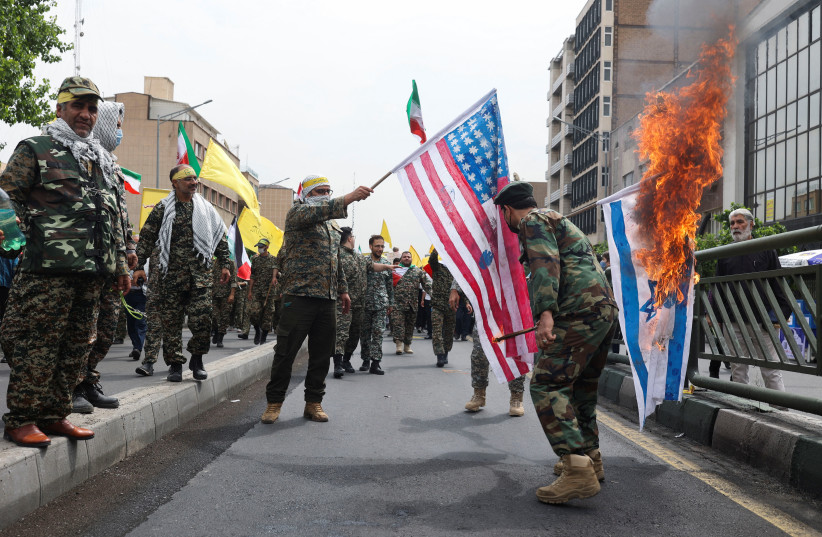
Iranians burn Israeli and US flags during a rally marking the annual Quds Day, or Jerusalem Day, on the last Friday of the holy month of Ramadan in Tehran, Iran April 29, 2022 (credit: WANA NEWS AGENCY/REUTERS)

The assassination, IRGC and the United States

Assailants on a motorcycle shot and killed Khodayari in front of his home on Mojahedin Eslam Street in the capital city of Tehran, according to Iranian reports. Iranian authorities are searching for assailants.

The IRGC called the assassination a “criminal terrorist act of the counter-revolution and elements related to global arrogance,” a term often used to refer to the US and Israel.

Prime Minister Naftali Bennett confirmed on Wednesday reports that US President Joe Biden has informed him he will definitively not remove the IRGC from the US’ list of foreign terrorist organizations (FTOs).

Prime Minister Naftali Bennett confirmed on Wednesday reports that US President Joe Biden has informed him he will definitively not remove the IRGC from the US’ list of foreign terrorist organizations (FTOs).

Biden reportedly told Bennett of his decision during a phone conversation between the two in April.

According to the report, Biden decided to pull the plug on the idea to remove the IRGC’s Quds Force from the US’ terrorist blacklist after it was clear it would not be enough to force Iran to compromise in talks to revive the 2015 Joint Comprehensive Plan of Action (JCPOA).

Israeli anger

Israel’s defense establishment was surprised by the leak. Israel and the US have a close intelligence relationship; something like this should never have been publicized, Israeli media noted.

As per the report, Israeli officials are awaiting an explanation from their American counterparts, as the leak caught Israel by surprise and was expected to have come from a source in the US.


Zawartość publikowanych artykułów i materiałów nie reprezentuje poglądów ani opinii Reunion’68,
ani też webmastera Blogu Reunion’68, chyba ze jest to wyraźnie zaznaczone.
Twoje uwagi, linki, własne artykuły lub wiadomości prześlij na adres:
webmaster@reunion68.com


Not everyone who celebrates on Jerusalem Day are extremists – opinion

Not everyone who celebrates on Jerusalem Day are extremists – opinion

SHMUEL GOLDIN, REUVEN TRADBURKS


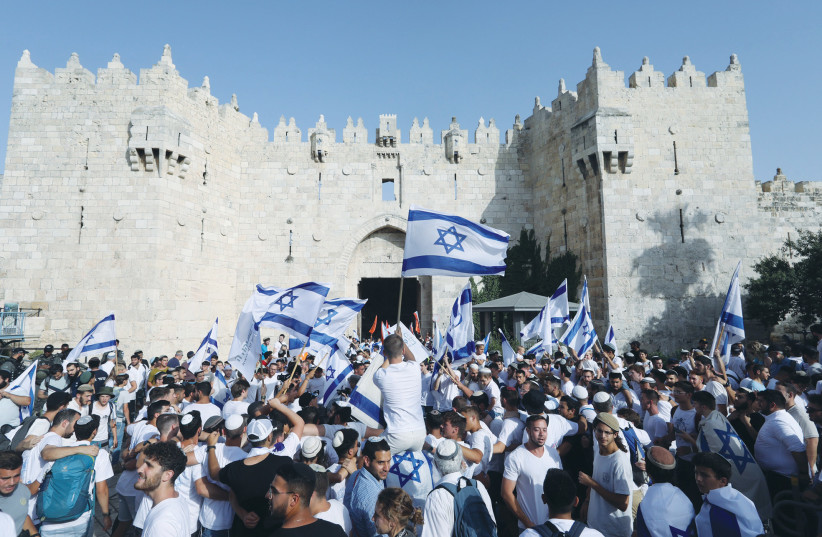
Jerusalem Day is a day for Israel to take pride in the reunification of Jerusalem after it was recaptured in the Six Day War.

.
CELEBRANTS MARCH on Jerusalem Day toward the Old City. No mention was made of the myriads like us who were there to celebrate our pride in, and love for, Jerusalem, write the authors. /  (photo credit: MARC ISRAEL SELLEM)

We are not extremists. Yet we proudly participated in the celebrations in Jerusalem, on Jerusalem Day.

We firmly believe the majority of those who participated in the Flag March intended to celebrate, not to incite. Like us, they did not support and certainly did not participate in any provocative actions.

Let us state what should be obvious.

We adamantly oppose acts of violence against innocent people – be they Jews, Muslims or Christians. We believe in the rights of all people. We reject those individuals who shouted “death to the Arabs” and other racist slogans. We decry those who banged on the shuttered stores of the Shuk. We denounce those who may have attacked bystanders without provocation.

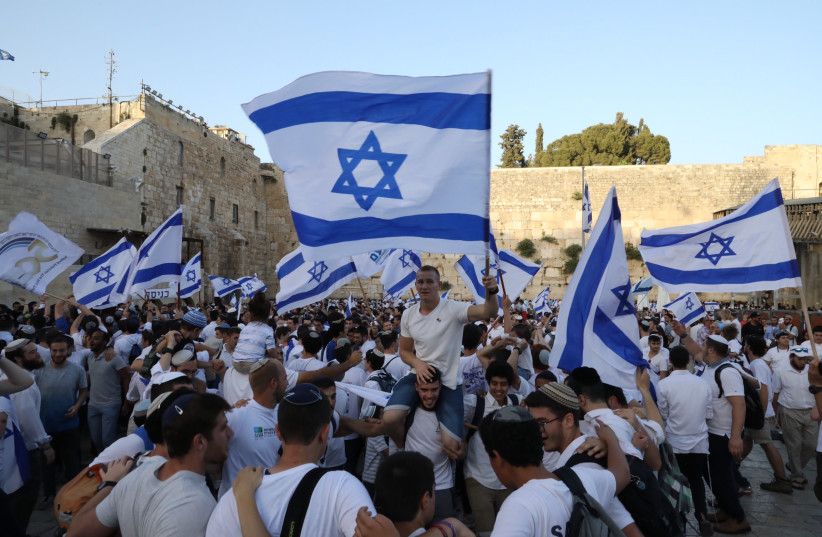
Celebratory dancing at the Western Wall on Jerusalem Day. (credit: MARC ISRAEL SELLEM)

Jerusalem Day is a proud day. We take pride in Israel’s reunification of the city during the Six Day War. We also strongly support the continued existence of a unified Jerusalem as the capital of the State of Israel.

Our pride and support stem from two main sources…

First and foremost, Jerusalem is our holy city and has been for millennia; tracing back to events in life of the Patriarch Abraham, the progenitor of the Jewish people.

Secondly, we learn from history. The only time when unfettered access within the city has been granted to people of all faiths has been since the day the city was reunited by the Israeli Defense Forces. Jerusalem today features fully functioning synagogues, mosques and churches. Jews pray at the Western Wall, Muslims worship in the Mosque of Omar, Christians pray in the Church of the Ascension.

These scenes stand in clear contrast to those which existed before the Six Day War. During the decades of Jordanian control of the Old City of Jerusalem the “Jewish Quarter” was razed. Synagogues were completely destroyed. Jewish holy sites were desecrated in unimaginable ways. You will pardon us if we don’t trust a return to the time when the city was in the hands of others.

As such, Jerusalem Day is celebrated by us as an historically momentous day. Though we cannot see into the hearts of others, we believe this is the sentiment shared by the vast majority of those who participated in the march.

It is regrettable that this pride in our history was overshadowed by the objectionable actions of a few. Reports in the press gave the impression that thousands and thousands of Israeli extremists and provocateurs paraded through the streets of Jerusalem last Sunday, all intent upon humiliating the Arab population of the city. No mention was made of the myriads like us who were there to celebrate our pride in, and love for, Jerusalem.

I suppose that means that there is work to be done in order to reclaim the celebrations of Jerusalem Day. We, and those who agree with us, will have to become more vocal, so that the pride of the day drowns out the voices furthering their own extreme agenda.

But, you have to wonder whether or not such efforts will ultimately prevail. In a world where reported news tends to be spun to fit the “newscaster’s” preconceived point of view; where the items that make it to the news desk are generally those on the extreme; where nuance has been totally lost in the marketplace of ideas… can a complex point of view ever be publicly projected?

One thing we do know, is that we have to try. We will continue to celebrate Jerusalem Day for the right reasons in the years to come. And, who knows? If more and more like-minded individuals openly celebrate with us, perhaps the glory of a unified Jerusalem will be properly projected to the world.


Shmuel Goldin is rabbi emeritus of Congregation Ahavath Torah in Englewood, New Jersey and served for two terms as president of the Rabbinical Council of America.

Reuven Tradburks served as congregational rabbi in North America most recently in Toronto and presently serves as the director of the Israel Region of the RCA.


Zawartość publikowanych artykułów i materiałów nie reprezentuje poglądów ani opinii Reunion’68,
ani też webmastera Blogu Reunion’68, chyba ze jest to wyraźnie zaznaczone.
Twoje uwagi, linki, własne artykuły lub wiadomości prześlij na adres:
webmaster@reunion68.com