Archives

News From Israel- April 27, 2022

News From Israel- April 27, 2022

ILTV Israel News


Video zablokowane przez YOUTUBE jako szkodliwe dla niepelnoletnich

Israel’s annual Holocaust Remembrance Day starting with various events across the country. But are survivors in Israel doing more than just ‘surviving?’

Joining with more on this year’s historic events… chief of the Yad Vashem holocaust memorial, Danny Dayan

From Theresienstadt, to TikTok – social media celebrity, Holocaust survivor, and self-described ‘rascal,’ Gidon Lev, honoring us in-studio with an incredible and introspective conversation.


Zawartość publikowanych artykułów i materiałów nie reprezentuje poglądów ani opinii Reunion’68,
ani też webmastera Blogu Reunion’68, chyba ze jest to wyraźnie zaznaczone.
Twoje uwagi, linki, własne artykuły lub wiadomości prześlij na adres:
webmaster@reunion68.com


Would Charles Darwin have been tolerant of LGBTQ+, other minorities? – study

Would Charles Darwin have been tolerant of LGBTQ+, other minorities? – study

JUDY SIEGEL-ITZKOVICH


In the Israel-based study, people with a stronger belief in evolution were more likely to support peace among Jews, Arabs and Palestinians.

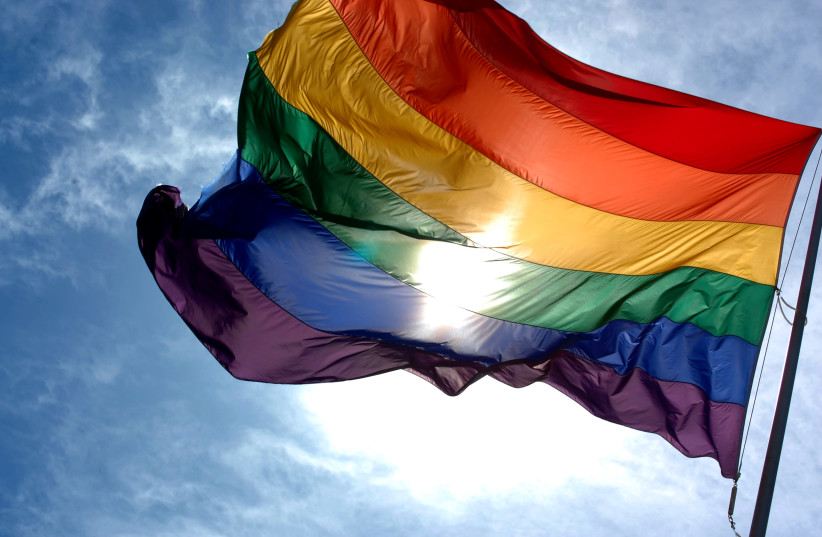
LGBTQ flag / (photo credit: Wikimedia Commons)

Would Charles Darwin have been tolerant of homosexuals, lesbians and other minorities? The English naturalist, geologist and biologist best known for his contributions to evolutionary biology – who died exactly 140 years ago this month at the age of 72 – would likely not have been prepared for the lesbian, gay, bisexual and transgender controversies that exist in the world today.

Now, researchers in the US and Israel have found that a disbelief in human evolution is linked with higher levels of prejudice, racist attitudes and support of discriminatory behavior against blacks, immigrants, the LGBT community in the US and minorities around the world.

The study has just been published in the Journal of Personality and Social Psychology under the title “Bigotry and the human–animal divide: (Dis)belief in human evolution and bigoted attitudes across different cultures.”

The lead authors were Associate Prof. Bernhard Leidner; Stylianos Syropoulos, a doctoral candidate in the War and Peace Lab at the University of Massachusetts at Amherst; and psychology Prof. Uri Lifshin at Reichman University in Herzliya. They were assisted by Jeff Greenberg and Dylan Horner at the University of Arizona in Tucson.

With Darwin’s discovery of natural selection, the origin and adaptations of organisms were brought into the realm of science. The adaptive features of organisms could now be explained – like the phenomena of the inanimate world – as the result of natural processes.

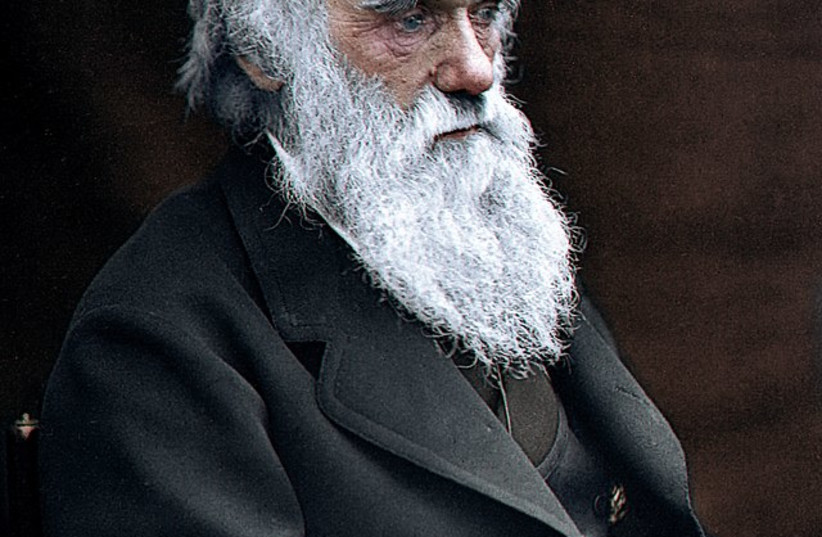
 Charles Darwin, English naturlist, geologist and biologist, 1809-1882. (credit: Wikimedia Commons)Charles Darwin, English naturlist, geologist and biologist, 1809-1882. (credit: Wikimedia Commons)

The researchers note that Darwin’s 19th-century theory of evolution has been cited as perpetuating racism, prejudice and homophobia, in part through the phrase “survival of the fittest,” used to describe the process of natural selection.

“There have been theoretical accounts that predict the opposite of what we found, so it was exciting for us to show that this actually is not the case: that the opposite is true and that belief in evolution seems to have pretty positive effects,” Leidner commented.

“This whole effect and pattern seems to be present in all major political systems,” he said. “It’s very much a human phenomenon, no matter where you are in the world.”

Across the globe – in 19 Eastern European countries, 25 Muslim countries and Israel – a low level of belief in evolution was linked to higher biases within a person’s group, prejudicial attitudes toward people in different groups and less support for conflict resolution.

The researchers hypothesized that belief in evolution would tend to increase people’s identification with all humanity due to its common ancestry and would lead to less prejudicial attitudes.

“People who perceive themselves as more similar to animals are also people who tend to have more pro-social or positive attitudes toward outgroup members or people from stigmatized and marginalized backgrounds,” Syropoulos noted. “In this investigation, we were interested in examining whether belief in evolution would also act in a similar way, because it would reinforce this belief that we are more similar to animals.”

IN THE Israel-based study, people with a stronger belief in evolution were more likely to support peace among Jews, Arabs and Palestinians. In the study involving countries in the Islamic world, belief in evolution was associated with less prejudice toward Christians and Jews. In the study based in Eastern Europe, where Orthodox Christians are the majority, a belief in evolution was linked with less prejudice toward gypsies, Jews and Muslims.

The US-based study involved data from 1993, 1994, 2000, 2006, 2008, 2010, 2012, 2014, 2016 and 2018 – the years the American General Social Survey (GSS) surveyed Americans about their beliefs in evolution, as well as measures of attitudes toward immigrants, blacks, affirmative action, LGBTQ+ people and other social matters.

They tested their hypothesis on over 60,000 people in 45 countries, in diverse populations and religious settings and across time. In eight studies involving different areas of the world, the researchers analyzed data from the GSS, the Pew Research Center and three online crowd-sourced samples. In testing their hypothesis about the associations of different levels of belief in evolution, they took account of education, political ideology, religiosity, cultural identity and scientific knowledge.

“We found the same results each time – that believing in evolution relates to less prejudice, regardless of the group you’re in, and controlling for all of these alternative explanations,” the authors wrote.

For example, religious beliefs, like political ideology, were measured separately from a belief or disbelief in evolution, the researchers note.

“Regardless of whether one considers religion an important part of their life, belief in evolution relates to less prejudice independently from belief, or lack thereof, in God or any particular religion,” Syropoulos said.

The data analysis showed unfailingly “that the disbelief in human evolution is the driving factor and most consistent predictor of prejudice in comparison to other relevant constructs,” the paper states.

The researchers suggested that a belief in evolution might expand people’s “moral circle,” leading to a sense that “we have more in common than things that are different.”

The findings also suggest that “teaching evolution seems to have side effects that might make for a better or more harmonious society,” the researchers said.

“The next step is to investigate how evolution is taught in the classroom and work toward developing models to study and strengthen the positive effects.”


Zawartość publikowanych artykułów i materiałów nie reprezentuje poglądów ani opinii Reunion’68,
ani też webmastera Blogu Reunion’68, chyba ze jest to wyraźnie zaznaczone.
Twoje uwagi, linki, własne artykuły lub wiadomości prześlij na adres:
webmaster@reunion68.com


Israel, South Africa: Relations stuck in a time warp – opinion

Israel, South Africa: Relations stuck in a time warp – opinion

MARK REGEV


South Africa’s boycott of Israel prevents the sort of fruitful cooperation seen in Israel’s relations across Africa.
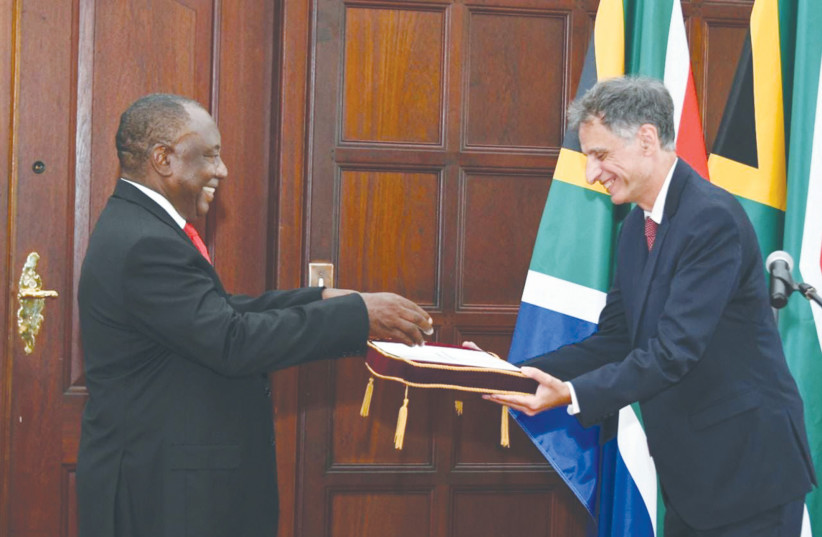
SOUTH AFRICAN President Cyril Ramaphosa smiles as he receives the credentials of new Israeli ambassador Eliav Belotsercovsky in January.
(photo credit: Israel Embassy-South Africa/South African Dept. of International Relations and Cooperation/Twitter)

The institution committed to unity in Africa has been decidedly disunited on Israel. The African Union (AU) has been split over granting Israel official observer status, exposing serious fault lines regarding the Jewish state in the organization that brings together the continent’s 55 countries.

On one side, there is the growing list of African states that have positive ties with Israel and support Israel becoming an AU observer. On the other, there are countries adamantly opposed to upgrading Israel’s status.

Among Israel’s AU friends are states from across sub-Saharan Africa: Cameroon, Chad, DRC, Ethiopia, Ghana, Kenya, Liberia, Malawi, Rwanda, Senegal, Uganda and Zambia, to name but a few. With some of these countries, Israel’s ties date back decades.

As foreign minister from 1956 to 1966, Golda Meir pioneered Israel’s African outreach. Meir’s passion to strengthen Israel’s international standing was matched only by her genuinely held belief that Israel’s own development could be a valuable example to the newly independent countries of the continent.

The woman who went on to become Israel’s fourth prime minister firmly believed that Israel could be Africa’s role model: “Like them, we had shaken off foreign rule; like them, we had to learn for ourselves how to reclaim the land, increase the yields of our crops, irrigate, raise poultry, live together and defend ourselves.”
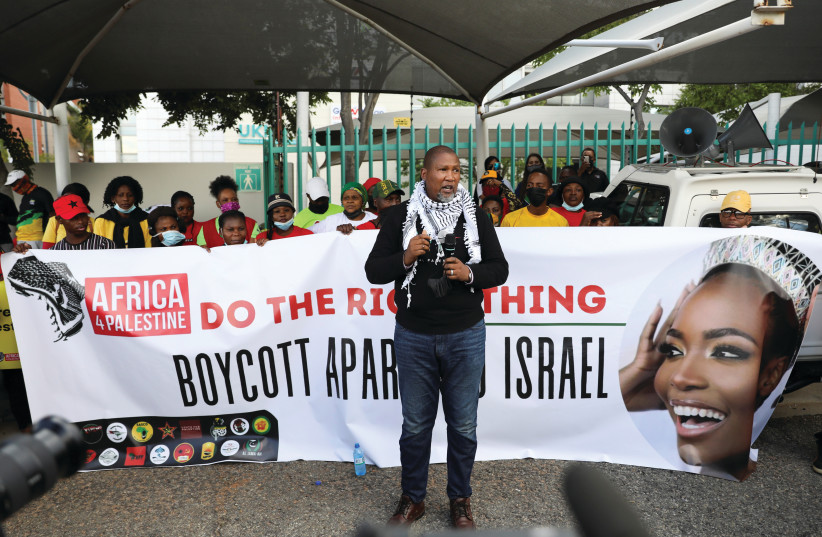
NELSON MANDELA’S eldest grandson, Mandla Mandela, speaks during a protest by Palestinian supporters earlier this month in Johannesburg, calling for Miss South Africa Lalela Mswane to withdraw from the Miss Universe pageant in Israel. (credit: SIPHIWE SIBEKO/REUTERS)

Over half a century later, Israel’s ninth prime minister Benjamin Netanyahu, followed in Meir’s footsteps in prioritizing relations with the continent, declaring that “Israel is coming back to Africa and Africa is coming back to Israel.”

In 2016, Netanyahu became the first Israeli prime minister to visit Africa in decades, his trip including Uganda, Kenya, Rwanda and Ethiopia. In 2017 he became the first ever non-African to address the Economic Community of West African States (ECOWAS) leaders’ summit in Monrovia, during which he met with 10 African presidents.

In the current debate over Israel in the AU, the organization’s Chair, Chad’s Moussa Faki, has supported Israel’s acceptance as an observer. In a speech in February, Faki alluded to Israel’s extensive connections across the continent, pointing to the 44 African states that maintain diplomatic relations with Israel, as opposed to 11 states, only one fifth of the AU membership, that refuse to do so.

Those against upgrading Israel’s status received support from Palestinian Authority Prime Minister Mohammad Shtayyeh, who flew to Addis Ababa to demand the AU not reward Israel “for the apartheid regime it does impose on the Palestinian people.”

Inside the AU, spearheading the effort against Israel are Algeria and South Africa.

The People’s Democratic Republic of Algeria has a revolutionary Arab nationalist tradition dating back to the struggle for independence from France. Algeria is not one of the increasing number of Arab League states that have moved to normalize or liberalize ties with Israel – far from it. Even in the heyday of Oslo, unlike its immediate Arab neighbors Morocco and Tunisia, Algeria refused to allow Israel to open an interest office.

The case of South Africa is more complex. South Africa is both a democracy and, because of its own unique historic experience, espouses a special commitment to combating racism. However, South Africa does not evince any natural affinity with the Middle East’s singular democracy, nor does its sensitivity to racism encompass understanding of antisemitism or appreciation of the Jews’ desire for national freedom and security. Despite the formal diplomatic ties, South Africa’s aversion towards Israel is institutional and ubiquitous.

LAST YEAR, South Africa’s Minister of International Relations and Cooperation, Dr Naledi Pandor, addressed Chatham House on her country’s foreign policy agenda. Before discussing a series of international issues, Pandor first stressed South Africa’s special commitment to the Palestinian people. Only after this obligatory opening, was it possible for the minister to delve into other matters.

Indeed, the Palestinian cause has become the holy grail of South Africa’s ruling African National Congress (ANC), the litmus test for commitment to the ideology of national liberation. Public figures who challenge the prevailing anti-Israel dogma can see their careers suffer.

One example: In 2021 South Africa’s chief justice, Mogoeng Mogoeng, was forced to apologize for expressing support for Israel, having to resign from his position as chancellor of the University of KwaZulu-Natal, ultimately leaving his post as chief justice, as well. Mogoeng’s lapse: He had said in a webinar hosted by this newspaper that “I’m under an obligation as a Christian to love Israel, to pray for the peace of Jerusalem.”

In a similar vein, last November the South African government publicly rebuked Miss South Africa, Lalela Mswane, over her decision to participate in the Miss Universe pageant in Eilat, releasing a statement that “the atrocities committed by Israel against Palestinians are well documented and government, as the legitimate representative of the people of South Africa, cannot in good conscience associate itself with such.”

Earlier this year, South African President Cyril Ramaphosa was himself chided for being photographed smiling during the ceremony where he received the credentials of Israel’s new ambassador Eliav Belotsercovsky. As the criticism came from influential elements inside the African National Congress (ANC) and its tripartite alliance partners, the government immediately released a sharp anti-Israel statement reiterating devotion to the Palestinian cause. Apparently, the ANC orthodoxy demands the head of state frown when meeting Israelis.

All this is highly counterproductive. South Africa’s boycott of Israel prevents the sort of fruitful cooperation seen in Israel’s relations across Africa, which, according to AU Chair Faki, encompass “fields as varied and sensitive as: education/training, defense, security, intelligence, nuclear cooperation, agriculture, technological innovations, health, economy and finance.”

Of late, because of its professed commitment to an ethical foreign policy prioritizing freedom and human rights, South Africa’s government drew accusations of hypocrisy and moral bankruptcy for repeatedly refusing to join the majority at the UN in condemning Russia’s invasion of Ukraine.

Critics charge that South Africa’s leadership is stuck in a time warp, that many in the ANC view the world as if it was still the Cold War of the 1980s when the Communist East wholeheartedly supported the anti-apartheid struggle, while the West (including Israel) was too cozy with the racist white minority regime.

If the current Ukraine crisis drives Pretoria to rethink some warn-out foreign policy axioms, one can only hope that any possible glasnost will also involve looking afresh at South Africa’s reigning self-defeating anti-Israel obsession.


The writer, formerly an adviser to the prime minister, is a senior visiting fellow at the INSS at Tel Aviv University. Follow him at @MarkRegev on Twitter.


Zawartość publikowanych artykułów i materiałów nie reprezentuje poglądów ani opinii Reunion’68,
ani też webmastera Blogu Reunion’68, chyba ze jest to wyraźnie zaznaczone.
Twoje uwagi, linki, własne artykuły lub wiadomości prześlij na adres:
webmaster@reunion68.com


Israeli Artillery Attacks Site of Lebanon Rocket Launch

Israeli Artillery Attacks Site of Lebanon Rocket Launch

i24 News and Algemeiner Staff


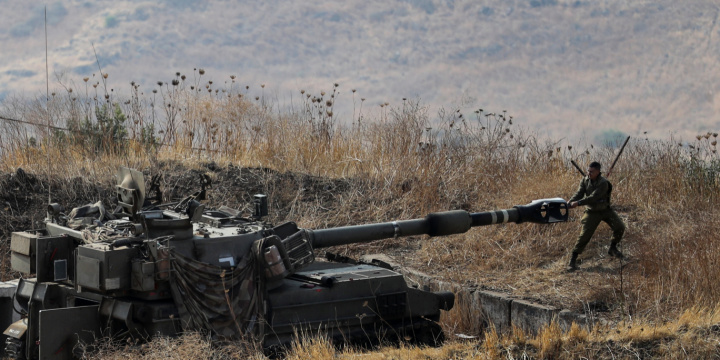
An Israeli soldier cleans the cannon of an artillery unit on the Israeli side of the border with Lebanon, August 6, 2021. REUTERS/Ammar Awad

 Israel’s military said early Monday that its artillery shelled the site of a rocket launched from Lebanon, which hit open land in Israel near the border.

The Israel Defense Forces said an explosion was reported shortly after midnight near the northern Kibbutz Metsuba, just miles from the border with Lebanon.

No alert sirens were triggered by the rocket, according to the military.

The Hezbollah-affiliated Al-Akhbar newspaper said a rocket was shot from the area south of the city Tyre.

Exchanges of fire between Israel and Lebanon since the 2006 Second Lebanon War with Hezbollah are rare. Last August, a rocket attack from Lebanon wounded several Israelis.

Attacks on Israel from Lebanon are generally perpetrated by Palestinian factions in the country, which holds a sizable Palestinian refugee population.
Israel has seen a wave of violence in recent weeks, with Jerusalem’s Al-Aqsa mosque, or Temple Mount, serving as a flash point for clashes that threaten to destabilize other areas, including Israel’s border with the Gaza Strip.


Zawartość publikowanych artykułów i materiałów nie reprezentuje poglądów ani opinii Reunion’68,
ani też webmastera Blogu Reunion’68, chyba ze jest to wyraźnie zaznaczone.
Twoje uwagi, linki, własne artykuły lub wiadomości prześlij na adres:
webmaster@reunion68.com


Coachella Festivalgoers Get Passover Seder Experience With ‘Matzahchella’ Led by Rapper Kosha Dillz

Coachella Festivalgoers Get Passover Seder Experience With ‘Matzahchella’ Led by Rapper Kosha Dillz

Shiryn Ghermezian


Rapper Kosha Dillz, dressed as Moses, leading a Passover seder at Coachella. Photo: @chrism_arts.

Attendees of the 2022 Coachella Valley Music and Arts Festival in Indio, California, this weekend also had the chance to join a Seder for Passover, which began Friday night.

As part of the festival’s Shabbat Tent, the free “Matzahchella” Passover Seders were held on Friday and Saturday night, and hosted by Jewish rapper Kosha Dillz, whose real name is Rami Matan. The 10-minute Seders took place every 30 minutes, and included matzah, charoset, horseradish, boiled eggs and grape juice

“As a musician it is a huge goal of mine to be involved with one the most influential music festivals in the world. Providing to the [Jewish] community is even more important,” Kosha Dillz told The Algemeiner on Monday. “So we all fulfill a need that is there. So many people skip the Seder, but we never do.”

“A lot of people don’t even know what Passover is,” added Dillz, who donned a Moses costume for the occasion. “Many people don’t know what Shabbat is, let alone a Shabbat tent. Some people thought we were dressed as Jesus or Harry Potter. We definitely introduced people to a lot of culture and positive Jewish vibes because we were able to give out free food and drink and provide phone charging. Besides being a Seder haven, the educational part was probably larger.”

Shabbat Tent has appeared at various festivals across the US since 1999, also serving as a “hospitality tent” for concertgoers to rest and charge their phone. Shabbat Tent director Rabbi Yonah Bookstein was on-site at Coachella in previous years, but this year he is in Poland leading Seders for Jewish-Ukrainian refugees.

A Passover Seder was also held at Coachella by Outstanding in the Field, the $275-per-person dinner series that takes nightly in the festival’s VIP section, according to Variety. A partnership with dinner organizers and a grant from a Jewish organization lowered the cost to $75 to partake in the meal, which included a brief candle lighting and prayer ceremony.

Coachella, which falls on Passover every few years, spans two consecutive weekends starting from April 15 through April 24. This year is also the first Coachella since 2019, after back-to-back cancellations due to the COVID-19 pandemic.


Zawartość publikowanych artykułów i materiałów nie reprezentuje poglądów ani opinii Reunion’68,
ani też webmastera Blogu Reunion’68, chyba ze jest to wyraźnie zaznaczone.
Twoje uwagi, linki, własne artykuły lub wiadomości prześlij na adres:
webmaster@reunion68.com