Archives

Why does NYC still honor two French Nazi collaborators? – opinion

Why does NYC still honor two French Nazi collaborators? – opinion

MENACHEM Z. ROSENSAFT/JTA


Two people honored by New York City were accused of dispatching tens of thousands of people to be killed in gas chambers.
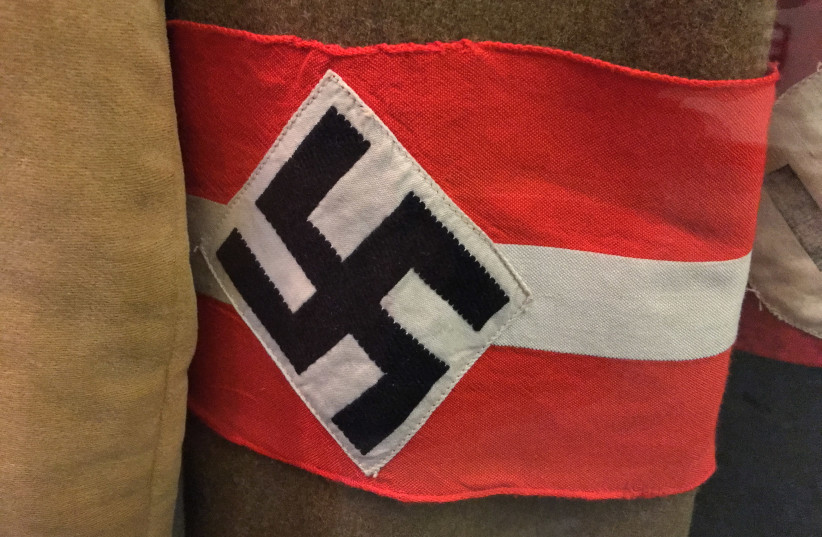
A Nazi armband with a swastika displayed in the Deutsches Historisches Museum, Berlin, Germany / (photo credit: Wikimedia Commons)

Statues of Presidents Thomas Jefferson and Theodore Roosevelt were recently removed from, respectively, the New York City Council chamber at City Hall and the entrance to the American Museum of Natural History on Central Park West. Municipal officials, acting amidst a wave of sensitivity to historical slights, noted Jefferson’s role as a slaveholder and the Roosevelt statue’s demeaning depiction of Native Americans.

Regardless of their shortcomings, neither US president has ever been accused of dispatching tens of thousands of people to be killed in gas chambers. But two people honored by New York City have been.

For most of the past two decades, plaques honoring Philippe Pétain and Pierre Laval, under whose watch as leaders of the Hitler-allied Vichy regime approximately 77,000 Jews living in France were murdered, have been on prominent display in New York City.

The Pétain/Laval government promulgated draconian antisemitic laws, “aryanized” or seized Jewish property and rounded up thousands of Jews for deportation from France to Nazi death camps in German-occupied Poland.

Yet black granite markers engraved with Pétain’s and Laval’s names remain untouched on Broadway’s Canyon of Heroes in lower Manhattan.

The Pétain and Laval plaques and 204 others embedded in the sidewalks between Battery Park and Chambers Street commemorate individuals and groups celebrated with ticker-tape parades beginning in 1886. On Oct. 22, 1931, Laval, then prime minister of France, starred in his parade. Four days later, Marshal Pétain, the French army’s commander-in-chief at the end of World War I, was escorted up Broadway by 2,000 uniformed men and three bands.

At that time, neither of them had yet descended into ignominy; that happened during World War II. Both were tried for treason in 1945, found guilty and sentenced to death. Laval was executed but Pétain’s sentence was commuted to life imprisonment.

The plaques, however, were installed in 2004 — not 1931 — by which time Pétain and Laval had been notorious for over 60 years. Imposing these blights on the New York City landscape in the first place didn’t appear to ring alarm bells — a fact that speaks volumes in and of itself.

Serge Klarsfeld, one of France’s most prominent authorities on the Holocaust, revealed in 2010 that Pétain, the chief of state of Vichy France from 1940 until 1944, had personally and significantly worsened conditions for Jews in France: A draft of his government’s first Law on the Status of the Jews (“Statut des Juifs”) of October 1940, which defined who was Jewish and which excluded Jews from large segments of French public life, included Pétain’s handwritten notations making the law ever more strict.

For his part, Laval, the head of the Vichy government, told German and other correspondents at a news conference in September 1942 that he intended to continue deporting alien Jews — that is, refugees and other Jews who did not hold French citizenship — from France. “No man and nothing,” Laval declared, “can sway me from my determination to rid France of alien Jews and send them back where they came from.”

What’s more, while most of the Jews sent from France to the Nazi death camps were indeed foreign or stateless Jews, large numbers of native French Jews were deported and killed as well.

Symbolism matters. A lot. And for better or worse, Pétain and Laval have come to epitomize Nazi collaboration at its worst. In France, no one except for ultra-right political extremists like Éric Zemmour — a reactionary (and, unfortunately, Jewish) fringe candidate who finished a distant fourth in Sunday’s first round of French presidential elections — wants to have anything to do with either of them. The last French street bearing Pétain’s name, in the village of Tremblois-lès-Carignan, was renamed in 2011.

In 2017, with Confederate monuments coming down across the United States, attempts were made to have the Pétain and Laval plaques removed from Lower Manhattan. At first, then-Mayor Bill de Blasio agreed, tweeting that “the commemoration for Nazi collaborator Philippe Pétain in the Canyon of Heroes will be one of the first we remove.”

His resolve did not last. In January 2018, the Mayoral Advisory Commission on City Art, Monuments, and Markers recommended that the Pétain plaque should stay where it is, arguing that “if a marker is accurate, and not celebratory of egregious values or actions, it should not be removed.”

The commission did throw a bone of sorts to those who were offended by the Pétain plaque. It suggested “re-contextualizing” it by adding explanatory texts so as to “reframe” the markers “as a teachable moment.” It is not clear whether the commission discussed the Laval plaque at all.

Four years later, not only are the Pétain and Laval markers still there, but no “contextualizing” content has been added. These two Holocaust enablers with blood on their hands continue to receive equal billing with the likes of Winston Churchill, Dwight D. Eisenhower, David Ben-Gurion, Queen Elizabeth II, Charles de Gaulle and Nelson Mandela.

I am not taking issue here with the removal of the Jefferson and Roosevelt statues. But if they were taken away, what possible rationale can there be for not doing the same to the Pétain and Laval plaques?

Petain and Laval, incidentally, are not the only World War II villains to be glorified in the United States. The Von Braun Center in Huntsville, Alabama, is named for Wernher von Braun, who, prior to reinventing himself as a key architect of the American space program in the 1950s and 1960s, was a Nazi major who lethally exploited inmates at the Dora-Mittelbau concentration camp to manufacture the Third Reich’s V-2 ballistic missiles. A large bust of von Braun stands prominently outside NASA’s Marshall Space Flight Center, also in Huntsville. My father, who was imprisoned at Dora for several months, said that conditions there were worse than he experienced at Auschwitz.

As the son of two survivors of Auschwitz and Bergen-Belsen, I urge Mayor Eric Adams to take a fresh, hard look at the obscenity of heroizing two antisemitic Nazi collaborators on the streets of New York City, and fervently hope that he will have these markers removed without further delay. It’s the morally right thing to do.


Zawartość publikowanych artykułów i materiałów nie reprezentuje poglądów ani opinii Reunion’68,
ani też webmastera Blogu Reunion’68, chyba ze jest to wyraźnie zaznaczone.
Twoje uwagi, linki, własne artykuły lub wiadomości prześlij na adres:
webmaster@reunion68.com


IDF strikes Hamas military compound after rocket from Gaza

IDF strikes Hamas military compound after rocket from Gaza

ANNA AHRONHEIM


Sirens sound multiple times in Sderot throughout Wednesday night • IDF also struck infrastructure of rocket manufacturing structure

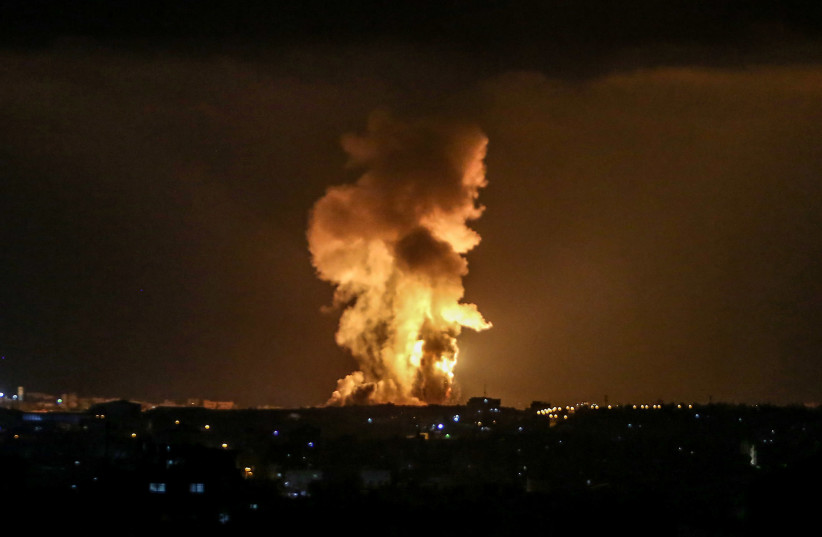
A ball of fire and smoke rises during Israeli airstrikes in Rafah, in the southern Gaza Strip on May 10, 2021. /  (photo credit: ABED RAHIM KHATIB/FLASH90)

The Israeli Air Force struck targets in the Gaza Strip overnight on Thursday in response to earlier rocket fire launched towards southern Israel.

The first rocket fired from Gaza occurred around 10:30 p.m., with a rocket damaging a parked car and a wall near a home in the college city of Sderot.

The rocket did not explode but several people were treated for shock including a 70-year-old man. Sappers handled the rocket fragment found at the scene along with Israel Fire and Rescue Services firefighting crews.

The Iron Dome missile defense system was not activated.

In response, the IDF said that fighter jets targeted a military post and a tunnel complex in the Hamas-run enclave “containing raw chemicals used for the manufacturing of rocket engines.”

Iron Dome (credit: MINISTRY OF DEFENSE SPOKESPERSON’S OFFICE)

The IDF said that the strike dealt “a significant blow” to the rocket production process in Gaza.

During the airstrikes, terrorists in the Strip fired anti-aircraft missiles, the second time in a row that such a system was used. 

On Tuesday during retaliatory Israeli strikes on the coastal enclave, Hamas fired a Russian-made Strela (SA-7) shoulder-to-air missile. 

The IDF said that the attempts to hit the planes, both on Tuesday and Thursday, failed and no damage had been caused. 

Despite initial reports suggesting four rockets were fired toward Sderot during the overnight strikes, the IDF said only one rocket was actually launched, stating all other instances of sirens sounding in southern Israel throughout the night were due to machine-gun fire from Gaza. Another rocket landed within the Gaza Strip, the IDF added.

Prime Minister Naftali Bennett must respond to the attack, Sderot Mayor Alon Davidi said at the scene. “It was a miracle no one was hurt. It is the government’s responsibility to ensure Sderot residents can enjoy the Passover holiday in peace,” the mayor added.

During a visit on Tuesday afternoon to the Judea and Samaria Border Police, Defense Minister Benny Gantz warned that Israel would not allow for continued rocket fire from the Hamas-run enclave.

“The IDF is ready with a wide range of means and targets – so that peace and stability will continue,” he said.

“If the incitement and rocket fire continues – the terrorist organizations will be severely harmed, as will the people of Gaza, who are currently benefiting from the moves we have made to develop the economy and allow them to work in Israel,” he warned. “These are moves that we will expand if the stability continues or we can go backward, if the Hamas leaders decide to harm it.”


Zawartość publikowanych artykułów i materiałów nie reprezentuje poglądów ani opinii Reunion’68,
ani też webmastera Blogu Reunion’68, chyba ze jest to wyraźnie zaznaczone.
Twoje uwagi, linki, własne artykuły lub wiadomości prześlij na adres:
webmaster@reunion68.com


UAE cancels participation in Israeli flyover due to Temple Mount riots

UAE cancels participation in Israeli flyover due to Temple Mount riots

JERUSALEM POST STAFF


The announcements came as the UAE Foreign Ministry summoned Israel’s Ambassador Amir Hayek over police actions against Palestinian rioters on Jerusalem’s Temple Mount and in the Old Cit

French-made Mirage 2000 and US-made F-16 fighter jets of the United Arab Emirates forces take part in joint military maneuvers with the French army in the desert of Abu Dhabi, May 2, 2012. /  (photo credit: REUTERS/BEN JOB)

Emirati airline Wizz Air Abu Dhabi has canceled its participation in Israel’s Independence Day flyover this year, amid Arab condemnation of Temple Mount and Old City violence, according to the Israel Pilot’s Association.

It tweeted that it had “received a message today from #WizzairAbuDhabi that it will not be able to participate in the Independence Day flight in Israel.

“The announcement was made shortly after the announcement of the summoning of the Israeli ambassador to Abu Dhabi for a conversation at the Foreign Ministry in the United Arab Emirates.

“We are sorry for this decision,” it explained.

Etihad Airways, also of the UAE, made a similar announcement.

An Etihad Airways Airbus A320-200 at the National Airport Minsk, Belarus, April 19, 2018. (credit: VASILY FEDOSENKO / REUTERS)

UAE’s participation in the flyover had been intended to hight the increased cooperation between the two countries, which had normalized ties in 2020 under the US-brokered Abraham Accords.

The announcements came as the UAE Foreign Ministry summoned Israel’s Ambassador Amir Hayek over police actions against Palestinian rioters on Jerusalem’s Temple Mount and in the Old City. 

Hayek, who is Israel’s first ambassador to the UAE arrived there in October of last year and this is the first time he has been summoned. He met Tuesday with Minister of State for International Cooperation Reem bint Ebrahim Al Hashimy.

Jordan’s Foreign Minister Ayman Safadi on Monday similarly spoke with Israel’s Deputy Ambassador Sami Abu Janeb on the same issue. 

On Tuesday Al Hashimy told Hayek that full protection must be given to Palestinian worshipers on the Temple Mount, known to Muslims as al-Haram al-Sharif.

She asked Israel to preserve the sanctity of the al-Aqsa Mosque and “expressed concern over the escalation of tension that threatens stability and security in the region,” according to her office.

Al Hashimy underscored the importance of respecting Jordan’s custodial role on the Temple Mount. She spoke of the need to resume a peace process for the “establishment of an independent Palestinian state on the 1967 borders with east Jerusalem as its capital in accordance with legitimate international resolutions and the Arab Peace Initiative.”

The UAE, like Jordan, has been concerned that Israel is disrupting the status quo on the Temple Mount, a charge that Israel has denied.


Zawartość publikowanych artykułów i materiałów nie reprezentuje poglądów ani opinii Reunion’68,
ani też webmastera Blogu Reunion’68, chyba ze jest to wyraźnie zaznaczone.
Twoje uwagi, linki, własne artykuły lub wiadomości prześlij na adres:
webmaster@reunion68.com
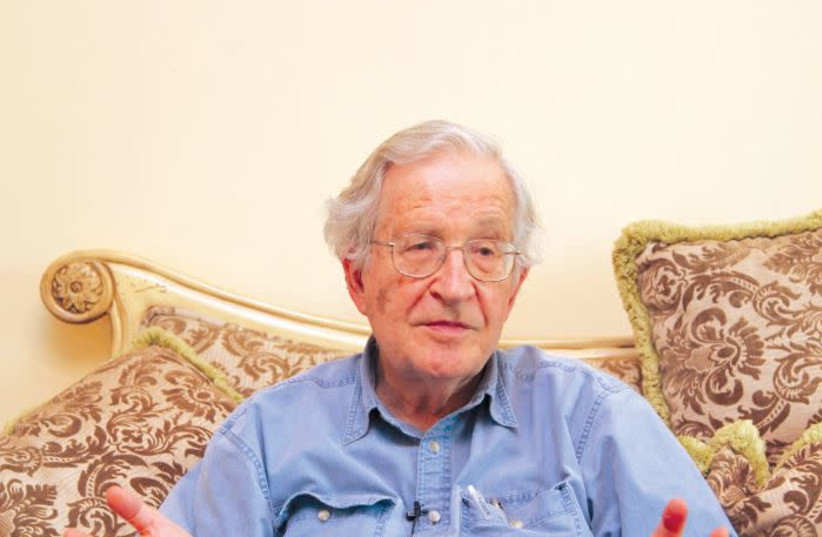

Noam Chomsky says Ukraine should settle with Russia

Noam Chomsky says Ukraine should settle with Russia

BEN ZION GAD


Chomsky, who originally made his name in linguistics, has been known for his anti-war, anti-capitalist, and anti-Zionist stances.

NOAM CHOMSKY is accused by the author of numerous inaccuracies and the projection of ‘a crippling ideological rigidity.’ / (photo credit: MAJED JABER/REUTERS)

Jewish American philosopher and linguist Noam Chomsky said that Ukraine must make concessions to Russian demands, saying that the public must “pay attention to the reality of the world,” in an interview with Current Affairs on Wednesday.

“One option is to pursue the policy we are now following… to fight Russia to the last Ukrainian. And yes, we can pursue that policy with the possibility of nuclear war. Or we can face the reality that the only alternative is a diplomatic settlement, which will be ugly – it will give Putin and his narrow circle an escape hatch,” Chomsky said.

“We know the basic framework is neutralization of Ukraine, some kind of accommodation for the Donbas region, with a high level of autonomy, maybe within some federal structure in Ukraine, and recognizing that, like it or not, Crimea is not on the table,” continued Chomsky. “You may not like it, you may not like the fact that there’s a hurricane coming tomorrow, but you can’t stop it by saying, ‘I don’t like hurricanes’ or ‘I don’t recognize hurricanes.’”

Chomsky, who originally made his name in the field of linguistics, has been known for his anti-war, anti-capitalist, and – perhaps most prominently – anti-Zionist stances. He has called Israel’s military defense akin to “murder,” has said that Palestine deserves justice from US and Israeli “war crimes,” and called the adoption of the 1947 United Nations Partition Plan for Palestine “a very bad decision.” He most recently signed an open letter denouncing what the letter called an Israeli plot to silence a pro-Palestinian musician.

Noam Chomsky, a leading American intellectual highly critical of Israel’s policies toward the Palestinians, meets Hezbollah mentor Grand Ayatollah Mohammed Hussein Fadlallah in Beirut, in 2010 (credit: REUTERS)Noam Chomsky, a leading American intellectual highly critical of Israel’s policies toward the Palestinians, meets Hezbollah mentor Grand Ayatollah Mohammed Hussein Fadlallah in Beirut, in 2010 (credit: REUTERS)

Chomsky’s rise to political prominence began with his 1967 anti-Vietnam War essay “The Responsibility of Intellectuals,” which helped lead to his placement on President Richard Nixon’s Enemies List in 1971. He has also spoken at length about American military interventionism, capitalism, and neoliberalism.


Zawartość publikowanych artykułów i materiałów nie reprezentuje poglądów ani opinii Reunion’68,
ani też webmastera Blogu Reunion’68, chyba ze jest to wyraźnie zaznaczone.
Twoje uwagi, linki, własne artykuły lub wiadomości prześlij na adres:
webmaster@reunion68.com

Jerusalem elite enjoyed wine with touches of vanilla in Kingdom of Judah

Jerusalem elite enjoyed wine with touches of vanilla in Kingdom of Judah

JUDITH SUDILOVSKY


Researchers were recently surprised to discover organic residues of the exotic, expensive (even until today) spice on wine jars unearthed during excavations in the City of David.

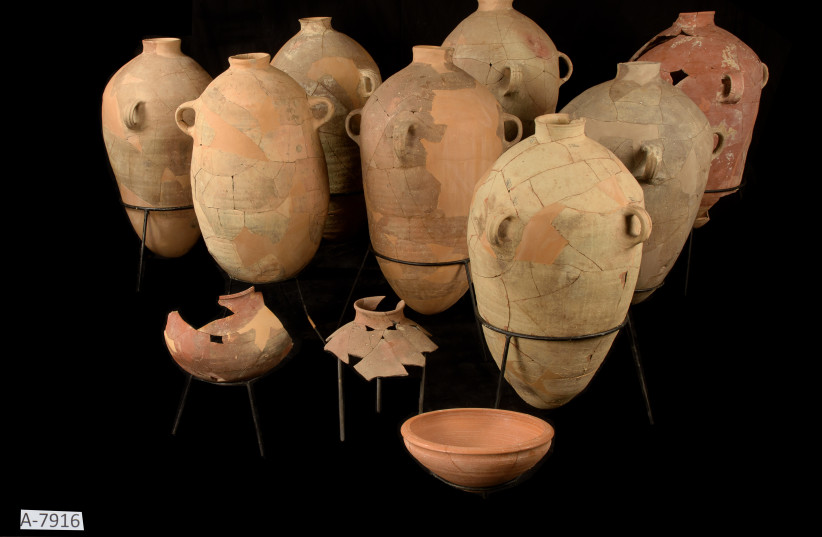
4. Collection of wine jars after the restoration process / (photo credit: DAFNA GAZIT/ISRAEL ANTIQUITIES AUTHORITY)

Modern-day wine lovers are not the only ones who enjoy a few vanilla notes in their luxury wines.

Researchers from Tel Aviv University and the Antiquities Authority (IAA) were recently surprised to discover organic residues of the exotic, expensive (even until today) spice on wine jars unearthed during excavations in the City of David National Park, located in Jerusalem’s Silwan neighborhood.

They say the discovery indicates that the wine was enriched with vanilla, and “fantastically” illustrates which luxury products arrived to Jerusalem, possibly from India and is environs, thanks to its strategic location along the international trade route.

The process of “oaking” – the aging of wines in barrels made from oak – which has been around since Roman times imparts an understated vanilla note to wine due to the vanillin chemical compound found in oak. However, the Israeli researchers say their analysis of the residue found three different molecules, which together indicate a fingerprint from vanilla itself, leaving no doubt of the origins of the residue.

Their study, recently published in the scientific journal Plos One, describes the results of chemical tests that identified the remnants of these molecules, which have been preserved in the tiny spaces on the side of the pottery vessels.

.

“Vanilla markers are an unusual find, especially in light of the fire that occurred in the buildings where the jars were found,” said Ayala Amir, a doctoral student in the Department of Archeology and Ancient Near Eastern Cultures at Tel Aviv University. “The results of the analysis of the organic residues allow me to say with confidence that the jars contained wine and that it was seasoned with vanilla.”

IAA director Eli Eskozido noted that new scientific tools continue to contribute information to the archaeological studies of the past.

The discovery of vanilla is apparently related to an international trade route that crossed the Negev during the seventh century BCE, initially under the auspices of the Assyrian Empire and later likely under their heirs, the Egyptians, and possibly even the Babylonians, according to the researchers.

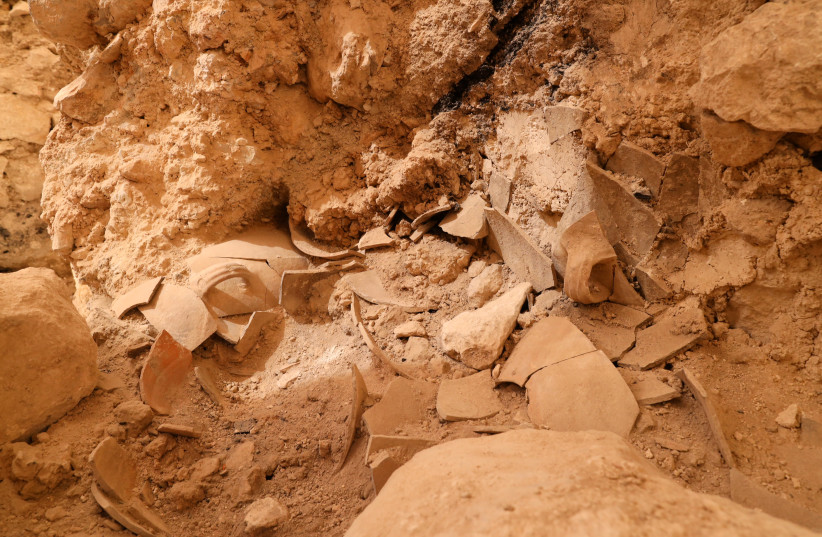
The wine jars, dating to the days of King Zedekiah – the end of the glory days of the Kingdom of Judah – were discovered inside storage rooms of buildings in two different archaeological excavations in the City of David. The two buildings unearthed in the excavations were destroyed during the Babylonian obliteration of Jerusalem in 586 BCE. The jars were discovered smashed inside the rooms, under a collapsed building.

One excavation, conducted by the IAA, is located on the eastern slopes of the City of David hill. Another excavation, under the joint management of the IAA and Tel Aviv University, was conducted in the Givati ​​Parking Lot, west of the hill.

The study examined eight jars from both buildings, and clear evidence was found in all of them for wine storage, according to the IAA.

The finds, including the vanilla used in the wine, indicate that the elites connected to the administrative seat of the Kingdom of Judah living in the neighborhoods of the area were enjoying the good life, according to Dr. Yiftah Shalev.

 Collection of wine jars after the restoration process (credit: DAFNA GAZIT/ISRAEL ANTIQUITIES AUTHORITY)Collection of wine jars after the restoration process (credit: DAFNA GAZIT/ISRAEL ANTIQUITIES AUTHORITY)

Shalev’s excavation, together with Prof. Yuval Gadot in the Givati Parking Lot, revealed a set of more than 15 jars in a ground floor easternmost room that might have been a wine cellar in an impressive two-story building. The archaeologists believe the building might have served as a bureau of senior officials in the kingdom.

Other vessels for storing liquids, including a very large one, were also found in the room that was so crowded that researchers said it would have been very hard for people to move around inside it.

“These finds tell us that the residents of Jerusalem in the late seventh century BCE in this area were people of means, with money, who were connected to international trade and the South Arabia trade,” Shalev said. “They could allow themselves the prestigious things of life that were available then, and were connected to the trends of the day. I don’t know what the wine tasted like then, but it certainly was considered high quality at the time.”

Social events and ceremonies that included drinking wine were also common then in many other cultures in Greece and Eastern empires. It is mentioned numerous times in the Bible, such as in Psalms 104:15, where God is blessed as the creator of “wine, which cheers man’s heart,” and in Amos 6:1-7, as the Prophet Amos rebukes “the complacent in Zion… You lie on beds adorned with ivory and lounge on your couches… You drink wine by the bowlful.”

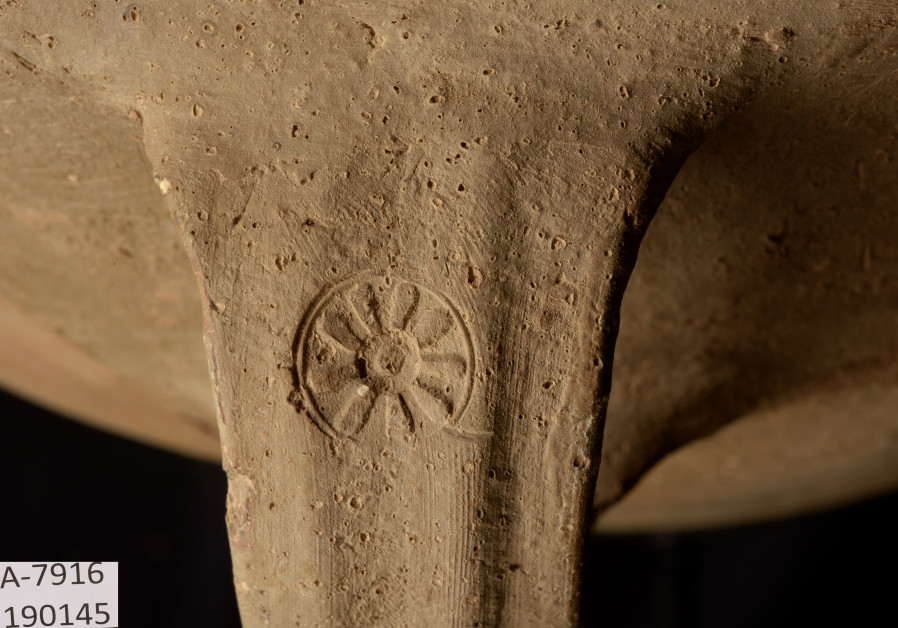
Seal impressions in the shape of a rosette appear on the handles of some of the jars, indicating that they and their contents were part of the royal administration of the Kingdom of Judah, the researchers said, and that the number of jars and impressions on them point to the economic importance of wine, and the drinking culture, as a tool for expressing status and power.

“These jars were part of the taxation system common throughout Judea in the seventh century BCE,” said Shalev.


Zawartość publikowanych artykułów i materiałów nie reprezentuje poglądów ani opinii Reunion’68,
ani też webmastera Blogu Reunion’68, chyba ze jest to wyraźnie zaznaczone.
Twoje uwagi, linki, własne artykuły lub wiadomości prześlij na adres:
webmaster@reunion68.com