Archives

The PLO Renounces All Agreements with Israel — and No One Cares

The PLO Renounces All Agreements with Israel — and No One Cares

Maurice Hirsch
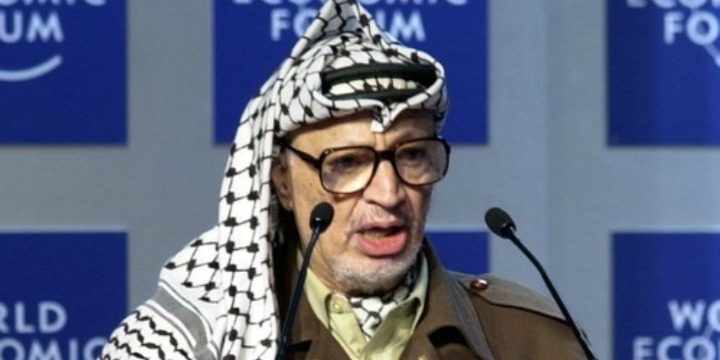

PLO leader leader Yasser Arafat. Photo: World Economic Forum.

Speaking after the recent meeting of the Palestinian National Council (PNC), its Deputy Chairman clarified that there is a binding Palestinian decision to “renounce … all agreements with Israel.”

He added that from the point of view of the Palestinian leadership, the Palestinians “have entered a path of resistance in all its forms” — a term that clearly includes the use of violence and terror.

Palestinian National Council Deputy Chairman Ali Faisal: “The decision of the [Palestinian] National Council was a recommendation to the [PLO] Central Council to renounce all the commitments of the Oslo Accords and stop the security coordination [with Israel]. Now there is a binding decision. The Central Council decided to renounce the commitments of all the agreements with the State of Israel, whether by the PLO or the PA. Currently we are outside the path of Oslo, the security coordination, and the economic Paris Agreement, and we have entered a path of resistance in all its forms and a realization of sovereignty.” [emphasis added]

[Official PA TV, “From Beirut,” Feb. 18, 2022]

To understand the ostensible importance of this statement, it is necessary to explain what the PNC is and what authority it carries.

Constitutionally, the PNC is the highest authority in the Palestine Liberation Organization (PLO), and is responsible for formulating its policies and programs.

The PLO Central Council was established by the 11th PNC meeting, in January 1973, as a legislative organ to function when the PNC is not in session and to follow up on and implement its resolutions. Its members are drawn from the PNC (including the entire PLO Executive Committee) and it is chaired by the PNC president.

The Executive Committee is the PLO’s primary executive organ — its “cabinet” — and represents the organization internationally. The Executive Committee answers to the PNC.

In other words, the PNC is the primary and most senior organ of the PLO. Its decisions are binding on the entire organization.

And what impact do decisions of the PNC have on the Palestinian Authority (PA)?

According to the PLO, the PA — created by the Oslo Accords — is merely an interim governing body that functions within, and subjected to, the authority of the PLO. Since the signing of the Oslo Accords, the head of the PLO has also held the position of PA Chairman. Accordingly, to this day, the PLO governing bodies appear to make all the major decisions on behalf of the Palestinians.

When the PLO makes an internal decision to “renounce … all agreements with Israel,” with impact on both the security coordination and economic relations (referred to by Faisal as the “economic Paris Agreement”) between Israel and the PA, that decision should have a binding effect. A decision of that nature, taken by the highest Palestinian source of authority, should not only bind the PLO and the PA, but should also have ramifications vis-à-vis Israel.

Despite the ostensible severity of the PNC decision, nothing on the ground has changed. Neither the PLO nor the PA has announced severing the security coordination, and they certainly did not decide to stop taking the hundreds of millions of dollars of taxes Israel collects every month and gives to the PA.

In stark contrast, in May 2020, Mahmoud Abbas decided alone and then announced the renunciation of all agreements with Israel, including the severing of the security coordination and the refusal to accept the tax income. That decision held for six months, after which the coordination was renewed, and the PA agreed to accept the billions of shekels (over a billion dollars) in tax revenue that had accrued.

PLO declarations aside, the reality is that everyone — including the Palestinians themselves — knows that the PLO is a defunct institution that lacks any real legitimacy. Both the PLO and the PA are run as a de facto dictatorship, in which decisions are made by one person. The PLO only continues to exist thanks to the hundreds of millions of dollars given annually from the PA budget to the “PLO institutions.” No one truly puts any stock in the decisions made by the PLO, and the organization itself is incapable of enforcing the decisions that it and its institutions make.

In a recent report, Palestinian Media Watch concluded that the PLO decision to revoke its recognition of Israel’s right to exist was devoid of any real meaning or influence. That conclusion was based on the fact that the PLO recognition of Israel’s right to exist was always empty. The most dominant organization in the PLO is Fatah. To date, the head of Fatah — first Yasser Arafat, and then Mahmoud Abbas — has been the head of the PLO. The head of the PLO has always been the chairman of the PA. Similar to other PLO members, Fatah never recognized Israel’s right to exist.

For many years, the PLO enjoyed the title of the “sole legitimate representative of the Palestinian people.” That historic role brought Israel to sign peace agreements with the PLO. However, with the passage of time, the reality is that the PLO has lost its unique status. Surveys conducted by the Palestinian Center for Policy and Survey Research show declining Palestinian support for the PLO as the “sole legitimate representative of the Palestinian people.” The March 2019 survey showed that only 54% of those surveyed still viewed the PLO as the “sole legitimate representative” of the Palestinians, down from 69% in 2006.

While the PLO may have renounced all agreements with Israel, the reality is that the PLO is simply irrelevant.


Lt. Col. (res.) Maurice Hirsch, Adv. is the Head of Legal Strategies for Palestinian Media Watch, where a version of this article first appeared.


Zawartość publikowanych artykułów i materiałów nie reprezentuje poglądów ani opinii Reunion’68,
ani też webmastera Blogu Reunion’68, chyba ze jest to wyraźnie zaznaczone.
Twoje uwagi, linki, własne artykuły lub wiadomości prześlij na adres:
webmaster@reunion68.com



Israeli NGO, Design Students Create DIY Purim Costumes for Children With Disabilities

Israeli NGO, Design Students Create DIY Purim Costumes for Children With Disabilities

Shiryn Ghermezian


A butterfly DIY costume created by Beit Issie Shapiro and the Holon Institute of Technology. Photo: Provided.

The Israel-based NGO Beit Issie Shapiro has partnered with industrial design students from the Holon Institute of Technology to create a series of Do It Yourself (DIY) costumes for children with disabilities ahead of the Jewish holiday of Purim.

The new initiative aims to help “parents of children with disabilities who use walkers and wheelchairs to create a dream-costume for their child which highlights their mobility aid and makes them feel magical,” according to a Thursday announcement.

Based in Ra’anana, the mission of Beit Issie Shapiro is to create more inclusivity and equal opportunities around the world for people with disabilities.

The Israeli NGO has posted on its website four video tutorials explaining how to make butterfly, airplane pilot, DJ or candy shop costumes designed to be adapted for different mobility devices — including a stroller, walker, wheelchair and motorized wheelchair. The website also provides written instructions, lists of supplies needed and design patterns that can be printed at home.

The “Dream Costume” initiative has worked with the Holon Institute of Technology for seven years to help children who use a mobility aid bring their costume ideas to life. The joint initiative allows “children with disabilities to stand out among their peers in a positive way, as their wheelchair or walker becomes their greatest asset,” the organization said.

“We realized the incredible demand of this initiative and wanted to ensure that every child, in Israel and around the world, can feel like a star in their costumes,” said Adi Shpigel, director of Social Impact Projects at the Holon Institute of Technology. “The open-design templates will allow us to reach even further and allow families to benefit and connect through the creativity process.”

Ahmir Lerner, Beit Issie Shapiro’s executive director, added, “By sharing the know-how to create adaptive costumes, and for the first time making it accessible to families around the world, we hope to create true impact in our society and bring Purim-joy for people with disabilities.”


Zawartość publikowanych artykułów i materiałów nie reprezentuje poglądów ani opinii Reunion’68,
ani też webmastera Blogu Reunion’68, chyba ze jest to wyraźnie zaznaczone.
Twoje uwagi, linki, własne artykuły lub wiadomości prześlij na adres:
webmaster@reunion68.com


New Israeli Drama Series Tells ‘Impossible Love Story’ Set in Haredi Community

New Israeli Drama Series Tells ‘Impossible Love Story’ Set in Haredi Community

Shiryn Ghermezian


A photo from “Fire Dance.” Photo: Provided.

Israel’s yes Studios has released a trailer and first look photo for its new television series “Fire Dance,” which has been nominated for the Grand Prix in this year’s Series Mania Competition.

The eight-part series from acclaimed filmmaker Rama Burshtein-Shai is about the relationship that develops between a married spiritual leader and his young female follower in a tight-knit, ultra-Orthodox religious community in Israel.

Feigie, 18, is a troubled teen growing up in a broken home who falls in love with Nathan, the 35-year-old married son of the religious leader in their Haredi community. Nathan is also the owner of a workshop that employs seamstresses who live with mental illness, which is run by Feigie’s mother. Following Feigie’s failed suicide attempt, she becomes part of Nathan’s household and helps to run the home while Nathan’s wife is pregnant with their second child.

The bond between Nathan and Feigie grows and though she voices her feelings for the married man, their relationship can never materialize. Their community also disapproves of Nathan’s  closeness to troubled women, threatening to cast him out and keep Feigie far away from him.

The show will premiere in spring 2022 and stars Yehuda Levi (“Very Important Person”), Noa Koler (“The Wedding Plan,” “Checkout”) and Mia Ivrin. It is produced by Shira Margalit and Elad Kuperman at Kuma Studios, Adar Shafran, Tammy Cohen, and yes TV.

“‘Fire Dance,’ from amazingly talented creator Rama Burshtein-Shai, gives us, the viewers, an honest and bold glance into one of the most intriguing and closed off ultra-religious communities,” said Sharon Levi, the new managing director of yes Studios. “The series deals with an impossible love story from an authentic and honest point of view. Yes Studios is proud and excited to introduce this fascinating drama to international audiences.”

Burshtein-Shai said, “I’m so thrilled to see my heart in colors and sounds and so grateful to premiere it on the amazing platform of Series Mania.”

The show is directed and written by Burshtein-Shai, marking his television drama debut. The filmmaker is famous for his 2012 movie drama “Fill The Void,” which played at the Sundance, Venice, London and New York film festivals.

Watch the trailer for “Fire Dance”


Zawartość publikowanych artykułów i materiałów nie reprezentuje poglądów ani opinii Reunion’68,
ani też webmastera Blogu Reunion’68, chyba ze jest to wyraźnie zaznaczone.
Twoje uwagi, linki, własne artykuły lub wiadomości prześlij na adres:
webmaster@reunion68.com


News From Israel- March 16, 2022

News From Israel- March 16, 2022

ILTV Israel News


As the Russian invasion of Ukraine continuing into its fourth straight week, Israeli analyst Nahum Barnea explains why Moscow will lose; even if President Putin wins

The war in pictures. Critically acclaimed photojournalist, Ziv Koren, joining us from the ground in Ukraine

With the Purim holiday set to begin – Israeli ‘dream doctors’ bringing some much-needed levity to the war-torn Ukrainian border


Zawartość publikowanych artykułów i materiałów nie reprezentuje poglądów ani opinii Reunion’68,
ani też webmastera Blogu Reunion’68, chyba ze jest to wyraźnie zaznaczone.
Twoje uwagi, linki, własne artykuły lub wiadomości prześlij na adres:
webmaster@reunion68.com


Iran blames Israel for destroying hundreds of Iranian drones – report

Iran blames Israel for destroying hundreds of Iranian drones – report

YONAH JEREMY BOB


Tehran also releases more details of alleged thwarting Mossad hit on Fordow nuclear facility.
.
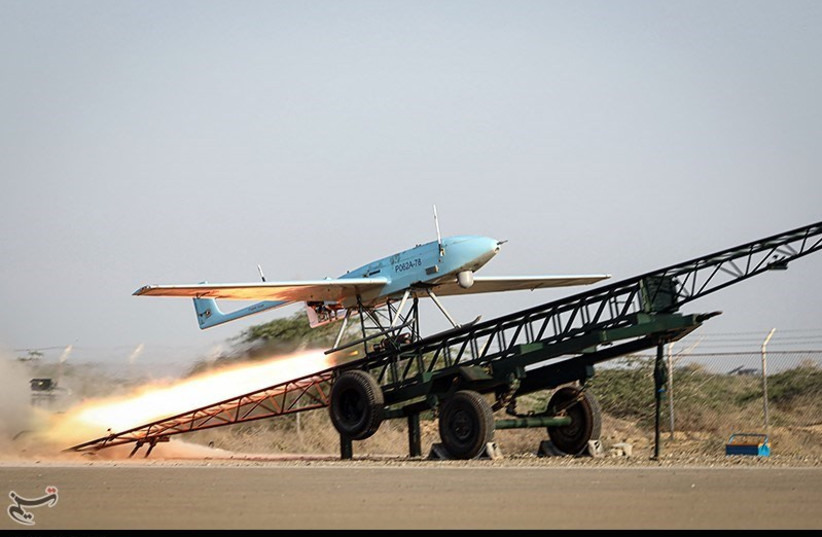
A drone is seen during an Iranian Army exercise dubbed ‘Zulfiqar 1400’, in the coastal area of the Gulf of Oman, Iran, November, 2021 / (photo credit: TASNIM NEWS AGENCY)

The latest explosive exchanges between Israel and Iran may relate to Israel having destroyed hundreds of Iranian drones last month, according to a mix of Israeli and Lebanese reports.

Neither country had even mentioned the reported attack on a critical base in Western Iran until earlier this week, when it was first reported by the Lebanese television station Al Mayadeen, which is linked to both Hezbollah and Iran. Tehran blames Israel, but Jerusalem has not taken responsibility.

Subsequently, Haaretz on Tuesday confirmed the report and added a number of details with other Israeli media also filling in some details.

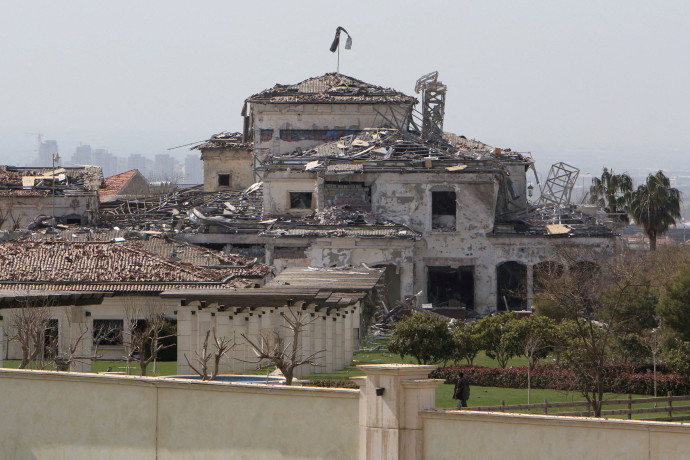
According to Al Mayadeen, this was the reason for Saturday night’s Iranian missile attack on Erbil on an alleged Mossad training base.

Iranian media on Tuesday continued to add details about the number of alleged Mossad agents who were hit by their attack on Erbil.

Many sources have contradicted the idea that there was a Mossad base there. The Islamic Republic often manufactures reports of busting Mossad agents to cover for going after local opposition figures.

But the juxtaposition with what most government officials and outside experts said was a massive Iranian cyberattack on Monday night suggests that Tehran genuinely felt it was hit hard somewhere and needed to hit back in a large and public way.

At the same time, Iranian media also continued to release more details about its alleged nabbing of Mossad agents who tried to recruit a member of Iran’s IR-6 centrifuge team at its Fordow nuclear facility.

While this report could also be disinformation, the degree of detail was unusual and resembled other earlier plots by the Mossad to infiltrate nuclear facilities via supply-chain penetration.

Moreover, some of the reports went into great detail about earlier successful reported Mossad hits on Iranian nuclear scientists, giving the reports at least the unusual appearance of heft since Tehran was not claiming perfection in its conflict with the Israeli spy agency by any means.

In mid-February, Reuters reported that a fire broke out at a military base in western Iran, potentially being the location of the drones though without mentioning the drones, based on a report from media affiliated with the country’s Supreme National Security Council reported.

“On Monday morning, a fire broke out in a stockroom where motor oil and other flammable materials were stored in one of the support bases of the Revolutionary Guards in the Mahidasht region of Kermanshah Province, causing damage to an industrial shed,” Nour news reported.

That report merely said that the fire was put out by rescuers, and that teams had been dispatched to the support base to investigate the cause of the incident, without referencing the drones.


Jerusalem Post Staff and Reuters contributed to this report.


Zawartość publikowanych artykułów i materiałów nie reprezentuje poglądów ani opinii Reunion’68,
ani też webmastera Blogu Reunion’68, chyba ze jest to wyraźnie zaznaczone.
Twoje uwagi, linki, własne artykuły lub wiadomości prześlij na adres:
webmaster@reunion68.com