Archives

Ukraine Trusts in Israeli Mediation, Denies Bennett Advised Caving to Russia

Ukraine Trusts in Israeli Mediation, Denies Bennett Advised Caving to Russia

Reuters and Algemeiner Staff
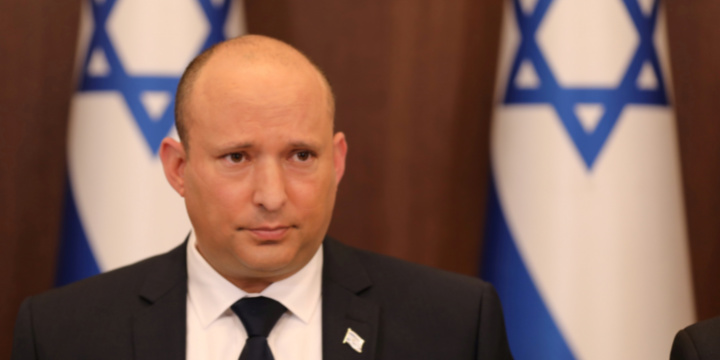

Israeli Prime Minister Naftali Bennett attends a cabinet meeting in Jerusalem, November 21, 2021. Photo: Abir Sultan Pool via REUTERS

Ukraine voiced hope on Saturday for positive results from Israel‘s bid to broker peace with Russia, denying a media report that suggested Israeli Prime Minister Naftali Bennett had tried to nudge Kyiv into caving to Moscow’s demands.

Bennett, acting at Ukraine’s behest, held a three-hour Kremlin meeting with Russian President Vladimir Putin last Saturday. He has since spoken twice with Putin by phone and four times with Ukrainian President Volodymyr Zelenskiy, officials say.

“I believe (Bennett) can play an important role, because Israel is a country with a lot of history and parallels (to our situation), as well as having a large migration of Jews from Ukraine, Russia, and Belarus,” Zelenskiy said in a briefing.

Earlier on Saturday, a top Ukrainian adviser denied a report carried by Israel‘s Walla news, the Jerusalem Post and US news site Axios that had suggested, citing an unidentified Ukrainian official, that Bennett had urged Ukraine to give in to Russia.

Israel, “just as other conditional intermediary countries, does NOT offer Ukraine to agree to any demands of the Russian Federation,” the adviser, Mykhailo Podolyak, tweeted. “This is impossible for military & political reasons. On the contrary, Israel urges Russia to assess the events more adequately.”

A senior Israeli official, who requested anonymity due to the sensitivity of the matter, called the report “patently false.”

“At no point did Prime Minister Bennett advise President Zelenskiy to take a deal from Putin – because no such deal was offered to Israel for us to be able to do so,” the official said.

TALKS IN JERUSALEM?

Moscow has said little about Bennett’s mediation efforts. It has issued terms including that Ukraine recognize Crimea as Russian and Russian-backed breakaway areas as independent. Kyiv says it will not cede any territory.

One official briefed on the mediation, and who spoke to Reuters on condition of anonymity, envisaged a potential situation where the warring countries “put it (the recognition issue) on the side, perhaps for 10 or 15 years.”

As a possible precedent, the official cited the Soviet-Japanese peace pact of 1956 that left the status of disputed islands unresolved. It was not immediately clear if the remarks reflected wider thinking in Kyiv or Moscow.

Zelenskiy said he would be open to peace talks in Jerusalem, and anticipated Israel giving Ukraine security guarantees.

“I said to (Bennett) that at present it’s not constructive to hold meetings in Russia, Ukraine, or Belarus. These are not the places where we (the leaders of the involved countries) can agree to stop the war… Do I consider Israel, Jerusalem in particular, to be such a place? I think the answer is yes.”

The crisis diplomacy, coordinated with the United States, Germany and France, has been a high-wire act for Bennett.

He has left it to his foreign minister to condemn the Russian invasion in Israel‘s name. That, said another official, was meant to keep Putin’s door open to the Israeli prime minister.

“Power in Russia is pooled entirely around this one man. It’s highly personal. Israel has managed relations with Russia through leader-to-leader contacts, and that requires avoiding soundbites that might stir up ill will,” the official said.

Citing the time that Putin and Zelenskiy have invested in speaking to – and through – Bennett, a senior official in Israel‘s Foreign Ministry, Simona Halperin, said in a radio interview on Thursday the mediation efforts “certainly, certainly have a chance of succeeding”.


Zawartość publikowanych artykułów i materiałów nie reprezentuje poglądów ani opinii Reunion’68,
ani też webmastera Blogu Reunion’68, chyba ze jest to wyraźnie zaznaczone.
Twoje uwagi, linki, własne artykuły lub wiadomości prześlij na adres:
webmaster@reunion68.com


News From Israel- March 10, 2022

News From Israel- March 10, 2022

ILTV Israel News


Israeli President Herzog finishing his historic 24-hour visit with Turkish President Erdogan. But the celebratory atmosphere undermined by protests – and ties to Palestinian terror

Ukrainian President Zelenskyy calling to address the Israeli Knesset; as foreign Ministers from Kyiv and Moscow meet in Antalya, Turkey, for trilateral negotiations

Israel announcing the absorption of thousands of Ukrainian refugees. But many reportedly still stuck in limbo at the airport in Tel Aviv


Zawartość publikowanych artykułów i materiałów nie reprezentuje poglądów ani opinii Reunion’68,
ani też webmastera Blogu Reunion’68, chyba ze jest to wyraźnie zaznaczone.
Twoje uwagi, linki, własne artykuły lub wiadomości prześlij na adres:
webmaster@reunion68.com


The Palestinian Stance on the Ukraine War

The Palestinian Stance on the Ukraine War

Yoni Ben Menachem / JNS.org


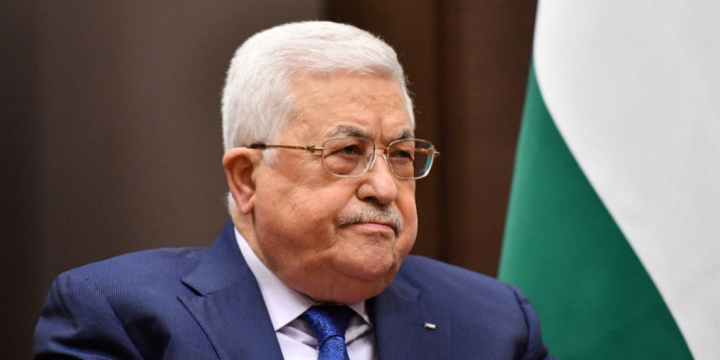
Palestinian President Mahmoud Abbas attends a meeting with Russian President Vladimir Putin in Sochi, Russia November 23, 2021. Sputnik/Evgeny Biyatov/Kremlin via REUTERS

– While many on the Palestinian street openly identify with the people of Ukraine after Russia’s military invasion of that country, the Palestinian leadership is still unsure what position to adopt.

Palestinian intellectuals believe the Palestinians must adopt a prudent position that upholds the tenets of international law; calls to resolve conflicts peacefully through dialogue and not by military force; and upholds the right of peoples to self-determination as a principle that cannot be compromised.

At the same time, the Palestinians are well aware that Ukrainian President Zelensky is a Jew. In their view, he is also a Zionist who backed the American recognition of Jerusalem as Israel’s united capital, as well as Israel’s “Guardian of the Walls Operation” in Gaza in May 2021.

There are also Palestinians in the territories who welcome the Russian army’s invasion of Ukraine in the hope that it will lead to a new world order in which US power and hegemony will decline. They want to see the United States, Israel’s strong ally, weakened. According to their logic, that would inevitably lead to Israel’s weakening as well.

However, just as Israel is painstakingly deliberating its positions and policy, trying to tread a fine line and avoid unnecessary statements on Russia’s invasion of Ukraine, the Palestinian Authority is being particularly circumspect. The PA chairman wants to avoid causing trouble with the Biden administration by failing to condemn Russia, which could jeopardize the reopening of PLO offices in Washington and the transfer of the American consulate to eastern Jerusalem. On the other hand, Abbas has long-standing ties with Moscow; some years ago, he even claimed he had served as a KGB agent while earning his doctorate in Moscow.

In addition, 2,500 Palestinians are currently living in Ukraine, mostly students. On Feb. 26, 2022, PA Prime Minister Mohammed Shtayyeh said all of them were safe and that the PA was tending to their needs through the Palestinian embassy in Kyiv.

The PA as a whole, though, is keeping quiet. It needs Russia, but at the same time, it does not want trouble with Ukraine. It needs Russia to push the Middle East Quartet (the United Nations, European Union, United States and Russia) to convene an international conference that would seek to force Israel to an international peace conference despite Israel’s and the Biden administration’s opposition.

The PA is trying to curtail the role of the United States which, since the Oslo accords, has traditionally been the mediator between the PA and Israel. Abbas is working, with Russia’s help, to divest the United States of that role, claiming that it is not an “honest broker,” and to install the Quartet as the body that will oversee the Israeli-Palestinian negotiations instead of the United States.

Hamas, Russia and Ukraine

Hamas, too, has good relations with Russia. Like the PA, which is dominated by Fatah, it is hesitant to take a stance on the crisis in Ukraine.

In a strange incident, senior Hamas official Khaled Mashal was quoted as saying that Putin “must halt his invasion of Ukraine and the killing of civilians.” The Hamas leadership quickly denied the “fabricated” remarks. “He did not make any statement to any media outlet regarding the Ukrainian crisis,” insisted a Hamas spokesperson.

Hamas leader Mousa Abu Marzouk was the only Hamas official authorized to speak on the matter. On Feb. 26, Abu Marzouk tweeted: “One of the most important lessons of the Russian-Ukrainian war is that the era of America as the world’s sole bulwark has come to an end.”

The PA has closer ties with Moscow than with Washington. Not only Abbas, who is directly in touch with Putin and talks with him by phone whenever he needs help, but also Hussein al-Sheikh, a member of the PLO Executive Committee and a possible Abbas successor, has cultivated tight ties with the Russian leadership. Al-Sheikh is also a favorite of Russian Foreign Minister Sergey Lavrov, who recommended that Abbas put him in charge of the negotiations with Israel in place of the late Saeb Erekat.

Last week al-Sheikh talked by phone with Mikhail Bogdanov, the Russian deputy foreign minister and special emissary to the Middle East. They discussed various topics including the situation in Ukraine and the Feb. 8 resolutions of the PLO Central Council. Al-Sheikh, however, did not divulge any details to the media about what they discussed regarding the invasion of Ukraine.

Undoubtedly, the PA and Hamas are much more sympathetic toward Russia than toward the United States, Israel’s closest ally. In recent years, Russia has also played the role of mediator between the different Palestinian factions, and it even hosted a dialogue of all those factions in Moscow aimed at achieving national unity.

Annually, the heads of the Palestinian factions attend diplomatic meetings in the Russian Foreign Ministry. Even Mohammed Dahlan, a bitter rival of Abbas, was hosted a few months ago in Moscow, and requested Lavrov’s help in reconciling with the PA chairman.

However, the Palestinians’ silence will not last long. The moment the outcome of the fighting in Ukraine becomes clearer, it is safe to assume that senior figures in the PA and Hamas will declare their positions. They hope a diplomatic solution will be found as soon as possible so that they can take a more expedient public stance that will not rile Russia or the United States. Ultimately, it may be that both the PA and Hamas will adopt a neutral and principled position that does not favor either side.


Yoni Ben Menachem, a veteran Arab affairs and diplomatic commentator for Israel Radio and Television, is a senior Middle East analyst for the Jerusalem Center. He served as director general and chief editor of the Israel Broadcasting Authority.

This article was first published by the Jerusalem Center for Public Affairs.


Zawartość publikowanych artykułów i materiałów nie reprezentuje poglądów ani opinii Reunion’68,
ani też webmastera Blogu Reunion’68, chyba ze jest to wyraźnie zaznaczone.
Twoje uwagi, linki, własne artykuły lub wiadomości prześlij na adres:
webmaster@reunion68.com


IDF to End Holocaust Delegations to Poland, Chooses Lithuania Instead

h5 style=”text-align: center;”>IDF to End Holocaust Delegations to Poland, Chooses Lithuania Instead

Yoav Limor


An IDF delegation at Auschwitz, Poland.

(Israel Hayom via JNS)  In a decision that could undermine already strained relations with Warsaw, the Israel Defense Forces will no longer send delegations to Poland to learn about the Holocaust. Instead, officer delegations will visit Lithuania, in a decision that has also drawn criticism.

Named “Witnesses in Uniform,” the project began around two decades ago as a Holocaust remembrance program for military personnel. Within its framework, career officers and commanders, reserve soldiers, family members of fallen soldiers and Holocaust survivors comprise delegations that visit the sites of death camps in Poland and participate in memorial services.

Throughout the years, the IDF has sent hundreds of these delegations to Poland. Other security agencies, including the Israel Police, Israel Security Agency (Shin Bet), Israel Prison Service and others have joined the initiative and have sent similar delegations.

Over the past two years, however, all delegations from Israel to Poland were frozen due to the COVID pandemic, including high-school delegations organized by the Israeli Education Ministry. Every attempt to renew the initiative, meanwhile, was upended by a new wave of the coronavirus.

As stated, the IDF recently decided to relaunch the program but will send its delegations to Lithuania instead of Poland. The move stunned many inside and outside the IDF, both due to the unilateral nature of the decision and because of the choice of alternative destination.

IDF officials gave varying explanations for the decision. One explanation pertains to difficulties in coordinating the renewal of the program with the Poles, amid the ongoing diplomatic crisis between the countries. The second, more relevant, explanation is that the IDF is falling in step with the Israeli Foreign Ministry, which is waging a harsh diplomatic battle with Poland over the Polish government’s policies and new laws it has passed, which Foreign Minister Yair Lapid has slammed as “bordering on Holocaust denial.”

Lapid was largely taking aim at Polish legislation that restricts the rights of Holocaust survivors or their descendants to reclaim property seized by the country’s former communist regime. Consequently, both countries have recalled their respective ambassadors.

However, the ministry’s position was never approved as official government policy, and no formal decision was taken that would require the delegations to Poland to be canceled.

“Someone is confused here,” said one senior IDF official. “Yes, relations with Poland have been sputtering politically and diplomatically for quite some time, but the army is not independent, to make such a decision on its own. This is not a military decision. This needs to be a political decision, made by the government or at the very least the Defense Ministry.”

He added: “The Holocaust happened in Poland. It would have been better to wait for a solution, instead of going somewhere else. It’s just not serious conduct.”

Another official expressed concern that the decision would exacerbate diplomatic tensions with Poland, whose help Israel now needs amid the war in Ukraine and efforts to rescue Jews and Israelis from that country.

Yet another official questioned the choice of Lithuania.

“The Holocaust was planned in Germany and carried out in Poland. It’s true that Jews were murdered in Lithuania, but this is also true of almost every other country in Europe. How is Lithuania different from Hungary, Holland, or Austria? And if Poland is off the table, why not go to Germany?,” the official said.

At time of publication, it was still unclear how the Poles would react to the decision. It also wasn’t clear what the Education Ministry would do as a result.

The IDF said in a statement: “The ‘Witnesses in Uniform’ journey is an important part of fostering Holocaust remembrance in the IDF. Until the ‘Witnesses in Uniform’ program to Poland is reinstated, [the army] is examining the option of holding it in Lithuania, a country with a rich Jewish history, along with memorial and heritage sites that currently allow the memory of the Holocaust to be taught to IDF commanders in an optimal manner. The recommendation will be presented to [IDF chief of staff Lt. Gen. Aviv Kochavi] soon.”


This article first appeared in Israel Hayom.


Zawartość publikowanych artykułów i materiałów nie reprezentuje poglądów ani opinii Reunion’68,
ani też webmastera Blogu Reunion’68, chyba ze jest to wyraźnie zaznaczone.
Twoje uwagi, linki, własne artykuły lub wiadomości prześlij na adres:
webmaster@reunion68.com


Jews left behind in Ukrainian cities face grim conditions

Jews left behind in Ukrainian cities face grim conditions

RACHEL KOHN/JTA


Jews in war-stricken Ukraine face two options: flee, and abandon their lives, or stay, and risk hunger, fear and death.

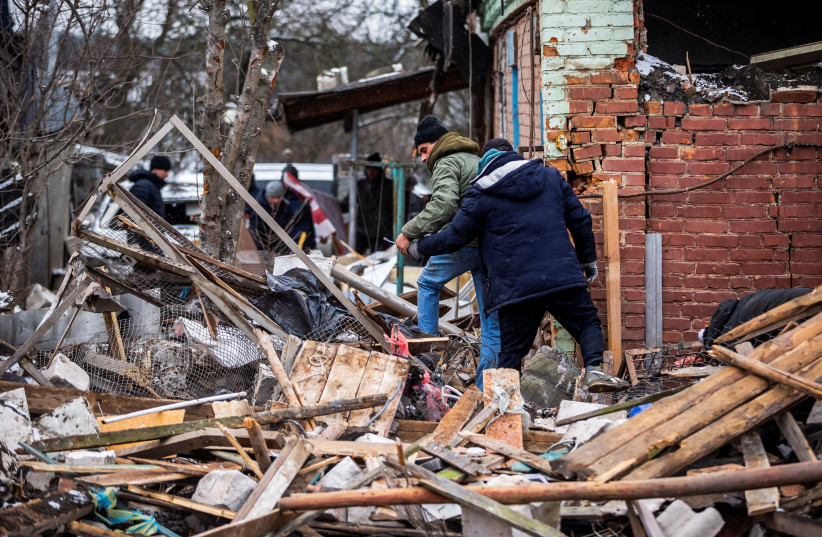
Local residents walk among debris of a residential building destroyed by shelling, as Russia’s invasion of Ukraine continues, in Zhytomyr, Ukraine March 2, 2022 /  (photo credit: Viacheslav Ratynskyi/Reuters)

Shelter, vital supplies, and escape from besieged cities: these are the keys to survival many Ukrainian Jews are seeking as the Russian invasion enters its second week.

Ukrainian and Russian negotiators on Thursday acknowledged a need for humanitarian corridors for civilians, reflecting growing fears about an imminent crisis in multiple major cities under attack.

Today, Ukrainian officials said the Russians were not upholding their end of the deal. If those corridors are not established and maintained, Ukrainians across the country could soon run out of food, medicine and other supplies.

“Nobody’s bringing food or medicine to where we live,” said Anna Zherber, whose family fled Kharkiv for their country house about 50 kilometers away when the war began. They have been venturing to nearby villages to buy supplies when absolutely needed.

But if goods become scarce in the small towns they are dependent on or leaving the dacha becomes dangerous, as Russia’s continued siege suggests could soon happen, the family — an extended group of eight — would soon be in trouble. How much food and medication do they have with them now?

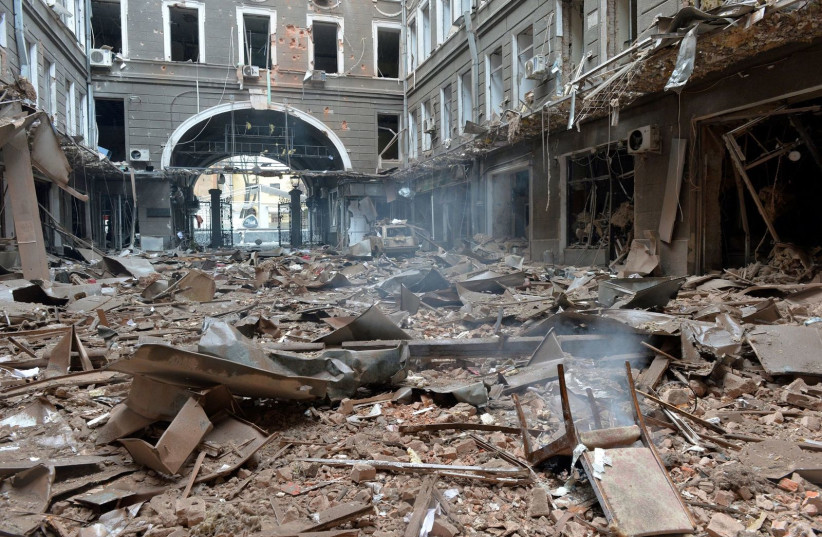
A photo shows damages to a building in Kharkiv’s Constitution Square after shelling by Russian forces, March 2, 2022 (credit: SERGEY BOBOK/AFP via Getty Images)

“Enough for about five days,” Zherber said.

The Zherbers’ situation is better than most. Ensconced at their country house, they had not faced the constant shelling that those who stayed behind in the city were experiencing. Kharkiv has faced one of the most punishing assaults, and a communal response has begun to fracture in recent days, according to Dmitry “Yishai” Shapovalov, 36, a veteran of the Israeli Defense Forces who lives there with his mother and two children.

Last week, Shapovalov said, he stopped by the historic Kharkiv Choral Synagogue to pick up challah, chicken and wine for kiddush for Shabbat.

Anywhere from 20 to 100 residents have been living in the event hall below the ground floor of the historic Kharkiv Choral Synagogue since the war began, according to accounts from the city’s chief Chabad emissaries Rabbi Moshe and Miriam Moskovitz and other locals.

Kharkiv was Ukraine’s second-largest city at the outset of the war, with a population of 1.4 million. Among them were as many as 40,000 Jews, one of the largest communities in the country. Much of the city’s Jewish infrastructure is located in the city’s center, and the buildings housing Chabad’s Or Avner Jewish Day School and Hillel International’s local chapter were among those struck in recent days.

Now, with what Shapovalov said appeared to be about 60% of the city’s population gone, Jews in the city were using a Telegram channel to crowdsource space in cars attempting to head west to Dnipro, another major Jewish center, and points beyond.

The Moskovitzes evacuated from Kharkiv on Wednesday with their family and other local Chabad emissaries, themselves heading to Dnipro, but people continue to shelter in the synagogue’s hall and collect free meals from its kitchen.

There is no official community evacuation effort to turn to right now, Shapovalov said. It is up to individuals to work together.

Leonid Plotnitzky, 50 knows that volunteers are trying to shuttle people out of the country’s hot spots, but he is staying in Kharkiv because he wants to remain near the son he shares with his ex-wife.

“In case he needs my help,” said Plotnitzky, a physical education professor and a former powerlifting coach who said he is ready to join in the defense of Ukraine at any moment.

Conditions are worse yet in the southeastern city of Mariupol on the coast of the Azov Sea, where officials warn of a coming catastrophe if conditions do not soon change. There, Yulia Tirgum, her husband, and their two children are trapped in their apartment with no electricity and no heat. Only a thin stream of water flows weakly from their faucets, and there is no guarantee how long even that will continue.

Still, home remains the best of what are only bad options right now.

“It’s almost impossible to leave the house, because you don’t know where the bullet might find you,” Tirgum, 40, texted Thursday via the messaging app Viber, one of the only ways she was able to reliably communicate, and then only intermittently. “Do not listen to anyone [saying] that the civilian population does not suffer, this is not true. Now our cell phone connection and the Internet are disconnected so we can not talk about it.”

She described continual waves of missiles and rockets from air, land and sea. At the start of the war, they hit the outskirts of the city, but now they pummeled its center as well. Earlier this week, a missile struck in the yard outside her complex of nine-story apartment buildings. She and her family were in an interior hallway of their building at the moment of impact.

“That saved us, but it was very scary,” she wrote. “The house was shaking as if we were riding a train.”

The explosion shattered the windows of three buildings in the complex and the nearby school as well. “Everyone who was on the street at that moment was injured or perished,” she wrote, including a 16-year-old student from the local high school.

The experience has been very different from when conflict between pro-Russian separatists and pro-Ukrainian nationalists broke out in eastern Ukraine in 2014. Then, she recalled, the power stayed on, there was access to food and gas for vehicles, and shelling was limited to the city’s eastern outskirts. Critically, it was also possible to leave: Her husband stayed on in the city and continued going to work, but she and their children retreated to the countryside before the situation eventually improved.

“Now there is nowhere to run away, we are surrounded,” she wrote. “They do not let us out of the city and it is very dangerous, they are shooting everywhere.”

It appears that it may be growing too late for many of those who remain in Kharkiv to evacuate, too. Anna Zherber’s grandmother insisted on remaining there, as did cousin and his wife. The Zherbers hear that there are explosions “every minute, every 10 minutes, every half hour — it’s too much,” she said. “Houses are burning. This is terrible.”

The Zherbers have relatives in Israel, Germany and the United States, but they don’t plan to flee further than their family cottage outside the city.

“We decided not to evacuate because this is our country,” said Anna. Calling Ukrainian antisemitism “Putin’s fantasy” and speaking through tears, she said she wanted people outside Ukraine to know that the Russian president is a liar and a fascist. “Ukraine is an independent country and we want to live in peace.”


Alexander Flyax contributed translation services for this reporting.


Zawartość publikowanych artykułów i materiałów nie reprezentuje poglądów ani opinii Reunion’68,
ani też webmastera Blogu Reunion’68, chyba ze jest to wyraźnie zaznaczone.
Twoje uwagi, linki, własne artykuły lub wiadomości prześlij na adres:
webmaster@reunion68.com