Archives

New Year – 2022 – Tel-Aviv – Yaffo

New Year – 2022 – Tel-Aviv – Yaffo


Alexander Ravikovich


Zawartość publikowanych artykułów i materiałów nie reprezentuje poglądów ani opinii Reunion’68,
ani też webmastera Blogu Reunion’68, chyba ze jest to wyraźnie zaznaczone.
Twoje uwagi, linki, własne artykuły lub wiadomości prześlij na adres:
webmaster@reunion68.com


News From Israel- January 03, 2022

News From Israel- January 03, 2022

ILTV Israel News


Amid a surge in omicron cases, Israel becomes the first country in the world to approve a 4th booster shot

We’ll take a look at how Israel’s travel ban has affected relations with the diaspora

Today marks the 2 year anniversary of the assassination of Iran’s top military commander


Zawartość publikowanych artykułów i materiałów nie reprezentuje poglądów ani opinii Reunion’68,
ani też webmastera Blogu Reunion’68, chyba ze jest to wyraźnie zaznaczone.
Twoje uwagi, linki, własne artykuły lub wiadomości prześlij na adres:
webmaster@reunion68.com


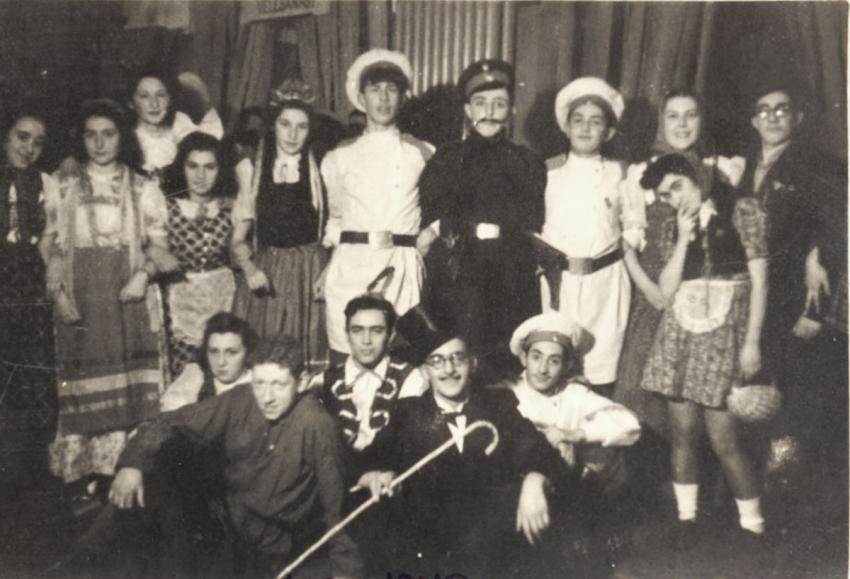
December 31, 1940, A costume party marking the new year of 1941 in Riga, Latvia

December 31, 1940, A costume party marking the new year of 1941 in Riga, Latvia

Yad Vashem Photo Archives 8449/38


By December 1940, Riga had been occupied for some six months by the Soviet Union. Some of the wealthier Jews had lost their property, which was nationalized by the regime, but others benefited from the equal opportunity and anti-discrimination policies adopted by the Communist regime, including its approach to higher education.

In June 1941, on the eve of the German invasion, the Soviet authorities arrested thousands of Riga’s Jews and sent them to Siberia. Some 40,000 Jews remained in Riga, most of whom were murdered in the Holocaust.
Yad Vashem Photo Archives 8449/38

Riga was the capital of Latvia and the cultural center of Latvian Jewry. In the mid 1930s, there were approximately 43,000 Jews living there, about one tenth of the total population.  The Jews had an important economic role in the city: More than half of Riga’s large factories, close to half its big businesses, and five of its merchant banks were owned by Jews.  Many of the Jews of Riga owned small and medium-sized businesses, or were artisans and bureaucrats.  Approximately half of Riga’s doctors were Jewish, and 25 percent of its lawyers. Zionist parties and youth movements were active there, as well as the Bund and Agudat Israel parties.  In addition, there were Jewish student and sports unions, Jewish newspapers and periodicals, and a Jewish theater, conservatory and choir.

After the Latvian coup d’etat in 1934, democracy became a thing of the past in Latvia.  Management of Jewish matters, including schooling, was handed over to Agudat Israel, as a response to which, many Jewish parents chose to send their children to Latvian public schools.

In June 1940, Riga was annexed, along with the rest of Latvia, by the Soviet Union. Many of the Jews, who were communists or communist supporters, expressed their satisfaction with this development.  In contrast, most Christian Latvians saw the Soviet occupation as undesirable, and this difference of opinion deepened the hostility between Latvians and Jews.

The Soviet occupiers nationalized the banks, large factories and businesses. The Jews were more affected by this than the general population, due to the high proportion of Jewish business owners, although many of them subsequently found work as consultants.  The Jews also started entering municipal and state institutions that had previously been closed to them, including the police and security forces.  The number of Jewish students in academic institutions doubled.  As a result of these new opportunities, many young Jews flocked to Riga from the surrounding cities and towns, raising the number of Jews in the city to some 50,000. 

At the same time, Jewish political activity was brought to a halt.  The Jewish parties and youth movements were disbanded, communal institutions were closed, and the Jews had to work on the Sabbath and holidays.  The Jewish educational system was forced to follow communist curricula, but Jewish schools changed their language of instruction to Yiddish, and the State Yiddish Theater was dedicated in Riga in October 1940.

On 14 June 1941, the authorities started to arrest thousands of Riga Jews defined as “hostile to the Soviet regime” and to deport them to Siberia.  These included Zionist activists, Revisionists, Bundists, members of Agudat Israel, “bourgeois” Jews, and about 250 Jewish refugees from Germany and Austria.

When the Germans invaded the Soviet Union on 22 June 1941, the Red Army retreated from Riga.  They were joined by at least 5,000 Jews, but many Jewish refugees from other cities were trapped in the city. 

On the eve of the German occupation, there were approximately 40,000 Jews in Riga.  Riga fell into German hands on 1 July 1941. In the course of July, Latvians who were members of extremist nationalist organizations arrested thousands of Jews.

Between July and October, the Germans issued a series of anti-Jewish decrees. The Riga ghetto was established in August, and by October: 32,000 Jews were confined there.

On 30 November 1941,German SS soldiers entered the ghetto accompanied by Latvian policemen.  Some 800 Jews, including babies and the elderly, were murdered in the ghetto, and some 15,000, mostly women, were forced to march in the freezing cold to the Rumbula forest, 8 km away, while Latvian locals looked on.  They were murdered and their bodies were thrown into pits that had been prepared in advance.   A further 950 German Jews who had arrived that day to Riga on the transport that left Berlin on 27 November 1941, were murdered during this Aktion, in the course of which the Germans were assisted by Latvian policemen.

The vast majority of Riga Jewry was murdered by the end of the war.  Most were murdered in Aktions, the remainder in forced labor camps.

The Red Army liberated Riga in October 1944.


Photograph:  

Bottom row, right to left: Izchak Garber (perished); Bubi Lewenberg (perished); Levitan (perished); Jakov Jacki Breitbord (served and died in combat in the Red Army); Ance Arkin (perished).

Top row, right to left: Maks Siegel (died in Israel); Fani Gorschuni (died in Israel); the submitter Schulamit (Mea) Fuhr (exiled to Siberia and later immigrated to Israel); unknown; Isja Schlomovitsch (perished); Jeheskiel Zigler (perished); Riva Berkowitsch (perished); Meri Mura Pevsner (immigrated to Israel); Ludsin Liuba (perished); Isja Maimin (a German refugee, perished); unknown.


Zawartość publikowanych artykułów i materiałów nie reprezentuje poglądów ani opinii Reunion’68,
ani też webmastera Blogu Reunion’68, chyba ze jest to wyraźnie zaznaczone.
Twoje uwagi, linki, własne artykuły lub wiadomości prześlij na adres:
webmaster@reunion68.com


Israel, US sign deal for 12 helicopters and refueling aircraft

Israel, US sign deal for 12 helicopters and refueling aircraft

ANNA AHRONHEIM


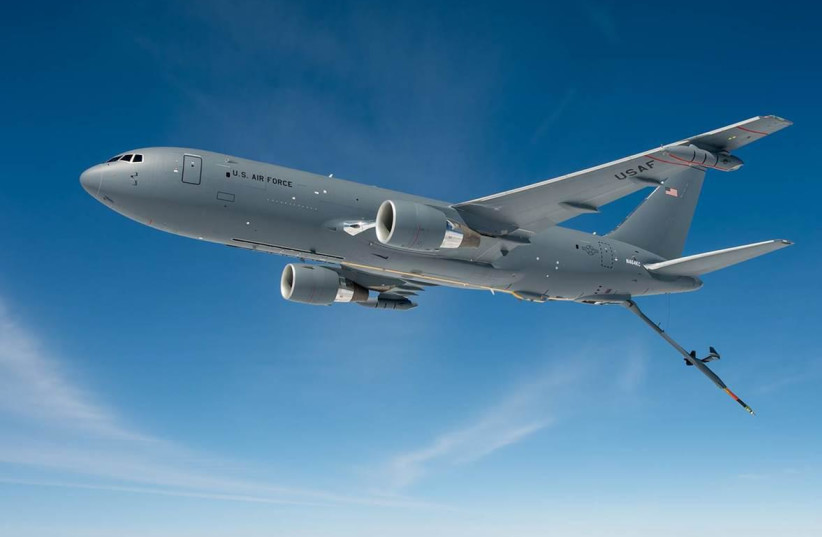
With a range of 11,830 km and the capacity to carry 207,000 pounds of fuel, the KC-46 can refuel over 64 different types of aircraft and allow dozens of jets to remain airborne for up to 12 hours

The KC-46 refueler / (photo credit: BOEING)

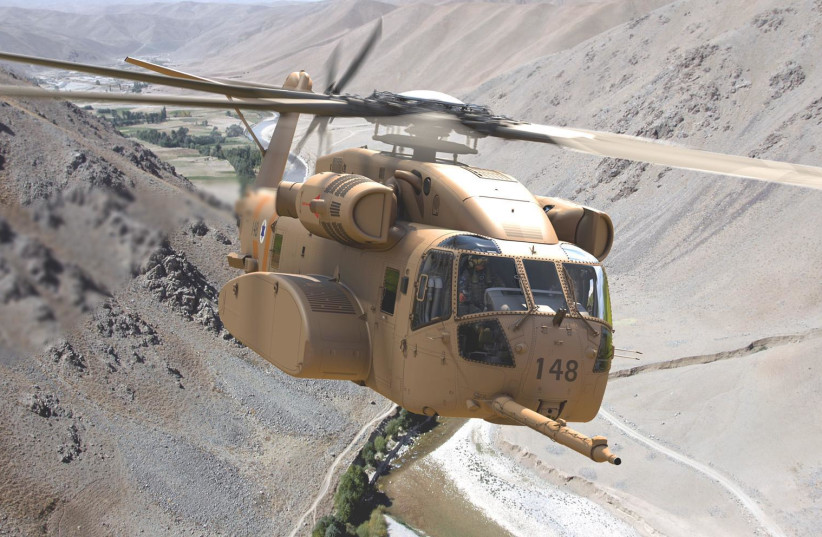
Israel’s Defense Ministry has signed an agreement with the US government to acquire 12 Lockheed Martin CH-53K helicopters and two additional Boeing KC-46 refueling aircraft.

The US Defense Department’s Procurement Delegation signed the letters of acceptance (LOAs) with Israel on Thursday evening to replace the Israel Air Force’s CH-53 Yasur heavy-lift helicopters and Ra’am (Boeing 707) tanker aircraft that are required for long-range missions.

“These procurement agreements are significant milestones in the IDF’s force buildup processes,” said Defense Minister Benny Gantz. “We continue to strengthen our capabilities and to change and adapt our Air Force to face future challenges both near and far.”

The deal regarding the helicopters is estimated at USD $2 billion with the first expected to arrive in Israel throughout 2026 and the option to procure an additional six helicopters. The agreement was signed with the US Navy by the head of the Defense Ministry Mission to the US Brig.-Gen. (ret.) Michel Ben Baruch.

Israel announced last February that it would purchase one squadron of CH-53K over Boeing’s CH-47 to replace its fleet of Yasur helicopters at Tel Nof Air Base. First used by the IAF in 1969, the Yasur is the air force’s primary helicopter used to transport soldiers and equipment and has taken part in a wide variety of missions, including secret operations as well as search and rescue missions.

A CH-53K helicopter (credit: LOCKHEED MARTIN)

Joshua (Shiki) Shani, chief executive, Lockheed Martin Israel, said that the company “remains committed to supporting the Israeli Air Force and providing them with the premier heavy-lift helicopter for their critical missions, which will help strengthen Israel’s national security for decades to come. We are confident that the CH-53K helicopter, designed and built by Lockheed Martin, is the most capable, efficient, and reliable solution to meet the needs of the IAF.”

Another agreement worth approximately $1.1 billion, was signed for the procurement of an additional two Boeing KC-46 refueling aircraft, to add to the two already purchased.

The US State Department approved the possible sale of up to eight KC-46 tanker aircraft and related equipment to Israel last March, marking the first time that Washington has allowed Jerusalem to buy new tankers. Two weeks ago Washington denied Jerusalem’s request to expedite the delivery of two KC-46 refueling jets.

The platform will be adapted to meet the IAF’s operational requirements and Israeli systems will be integrated into aircraft.

Israel’s fleet of Ram planes, the number of which remains confidential, are former civilian aircraft adapted for military uses such as aerial refueling for fighter jets, as well as its fleet of transport aircraft.

The new KC-46 tankers can refuel jets with 1,200 gallons of fuel per minute by its fly-by-wire 55-foot refueling boom. It also can have wing air refueling pods allowing three jets to be refueled at once within three to four minutes.

With a range of 11,830 km with the capacity to unload some 207,000 pounds of fuel, the KC-46 can refuel over 64 different types of aircraft and would allow dozens of jets to remain airborne for up to 12 hours at a range of 11,000 kilometers.

“The procurement of these platforms is part of a large-scale program undertaken by the Ministry of Defense together with the IDF over the last year and a half, with the aim of strengthening the IDF’s capabilities, force buildup, and preparedness to face existing and future threats,” the ministry said in a statement. “The procurement plans include the purchase of a new fleet of F35 aircraft, refueling aircraft, CH-53K helicopters, advanced air munition, air defense systems, new marine, and land platforms as well as cyber systems.”


Zawartość publikowanych artykułów i materiałów nie reprezentuje poglądów ani opinii Reunion’68,
ani też webmastera Blogu Reunion’68, chyba ze jest to wyraźnie zaznaczone.
Twoje uwagi, linki, własne artykuły lub wiadomości prześlij na adres:
webmaster@reunion68.com


Happy New Year 2021 from Israel

Happy New Year 2021 from Israel


Lev Zaretsky


Zawartość publikowanych artykułów i materiałów nie reprezentuje poglądów ani opinii Reunion’68,
ani też webmastera Blogu Reunion’68, chyba ze jest to wyraźnie zaznaczone.
Twoje uwagi, linki, własne artykuły lub wiadomości prześlij na adres:
webmaster@reunion68.com