Archives

Polls Show Most Palestinians Don’t Support a Two-State Solution

Polls Show Most Palestinians Don’t Support a Two-State Solution

David M. Litman


Masked Palestinian youths clash with Israeli security forces on Jerusalem’s Temple Mount. Photo: Reuters/Ammar Awad

In yet another display of Christiane Amanpour’s prioritization of her disdain for Israel over journalistic integrity, the CNN anchor appears to have fabricated poll results to falsely suggest that the Palestinian side supports the two-state solution with Israel.

Her comments came during her interview with former Israeli ambassador Yael German on February 14, 2023. Toward the end of the interview, Amanpour asked Ambassador German: “I want to know from you, as a diplomat, is there any hope for anything resembling negotiations on a two-state solution, given that the settlements and the settlement-believers are emboldened by now their backers who are in government?”

Ambassador German answered by pointing out the unwillingness of Palestinian leaders to agree to repeated offers of statehood and to live side by side with Israel. She also argued that the Palestinian people generally refuse to accept the existence of a Jewish state.

Amanpour responded first by downplaying the extent of Palestinian rejectionism of the Jewish state, saying only “some people” believe that, and then, without providing any specific source, claimed: “The latest polls from the Palestinian side also show that they want a peaceful, two-state solution to co-exist with you.”

It’s unclear what “latest polls” Amanpour might be referring to, given that every major recent poll from the Palestinian side shows exactly the opposite.

Recent polling by the Ramallah-based Palestinian Center for Policy and Survey Research (PCPSR) has consistently shown low support for a two-state solution. A June 2022 poll found that only 28% of Palestinians support the concept of a two-state solution. In September, that figure rose to 37%, but dropped again in December to 32%.

Other Palestinian polls show the same. An August 2021 poll from the Ramallah-based Arab World for Research & Development (AWRD) found that only 36% of Palestinians supported the principle of a two-state solution. A July 2022 poll by the Palestinian organization Jerusalem Media & Communication Center (JMCC) found that only 26% preferred a two-state solution. The data is further supported by polling data from The Washington Institute for Near East Policy (TWI), which found in June 2022 that only 37% of Gazans and 25% of West Bank Palestinians would “definitely accept” or “probably accept” the principle of “two states for two peoples.”

The PCPSR polls also dispel the notion that the “Palestinian side” seeks a peaceful solution. As the December 2022 poll showed, a “majority of 55% support the return to an armed intifada.” The figure was 55% and 48% respectively in June and September 2022. TWI found in June 2022 that approximately 70% of Gazans and 61% of West Bank Palestinians either strongly or somewhat agree that “Palestinians should move to a new intifadah and make armed struggle their top priority.”

The December 2022 PCPSR poll also found that 72% of Palestinians “support the formation of armed groups such as the ‘Lions’ Den,’” a terrorist organization behind a significant portion of the uptick in terror attacks in the last year, including by sending a 16-year-old to attack Jewish worshipers.

Given these consistent findings of relatively well-respected Palestinian polls, it seems likely that Amanpour entirely fabricated findings from nonexistent “latest polls.” A request for substantiation sent to Amanpour has so far gone unanswered.

Even if a recent poll does exist that shows dramatically different results than the consistent figures from PCPSR, AWRD, TWI, and JMCC, it would be intellectually dishonest to omit any mention of the other “recent polls” contradicting Amanpour’s preferred results.


David M. Litman is a Research Analyst at the Committee for Accuracy in Middle East Reporting and Analysis (CAMERA), where a version of this article first appeared.


Zawartość publikowanych artykułów i materiałów nie reprezentuje poglądów ani opinii Reunion’68,
ani też webmastera Blogu Reunion’68, chyba ze jest to wyraźnie zaznaczone.
Twoje uwagi, linki, własne artykuły lub wiadomości prześlij na adres:
webmaster@reunion68.com


Israeli Singer Noa Kirel Officially Releases 2023 Eurovision Song Contest Entry Titled ‘Unicorn’

Israeli Singer Noa Kirel Officially Releases 2023 Eurovision Song Contest Entry Titled ‘Unicorn

Shiryn Ghermezian


Noa Kirel in a clip from the music video for “Unicorn.” Photo: YouTube screenshot

Israeli pop singer Noa Kirel revealed on Thursday the song that she will be performing when she represents Israel at the 2023 Eurovision Song Contest later this year in Liverpool in the United Kingdom.

The 21-year-old shared a clip from the music video for her new English-language song Unicorn and explained the message behind the track in an Instagram post.

“It’s sometime hard to keep up with this fast-paced world,” she wrote. “After the coronavirus and everything that is happening in Israel and all over the world, we are faced with so many challenges and for that we need a special power. The power of a unicorn.
The unicorn wins, thanks to his delicate power and his beauty. Maybe if we stop hating each other and believe in fairytales a little more, we will have a phenomenon phenomenon phenomenal world.”

Kirel sings in the chorus of the three-minute track: “I’m gonna stand here like a unicorn/Out here on my own/I got the power of a unicorn/Don’t you ever learn?/That I won’t look back/ I won’t look down/I’m going up/You better turn around.” The song also includes a few Hebrew language lines which translate to: “I’m not like everybody else/in front of the rest of the world … You can call me queen/I’m not trying to impress.”

Unicorn was co-written by Kirel, Yinon Yahel, May Sfadia and Doron Medalie — who co-wrote Israeli singer Netta Barzilai’s 2018 Eurovision-winning song Toy.

At an event in Eilat where Unicorn was first unveiled, Kirel further explained the decision to focus the song on a mythological creature. She said, “We chose a character that is also mythological but is very strong and stands with its horn outward to anyone coming — and I see our country as such a strong country. There’s something so innocent and pure about a unicorn, that in this period, we had to choose something that exists only in fairytales, in fantasies.”

Kirel was chosen by a panel, convened by Israel’s public broadcasting network Kan News, to represent Israel in the 2023 Eurovision Song Contest. She will perform Unicorn in the first Eurovision semifinal on May 9 and if she gets enough votes she will advance to the grand final on May 13.

Watch the music video for Unicorn below.


Zawartość publikowanych artykułów i materiałów nie reprezentuje poglądów ani opinii Reunion’68,
ani też webmastera Blogu Reunion’68, chyba ze jest to wyraźnie zaznaczone.
Twoje uwagi, linki, własne artykuły lub wiadomości prześlij na adres:
webmaster@reunion68.com

Rocket targeting Israel falls within Gaza Strip, IDF on high alert

Rocket targeting Israel falls within Gaza Strip, IDF on high alert

JERUSALEM POST STAFF


The IDF is on high alert for “revenge” terror attacks following a failed rocket launch and continued violence in the West Bank.
.

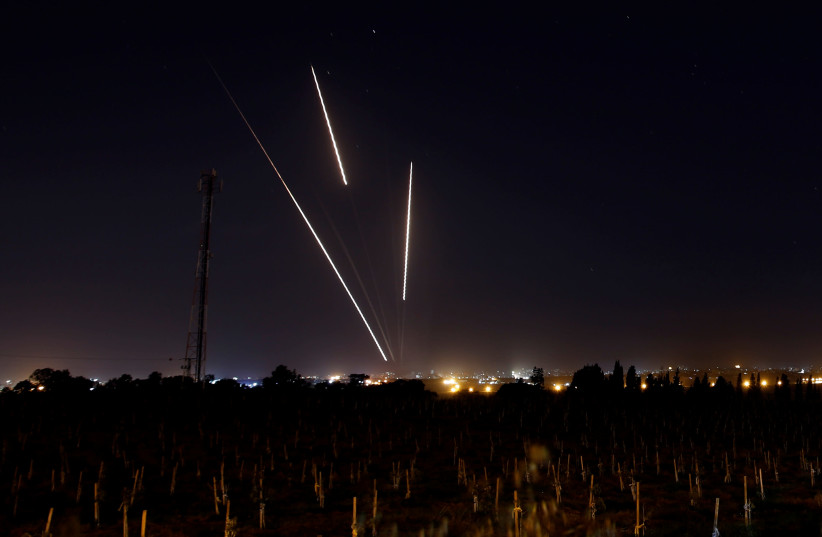
Streaks of light are pictured as rockets are launched from the Gaza Strip towards Israel, as seen from the Israeli side of the border March 25, 2019 / (photo credit: REUTERS/AMIR COHEN)

A rocket launched from the Gaza Strip fell within the territory’s borders, triggering rocket sirens in the southern Israeli kibbutz Nir Am early on Wednesday morning, according to the IDF Spokesperson’s Unit.

The rocket fire followed an IDF raid in Jenin on Tuesday in which six Palestinians were killed – including Hamas operative Abdel Fattah Hussain Harusha, the terrorist who killed Hillel and Ya’acov Yaniv in a shooting attack in Huwara last week – and 26 were wounded.

Harusha had recently been released from prison after spending eight months there for his part in a conspiracy to plan a terror attack.

IDF on high alert following rocket launch, West Bank violence

Following Wednesday morning’s failed rocket launch, the Israeli military is preparing for the possibility that Palestinians in the West Bank and east Jerusalem will attempt to carry out terror attacks as “revenge” for the IDF raid in Jenin, as per Maariv.

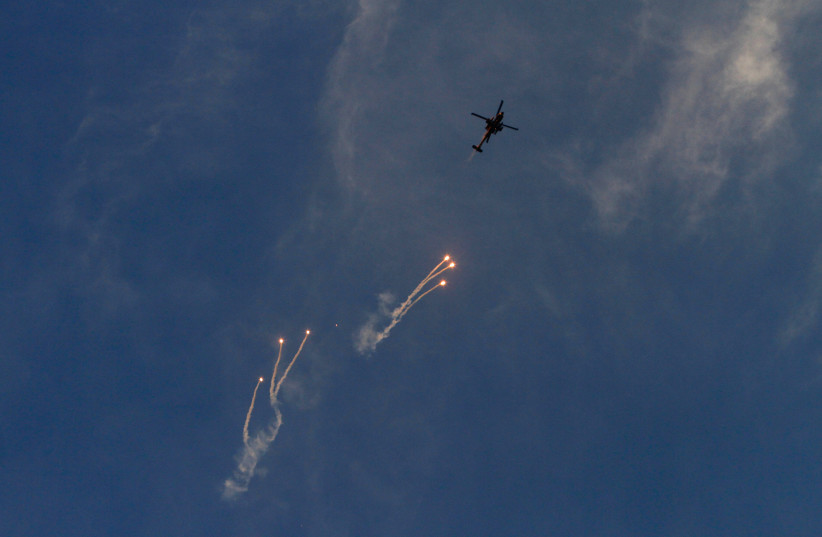
An Israeli Helicopter seen during a Military operation in the West Bank city of Jenin on March 7, 2023 (credit: NASSER ISHTAYEH/FLASH90)

The Jerusalem Post reported on Monday that Israeli settlers clashed with Palestinians in Huwara and at least five Palestinians were injured, a week after settlers had rioted in the village, destroying property and injuring hundreds of people.

50 Palestinians threw stones at Israeli cars in the town, according to Israeli residents.


Zawartość publikowanych artykułów i materiałów nie reprezentuje poglądów ani opinii Reunion’68,
ani też webmastera Blogu Reunion’68, chyba ze jest to wyraźnie zaznaczone.
Twoje uwagi, linki, własne artykuły lub wiadomości prześlij na adres:
webmaster@reunion68.com

How To Celebrate Purim in Israel 2023


How To Celebrate Purim in Israel 2023

Noemi Bowman


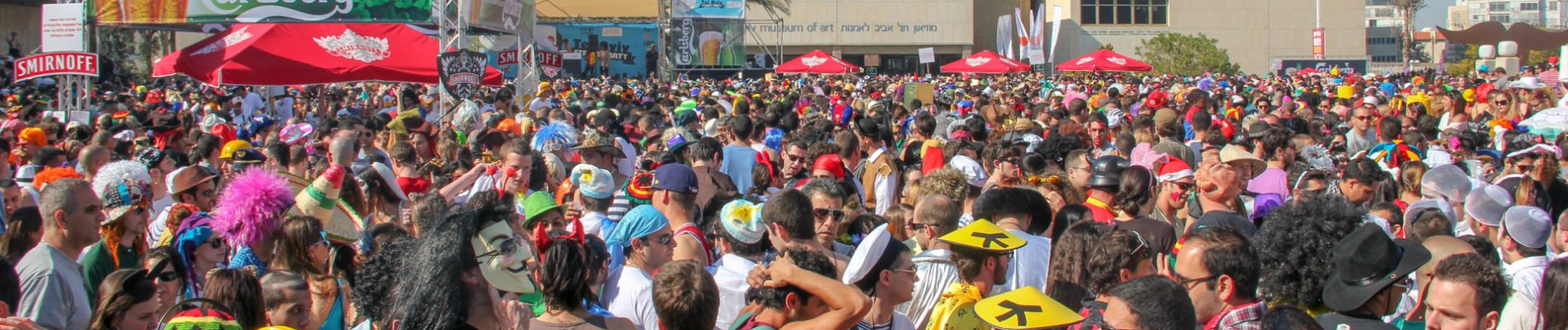
Purim is right around the corner, and it’s a holiday that children and adults alike take very seriously. 

When is Purim in Israel 2023?

This year, Purim will be taking place from the evening of March 6th to the evening of March 7th in most places. But, if you’re lucky enough to be in Jerusalem, get ready for an extra day of celebrations, because Shushan Purim is happening on March 7th to March 8th! So, whether you’ll be dancing in the streets, noshing on hamantaschen, or just enjoying the festive spirit, don’t forget to plan accordingly for this epic Jewish holiday.

How is Purim Celebrated in Israel?

Purim commemorates the salvation of the Jewish people in ancient Persia from Haman’s plot to destroy them. The holiday is marked by reading the Megilah (the story of Esther), dressing up in costumes, giving gifts of food (“mishloach manot”) to friends and family, matanot laevyonim (giving charity to oprhans or those in need), and enjoying festive meals. 

celebrating purim in israel

So, in order to get you in the right Purim mindset – we have put together a comprehensive list of how to celebrate Purim in Israel:

  • Where to buy your costume in Jerusalem and Tel Aviv
  • Where the best Purim parties are throughout Israel
  • The best places to hear the Megilah
  • Where you can volunteer for Purim
  • Where to find the yummiest Hamentaschen’s

First things first, Purim is synonymous with costumes. There is no Purim without costumes – and what’s really fun in celebrating Purim in Israel is that everyone dresses up – all ages. So, where can you shop for costumes in Tel Aviv and Jerusalem? Let’s see!

Where to Buy Purim Costumes in Israel?

The answer is…. anywhere! In Tel Aviv, they start selling costumes a few weeks before Purim, but King George Street has definitely become a street lined with costume stores. There are also a few costume stores and stand across Dizengoff Mall, including Brurya in the mall. 

buying costumes in israel for purim

In Jerusalem, you can go to the Red Pirate to stock up on your costume or any other store downtown that sells costumes – as they will be everywhere. Plus, if you ever need a last minute costume and inspiration, just go to Max Stock and put on those bunny ears.

Also, you can always just order on Amazon!

Where are the Best Purim Parties in Tel Aviv and Jerusalem?

First of all, did you know that Purim in Jerusalem takes place a day after everywhere else in the world? This year, Purim begins Monday night into Tuesday. This means you can start partying in Tel Aviv at Kerem Hateimanim (the Yemenite Quarter), which turns into a huge party, and then continue to Jerusalem on Tuesday or Wednesday and continue the celebrations on Shushan Purim!

purim parties in israel

 However, if you don’t want to travel between the two cities on Purim, I promise you there will be so many parties happening all week of Purim. 

If you want a unique experience in Jerusalem, you can party it up at the Israel Museum or the City of David. You will need to buy tickets to these parties, though. 

Secret Tel Aviv has also compiled a comprehensive list of Purim parties in Tel Aviv. 

The Best Places to Hear the Megilah Reading

In Tel Aviv, the International Synagogue on Frishman will host a “Purim Extravaganza” with a live band. Or you can make your way to 126 Ben Yehuda, where there will be lots of celebrations, food to snack on, and other refreshments. Chabad On the Coast has also released its timetable for next week’s celebrations, which you can find here.  

In Jerusalem, you can hear the Megilah at the Great Synagogue, which is an experience of its own. Or even better, you can make your way to the Kotel and hear it there! The Masorti (Conservative) Synagogue has also released its own timetable! However, there are always English-speaking readings on Emek Refaim in the German Colony, at the First Station, and Mayanot Synagogue in Nachlaot. 

Ultimately, all of Israel will be celebrating, so even if you can’t reach these synagogues, you can find one nearby and listen to the Megilah reading there.

Where You Can Volunteer on Purim

While Purim is definitely a fun holiday, it’s also a great time to do something really nice for your community as well. This year, you can take part in the Ichilov Volunteering Day with the 126 Ben Yehuda Synagogue. Or make a mishloach manot, a Purim Basket for the people you care about. Here is a quick brief on mishloach manot and a few ideas as to what to give

purim volunteering

The Best Hamentaschen’s in Israel 

In Israel, you will find most bakeries selling hamentaschen for Purim celebrations. However, how can you know, which one’s the tastiest? Well, you might just need to taste all of them… but if you don’t want to, I have compiled a few bakeries in Tel Aviv and Jerusalem where you can find the best hamentaschen. 

In Tel Aviv, Lehamim Bakery for sure has some of the best hamentaschen. They have sweet and savory ones and a delicious marzipan one too! Roladin is also a good option – plus, it’s located all over Israel. They have a delicious apple and walnut filling cookie. You will find giant hamentaschen with traditional fillings in Jerusalem at the Brooklyn Bakery in Meah Shearim. But another great spot is Neeman, located across Jerusalem. Let us know your favorite bakery! 

Purim In Israel

 Just have fun! Dress up, enjoy this holiday with your friends and the whole country! And don’t forget to snack up on those yummy hamentaschen’s either. 😉 


Zawartość publikowanych artykułów i materiałów nie reprezentuje poglądów ani opinii Reunion’68,
ani też webmastera Blogu Reunion’68, chyba ze jest to wyraźnie zaznaczone.
Twoje uwagi, linki, własne artykuły lub wiadomości prześlij na adres:
webmaster@reunion68.com


Palestyńska wojna przeciwko Izraelowi nie jest reakcją na rządy Netanjahu.

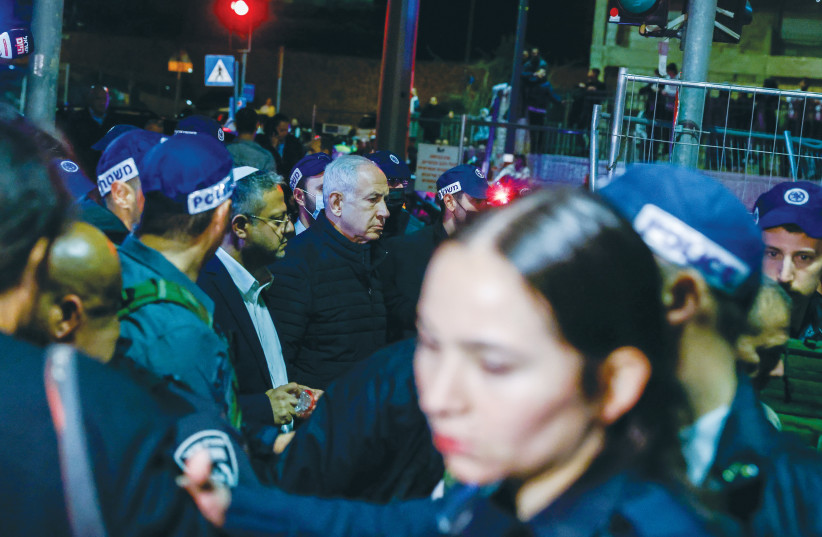
Premier Benjamin Netanjahu odwiedza miejsce styczniowego ataku na synagogę w jerozolimskiej dzielnicy Neveh Ya’acov, w którym zginęło siedem osób. Arabski terroryzm nie jest odpowiedzią na Netanjahu lub osadników, mówi pisarz. / (źródło zdjęcia: OLIVIER FITOUSSI/FLASH90)


Palestyńska wojna przeciwko Izraelowi nie jest reakcją na rządy Netanjahu.

STEPHEN M. FLATOW
tłumaczenie: google


Terror antyizraelski nie narodził się wczoraj, zaczął się od czterodniowego pogromu w Jerozolimie i okolicach w kwietniu 1920 roku.
wiecej – Jerusalem Kwiecien 1920


.

Niektórzy dziennikarze i eksperci, którzy piszą o Izraelu, wydają się cierpieć na coś, co nazywam Syndromem Urodzonego Wczoraj, w którym udają, że terroryzm palestyńskich Arabów jest odpowiedzią na jakąś niedawną politykę Izraela. Najczęstszym przykładem jest twierdzenie, że terroryzm arabski jest odpowiedzią na obecność Izraela na terytoriach, które wygrał w wojnie sześciodniowej w 1967 r. – tak jakby przed 1967 r. nie było żadnej wojny arabskiej przeciwko Izraelowi.

Teraz widzimy oznaki syndromu urodzonego wczoraj w zarzutach, że ostatnie ataki terrorystyczne Arabów palestyńskich są winą niedawno wybranego rządu izraelskiego.

Rekonstrukcjonistyczne Stowarzyszenie Rabinów oświadczyło w tym tygodniu, że ostatnie „wybuchy przemocy” arabskich terrorystów „są w dużej mierze wynikiem [polityki] izraelskiego rządu i retoryki niektórych członków rządzącej koalicji, które można postrzegać jedynie jako zachętę. ”

J Street mówi również, że „ostatnie poważne ruchy skrajnie prawicowego izraelskiego rządu w kierunku aneksji i pogłębienia okupacji” są winne „nieustannego podsycania cyklu pogłębiających się konfliktów i niesprawiedliwości”. (W rzeczywistości rząd niczego nie „zaanektował” ani nie zmienił „okupacji” terytorium, które w porozumieniu z Oslo oddało pod kontrolę Izraela – ale nieważne te niewygodne fakty.)

W tym samym duchu niedawny komunikat agencji informacyjnej Reuters głosił, że „Napięcia wzrosły jeszcze bardziej, odkąd premier Benjamin Netanjahu powrócił do władzy w grudniu z religijnymi nacjonalistami na kluczowych stanowiskach w rządzie…”

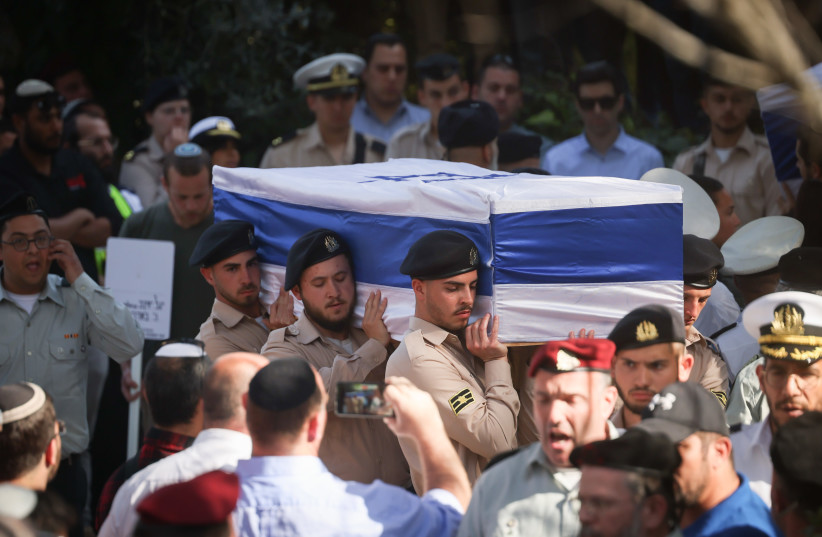
Przyjaciele i rodzina biorą udział w pogrzebie braci Hallela, lat 21, i Jagla Janowa, lat 19, na cmentarzu wojskowym Mount Herzl w Jerozolimie. Dwaj bracia zostali zastrzeleni zeszłej nocy podczas ataku terrorystycznego w mieście Huwara na Zachodnim Brzegu. 27 lutego 2023 r. (źródło: YONATAN SINDEL/FLASH90)

Break the Wave poprzedziło Netanjahu
Tym, co ci eksperci i reporterzy tuszują, jest fakt, że izraelska polityka wysyłania sił bezpieczeństwa w celu aresztowania terrorystów w miastach Autonomii Palestyńskiej nie rozpoczęła się za niedawno wybranego rządu Netanjahu. W rzeczywistości polityka, znana jako Operacja Przełamać Falę, była pomysłem rządzącej koalicji Lewicy Centrum, która poprzedzała Netanjahu.

„Fala”, którą miała przerwać, była potężną falą terroryzmu palestyńskich Arabów, która uderzyła w Izrael w marcu 2022 r.

6 marca palestyński arabski terrorysta rzucił bombę zapalającą na Izraelczyków w Abu Dis. 7 marca arabscy terroryści zadźgali i zranili dwóch Izraelczyków w Jerozolimie. 15 marca terrorysta strzelał do izraelskich żołnierzy próbujących dokonać aresztowania w Balacie. Tego samego dnia arabski tłum zaatakował Izraelczyków, aresztując terrorystę w Kalandiya.

22 marca palestyński arabski terrorysta w Beer-Szebie zasztyletował trzech Żydów, a czwartego zamordował swoim samochodem. 27 marca arabscy terroryści zamordowali w Haderze dwóch Izraelczyków. 29 marca terrorysta dokonał masakry pięciu Izraelczyków w Bnei Brak. Dwa dni później Arabowie palestyńscy zastrzelili i zranili Izraelczyka w Jenin, dźgnęli i poważnie zranili Izraelczyka w pobliżu Elazar i próbowali ukamienować Izraelczyków w Tarkumiya.

W ciągu zaledwie dziewięciu dni zamordowano jedenastu Izraelczyków, a trzech zostało rannych. W tym czasie największą frakcją w izraelskim rządzie była lewicowa partia Yaira Lapida Yesh Atid. Inni partnerzy koalicyjni to lewicowa Partia Pracy, skrajnie lewicowa partia Meretz i arabska nacjonalistyczna partia Ra’am.

WSZYSCY poparli ogłoszenie przez byłego premiera Naftalego Bennetta „Operacji Przełamać Falę”. Wszyscy oni popierali politykę ścigania terrorystów w miastach kontrolowanych przez AP. A ich amerykańscy zwolennicy, tacy jak J Street i rekonstrukcjoniści, powstrzymywali się od oskarżania izraelskiego rządu o „eskalację napięć”.

Bennett zrezygnował niedługo potem. Lapid został premierem. Kontynuował operację Break the Wave przez całe pięć miesięcy sprawowania urzędu. Jego następca, Benjamin Netanjahu, zdecydował się na kontynuację polityki Bennetta-Lapida.

Netanjahu kontynuował politykę Bennetta-Lapida
I nie bez powodu: w Izraelu panuje zgoda co do tego, że siły bezpieczeństwa powinny ścigać i zatrzymywać terrorystów. Podobnie jak w Ameryce panuje zgoda co do tego, że policja powinna ścigać i zatrzymywać przestępców. Izraelska strategia antyterrorystyczna nie jest jakąś „prawicową” polityką; została zainicjowana przez izraelską lewicę i wspierana przez żydowskie cheerleaderki izraelskiej lewicy.

Oczywiście wojna palestyńskich Arabów przeciwko Izraelowi nie zaczęła się w marcu 2022 roku. Nie zaczęła się też w czerwcu 1967 roku. Zaczęła się od pierwszej zorganizowanej arabskiej przemocy wobec Żydów w Ziemi Izraela w czasach nowożytnych, czterodniowego pogromu w i wokół Jerozolimy w kwietniu 1920 r.

Nie było wtedy „nielegalnych osiedli”. Żadnych „terytoriów okupowanych”. Żadnego „prawicowego rządu izraelskiego”. Żadnej z tak zwanych prowokacji, które rzekomo są winne arabskiemu terroryzmowi.

Nie, terroryzm palestyńskich Arabów nie narodził się wczoraj. To nie jest odpowiedź dla Netanjahu ani osadników. Jest odpowiedzią na pragnienie Żydów do życia w ich starożytnej ojczyźnie i istnienie państwa żydowskiego dowolnej wielkości, niezależnie od konkretnego rządu lub polityki.


Pisarz jest adwokatem i ojcem Alisy Flatow, która została zamordowana w sponsorowanym przez Iran palestyńskim ataku terrorystycznym w 1995 roku. Jest autorem książki A Father’s Story: My Fight for Justice Against Iranian Terror i jest oleh chadash (nowym imigrantem ).


Zawartość publikowanych artykułów i materiałów nie reprezentuje poglądów ani opinii Reunion’68,
ani też webmastera Blogu Reunion’68, chyba ze jest to wyraźnie zaznaczone.
Twoje uwagi, linki, własne artykuły lub wiadomości prześlij na adres:
webmaster@reunion68.com