Archives

Israel Daily News – February 20, 2023

Israel Daily News – February 20, 2023

ILTV Israel News


While the coalition is submitting the first part of its judicial overhaul for a first reading, tens of thousands are out protesting again, and they aren’t planning to stop.

Meantime; International nuclear inspectors detecting Iranian uranium enriched to levels required for the production of an atomic bomb

And ILTV sits down with key figures discussing the future of metaverse, and technology…


Zawartość publikowanych artykułów i materiałów nie reprezentuje poglądów ani opinii Reunion’68,
ani też webmastera Blogu Reunion’68, chyba ze jest to wyraźnie zaznaczone.
Twoje uwagi, linki, własne artykuły lub wiadomości prześlij na adres:
webmaster@reunion68.com


Israel must return to its Zionist roots to move forward – opinion

Israel must return to its Zionist roots to move forward – opinion

YOAZ HENDEL


THE WRITER addresses a right-wing-led protest against the government, in Jerusalem, on Saturday night. / (photo credit: YONATAN SINDEL/FLASH90)

They claim that we don’t exist. The outcome of the elections is proof, they say. In other words, there is no right wing that doesn’t support Prime Minister Benjamin Netanyahu, no Right that opposes closing Israel’s Public Broadcasting Corporation and no Right that thinks that Deri, a convicted criminal, should not serve as a minister in Israel.

The Right has become synonymous with a haredi monopoly over Judaism in Israel; with governance and fighting crime, yet only when you’re in the opposition without the need to back up words with actions; to tweet and incite against leftists.

If the voice of the silent Right, the statesmanlike Right is not heard and people will start to believe that there is no secular, liberal Right in Israel; no religious Zionism that isn’t a Smotrich and Ben-Gvir style national haredi; and that there is only the pro-Netanyahu haredi Right and Center-Left but no Center-Right in between the other two camps.

And if everyone is convinced that we don’t exist – the pragmatic Right on security issues, yet liberal on social and other issues – then the Zionist project in its entirety is in danger, serious danger.

When everything is black and white and when a war among brothers is raging on social media and in the streets, it shows we are indeed in danger. Our state is falling apart and turning into fractured autonomies. The melting pot is disappearing. Even the Zionist consensus is declining, falling to tribalism.

Students protesting against the judicial reforms in Tel Aviv. (credit: The Student’s Protest)

Whoever is trying to sell the public on the binary notion that half of Israel is Right and the other half is Left is nothing short of a con man. There is ideological chaos, like in The Matrix, what we are hearing is the opposite of reality.

Over the past few years, I had the privilege of being among Israel’s decision-makers, as a minister in the last two governments and as an MK. I am proud of my achievements as communications minister: improving infrastructure, deploying high-speed Internet throughout Israel’s center and periphery, and developing our economy.

That is, in my opinion, the mission of a politician: to leave a mark and to be tested by results and actions, not by words. I have a responsibility for what happens on my watch and that includes my mistakes. And now, as a civilian, I have a responsibility for what happens and what will happen.

For those who forgot, the role of journalism and the free press is to criticize the government, as others criticized me when I was a minister. I may not be a journalist but my job as a civilian is to use the freedom of expression and platforms at our disposal to criticize the government, thoroughly, fairly and seriously.

What went wrong?

I LOVE this country. I fought for it. My children will go to its military to protect it. I love its scenery, its people, the unity and the social cohesion. It is for that reason that there is no denying or ignoring that something went wrong. Supporters of this government are convinced the courts have become the biggest disruption to their lives over the past years. All the rest are convinced that this government is the disruptor.

At least everyone agrees that there is nothing reasonable or normal about the situation and I don’t mean the security situation. We have spent the past 75 years living under constant threat and fire. Arab terrorists try to kill Jews regardless of the government’s political orientation. So, what went wrong? Our domestic and social cohesion.

Let’s remember where it all started: Zionism, a national homeland for the Jewish people. This necessitates defending our homeland, settling, making aliyah and absorption. Yet above all, it is the vision of a model society, a light unto the nations. It is pretty simple, actually. It’s what every first grader should be learning, if only the majority of first graders were still enrolled in the basic Zionist educational system.

Now, ask yourselves: What do the Judicial Selection Committee, closing the public broadcasting corporation and the ensuing public debates have to do with these fundamental facts of our existence here? How do they protect our homeland?

Which Zionist ideology justifies that 40% of society risk their lives protecting our homeland, while the rest get a free pass to evade our collective responsibility? How can it be that all the Ben-Gvirs and Gafnis who didn’t serve in the IDF or the Deris who served a maximum three months are the ones sending me and my friends to war without the slightest sense of shame?

Using terms such as “second Israel” and “hegemony” are lame excuses covering up the fact that people have forsaken their commitment to solidarity. Why can’t a young haredi man do National Service in one of the wonderful haredi charitable organizations? Why shouldn’t a young Arab woman do National Service and give back to her community?

They ask: Why do we need any of this anyway? Why not ignore the problem?

The answer is that enlisting creates a sense of identification with our country. That is the means to loving it, not just searching for its flaws. While it is so much easier to turn to the blame game, we must do what is right. And to do so we need a government that believes in Zionism. We need a Zionist government.

A Zionist government is a government that is also committed to the ideal of a model society. How can we possibly explain such a strenuous effort to reinstate as a minister a twice-convicted criminal offender?

I will not pay any lip service to this farce that calls itself “fully right wing.” It provides governance and is fighting crime? All we get is terrorism, attacks on police stations, chaos in the south and endless shootings in the streets.

Instead of saying who we are against and who we are not, we need to be able to say who we are. I know who I am: right wing, liberal, and a proud and relentless Zionist. And I know that, like me, there are many others, thousands, indeed tens of thousands of right-wing, proud, secular Jews, as well as religious Zionists who do not identify with Smotrich.

And I know that the only way back to the right path is to return to our roots, our Zionist fundamentals. The only way forward and the only way to safeguard Israel’s future and character is the Zionist way.


The writer is a former communications minister.


Zawartość publikowanych artykułów i materiałów nie reprezentuje poglądów ani opinii Reunion’68,
ani też webmastera Blogu Reunion’68, chyba ze jest to wyraźnie zaznaczone.
Twoje uwagi, linki, własne artykuły lub wiadomości prześlij na adres:
webmaster@reunion68.com


Gov’t should prevent economic decline caused by judicial reforms – editorial

Gov’t should prevent economic decline caused by judicial reforms – editorial

JPOST EDITORIAL


Just as Israel’s tech sector was built into the formidable force that it is today, it can be ruined by wrong Knesset decisions.
.

Israelis gather to protest the judicial reform at the Knesset
(photo credit: MARC ISRAEL SELLEM)

A lot has been written in recent weeks about the impact the continued legislation of the coalition’s judicial reforms might have on Israel’s economy.

A number of high-profile hi-tech companies have announced that they are pulling their money and some of their operations out of Israel and media reports last week claimed that NIS 4 billion has already been moved out of Israel by clients concerned that the reforms will lead to a decline in Israeli economic growth.

And Israeli economic growth is not something to take for granted. On Thursday, the Central Bureau of Statistics revealed that Israel’s economy grew by 6.5% in 2022 and that despite the economic slowdown that is expected to impact the country in the coming year, the forecasted growth is expected to be nearly 3% in 2023.

Is it possible that the judicial reforms will undermine that? Yes. Should the government take steps to prevent that from happening? Of course.

OurCrowd summit

A positive sign was seen in Jerusalem this week where 6,000 people gathered to attend the annual OurCrowd summit at the International Convention Center. The day event – during which the global venture investing platform showcased Israeli tech – coincided with OurCrowd’s recent announcement that it had received investment commitments crossing the $2 billion mark at the end of 2022.

OurCrowd CEO Jon Medved (credit: OURCROWD MANAGEMENT)

OurCrowd CEO Jon Medved told The Jerusalem Post that as far as OurCrowd is concerned, the narrative surrounding the event is exclusively on investment, and not engaging in the currently boiling political narrative which surrounds it. “We’re not talking about Israeli internal politics… we’re focused on investment and not legal reform,” he said.

The success of OurCrowd is hard to ignore. In 2022, more than $250 million dollars were raised through OurCrowd, and over 116 investment rounds in start-ups and funds closed. Every year since its founding in 2013, the platform has been awarded the title of Israel’s “most active investor” by Pitchbook, with over 60 recorded exits to date from 370 portfolio companies and an additional 410 companies held via partner funds. Among those exits are several stock market listings, including Beyond Meat, Lemonade, Innoviz and Hub Security.

The participation of people from 80 countries was a sign that Israel’s tech sector – which makes up 50% of the country’s exports – is stronger than ever. The Post’s tech reporter Zachy Hennessey reported how last week’s event, which marked the summit’s 10th anniversary, was charged with excitement generated by the latest groundbreaking developments in AI technology.

“We have over 50 AI companies in our portfolio that we’ve invested in so far. It’s gonna affect everything, really everything,” Medved said. “We have companies in agtech and insurance-tech, automotive and mobility, and all kinds of healthcare applications. It’s just everywhere.”

At the conference, there were 1,700 investors spanning 35 countries, some 631 venture capitalists from around the world, and nearly 2,000 delegates from more than 400 multinational corporations. As Aaron Katsman wrote in Friday’s Post, “That sounds to me like there is still ‘just a bit’ of interest in Israeli ingenuity and creativity.”

“We have over 50 AI companies in our portfolio that we’ve invested in so far. It’s gonna affect everything, really everything.”

OurCrowd CEO Jon Medved

OurCrowd and particularly Medved should be celebrated for the work they have done to “democratize” hi-tech investing, by creating a platform that allows private investors to get involved in the tech sector and lowering the minimum investment required. This was revolutionary when it was launched and has allowed private investors access to technology being developed in Israel.

But this does not mean that concern is not warranted. Just as Israel’s tech sector was built into the formidable force that it is today, it can be ruined by wrong Knesset decisions, government intervention, or an atmosphere that makes it seem as if Israel is turning away from its liberal democratic values and system of government.

The OurCrowd summit should serve not just as an example of the amazing progress Israel’s tech sector has made over the years but also as a type of warning of what could be lost if the government goes too far with what it is planning to do.

Judicial reforms are important. They need to be done in a way that strengthens and does not weaken Israel’s economy.


Zawartość publikowanych artykułów i materiałów nie reprezentuje poglądów ani opinii Reunion’68,
ani też webmastera Blogu Reunion’68, chyba ze jest to wyraźnie zaznaczone.
Twoje uwagi, linki, własne artykuły lub wiadomości prześlij na adres:
webmaster@reunion68.com


Researcher using AI to piece together fragments of ancient texts

Researcher using AI to piece together fragments of ancient texts

JERUSALEM POST STAFF


A team led by Prof. Enrique Jiménez constructed an unprecedented database called the Fragmentarium, which uses automation to piece together text fragments.

.

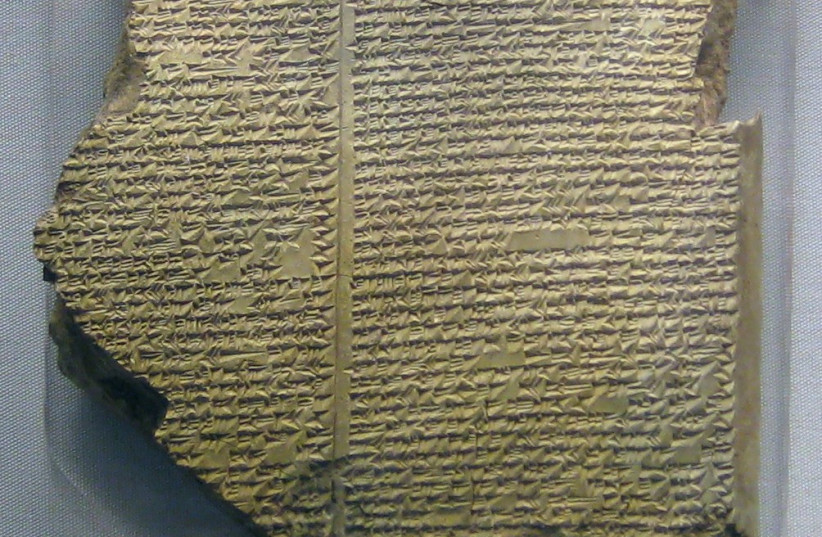
Original Akkadian Tablet XI (the “Deluge Tablet”) of the Epic of Gilgamesh / (photo credit: BRITISH MUSEUM/CC0/VIA WIKIMEDIA COMMONS)

A researcher at Ludwig Maximilian University in Munich, Germany, is using artificial intelligence to fill in gaps in ancient texts, according to phys.org.

The researcher, Enrique Jiménez, Professor of Ancient Near Eastern Literatures at the Institute of Assyriology, has led a team that is digitizing every surviving Babylonian cuneiform tablet. Since 2018, the team has processed up to 22,000 fragments of text.

The Fragmentarium

The team constructed an unprecedented database called the Fragmentarium that uses automation to piece together text fragments.

Thousands of fragments were photographed by the team in cooperation with the Iraq Museum and the British Museum.

The team that built the database believes it will eventually have the capability to identify and transcribe photographs of cuneiform scripts.

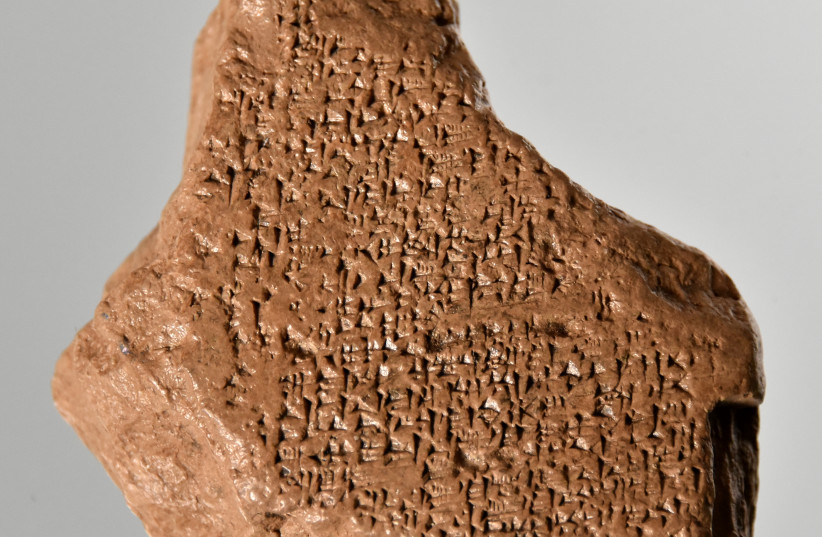
Fragment (obverse) of Tablet II of the Epic of Gilgamesh. Old-Babylonian period, 2003-1595 BCE. Purchase, 2013. From southern Iraq; precise provenance unknown. Not on display. The Sulaymaniyah Museum, Iraqi Kurdistan. (credit: Osama Shukir Muhammed Amin/CC BY-SA 4.0 (https://creativecommons.org/licenses/by-sa/4.0)/WIKIMEDIA)

Algorithm pieces together text fragments

“The new texts we’re discovering are helping us understand the literature and culture of Babylon as a whole.”

Enrique Jiménez, Professor of Ancient Near Eastern Literatures, Institute of Assyriology, Ludwig Maximilian University

The researchers are training an algorithm to put together pieces of text that are out of context. It has so far successfully pieced together hundreds of manuscripts.

The algorithm identified a fragment from 130 BC belonging to a tablet of the Epic of Gilgamesh last November. Notably, the tablet is thousands of years newer than the oldest known version of the Epic of Gilgamesh.

“There’s so much work to do in the study of Babylonian literature. The new texts we’re discovering are helping us understand the literature and culture of Babylon as a whole,” said Jiménez.

He plans to publish the Fragmentarium, along with a digital version of the Epic of Gilgamesh—the first containing all transcriptions of cuneiform fragments that are currently known—this month.

“Everybody will be able to play around with the Fragmentarium. There are thousands of fragments that have not yet been identified,” Jiménez added.


Zawartość publikowanych artykułów i materiałów nie reprezentuje poglądów ani opinii Reunion’68,
ani też webmastera Blogu Reunion’68, chyba ze jest to wyraźnie zaznaczone.
Twoje uwagi, linki, własne artykuły lub wiadomości prześlij na adres:
webmaster@reunion68.com


Palestinian prisoners ‘revolt’ against Ben-Gvir’s measures

Palestinian prisoners ‘revolt’ against Ben-Gvir’s measures

HALED ABU TOAMEH


The security prisoners have decided to protest against the measures by initially declaring a “revolt” and later going on a hunger strike on the first day of Ramadan.

.
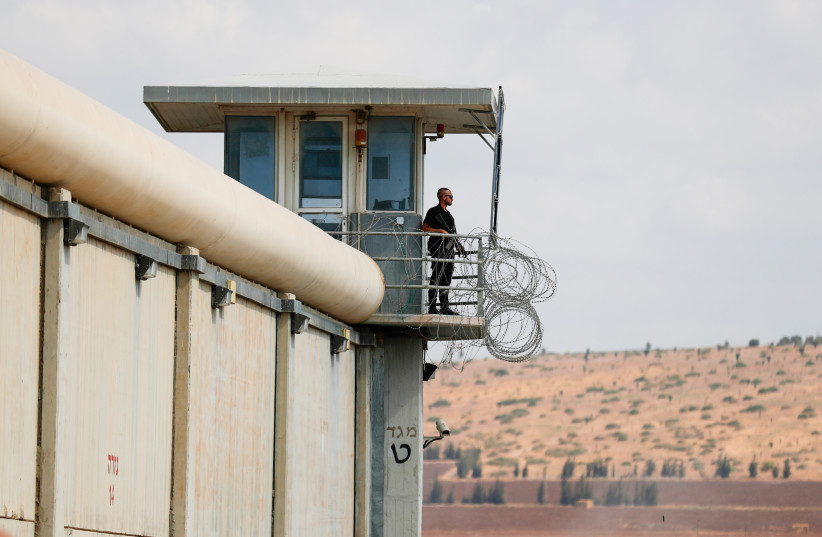
GILBOA PRISON, in northern Israel near the West Bank. / (photo credit: FLASH90)

Palestinian security prisoners are planning to go on hunger strike on the first day of the holy month of Ramadan, which starts on March 22, in protest of a series of restrictions imposed on them by the Israel Prison Service (IPS).

The Palestinian Commission for Detainees and Ex-Detainees Affairs and the Palestinian Prisoners Club said in a joint statement that inmates in Nafha Prison in southern Israel declared a state of “revolt” on Tuesday by disrupting the security checks by the guards and the requirement to wear the brown uniforms supplied by the PIS.

According to the statement, the IPS threatened the security prisoners in the Meggido and Gilboa prisons that they would face even harsher measures if they joined the insurgency.

What are the Palestinian security prisoners protesting?

The prisoners are protesting a series of measures announced by National Security Minister Itamar Ben-Gvir, who said last month that he wants to “ensure that the murderers of Jews are not getting better conditions.”

He has since ordered the closure of bakeries run by the inmates in two prisons. He has also instructed the IPS to allocate a showering time of only four minutes and to provide a total time of one hour of running water to each prisoner wing.

MK Itamar Ben Gvir speaks during a press conference ahead of the upcoming elections, in Jerusalem, July 11, 2022. (credit: YONATAN SINDEL/FLASH 90)

On Tuesday, the Prisoners’ Higher Emergency Committee accused Ben-Gvir of using bread and water to “wage war” on the security prisoners. “We will respond to him with the battle of freedom and martyrdom,” said the committee, which claims to represent the 4,700 security prisoners held in Israeli jails.

“We will respond to him with the battle of freedom and martyrdom.”

Prisoners’ Higher Emergency Committee

The committee announced that the security prisoners have decided to protest against the measures by initially declaring a “revolt” and later going on a hunger strike on the first day of Ramadan.

Qadura Fares, chairman of the Palestinian Prisoners Club, warned of violence in the prisons if the Israeli authorities tried to punish the prisoners because of the revolt.

“The situation in the prisons is very dangerous,” Fares told the Palestinian Al-Quds newspaper. “The prisoners took the decision [to revolt] in protest of the measures because Ben-Gvir wants to take the prisoners 50 years back. The prisoners won’t accept this. They won’t allow him to undermine the achievements they made over the past 50 years.”


Zawartość publikowanych artykułów i materiałów nie reprezentuje poglądów ani opinii Reunion’68,
ani też webmastera Blogu Reunion’68, chyba ze jest to wyraźnie zaznaczone.
Twoje uwagi, linki, własne artykuły lub wiadomości prześlij na adres:
webmaster@reunion68.com