Archives

50 local authorities declare intent to boycott Avi Maoz’s anti-LGBTQ policies

50 local authorities declare intent to boycott Avi Maoz’s anti-LGBTQ policies

URI SELA/WALLA, JERUSALEM POST STAFF


Yesh Atid leader Yair Lapid announced on Saturday that his party is opening a hotline for parents who are concerned about the content Maoz may bring into their childrens’ schools.
.
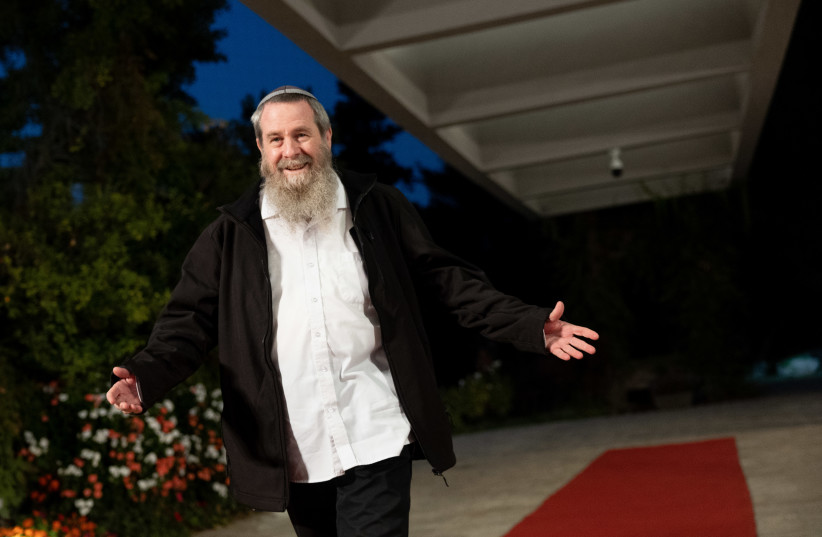
MK Avi Maoz from the Noam party arrives for a meeting with Israeli president Isaac Herzog at the President’s residence in Jerusalem on November 10, 2022. / (photo credit: YONATAN SINDEL/FLASH90)

More than 50 local authorities from the Upper Galilee to the Negev announced on Saturday that they will not cooperate with the policies of far-right MK Avi Maoz’s Noam party.

In a large number of the “rebellious” authorities, the heads of the authorities have announced that they will self-fund the plans that will be affected as a result of the unit’s transition to external programs in the hands of Maoz.

According to the coalition agreement between Likud and Noam, the unit for external programs and promoting partnerships in the Ministry of Education will be transferred to the Prime Minister’s Office and then handed over to Maoz’s authority. The Noam chairman has often expressed extreme positions regarding the LGBTQ community and regarding women’s rights. Following the announcement of the agreement, this caused a wave of concern to arise among educational authorities and among parents and students from the LGBTQ community regarding damage to areas that help prevent prejudices against the community.

Maoz also recently said that the advisory unit to the Chief of Staff regarding the status of women in the IDF should be abolished.

Which local authorities will be going against Maoz?

The municipalities that joined the call include Rosh Ha’ayin, Arad, Rishon Lezion, Ramat Gan, Kiryat Bialik, Holon, Haifa, Tel Aviv-Jaffa, Nesher, Ashdod, Ganei Tikva, Bat Yam, Hod Hasharon, Zichron Yaakov, Nes Ziona, Kiryat Ono, Givatayim, Mevaseret Zion, Alfei Menashe, Ramat HaNegev, Kfar Saba and Herzliya.

Also voicing their intention to go against Maoz were Ramat Hasharon, Eshkol, Emek Hefer, Mateh Yehuda, Jezreel Valley, Gezer, Kiryat Tevon, Zoran, Darom Hasharon, Kfar Yona, Neve Monoson, Tel Mond, Savyon, Pardess Hanna, Gilboa, Hof HaCarmel, Megiddo, Givat Brenner, Ramat Yishai, Pardesiya, Kfar Vardim, Meta Asher, Ramat Yishai, Yoav, Kochav Yair-Tzur Yigal, Yehud-Monson, Bnei Shimon, Ibn Yehuda, Upper Galilee, Zebulon and Menashe.
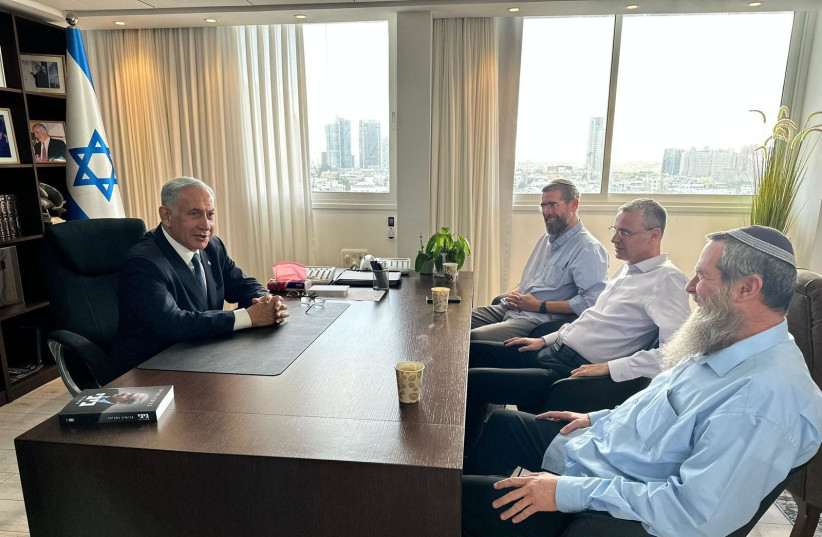
Benjamin Netanyahu and Avi Maoz meet ahead of coalition negotiations. (credit: LIKUD SPOKESPERSON)

The response in Tel Aviv was not limited to Mayor Ron Huldai alone, who was one of the first to respond. The head of the education administration in the Tel Aviv municipality, Shirley Rimon Bracha, sent a letter to the administrators in the city following the transfer of powers to Maoz, stating: “This is not a minor event, it is an administrative drama that may also turn into a value drama” story. “I suppose we all fear a unilateral and extreme political intervention in the content that enters the schools.”

The 14th Forum, which is composed of women who head local authorities, sent a letter to Prime Minister-elect Benjamin Netanyahu, which reads: “We, the members of the 14th Forum of Heads of Local Authorities in Israel, turn to you with great concern following the decision to remove the unit for external programs from the Ministry of Education and transfer it to the Noam party. In fact, the decision to remove from the Education Ministry a division entrusted with the education of Israeli children and transfer it within a political agreement creates great discomfort, when the education of our children is at stake. 

“The education system must remain free of political interests and give expression to the variety of opinions and voices that exist in Israeli society and cannot be divided as a puzzle for the need A coalition agreement of one kind or another.”

Lapid opens hotline for people affected by Maoz’s position

Yesh Atid leader Yair Lapid announced on Saturday that his party is opening a hotline for the guidance of parents who wish to make sure that the extreme and dangerous content of Avi Maoz does not enter their children’s schools.

“Maoz will be allowed to instill the dark, homophobic, nationalist and violent teachings of his party into the schools of every child in Israel,” the party stated on Facebook.

According to the official statement, a parent who wishes to influence the content of their children’s education should do the following: 

  1. Contact the local authority with a demand for transparency and information on the programs that are expected to enter their children’s schools.
  2. Contact the school principal and the local authority to maintain the parents’ right to influence the curriculum and school regulations, which will define the school as an inclusive, protected environment that accepts all children.
  3. To demand early notification and to examine administrative and legal options to not oblige children to be present during the hours in which these new programs will be taught, and to instead promote the instillation of liberal contents, dealing with human rights, acceptance of difference and education for tolerance.

Zawartość publikowanych artykułów i materiałów nie reprezentuje poglądów ani opinii Reunion’68,
ani też webmastera Blogu Reunion’68, chyba ze jest to wyraźnie zaznaczone.
Twoje uwagi, linki, własne artykuły lub wiadomości prześlij na adres:
webmaster@reunion68.com



Al Jazeera Files Suit at International Criminal Court Over Journalist’s Killing

Al Jazeera Files Suit at International Criminal Court Over Journalist’s Killing

Reuters and Algemeiner Staff


People light candles during a vigil in memory of Al Jazeera journalist Shireen Abu Akleh, who was killed during an Israeli raid, outside the Church of the Nativity in Bethlehem, in the Israeli-occupied West Bank, May 16, 2022. REUTERS/Mussa Qawasma

Al Jazeera on Tuesday said it has filed a lawsuit at the International Criminal Court against Israeli forces over the killing of Palestinian-American journalist Shireen Abu Akleh, who was shot during an Israeli raid in the West Bank in May.

The lawsuit following an investigation by the television news network’s legal team, Al Jazeera said on Twitter.

The ICC must identify the individuals who were directly involved Abu Akleh’s killing, Al Jazeera lawyer Rodney Dixon KC told a news conference in The Hague on Tuesday.

“The rulings of the International Criminal Court stipulate that those responsible be investigated and held accountable. Otherwise, they bear the same responsibility as if they were the ones who opened fire,” Dixon said.

The circumstances of Abu Akleh’s killing are disputed.

Israeli Prime Minister Yair Lapid said on Tuesday that no one would question Israeli soldiers.

“No one will interrogate IDF soldiers and no one will preach to us about morals of combat, certainly not the Al Jazeera network,” Lapid said.


Zawartość publikowanych artykułów i materiałów nie reprezentuje poglądów ani opinii Reunion’68,
ani też webmastera Blogu Reunion’68, chyba ze jest to wyraźnie zaznaczone.
Twoje uwagi, linki, własne artykuły lub wiadomości prześlij na adres:
webmaster@reunion68.com


Israel Daily – November 30, 2022

Israel Daily – November 30, 2022

ILTV Israel News


Ongoing unrest in Judea and Samaria waking many voices in the still unformed government

Meantime, asking the hard questions – antisemitism rising into the mainstream media worldwide, and Jews everywhere are concerned … But are we having the right conversation to address it?

And later, the fallout from the supercharged World Cup match between D.C and Tehran…


Zawartość publikowanych artykułów i materiałów nie reprezentuje poglądów ani opinii Reunion’68,
ani też webmastera Blogu Reunion’68, chyba ze jest to wyraźnie zaznaczone.
Twoje uwagi, linki, własne artykuły lub wiadomości prześlij na adres:
webmaster@reunion68.com


Has Judaism become too easy?

Has Judaism become too easy? – opinion

MOSHE TARAGIN


Religion and religious practice have become easier and more comfortable than in the past.

.
OneTable shabbat dinners. / (photo credit: ONETABLE)

A few years ago, an Orthodox woman penned a New York Times article advocating the virtues of Shabbat observance to a general, non-Jewish public.

The author portrayed Shabbat as a 24-hour oasis of serenity within our noisy and boisterous modern world. Shabbat provides down time to reconnect with our inner self, our families and our community. Unplugging from a wired and hyper-stimulated culture preserves our sanity and our emotional well-being.

Portraying Shabbat as a solution to the maladies of modernity allows even a non-Jewish audience to appreciate its beauty

Though the author was portraying the Shabbat experience, she could just as easily have been describing many other aspects of religion. Thankfully, religion and religious practice have become easier and more comfortable than in the past. On a practical level, it has never been easier to practice religion. But even more significantly, we have framed religion as an experience that benefits us and improves our lives. We embrace religion because it delivers meaning and purpose to our lives and because it imbues us with values and vision. We endorse religion and pitch it to others because it crafts the best version of ourselves.

There is a different way to view religion. When Abraham dispatches his servant to secure a wife for Isaac, he requests from him an oath to faithfully execute the mission. To convey his seriousness, Abraham places his servant’s hand upon his leg near the area of his brit milah. At the brittle age of 99, Abraham had submitted to an extremely painful surgery without the benefits of anesthesia. By placing his servant’s hand close to his scar, Abraham associates the oath and the mission with his painful suffering.

Shabbat (Illustrative). (credit: MENDY HECHTMAN/FLASH90)

His milah was painful, but it was also transformative and foundational to his identity. Anchoring the oath to this arduous experience lent gravitas to the oath and urgency to the mission.

A parallel scene unfolded 1,800 years later involving Rabbi Akiva, one of the greatest Talmudic scholars. Born into ignorance, he spent the first 40 years of his life as an illiterate peasant. One day he passed a waterway and witnessed the rushing water sculpting surrounding stones. Surprised that soft water could mold solid stone, he extrapolated that Torah study and religious observance, which are each extremely demanding, would powerfully forge his identity.

He didn’t flinch in the face of religious challenge but embraced it, knowing that the impact of an experience is always directly related to the degree of difficulty and hardship. The more we strain and struggle in religion, the more deeply it shapes our identity.

Abraham and Rabbi Akiva didn’t view religion as beneficial or enjoyable but as challenging and demanding. As my revered teacher Rabbi Aharon Lichtenstein put it, “Religion demands having shoulders strong enough to bear the weight of religion without being crushed by it.” Religion is meant to be pleasant and agreeable but also heavy and burdensome. It is crucial to delicately calibrate these opposing perspectives of religion. If too easy, religion becomes superficial and doesn’t touch our souls. If too heavy, religion suffocates life and crushes our spirit.

How did we get to the point that we predominantly view religion as easy and beneficial rather than as a strenuous challenge to serve a higher being? How did religion become soft, less heavy and, by extension, less transformative?

A world of comfort

Religion has been adapted to our modern world of convenience. Science, technology and capitalism have all improved our living conditions, vastly upgrading our quality of life. Life used to be difficult, but it has become significantly more comfortable and enjoyable. Without adapting our attitude about religion, it may have become completely severed from our reality. By altering our perspective and even our religious language, we preserved its relevance, but we also emulsified religion, smoothing out its rough edges and eliminating any prickly thorns. This transformation of religion may have been necessary to update it to our new world of comfort. But, like every adaptation, it carried steep and unforeseen costs.

Shabbat observance is a perfect example of how religion has become more “silky,” based on the general improvements in our quality of life. Previous generations endured austere Shabbat experiences with limited physical pleasure. Their Shabbat home environment was cold and dark, their food was cold, and their mobility was limited. Due to electricity, modern heating, Shabbat clocks and ubiquitous eruvin, our Shabbat experience has become luxurious, with almost no drop-off from our general weekday routine. Shabbat is a perfect example of how religious practice has become more comfortable, matching the staggering improvements in our quality of life.

The improvements to Shabbat are obviously positive and necessary developments, but they threaten the spiritual flavor and tone of Shabbat. Shabbat is more than just family time and more than just a day to relax, play board games and reconnect over coffee. It is a day to shut down and recall Creation, the Exodus and the Jewish covenant. Without actual shutdown, it is difficult to latch on to those large and seminal ideas.

Moving from the Holocaust

Additionally, there is a historical element behind this shift in how we frame religion. Two major Jewish historical events of the 20th century contributed to this reconfiguration of religion.

The post-Holocaust world was a gloomy world of death and darkness. In the aftermath of this apocalypse, God appeared very distant and very imposing. Many were left with lingering questions about a God who could allow mass genocide against His chosen people. Many who couldn’t relate to this frightening God left religion entirely. For those who remained, religious life felt heavy and imposing. The popular Yiddish phrase “shver zu zein a yid” (“it is difficult to be a Jew”) captured the pervasive impression that religion was overbearing. Judaism was in dire need of an attitudinal overhaul.

Gradually, a younger and more religiously confident generation, which hadn’t suffered the agony of the Holocaust, began to define God in more welcoming and cheery terms. He was no longer seen as austere and forbidding but as user-friendly and loving. The emotional core of religion shifted from fear and trembling to joy and celebration. God became less intimidating, less demanding, and more accommodating and helpful. God went from being our Father in heaven to being our Grandfather in heaven. No one is afraid of their grandfather.

This shift was absolutely necessary to restore faith and rebuild religious experience in the wake of the Holocaust, but it created a lopsided view of God and an imbalanced attitude toward religion. Religion has become a platform of opportunity rather than a regimen of expectation and duty.

The sun shines in Israel

Our return to the modern State of Israel has also reworked our image of God. The tables of history have turned and, for the first time in thousands of years, we sense that God is smiling upon us rather than hiding from us. Living through euphoric miracles, we can’t help but feel that we are partnering with God in crafting modern history. This sense of partnership has bred optimism, lending a cheery confidence to religion. Eighty years after the Holocaust and seventy-five years into statehood, religion is broadcast in a very different frequency. The sun has risen above Jewish history, and its bright rays have made religion glow.

All these developments are fortunate and have fastened religion to our ever-changing world. These changes have made religion more vibrant, more joyful, and more popular than ever.

However, we mustn’t let the overall balance go awry. Judaism isn’t just bagels and lox and lovely family gatherings. It is a stretch to reach heaven, a thrust to encounter the Other and journey beyond our world. In our efforts to affix religion to our new world, we must not ground it and eliminate its struggle, its power, or its glory. 


The writer is a rabbi at Yeshivat Har Etzion/Gush, a hesder yeshiva. He has smicha and a BA in computer science from Yeshiva University, as well as a master’s degree in English literature from the City University of New York.


Zawartość publikowanych artykułów i materiałów nie reprezentuje poglądów ani opinii Reunion’68,
ani też webmastera Blogu Reunion’68, chyba ze jest to wyraźnie zaznaczone.
Twoje uwagi, linki, własne artykuły lub wiadomości prześlij na adres:
webmaster@reunion68.com


News From Israel- November 29, 2022

News From Israel- November 29, 2022

ILTV Israel News


Israelis face another car-ramming terrorist attack in Judea and Samaria…The Palestinian terrorist shot and killed by security forces…

After intense negotiations liked and Religious Zionism parties are reportedly close to finalizing an agreement…Is a new right-wing government on the horizon?

And a new selfie from the Artemis 1 crew in space featuring the Israeli flag and Israeli tech…


Zawartość publikowanych artykułów i materiałów nie reprezentuje poglądów ani opinii Reunion’68,
ani też webmastera Blogu Reunion’68, chyba ze jest to wyraźnie zaznaczone.
Twoje uwagi, linki, własne artykuły lub wiadomości prześlij na adres:
webmaster@reunion68.com