
Archives

‘Bibi’ Offers Close-Up Look at Israeli Politician in Family Context

‘Bibi’ Offers Close-Up Look at Israeli Politician in Family Context

Ira Stoll
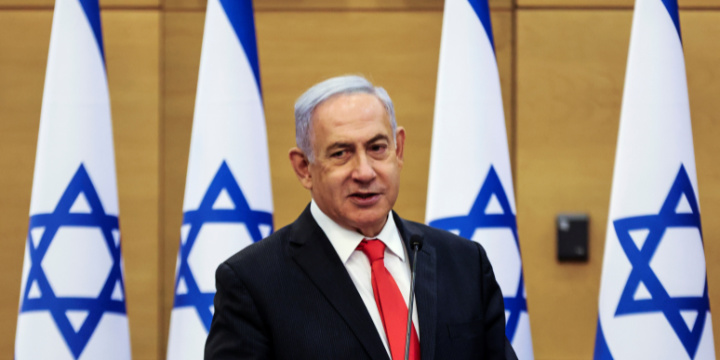

Leader of Israeli opposition Benjamin Netanyahu speaks during a meeting with his Likud party in the Knesset, the Israeli parliament, in Jerusalem June 14, 2021. Photo: REUTERS/Ronen Zvulun

Every Jewish American home library should have at least two books by authors named Netanyahu.

“Self-Portrait of a Hero,” the collection of letters by Jonathan Netanyahu, originally published in 1980, is a Zionist classic.

“The Origins of the Inquisition in Fifteenth Century Spain,” Benzion Netanyahu’s 1995 masterpiece, is one of the best works ever written about antisemitism.

What makes Benjamin Netanyahu’s new book “Bibi: My Story,” worthy of being added to the shelf in a place of honor alongside the other two is, strangely enough, precisely the light it sheds on how the author—Israel’s longest-serving prime minister—exists in relation to his older brother and father.

Benjamin Netanyahu’s challenge as an author is in some ways the same challenge he faced as a soldier and as a Zionist activist and leader: his older brother and his father got there earlier, and in such a profoundly excellent way, that their achievements are nearly impossible for Benjamin Netanyahu to top.

It’s worth remembering that due to Benjamin Netanyahu’s constant media spotlight, the other Netanyahus have receded. Jonathan Netanyahu died in 1976 after leading a successful Israeli military raid to liberate hostages held by terrorists in Entebbe, Uganda. Benzion Netanyahu died in 2012, and his activism—as opposed to his scholarship—took place in the 1930s and 1940s.

The genius of Benjamin Netanyahu’s new book, though, is the way it makes the other two Netanyahus, and their influence on him, come alive. Benjamin Netanyahu quotes his father warning in 1933 about “the Holocaust facing the Jewish people.” As Benjamin Netanyahu tells it, in the 1940s, his father figured out that “influencing Republican policy was the best way to influence Democratic Party.” Benzion Netanyahu briefed Senate Republican Leader Robert Taft on the case for a Jewish state, and in 1944, the Republicans adopted a platform “calling for unrestricted Jewish emigration to the Land of Israel and for the establishment of a Jewish state there.”

As for Jonathan Netanyahu, or Yoni, Benjamin served in the same elite special forces combat unit as his older brother. They both were educated in part in Cambridge, Massachusetts. The closest analogy in American history would be President Kennedy. JFK’s father was also a significant public figure. And Kennedy’s older brother and fellow Harvard graduate was killed in action in World War II, while JFK narrowly survived his own combat perils.

This is, in other words, not a standard, instantly forgettable, self-serving, score-settling campaign biography. It’s better than that, not only for its insight into what makes Netanyahu tick, but also for the insights into his policies. The account of how Israel’s GDP per capita grew to 19th in the world from 50th—surpassing Britain, France, Japan, Italy, and Spain—is a case study: tax cuts, welfare reform, deregulation, privatization. Netanyahu describes it as the transformation of Israel from a semisocialist country to a capitalist one.

It’s not a perfect book. There are more minor errors than there should be: a reference to the “diplomatic core,” to political consultant “David Shrum,” to lunching with Henry Kissinger at the “Four Seasons Hotel” (rather than the Four Seasons restaurant at which Kissinger was a regular). And while Netanyahu does own up to some tactical and political errors, I wish he’d have been a little less defensive, and a little more reflective, when it came to the assassination of Yitzhak Rabin.

But those are quibbles. If Netanyahu emerges from Israel’s November 1 election as again the prime minister of Israel, the world will understand him and his country better as a result of this book. And if he remains in opposition, or retires from politics, at least he will have the satisfaction of having succeeded as an author alongside his late brother and father. He’s added his telling of his own story—unfinished, but remarkable nonetheless—to the narrative of the Jewish people.


Ira Stoll was managing editor of The Forward and North American editor of The Jerusalem Post. His media critique, a regular Algemeiner feature, can be found here.


Zawartość publikowanych artykułów i materiałów nie reprezentuje poglądów ani opinii Reunion’68,
ani też webmastera Blogu Reunion’68, chyba ze jest to wyraźnie zaznaczone.
Twoje uwagi, linki, własne artykuły lub wiadomości prześlij na adres:
webmaster@reunion68.com

Iranian report exposes the history of its missile program

Iranian report exposes the history of its missile program

SETH J. FRANTZMAN


A report in Tasnim describes how Iran went from being terrorized by missiles to creating accurate missiles that are being used throughout the region.
.

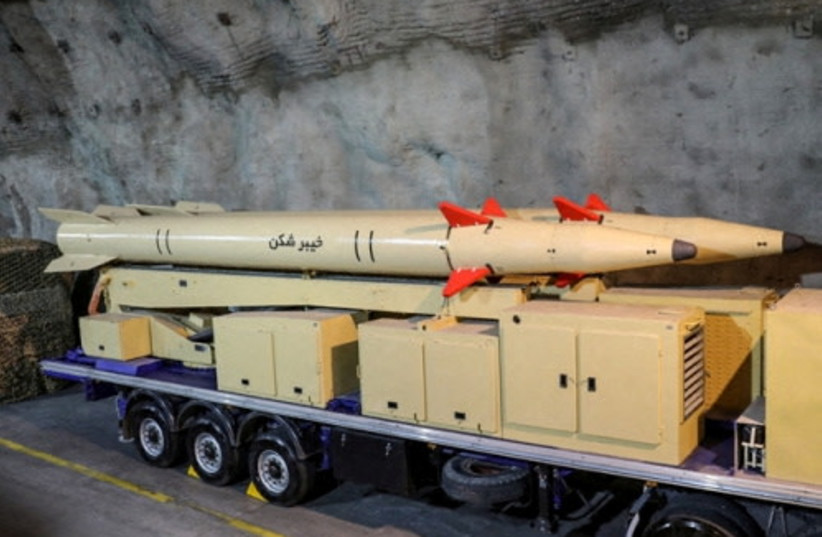
New Iranian “Kheibarshekan” missiles are seen in an undisclosed location in Iran, in this picture obtained on February 9, 2022. / (photo credit: IRGC/WANA (West Asia News Agency)/Handout via REUTERS)

As Iran supplies Russia with drones and there are concerns Iran may supply Moscow with ballistic missiles, the issue of Iran’s missile program is increasingly important globally. In addition, Iran’s missiles threaten Israel and US forces in the region and also destabilize the Middle East through threats to the Gulf, Iraq and other countries.

Iran’s Tasnim News ran an interesting article on Saturday focusing on the history of Iran’s missile program. The article begins by profiling Hassan Tehrani Moghaddam, an Iranian military officer in the Aerospace Force of the Islamic Revolutionary Guard Corps. He was born in 1959 and died in 2011. He is credited with being a major designer of the Iranian ballistic missile project. Tasnim News notes that while he began as a largely unknown figure, his fame grew over time. He was initially an artillery officer in the IRGC.

“The IRGC missile unit was formed with imported missiles, and even the firing of those missiles was done by others, but gradually Hassan Tehrani Moghadam and his comrades learned to shoot, manipulate and upgrade missiles, and finally build missiles,” the report says. Iran tried building short-range missiles at first. This was likely back in the era of the Iran-Iraq war. The report includes historic conversations with those who knew Moghaddam.

According to this report, Iran first acquired the Scud B missile from Libya in 1963. During the war with Iraq in the 1980s, Iran faced a shortage of weapon systems to oppose the Iraqi invasion.

“The war started when we were empty-handed. The weapons we had in the Corps were light weapons such as Brno, M1K, Kalashnikov and Zh3,” the report says. Eventually, the soldiers received mortars and artillery. The Iraqis meanwhile had received the Scud B from the Soviet Union. “Some time after the start of the war, rockets started raining on the cities,” the report notes. Indeed, Iraq used missiles and rockets to spread terror and try to weaken Iran’s ability to continue the war.

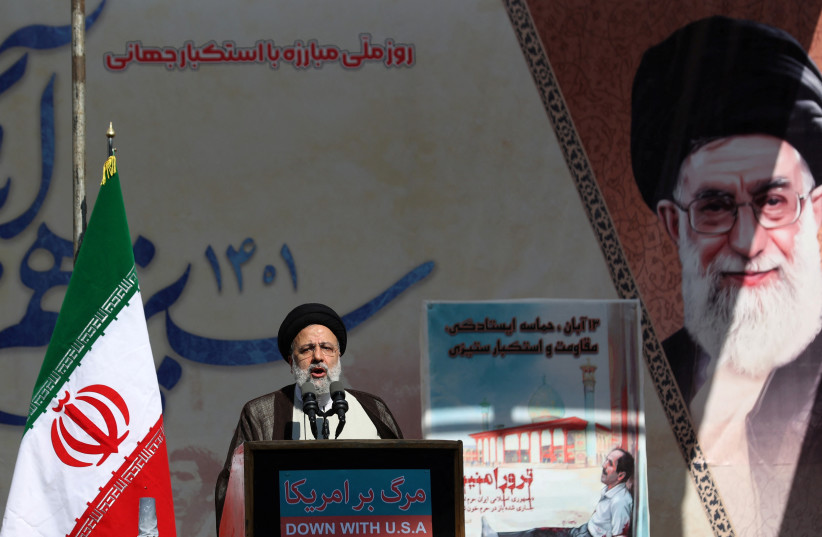
Iran’s President Ebrahim Raisi speaks during the 43rd anniversary of the U.S. expulsion from Iran, in Tehran, Iran November 4, 2022 (credit: MAJID ASGARIPOUR/WANA (WEST ASIA NEWS AGENCY) VIA REUTERS)

Iran focused on developing its own missiles to counter the Iraqis. “The Minister of the IRGC, continued to purchase rockets and a group of IRGC Artillery units was also engaged in training courses….Hassan Tehrani Moghadam, who was in charge of IRGC artillery and had taken important measures to increase the range and power of fire until then, was appointed to form a missile unit.”

Iran began by using Katyusha rocket engines in rockets and approached Syria and Libya for missiles. “Syria said that it cannot give missiles to Iran and that it is under severe pressure from the Soviet Union and their advisors who are in that country, but it can train Iranian forces,” the Tasnim report says. Muammar Gadaffi in Libya was more supportive.

However, the support didn’t last long; when Libya and Iraq had better relations the support stopped and Libyan advisors stop helping the Iranians.  “A team that came from Libya fired missiles at several targets, including the Kirkuk refinery and the Rafdin Bank in Baghdad,” the report says. 

The Scud B missile had an error of up to 1.5km, meaning that if you fired the rocket it might hit as much as 1.5km from the target. That made it extremely inaccurate. The report says that the ability of Iran to hit the Kirkuk refinery and target Sudanese and Egyptian volunteers serving with the Iraqis was mostly good luck.

“When Iran fired missiles at Iraq and those missiles hit important targets, Libya was under pressure from the Soviet Union. Therefore, on the anniversary of the establishment of the Baath party, Gaddafi told Saddam that he will give him a gift on this day, and that is that no more missiles will be fired from Iran toward Iraq.” 

Iran’s missile men, Hashemi Rafsanjani and Hassan Tehrani Moghadam sought new ways to respond. “Hassan ordered a missile and a platform to be prepared for us to fire…We identified 32 defects and it took several days to fix each one somehow. We asked for help from all the forces that were in academic and industrial jihad.”

Meanwhile, Iran received support from Syria and was able to send men to Syria to train 

The story of the rocket program continues by looking at Iran’s response to Iraq’s use of missiles against Iran’s cities. Many Iranians were being killed and Iran had only limited success responding. The article claims that both the Soviets and the US were helping Iraq at the time.

Iran’s missiles, which it had received from Libya, were also apparently defective, the report claims. The Iranians had to work to make them usable, and the missiles were taken apart and reassembled. “We did this. It also worked in the tests. The main faults were in the guidance system,” the report says.  

“From the beginning, Hassan Tehrani Moghadam emphasized self-sufficiency in the scientific field and the use of rockets. His command and guidance in missile matters was divine guidance.”

Tasnim News

The report then turns to the modern-day and recent conflicts between Israel and Hamas. Iran sees Hamas’s success in making rockets as a kind of legacy of its own hardship in the 1980s. Iran has also supported Hezbollah expand its missile program over the last decades.

“Hezbollah has the ability to fire hundreds of missiles at the occupied territories every day. Any war with Hezbollah will lead to the destruction of the Zionist regime.”

Tasnim

Iran has also improved multi-stage missiles that can carry payloads into orbit. But the process of reaching self-sufficiency in rocketry was a long one. “Despite the fact that we had good experiences in the field of liquid fuel, we did not have much experience in the field of solid fuel,” the report notes. “Liquid fuel engine technology is a complex technology. For this reason, we had to enter the field of solid-fuel rockets. Of course, at some point, some people wanted to take this issue from the Air Force and give it to the Ground Force, but Tehrani Moghadam stood up and did not let this happen. We believed that in the future our best and most accurate rockets would be solid fuel rockets.” 

Iran’s missile men faced hurdles with the solid fuel rockets they were working on. Guiding them was difficult, the report says. Eventually, they did design engineers that could “steer,” the report says. “Tehrani Moghadam designed a liner to fill the space between the fuel and the engine body.” 

Iran built a series of missiles called Fateh, which became increasingly effective and also reached new levels of precision in terms of their ability to hit targets. According to the report, the origins of the Fateh missiles were in Iran repurposing the SAM 2 “surface-to-air missiles into surface-to-surface missiles.” The developments eventually led to the Fateh 110 missile. Initial challenges at guidance and control were overcome.

“Of course, all these processes were very time-consuming. For example, to convert a metal rocket engine into a composite engine, Tehrani Moghadam designed a composite factory, and after that, the main focus of that factory was designing composite engines. When we tested the first engine they produced on the test stand, numerous holes were created in the body of this engine, but after many trials and errors, this engine also achieved positive results and reached mass production.” 

The overall goal here was self-sufficiency so that Iran could build and design its own rockets and missiles. The outcome of the difficulties of the 1980s can be seen today. Iran’s ballistic missiles continue to reach new ranges and new levels of precision. Iran also builds precision-guided munitions and drones.

This plethora of weapon systems has now influenced the region. It not only gave Hamas new abilities in the last two decades such that Hamas rockets went from traveling a kilometer or two, to reach most of Israel. Iran also expanded the Hezbollah program exponentially, giving it huge capabilities to target Israel.

In the last seven years, Iran boosted the ability of the Houthis in Yemen so that they could target Saudi Arabia and the Gulf states as well as target chips in the Gulf of Oman. Now Iran is arming Russia so it can terrorize Ukraine. Although the article doesn’t touch on this, it’s important to understand the Iranian IRGC mindset in order to understand its next goals. It’s also important to understand the technical abilities and history of Iran’s various weapon programs.  


Zawartość publikowanych artykułów i materiałów nie reprezentuje poglądów ani opinii Reunion’68,
ani też webmastera Blogu Reunion’68, chyba ze jest to wyraźnie zaznaczone.
Twoje uwagi, linki, własne artykuły lub wiadomości prześlij na adres:
webmaster@reunion68.com


News From Israel- November 20, 2022

News From Israel- November 20, 2022


ILTV Israel News


Netanyahu addressing major issues at the Jewish republican conference in Vegas

The 2022 World Cup starting today in Qatar to the delight of millions but isn’t going without criticism

And an incredible project bringing attention to IDF veterans suffering with post-traumatic stress.


Zawartość publikowanych artykułów i materiałów nie reprezentuje poglądów ani opinii Reunion’68,
ani też webmastera Blogu Reunion’68, chyba ze jest to wyraźnie zaznaczone.
Twoje uwagi, linki, własne artykuły lub wiadomości prześlij na adres:
webmaster@reunion68.com


Clashes in West Bank’s Hebron During Jewish Celebration

Clashes in West Bank’s Hebron During Jewish Celebration

i24 News


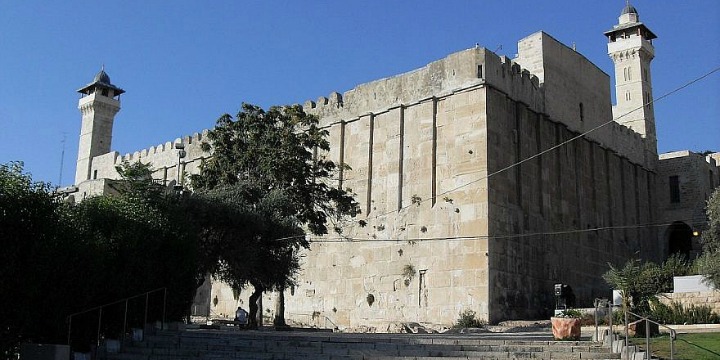
The Cave of the Patriarchs in Hebron. Photo: Wikimedia Commons.

The West Bank city of Hebron saw violent clashes on Saturday as Jewish Israelis spent the weekend in the city for an annual pilgrimage tradition.

Jewish Israelis reportedly marched throughout Palestinian areas of the city on Saturday morning, flying Israeli flags. In response, Palestinians threw stones at the Israelis.

Additionally, reports note that Israel Police and Border Police blocked roads leading in and out of Hebron, turning away those attempting to enter the city.

The Jewish Israelis were in Hebron to celebrate the reading of the Torah portion Chayei Sarah, which tells the story of the biblical figure of Abraham purchasing the Cave of the Patriarchs, located in Hebron, as a burial place for his wife, the matriarch Sarah.

Each year, thousands of Jews gather in Hebron to celebrate the Shabbat when Chayei Sarah is read.

In a separate occurrence on Friday night, one of the bodyguards of far-right lawmaker Itamar Ben-Gvir was wounded in an altercation in Hebron. The guard was sent to a hospital for medical treatment with no immediate information on his condition being available.

Hebron also saw masked settlers throwing stones at Palestinian homes on Friday night, smashing windows and a car windshield, according to the Yesh Din NGO. Earlier that morning, a Palestinian teenager was arrested with a knife near the city.

The West Bank city of Hebron is unique as it is under shared Israeli-Palestinian control, with the Palestinian Authority responsible for roughly 80 percent of the city.


Zawartość publikowanych artykułów i materiałów nie reprezentuje poglądów ani opinii Reunion’68,
ani też webmastera Blogu Reunion’68, chyba ze jest to wyraźnie zaznaczone.
Twoje uwagi, linki, własne artykuły lub wiadomości prześlij na adres:
webmaster@reunion68.com


News From Israel- November 17, 2022

News From Israel- November 17, 2022

ILTV Israel News


The United States reportedly interfering with Israel’s coalition negotiations…

Iranian suicide drones used by Russia – discovered to be powered by Israeli-made tech…

And antiquities looters caught red-handed in the Bedouin city of Rahat.


Zawartość publikowanych artykułów i materiałów nie reprezentuje poglądów ani opinii Reunion’68,
ani też webmastera Blogu Reunion’68, chyba ze jest to wyraźnie zaznaczone.
Twoje uwagi, linki, własne artykuły lub wiadomości prześlij na adres:
webmaster@reunion68.com