Archives

Palestyńczycy: dlaczego ignoruje się ataki na chrześcijan?

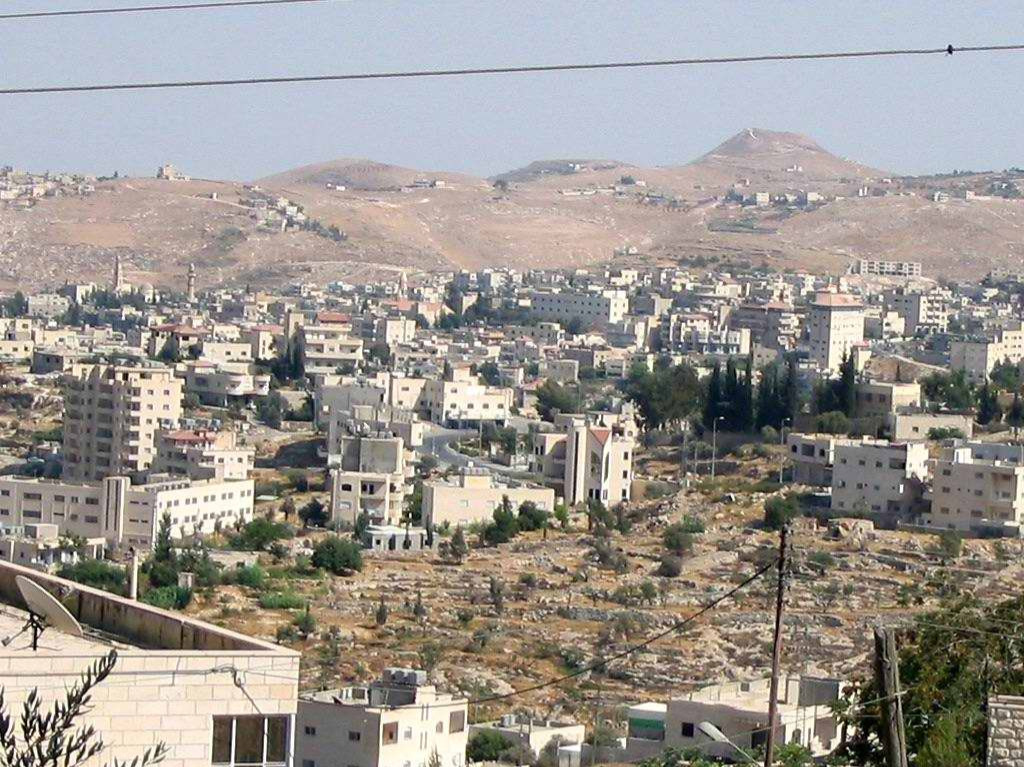
Seria brutalnych incydentów w Betlejem i pobliskich miastach Beit Dżala i Beit Sahour sprawiła, że chrześcijanie martwią się o swoje bezpieczeństwo i przyszłość pod władzą Autonomii Palestyńskiej. W zeszłym tygodniu dziesiątki muzułmańskich mężczyzn zaatakowało Kościół Prawosławny w Beit Sahour, rzucając kamieniami i raniąc kilku chrześcijan. N/z: Beit Sahour. (Źródło: Iseidgeo/Wikimedia Commons)

Palestyńczycy: dlaczego ignoruje się ataki na chrześcijan?

Khaled Abu Toameh
Tłumaczenie: Małgorzata Koraszewska


Seria brutalnych incydentów w Betlejem, miejscu narodzin Jezusa, i w pobliskich miastach Beit Dżala i Beit Sahour, sprawiła, że chrześcijanie martwią się o swoje bezpieczeństwo i przyszłość pod władzą Autonomii Palestyńskiej (AP).

Wielu chrześcijan żyjących w tych społecznościach skarży się, że Autonomia Palestyńska nie robi wystarczająco dużo, by ukarać tych, którzy atakują kościoły i chrześcijańskie firmy. Sprawcami są muzułmanie, którzy stanowią większość ludności na terenie Betlejem.

Kilka miesięcy temu palestyński pastor ewangelicki Johnny Shahwan został aresztowany przez siły bezpieczeństwa Autonomii Palestyńskiej pod zarzutem “promowania normalizacji” z Izraelem.

Aresztowanie nastąpiło po tym, jak Szahwan, założyciel i przewodniczący zarządu Beit Al-Lika (Domu Spotkań) w Beit Dżala, pojawił się na zdjęciu obok rabina Jehudy Glicka, byłego członka izraelskiego parlamentu, Knesetu.

Beit Al-Lika jest chrześcijańskim ośrodkiem społeczno-edukacyjnym. Ośrodek, oskarżony o przyjmowanie rabina wraz z grupą niemieckich turystów, został zamknięty przez Autonomię Palestyńską na tydzień.

Po tym, jak w mediach społecznościowych pojawiło się zdjęcie pastora i rabina, niezidentyfikowani bandyci ostrzelali jego ośrodek. Nikt nie został ranny i nie zgłoszono żadnych uszkodzeń. Według niektórych raportów, pastor był przetrzymywany w palestyńskim areszcie przez ponad miesiąc, aby chronić go przed Palestyńczykami, którzy zagrażali jego życiu.

W innym incydencie na początku tego roku duża grupa zamaskowanych muzułmanów kijami i żelaznymi prętami zaatakowała chrześcijańskich braci Daouda i Dahera Nassara, gdy pracowali na swojej ziemi. Bszara Nassar, syn Dahera Nassara, skomentował:

“Jestem szczególnie zdruzgotany tym, że ten [atak] przeprowadziła grupa palestyńskich zamaskowanych mężczyzn z pobliskiej wioski Nahalin. To z pewnością nie odzwierciedla ani nie reprezentuje tego, kim jest naród palestyński, i nie jesteśmy pewni ich motywów ani kto za nimi stoi. Ale naprawdę trudno jest patrzeć, jak nasi bracia palestyńscy atakują rodzinę. Rodzina domaga się sprawiedliwości i pociągnięcia do odpowiedzialności tych, którzy dopuścili się tych czynów”.

Na początku października napastnicy ostrzelali hotel w Betlejem za wywieszenie symboli żydowskich w jednej z sal konferencyjnych. Napastnicy oskarżyli hotel należący do chrześcijan o “promowanie normalizacji stosunków z Izraelem” z powodu tekturowych wycinanek z gwiazdą Dawida i Menorą, które umieszczono w pokoju.

Palestyńskie Ministerstwo Turystyki nakazało zamknięcie hotelu i poinformowało, że wszczęło dochodzenie w sprawie twierdzeń, że hotel przygotowuje się do zorganizowania żydowskiej uroczystości.

Przerażony kierownik hotelu Elias al-Ardża zaprzeczył tym twierdzeniom. Powiedział palestyńskiej stacji radiowej Mawwal, że grupa turystów z Filipin przygotowuje się do zorganizowania w sali konferencyjnej chrześcijańskiej konferencji religijnej. “Nie pozwalamy tu przychodzić Żydom – powiedział al-Ardża. – Nigdy nie organizujemy imprez z okazji żydowskich świąt”.

Rządząca frakcja Fatah, kierowana przez prezydenta Autonomii Palestyńskiej Mahmouda Abbasa, wydała oświadczenie, w którym potępiła próbę zorganizowania w hotelu “przyjęcia syjonistycznego”, nazywając ją “ciosem noża w Betlejem i zdradą tradycji i wartości Ziemi Świętej”.

Najnowszy atak na chrześcijan miał miejsce pod koniec października, kiedy dziesiątki muzułmańskich mężczyzn zaatakowało Kościół Prawosławny w Beit Sahour. Podczas ataku napastnicy obrzucili kościół kamieniami, raniąc wielu chrześcijan.

Mieszkańcy tego chrześcijańskiego miasta wezwali Autonomię Palestyńską do aresztowania wszystkich tych, którzy zaatakowali kościół. Powiedzieli, że atak na kościół był atakiem na całe miasto. Po incydencie dzwony kościelne biły na trwogę, a w mediach społecznościowych krążyły nagrania pokazujące napastników rzucających kamieniami w budynek.

Grecko-prawosławny arcybiskup Atallah Hanna potępił ten atak jako “szokujący” i “przerażający”. Dodał:

“Atak na Kościół jest przestępstwem par excellence. Kościół nie jest miejscem rozliczeń i wyrażania nienawiści przez tych, którzy stracili człowieczeństwo i patriotyczny zmysł”.

Szadi Challoul, wybitny obrońca praw chrześcijan, powiedział w reakcji na atak:

“Muzułmańsko-arabskie plemię Atamry zaatakowało wczoraj wieczorem kościół chrześcijański w Bet Sahour niedaleko Betlejem. Czy widzieliście kiedyś chrześcijanina atakującego meczet w chrześcijańskich miastach na Bliskim Wschodzie? Oczywiście nie. To pokazuje różnicę w kulturze, wierze, szacunku i uznaniu, które posiadamy”

Zgromadzenie ordynariuszy katolickich Ziemi Świętej również potępiło atak na kościół. “Grupa mężczyzn zaatakowała kościół w Beit Sahour po bójce wśród młodych mężczyzn” – powiedzieli.

“Potępiamy ten atak i domagamy się, aby Autonomia Palestyńska jak najszybciej postawiła napastników przed wymiarem sprawiedliwości. Z drugiej strony, chwalimy wszystkich tych, z różnych wyznań i rodzin, którzy przybyli na miejsce i zrobili wszystko, aby chronić kościół. Mamy nadzieję, że podobne incydenty nie będą miały miejsca w przyszłości i wzywamy wszystkich do trzymania miejsc kultu z dala od wszelkich sporów”.

Podobnie jak w poprzednich przypadkach, Autonomia Palestyńska nie podjęła rzeczywistych kroków w celu ukarania tych, którzy atakują chrześcijan lub chrześcijańskie święte miejsca na obszarze Betlejem. W kwietniu 2002 r. bandyci zaatakowali Bazylikę Narodzenia Pańskiego w Betlejem. Trzem zakonnikom przetrzymywanym przez bandytów udało się uciec z kościoła boczną bramą. Powiedzieli oficerom armii izraelskiej, że bandyci ukradli złoto i inne mienie, w tym krucyfiksy i modlitewniki.

Takie incydenty są głównym powodem, dla którego wielu chrześcijan nie czuje się już bezpiecznie na obszarach kontrolowanych przez Autonomię Palestyńską na Zachodnim Brzegu [tj. Judei i Samarii. MK]. Liczba chrześcijan znacznie spadła w ciągu ostatnich kilku dekad: z 18% populacji w 1948 roku do zaledwie 2% populacji Zachodniego Brzegu i Gazy. W Betlejem spadła z 80% do 12%. Wielu przeniosło się do USA, Kanady i Europy.

Ataki muzułmanów na chrześcijan są często ignorowane przez społeczność międzynarodową i media, które wydają się zabierać głos tylko wtedy, gdy mogą znaleźć sposób, by obwiniać Izrael.

Inną niepokojącą sytuacją jest to, że przywódcy społeczności chrześcijańskiej na Zachodnim Brzegu niechętnie pociągają Autonomię Palestyńską i ich muzułmańskich sąsiadów do odpowiedzialności za ataki. Boją się zemsty i wolą podporządkować się oficjalnej linii obarczania Izraela wyłączną odpowiedzialnością za niedolę mniejszości chrześcijańskiej.

Niestety, można bezpiecznie założyć, że trudna sytuacja palestyńskich chrześcijan tylko się nasili w świetle milczenia społeczności międzynarodowej i zrozumiałego strachu ich własnych przywódców przed odwetem.


Zawartość publikowanych artykułów i materiałów nie reprezentuje poglądów ani opinii Reunion’68,
ani też webmastera Blogu Reunion’68, chyba ze jest to wyraźnie zaznaczone.
Twoje uwagi, linki, własne artykuły lub wiadomości prześlij na adres:
webmaster@reunion68.com



Israeli-Ukrainian Relations Sour Over UN Votes, Admission of Refugees

Israeli-Ukrainian Relations Sour Over UN Votes, Admission of Refugees

Algemeiner Staff


A young boy waves a Ukrainian flag in the city of Kherson following the departure of occupying Russian troops. Photo: Reuters/Valentyn Ogirenko

Diplomatic ties between Israel and Ukraine were looking increasingly strained on Tuesday as both nations accused the other of a lack of political solidarity.

Days after Israeli and several Ukrainian officials reacted with frustration to the vote of the Ukrainian mission to the UN in favor of an anti-Israel resolution last Friday, Ukraine criticized Israel for abstaining on a separate UN vote holding Russia legally responsible for the damage wrought in Ukraine since its troops invaded on Feb. 24.

Several Ukrainian media outlets pointed out that other states with historically close ties to Russian President Vladimir Putin’s regime, including Hungary and Turkey, had voted in favor of the resolution criticizing Russia, in contrast to Israel.

Ukraine is also angry with the Israeli government for placing new restrictions on the entry of Ukrainian refugees to Israel. On Tuesday, Ukraine’s envoy in Tel Aviv, Yevhen Korniychuk, told Israeli media outlets that he had been requesting a meeting with the Israeli foreign ministry for 10 days to discuss the problem. Asked whether he had been summoned by the ministry for a formal reprimand over last Friday’s UN vote, Korniychuk flatly denied this was the case. Responding to Israel’s claim that he had in fact been summoned, Korniychuk retorted, “they can say whatever they want.”

Separately, Ukrainian Defense Minister Oleksiy Reznikov spoke to his Israeli counterpart Benny Gantz on Tuesday. Although they did not divulge the contents of their conversation, Reznikov tweeted later that they had engaged in a “fruitful conversation.”

“We discussed the priority issues of bilateral cooperation in the defense sphere and the advantages of democracy,” Reznikov wrote.

The diplomatic spat between Jerusalem and Kyiv comes amid repeated efforts by the Ukrainians to persuade Israel to reverse its policy on not supplying Ukrainian forces with weaponry. Several Ukrainian political figures expressed concern that last Friday’s vote would make an Israeli change of heart less likely.

“Ukraine’s foreign ministry’s position was illogical and unacceptable,” Ukrainian president Volodymyr Zelensky’s personal aide, Alexey Arestovych, said of the vote. “We’re teaming up with Russia and Iran who are attacking us, and distancing ourselves from Israel — which we want as an ally.”

A statement from Israel’s foreign ministry observed that Ukraine’s vote “does not reflect the relations between friendly states with shared values, especially in light of Israel’s support for Ukraine in various important UN decisions and extensive humanitarian aid.”

Meanwhile, Russian forces stepped up their offensive on Tuesday, raining missiles on Kyiv and other cities, and with NATO and US officials following up reports that two missiles landed in Poland, a NATO member. Two Polish citizens were reportedly killed in the attacks. Denouncing the “Russian missile attack on collective security,” Zelensky said that there had been “a very significant escalation. We must act.”


Zawartość publikowanych artykułów i materiałów nie reprezentuje poglądów ani opinii Reunion’68,
ani też webmastera Blogu Reunion’68, chyba ze jest to wyraźnie zaznaczone.
Twoje uwagi, linki, własne artykuły lub wiadomości prześlij na adres:
webmaster@reunion68.com


News From Israel- November 15, 2022

News From Israel- November 15, 2022


ILTV Israel News


Three Israelis killed and other critically wounded in a terrorist stabbing and car ramming attack in Judea and Samaria…

120 Israeli Parliamentarians sworn in today…ILTV breaks down Israel’s 25th Knesset…

And the Tinder Swindler strikes again…This time in Israel…What are the latest allegations against him?


Zawartość publikowanych artykułów i materiałów nie reprezentuje poglądów ani opinii Reunion’68,
ani też webmastera Blogu Reunion’68, chyba ze jest to wyraźnie zaznaczone.
Twoje uwagi, linki, własne artykuły lub wiadomości prześlij na adres:
webmaster@reunion68.com

Israel unearths ivory comb from 1700 BCE inscribed with plea to stop lice

Israel unearths ivory comb from 1700 BCE inscribed with plea to stop lice

JUDY SIEGEL-ITZKOVICH


‘May this [ivory] tusk root out the lice of the hair and the beard’ is the first sentence written in the Canaanite language to be discovered at Tel Lachish.
.

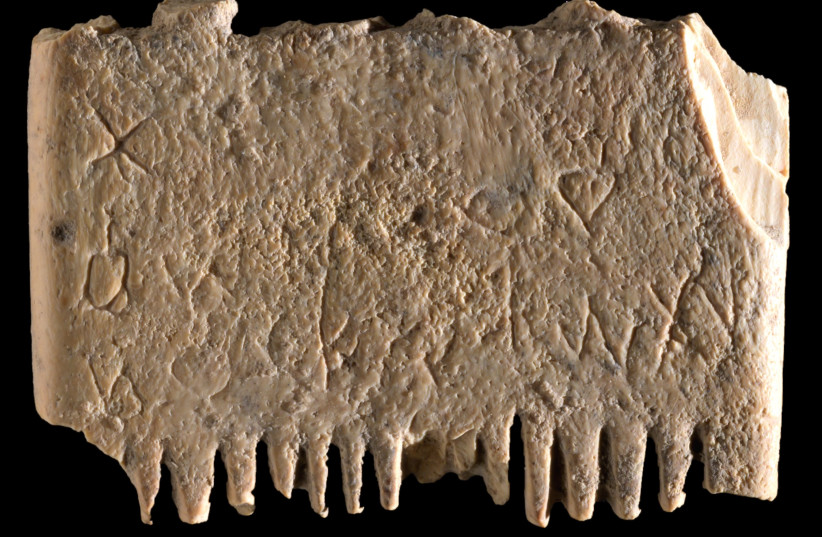
The ivory comb.
(photo credit: DAFNA GAZIT/ISRAEL ANTIQUITIES AUTHORITY)

Ancient Canaanites suffered from lice, pediculus humanus capitis, on their beards and not just on their heads as do young children in Israeli schools today. The first sentence ever written in their language from 1700 BCE appears on an ivory comb inscribed with a hopeful plea to wipe out the lice: “May this [ivory] tusk root out the lice of the hair and the beard.”

The alphabet was invented around a century before and was used by the Canaanites and later included in most other languages in the world. Until recently, no meaningful Canaanite inscriptions had been discovered in the Land of Israel, except for two or three words here and there.

The comb was dug up at Israel’s Tel Lachish by a team from the Hebrew University of Jerusalem (HU) and Southern Adventist University in Tennessee under the direction of professors Yosef Garfinkel, Michael Hasel and Martin Klingbeil. The inscription was deciphered by semitic epigraphist Dr. Daniel Vainstub at Ben-Gurion University of the Negev (BGU) in Beersheba. The ivory was tested by HU Prof. Rivka Rabinovich and BGU Prof. Yuval Goren and found to originate from an elephant tusk.

Their findings were published in the peer-reviewed journal Jerusalem Journal of Archaeology under the title “A Canaanite’s Wish to Eradicate Lice on an Inscribed Ivory Comb from Lachish.”

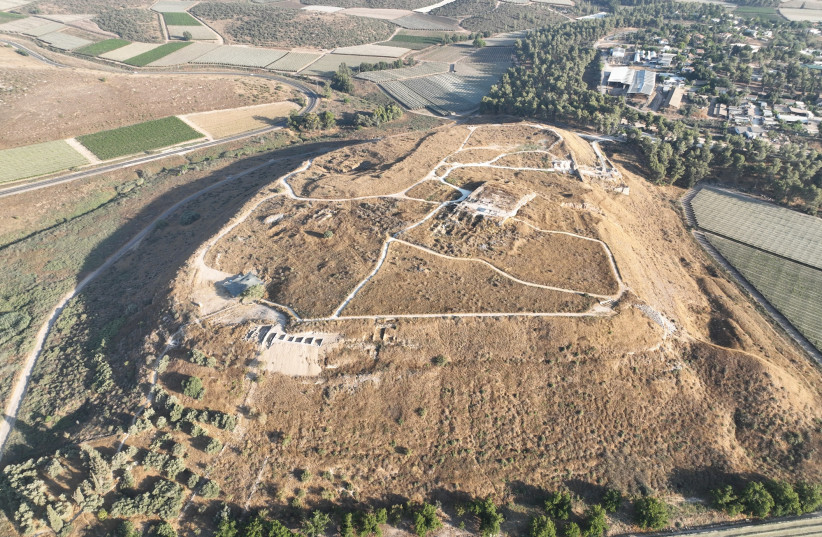
Aerial view of Tel Lachish. (credit: EMIL ALADJEM/ISRAEL ANTIQUITIES AUTHORITY)

Where was Lachish?

Lachish was an ancient Canaanite and Israelite city in the lowlands of Judea on the southern bank of the Lakhish River. It was mentioned several times in the Hebrew Bible. To date, 10 Canaanite inscriptions have been found there, more than at any other site in Israel. The city was the major center for the use and preservation of the alphabet for more than 600 years, from about 1800 BCE to 1150 BCE.

In the Book of Joshua, it is mentioned as one of the cities destroyed by the Israelites for joining the league against the Gibeonites (Joshua 10:31-33). The territory was later assigned to the tribe of Judah (15:39) and became part of the United Kingdom of Israel. Following the kingdom’s partition, Lachish emerged as one of the most important cities in the Kingdom of Judah, second only to the capital, Jerusalem.

Today, Lachish is a national park run and cared for by the Israel Nature and Parks Authority.

The letters of the inscription were engraved in a very shallow manner. It was excavated in 2017, but the letters were noticed only in subsequent post-processing in 2022 by Dr. Madeleine Mumcuoglu, a research associate at HU’s Institute of Archaeology. It was cleaned and preserved by Miriam Lavi.

The ivory comb is small, measuring roughly 3.5 by 2.5 centimeters. The comb has teeth on both sides. Although their bases are still visible, the comb teeth were broken in antiquity. The central part of the comb is somewhat eroded, possibly by the pressure of fingers holding the comb during haircare or removal of lice from the head or beard. The side of the comb with six thick teeth was used to untangle knots in the hair, while the other side, with 14 fine teeth, was used to remove lice and their eggs, much like the two-sided lice combs sold today in Israeli pharmacies and other stores.

There are 17 Canaanite letters – archaic in form from the first stage of the invention of the alphabet script – on the comb, and they form seven words in Canaanite.

“This is the first sentence ever found in the Canaanite language in Israel,” the researchers wrote. “There are Canaanites in Ugarit in Syria, but they write in a different script – not the alphabet that is used today. The Canaanite cities are mentioned in Egyptian documents, the Amarna letters that were written in Akkadian and in the Hebrew Bible. Amarna letters are an archive written on clay tablets primarily consisting of diplomatic correspondence between the Egyptian administration and its representatives in Canaan and Amurru or neighboring kingdom leaders, during the New Kingdom, spanning a period of just three decades from 1360 BCE.”

The comb’s inscription is direct evidence for the use of the alphabet in daily activities some 3,700 years ago.

“This is a landmark in the history of the human ability to write,” Garfinkel said.

Ancient combs were made from wood, bone or ivory, which was a very expensive material and likely an imported luxury object. As there were no elephants in Canaan during that time period, the comb likely came from nearby Egypt. These factors indicate that even people of high social status suffered from lice.

The research team analyzed the comb for the presence of lice under a microscope, and photographs were taken of both sides. Remains of head lice, 0.5 to 0.6 millimeters in size, were found on the second tooth. The climatic conditions of Lachish, however, did not allow the preservation of whole head lice but only those of the outer chitin (polymer) membrane of the nymph-stage head louse.

Despite its small size, the inscription on the comb from Lachish has very special features, some of which are unique and fill in gaps in our knowledge of many aspects of the culture of Canaan in the Bronze Age.

For the first time, we have an entire verbal sentence written in the dialect spoken by the Canaanite inhabitants of Lachish, making it possible for us to compare this language in all its aspects with the other sources for it. Second, the inscription on the comb sheds light on some aspects of the routine of life at the time that were unknown until now, including haircare and dealing with lice.

It is also the first discovery in the region of an inscription referring to the purpose of the object on which it was written, unlike dedicatory or ownership inscriptions on objects.

The engraver’s skill in successfully executing such tiny letters is a fact that from now on should be taken into account in any attempt to summarize and draw conclusions on literacy in Canaan in the Bronze Age, the archaeologists wrote.


Zawartość publikowanych artykułów i materiałów nie reprezentuje poglądów ani opinii Reunion’68,
ani też webmastera Blogu Reunion’68, chyba ze jest to wyraźnie zaznaczone.
Twoje uwagi, linki, własne artykuły lub wiadomości prześlij na adres:
webmaster@reunion68.com

TV7 Israel News


TV7 Israel News

TV7 Israel News


1) IDF Chief of General Staff Lieutenant General Aviv Kochavi reveals that many dozens of terror operatives were killed since the month of March, as Operation Waves Breaker continues to yield operational fruit.
2) The United States deplores Jewish Power Chairman Itamar Ben-Gvir for attending a memorial ceremony commemorating Rabbi Meir Kahane, slain leader of the Kach faction, which is a designated terror organization.
3) The International Atomic Energy Agency Director General Rafael Mariano Grossi voices the alarm over Iran’s nuclear advances and refusal to cooperate.


Zawartość publikowanych artykułów i materiałów nie reprezentuje poglądów ani opinii Reunion’68,
ani też webmastera Blogu Reunion’68, chyba ze jest to wyraźnie zaznaczone.
Twoje uwagi, linki, własne artykuły lub wiadomości prześlij na adres:
webmaster@reunion68.com