Archive | June 2015

Studia judaistyczne

Strona głównaStudia judaistyczne

Z dumą i radością pragniemy poinformować, że Instytut Historyczny Uniwersytetu Warszawskiego uruchamia od roku akademickiego 2014/2015 nowy kierunek studiów licencjackich – studia judaistyczne: „Historia i kultura Żydów”

Dokumenty wymagane od kandydatów zakwalifikowanych na stacjonarne studia pierwszego stopnia w Instytucie Historycznym UW:

  • Oryginał oraz fotokopia świadectwa dojrzałości albo dyplomu IB albo świadectwa maturalnego uzyskanego za granicą (kopia zostanie poświadczona na miejscu na podstawie oryginału)
  • podanie o przyjęcie na studia wydrukowane z osobistego konta rejestracyjnego kandydata i podpisane przez kandydata,
  • dowód osobisty i fotokopia jego obu stron (poświadczamy na miejscu),
  • 2 fotografie zgodne z wymaganiami stosowanymi przy wydawaniu dowodów osobistych,
  • podanie o wydanie elektronicznej legitymacji studenckiej, podpisane przez kandydata i wydrukowane po wprowadzeniu przez kandydata na osobiste konto rejestracyjne jego fotografii (podanie to pojawia sie jako druga strona podania o przyjęcie na studia),
  • dowód wpłaty za elektroniczną legitymację studencką (numer konta w IRK-a).
  • w przypadku olimpijczyków i laureatów konkursów – zaświadczenie o uzyskaniu tytułu finalisty lub laureata,
  • oświadczenie studenta o spełnianiu warunków do podjecia i kontynuowania studiów stacjonarnych w uczelni publicznej bez wnoszenia opłat – jeżeli dotyczy kandydata.

Od kandydata legitymującego się świadectwem maturalnym lub dyplomem ukończenia studiów wyższych wydanymi za granicą – poza wymienionymi ww. dokumentami – wymagane są następujące dokumenty:

  • zaświadczenie o nostryfikacji – w przypadku świadectwa maturalnego wydanego w kraju, z którym Polska nie zawarła umowy o wzajemnym uznawaniu dokumentów o wykształceniu, oraz w przypadku dokumentu z kraju, z którym Polska zawarła ww. umowę, ale dokument ten nie jest nią objęty;
  • poświadczenie w formie legalizacji lub apostille, jeżeli dokument został wydany przez instytucję działającą w systemie edukacji państwa będącego stroną Konwencji Haskiej z dnia 5 października 1961 r. znoszącej wymóg legalizacji zagranicznych dokumentów urzędowych (Dz. U. z 2005 r. Nr 112, poz. 938 i 939);
  • tłumaczenie przysięgłe na język polski świadectwa lub dyplomu oraz ww. poświadczenia (jeśli zostało sporządzone w języku obcym),
  • oświadczenie studenta o spełnianiu warunków do podjecia i kontynuowania studiów stacjonarnych w uczelni publicznej bez wnoszenia opłat – jeżeli dotyczy kandydata.

Dokumenty wymagane od kandydatów zakwalifikowanych na stacjonarne studia równoległe pierwszego stopnia w Instytucie Historycznym UW:

  • podanie o przyjęcie na studia wydrukowane z osobistego konta rejestracyjnego kandydata i podpisane przez kandydata,
  • świadectwo maturalne (lub odpis) wraz z jego fotokopią (zostanie poświadczona na miejscu)
  • dowód osobisty i fotokopia jego obu stron (poświadczamy na miejscu),
  • zaświadczenie z macierzystego wydziału o studiowaniu oraz o uzyskaniu z ostatniego roku studiów średniej powyżej 4,50,
  • zdjęcie zgodne z wymaganiami stosowanymi przy wydawaniu dowodów osobistych,
  • oświadczenie studenta o spełnianiu warunków do podjecia i kontynuowania studiów stacjonarnych w uczelni publicznej bez wnoszenia opłat – jeżeli dotyczy kandydata

UWAGA!
Podpisane dokumenty mogą być składane przez osobę inną niż kandydat.
Dokumenty może odebrać kandydat bądź osoba upoważniona notarialnie.


„Historia i kultura Żydów”

Studia te oferują kształcenie o charakterze ogólnohumanistycznym, ze szczególnym naciskiem na poznawanie, badanie i opisywanie dziejów i kultury Żydów polskich. Studenci zdobywają szeroką wiedzę merytoryczną oraz podstawowe umiejętności interdyscyplinarnego warsztatu badawczego, powiązanego z różnymi dyscyplinami nauki, takimi jak historia, literaturoznawstwo czy kulturoznawstwo. Zdobywają kompetencje w zakresie znajomości języka jidysz i hebrajskiego. Potencjał naukowy Instytutu Historycznego – minimum kadrowe oraz dostępne dla studentów zbiory biblioteki – zapewniają pełną realizację efektów kształcenia. Studia judaistyczne przygotowują absolwentów do podjęcia studiów judaistycznych II stopnia, a także do dalszego kształcenia się na kierunkach humanistycznych i społecznych oraz do pracy zawodowej w rozmaitych instytucjach kultury, takich jak muzea, fundacje, organizacje społeczne czy samorządowe, w obszarze edukacji oraz w administracji. Uzyskane w czasie studiów wiedza i umiejętności dają także możliwość (po odpowiednim uzupełnieniu stosownymi kursami i szkoleniami) realizacji swoich pasji w szeroko rozumianej branży turystycznej i rozrywkowej. Studia judaistyczne prowadzone w Instytucie Historycznym UW, poprzez szczególne przywiązywanie uwagi do spraw tolerancji, wielokulturowości, poszanowania dla różnych postaw religijnych i światopoglądowych, doskonale przygotowują pracowników dla instytucji, w których wymagana jest praca w środowisku multietnicznym, wielojęzykowym i zróżnicowanym kulturowo. W podjęciu pracy zawodowej przydatne z pewnością będą przewidziane w programie studiów praktyki zawodowe w instytucjach zajmujących się kulturą, sztuką i historią Żydów.

Plan studiów judaistycznych stacjonarnych I stopnia na kierunku „Historia i kultura Żydów” z podziałem na etapy i punktacją ECTS (obowiązuje od 1 października 2014)

Czytaj wiecej tu: Studia judaistyczne


twoje uwagi, linki, wlasne artykuly, lub wiadomosci przeslij do: webmaster@reunion68.com



France Scaling Back Security of Jewish Communities Though Attacks on the Rise

France Scaling Back Security of Jewish Communities Though Attacks on the Rise

Eliezer Sherman


The wreath left outside the Hyper Cacher kosher supermarket in Paris by U.S. Secretary of State John Kerry and French Foreign Minister Laurent Fabius on Jan. 16, to pay homage to the Jewish victims of the Jan. 9 terrorist attack at that site. Photo: U.S. Department of State

Although at least three antisemitic acts are committed daily against Jews in France, it appears French security has been scaling back efforts to protect the country’s anxious Jewish communities, the British Jewish Chronicle reported on Thursday.

Just five months after a deadly terrorist attack at a kosher supermarket in Paris, “the truth is that this [French] military protection is, unofficially, waning,” reported the JC.

The report stemmed from concerns among synagogues and community centers, especially outside urban centers, that soldiers have begun providing only preliminary security at events, leaving the premises shortly after ceremonies or other engagements begin.

“Some small shuls have been told that they will not be guarded for an event that has fewer than ten participants,” said the JC, which is potentially devastating for Orthodox or other smaller communities in which barely a quorum is summoned for daily prayers.

The report came amid an announcement by the French antisemitism watchdog the Bureau National de Vigilance Contre l’Antisemitisme that on average three antisemitic acts are committed against Jews in France every day.

The head of France’s department to combat racism and antisemitism, Gilles Clavreul, confirmed those figures, according to the JC.

And since the January siege at the kosher supermarket, in which an armed gunmen who swore allegiance to the Islamic State slaughtered four Jewish hostages, 22 complaints of violent incidents have been filed.

One of those involved the brutal beating of a French teenager by four assailants in north-east Paris. The boy reportedly lost 30 percent of his vision as a result of the attack.

In addition, since the HyperCacher attack, the watchdog said it has registered 72 online incidents and 60 accounts of verbal abuse and threats.

Adding to an air of despondency, French Jews are reporting incidents of hateful crimes against their community “less and less,” said the bureau.

“If the perpetrators get arrested they are released again and just continue with the attacks,” said BNVCA director Danielle Ferra. “If they go to prison, they become Islamist extremists. We don’t know what to do.”

The rising attacks have spurred increased migration to Israel said a spokesperson from SOS Racisme, who indicated the number is likely to rise to 10,000 in 2015 from 6,500 last year.

Shortly after the supermarket attack in January, which occurred in conjunction with the slaughter at the French satire magazine Charlie Hebdo, Israeli Prime Minister Benjamin Netanyahu told French Jews “Israel is your home.”

Last month, French Prime Minister Manuel Valls pledged $107 million to fight racism and antisemitism, saying “”Racism, anti-Semitism, hatred of Muslims, of foreigners and homophobia are growing in an insufferable manner in our country.”


twoje uwagi, linki, wlasne artykuly, lub wiadomosci przeslij do: webmaster@reunion68.com


Film about Holocaust-era hero Jan Karski debuts in Jerusalem


Film about Holocaust-era hero Jan Karski debuts in Jerusalem

Jan Karski

Film about Holocaust-era hero Jan Karski debuts in Jerusalem

WJC President Ronald Lauder says during event, ‘Karski is my hero because he spoke up when most people remained silent. We Jews know what happens when the world is silent.’

The film “Karski and the Lords of Humanity” was screened for the first time outside Poland this week at Jerusalem’s Menachem Begin Heritage Center.

The event was sponsored by the Israel Council on Foreign Relations, which operates under the auspices of the World Jewish Congress (WJC), and the Polish Institute in Tel Aviv.
More than 300 guests, including Poland’s Foreign Minister Grzegorz Schetyna and the WJC leadership, which is holding a meeting of its Steering Committee in the Israeli capital this week, attended the screening Sunday night.

WJC President Ronald S. Lauder told them, “Just as Jan Karski sought to draw attention to the horrifying plight of the Jews in German-occupied Poland, so do I now feel compelled to highlight the precarious situation of our Christian brothers and sisters. Karski is my hero because he spoke up when most people remained silent. We Jews know what happens when the world is silent.”

Lauder added that “there could be no more fitting way to mark the 25th anniversary of the resumption of diplomatic relations between Israel and Poland.”

polecil: Vlady Rozenbaum

The Polish foreign minister said, “This is a must-see film for government officials in every country because passivity can lead to horror.”

The film’s director, Sławomir Grünberg, was present for the screening, as were the producers. Grünberg noted, “Karski’s dream was to become a diplomat. That dream was dashed by the war. Today, however, through this film, his message of compassion in diplomacy is being spread and his dream has, in effect, come true.”

Jan Karski (1914–2001), the heroic courier of the Polish underground state, was an eyewitness to the destruction of Polish Jewry and was among the first to personally bring detailed information to the attention of to Anglo-American leaders, including President Franklin D. Roosevelt.

He wrote one of the first books about Nazi atrocities, and after the war he taught two generations of students at Georgetown University in Washington, DC.


twoje uwagi, linki, wlasne artykuly, lub wiadomosci przeslij do: webmaster@reunion68.com



Cleaning Up Land-Based Oil Spills Shows Promise

HomeNew Method for Cleaning Up Land-Based Oil Spills Shows Promise

Len Rosen


Len Rosen's picture

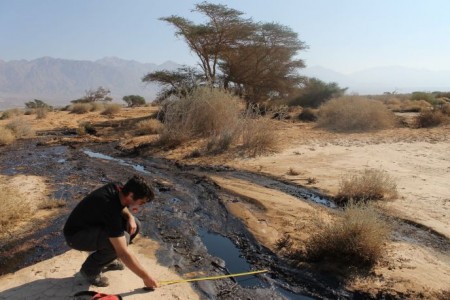
May 22, 2015 – Researchers at Hebrew University of Jerusalem have developed a product that oxidizes soil polluted by oil and other contaminants. According to an article appearing in the May 22, 2015 edition of Haaretz, one of Israel’s leading daily newspapers, the product, known as NHS+ reagent, was developed at the Casali Institute of Applied Chemistry. The product can be used at the site of a spill and within a few hours turns oil in the soil into carbon dioxide and water. Its inventors, Professor Yoel Sasson and Dr. Uri Stoin, refer to it as a hydrocarbon destructor that works on oil or solvent spills.

The technology went from the laboratory at Hebrew University to Yissum Research and Development, a technology transfer company the university set up in 1964. Yissum handles more than 8,900 patents, 2,500 inventions and has licensed 800 different products and processes globally. This has spawned 90 different companies which generate more than $2 billion U.S. in annual sales. The range of technologies coming out of Hebrew University that Yissum has commercialized cover agriculture and food, chemistry and materials science, clean up and environmental technologies, computer science and engineering, life sciences, biotechnology, veterinary and animal sciences.

In the case of NHS+ reagent, it has been sold to the Man Oil Group, a Swiss company. In December 2014 they conducted a desert pilot at an Israeli landfill site containing contaminated soils. The process of application took approximately two hours and within a few hours after the reagent had converted 80 to 90% of the hydrocarbon contaminants to carbon dioxide and water.

oil spill cleanup land

Now consider the potential value this technology represents with oil increasingly being shipped in North America from points of origin, like the Alberta oil sands, to refineries and transhipment terminals. Along all these routes the chance of spills, although small, warrants investing in this type of product. And if you have ever walked along a railway track it is certainly not an uncommon site to see the residue from petroleum and solvents on the ties and surrounding soil, tens of thousands of contaminated square kilometers. An inexpensive oxidizing solution such as NHS+ reagent can eliminate the contaminants ensuring they don’t end up in runoff impacting neighbouring lakes, ponds, rivers and groundwater.

According to its developers NHS+ reagent is more reliable than detergents or the biological agents commonly used today for oil spill clean up. Detergents leave residual chemicals in the soil which then means it has to be carted away. For biological agents, the soil too must be first removed before a bacteria is applied. The process can take months or even years before decontamination. With this new reagent, however, application is done at the site without any impact on flora or fauna and without damage to surrounding or buried infrastructure.

For the foreseeable future while we still rely heavily on oil for energy, and continue to move it over land, whether by pipeline, rail or truck, we will need clean up technology that can counter the negative impact of spills. This one looks like a good bet!


twoje uwagi, linki, wlasne artykuly, lub wiadomosci przeslij do: webmaster@reunion68.com


Mahmoud Abbas: Nigdy nie uznam żydowskiego państwa.

Mahmoud Abbas: Nigdy nie uznam żydowskiego państwa. Porwanie Gilada Szalita było dobra rzeczą

tlumaczenie: Malgorzata Koraszewska


W wywiadzie dla egipskiej telewizji prezydent Autonomii Palestyńskiej powiedział jednoznacznie, że nie zamierza uznać żydowskiego państwa i że popiera metody terrorystów.


twoje uwagi, linki, wlasne artykuly, lub wiadomosci przeslij do: webmaster@reunion68.com