Archive | May 2016

Sweden Choosing to Lose War against Middle East Antisemitism?

Gatestone InstituteSweden Choosing to Lose War against Middle East Antisemitism?

by Nima Gholam Ali Pour


  • Who invited this “Salafist megastar,” who denies the Holocaust and is known for making anti-Semitic statements, to visit Malmö? What do you do when anti-Semitism in Malmö, Sweden’s third-largest city, is so normalized that children in a public school can endorse a conference with anti-Semitic elements?
  • Anti-Semitism is such a gigantic problem in Malmö that even senior city officials cannot understand how it became so normalized. They seem to dismiss it as part of a non-Swedish culture that, in a multicultural society, must be tolerated, even accommodated.
  • If there are children in Swedish public schools today who are promoting an anti-Semitic conference, what will these children do in the future?
  • Is Sweden really turning into a country where Jews are no longer welcome, someday to become a country without Jews? And if that happens, what does that say about Sweden? And who will come next after the Jews?

Malmö, Sweden’s third-largest city, is an important, visible part of Sweden. If you read the Municipality of Malmö’s political objectives, which the Municipal Council of Malmö has endorsed, you will see that “racism, discrimination and hate crimes do not belong in open Malmö.” The reality, however, is different. Anti-Semitism there has reached bizarre levels — with politicians and other policymakers in Sweden doing nothing about it.

On April 30, 2016, the Islamic imam and preacher Salman Al-Ouda, who has been described in the Swedish media as a “Salafist megastar,” visited Malmö. Al-Ouda apparently inspired Osama bin Laden, has claimed that the Holocaust was a myth, and is known for making anti-Semitic statements.

The first question anyone should ask is: Who invited such a person to visit Malmö?

It turned out that it was a politician from the Green Party, currently part of the Swedish government’s ruling coalition, and which also governs in Malmö locally, together with the Social Democrats.

The second question that anyone should ask is: What kind of reception did Al-Ouda receive in such a large Swedish city?

Well, Al-Ouda got to speak at one of Malmö’s most famous conference facilities, Amiralen, described on the official website of the Municipality of Malmö as a part of the city’s cultural heritage. Al-Ouda was also invited by the Alhambra Muslim student association, at Malmö University. In other words, even though Malmö’s policies officially state that racism has no place in Malmö, Al-Ouda, an anti-Semite, was treated as a diplomat.

On May 6, just a week after Al-Ouda’s visit, the fourteenth “Palestinians in Europe Conference” was held in Malmö. One of the conference’s organizers, the Palestinian Return Centre, has close ties to the Hamas terrorist organization.

The Palestinians in Europe Conference was held at Malmömässan, another famous conference center in Malmö. When a Swedish pro-Israel organization, Perspektiv På Israel, sent an email to the CEO of Malmömässan, Lasse Larsson, to warn him that an anti-Semite was going to speak at his conference center, Larsson replied:

We, MalmöMässan, do not take positions on the substance of the matter, but have entrusted this to our authorities that have given the go-ahead and therefore we will allow the conference to be conducted.”

The problem is that if you allow someone to spread hatred against Jews, you need to have a clear position. Would he have allowed the hall to be used to spread hate speech against African-Swedes or homosexuals or women?

In Malmö, when it comes to Middle Eastern anti-Semitism, there is currently no clear position from any major institution.

When it was revealed that one of the speakers at the Palestinians in Europe Conference was to be the former Grand Mufti of Jerusalem, Sheikh Ekrim Said Sabri, who has also repeatedly made anti-Semitic remarks, an announcement came that two Swedish Members of Parliament, Hillevi Larsson (Social Democrat) and Daniel Sestrajcic (Left Party), would also speak at it. This arrangement appeared to be no coincidence. In October 2015, both of these MPs spoke in Malmö at a rally in which participants celebrated knife attacks against Jews in Israel. Additionally, when the Eurovision Song Contest took place in Malmö in 2013, it was Daniel Sestrajcic, then chairman of Malmö’s Municipal Cultural board, who argued that Eurovision should suspend Israel.

After the Perspektiv På Israel organization revealed that Sestrajcic and Larsson were to participate in the Palestinians in Europe Conference with Sheikh Sabri, a known anti-Semite, Israel’s ambassador to Sweden wrote a critical op-ed for a major Swedish newspaper — after which the two MPs cancelled their appearance.

Wait, it gets worse. Prior to the Palestinian conference, a public school class in Malmö participated in an video advertisement promoting it. The advertisement was filmed on the premises of the Apelgårdsskolan public elementary school. The idea that in Sweden a public school openly endorses a Palestinian conference to which an anti-Semite is invited to speak may also sound bizarre, but that is exactly what took place.

As this author also happens to be a member of Malmö’s school board, it seemed normal to contact the school’s director and the municipal councilor responsible for primary schools, to report the advertisement. The councilor never responded — but the school’s director did. The advertising video, he said, was just a “call to participate in the conference.”

What do you do when anti-Semitism in Sweden’s third-largest city is so normalized that children in a public school can endorse a conference with anti-Semitic elements?

Although the school director’s reply was published in the online magazine Situation Malmö (of which this author is the editor), the media in Malmö was, as always, silent.
Apelgårdsskolan elementary school in Malmö (left) openly endorsed a conference to which Sheikh Ekrim Said Sabri, who has repeatedly made anti-Semitic remarks, was invited to speak. Right: Hillevi Larsson, a Social Democratic MP representing a district of Malmö, accepted an invitation to speak at the same conference where Sheikh Sabri was scheduled to speak. Larsson is pictured showing off a Palestinian flag and a “map of Palestine” in which Israel does not exist.

The topic of anti-Semitism is so normalized in Malmö that when children are promoting a conference with anti-Semitic elements, it is not something the media even writes about. The omission seems part of an editorial policy of deliberately choosing not to report about Islamic and Palestinian anti-Semitism.

Anti-Semitism, is, in fact, such a gigantic problem in Malmö that even senior politicians and officials in the city seem not to understand how it became so normalized. They seem to dismiss it as part of a non-Swedish culture that, in a multicultural society, must be tolerated, even accommodated.

It is only in Muslim countries — and evidently extreme liberal countries such as Sweden — that a public school could promote a conference with anti-Semitic elements without anyone reacting.

That this happens in one of Sweden’s largest cities, means that leading politicians in the country are aware of this rough anti-Semitic wave, but prefer not to do anything about it.

Some of the reasons for this preference are:

  • Large-scale immigration from countries where anti-Semitism is normalized.
  • A strong pro-Palestinian engagement among Swedish politicians that has resulted in a totally surreal debate about the Israel-Palestine debate, in which Israel is unjustly demonized.
  • A desire among political parties in Sweden to win the votes of immigrants.
  • A Swedish multiculturalism that is so uncritical of foreign cultures that it cannot differentiate between culture and racism.
  • A fear of sounding critical of immigration.
  • Important Swedish institutions, such as the Church of Sweden, legitimizing anti-Semitism by endorsing the Kairos Palestine document.

Sweden has officially surrendered to the Middle Eastern anti-Semitism.

The period of April-May 2016, and the visits by assorted anti-Semites to Malmö, show a regrettable pattern. In Sweden in general, and Malmö in particular, there are too many politicians, senior officials, journalists, heads of schools and companies that do not distance themselves from anti-Semitism.

Such a condition cannot only be described as bizarre; it is extremely dangerous.

There are Jewish communities in Malmö and elsewhere in Sweden. Jews are one of Sweden’s five recognized minorities. As one of the countries that has joined the Council of Europe’s Framework Convention for the Protection of National Minorities, Sweden has an obligation to stop the normalization of anti-Semitism in Sweden.

When politicians and senior officials let children in Sweden’s third-largest city endorse a racist conference, with which even the most extreme anti-Israel Swedish MPs refuse to associate, it is obvious that Sweden wishes to lose its fight against Middle Eastern anti-Semitism. Allowing schoolchildren to endorse anti-Semitism deserves nothing but condemnation, whether in Gaza or in Sweden. We expect this pattern in Sweden of indulging anti-Semitism to be fixed.

If there are children in Swedish public schools today who are promoting an anti-Semitic conference, what will these children do in the future? In a European continent where Western values are being challenged by Islamic values and European security is threatened by Islamic extremists, these children are being abandoned and being forced into choosing racist values, because Swedish authorities refuse to say “No” to Middle Eastern anti-Semitism.

The more normalized Middle Eastern anti-Semitism becomes in Sweden, the more you see Palestinian and other Arabic and Islamic organizations pushing the limits of how openly they can express it. You start asking yourself, will Sweden someday become a country without Jews. And if that happens, what does that say about Sweden? And who will come next after the Jews? To cleanse a country of Jews through massive Islamic immigration is no better than doing the same thing through cattle-cars or concentration camps.

Is Sweden really turning into a country where Jews are no longer welcome?

Have the institutions in Sweden really chosen to lose the fight against Middle Eastern anti-Semitism and to let extremist Islam win?


Nima Gholam Ali Pour is a member of the board of education in the Swedish city of Malmö and is engaged in several Swedish think tanks concerned with the Middle East. He is also editor for the social conservative website Situation Malmö. Gholam Ali Pour is the author of the Swedish book “Därför är mångkultur förtryck”(“Why multiculturalism is oppression”).


twoje uwagi, linki, wlasne artykuly, lub wiadomosci przeslij do: webmaster@reunion68.com


ksiażki – Akacje kwitną. Montaże

Wydawnictwo AUSTERIAksiażki – Akacje kwitną. Montaże

opracował: Branley Zeichner


…napisał do mnie Branley Zeichner: … a tam znalazlem trop do Akacje kwitną. Montaże

.. i do autorki: –

Debora Vogel by S. I. Witkiewicz, 1929 or 1930 | foto: Wirtual Shtetl


IlustracjaDebora Vogel
Pochodziła z rodziny inteligenckiej. Podczas I wojny światowej wraz z rodzicami przeniosła się z Bursztyna do Wiednia
Po maturze, którą zdała już we Lwowie (w polskiej szkole), została wychowawczynią w sierocińcu, którym kierował jej ojciec. Jednocześnie studiowała filozofię i psychologię na Uniwersytecie Jana Kazimierza. Psychologię wykładała potem w gimnazjum hebrajskim. Pierwsze teksty publikowała w języku polskim, później przeszła na jidysz. Znawczyni kubizmu, zajmowała się krytyką twórczości żydowskich malarzy z kręgu „legérystów”. Publikowała m.in. w jidyszowym czasopiśmie „Cusztajer” (Darowizna), a także w polskich „Sygnałach” i „Wiadomościach Literackich”. Jest autorką dwóch tomów poezji „Tog figurn” (jid. Postacie dnia) i „Manekinen” (jid. Manekiny). W 1935 r. ukazał się jej tom prozy pt. „Akacje kwitną”. Wywarła duży wpływ na twórczość Bruna Schulza.


Wydawnictwo Austeria nie wspomina/ nie wie, ze kwitnace w Warszawie w 1935 roku akacje zakwitly wlasciwie rok wczesniej po zydowsku w Warsze – אקאציעס בליען: מאנטאזשן.

Polska wersja doczekala sie wznowienia w 2006r. Zydowskie wydanie z 1934 mozna znalezc po bibliotekach i aukcjach. Wznowienia pewnie nie bedzie…


Tom opowiadań, „montaży”, jak je nazywała Debora Vogel, zrodził się nie tylko z (dziś zaginionej) korespondencji z Schulzem, ale również z jej własnych, oryginalnych teorii estetycznych. Vogel fascynowała się konstruktywizmem w malarstwie i modernizmem w literaturze, ale w głębi duszy pozostała chyba artystką liryczną. Swym tekstom starała się nadać cechy gazetowego reportażu, kompozycji złożonych z pojedynczych szybkich ujęć, jak gdyby niepoddanych selekcji. Jej bohaterowie, umyślnie schematyczni i podobni do manekinów, spacerują ulicami wymyślonego, geometrycznego miasta, które przypomina na przemian Paryż i Lwów.

A jednak, choć wyzbyci cech indywidualnych, owi zajęci życiem kelnerzy, fryzjerki, ondulowane damy robotnicy i żołnierze, są bardzo ludzcy, kiedy wsłuchują się w słowa wszechobecnego tanga.
Niniejszy tom jest wznowieniem przedwojennego wydania, wzbogaconym o dalsze utwory Debory Vogel, pisane w jidysz i nigdy wcześniej nie publikowane.
Książka ilustrowana jest pracami Henryka Strengi. Autorką posłowia jest Karolina Szymaniak.

„Papier jest sztywny i płaski, bez prospektów. Papier jest smutny jak ludzie, którzy nie mogą już nic poradzić na życie; jak biało-niebieskie mleko i jak perkal w wielkie kwiaty różowe.

Drzewo zaś jest smutne, jak tylko nieporadni ludzie być mogą; ludzie nudni, którzy nie umieją żyć z niczego: z powietrza granatowego i samego życia.

Widać ich na ulicy i za witryną fotografa. Po ślubie zamawiają fotografie: podziesięć sztuk i po dwanaście, dla wszystkich krewnych i sobie na pamiątkę.

Oni wiedzą: życie trzeba odrobić: wszystko, co przystoi życiu i wszystko w przypisanym porządku i swoim czasie. (O tym, kiedy ten czas przychodzi – poucza życie samo, trzeba tylko zdać się na życie).
Ale nigdy nie jest odrobione wszystko: pozostaje zawsze jeszcze śmierć”.

Przyjaciółka czy nawet niedoszła żona Brunona Schulza, adresatka legendarnych (i niezachowanych) listów, z których zrodziły się „Sklepy cynamonowe”, a także korespondentka Witkacego – w takim kontekście pojawia się zwykle jej nazwisko. Nawet jeśli ktoś wspomina u nas jedyną polską książkę Debory Vogel, też odnosi ją do prozy Schulza, często sugerując pokrewieństwo czy wręcz zależność. Dziś wreszcie możemy zweryfikować te sądy. […] Możemy zobaczyć dzieło Debory Vogel jako samodzielny byt artystyczny, a ją samą jako fascynującą indywidualność, która nie przypadkiem odegrała tak znaczną rolę w życiu i twórczości genialnego pisarza.
Lektor, „Tygodnik Powszechny” nr 16 / 2006.

Niefabularna, odindywidualizowana, nasycona szorstkością wizyjnych obrazów proza Vogel zapowiada świat manekinów Kantora, wieszczy triumf świata tandety, dominację konturów, zapowiada najważniejszą technikę twórczą z przełomu XX i XXI wieku – sekwencję szybko zmontowanych obrazów, wielki, barwny klip muzyczny. Czarnym zwieńczeniem tej apokaliptycznej wizji jest kolorowe pulsowanie cywilizacji MTV, jednakich podrygujących torsów, które nawet nie wiedzą, że mogą pozazdrościć pomarańczy i betonowi duszy. I dlatego ta nowoczesna proza pozostaje po 70 latach żywa, ważna, inspirująca. Dobrze, że książka Debory Vogel do nas wróciła.
Roman Kurkiewicz, „Gazeta Wyborcza” nr 97 / 2006.

Zawarta tu technika kolażu, zmiennego punktu widzenia, krótkich i ekspresywnych zdań mogłaby zaskoczyć wielu współczesnych apostołów nowoczesności, którzy wyważają dzisiaj dawno już otwarte drzwi. Tym, którzy na dźwięk słowa awangarda cofają się do przytulnych wnętrz, można powiedzieć, że ta proza posiada niezwykły walor poetycki: prawie każde z zapisanych tu zdań ma polot wersów Józefa Czechowicza i gęstość materii Brunona Schulza. […] „Akacje kwitną” Debory Vogel – wydane wzorowo pod względem edytorskim i plastycznym – pozwalają nam przejrzeć się w zwierciadle naszego współczesnego życia raz jeszcze: gorączkowy nurt cywilizacji uzyskuje w tej wizji swoją głęboką interpretację. […] Znakomite, ale ciągle niedocenione „Akacje kwitną” to jedna z najważniejszych książek w historii dwudziestowiecznej literatury.
Paweł Huelle, „Dziennik” nr 50 / 2006.


twoje uwagi, linki, wlasne artykuly, lub wiadomosci przeslij do: webmaster@reunion68.com


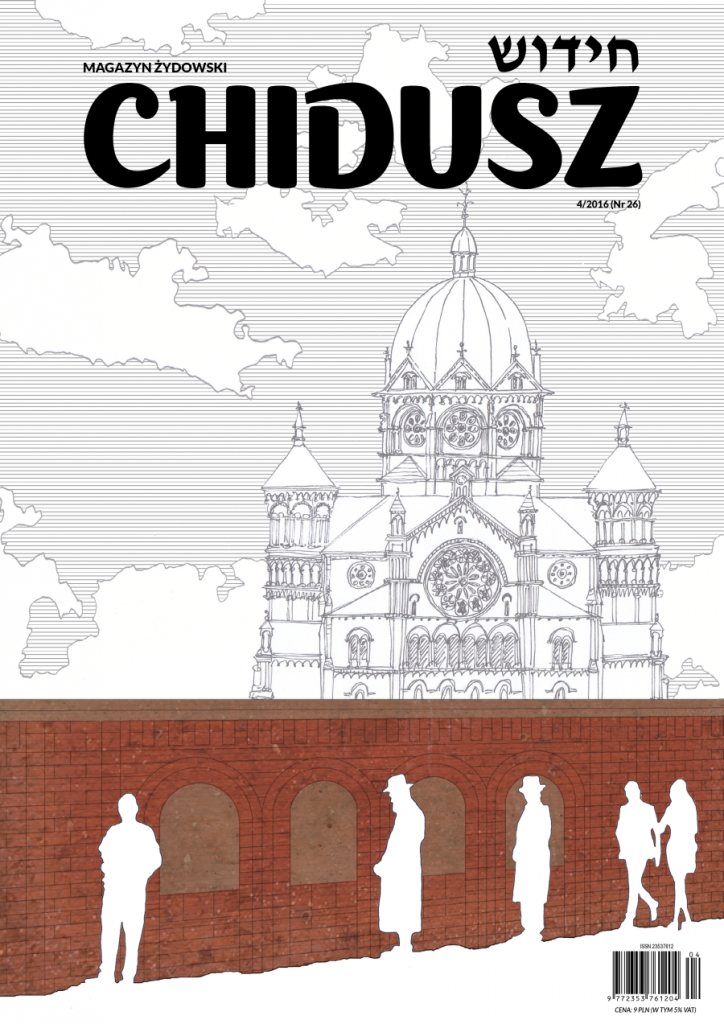
Nowa Synagoga w Breslau – Chidusz 4 / 2016

*Nowa Synagoga w Breslau | Chidusz 4 / 2016

Michał Bojanowski


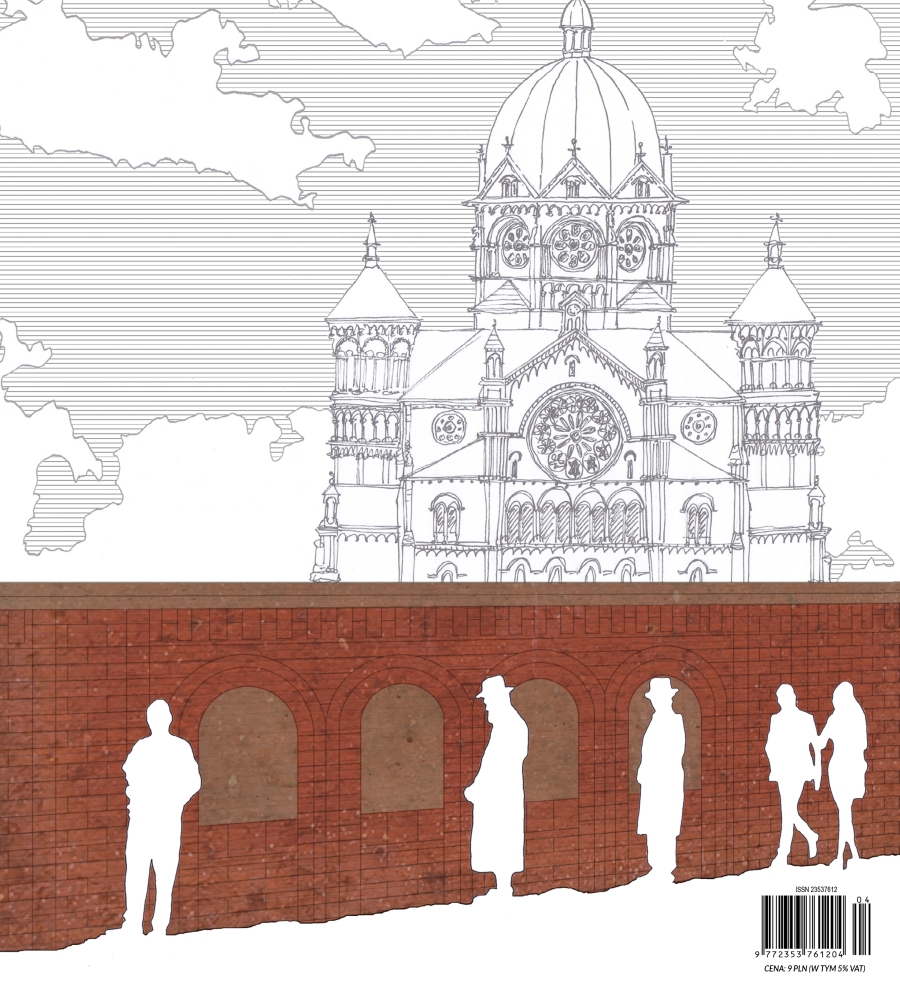
Fragment okładki CHIDUSZU 4/2016 autorstwa Edyty MarciniakFragment okładki CHIDUSZU 4/2016 autorstwa Edyty Marciniak

Okazuje się, że Nowa Synagoga w Breslau, druga (po berlińskiej) największa w ówczesnych Niemczech, nie do końca zniknęła z powierzchni ziemi. Wydawało by się, że po wysadzeniu jej w powietrze podczas nocy kryształowej 1938 roku i późniejszym dokładnym jej rozebraniu, po zawierusze wojennej, zniszczeniu Breslau i nie do końca przemyślanej odbudowie miasta po wojnie, nic nie mogło zachować się do naszych czasów. A jednak.

W tym numerze prezentujemy fragment muru otaczającego synagogę, który do dziś stoi na swoim miejscu we Wrocławiu i praktycznie nikt o nim nie wie. Niezwykłe odkrycie to zasługa Lva Sterna, izraelsko – polskiego architekta związanego z Wrocławiem, który opowiedział Katarzynie Andersz o tym niezwykłym znalezisku i projekcie przeniesienia muru na dziedziniec synagogi Pod Białym Bocianem. Stąd kolejna, wyjątkowa okładka Edyty Marciniak: przedstawia fragment odnalezionego muru oglądany przez mieszkańców Wrocławia. W tle, być może gdzieś pośród obłoków, przypomina się spalona synagoga.

Kwiecień to wyjątkowy miesiąc dla społeczności żydowskiej w Polsce. W tym roku w rocznicę powstania w getcie uroczyście odsłonięto tablicę pamiątkową poświęconą Raoulowi Wallenbergowi, Szwedowi, który podczas drugiej wojny światowej ratował węgierskich Żydów. Upamiętnienie było związane z nadaniem jednej z ulic w centrum Warszawy imienia tego znanego szwedzkiego dyplomaty. Z tej okazji do Polski przyjechała wnuczka siostry Wallenberga. Cecillia Åhlberg opowiedziała o swojej rodzinie, przemianach w szwedzkim społeczeństwie i potrzebie pomocy ludziom w potrzebie, szczególnie teraz, gdy media zapomniały już m.in. o problemie uchodźców, a wzywanie do pomocy jest traktowane jako opowiedzenie się przeciwko obecnej partii rządzącej.

Prenumerata
O prawach człowieka w kontekście postaci Raoula Wallenberga opowiada Rolf Ring, dyrektor szwedzkiego Instytutu im. Raoula Wallenberga w Lund.

Tuż po rocznicy powstania w getcie otwarto w Polsce pierwszy oddział Hillela – międzynarodowej organizacji zrzeszającej studentów żydowskich. O planach w Polsce opowiada Eric Fingerhut, dyrektor Hillel International.

Jakub Lang zaprasza w kolejną podróż do świata muzyki. Tym razem opowiada o żydowskich twórcach Woodstocku, najpopularniejszego festiwalu w historii muzyki rozrywkowej.

Ula Rybicka po raz kolejny prezentuje świeżą dawkę izraelskiej literatury: 11 mikroopowiadań Alexa Epsteina w pierwszym tłumaczeniu na język polski. Ponadto wspominamy zmarłego niedawno Imre Kertesza oraz Szolema Alejchema, którego setna rocznica śmierci niedawno przypadła. Magdalena Wójcik wybrała fragmenty prasy w jidysz sprzed stu lat, które zawiadamiają o śmierci wybitnego pisarza.

„Chidusz” można zakupić w salonach Empik na terenie całego kraju, Muzeum Historii Żydów Polskich POLIN, Żydowskim Instytucie Historycznym oraz w Centrum Informacji Żydowskiej (CIŻ Cafe) we Wrocławiu przy Włodkowica 9. ∎


twoje uwagi, linki, wlasne artykuly, lub wiadomosci przeslij do: webmaster@reunion68.com


The UN’s Shameful Degradation of the Holocaust

The UN’s Shameful Degradation of the Holocaust

Joseph Potasnik


United Nations headquarters in New York. Photo: wiki commons.
As Jews around the world and in Israel prepared to commemorate the Holocaust earlier this month, a disturbing narrative was being broadcast at the United Nations.

Speaking to the press, Palestinian Ambassador Riyad Mansour invoked the resistance fighters of the Warsaw Uprising, equating the Israeli government to the genocidal Nazi regime.

The deafening silence of the UN Secretary General, the European Union, and US Ambassador Samantha Power, among others, evidently served to encourage the proliferation of more hateful statements, when, days later, Venezuela’s UN Ambassador Rafael Ramirez suggested that Security Council members ask themselves whether Israel was planning a “Final Solution” against the Palestinian people.

After criticism by a few UN member states, Ambassador Ramirez released an apology for his libelous statements on May 11th that further inflamed tensions by invoking the ages-old meme of a “lobby” (code for Jewish lobby) that was “manipulating” his remarks.

Those Security Council members who did not publicly condemn these odious comparisons of Israel to the Nazi regime might want to recall that Kofi Annan, UN Secretary General Ban Ki-Moon’s enlightened predecessor, said that “the Holocaust of the Jews” was “unique” in history — unique, because the Nazis sought to exterminate all Jews from the face of the Earth. We Jews did not have the option of making peace with our enemies. We were slaughtered simply because we were Jews. In stark contrast, Israelis do not seek to destroy the Palestinians based on their religion, race or character. The Israeli-Palestinian conflict is a war over land and conflicts over real estate can, and should, be solved through compromise rather than incitement.

We Jews had no ambassador to plead our case as 1/3 of the world’s Jews were systematically annihilated by those who refused to recognize our right to live, let alone in a sovereign state.

While the Nazis exterminated 6 million innocent Jews, including 1 million Jewish children, during the Holocaust, since the occupation, in Gaza alone, the population has increased 600%.

Conflating Gaza and the West Bank with the Nazi occupation of Warsaw and comparing the Israelis to Nazis, is a cynical manipulation of history that trivializes Jewish suffering and delegitimizes a UN member state. Such hate-filled invective has no place in an institution founded on the ashes of the Holocaust and funded by US tax dollars.

Subsequent to Ambassador Mansour’s remarks, UN member states might want to ask themselves the following:

Were the Jews of the Warsaw Ghetto offered peace proposals by the Nazis as the Palestinians have been time and time again by successive Israeli Prime Ministers?

Did the Nazis unilaterally withdraw from any territories so Jews could achieve statehood as was done for the Palestinians in Gaza and proposed in the West Bank?

Did Jewish resistance fighters use their children and schools as human shields, as Palestinians do with impunity?

Comparing recent Palestinian knife, gun and car-ramming terror attacks against Israeli civilians to the Jews who resisted the Nazis’ “final solution” (which included transporting what remained of the Warsaw Ghetto population to Treblinka extermination camp) is an abuse of the UN platform and should be condemned in the strongest possible terms by UN Secretary General Ban Ki-Moon.

A UN that prides itself on teaching “the lessons of the Holocaust” — and a Secretary General who visited Auschwitz — should know, and do, better

Arab attacks on Jews predate any occupation and it is the Hamas charter that reads like a modern-day Mein Kampf. Hamas declares repeatedly in its broadcasts, that “Jews and Christians should be exterminated to the last one of them.”

Both the US State Department and The European Parliamentary Working Group on Anti-Semitism include “Drawing comparisons of contemporary Israeli policy to that of the Nazis” in their definitions of antisemitism. As such, Ambassador Mansour’s press conference has no place being disseminated on the UN website and should be immediately removed.

At the January 22, 2015 historic meeting of the General Assembly, convened to address the rise in Antisemitism worldwide, more than 40 UN member states jointly called for the UN to hold a follow-up conference on antisemitism as part of the “unlearning intolerance” series started in 2004. To date, the Department of Public Information has failed to schedule the conference.

Rather than affording a platform for those who would defile the Holocaust, the UN would do well to recall the words of the Prophet Isaiah, who proclaimed: “Woe to those who call evil good and good evil, who put darkness for light and light for darkness, who put bitter for sweet and sweet for bitter” (5:20).


Rabbi Potasnik is the Executive Vice President of the New York Board of Rabbis, the largest interdenominational rabbinic body in the world and has served as Chaplain of the New York City Fire Department since 1999. Rabbi Potasnik is the son of Holocaust survivors.


twoje uwagi, linki, wlasne artykuly, lub wiadomosci przeslij do: webmaster@reunion68.com