Archive | 2016/05/27

Adam Sitarek w odpowiedzi Piotrowi Zychowiczowi

Adam Sitarek w odpowiedzi Piotrowi Zychowiczowi

Adam Sitarek


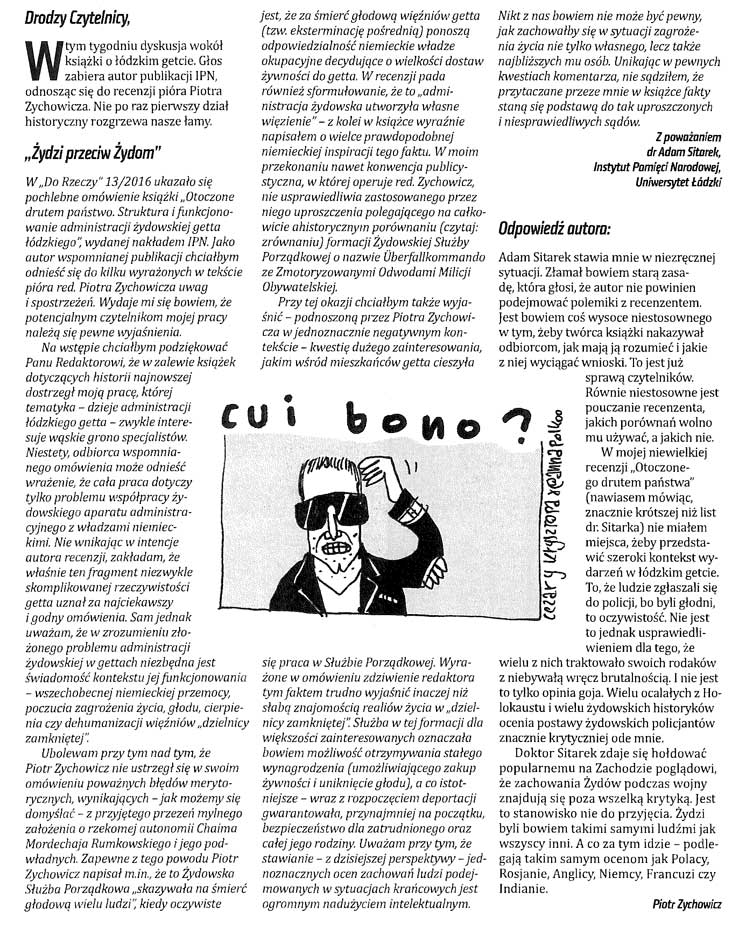
W numerze 13/164 (29 marca 2016 r.) tygodnika „Do Rzeczy” ukazało się przygotowane przez Piotra Zychowicza omówienie książki „Otoczone drutem państwo”. Struktura i funkcjonowanie administracji żydowskiej getta łódzkiego, wydanej nakładem IPN. Autor książki Adam Sitarek nie zgadzając się z tezami i interpretacjami P. Zychowicza przygotował sprostowanie. Niestety redakcja “Do Rzeczy” (mimo ciążącego na niej obowiązkugo) go nie opublikowała. Czynimy więc to za nią …


Szanowna Redakcjo,
Szanowny Panie Redaktorze,

W numerze 13/164 (29 marca 2016 r.) tygodnika „Do Rzeczy” ukazało się omówienie książki „Otoczone drutem państwo”. Struktura i funkcjonowanie administracji żydowskiej getta łódzkiego, wydanej nakładem IPN. Jako autor wspomnianej publikacji chciałbym odnieść się do kilku wyrażonych w tekście pióra redaktora Piotra Zychowicza uwag i spostrzeżeń. Wydaje mi się bowiem, że potencjalnym czytelnikom mojej pracy należą się pewne wyjaśnienia.

Na wstępie chciałbym podziękować Panu Redaktorowi, że w zalewie książek dotyczących historii najnowszej dostrzegł moją pracę, której tematyka – dzieje administracji łódzkiego getta – zwykle interesuje wąskie grono specjalistów. Niestety odbiorca wspomnianego omówienia może odnieść wrażenie, iż cała praca dotyczy tylko problemu współpracy żydowskiego aparatu administracyjnego z władzami niemieckimi. Nie wnikając w intencje autora recenzji zakładam, że właśnie ten fragment niezwykle skomplikowanej rzeczywistości getta uznał za najciekawszy i godny omówienia. Sam jednak uważam, że w zrozumieniu złożonego problemu administracji żydowskiej w gettach, niezbędna jest świadomość kontekstu jej funkcjonowania – wszechobecnej niemieckiej przemocy, poczucia zagrożenia życia, głodu, cierpienia, czy dehumanizacji więźniów „dzielnicy zamkniętej”.

Ubolewam przy tym nad faktem, że Piotr Zychowicz nie ustrzegł się w swoim omówieniu poważnych błędów merytorycznych, wynikających – jak możemy się domyślać – z przyjętego przezeń mylnego założenia o rzekomej autonomii Chaima Mordechaja Rumkowskiego i jego podwładnych. Zapewne z tego powodu Piotr Zychowicz napisał m.in. że to żydowska Służba Porządkowa „skazywała na śmierć głodową wielu ludzi”, kiedy oczywistym jest, że za śmierć głodową więźniów getta (tzw. eksterminację pośrednią) ponoszą odpowiedzialność niemieckie władze okupacyjne decydujące o wielkości dostaw żywności do getta. W recenzji pada również sformułowanie, że to „administracja żydowska utworzyła własne więzienie” – z kolei w książce wyraźnie napisałem o wielce prawdopodobnej niemieckiej inspiracji tego faktu. W moim przekonaniu, nawet konwencja publicystyczna, w której operuje redaktor Zychowicz, nie usprawiedliwia zastosowanego przez niego uproszczenia polegającego na całkowicie ahistorycznym porównaniu (czytaj zrównaniu) formacji żydowskiej Służby Porządkowej o nazwie Überfallkommando ze Zmotoryzowanymi Odwodami Milicji Obywatelskiej.

Przy tej okazji chciałbym także wyjaśnić – podnoszoną przez Piotra Zychowicza w jednoznaczne negatywnym kontekście – kwestię dużego zainteresowania jakim wśród mieszkańców getta cieszyła się praca w Służbie Porządkowej. Wyrażone w omówieniu zdziwienie Redaktora tym faktem, trudno wyjaśnić inaczej jak słabą znajomością realiów życia w „dzielnicy zamkniętej”. Służba w tej formacji dla większości zainteresowanych oznaczała bowiem możliwość otrzymywania stałego wynagrodzenia (umożliwiającego zakup żywności i uniknięcie głodu), a co istotniejsze, wraz z rozpoczęciem deportacji gwarantowała – przynajmniej na początku – bezpieczeństwo dla zatrudnionego oraz całej jego rodziny. Uważam przy tym, że stawianie – z dzisiejszej perspektywy – jednoznacznych ocen na temat zachowań ludzi podejmowanych w sytuacjach krańcowych jest ogromnym nadużyciem intelektualnym. Nikt z nas bowiem nie może być pewny jak zachowałby się w sytuacji zagrożenia życia nie tylko własnego, ale i najbliższych mu osób. Unikając w pewnych kwestiach komentarza, nie sądziłem, że przytaczane przeze mnie w książce fakty staną się podstawą do tak uproszczonych i niesprawiedliwych sądów.
Ze smutkiem skonstatowałem także, że zapewne wbrew intencjom Redaktora i pomimo czynionych przez niego zastrzeżeń, omówienie mojej książki zawiera dawno opisane przez naukę de facto antysemickie wzorce rozumowania. Smutek mój pogłębia fakt, że wyszły one spod pióra przedstawiciela cechu historyków. W ten schemat przypominający publicystykę z marca 1968 roku wpisuje się między innymi niczym nie poparte sformułowanie Piotra Zychowicza o „olbrzymiej skali współpracy” żydowskiej administracji z okupantem niemieckim oraz „klasyczne” już w tego typu dyskusjach zestawienie żydowskich policjantów – skazanych na zagładę ofiar – z polskimi szmalcownikami czy mordercami własnych sąsiadów. W ten typ narracji wpisuje się także sam tytuł artykułu, czyli hasło „Żydzi przeciw Żydom”.

W post scriptum pozwolę sobie zwrócić uwagę na jeszcze jeden fakt – pod umieszczoną na profilu zawodowym redaktora Zychowicza w portalu społecznościowym Facebook wstępną wersją tekstu pojawiła się fala komentarzy zawierających skrajnie antysemickie, szowinistyczne treści, odbiegające swoją formą od standardów merytorycznej dyskusji. Z tym większym ubolewaniem odnotowałem całkowity brak reakcji Redaktora, wykształconego historyka, na owe komentarze, co trudno odebrać inaczej niż przyzwolenie na tego rodzaju opinie.
Do listu załączam prośbę o jego publikację.

Z poważaniem,
dr Adam Sitarek (Instytut Pamięci Narodowej, Uniwersytet Łódzki)


Redakcja “Do Rzeczy” po ukazaniu się odpowiedzi, którą przygotował Adam Sitarek zdecydowała się ją opublikować. Niestety w skróconej (nie oznaczając zresztą skrótu!!!), a przez to zmanipulowanej wersji. Autor artykułu Piotr Zychowicz odpowiedział także Adamowi Sitarkowi. Sami Państwo oceńcie …

twoje uwagi, linki, wlasne artykuly, lub wiadomosci przeslij do: webmaster@reunion68.com


Turning Israel’s desert into a teaching experience

Turning Israel’s desert into a teaching experience

Viva Sarah Press


African and Asian farmers come to Israel’s Arava desert to learn how to transform farming in their own communities back home.

Israelis farming the Western Negev. Photo by www.shutterstock.comIsraelis farming the Western Negev. Photo by www.shutterstock.com

Israeli farmers are renowned for making the desert bloom. They’re also proving that this desolate area is fertile ground for a new crop of agriculturalists and agronomists.

Midway between the Dead Sea and Eilat, in the heart of the Arava desert, the Arava International Center for Agricultural Training (AICAT) is growing entrepreneurs.

AICAT, located in Sapir, has hosted over 10,000 undergraduates from across Asia and Africa at its 10-month agriculture work-study program over the past 20-plus years.

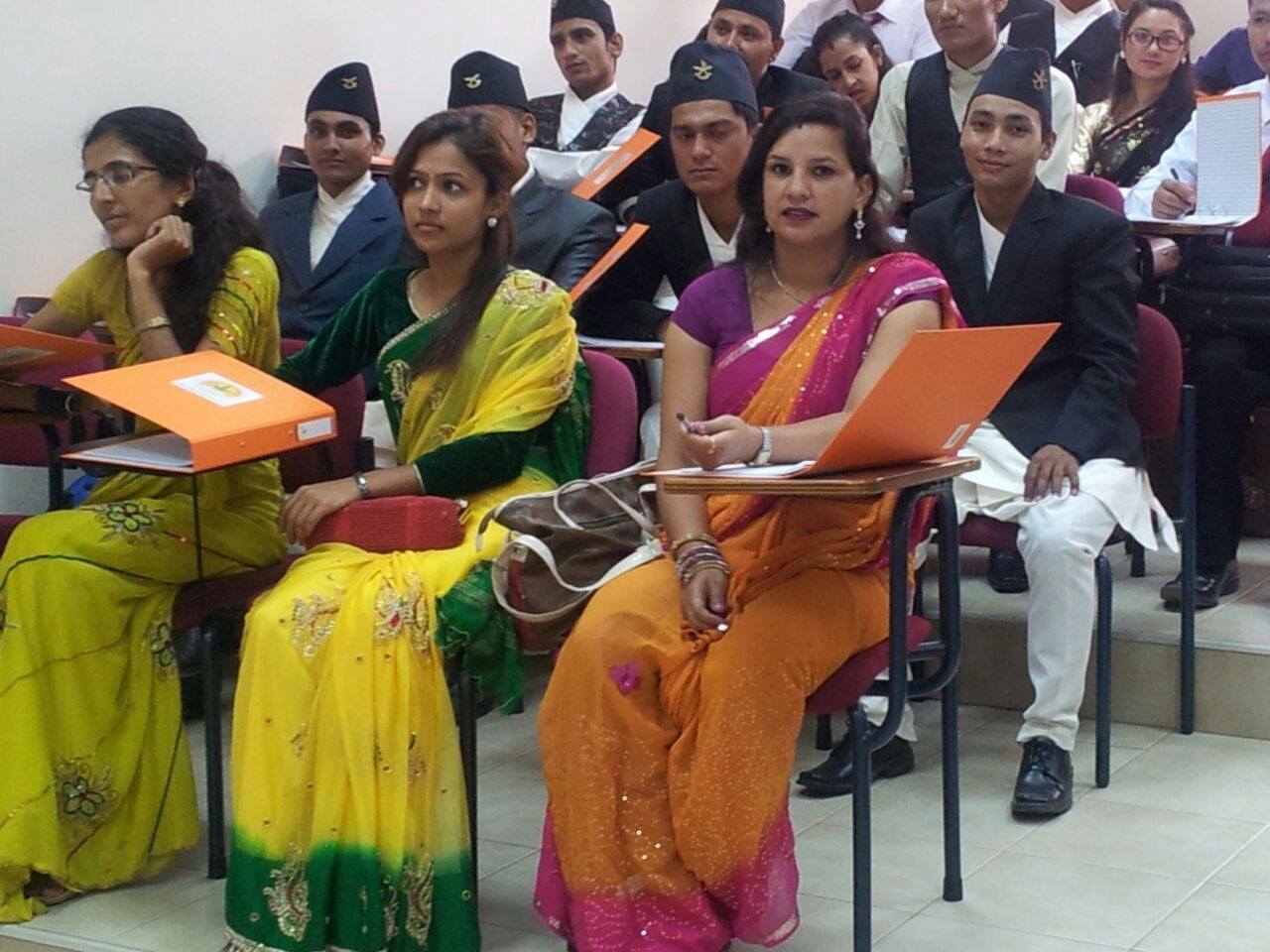
Students from Nepal, Vietnam, Myanmar, Cambodia, Laos, Ethiopia, South Sudan, East Timor, Thailand and Indonesia come in August of every year.

“They come at plantation time and grow with the plants,” Hanni Arnon, AICAT director, tells ISRAEL21c. “Here – where there are very harsh conditions, geographic isolation, extreme weather, arid soil and a shortage of water — they learn the importance of human capacity. If you want it, you can make a change. We teach that a difficulty is a challenge and you need to find a solution.”

Students come from many countries to learn Israeli agricultural techniques at AICAT. Photo: courtesyStudents come from many countries to learn Israeli agricultural techniques at AICAT. Photo courtesy

Students learn through hands-on experience about Israel’s modern approaches to all aspects of agriculture.

Arnon says many of the visitors’ farming families still rely on luck and prayers. “Students learn here that to farm properly and be prosperous, you need to plan. It’s not about planting randomly and hoping it grows. You need plans, research, drip irrigation, pest control and water management,” she says.

“A plant is a plant. It doesn’t matter if you grow a tomato here or somewhere in Asia or Africa. It still needs good soil, water, sun and pest control. We’re teaching that you need to plan, use the right methods, and research.”

Food security for the world

In 1994, Israeli farming communities began hiring Thai farmhands. The newcomers were amazed to see a desert in bloom and started asking how the magic happens.

“Nearly 25 percent of the world’s population lives in poverty and we have the knowhow to help. We realized there was an opportunity to create a school and share our knowledge of high-tech farming practices,” says Arnon.

Established with the mission of bringing in students from underdeveloped regions, AICAT operates within the Central Arava Regional Council and has partnerships with the KKL-JNF, Partnership2Gether, MASHAV and CINADCO-The Center for International Agricultural Development Cooperation within the Ministry of Agriculture and Rural Development.

“We never imagined that we’d go on to become an international school with over 1,000 students per year,” says Arnon. The majority of students (70%) are male.

“Because of JNF and AICAT, we’re getting the knowledge and experience we need to rebuild our country,” said Binod Ghimire, an AICAT student from Nepal.

AICAT students learning from an Israeli farmer. Photo: courtesy
Students come from many countries to learn Israeli agricultural techniques at AICAT. Photo courtesy

Read more: Turning Israel’s desert…


twoje uwagi, linki, wlasne artykuly, lub wiadomosci przeslij do: webmaster@reunion68.com


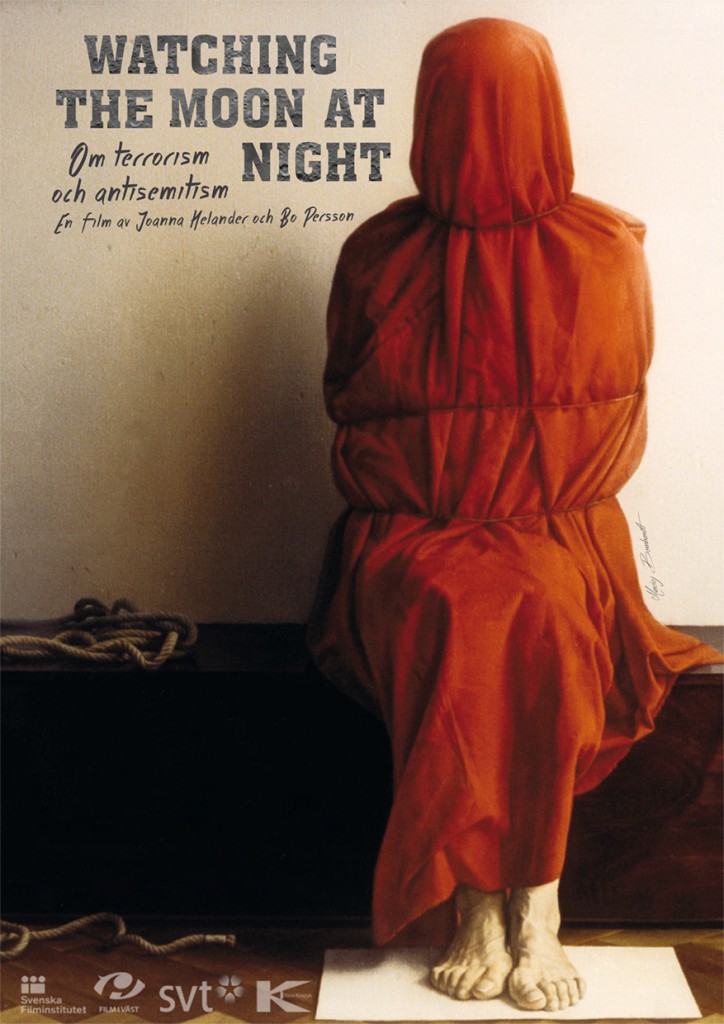
Watching the Moon at Night

Kino Koszyk presents Watching the Moon at Night.

[ Film ktorego szwedzka TV nie chce lub boi sie pokazac ]


American Première

Posted on March 25, 2016 by Bo Persson

Watching the Moon at Night — March 28 at The Center for Jewish History in New York

Film and Discussion
This powerful and timely documentary inspired by the historian Walter Laqueur explores the causes and consequences of terrorism and anti-Semitism around the globe. Creative camerawork and the poems of Nobel laureate Wislawa Szymborska are part of this exquisitely rendered cinematic essay. With filmmakers Bo Persson and Joanna Helander and journalist/educator/author and friend of Daniel Pearl, Asra Nomani. Moderated byJonathan Brent, YIVO Institute for Jewish Research.

presented by Center for Jewish History, American Sephardi Federation, YIVO Institute, and Yeshiva University Museum


“Watching the Moon at Night” at the Conrad festival

Posted on October 24, 2015 by Bo Persson

We were pleased to screen “Watching the Moon at Night” at the International Festival of Literature, the Conrad festival in Kraków, in October.

Excellent screening, crowded cinema and very good discussion in cinema Kino Pod Baranami at the main square.


Quote by: Michael Berenbaum

Posted on December 6, 2014 by admin

“Watching the Moon at Night” is an intellectually informative, visually compelling, emotionally moving and highly disturbing exploration of the phenomena of terrorism in our time. By exploring its roots, listening to its victims and showing its consequences “Watching the Moon at Night” sheds important new light on the scourge of our time. The film remained with me long after the screen went dark, remained with me and touched the darkness and the rage of our age”.

Michael Berenbaum, First Project Director of the United States Holocaust Memorial Museum, President Shoah Visual History Foundation and currently Director of the Sigi Ziering Institute, Los Angeles


Quote by: Agnieszka Holland

Posted on November 15, 2014 by admin

“Watching the Moon at Night’ is a film that touches on some of the most important questions of our time. It depicts contemporary terrorism and political attempts to justify it, the emergence of a new modern anti-Semitism and the present situation in the Middle East, the aftermath of the Holocaust and its denial. The film shows the common ground shared by victims the world over and the similarities between the perpetrators. In the film there is no simplifying thesis, no ‘political correctness’. The perspective of the filmmakers is personal and emotional. The film truly makes you think.”

Agnieszka Holland, Film director and Chairwoman of the European Film Academy


Quote by: Marianne Ahrne

Posted on October 1, 2014 by Bo Persson

“As a film commissioner at The Swedish Film Institute I read about a thousand scripts, both feature films and feature length documentaries. Among the creative documentaries not a single one had the impact, the intelligence and the scope of ”Watching the Moon at Night”. It is a rare film on a subject widely talked about – but never quite in this compelling way. The film digs too deeply to be ”politically correct” and becomes a little scary, especially in a country like Sweden where political correctness seems to be the religion of the day. I truly believe that ”Watching the Moon at Night” deserves a wide international audience.”

Marianne Ahrne, Film director and Writer


twoje uwagi, linki, wlasne artykuly, lub wiadomosci przeslij do: webmaster@reunion68.com