Archive | June 2021

CAROLINE GLICK: THE GREAT UNRAVELING

CAROLINE GLICK: THE GREAT UNRAVELING

Caroline Glick


Israel may soon abandon its diplomatic achievements because Yair Lapid and most of his partners in the new coalition want to erase the achievements of Benjamin Netanyahu.
.

.
Over the past decade, for the first time in its history, Israel developed a strong diplomatic posture in the region and worldwide. Israel developed strategic ties with Arab states, and the states of the eastern Mediterranean. It has built close ties with the E.U.’s Visegrád Group of central European states, Hungary, Poland, Slovakia and the Czech Republic, as well as Austria and Italy. Israel upgraded its diplomatic and trade relations with states in Africa and Central and South America, as well as with India, Japan and South Korea.

Unfortunately, it is likely that all Israel achieved through painstaking effort may be lost after the new governing coalition led by Yair Lapid takes power. This is the case for three reasons.

First, Benjamin Netanyahu is the author of Israel’s diplomatic triumphs. They are predicated on his foreign-policy vision that diplomatic ties are built on common interests even more than ideology and that Israel has much to offer the nations of the world. There are many things that divide the members of the incoming governing coalition, but they agree on one thing—they all hate Netanyahu. So, the first reason Israel may soon abandon its diplomatic achievements is because Lapid and most of his partners in the coalition want to erase Netanyahu’s accomplishments.

The second reason Israel’s diplomatic position is likely to soon crash is that Lapid and Defense Minister Benny Gantz along with most of their partners do not share Netanyahu’s diplomatic vision. Lapid is set to become foreign minister. Lapid, Gantz and the rest of the members of the incoming coalition are members of Israel’s elite class.Subscribe to The JNS Daily Syndicate by email and never miss our top stories

Israel’s elite encompasses the political left, the media, the senior brass of the security establishment and the senior leadership of the foreign and justice ministries, and right-wingers who prefer their company and plaudits to those of members of their own camp. Israel’s elites, almost to a man, believe Israel’s diplomatic position is exclusively a function of its relations with the Beltway establishment. The closer Israel is to the American ruling class, the stronger it is internationally. The weaker Israel’s relations with the American elite, the weaker its international posture.

The third reason Israel’s decade of diplomatic achievements is likely to end in short order is that as America-obsessed elitists, Lapid, Gantz and their ilk don’t understand the importance or potential of what Netanyahu has accomplished. They will not dedicate the necessary resources to maintain the ties he forged with the likes of Austrian Chancellor Sebastian Kurz or Brazil’s President Javier Bolsonaro, because they don’t value those ties. So the ties will wither.

This then brings us to Washington, the only place that matters for the incoming cabinet ministers.

On Monday, Secretary of State Antony Blinken testified before House and Senate committees. His remarks showed that just as Lapid and his colleagues are set to tear down Netanyahu’s legacy, President Joe Biden, Blinken and their advisers have taken an industrial-sized eraser to Donald Trump’s policies and achievements in the Middle East.

Take the Golan Heights. In 2019, Trump recognized Israel’s sovereignty over the strategic enclave along its borders with Syria and Jordan. When asked whether the Biden administration also recognizes Israel’s sovereignty, Blinken responded, “As a practical matter, Israel has control of the Golan Heights, irrespective of its legal status, and that will have to remain unless and until things get to a point where Syria and everything operating out of Syria no longer poses a threat to Israel, and we are not anywhere near that.”

Or the shorter answer: No.

Then there’s Iran. Democrat senators on Monday joined their Republican colleagues in demanding clarifications about the administration’s nuclear diplomacy with Iran. The 2015 nuclear deal, to which the administration is committed, placed temporary restrictions on Iran’s nuclear activities and in exchange, gave Iran an open road to a military nuclear capability by 2030 and $150 billion in sanctions relief. Trump abandoned the deal in 2018 because Iran was breaching the deal’s restrictions on its nuclear actions and reinstated U.S. economic sanctions that the Obama administration lifted.

The Democrat and Republican lawmakers asked how canceling U.S. economic sanctions on Iran would achieve the goal of limiting Iran’s nuclear activities given that Tehran had been breaching the deal’s limitations on its nuclear activities all along. They wanted to understand why Iran would agree to longer and stronger restrictions on its nuclear work in the future, as Blinken promises, if the 2015 deal gives them an open path to the bomb. And they wanted to know if Blinken could guarantee that money from sanctions relief wouldn’t end up in the coffers of Iran’s Revolutionary Guard Corps.

Blinken responded to all of the questions with a non-sequitur.

“Its [Iran’s nuclear] program is galloping forward. … The longer this goes on, the more the breakout time gets down. … It’s now down, by public reports, to a few months at best. And if this continues, it will get down to a matter of weeks,” he said.

Blinken’s alarmist view wasn’t a preamble to a call for military strikes against Iran’s nuclear installations or even for an announcement of a new strategy of maximum economic pressure aimed at collapsing the regime.

To the contrary, Blinken said that in light of the dimensions and urgency of the threat, the United States needs to immediately return to the 2015 deal, that is, give Iran billions of dollars in sanctions relief, to “put the nuclear problem in a box.”

In plain English, Blinken said that the senators’ concerns were irrelevant. The administration’s policy goal is not to prevent Iran from becoming a nuclear power and a regional hegemon. The administration’s goal is to be Iran’s friend.

Just days before Blinken renounced U.S. recognition of Israeli sovereignty over the Golan Heights and said the goal of U.S. policy towards Iran is to be the ayatollahs’ friend even if that means letting Iran become a nuclear-armed regional hegemon, he met his “friend” Benny Gantz at the State Department. Clearly, the meeting made no impression on Blinken. If Gantz had hoped that “good chemistry” with the Biden crowd would make it possible for him to influence them, he was doubtlessly disappointed.

Sometime in 2014, Netanyahu realized that then-president Barack Obama and his team—which is now Biden’s team—had no intention of preventing Iran from becoming a nuclear-armed hegemonic power. He reacted to this realization by spending the last eight years developing an interest-based alliance with the Arab Gulf states who are also threatened by Iran.

The Trump administration welcomed this alliance. The Biden administration is so hostile to it that Biden opened an offensive against Saudi Arabia immediately after he entered office. The administration refuses to call the Abraham Accords by their name. And during Hamas’s recent mini-war against Israel, the administration reportedly pressured Abraham Accords member states the United Arab Emirates, Bahrain, Sudan and Morocco to condemn Israel’s efforts to destroy Hamas’s missile capabilities. There is no doubt that Netanyahu spent long hours working to ensure that no such condemnations were made.

Facing the administration’s visceral hostility to Israel’s ties with the Sunni Arab states, Lapid, Gantz and their colleagues will be far less likely to move heaven and earth to maintain them.

Then there’s Jerusalem. Last Monday, 16 Republican senators signed a letter to Biden expressing their opposition to the administration’s plan to open a consulate in Jerusalem for the Palestinian Authority and to reopen the PLO’s representative office in Washington. They explained that Trump closed the consulate as required by the Jerusalem Embassy Act. He closed the PLO office in D.C. because it operated in breach of the Promoting Justice and Security for Victims of Terrorism Act, otherwise known as the Taylor Force Act. Opening a consulate in Jerusalem and reopening the PLO office in Washington would both be contrary to U.S. law, they noted.

While the senators were doubtlessly right, the administration is committed to following through on its plan. The only way Biden and his advisers may feel compelled to change course is if their efforts are met with trenchant opposition.

It won’t get any from Lapid’s coalition. Labor leader and incoming transportation minister Merav Michaeli said last week she intends to cancel 1.5 billion shekels ($462 million) now budgeted for improving roads in Judea and Samaria. Ra’am leader Mansour Abbas is ideologically aligned with the Muslim Brotherhood. Not only will he not oppose opening a consulate to the P.A. in Jerusalem, he might attend the opening of a U.S. diplomatic mission in Israel’s capital that is dedicated to serving Israel’s Palestinian enemies.

One of Israel’s greatest diplomatic assets in recent years has been the close ties it cultivated with E.U. member states led by nationalist leaders. Time after time, these leaders blocked efforts by the E.U. leadership in Brussels to condemn Israel.

The leader who has done the most to block E.U. condemnations of Israel has been Hungarian Prime Minister Viktor Orbán.

The most outspoken critic of ties between Jerusalem and Budapest has been Lapid. When Orbán came to Israel on an official visit, Lapid referred to the event as a “national disgrace,” because Orbán has expressed admiration for Hungary’s wartime leader and Nazi collaborator Admiral Horthy. Like the heads of the U.S. Jewish community with whom he is closely allied, Lapid is deeply hostile to European nationalist leaders despite their enthusiastic support for Israel. As foreign minister, Lapid is likely to harpoon Israel’s ties to the Visegrád Group and so destroy Israel’s ability to prevent E.U. condemnations of Israel.

What about Naftali Bennett? Where will the prime minister-designate be in all of this? Even in the unlikely event that Bennett will want to maintain Netanyahu’s policies, he won’t have the power to do so. Although in theory the government is supposed to give equal weight to its right and left-wing members, it is hard to see how this will manifest itself in practice.

Avigdor Lieberman’s Yisrael Beiteinu party is still considered a right-wing party, but Lieberman has adopted the left’s positions on nearly every issue. It is hard to imagine that he would side with Bennett on anything controversial, particularly if it involves maintaining Netanyahu’s legacy. And even if Lieberman sides with Bennett, they won’t have the power to force Lapid to do anything he doesn’t want to do. At best, they will be able to block him from doing some things that they don’t want him to do.

If Bennett decides to act independently as prime minister on behalf of Jerusalem, or the Golan Heights, or blocking Iran from getting the bomb, or anything at all that Lapid and the left oppose, he will find himself raked over the coals by his coalition partners and the media. Without a political base, Bennett—like his fellow right-winger New Hope Party leader Gideon Sa’ar—will quickly be presented with two options. He can either adopt the ideological positions of the left, as Ehud Olmert, Tzipi Livni and Ariel Sharon did before him, or he can bring down the government and leave public life.

It has taken the Biden administration less than six months to unravel Trump’s achievements in Israel and the wider Middle East. We can expect the incoming government to unravel Israel’s diplomatic position on their first day in power.


This article first appeared in Israel Hayom.


Zawartość publikowanych artykułów i materiałów nie reprezentuje poglądów ani opinii Reunion’68,
ani też webmastera Blogu Reunion’68, chyba ze jest to wyraźnie zaznaczone.
Twoje uwagi, linki, własne artykuły lub wiadomości prześlij na adres:
webmaster@reunion68.com


Trial Begins in France of Accused Antisemitic Gang Who Assaulted and Robbed Jewish Family in Their Own Home

Trial Begins in France of Accused Antisemitic Gang Who Assaulted and Robbed Jewish Family in Their Own Home

Ben Cohen


Roger Pinto and his son David speaking on Israeli television shortly after their ordeal at the hands of an antisemitic gang in 2017. Photo: I24

The trial of nine individuals accused of subjecting a Jewish family to antisemitic abuse and robbery in their Paris home began on Monday at the assize court in Bobigny, a north-eastern suburb of the French capital.

However, lawyers for the nine are insisting that the invasion of the Pinto family’s home on Sept. 8, 2017, was not motivated by antisemitism.

The family’s ordeal began early on that morning when their 41-year-old son, David Pinto, woke up to discover that the electricity was not working in the family home in the Livry-Gargan neighborhood of Paris. Going down into the basement to check the electricity meter, David opened a door which allowed three assailants, who had set a trap by cutting off the electricity supply, to force their way into the house.

Having gagged David, the three men dragged him to the first floor of the family home. There, they encountered his  mother, Mireille, at the time 73-years-old, who managed to alert her husband — Roger, then 83-years-old — before she too was grabbed by the gang. Mireille said that she was “caught and gagged” by the three men.

“As I struggled, the first man threw me down,” Mrs. Pinto recalled later. “He hit me. I really thought he wanted to rape me. The second one kicked me.”

The gang also attacked Roger Pinto, beating him unconscious. Mr. Pinto said that as he regained consciousness, he heard one of the gang members tell him,  “You are Jewish, we know that the Jews have a lot of money and you will give us what you have. If you do not give us what we ask you, we’ll kill you.”

Roger Pinto continued: “The three men had a screwdriver and a knife, which they constantly threatened us with. They threatened to kill us. That was unbearable. These thugs took our credit cards, took all the goods we had, jewelry from my wife.”

The Pinto family were tied and locked in a room while the gang carried out the robbery, which included several thousand euros in cash. After several hours, Mireille Pinto managed to call the emergency services using David’s phone. “For us it was really an eternity,” she said. “It was a very traumatic event.”

Among the mutations of antisemitism that French Jews have confronted in recent years is the myth that Jews are an uncommonly wealthy community with the widespread habit of keeping cash and expensive valuables in their homes. In 2014, a young Jewish couple in the suburb of Creteil was subjected to a violent robbery, during which the woman was raped, motivated by the same belief. More recently, in 2018, Mireille Knoll, an 85-year-old Holocaust survivor, was found burned and with multiple stab wounds in her Paris apartment after she was robbed by two men who targeted her because she was Jewish.

Lawyers for the nine defendants in the Pinto case — the three assailants and six more individuals who assisted them with the stolen goods — have argued that antisemitism was not a motivating factor. They claimed that the defendants had spotted Mireille Pinto a few weeks before the robbery, describing her as a “chic lady with beautiful jewelry” whom they had followed to her home. At least one defendant said that he was “unaware” that his victims were Jewish. “The facts were not committed because of the religion of the victims,” declared one of their lawyers, Margot Pugliese.

At the time of the attack in 2017, the then French Interior Minister, Gérard Collomb, was adamant that the attack on the Pintos was “a heinous aggression directly linked to the religion of the victims.” Marc Bensimhon, a lawyer for the Pintos, argued on Monday that there was no reason to change that assessment.

“The Pinto family was assaulted because they are a Jewish family,” Bensimhon said. “The attackers told them, ‘You are Jewish, so you have money.’”

Prior to the assault, the family was well-known among Parisian Jews for their active involvement in the community, with Roger Pinto serving as president of Siona, a pro-Israel association. In the wake of the attack, however, the Pintos moved away from the Livry-Gargan district where they had lived for thirty years. Mireille Pinto was badly traumatized by the attack and has not recovered from its effects four years later, while Roger Pinto was subsequently diagnosed with cancer.

The trial of the nine defendants will last for nine days. It will be keenly watched by a French Jewish community still hurting from the decision of the country’s highest court in April to excuse from trial the accused antisemitic killer of Sarah Halimi, a Jewish woman brutally murdered in her Paris apartment in April 2017, on the grounds that the perpetrator’s intake of cannabis had rendered him temporarily insane and therefore not criminally liable.


Zawartość publikowanych artykułów i materiałów nie reprezentuje poglądów ani opinii Reunion’68,
ani też webmastera Blogu Reunion’68, chyba ze jest to wyraźnie zaznaczone.
Twoje uwagi, linki, własne artykuły lub wiadomości prześlij na adres:
webmaster@reunion68.com


Owocna współpraca III Rzeszy i Związku Sowieckiego trwała do ostatnich godzin poprzedzających niemiecki atak

Niemcy otrzymywały od ZSRS 3000 ton ropy naftowej dziennie. Na zdjęciu: przepompowywanie surowca na stacji kolejowej w Przemyślu, lipiec 1940 r. (Fot. Domena publiczna)


Owocna współpraca III Rzeszy i Związku Sowieckiego trwała do ostatnich godzin poprzedzających niemiecki atak

Sławomir Dębski


Bez sowieckiej pomocy Niemcy nie odbudowałyby swojej armi. Wojna wybuchła więc nie z powodu źle układającej się współpracy gospodarczej czy wojskowej między Związkiem Sowieckim i III Rzeszą, ale dlatego, że Stalin i Hitler dostrzegli w sobie zagrożenie.

.

Agresja III Rzeszy na Związek Sowiecki była nie tylko odwróceniem sojuszy zawiązanych w przededniu II wojny światowej, wydarzeniem brzemiennym w skutki dla jej ostatecznego wyniku, ale także jej konsekwencją był powrót do tradycji współpracy brytyjsko-rosyjskiej wymierzonej przeciwko hegemonicznym aspiracjom innych mocarstw europejskich. Klasyczna strategia polityczna Prus, a po 1870 r. zjednoczonych Niemiec – uznawała taką współpracę za zagrożenie.

Jednym z twórców tej strategii był kanclerz Niemiec Otto von Bismarck, który szukając dla Niemiec bezpiecznej równowagi europejskiej, doszedł do wniosku, że każda polityczna konstelacja zmierzająca do ograniczenia niemieckiej potęgi musi uwzględniać Rosję. Dlatego Niemcy powinny zawsze „trzymać Rosję blisko siebie”, aby zamknąć innym mocarstwom możliwość stworzenia z nią antyniemieckiego bloku.

Różnice ideologiczne nie są ważne

Na początku maja 1939 r. powstała w Berlinie analiza, w której stwierdzano, że rozpoczęcie negocjacji brytyjsko-sowieckich o współpracy w powstrzymywaniu III Rzeszy oznacza, że „różnice wewnątrzpolityczne i światopoglądowe nie powinny być przeszkodą dla tworzenia sojuszy nawet wtedy, gdy przeciwieństwo ideologiczne jest tak daleko idące, jak między ultrakapitalistyczną, prywatną, wolnorynkową monarchią angielską a radykalnie antykapitalistycznym, ateistycznym, komunistycznym bolszewizmem”.

Autorzy analizy przekonywali, że różnice ideologiczne między Związkiem Sowieckiem a nazistowskimi Niemcami są dużo mniejsze niż dzielące „państwo awangardy proletariatu” od „kapitalistycznej monarchii angielskiej”. Ich zdaniem współpraca z III Rzeszą była dla ZSRS bardziej atrakcyjna niż z Anglią i Francją. Wchodząc do proponowanego przez Londyn bloku antyniemieckiego, Kreml wzmacniałby swoich sąsiadów – Polskę, Rumunię i Imperium Brytyjskie (Indie), podczas gdy przystąpienie ZSRS do wojny „razem z Niemcami przeciwko Polsce byłoby dużo mniej ryzykowne i mogłoby [pomóc] odzyskać stare białoruskie i ukraińskie ziemie utracone na rzecz Polski”.

W ten sposób Hitler został przekonany, że należy wykorzystać aspiracje Stalina do zmiany europejskiego status quo opartego na traktacie wersalskim (1919) i pokoju ryskim (1921) i podjąć z nim współdziałanie, które stworzy mu okazję do odzyskania przez Rosję granic utraconych w czasie, gdy bolszewicy byli zajęci walką o utrzymanie władzy.

W skrócie taka była intelektualna geneza układu Ribbentrop-Mołotow zawartego w Moskwie 23 sierpnia 1939 r.

Do takiego myślenia Hitlera przekonali dyplomaci, wojskowi i wywiad. Ludzie wychowani w bismarckowskiej szkole, a także na negatywnych doświadczeniach Niemiec, gdy po śmierci kanclerza (1898) kolejne rządy doszły do przekonania, że Niemcy są już tak silne, że mogą ignorować jego wskazówki. W rezultacie przeciwko Niemcom i sprzymierzonym z nimi Austro-Węgrom zawiązało się trójporozumienie Anglii, Francji i Rosji. Wybuchła I wojna światowa, którą Niemcy i Austro-Węgry przegrały, także na skutek przystąpienia do wojny Stanów Zjednoczonych.

Pomocni bolszewicy

Już w jej trakcie Berlin próbował wrócić do bismarckowskiej strategii i doprowadzić do rozbicia antyniemieckiego sojuszu. Wspomógł grupkę radykalnych rosyjskich marksistów, zwanych bolszewikami, z Włodzimierzem Leninem na czele, w przejęciu władzy w Rosji.

27 marca 1917 r. z Zurychu wyjechało do Niemiec 32 emigrantów rosyjskich – wbrew legendzie nie w zaplombowanym wagonie, lecz dość wygodnie – wśród których było 19 bolszewików, w tym Lenin oraz Karol Radek, który jako obywatel austro-węgierski, urodzony we Lwowie i wykształcony na Uniwersytecie Jagiellońskim, działacz Socjaldemokracji Królestwa Polskiego i Litwy, kontaktował się z wywiadem niemieckim, bo nie groził mu za to zarzut zdrady Rosji.

Po dotarciu do Piotrogrodu Lenin i jego ludzie włączyli się w walkę o władzę, cały czas korzystając z pieniędzy Berlina. W sumie w latach 1917-18 niemiecki wywiad przekazał bolszewikom ponad 50 mln marek niemieckich w złocie (6-10 mln ówczesnych dolarów i równowartość ponad 9 ton złota). Po przewrocie bolszewickim, obaleniu Rządu Tymczasowego, Niemcy zmusili swoich protegowanych rewolucjonistów do zawarcia separatystycznego pokoju, który został podpisany w marcu 1918 r. w Brześciu. Tym samym Rosja wyszła z kolacji antyniemieckiej. Musiała jednak porzucić także plany wzniecenia światowej rewolucji.

Przeciw Polsce nawet z diabłem

Idea niemiecko-bolszewickiej współpracy silnie zapadła jednak w pamięć zarówno niemieckim elitom wojskowym, jak i bolszewikom. Nieprzypadkowo więc po narzuceniu Niemcom drakońskich warunków traktatu wersalskiego w Berlinie powrócono do pomysłu współpracy z bolszewikami, obliczonej na obalenie porządku wersalskiego. Pierwszoplanową postacią stał się tu wspomniany Karol Radek. Wprawdzie po próbach wzniecenia przez niego rewolucji w Niemczech został na początku 1919 r. aresztowany i osadzony w berlińskim więzieniu Moabit, ale jeszcze, gdy w nim siedział, odwiedził go gen. Hans von Seeckt, szef sztabu Reichswehry (1919-20) i późniejszy naczelny dowódca niemieckiej armii (1920-26). Szybko się okazało, że poglądy na temat powojennej rzeczywistości obaj mają podobne. Doszli też do wniosku, że współpraca bolszewickiej Rosji i Niemiec Weimarskich będzie sprzyjać odbudowaniu osłabionych potencjałów obu państw.

W czasie wojny polsko-bolszewickiej w 1920 r. von Seeckt, przemawiając w Hamburgu, mówił: „Żaden Niemiec nie może kiwnąć palcem w celu uratowania przed bolszewizmem Polski, tego najbardziej śmiertelnego wroga Niemiec i sojusznika Francji, niszczyciela niemieckiej kultury, i jeśli diabeł brałby Polskę, my powinniśmy mu w tym dopomóc”. Z kolei w memorandum o niemieckiej polityce zagranicznej von Seeckt argumentował: „Tylko w trwałym sojuszu z Wielką Rosją mają Niemcy szansę odzyskać status wielkiego mocarstwa. Anglia i Francja obawiają się tego sojuszu dwóch kontynentalnych potęg i starają się mu zapobiec ze wszystkich sił… Dziś mamy do czynienia z Rosją Sowiecką, nie mamy wyboru, musimy z nią stworzyć sojusz”.

„Linia Rappalo”

Dla pokonanych pod Warszawą bolszewików podjęcie współpracy z Niemcami było sposobem na dokonanie wyłomu w „kapitalistycznym okrążeniu ojczyzny proletariatu” i szansą na wzmocnienie państwa. Niemiecko-sowiecki traktat o współpracy zawarty 16 kwietnia 1922 r. w Rapallo wyprowadził oba państwa z impasu.

Traktat wersalski nakładał na Republikę Weimarską poważne ograniczenia, m.in. w rozwoju lotnictwa, artylerii, broni pancernej i chemicznej. Porozumienie z Rosją bolszewicką, która nie była stroną traktatu, umożliwiło im obchodzenie tych ograniczeń. W Związku Sowieckim zorganizowano szkoły kształcące niemieckich lotników, czołgistów i artylerzystów, na specjalnych poligonach prowadzono wspólne ćwiczenia. W niemieckich biurach konstrukcyjnych w Rosji powstawały projekty techniczne dla wszystkich rodzajów wojsk. Jednocześnie Sowieci otrzymali dostęp do niemieckiej technologii wojskowej i wiedzy teoretycznej, dzięki czemu intensywnie rozwijali swoje siły zbrojne.

Adiutantem gen. Hansa von Seeckta był urodzony w Moskwie płk Ernst Köstring, który w 1931 r. został niemieckim attaché wojskowym w Moskwie. I choć dojście Hitlera do władzy zakończyło niemiecko-sowiecką współpracę polityczno-wojskową opartą na „linii Rappalo”, bolszewicy cały czas mieli pod ręką Köstringa, wielkiego zwolennika niemiecko-rosyjskiej współpracy. Wprawdzie do dziś jego rola w doprowadzeniu do układu Ribbentrop-Mołotow nie została w pełni ujawniona, ale gdy w nocy 24 sierpnia 1939 r. niemiecki minister spraw zagranicznych Joachim von Ribbentrop triumfował w niemieckiej ambasadzie w Moskwie po zawarciu w imieniu Hitlera ze Stalinem porozumienia o podziale Europy na strefy wpływów, wyminął ambasadora Friedricha-Wernera von der Schulenburga i pogratulował Köstringowi: „Dziękuję, panie generale, pańska współpraca była decydująca!”.

Płk Ernst Köstring, niemiecki attaché wojskowy w Moskwie Fot. Domena Publiczna

Morska współpraca

Podjęcie 17 września 1939 r. przez Związek Sowiecki „paralelnej akcji militarnej” w Polsce – jak 10 dni po inwazji określił ją zastępca Ribbentropa Ernst von Weizsäcker w rozmowie z włoskim ambasadorem – pomogło Niemcom zakończyć działania wojenne w Polsce i zainicjowało nowy okres współpracy niemiecko-sowieckiej.

Stalin starał się utrzymać Związek Sowiecki poza konfliktem w Europie, ale jednocześnie pomagał Hitlerowi, aby ten nie wahał się kontynuować wojny z Anglią i Francją. W czasie wspólnej inwazji na Polskę Związek Sowiecki udzielał niemieckim siłom zbrojnym wsparcia radiolokacyjnego i logistycznego, a Ribbentrop podczas swojej drugiej wizyty w Moskwie 28 września 1939 r. uzyskał od Stalina zgodę na pogłębienie dalszej współpracy.

Sowieci udostępnili niemieckim okrętom zatokę Zapadnaja Lica (na zachód od Murmańska), gdzie na początku listopada powstała tajna baza zaopatrzeniowo-remontowa Kriegsmarine o kryptonimie „Nord”. Nie odgrywała wprawdzie istotnej roli, ale już samo utworzenie jej przez Niemców na sowieckim terytorium było pogwałceniem zasad obowiązujących państwo neutralne, jakim ZSRS oficjalnie się ogłosił. Latem 1940 r., po zajęciu przez Niemców Norwegii, baza „Nord” przestała im być już potrzebna.

Moskwa pomogła też Niemcom w uzbrojeniu statku handlowego „Illner”, dzięki czemu stał się on krążownikiem pomocniczym. Wspierała też prowadzoną przez III Rzeszę wojnę morską, m.in. udostępniała jej okrętom „północną drogę morską” – z Morza Białego na Pacyfik. W sierpniu 1940 r. sowieckie lodołamacze przeprowadziły tamtędy niemiecki krążownik pomocniczy nr 45 – „Komet”, dowodzony przez kmdr. Roberta Eyssena, który podjął działania korsarskie na Ocenie Spokojnym. Były na tyle skuteczne, że pod koniec 1940 r. dowództwo Kriegsmarine rozważało skierowanie latem 1941 r. „drogą północną” na morza dalekowschodnie kolejnych dwóch krążowników. Niemcy wystąpili nawet do Sowietów z oficjalną prośbą w tej sprawie i w styczniu 1941 r. kmdr Jörg Baumbach otrzymał od nich odpowiedź pozytywną. Sowieci stawiali jedynie warunek, aby statki płynęły pod banderami handlowymi i były własnością prywatnych, tzn. cywilnych, kompanii. Pomysł skorzystania z „drogi północnej” z przyczyn oczywistych przestał być aktualny w związku z przygotowaniami do agresji na Związek Sowiecki, do których musiała włączyć się także Kriegsmarine.

Rosjanie nie są głupi!

Dla walczących z mocarstwami zachodnimi Niemiec istotne znaczenie miała sowiecka pomoc gospodarcza. Podczas drugiej wizyty w Moskwie Ribbentrop otwarcie mówił Stalinowi o nadziejach, jakie III Rzesza wiąże z niemiecko-sowiecką współpracą ekonomiczną. Kłopot wynikał z tego, że w przeciwieństwie do sfery politycznej, gdzie taktyczne interesy Berlina pokrywały się ze strategicznym interesem Moskwy, w sferze gospodarczej cele obu krajów były rozbieżne.

Sowieci doskonale zdawali sobie sprawę, iż ich atutem są surowce, dlatego za ich dostawy chcieli otrzymywać najlepszy produkty niemieckiego przemysłu – uzbrojenie. Lista życzeń obejmowała m.in. krążowniki „Seydlitz”, „Lützow”, „Prinz Eugen”, kadłub pancernika „Bismarck”. Tymczasem rozbudowa niemieckiej armii wymagała stałego zwiększania produkcji uzbrojenia, a zamówienia sowieckie były dla niej konkurencją. Dodatkowo prowadząca wojnę III Rzesza została objęta blokadą gospodarczą, dlatego formą rozliczania między partnerami powinien być barter. Tyle że Niemcy chcieli sowieckich surowców natychmiast, a ich towary miały być dostarczane z opóźnieniem i przez dłuższy czas. W praktyce oznaczało to kredytowanie III Rzeszy przez Związek Sowiecki, choć strona niemiecka uważała, że to nie było kredytowanie, gdyż za surowce chciała płacić niemieckimi markami.

To zirytowało Stalina, który otwarcie zwrócił Niemcom uwagę, aby nie uważali „Rosjan za głupców. W Europie Zachodniej brali Rosjan za niedźwiedzie, które słabo posługują się głową. Wszyscy, którzy trzymają się tego poglądu, mylą się, Rosjanie nie są głupsi od innych. Strona sowiecka zdaje sobie sprawę, że Niemcy nie mają teraz, gdzie kupować zboża, nafty, rudy, bawełny za marki, bo płacić [muszą] za to walutą. Co da Związkowi Sowieckiemu trzymanie zamrożonych marek w bankach i otrzymywanie za nie procentów?”. Dlatego zdaniem Stalina dostawy rozliczane w markach należy interpretować jako pomoc dla Niemiec, przez którą jednak Związek Sowiecki „narobił sobie niemało wrogów”.

W lutym 1940 r. Stalin przychylił się do prośby Ribbentropa o wsparcie „wojny z Anglią i Francją za pomocą możliwie szybkich i pokaźnych dostaw surowców”. Moskwa ograniczyła własne zamówienia wojskowe i 11 lutego 1940 r. zawarła umowę gospodarczą z III Rzeszą. Miała dostarczać jej towary na łączną sumę 650 mln marek, w tym surowce strategiczne – 5 tys. ton rudy miedzi, 1,5 tys. ton rudy niklu, 950 ton rudy ołowiu, 500 ton rudy wolframu, 500 ton rudy molibdenu i 3 tony rudy kobaltu. Ponadto Związek Sowiecki zobowiązał się do kupowania dla Niemiec surowców w państwach trzecich i umożliwić tranzyt przez sowieckie terytorium towarów z Rumunii, Iranu i Afganistanu oraz z państw Dalekiego Wschodu.

Morze surowców płynie do Rzeszy

Niemiecka strefa gospodarcza (III Rzesza i państwa przez nią okupowane) stała się w 1940 r. podstawowym odbiorcą sowieckich towarów, przypadało na nią aż 52,2 proc. eksportu ZSRS, w tym 49,9 proc. eksportu fosforanów, 77,7 proc. – azbestu, 62,4 proc – rudy chromu, 40,7 proc. – rudy manganowej, 75,2 proc. – ropy naftowej, 79,6 proc. – bawełny i 77,2 proc. – zboża.

Fundamentalne znaczenie miał dla Niemiec tranzyt przez Związek Sowiecki towarów kupowanych w państwach trzecich. Od kwietnia do grudnia 1940 r. przeszło tą drogą aż 59 proc. niemieckiego importu oraz 49 proc. niemieckiego eksportu, zaś w pierwszej połowie 1941 r., odpowiednio, 72 i 64 proc.

Gdy III Rzesza dokonywała inwazji na Belgię, Holandię i Francję, Sowieci zwiększali dostawy surowców. Od marca 1940 r. Niemcy otrzymywały 3000 ton ropy naftowej dziennie. W tym samym czasie sprzedali Sowietom krążownik „Lützow” za 100 mln marek.

10 stycznia 1941 r., czyli już po tym, gdy obie strony uznały się wzajemnie za zagrożenie i równolegle zaczęły przygotowania do wojny ofensywnej, oba kraje zawarły kolejne porozumienie handlowe. Tym razem głównym punktem niemieckich zamówień stało się zboże, a Sowieci postawili na dostawy maszyn i obrabiarek. W pierwszym półroczu 1941 r. wymiana towarowa między Rzeszą a Związkiem Sowieckim osiągnęła rekordowy pułap, a obie strony wywiązywały się ze zobowiązań ze szczególną starannością. Związek Sowiecki już w kwietniu zrealizował niemieckie zamówienia na zboże na cały 1941 r. w 90,3 proc. Niemcy także przekroczyli harmonogramy, realizując sowieckie zamówienia w 81,5 proc. W maju 1941 r., a więc miesiąc przed inwazją na ZSRS, Niemcy zapłacili za dostawy złotem.

Transporty szły w obie strony niemal do ostatnich godzin poprzedzających niemiecki atak. Wojna wybuchła więc nie z powodu źle układającej się współpracy gospodarczej czy wojskowej między Związkiem Sowieckim i III Rzeszą, ale dlatego, że Stalin i Hitler dostrzegli w sobie zagrożenie. I obaj postanowili mu przeciwdziałać, zaskakując rywala agresją. Hitler był szybszy.


Dr Sławomir Dębski (ur. w 1971 r.) – politolog i historyk, dyrektor Polskiego Instytutu Spraw Międzynarodowych. Autor m.in. książki „Między Berlinem a Moskwą. Stosunki niemiecko-sowieckie 1939-1941″, PISM, Warszawa 2003


Zawartość publikowanych artykułów i materiałów nie reprezentuje poglądów ani opinii Reunion’68,
ani też webmastera Blogu Reunion’68, chyba ze jest to wyraźnie zaznaczone.
Twoje uwagi, linki, własne artykuły lub wiadomości prześlij na adres:
webmaster@reunion68.com


Cannibal Island: In 1933, Nearly 5,000 Died In One Of Stalin’s Most Horrific Labor Camps

Cannibal Island: In 1933, Nearly 5,000 Died In One Of Stalin’s Most Horrific Labor Camps

Andrei Filimonov, Robert Coalson


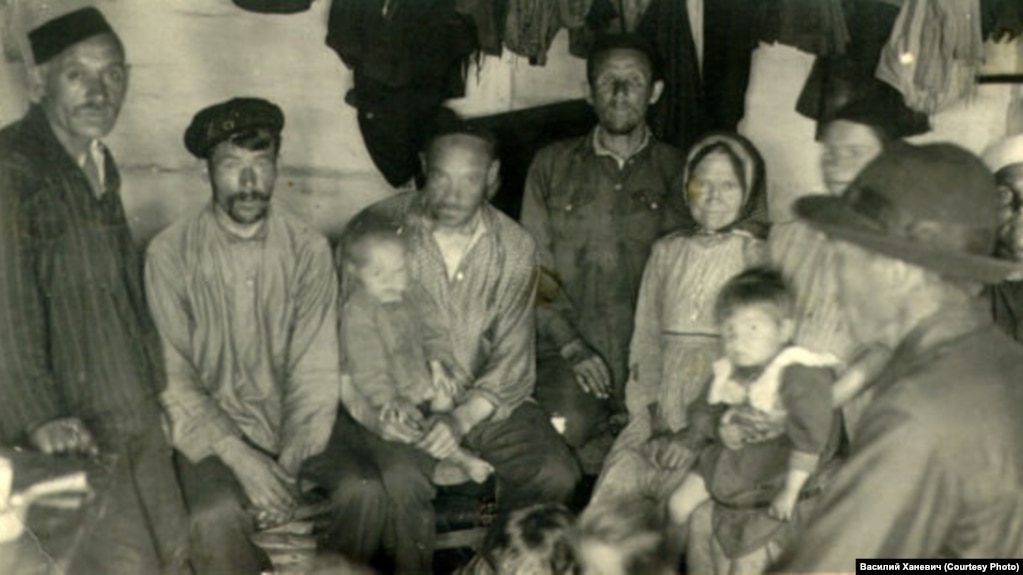
A group of "settlers" in the Narym region in the 1930sA group of “settlers” in the Narym region in the 1930s

TOMSK, Russia – Every year, a small group of locals travels the 550 kilometers northwest from this Siberian city to Nazinsky Island, in the middle of the Ob River, to place a wreath at the foot of a wooden cross. It is a gesture of remembrance for the victims of the horrific events that unfolded there in the summer of 1933.

“Every year in June, we place a wreath at the cross that was placed on the island in 1993,” Valeria Shtatolkin told RFE/RL. “But this year, we couldn’t go. The water was too high, and the island is almost entirely flooded.”

Their dedication to the pilgrimage is part of an effort to remind fellow Russians of an experiment in social engineering and self-sufficiency that went tragically wrong for many of the “settlers” lured by Soviet authorities under Josef Stalin — whose brutal excesses have frequently been downplayed under Russia’s current leadership in favor of a more forgiving historical interpretation of Stalin’s three-decade rule.

Eighty-five years ago in May, a small flotilla of lumber barges pulled up to Nazinsky Island and off-loaded about 3,000 “settlers” with orders to construct a “special settlement,” as their little corner of Stalin’s GULAG – the network of labor camps that spread across the Soviet Union where millions of people were repressed and killed — was euphemistically called. At least 23 of the prisoners were already dead.

Without tools or shelter or food and surrounded by armed guards who shot anyone who tried to brave the icy river, the prisoners quickly fell victim to starvation, disease, violence, and the brutal elements. And still, additional barges continued to pull up at the island.

Numerous gruesome incidents of cannibalism were reported. So many, in fact, that locals came to call it Cannibal Island or the Island of Death.

By August, at least 4,000 people were dead or missing. According to a Soviet document dated August 20, 1933, there were only 2,200 survivors out of the 6,700 prisoners who had been sent to Nazinsky, a low-lying, swampy strip some 3 kilometers long and about 600 meters wide.

The wooden cross erected on Nazinsky Island in memory of the victims of 1933The wooden cross erected on Nazinsky Island in memory of the victims of 1933

Only 300 of those survivors were deemed at the time fit for further work.

“Once a woman from the Island of Death was brought to our house,” Feofila Bylina, a resident of the village of Nazino on the north bank of the Ob, recalled in an oral history in 1989. “She was being taken to another camp…. The woman was taken into the back room to spend the night and I saw that her calves had been cut off. I asked and she said, ‘They did that to me on the Island of Death – cut them off and cooked them.’ All the meat on her calves was cut away. Her legs were freezing because of this and she wrapped them up with rags. She was able to move on her own. She looked like an old woman, but really she was just a little over 40.”

The Nazinsky tragedy was the product of pitiless Soviet efficiency.

One was asked if he ate “human meat.” “No, that is not true,” he answered. “I only ate livers and hearts.”

Secret police head Genrikh Yagoda and Matvei Berman, head of the GULAG system, dreamed up a brutal social-engineering project aimed at “resettling” at least 2 million people in the remote reaches of Siberia and Soviet Kazakhstan. The idea was that the “settlers” would bring millions of hectares of land into cultivation and develop self-sufficient communities within two years. In part, the plan was aimed at covering up the ongoing famine in Ukraine and other parts of the country.

To generate “settlers,” the government reinstated the hated system of domestic passports that had been banned after the 1917 Bolshevik coup.

Almost immediately, police throughout the country began rounding up anyone found in a place other than where they were registered.

“‘How did you end up here?’ we asked one young man,” recalled Bylina in her oral history. “He said: ‘I didn’t do anything. I was a student in Moscow. On the weekend, I went to visit my aunt, who lives in Moscow. I got to her apartment and knocked on the door, but before she opened the door, they grabbed me right there. I was arrested because I didn’t have my passport with me.'”

Vera Panovaya, a resident of the village of Ust-Tyma who also gave an oral history in 1989, recalled meeting a man named Kuzma Salnikov, who had been on Cannibal Island.

“He was a miner from Novokuznetsk. Married, with two children. Once he went to Novosibirsk and stopped at the central market,” Panovaya recalled. “At that moment, they surrounded the market, set up a dragnet, and arrested everyone who wasn’t carrying documents. Everyone – including women and children – was loaded onto a barge and sent to Nazinsky Island.”

“There was no food,” she continued. “People were tortured by hunger. The guards threw them bits of bread as they passed the island. If you got a piece, you ate. The rest had nothing…. Salnikov was there, but he managed to escape. He swam the river and made it through the swamps to a village. After that, he worked on a collective farm.”

The police, however, worked too quickly. When the first 25,000 people arrived in Tomsk in April 1933, their camp had not been built. Prisoners continued to collect, but they could not be transported further on because the Ob and Tom rivers were still iced over.

After getting the ration, the people ran to the water and mixed it with the flour in their hats and ate it. Many people just ate the flour as it was, and since it was a powder, many suffocated from breathing it in.”

As was standard practice in Stalin’s GULAG, common criminals were mixed in among the political prisoners as a means of maintaining an atmosphere of terror.

Soviet documents preserved in the GULAG museum in Tomsk record the interrogations of some of these criminals who were at Nazinsky Island.

One was asked if he ate “human meat.”

“No, that is not true,” he answered. “I only ate livers and hearts.”

Asked for details, he said: “It was very simple. Just like shashlik. We made skewers from willow branches, cut it into pieces, stuck it on the skewers, and roasted it over the campfire.”

“I picked those who were not quite living, but not yet quite dead,” he added. “It was obvious that they were about to go – that in a day or two, they’d give up. So it was easier for them that way. Now. Quickly. Without suffering for another two or three days.”

Others described women who were tied to trees while men cut off their breasts, calves, and other body parts.

Another common criminal whose interrogation survives bragged of beating prisoners to extract the gold in their dental work.

“In order to get smokes,” he said, when asked why he did it. “People need to smoke. From the guards, you could get a matchbook [of tobacco] or two whole newspapers for rolling cigarettes.” 

Vasily Velichko

Vasily Velichko

The disaster on Cannibal Island was so horrifying that a local communist instructor named Vasily Velichko set out on his own initiative to investigate in July 1933. He interviewed dozens of people and wrote an 11-page report that he sent to Moscow, Novosibirsk, and the district center Narym. His report was stamped “top secret” and only came to light in 1994.

“People began dying,” he wrote. “They burned to death alive while sleeping close to the fires. They died from exhaustion and cold.”

“Immediately after the snow and frost came the rains and freezing winds,” he continued. “And the people were still left without food. Every fourth or fifth day, some rye flour was brought to the island and distributed to the settlers, a few hundred grams each. After getting the ration, the people ran to the water and mixed it with the flour in their hats and ate it. Many people just ate the flour as it was, and since it was a powder, many suffocated from breathing it in.”

Nazinsky Island was finally evacuated in July 1933. When Velichko reached it in August, all the “settlers” were gone.

“The grass on the island was head high,” he wrote in his report. “But locals who went there to gather berries returned after discovering corpses in the grass and stick shelters full of skeletons.”

In 1989, the Tomsk branch of the Memorial human rights group sent an expedition to Nazinsky to gather oral histories.

recommended by: Leon Rozenbaum

“I went there from Tveritinskye to cut hay,” Nazino resident Taisia Chokarevaya told the Memorial team about her trip to Nazinsky after the camp had been abandoned. “I saw people washing their hands. I was holding my nose and thinking, ‘What are they doing?’ They would wash their hands and then run back up. I saw that they were collecting gold teeth…. There was a state store then in Aleksandrovsk. They took the gold there. Anyone who had gold took it there. They had some nice clothes, macaroni, good food.” 

Participants in the 1989 expedition to Nazinsky by the human rights group MemorialParticipants in the 1989 expedition to Nazinsky by the human rights group Memorial

Velichko’s report caused a sensation in Moscow. The Communist Party sent a special commission to Nazino to investigate, and the facts of the report were largely confirmed. Several officials of the former camp were reprimanded and sentenced to prison terms ranging from one to three years. Velichko’s report was labeled secret and tucked away in the archives.

Velichko himself was fired from his party job. He later became a journalist and gained some fame as a war correspondent during World War II. He traveled with the Red Army all the way to Berlin.

After the war, he wrote several novels singing the praises of the transformation of Siberia under the Soviet government. He never wrote anything else about Cannibal Island.


Written by RFE/RL senior correspondent Robert Coalson based on reporting by RFE/RL Siberia Desk correspondent Andrei Filimonov


Zawartość publikowanych artykułów i materiałów nie reprezentuje poglądów ani opinii Reunion’68,
ani też webmastera Blogu Reunion’68, chyba ze jest to wyraźnie zaznaczone.
Twoje uwagi, linki, własne artykuły lub wiadomości prześlij na adres:
webmaster@reunion68.com


WHAT THE LEFT HAS DONE TO COMPLETELY KILL COMEDY

WHAT THE LEFT HAS DONE TO COMPLETELY KILL COMEDY

Phil Schneider


It is a very important part of life to be able to laugh. Laughing allows us to see the world through the eyes of a more refreshing angle. People need to be able to not take themselves all that seriously. But, in today’s day and age, in the age where everything is fact-checked by hyper-sensitive progressives, nothing is considered fair game for satire. This is yet another aspect of modern-day censorship.
.

.
We need to be able to cut through the garbage and expose the truth – yes, via satire. We need a return to a “feel good” way of living that enables us to laugh at others, laugh at ourselves, and be willing to accept that we have erred. Yes, we all have our aspects of life that need to be laughed at. That’s OK. What is not OK is to assume that we are not human and therefore infallible.

What is so ironic is that the very people who are constantly feeling insulted and accusing others of insensitivity are actually the people who need a good laugh more than anything else. There is nothing to be afraid of when we are dealing with the truth. Yes, even satire should have it’s limits. But, if there is one field that should have less limits on it than nearly any other field, it is the field of satire and humor. Political correctness does have a place in this world – but not in the halls of comedians. We need their brilliance to remind us to not take our lives that seriously. Let’s lighten up a bit and enjoy our differences via more freedom of speech, not less.


Zawartość publikowanych artykułów i materiałów nie reprezentuje poglądów ani opinii Reunion’68,
ani też webmastera Blogu Reunion’68, chyba ze jest to wyraźnie zaznaczone.
Twoje uwagi, linki, własne artykuły lub wiadomości prześlij na adres:
webmaster@reunion68.com