Archive | 2021/06/17

Strój, który robi wrażenie [komentarz do parszy Tecawe]

„Chana oddaje Samuela pod opiekę kapłanowi”, Jan Victors/ Wikipedia


Strój, który robi wrażenie [komentarz do parszy Tecawe]

RABIN JONATHAN SACKS
Tłumaczenie: Jolanta Różyło


PARSZA TECAWE 7 MARCA 2020/ 11 ADAR 5780

Parsza Tecawe, w której znajdziemy wyczerpujące opisy kapłańskich świętych szat noszonych „na cześć i na ozdobę”, wydaje się stać w sprzeczności z pewnymi fundamentalnymi wartościami judaizmu.

Szaty mają robić wrażenie i cieszyć oko, judaizm natomiast jest raczej religią ucha niż oka. Jednym z jego kluczowych słów jest szema – słyszeć, słuchać, rozumieć i podporządkowywać się. Czasownik o rdzeniu szin-mem-ajn stanowi ważny element księgi Dwarim – pojawia się w niej ponad dziewięćdziesiąt razy. Żydowska duchowość polega na słuchaniu, nie na patrzeniu. To z tego powodu podczas modlitwy Szema Israel zasłaniamy oczy. Odcinamy się od świata wizualnego i zagłębiamy w świecie dźwięku – słów, komunikacji i znaczeń. 

Powodem tego jest prawdopodobnie batalia, jaką Tora prowadzi z bałwochwalstwem. Inni widzieli bóstwa w słońcu, gwiazdach, rzekach i morzach, deszczach i burzach, w świecie flory i fauny, a następnie tworzyli ich wizualne reprezentacje. Judaizm całkowicie od tych praktyk odchodzi. 

Bóg nie jest w naturze, ale ponad nią. Stworzył ją, dlatego ją przewyższa. W Psalmie ósmym czytamy: „Gdy spoglądam na niebiosa Twoje, dzieło pięści Twoich, księżyc i gwiazdy, któreś ustanowił. Czemże jest człowiek, że pamiętasz o nim, a syn człowieczy, że nań zważasz”. Dla psalmisty ogrom wszechświata i natura są niczym więcej jak tylko „dziełem Bożych pięści”. Boga nie można dostrzec w naturze – Bóg jest ukryty.

Objawia się za to głównie w słowach. U podnóża Synaju Mojżesz powiedział: „I przemawiał Wiekuisty do was z pośród ognia; głos słów słyszeliście, aleście postaci żadnej nie widzieli, a jedynie głos!” (Dwarim 4:12). Eliasz podczas swojego objawienia na górze odkrył, że „nie w trzęsieniu ziemi ani w ogniu był Wiekuisty”, ale w kol demama daka – „szmerze tchnienia łagodnego”. 

Miszkan (Przybytek), a później Mikdasz (Świątynia) były pod tym względem wyjątkowe. Tutaj istotny był element wizualny, a najlepszym tego przykładem są święte szaty kapłanów i arcykapłanów – bigdej kodesz.

To dość zaskakujące. Hebrajski rdzeń oznaczający „ubrania” może znaczyć również „zdradę” – jak w słowach spowiedzi recytowanych w pokutne dni: Aszamnu bagadnu, zawiniliśmy, zdradziliśmy. Za każdym razem, kiedy element odzieży odgrywa w historii istotną rolę, historia owa dotyczy jakiegoś oszustwa albo zdrady. 

Po zjedzeniu zakazanego owocu Adam i Ewa okrywają się figowymi liśćmi. Jakub przebrał się w strój Ezawa, żeby podstępem odebrać swojemu bratu błogosławieństwo ojca. Tamar przebrała się za prostytutkę, aby Juda się z nią przespał. Bracia Józefa posłużyli się jego zakrwawionymi szatami, ażeby okłamać ojca, mówiąc mu, że jego syn został rozszarpany przez dzikie zwierzę. Żona Potifara użyła płaszcza Józefa jako fałszywego dowodu na to, że chłopak próbował ją zgwałcić. Józef zresztą również skorzystał z przebrania egipskiego możnowładcy, gdy jego bracia przybyli do Egiptu po jedzenie. Wyjątkowo dziwne więc, że Tora nagle mówi o elementach odzieży w pozytywnym kontekście.

Ubrania kojarzą się nie z tym, co ukryte głęboko, ale z tym, co na wierzchu – jakie coś sprawia wrażenie, a nie jakie jest w rzeczywistości. Jeszcze dziwniejsze zatem, że są tak ważnym elementem służby kapłańskiej, jako że „człowiek baczy na pozór, ale Wiekuisty baczy na serce” (1 Ks. Samuela 16:7).

Równie niezwykły jest fakt, że po raz pierwszy spotykamy się z ideą uniformu – ujednoliconego stroju noszonego nie ze względu na własne preferencje, ale na piastowane stanowisko, takie jak Koen czy Koen gadol. Judaizm z reguły skupia się na osobie, nie na zajmowanym przez nią stanowisku. Prorocy nie mieli przecież swoich uniformów.

W Tecawe spotykamy się również po raz pierwszy z frazą „na cześć i na ozdobę”, określającą charakter i cel świętych szat. Do tej pory określenie kawod, „cześć”, odnosiło się tylko do Boga. Teraz część tej chwały ma należeć również do ludzi. 

Po raz pierwszy w Torze pojawia się też inne słowo – tiferet – oznaczające wspaniałość i przepych, ale także piękno. Parsza Tecawe wprowadza więc zupełnie nową kategorię – estetykę. Wcześniej czytaliśmy w Biblii o pięknie etycznym, na przykład w historii Rywki, która proponuje wodę słudze Abrahama. Spotkaliśmy się też z pięknem fizycznym. Sara, Rywka, Rachel – wszystkie przedstawione są jako kobiety pełne wdzięku. Jednak dopiero w historii budowy Miszkanu i odprawianych w nim rytuałów mowa jest o kunszcie i pięknie przedmiotów. 

Jest to stały element opis Namiotu, a później także Świątyni. Pierwszą wzmiankę tego rodzaju znajdujemy już w historii związania Izaaka na górze Moria, na której później wzniesiona zostanie Świątynia: „I nazwał Abraham imię miejsca onego: Wiekuisty upatrzy; stąd mówią po dziś dzień: na górze Wiekuistego ukaże się” (Be-reszit 22:14). Akcent niezaprzeczalnie położony jest na aspekt wizualny – Świątynia ma być oglądana i będzie się w niej oglądać.

Dobrze znana modlitwa recytowana w Jom Kipur mówi o mare koen, „wyglądzie kapłana”:

Jak obraz tęczy pojawiającej się wśród chmur…

Jak róża w sercu pięknego ogrodu…

Jak światło lampy migoczące między żaluzjami…

Jak pokój ozdobiony błękitem i królewską purpurą…

Jak lilia pnąca się przez chwasty…

Jak Orion i Plejady oglądane na południu…

Refren modlitwy brzmi: „Jakże szczęśliwe jest oko, które widziało to wszystko”. Dlaczego aspekt wizualny był tak istotny właśnie w kontekście Świątyni i Miszkanu?

Odpowiedź związana jest z historią złotego cielca. Grzech pokazał, że ludziom nie wystarczył Bóg, który nie dawał trwałego i widocznego znaku swojej obecności i komunikował się z ludem tylko przez największych proroków. Tora została dana wszystkim ludziom, nie tylko aniołom czy wyjątkowym jednostkom jak Mojżesz. Trudno uwierzyć w Boga, który jest jednocześnie wszędzie i nigdzie. Trudno utrzymywać relację z Bogiem objawiającym się tylko w cudach i niezwykłych zdarzeniach, ale nigdy w życiu codziennym. Trudno zrozumieć Boga, który manifestuje swoją obecność wyłącznie poprzez akty przytłaczającej mocy.

PRENUMERATA
Miszkan stał się więc namacalnym znakiem Bożej obecności wśród ludu Izraela. Ci, którzy odprawiali w nim rytuały, nie wyróżniali się niczym szczególnym (tak jak było to na przykład w przypadku Mojżesza) – o pełnionej funkcji świadczyło pochodzenie i odpowiednie ubranie. Miszkan potwierdza, że ludzka duchowość związana jest nie tylko z intelektem, ale też z emocjami – z sercem, a nie wyłącznie z umysłem. Stąd estetyka, która służy wywoływaniu respektu i podziwu. W Przewodniku błądzących Majmonides pisze:

Aby zwiększyć poważanie Świątyni, ci którzy w niej służyli, obdarowywani byli szczególnymi honorami; kapłani i lewici byli zatem wyróżnieni wśród pozostałych. Nakazane było, aby kapłani ubrani byli odpowiednio w piękne i dobre szaty, „święte szaty na cześć i na ozdobę”. Wszyscy mieli poważać Świątynię (cz. III, r. 44).

Wspaniałość i splendor świętych szat, Miszkanu i Świątyni miały wzbudzać podziw, choć Rilke twierdził, że „piękno jest wyłącznie początkiem terroru, który jesteśmy jeszcze w stanie znieść”. Miszkan i szaty służących w nim kapłanów miały tworzyć atmosferę czci i szacunku, ponieważ wskazywały na piękno i splendor samego Boga.

Majmonides rozumiał, jakie emocje wzbudza piękno. We wstępie do komentarza do traktatu Awot pisze: „Dusza musi odpocząć i dać odpocząć zmysłom, patrząc na przykład na piękne przedmioty i dekoracje”. Sztuka i architektura mogą pobudzić zmysły i pomóc pokonać przygnębienie.

Majmonides przywiązuje do aspektu wizualnego szczególną uwagę, co pomaga mu wyjaśnić trudne do zrozumienia prawo, według którego kapłan z „cielesną skazą” nie może służyć w Świątyni. Jest to sprzeczne z ogólną zasadą Rachmana liba baj, „Bóg pragnie serca”. To wykluczenie – pisze Majmonides – nie ma nic wspólnego z modlitwą czy służbą kapłańską, ale z postawami ludzi. „Tłum nie ocenia człowieka na podstawie jego prawdziwego ja”, ale na podstawie wyglądu. Nie jest to być może w porządku, ale musiało zostać wzięte pod uwagę, ponieważ celem Miszkanu było przybliżenie ludziom doświadczenia Boga dzięki powtarzanym regularnie czynnościom wykonywanym przez zwykłego człowieka. Zadaniem kapłana było uświadomienie ludziom, że Bóg jest wśród nich obecny, mimo że go nie widzą.

W życiu duchowym jest więc miejsce na estetykę. Współcześnie osobą, która wyczekiwała odrodzenia się sztuki żydowskiej w Ziemi Izraela, był Raw Kuk. On kochał Rembrandta. Mawiał, że światło w jego obrazach to światło pierwszego dnia stworzenia. Raw wspierał również, choć ostrożnie, Akademię Sztuk Pięknych Bezalel – jeden z pierwszych przejawów tego odrodzenia.

Hidur micwa – rabiniczna zasada „upiększania” przykazania – ma swój początek w historii Miszkanu. Starożytna Grecja różniła się od Izraela tym, że Grecy wierzyli w świętość piękności, Żydzi zaś w hadrat kodesz, piękno świętości.

Wierzę, że piękno ma moc, która zawsze miała swoją duchową rolę w judaizmie. Jego celem jest uświadamianie nas, że wszechświat to dzieło sztuki, będące świadectwem najwyższego Artysty.


Zawartość publikowanych artykułów i materiałów nie reprezentuje poglądów ani opinii Reunion’68,
ani też webmastera Blogu Reunion’68, chyba ze jest to wyraźnie zaznaczone.
Twoje uwagi, linki, własne artykuły lub wiadomości prześlij na adres:
webmaster@reunion68.com

Contact Germany’s Failed Hezbollah Ban

Contact
Germany’s Failed Hezbollah Ban

Soeren Kern


  • In retrospect, Germany’s much-vaunted Hezbollah ban appears to have been little more than a publicity stunt aimed at silencing critics of the German government’s pro-Iran foreign policy.
  • Hezbollah has effectively evaded the ban by transferring many of its activities to charities and cultural centers controlled by Iran.
  • Iran’s main base of operation in Germany is the Hamburg-based Shiite Imam Ali Mosque and the associated Islamic Centre of Hamburg (Islamisches Zentrum Hamburg, IZH).
  • “Like all pro-Iranian institutions, IZH is based on the model of the Islamic state of Allah and the ideas of the 1979 revolution with the aim of expanding and Islamizing the entire world. Western values, liberal ideas or the free democratic basic order are in contradiction to this. Due to the history and the animosity between Iran and Israel, the teachings of IZH have a strong anti-Semitic and anti-Israeli attitude.” — Annual Report for 2020, Germany’s domestic intelligence agency, Hamburg branch.
  • “Although it contains ‘democratic’ elements, this doctrine does not serve to establish the rule of the people, i.e., democracy, but rather to establish the rule of Allah, whose ‘guardians’ are Shiite Islamic scholars. Therefore, Hezbollah spreads an extremist Islamist ideology and represents a threat to the constitutional order.” — Annual Report for 2020, Germany’s domestic intelligence agency, North Rhine-Westphalia branch.
  • “For Hezbollah, Germany represents a space for logistical and financial support services. Although its supporters in Germany are well networked internally, they are not very visible to the outside world because they are careful not to be openly connected with Hezbollah.” — Annual Report for 2020, Germany’s domestic intelligence agency, Rhineland Palatinate branch.
  • “One gets the impression that no one has really tried to completely shed light on and smash the structures of Hezbollah in Germany.” — German MP Benjamin Strasser.
  • The Hezbollah ban was in fact a compromise measure between German lawmakers who wanted to take a harder line against Iran and those who did not. As a result, the ban fell far short of a complete prohibition on Hezbollah and was apparently aimed at providing the German government with political cover that allowed Germany to claim that it had banned the group even if it had not.

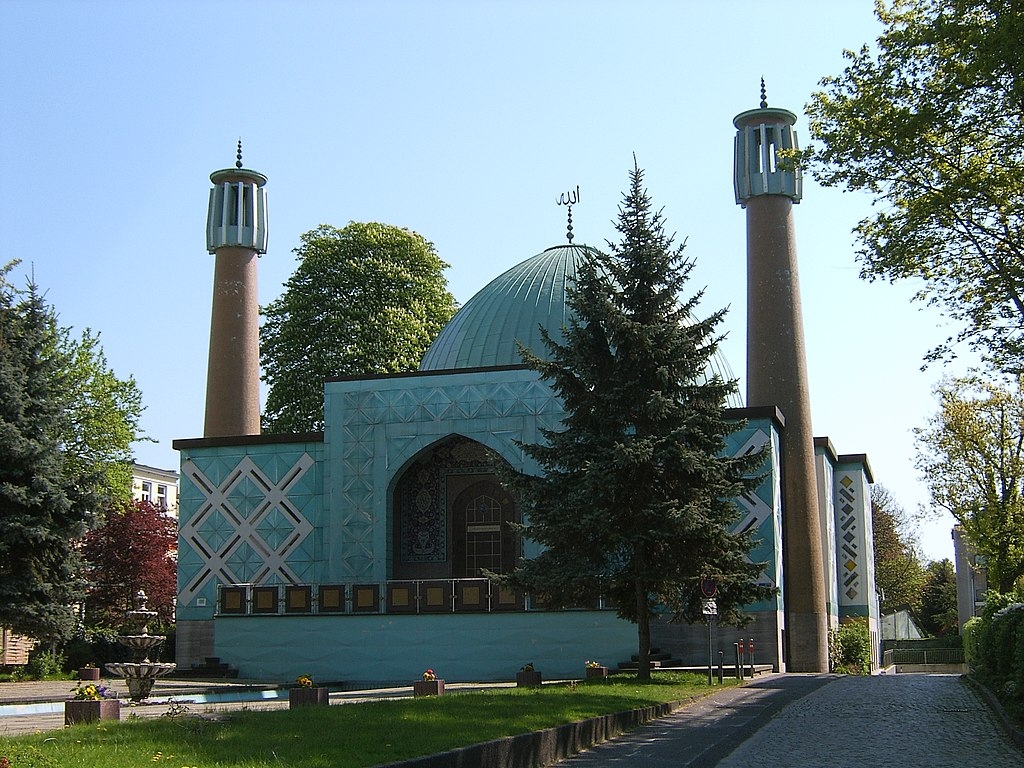
One year after Germany banned Hezbollah from operating on its soil, the Iran-backed, Lebanon-based Shiite terrorist group’s presence in Germany is stronger than ever. Iran’s main base of operation in Germany is the Hamburg-based Shiite Imam Ali Mosque (pictured) and the associated Islamic Centre of Hamburg (Islamisches Zentrum Hamburg, IZH). (Image source: Staro1/Wikimedia Commons)

One year after Germany banned Hezbollah from operating on its soil, the Iran-backed, Lebanon-based Shiite terrorist group’s presence in Germany is stronger than ever.

In the twelve months since the ban entered into effect, Hezbollah’s propaganda and fundraising activities in Germany have continued apace; the number of its followers in the country has increased; and the Hamburg mosque which serves as Iran’s main base of operations in Germany has gained in influence.

In retrospect, Germany’s much-vaunted Hezbollah ban appears to have been little more than a publicity stunt aimed at silencing critics of the German government’s pro-Iran foreign policy.

A recent annual report (Verfassungsschutzbericht 2020) by the Hamburg branch of Germany’s domestic intelligence agency (Bundesamt für Verfassungsschutz, BfV) revealed that despite the ban, which entered into effect on April 30, 2020, Hezbollah continues to operate at least 30 mosques and cultural associations in Germany.

The report added that the number of known Hezbollah followers in Germany had increased by 20% during the past year, jumping to 1,250 in 2020, up from 1,050 in 2019. The increase was attributed to improved intelligence gathering.

The report also said that Hezbollah leader Hassan Nasrallah had ordered Hezbollah followers in Germany to obey German law in order to avoid drawing unwanted attention from German intelligence agencies. At the same time, Hezbollah has effectively evaded the ban by transferring many of its activities to charities and cultural centers controlled by Iran.

“Pro-Iranian institutions in Germany are assessed to be instruments of the Iranian government that represent their theocratic state doctrine,” said the report. “They represent a system of values that is incompatible with the liberal democratic basic order.”

Iran’s main base of operation in Germany is the Hamburg-based Shiite Imam Ali Mosque and the associated Islamic Centre of Hamburg (Islamisches Zentrum Hamburg, IZH). The report stated:

“The director position of IZH has traditionally been filled with a loyal supporter of Iranian state doctrine and Islamic revolutionary goals. He is regarded as the representative of Iran’s Supreme Leader Ali Khamenei in Europe and as the Iran’s religious representative to the Shiite community.

“IZH is headed by Dr. Mohammad Hadi Mofatteh…a well-trained representative of the current regime in Tehran. According to his own statements, he served as an officer with the Revolutionary Guards. Mofatteh’s family is firmly anchored in the state-religious elite of Iran. He himself held various management positions in state-controlled media outlets for many years.

“The IZH is one of the most important centers of its kind in Europe, which is used by Shiite Muslims of various nations as a central religious contact point — in addition to Iranians, above all by Afghans, Arabs, Lebanese, Pakistanis and Turks as well as German converts….

“The IZH aims to export the Islamic revolution by means of extensive public relations work. The content is formulated in a moderate way and rarely offers a target for intelligence observation. To the outside world, the IZH presents itself as a purely religious institution that does not permit any political activities. Public association or identification with the Iranian government is usually avoided. Nevertheless, the IZH’s understanding of the state and society is shaped by the primacy of religion over democracy and the rule of law.

“A number of Shiite Islamic centers and organizations exist in Germany. The IZH has established a nationwide network of contacts and exercises influence over Shiites of various nationalities as well as Shiite-Islamic mosques and associations, up to and including complete control. Through these organizations, the IZH provides financial support, among other things, for the dissemination of the Iranian ‘revolutionary idea’ in various areas of society such as religion, education and sport.”

“The IZH is represented in some Islamic umbrella organizations that currently are not being monitored by German intelligence. In Hamburg it has a leading position in the central Islamic organization Council of Islamic Communities in Hamburg (SCHURA), an amalgamation of numerous mosque-sponsoring associations. At the federal level, representatives of the IZH are active in the Central Council of Muslims in Germany (ZMD) and in the Islamic Community of Shiite Congregations in Germany (IGS), at the European level in the Islamic-European Union of Shia Scholars and Theologians (IEUS). The IGS and IEUS are currently being monitored by German intelligence.”

A separate intelligence report (Verfassungsschutzbericht 2020) by the regional branch of the BfV in the German state of Schleswig-Holstein added:

“IZH is regarded as an important propaganda apparatus on the one hand, but also as an important interface between Iran and Germany and one of the centers of Iranian influence in Europe on the other. The head of the association is the representative of the revolutionary leader Khamenei in Europe and is accordingly appointed from Tehran.

“Like all pro-Iranian institutions, IZH is based on the model of the Islamic state of Allah and the ideas of the 1979 revolution with the aim of expanding and Islamizing the entire world. Western values, liberal ideas or the free democratic basic order are in contradiction to this. Due to the history and the animosity between Iran and Israel, the teachings of IZH have a strong anti-Semitic and anti-Israeli attitude.”

When asked why IZH was allowed to continue operating, a long-time observer of German politics told Gatestone Institute that German authorities were making a trade-off between banning the center and keeping it open so that German security agencies can keep tabs on Hezbollah’s activities in Germany.

Regional Intelligence Assessments on Hezbollah

Germany’s domestic intelligence agency, the Federal Office for the Protection of the Constitution (Bundesamt für Verfassungsschutz, BfV), has branches in all of Germany’s 16 federal states. Following are select statements about Hezbollah from the new 2020 annual reports:

  • Bavaria: “The long-term goal of Hezbollah (Party of Allah) is the destruction of the State of Israel and the rule of Islam over Jerusalem. Hezbollah has been responsible for terrorist attacks in Israel for years. The group so far has not carried out any violent actions in Germany but uses our territory as a safe haven. Hezbollah activities endanger the foreign interests of Germany and are directed against the concept of international understanding.”
  • Bremen: “In Germany, the primary goal of Hezbollah is to promote the development of organizational structures. These include their own mosque associations, in which Hezbollah supporters organize themselves. The organization has around 1,250 supporters nationwide.”
  • North Rhine-Westphalia: “Hezbollah is being monitored due to its extremist aspirations. Its ideological basis is the doctrine of the ‘guardianship of the Islamic jurist’ (Welayat-e Faqih) established by Ayatollah Khomeini and implemented politically in the Islamic Republic of Iran. Although it contains ‘democratic’ elements, this doctrine does not serve to establish the rule of the people, i.e., democracy, but rather to establish the rule of Allah, whose ‘guardians’ are Shiite Islamic scholars. Therefore, Hezbollah spreads an extremist Islamist ideology and represents a threat to the constitutional order.”
  • Rhineland-Palatinate: “For Hezbollah, Germany represents a space for logistical and financial support services. Although its supporters in Germany are well networked internally, they are not very visible to the outside world because they are careful not to be openly connected with Hezbollah.”

Hezbollah Ban Has Had No Effect

Hezbollah is also hiding its fundraising activities by using generic-sounding charities. On May 19, for instance, Germany’s Interior Ministry banned three charities — Deutsche Libanesische Familie (German-Lebanese Family), Menschen für Menschen (People for People) and Gib Frieden (Give Peace) — accused of collecting money for Hezbollah.

The entities were substitutes for a group called Waisenkinderprojekt Libanon (Orphans Project Lebanon) that was banned in Germany in 2014, after it had raised millions of euros for Hezbollah’s Shahid Foundation (Martyrs Foundation), which supports orphans of Hezbollah suicide bombers.

If the past is any guide, Hezbollah has almost certainly already found replacements for the banned entities. Nevertheless, German Interior Minister Horst Seehofer sounded triumphant. “Our security authorities are wide awake,” he declared. “Those who support terrorism will not be safe in Germany. No matter what clothes their supporters appear in, they will not find a place of refuge in our country.”

Since then, however, the German government has openly admitted that the ban has not had any practical impact on Hezbollah’s activities in Germany. Responding to a parliamentary inquiry on May 31, the government said that German security authorities have not observed any emigration of Hezbollah sympathizers from Germany or a withdrawal of activists from mosque associations. The government added that Hezbollah supporters continue to maintain organizational and ideological cohesion:

“The federal government has no knowledge of any fundamental structural changes within or among the supporters of Hezbollah. As before, the supporters of Hezbollah in Germany maintain organizational and ideological cohesion in local mosque associations which are primarily financed by donations. They are therefore not networked in a uniform, nationwide structure, but are presumably looking for isolated regional meeting places, including mosque and cultural associations. These associations are not homogeneous Hezbollah associations, but contact points for Shiite Muslims, including sympathizers of Hezbollah.”

In a separate parliamentary inquiry on May 14, the government said that a considerable part of Hezbollah’s activities in Germany are being carried out “in the dark” and that German authorities were finding it “difficult” to ascertain criminal activities, a claim that has been emphatically disputed. It added:

“The individual association structures continue to exist even after the activity ban, as no organization bans have been issued in this respect. There was and is no superordinate umbrella organization of Hezbollah in Germany.”

The government also admitted that it has not confiscated any assets of Hezbollah in Germany. When asked why the Hamburg-based IZH has not been banned, the government refused to provide an answer. It also said that Hezbollah does not pose a threat to Jewish interests in Germany:

“The federal government has no reliable information about Hezbollah spying on Jewish, Israeli or American targets in Germany. According to current knowledge, the likelihood of attacks by Hezbollah in Germany is low, as this runs counter to the interests of the organization, for which Germany is more of a safe haven.”

“One gets the impression that no one has really tried to completely shed light on and smash the structures of Hezbollah in Germany,” said FDP MP Benjamin Strasser.

When a Ban Is Not Really a Ban

In April 2020, the German government, after years of equivocating and under sustained pressure from the Trump Administration, announced a ban on Hezbollah — Arabic for “The Party of Allah” — in Germany. The ban — supported by the center-right Christian Democrats and the center-left Social Democrats, the two parties that make up Germany’s ruling coalition, and also by the classical liberal Free Democrats — was hailed as “important,” “significant,” and “long overdue.”

The Hezbollah ban was, in fact, a compromise measure between German lawmakers who wanted to take a harder line against Iran and those who did not. As a result, the ban fell far short of a complete prohibition of Hezbollah and was apparently aimed at providing the German government with political cover that allowed Germany to claim that it had banned the group even if it had not.

On April 30, the German government’s Federal Gazette (Bundesanzeiger) reported that Hezbollah was subject to an activity ban (Betätigungsverbot), but not an organizational ban (Organisationsverbot) — an important legal distinction because the activity ban is weaker than an organizational ban.

The two-page document, which carefully avoided referring to Hezbollah as a terrorist organization, prohibited the group’s logo from being displayed “in public, in meetings or in writings.” In addition, Hezbollah’s assets in Germany were to have been confiscated — which ultimately did not happen.

The ban did not call for Hezbollah mosques or cultural centers to be closed, nor did it require that members of the group be deported. The ban also did not prohibit Hezbollah operatives from travelling to Germany.

German lawmakers said that a complete ban of Hezbollah would be impossible because the group’s structures in Germany are “not currently ascertainable.”

The Deputy Chairman of the CDU/CSU parliamentary group in the Bundestag, Thorsten Frei, stated:

“Hezbollah-related association structures, which could justify an organizational ban (vereinsrechtliches Organisationsverbot), are not ascertainable, despite efforts by the federal government since 2008. An organizational ban is therefore not an option due to the lack of a verifiable domestic organizational structure. However, we are free to pursue an activity ban (Betätigungsverbot) that we have also applied to other terrorist organizations that lack a demonstrable domestic organizational structure.”

The idea to ban Hezbollah in its entirety originated with Germany’s conservative party, Alternative for Germany (Alternative für Deutschland, AfD), the third-largest party in the German parliament. The AfD was not pleased with the partial ban. The deputy chairwoman of the AfD parliamentary group in the German Bundestag, Beatrix von Storch, explained:

“Six months ago, the AfD presented a resolution in the Bundestag to ban Hezbollah, a resolution which you vehemently rejected and which, since then, you have blocked in caucus. Now, six months later, you are collectively rushing through the door that we have politically opened. If this would happen with more AfD proposals, Germany would be in a much better place….

“Nevertheless, your resolution has two central weaknesses. The first weakness is that you are asking for only an activity ban (Betätigungsverbot). We want a specific organizational ban (Organisationsverbot). According to the Crime Fighting Law (Verbrechensbekämpfungsgesetz) of 1994, the activity ban is the weaker legal means when compared to an organizational ban. There is no reason in the world why you would fight a terrorist organization with the weaker means and not the stronger. You are making a loud bark, but you are not biting.

“The second fundamental weakness of your resolution is your justification for using the weaker means. You write, and I quote, ‘Hezbollah-related association structures, which could justify an organizational ban (vereinsrechtliches Organisationsverbot), are not ascertainable.’ That is objectively false, as confirmed by the 2017 and 2018 annual reports of Germany’s domestic intelligence agency (Bundesamt für Verfassungsschutz, BfV). The 2018 report states, and I quote, ‘In Germany, Hezbollah followers maintain organizational and ideological cohesion, among other things, in local mosque associations, which are primarily financed by donations.’ Do you even read your own intelligence reports? In case it is too long for you to read, it is located on page 214. Just check it!

“If you do not want to touch Hezbollah’s mosque associations, then this resolution is pure symbolism politics (Symbolpolitik), and symbolism politics cannot continue. What is needed is the complete ban of Hezbollah. Hezbollah’s propaganda and terror financing in Germany must be stopped. The mosque associations that exist must be disbanded, and most importantly, Hezbollah supporters must be deported. This, by the way, is also demanded by the Bundestag’s Anti-Semitism Resolution, which expressly calls for the deportation of supporters of anti-Semitism. If this does not apply to supporters of Hezbollah, which wants to send Jews to the gas chambers, and wants to destroy Israel, then to whom could it apply?”

At the time, German security expert Stefan Schubert wrote that Germany’s partial ban on Hezbollah reflected a lack of political will to crack down on the group. He also predicted that the ban will likely have only a very small impact on Hezbollah’s activities in Germany:

“Today’s completely late action by the federal government is primarily a symbolic gesture. If the government were really serious about annihilating Hezbollah in Germany, it should have established a special commission and provided the security authorities with financial and human resources to identify and dismantle the group nationwide.”


Soeren Kern is a Senior Fellow at the New York-based Gatestone Institute.


Zawartość publikowanych artykułów i materiałów nie reprezentuje poglądów ani opinii Reunion’68,
ani też webmastera Blogu Reunion’68, chyba ze jest to wyraźnie zaznaczone.
Twoje uwagi, linki, własne artykuły lub wiadomości prześlij na adres:
webmaster@reunion68.com


Postcard from Israel – Israel’s Desert Kibbutzim

Postcard from Israel – Israel’s Desert Kibbutzim


21see


Production by Viva Sarah Press for ISRAEL21c

Visit ISRAEL21c’s Social Media Channels:
Facebook – http://www.facebook.com/ISRAEL21c​
Twitter – http://www.twitter.com/Israel21c​
Subscribe to our YouTube channel – http://www.youtube.com/ISRAEL21cdotcom


Zawartość publikowanych artykułów i materiałów nie reprezentuje poglądów ani opinii Reunion’68,
ani też webmastera Blogu Reunion’68, chyba ze jest to wyraźnie zaznaczone.
Twoje uwagi, linki, własne artykuły lub wiadomości prześlij na adres:
webmaster@reunion68.com