ROSSELLA TERCATIN
Hebrew U and Tel Aviv University researchers found remains of a new type of ‘Homo’ who lived in the region some 130,000 years ago.
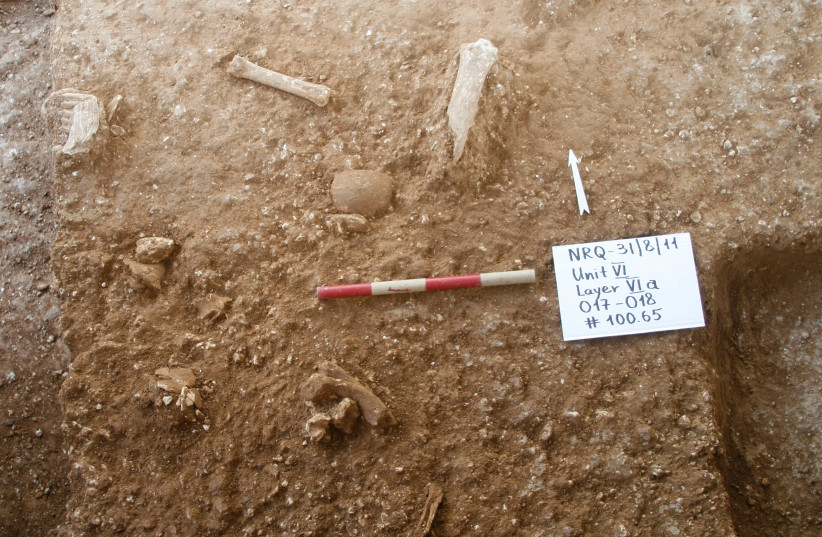 Skull found at the site among other items at Nesher Ramla. / (photo credit: DR. YOSSI ZAIDNER)
A new type of early human previously not known to scientists has been discovered in Israel, Tel Aviv University and Hebrew University researchers announced Thursday as their extraordinary findings appeared in the prestigious academic journal Science.
Researchers believe the new “Homo” species intermarried with Homo sapiens and was an ancestor of the Neanderthals.
Tens of thousands of years ago, the busy central region of what is now a densely populated and traffic-jammed part of Israel, was a landscape that very much resembled the African savanna. It featured rhinos, wild horses and cattle and other large animals that were perfect game for ancient hunter-gatherers.
The site of Nesher Ramla, a few kilometers from the modern-day city, was probably close to a water reservoir where early humans could hunt animals. Today, the dig site is filled with many animal bones, stone tools for making fire and butchering, and human bones, including skulls, TAU anthropologist Prof. Israel Hershkovitz said.
.
“We know that modern humans – or Homo sapiens – arrived in this area some 200,000 years ago,” he said. “When we started excavating and examining the different archaeological layers, we found that they dated back between 140,000 and 120,000 years ago, so we expected to find remains of Homo sapiens. We did not realize that another form of human was living alongside them.”
The site was discovered during a salvage excavation led by Hebrew University archaeologist Dr. Yossi Zaidner at the Nesher cement plant. Israeli law demands that a salvage excavation be carried out alongside any new construction project.
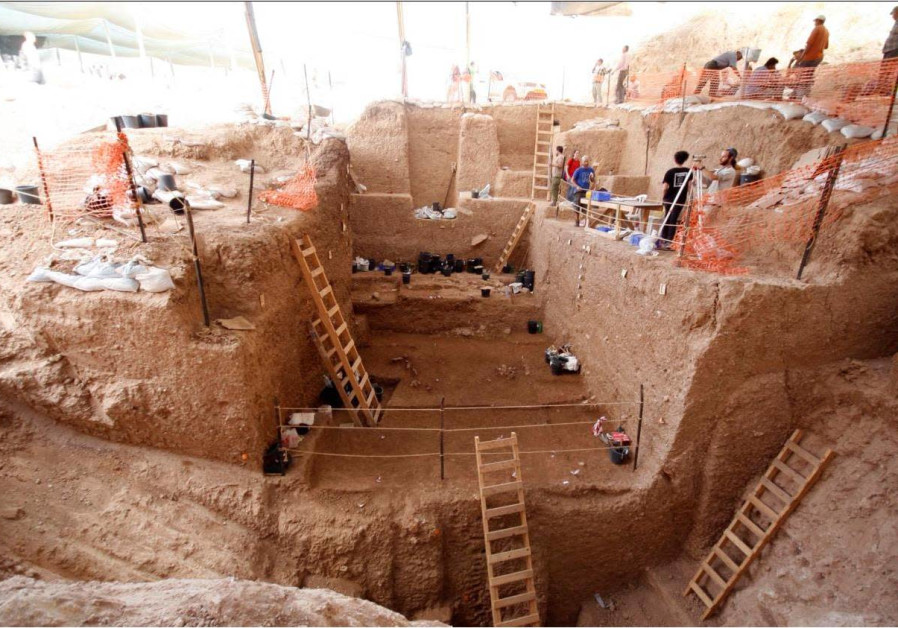 Thick archaeological layers uncovered during the dig at Nesher Ramla. (Photo credit: Dr. Yossi Zaidner)
“This is an extraordinary discovery,” said Zaidner. “We never imagined that alongside Homo sapiens, archaic Homo roamed the area so late in human history.”
The researchers believe that the newly discovered human type, which they named after the site, lived in the region hundreds of thousands of years ago and at least until 130,000 years ago.
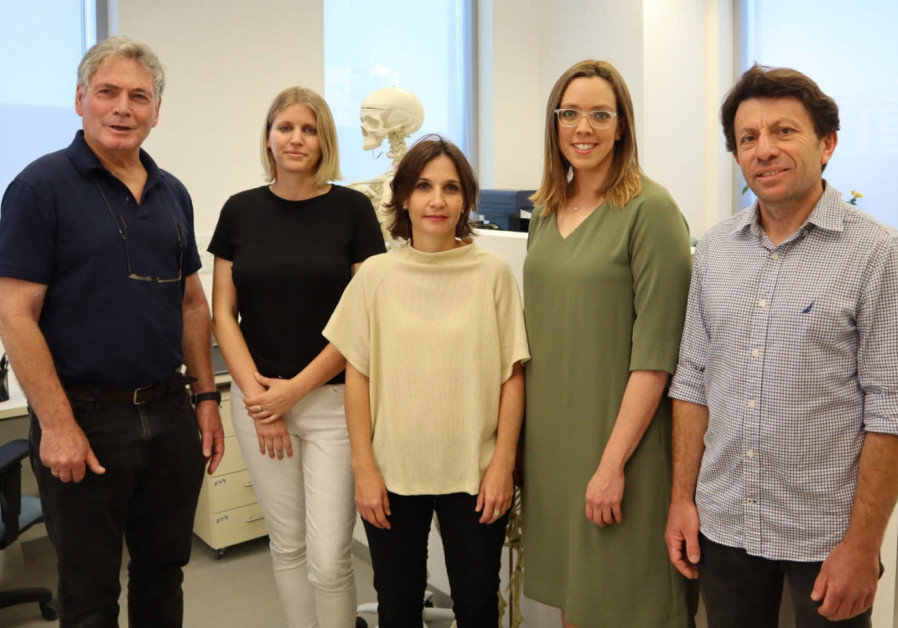 The Nesher Ramla research team (Left to Right): Israel Hershkovitz, Marion Prevost, Hila May, Rachel Sarig and Yossi Zaidner. (Photo credit: Tel Aviv University)
Hershkovitz said it took a long time to determine that the bones they found indeed belonged to a hitherto unknown species.
“There was no ‘eureka’ moment,” he noted.
But the findings may radically change what researchers have so far believed about how ancient populations evolved and interacted, including how sapiens and Neanderthal, other ancient human types, related to each other.
“We have shown that contrary to what was previously believed, the Neanderthals are not a European story, but very much a story of the Levant,” he said.
Researchers believe the Nesher Ramla was an ancestor of the Neanderthals and other archaic Asian populations.
“Previously, it was thought that Neanderthals arrived in [what is now] Israel around 70,000 to 50,000 years ago from Europe,” Hershkovitz remarked. “However, now we are talking about a population living here some 130,000 years ago.”
Some features of the remains, like the teeth and the jaws, were more similar to Neanderthal species, while the skulls resembled the Homo type. But something did not make sense.
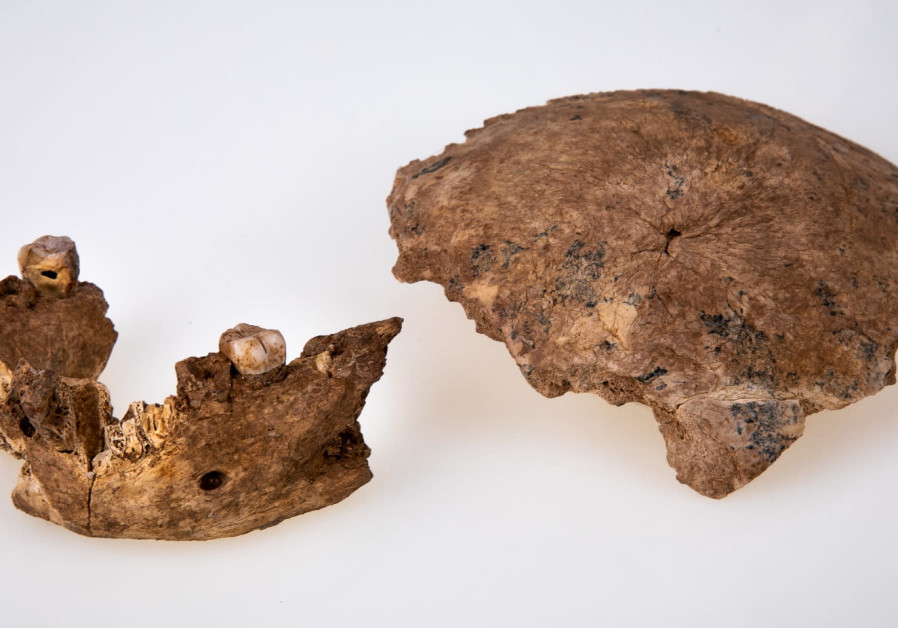 Fossil remains of skull and jaw found at Nesher Ramla. (Photo credit: Tel Aviv University)
When the researchers understood that the bones they had retrieved did not belong to either a Neanderthal or a Homo sapiens, they started to examine the possibility that they belonged to the last survivors of a more archaic population that they thought had become extinct hundreds of thousands of years earlier.
“We started to look for other members of this population, and we discovered that some fossils previously unearthed at other prehistoric sites in Israel, including the Qesem cave, belonged to the same group,” Hershkovitz said.
“We therefore realized that we were dealing with a huge population that lived in the region, and probably also migrated in different directions, including in Asia and in Europe and later became the humans we know as Neanderthal.”
According to Hershkovitz, Nesher Ramla Homo and Homo sapiens not only coexisted peacefully and exchanged technology, but also produced offspring.
“They engaged culturally and biologically,” he said. “In Europe, the story was very different because when modern humans arrived there around 45,000 years ago, they completely eliminated the local Neanderthals. This did not happen here.”
“We think that some later fossils we found in several caves dating back to 100,000 years ago probably belonged to offspring of sapiens and Nesher Ramla,” he added.
For example, in the Qafzeh cave in the Lower Galilee, archaeologists found the remains of several humans presenting the features of both species, some closer to the sapiens, some to the Nesher Ramla.
“It is similar to what happens when we see that certain children look more like their mother and some look more like their father,” Hershkovitz noted.
The scientists were not able to extract any DNA from the fossils.
“Warm weather destroys DNA,” Hershkovitz said. “In Israel, we have not been able to find any preserved DNA from earlier than 15,000 years ago.”
For this reason, the researchers’ conclusions are based on the morphology of the bones found.
“People think in paradigms,” said TAU Dr. Rachel Sarig. “That’s why efforts have been made to ascribe these fossils to known human groups like Homo sapiens, Homo erectus, Homo heidelbergensis or the Neanderthals. But now we say: No. This is a group in itself, with distinct features and characteristics.”
In the past, geneticists had already suggested that an unknown population represented the missing link between sapiens and Neanderthal, as pointed out by another researcher, Dr. Hila May. The Nesher Ramla population could represent the answer.
“As a crossroads between Africa, Europe and Asia, the Land of Israel served as a melting pot where different human populations mixed with one another, to later spread throughout the Old World,” she added. “The discovery from the Nesher Ramla site writes a new and fascinating chapter in the story of humankind.”

 Spotkanie autorskie wokół książki Jaffa Schatza ‘Pokolenie. Wzlot i upadek polskich Żydów komunistów’ – obejrzyj nagranie


 ILTV Israel News