Archive | November 2023

Where Are You People?

Where Are You People?

KATYA KAZAKINA


A. PEREZ MECA/EUROPA PRESS VIA GETTY IMAGES

The art world’s deafening silence after the Hamas attack in Israel.

The silence is deafening.

In New York, the home of the largest Jewish population outside of Israel, not a single major museum has so far expressed its official support for the Jewish state and, by extension, the Jewish people. Not one major gallery chose to send a message of empathy and take a public stand against the slaughter of Jewish civilians despite, by now, the widely reported grim toll: the estimated 1,400 Israelis killed, including babieswomen, and the elderly. Just imagine for a second anything of this magnitude taking place in your community, among your people.

The art world’s silence speaks volumes. As a Jewish woman, who’s been writing about art, artists, galleries, museums, auction houses, foundations, fairs, lawsuits for more than 17 years, I feel a mix of pain, disappointment, rage, and fear. Why are the Jews being slaughtered and the art world turns a blind eye—and goes on shopping at Frieze London as if nothing happened? Where is the solidarity? Where is the empathy? Where is the moral compass?

I have reached out to museums including the Met, the MoMA, the Guggenheim, and the Whitney; galleries including Gagosian, Pace, Hauser & Wirth, and David Zwirner; auction houses Christie’s, Sotheby’s, and Phillips.

It’s been radio silence for the first week, with only a few lonely voices, including the Jewish museums around the country and an art industry newsletter, The Canvas, speaking up in solidarity with Israel after the attack.

This week, as the humanitarian crisis developed in Gaza following Israel’s retaliation, critical voices quickly drowned out those voices of support. Just yesterday, 8,000 artists signed an open letter, declaring their solidarity with the Palestinians, but conspicuously not saying a word about the largest Jewish massacre since the Holocaust. Published in Art Forum magazine, the letter called on institutions to break their silence. The signatories included prominent artists such as Nan Goldin, Martha Rosler, Barbara Kruger, Kara Walker, and Peter Doig.

Those who remain silent are the same businesses and institutions that issued almost instant (and correct) support for Ukraine after Russia’s invasion last year, for Black Lives Matter after George Floyd’s murder; that telegraph their support for LGBT rights and minority rights through exhibitions, policies, and statements.

These are the same institutions and businesses whose endowments, boards, and coffers have been oiled by wealthy Jewish patrons for decades. And these are the same entities who employ and represent staffers and artists, who may see Israel as the aggressor often without real understanding of historic complexity in the region and throughout centuries. It’s a fashionable view.

“Where are you, people? Who are you, people?” said New York-based private art dealer and collector Alberto Mugrabi, whose father was born in Israel. “We are seeing who is with us and who is not.”

Why the silence? I’ve asked myself and others this week.

“Now, at this moment, the art world could stand by Israel and say those are atrocities,” said Tania Coen-Uzzielli, director of the Tel Aviv Museum, which has been closed alongside all other public institutions. “I cannot hear this voice.”

A member of a WhatsApp group of 20 museum directors around the world, she has received just four personal messages since the attack. The group as a whole has been silent, including all of its American members. “I don’t know why,” Coen-Uzzielli said. “I am struggling with this. Really.”

Perhaps people are afraid to say the wrong thing and offend someone. Perhaps museums are afraid to be criticized or canceled by their constituencies. Perhaps galleries are afraid to lose business.

Powerful art patrons such as Qatar’s Sheikha al Mayassa, who has been one of the top art buyers of the past 20 years and is the chairperson of Qatar Museums, posted images of the Palestinian flag projected onto museum buildings in Doha on social media after the massacre.

In New York, the home of the largest Jewish population outside of Israel, not a single major museum has so far expressed its official support for the Jewish state and, by extension, the Jewish people.

“People are afraid,” a public relations consultant told me about why the art world doesn’t want to take a pro-Israel stance publicly.

Some, including actress Stella Schnabel, the daughter of painter and film director Julian Schnabel, have spoken out on her private Instagram account against “Israeli apartheid” rather than about the massacre of Israelis. Others, like members of the Indonesian art collective ruangrupa, walked back their initial pro-Hamas comments.

The first statements of support for Israel came, not surprisingly, from Jewish institutions, starting with the U.S. Holocaust Museum in Washington, D.C., and the Jewish Museum in New York. Regional Jewish museums, like the Maltz Museum in Cleveland, dedicated to sharing Jewish heritage through the lens of the American experience, responded with clarity and passion:

We are living through history and watching it unfold. The choices we make at this moment both individually and collectively matter. We are often asked at the Maltz Museum how could the Holocaust have happened? How could people have followed Hitler? When we study artifacts that teach us about history, we define for ourselves what it means to be a perpetrator, by-stander, or upstander. Every one of us can choose how to act now. What side of history will each of us be on? We condemn the terrorist attacks on the Jewish people of Israel by Hamas and encourage all people to stand up and speak out against the brutally cruel and utterly inhumane crimes targeting Jewish homes, families, children as young as babies, and the elderly including Holocaust survivors.

The mainstream art world’s silence is particularly stark compared with the public expressions of support for Israel. The massive projections of the Israeli flag onto the Brandenburg Gate in Berlin left me transfixed on Monday. Equally powerful were the blue-and-white light treatments of the Empire State Building in New York, the Eiffel Tower in Paris, the House of Parliament in London.

Those who have expressed support for Israel ranged from the National Basketball Association to the New York City Schools Chancellor David Banks. But the institutional art world remains mum.

In the past few days, every time a follower on Instagram posted his or her support for Israel it made me feel grateful. I realized how much these expressions of solidarity meant to me during these dark days for the Jewish state and the Jewish diaspora.

Homa Taj, an artist who grew up in Iran and isn’t Jewish, reposted the Holocaust Museum’s statement in support of Israel in her Instagram story on Monday—and quickly saw the repercussions.

“We were bleeding followers until the story disappeared,” Taj told me. “This kind of reaction doesn’t surprise me. You have to buckle down and take a stance and believe in what you think is right.”

Adam Cohen, the owner of A Hug From the Art World gallery in Chelsea, posted on Wednesday an image of a deconstructed flag of Israel accompanied by a comment: “THE UNEQUIVOCAL SILENCE OF MY COLLECTIVE ARTS COMMUNITY IS DEAFENING #NEVERAGAIN.”

The most recent edition of The Canvas, an art industry newsletter, was titled, “When Did the Artworld Lose Its Voice?”

There’ve been a few lone voices. The first thing you see on the website of the Staatliche Kunstsammlungen Dresden, Germany, which comprises 15 state museums, is Israel’s flag and the condemnation of terrorism.

Pace Gallery was the only one of the major galleries that responded to my request to comment on the events in Israel (though the company is yet to make a public post or statement).

“We are shocked and horrified by the atrocities and war crimes being committed in Israel,” Marc Glimcher said in a statement. “No political goal can justify these actions. We mourn the loss of innocent lives. Our hearts go out to the families and communities that have been destroyed and desecrated.”

I asked Cohen, of A Hug From the Art World gallery, why he decided to speak up on Instagram.

“I felt the silence and I saw this image online and it best represented how I felt,” Cohen said in a telephone interview. “So I thought it important to share.”

When asked how Cohen felt in the art world as a Jew, the dealer said that the real question was how he felt in the world as a Jew. “And the answer is: proud yet afraid.”


This column originally appeared on Oct. 12 as part of Artnet News Pro, a subscriber-only feature from Artnet. More information is available at news.artnet.com. It has been updated slightly by the author.


Katya Kazakina is an award-winning journalist covering arts and culture. After almost 15 years at Bloomberg, she joined Artnet News as a senior reporter, writing a weekly column, “The Art Detective,” that lifts the curtain on what’s really going on in the art market. She’s also a contributor to The New York Times and Town & Country magazine.


Zawartość publikowanych artykułów i materiałów nie reprezentuje poglądów ani opinii Reunion’68,
ani też webmastera Blogu Reunion’68, chyba ze jest to wyraźnie zaznaczone.
Twoje uwagi, linki, własne artykuły lub wiadomości prześlij na adres:
webmaster@reunion68.com


Israel Daily News – War Day 26, November 1, 2023

Israel Daily News – War Day 26, November 1, 2023

ILTV Israel News


The IDF intensify their ground operations in Gaza while successfully rescuing a hostage from Hamas captivity, and the northern border sees more clashes with Hezbollah. And much more.


Zawartość publikowanych artykułów i materiałów nie reprezentuje poglądów ani opinii Reunion’68,
ani też webmastera Blogu Reunion’68, chyba ze jest to wyraźnie zaznaczone.
Twoje uwagi, linki, własne artykuły lub wiadomości prześlij na adres:
webmaster@reunion68.com


Marzenie o aksamitnym Palestyńskim Państwie Hamasu i Innych

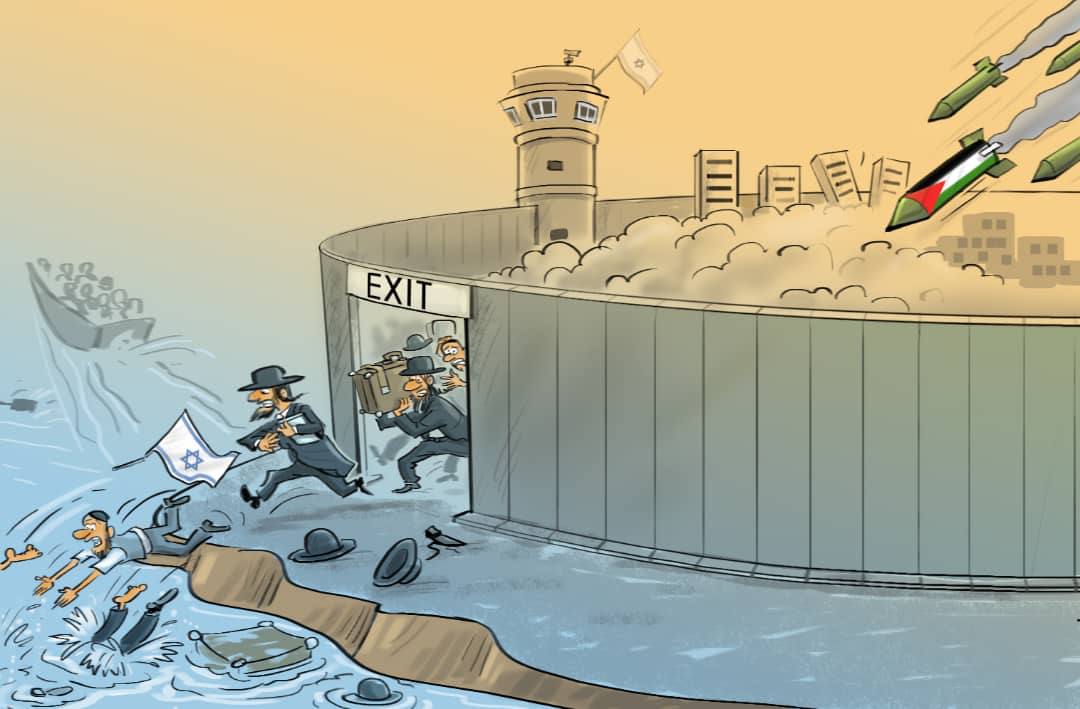
Palestyńskie Państwo Hamasu i Innych w trakcie budowy z myślą o pokojowej przyszłości (Źródło: Karykatura zamieszczona na X przez Mohamada Qasima z Londynu 7 października 2023 o godz., 12.28)


Marzenie o aksamitnym Palestyńskim Państwie Hamasu i Innych

Andrzej Koraszewski


Dobry papież Franciszek napisał książkę, w której zapewnia, że islam jest religią pokoju, tak, to ten sam papież, który nazwał Mahmouda Abbasa aniołem pokoju, ten sam, który nigdy nie wystąpił w obronie mordowanych przez muzułmanów chrześcijan w Afryce, ten sam, który odmówił wsparcia Asii Bibi, ten sam, o którym wielu chrześcijan sądzi, że naprawia Kościół katolicki.

Były jezuita pisze, że jest sceptykiem, ale nie informuje w jakiej sprawie, zachwyca się Irlandczykiem, który twierdzi, że książka o zderzeniu cywilizacji wpłynęła na amerykańską politykę na Bliskim Wschodzie. Ciekawi mnie jak ten Irlandczyk na to wpadł, ale nie na tyle, żeby jego książkę czytać. Sądziłem, że były jezuita podzieli się ze mną znaną mu tajemnicą, ale były jezuita zapewnił, że jest sceptykiem, że Irlandczyk jest klawy i nie popiera terroru (co zapewne daje mu carte blanche na pisanie książek opartych na fałszywych przesłankach).  Były jezuita jest przekonany, że dzięki takim ludziom jak ten klawy Irlandczyk udało się znaleźć rozwiązanie pokojowe w Irlandii i ma nadzieję, że da się znaleźć takie rozwiązanie dla Izraela i Palestyńczyków. Bardzo lubię byłego jezuitę, ale bardzo się boję że jego niezłomna walka o stworzenie aksamitnego Palestyńskiego Państwa Hamasu i Innych może być skuteczna. Ma w tej walce potężne wsparcie amerykańskiej administracji, Organizacji Narodów Zjednoczonych, zachodnich demokracji i milionów ludzi dobrej woli z solidną porcją nie tylko Żydów z diaspory, ale i Żydów z Izraela.

Były jezuita najwyraźniej nie ma czasu na czytanie informacji dysydentów palestyńskich na temat tego, w jakim stopniu Hamas reprezentuje Palestyńczyków (a są to informacje z palestyńskich ośrodków badania opinii publicznej). Nie jest to jakaś wiedza tajemna, trzeba ogromnej siły woli, żeby trzymać tę wiedzę z daleka od siebie. A istotę tego poparcia najlepiej oddaje rozmowa telefoniczna hamasowskiego mordercy  z miejsca mordu z rodzicami w Gazie, z prośbą, żeby sami zobaczyli, ilu Żydów właśnie zabił własnymi rękami.

Były jezuita chce mieć nadzieję na pokój, nie ma ochoty na rzeczywistość, więc zamiast winić biednych Palestyńczyków, patrzy złym okiem na premiera Netanjahu. Nie on jeden.

7 października nazistowscy barbarzyńcy zabili więcej Żydów niż podczas Nocy Kryształowej, to wydarzenie było dla świata mediów kilkudniowym wstrząsem, potem zwolennicy aksamitnego Palestyńskiego Państwa Hamasu i Innych zareagowali wzmożoną nienawiścią do Izraela.

Ten fenomen próbuje wyjaśnić izraelski politolog Shany Mor na łamach „The Wall Street Journal”, który twierdzi, że zjawisko wzrostu niechęci do Żydów w reakcji na masakrę Żydów wynika z potrzeby redukcji dysonansu poznawczego. (Cytuję za Adamem Levickiem z Camera U.K.)

„Zachodni aktywiści na rzecz Palestyńczyków oddani są dwóm niemal teologicznym dogmatom: że Izrael jest zły i że żadne palestyńskie działanie nie jest nigdy powiązane z jakąkolwiek palestyńską odpowiedzialnością”. Barbarzyński atak Hamasu, stwierdza dalej autor, „stanowi zagrożenie dla tego światopoglądu i jedynym sposobem rozwiązania tego problemu jest zwiększenie wyimaginowanej wrogości Izraela wobec Palestyńczyków. Terrorystyczne okrucieństwa nie powodują odwrotu od Sprawy, w imieniu której zostały popełnione; prowadzą do jeszcze większej odrazy do ofiary”.

Czy to znaczy, że to są źli ludzie? Ależ skąd, przenika ich odrażające dobro, to samo dobro, które wypełnia serce papieża Franciszka.

Bardzo znany amerykański dziennikarz żydowskiego pochodzenia, Peter Beinart, opublikował 14 października na łamach „New York Times’a” artykuł o żydowskiej nadziei na wyzwolenie Palestyńczyków. Zaczyna ten artykuł od przypomnienia, że w 1988 roku w RPA Afrykański Kongres Narodowy odżegnał się od terroru.

Amerykański dziennikarz zdaje sobie sprawę, że Hamas to jednak co innego, zapewnia, że Hamas jest straszny i stwierdza:

„Jednak kiedy Palestyńczycy opierają się uciskowi w etyczny sposób – wzywając do bojkotu, sankcji i stosowania prawa międzynarodowego – Stany Zjednoczone i ich sojusznicy pracują nad tym, by te wysiłki zakończyły się niepowodzeniem, co przekonuje wielu Palestyńczyków, że etyczny opór nie działa, co wzmacnia Hamas.”

Pytanie, jak on do tego wspaniałego wniosku doszedł, nie ma sensu. Bo jak wyjaśnić, że 78 procent Mandatu Palestyńskiego przeznaczono na arabską Palestynę (Transjordania/Jordania), w której miało nie być ani jednego Żyda, a pozostałe 22 procent na Dom Żydów, w którym Żydzi chcieli żyć w pokoju ze swoimi arabskimi sąsiadami. Jak wyjaśnić amerykańskiemu dziennikarzowi, że Żydzi nie wyganiali swoich arabskich sąsiadów, że islamofaszystowski ruch nacjonalistyczny wzywał do mordowania Żydów, kiedykolwiek to możliwe. Jak wyjaśnić amerykańskiemu dziennikarzowi, że kiedy 5 arabskich armii napadło na jednodniowy Izrael, organizatorzy tej wyprawy, (która miała być dokończeniem Holokaustu), wezwali ludność arabską do ucieczki z terenu operacji wojennych na okres tygodnia. Jak wyjaśnić temu człowiekowi, skąd się wzięła definicja „palestyńskiego uchodźcy” jako kogoś, kto mieszkał przez co najmniej dwa lata na terenach, na których powstał Izrael, ale nawet ci, którzy wrócili do krajów, z których niedawno wyjechali, pozostali na zawsze palestyńskimi uchodźcami? Jak wyjaśnić, to, że Izraelscy Żydzi to dziś w większości przybysze i potomkowie przybyszów z krajów muzułmańskich, gdzie pozbawiono ich własności wielokrotnie większej niż cały Izrael? Jak wytłumaczyć temu dziennikarzowi, że Palestyńczycy, którzy chcą pokoju z Izraelem, są zarówno pod władzą Hamasu, jak i Autonomii Palestyńskiej, prześladowani, więzieni, torturowani i zabijani?

Peter Beinart jest zbyt dobrym człowiekiem, żeby chcieć o tym wiedzieć. Jakiś człowiek z dziwacznym internetowym pseudonimem zapytał mnie, które wersety Koranu zachęcają do podboju świata. Poleciłem mu kilka książek autorów wychowanych w islamskim świecie i w islamskiej religii. Odpisał, że nie będzie ich czytał, bo to ludzie, którzy nie lubią islamu. Nie zamierzałem go przekonywać, ale na użytek innych czytelników tego wątku napisałem, że uniwersytet Al-Azhar, to odpowiednik katolickiego Watykanu, a jego szejk Ahmad Al-Tajjeb, to odpowiednik papieża Franciszka. Ahmad Al-Tajjeb nigdy nie potępił Al-Kaidy, ani afgańskich Talibów, nigdy nie potępił ISIS, nigdy nie potępił ludobójstwa chrześcijan przez muzułmanów w Afryce, nie potępił również Hamasu (ani po 7 października, ani wcześniej). Muzułmanie (nie żaden papież Franciszek, czy jakiś amerykański prezydent) prosili go, żeby ogłosił, że ISIS nie jest islamski, że jest niezgodny z Koranem. Główny autorytet sunnickiego islamu zbył ich lekceważącym milczeniem (wiedząc dobrze jak bardzo ci muzułmanie chcą go nakłonić do powiedzenia nieprawdy). Prezydent Egiptu Sisi apelował do niego, żeby zmienić nauczanie islamu, tak iżby wyeliminować z tego nauczania wezwania do nienawiści wobec niewiernych i wezwania do nawracania przemocą. Największy sunnicki autorytet religijny odrzucił ten pomysł. Trudno posądzać dobrego szejka o to, że nie lubi islamu, trudno również odmówić mu znajomości Koranu i innych świętych pism jego religii.

Oczywiście nikt takich pytań nie zadaje ajatollahowi Chameneiemu, bo to byłoby bardzo niebezpieczne. Z jego strony powtarzające się okrzyki „śmierć Ameryce, śmierć Izraelowi” i zapewnienie, że koraniczne wezwanie „zasiej terror w sercach niewiernych” jest samą podstawą religii pokoju, są dowodem na to, że przy nim Ahmad Al-Tajjeb jest umiarkowanym muzułmaninem.

Papież Franciszek przyjaźni się z dobrym sunnickim szejkiem (pielgrzymował również do pewnego szyickiego imama w Iraku) i jest uczciwie przekonany, że islam jest religią pokoju. Nie przeszkadzają mu ani nazistowskie saluty, ani mordowanie chrześcijan, a już najmniej mordowanie Żydów. To bardzo dobry człowiek, ten katolicki papież.

Peter Beinart jest nie tylko Amerykaninem, ale i Żydem i nie może się zdobyć na tak wielką tolerancję, jaką serwuje światu papież Franciszek. Beinart dostrzegł prawdziwą twarz  Hamasu, chociaż nie podejrzewa, żeby miała cokolwiek wspólnego z islamem.

Jest podejrzliwy raczej wobec „cyklu”. (Ciekawa rzecz tymi cyklami.)

Okrucieństwo, jakiego dopuścił się Hamas 7 października, znacznie utrudniło odwrócenie tego potwornego cyklu. To może potrwać całe pokolenie. Będzie to wymagało wspólnego zaangażowania na rzecz położenia kresu uciskowi Palestyńczyków w sposób, który szanuje nieskończoną wartość każdego ludzkiego życia. Będzie to wymagało od Palestyńczyków zdecydowanego przeciwstawienia się atakom na żydowskich cywilów, a od Żydów wspierania Palestyńczyków, gdy ci opierają się uciskowi w humanitarny sposób – nawet jeśli Palestyńczycy i Żydzi, którzy podejmą takie kroki, ryzykują, że staną się pariasami wśród własnego narodu.

Przeraża bezmiar dobra tego judeo-amerykańskiego humanisty. Mam wrażenie, że Peter Beinart domyśla się, że nie da się zbudować aksamitnego Palestyńskiego Państwa Hamasu i Innych. Palestyńskie państwo muszą budować pokojowi Palestyńczycy. Nie wyjaśnia którzy, nie wyjaśnia, jak mają pozbyć się Hamasu i innych, nie ma jasnego zdania kim są ci „inni”. Jego zdaniem brzydki Izrael, z pomocą Ameryki, podkopywał pozycję Palestyńczyków, którzy dążyli do zakończenia izraelskiej okupacji poprzez negocjacje lub pokojową presję. Ciekawa wizja tego „dążenia”, które realizowali władcy Palestyńczyków, najpierw Arafat, a potem Abbas. Papież Franciszek nie jest jedynym dobrym człowiekiem, który wyobraża sobie Abbasa jako „anioła pokoju”.

Peter Beinart, kończy swój poemat na łamach jednej z najważniejszych gazet świata pisząc:

„…być może pewnego dnia, kiedy w końcu stanie się ohydnie jasne, że Hamas nie może wyzwolić Palestyńczyków mordując dzieci, a Izrael nie może podporządkować sobie Gazy, nawet zrównując ją z ziemią, społeczności te mogą stać się zalążkiem masowego ruchu na rzecz wolności, który zadziwi świat.”

Inny chorąży pokoju, Sekretarz Generalny ONZ, Antonio Gutterres, używa busoli moralnej tej samej produkcji, co papież Franciszek i judeo-amerykański humanista mówiąc:

Nawet w tym momencie poważnego i natychmiastowego zagrożenia, nie wolno nam tracić z oczu jedynej realistycznej podstawy prawdziwego pokoju i stabilności: rozwiązania w postaci dwóch państw.

Wcześniej ten chorąży pokoju, stojący na czele organizacji zrzeszającej pokój miłujące narody raczył powiedzieć, że wydarzenia z 7 października „nie wydarzyły się w próżni” (nie, nie miał na myśli tego, że poprzedziły je dziesiątki tysięcy rakiet i zamachów terrorystycznych na Żydów z logistycznym wsparciem antyizraelskich rezolucji ONZ, ani tego, że za działaniami Hamasu stoi Islamska Republika Iranu, ani tego, że do tej wojny z Żydami podżega nieustannie „liberalna” prasa zachodnia, powielając propagandę Hamasu i Autonomii Palestyńskiej.)

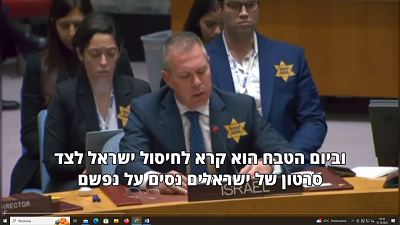
Nic dziwnego, że izraelski ambasador przy ONZ postanowił, że od tej chwili on i jego zespół będą na terenie budynków tej organizacji poruszali się z przypiętymi żółtymi gwiazdami Dawida.

Źródło: zrzut z ekranu wideo z konta X Giliata Erdana.

Polski były jezuita jest naprawdę cudownym człowiekiem, nadal marzy o Kościele z ludzką twarzą i nadal chce wierzyć, że papież Franciszek jest bardziej umiarkowanym katolikiem niż jego poprzednicy. Podobnie jak Guterres, nie chce również tracić z oczu „jedynej realistycznej podstawy prawdziwego pokoju i stabilności: rozwiązania w postaci dwóch państw.”

Marzenie o aksamitnym Palestyńskim Państwie Hamasu i Innych podzielają setki milionów dobrych ludzi, utrzymanie tego marzenia wymaga stanowczości, zdecydowanego odmówienia tego, że islam prowadzi wojnę religijną, w której Żydzi są tylko pierwszą linią frontu, na której zwycięstwo religii pokoju zależy od siły poparcia przez ludzi dobrej woli całego świata.


Zawartość publikowanych artykułów i materiałów nie reprezentuje poglądów ani opinii Reunion’68,
ani też webmastera Blogu Reunion’68, chyba ze jest to wyraźnie zaznaczone.
Twoje uwagi, linki, własne artykuły lub wiadomości prześlij na adres:
webmaster@reunion68.com


Never Again Is Now

Never Again Is Now

NATAN SHARANSKY


A call for a mass rally in Washington in support of Jewish students and Israel.
.

Pro-Israel students gather on Oct. 25 in New York City’s Washington Square Park to counterprotest a New York University student walkout to demonstrate against the Israeli bombardment of Gaza. / ANDREW LICHTENSTEIN/CORBIS VIA GETTY IMAGES

Twenty years ago, upon returning to Israel from a trip to American university campuses as the minister in charge of combating antisemitism, I reported my opinion to then-Prime Minister Ariel Sharon that U.S. colleges had become the beachhead of the battle for the next generation of American Jewry. For the first time, in an atmosphere of growing political opposition to the state of Israel, more and more Jewish students at leading universities—Harvard, Columbia, Rutgers, and others—told me in private conversations that they were afraid to voice their sympathy with the Jewish state, out of concern that doing so would damage their academic success and future careers.

At the time, I was startled and deeply concerned to see such self-censorship—not in the Moscow of my youth, but in the most powerful country in the free world. I was also surprised then that few Jewish organizations felt a responsibility to get involved in the life of students on campuses.

Much has changed since then. Today, practically every serious American Jewish organization runs programs designed to prepare Jewish students for campus life, including giving them the tools to fight against antisemitism, and to strengthen their connection to Jewish identity and Israel while they are there. In addition, Israeli shlichim, or fellows, have been added to strengthen Hillel teams at almost a hundred universities across the country.

Nevertheless, anti-Zionism—the new antisemitism—is a permanent feature of daily life at American colleges. What is more, Israel’s opponents are equipped with new intellectual weapons: postcolonialist and other “critical” theories, wokeness, microaggressions, and various other ways of conveying the simplistic neo-Marxist idea of a permanent struggle between oppressors and oppressed, in which the oppressed are always right and oppressors wrong, and should be silenced and attacked by any means possible. In this narrative, “white colonial” Israel is always the oppressor, while the Palestinians are always oppressed.

There were many efforts over the past two decades to fight the expressions of this pernicious narrative at universities. They included opposition to the constant flow of resolutions supporting BDS and a push to recognize the connection between anti-Zionism and antisemitism. There were ups and downs, successes and failures, but the struggle continued.

Despite these long-standing realities, however, no one was truly prepared for the reaction of leading American universities to the horrific events of Oct. 7, when Hamas sent its jihadi terrorists into Israeli territory to kill some 1,400 people, mostly civilians, and take over 230 more hostage. Just as Israelis were shocked by the failure of our intelligence and political leadership to anticipate and prevent such a catastrophe, American Jews and their allies have been shocked by the failure of university leaders to unequivocally condemn the rape, torture, mutilation, and brutal murder of innocent children, families, and elderly people by an organization that has made no secret of its genocidal intentions against the Jewish people.

Instead of unanimous condemnation, what we have heard from college campuses is the full justification of this pogrom—the worst in modern memory—in statements by campus organizations and in demonstrations celebrating Hamas. According to the worldview that guides these deplorable responses, voiced repeatedly by students and their professors, Israel must be blamed for everything because fighting against the Zionist oppressor is how the worldwide struggle against colonialism begins.

With this, the parallel between these contemporary critical theories and the Marxism-Leninism of my Soviet youth has received new proof. Recall that the major pogroms in Eastern Europe started in 1881, when Tsar Alexander II was killed and his murder blamed on Jews. The organization behind the murder, Narodnaya Volya (the People’s Will), was a predecessor of the Communist Party, with both an extremist wing responsible for the killing and a more moderate wing that spread propaganda to the people. When the awful pogroms started, the latter tried to defend these aggressions by explaining that this was how the social movement of the masses—and with it the worldwide revolution—would begin. They argued that their target was not the Jews per se, but an entire oppressive system, which their movement sought to overthrow in the name of justice and liberation.

The rationalization of today’s Hamas sympathizers on campus are remarkably similar to these. And if the connection seemed largely theoretical before, today it is practical, articulated and even acted upon not by extremists but in the heart of the academy. While Jewish organizations were busy fighting tactical battles against BDS and other localized affronts, we failed to see that terrorism received an intellectual rehabilitation in the most prestigious segments of American society. Consider the words of prominent feminist scholar Judith Butler, who in 2006 proclaimed at the University of California, Berkeley, that “understanding Hamas [and] Hezbollah as social movements that are progressive, that are on the left, that are part of a global left, is extremely important.”

The struggle for campuses is a struggle for America and its values—for an America that is liberal, that supports free speech and human rights, and that protects all of its citizens, regardless of race or creed, from vicious, lawless assault.

Even the presidents of leading universities—unlike the president of the United States—have refused to denounce Hamas’s evil, speaking instead about violence on both sides. Those who protest microaggressions are unable or unwilling to differentiate between the most awful forms of pogrom and the legitimate self-defense of the attacked.

As a result, if 20 years ago to be openly and proudly pro-Israel was bad for students’ careers, today it is a threat to their physical safety. The number of antisemitic events, including physical assaults, has skyrocketed since Oct. 7, and campuses are now flooded with the slogan “From the river to the sea, Palestine will be free.” For those unfamiliar with geography, this means that there is no place for a Jewish state on the world map.

Israel is currently fighting a war for its survival. We realize that Hamas crossed a red line on Oct. 7 and that for the state to continue to exist, we have to win. In fact, we know that we are fighting not only for ourselves but for the future of the free world, to preserve the values of democracy and freedom in the face of an organization that would destroy them completely.

In a different way, the United States is also fighting a war for its survival. American universities crossed a red line in the aftermath of Oct. 7. The struggle for campuses is therefore a struggle for America and its values—for an America that is liberal, that supports free speech and human rights, and that protects all of its citizens, regardless of race or creed, from vicious, lawless assault.

In 2015, following the terrorist attacks on the Charlie Hebdo newspaper and on Jewish targets in Paris, I asked the French philosopher Alain Finkielkraut whether he thought there was a future for Jews in Europe. He responded that he could not answer my question directly, since he was not part of the organized Jewish community, but that he worried there may not be a future for Europe in Europe—that is, for a Europe that cherishes liberal values and is willing to defend them in the face of barbaric assault.

If there is to be a future for America in America, it is time to step up in defense of its core values, and in this American Jews can play an important role. Let us start with a March of One Million: students, parents, Jewish organizations, and allies coming together in support of academic freedom and against a primitive ideology that silences truth and justifies murderous rampages as a form of liberation.

We have done this before: In 1987, hundreds of thousands of Jews marched to Washington, D.C., to support their brethren in the Soviet Union, chanting the slogan “Let my people go.” In 2002, thousands rallied in front of the U.S. Capitol in opposition to terrorism and support for the Jewish state.

Only this time we will be fighting not only for our own people, but for America as well—for the values it represents and for its continued role as a beacon of light around the world.


Natan Sharansky is a former political prisoner in the Soviet Union, former minister in Israeli governments, former Chairman of the Executive of the Jewish Agency for Israel, and Chair of the Advisory Board of ISGAP (Institute for the Study of Global Antisemitism and Policy) and CAM (Combat Antisemitism Movement).


Zawartość publikowanych artykułów i materiałów nie reprezentuje poglądów ani opinii Reunion’68,
ani też webmastera Blogu Reunion’68, chyba ze jest to wyraźnie zaznaczone.
Twoje uwagi, linki, własne artykuły lub wiadomości prześlij na adres:
webmaster@reunion68.com


Gilad Erdan, Israel’s Envoy to the UN delivers a strong message.

Gilad Erdan, Israel’s Envoy to the UN delivers a strong message.

AIJAC


Gilad Erdan, Permanent Representative of Israel to the United Nations at the emergency special session of UNGA said,’This is not a war with Palestinians, but with Hamas terror organisation.’ He added,’Hamas is counting on you, they are certain that despite the terror & massacre, the UN will come to the rescue & prevent Israel from defending itself.’


Zawartość publikowanych artykułów i materiałów nie reprezentuje poglądów ani opinii Reunion’68,
ani też webmastera Blogu Reunion’68, chyba ze jest to wyraźnie zaznaczone.
Twoje uwagi, linki, własne artykuły lub wiadomości prześlij na adres:
webmaster@reunion68.com