Archive | July 2024

“GUARDIAN” chce, byście bali się “Wpływu Izraela na USA”


“GUARDIAN” chce, byście bali się “Wpływu Izraela na USA”

Adam Levick
Tłumaczenie: Małgorzata Koraszewska


Dwóch dziennikarzy „Guardiana” poświęciło 2600 słów, aby przypisać coś mrocznego i gniewnego wobec faktu, że po masakrze dokonanej przez Hamas 7 października izraelskie ministerstwo wydało pewną sumę pieniędzy na walkę z antysemityzmem i promowanie sprawy Izraela w USA. Nie upraszczamy tego. Oto sedno „rewelacji ” tego medium (Israeli documents show expansive government effort to shape US discourse around Gaza war [Izraelskie dokumenty pokazują ekspansywne wysiłki rządu na rzecz kształtowania dyskursu USA na temat wojny w Gazie], 24 czerwca) napisanych przez Lee Fanga i Jacka Poulsona.

Artykuł rozpoczyna się absurdalną charakterystyką protestów, które wybuchły w USA, opisując je jako „antywojenne protesty młodych ludzi w całych Stanach Zjednoczonych, zwłaszcza na elitarnych uniwersytetach”.

Poświęciliśmy dużo miejsca na naszej stronie i na X dokumentowaniu protestów zarówno w Wielkiej Brytanii, jak i USA oraz opisaniu fanatycznych wybuchów nienawiści wobec Izraela i Żydów, które często obejmowały wyraźne wsparcie dla terroryzmu, a które rozpoczęły się natychmiast po najgorszym antysemickim ataku od czasu Holokaustu, jako „protesty antywojenne”, ponieważ przypomina to propagandę na poziomie sowieckim.

„Guardian” następnie „ujawnia”, że izraelski minister Chikli wznowił współpracę z organizacją o nazwie Voices of Israel, która, jak widać na jej stronie internetowej, w przejrzysty sposób informuje o swoim partnerstwie z izraelskim ministerstwem. Czytelnikom powiedziano, że organizacja Voices of Israel „wcześniej  współpracowała z grupami kierującymi kampanią mającą na celu uchwalenie… anty-BDS ”praw stanowych, które karzą Amerykanów za angażowanie się w bojkoty lub inne pokojowe protesty wobec Izraela. To jest kłamstwo. Ustawy anty-BDS, które zostały przyjęte w 38 stanach USA, nie ograniczają wolności wypowiedzi jednostek na temat Izraela, ponieważ byłoby to sprzeczne z solidnymi gwarancjami wolności słowa zawartymi w Konstytucji Stanów Zjednoczonych.

Te ustawy stanowe, z których prawie wszystkie przetrwały wyzwania prawne, w niewielkim stopniu zabraniają podejmowania decyzji gospodarczych dyskryminujących Izrael lub Izraelczyków. Dla porównania, wiele stanów zakazuje zawierania umów z firmami, które dopuszczają się innych form dyskryminacji. Jak napisał federalny sąd apelacyjny w decyzji z 2022 r. podtrzymującej prawo stanu Arkansas wymagające od wykonawców stanowych zobowiązania się do niebojkotowania Izraela, który stwierdził, że ograniczenie to nie stanowi niekonstytucyjnego naruszenia wolności słowa: „Ponieważ [takie] decyzje handlowe są niewidoczne dla obserwatorów, nie mają zatem charakteru wyrazistego i nie implikują zastosowania Pierwszej Poprawki”.

Jednym z innych ujawniających aspektów „wniosków” „Guardiana” jest to, że – jak sami autorzy artykułu przyznają – kwota wydana przez izraelskie ministerstwo na walkę z antysemityzmem i dezinformacją za granicą, którą autorzy określają jako „kształtującą opinię”, wynosi „32 miliony szekli, czyli około 8,6 mln dolarów” – kwota tak mała, że mogłaby stanowić błąd wynikający z zaokrągleń w ogólnym budżecie kraju.

Umieśćmy to w jeszcze bardziej odpowiednim kontekście. Według Open Secrets rząd Izraela w 2023 r. wydał łącznie 155 210 dolarów na lobbowanie w USA, podczas gdy izraelskie podmioty pozarządowe wydały 116 061 dolarów. Dla kontrastu rząd Kataru wydał w 2023 r. 8 488 502 dolarów, podczas gdy podmioty pozarządowe w tym kraju wydały w tym roku kolejne 12 841 541 dolarów. Według Washington Free Beacon Doha, która zapewnia schronienie i gotówkę czołowym przywódcom Hamasu, od 2007 roku wydała na lobbing w USA prawie 6 miliardów dolarów, przy czym pieniądze te obejmowały przekazywanie środków pieniężnych do najlepszych uniwersytetów w Stanach Zjednoczonych i w ten sposób wywieranie na nie wpływu. 

(W rzeczywistości Katar nie znajduje się nawet na liście 10 największych zagranicznych krajów lobbujących w USA. Arabia Saudyjska, która jest druga na liście w 2023 r., wydała 92 266 015 dolarów i 792 665 dolarów w wydatkach pozarządowych).

Stwierdzenie, że wydatki Jerozolimy bezpośrednio na lobbowanie wobec rządu USA stanowią kroplę w morzu całkowitej kwoty wydanej na lobbing zagraniczny, jest głębokim niedopowiedzeniem. Jednak „Guardiana” nie obchodzą fakty dotyczące ogromnego finansowo lobbingu Arabii Saudyjskiej i Kataru w USA, ponieważ jak sami napisali:

„Istnieje obsesja na punkcie kontrolowania amerykańskiego dyskursu na temat stosunków USA-Izrael, nawet dyskursu na kampusie uniwersyteckim, począwszy od Izraela, aż do premiera Netanjahu” – powiedział Eli Clifton, starszy doradca w Quincy Institute for Responsible Statecraft. „Trudno znaleźć paralelę pod względem wpływu obcego kraju na amerykańską debatę polityczną”.

Quincy Institute, pro-izolacjonistyczny think tank, który był krytykowany za sympatyzowanie z autorytarnymi reżimami, a jednocześnie oczernianie dysydentów i prawdziwych obrońców praw człowieka, sprzeciwia się bliskim stosunkom USA-Izrael. Co znamienne, John Mearsheimer i Stephen Walt – którzy współtworzyli powszechnie potępioną antysemicką książkę The Israel Lobby and US Foreign Policy – są naukowcami stowarzyszonymi z tym Instytutem.

Jest oczywiste, że ani Quincy, ani „Guardian” nie są zaniepokojeni wysiłkami Kataru na rzecz „kształtowania debaty” w USA.

W rzeczywistości jedyne odniesienie do tego kraju w tym artykule polega na szyderczym odnotowaniu skarg Natana Szaranskiego na wpływy bogatego w ropę, autorytarnego reżimu. Zamiast tego autorzy są znacznie bardziej zaniepokojeni działalnością Institute for the Study of Global Antisemitism and Policy (ISGAP) (ISGAP), którego badania cytowano w grudniu podczas przesłuchań w Kongresie w sprawie antysemityzmu na kampusach uniwersyteckich. Wielu pamięta niesłychanie popularne klipy z tego przesłuchania, na których kilka rektorek uniwersytetów odmawiało powiedzenia, czy nawoływanie do ludobójstwa na Żydach naruszyłoby zasady panujące na kampusie.

Autorzy artykułu z „Guardiana” nie kwestionują badań ISGAP, a raczej chcą, aby czytelników zaniepokoił fakt, że w 2018 roku ISGAP rzekomo otrzymał „większość swoich funduszy” od izraelskiego Ministerstwa Spraw Strategicznych. Jeszcze bardziej niepokojący dla „Guardiana” jest fakt, że ISGAP jest jedną z grup naciskających na szersze przyjęcie popularnej na arenie międzynarodowej roboczej definicji antysemityzmu IHRA.

Powtarzając tak zwaną formułę Livingstone’a , artykuł promuje pogląd, że IHRA stanowi złowrogą próbę użycia „antysemityzmu jako pałki do ukarania krytyków polityki izraelskiej”.

Być może najbardziej komiczny jest ten fragment artykułu – ewidentnie ich wersja dymiącego pistoletu wskazującego na wpływ Izraela na politykę USA:

„Kolejna powiązana ustawa na Florydzie, HB 187, przeszła przez obie izby legislatury stanowej i oczekuje na podpis gubernatora Rona DeSantisa. Z e-maili otrzymanych w ramach żądania ujawnienia akt wynika, że Kennedy Starnes, urzędnik izraelskiego ministerstwa spraw zagranicznych, korespondował z senator stanu Lori Berman w sprawie ustawodawstwa”.

Ustawa, o której mowa, została jednomyślnie przyjęta przez Senat stanu i jedynie potwierdza roboczą definicję antysemityzmu IHRA, którą w jakiejś formie przyjęły już 34 inne stany. Jakie znaczenie dziennikarze „Guardiana” przywiązują do faktu, że jeden izraelski urzędnik korespondował z senator stanu w sprawie projektu ustawy?

Jednak autorzy artykułu nie tylko nie wyrażają obaw o tsunami antysemityzmu w USA i innych krajach zachodnich od 7 października, ale także atakują główne grupy żydowskie, które pracowały na rzecz wsparcia żydowskich studentów uniwersyteckich. Piszą, że Hillel International, który promuje żydowskie życie na kampusach uniwersyteckich, „zgłosił wsparcie finansowe i strategiczne od Mosaic United, korporacji pożytku publicznego wspieranej przez ministerstwo Chikliego”. Długotrwałe partnerstwo, ostrzega „Guardian”, „jest obecnie wykorzystywane do kształtowania debaty politycznej o wojnie Izraela”.

W artykule znajduje się także cytat wypowiedzi Lary Friedman, przewodniczącej radykalnej organizacji antysyjonistycznej „Fundacja na rzecz Pokoju na Bliskim Wschodzie”, która skarży się, że „istnieje wbudowane założenie, że nie ma nic dziwnego w postrzeganiu Stanów Zjednoczonych jako swego rodzaju otwartego pola dla Izraela, w którym można działać, że nie ma żadnych ograniczeń.” Aby dać wyobrażenie o ideologicznych przekonaniach Friedman, 13 października, niecały tydzień po masakrze w Hamasie 7 października i dwa tygodnie przed rozpoczęciem przez IDF wojny lądowej w Gazie, Friedman napisała na Twitterze: „Obserwujemy, jak Izrael dopuszcza się w czasie rzeczywistym ludobójstwa/czystek etnicznych na dużą skalę, a rząd USA i większość zorganizowanej społeczności żydowskiej usprawiedliwia to, broni, wspiera materialnie, celebruje i dosłownie kibicuje ”.

Tego samego dnia zamieściła na Twitterze następujący nienawistny post: W ciągu kilku pokoleń mój naród przeszedł od przetrwania ludobójstwa do rozkoszowania się robieniem tego samego Palestyńczykom – w zemście za ohydne czyny Hamasu w tym tygodniu, ale przede wszystkim jako zemsta na Palestyńczykach, którzy odważają się istnieć i nie pozwalają nam zapomnieć, co Izrael robił im przez 75 lat”.

Fakt, że dziennikarze „Guardiana” uznali za stosowne bezkrytycznie cytować słowa tej aktywistkę, która rozpowszechnia rasistowską retorykę na temat Żydów, pomaga wyjaśnić zarówno antysemicki ton w artykule o domniemanym wpływie Izraela na politykę USA, jak i rzekomą „zmowę” amerykańskich grup żydowskich w sprawie tego zagranicznego „wtrącania się”. Wymowny jest również fakt, że w artykule liczącym ponad 2600 słów i skupiającym się głównie na izraelskich i żydowskich wysiłkach na rzecz walki z antysemityzmem nie było żadnej wzmianki ani nawet aluzji do faktu, że w 2023 r. odnotowano największą, rekordową liczbę przypadków nienawiści wobec Żydów.

„Guardian” nie zadowala się jedynie zamazywaniem wzrostu antysemityzmu po masakrze dokonanej przez Hamas 7 października, ale po raz kolejny pokazał, że jest więcej niż skłonny do przywoływania bardzo toksycznych oszczerstw na temat „żydowskiej siły”, które podsycają antyżydowską bigoterię w społeczeństwie Wielkiej Brytanii.


Adam Levick jest redaktorem Camera U.K.


Zawartość publikowanych artykułów i materiałów nie reprezentuje poglądów ani opinii Reunion’68,
ani też webmastera Blogu Reunion’68, chyba ze jest to wyraźnie zaznaczone.
Twoje uwagi, linki, własne artykuły lub wiadomości prześlij na adres:
webmaster@reunion68.com


IDF to stay in Philadelphi Corridor

IDF to stay in Philadelphi Corridor

https://www.jns.org/


FDD’s Richard Goldberg: History would repeat itself the minute the IDF abandons the Gaza-Sinai border, with Hamas rebuilding its smuggling operations.

.
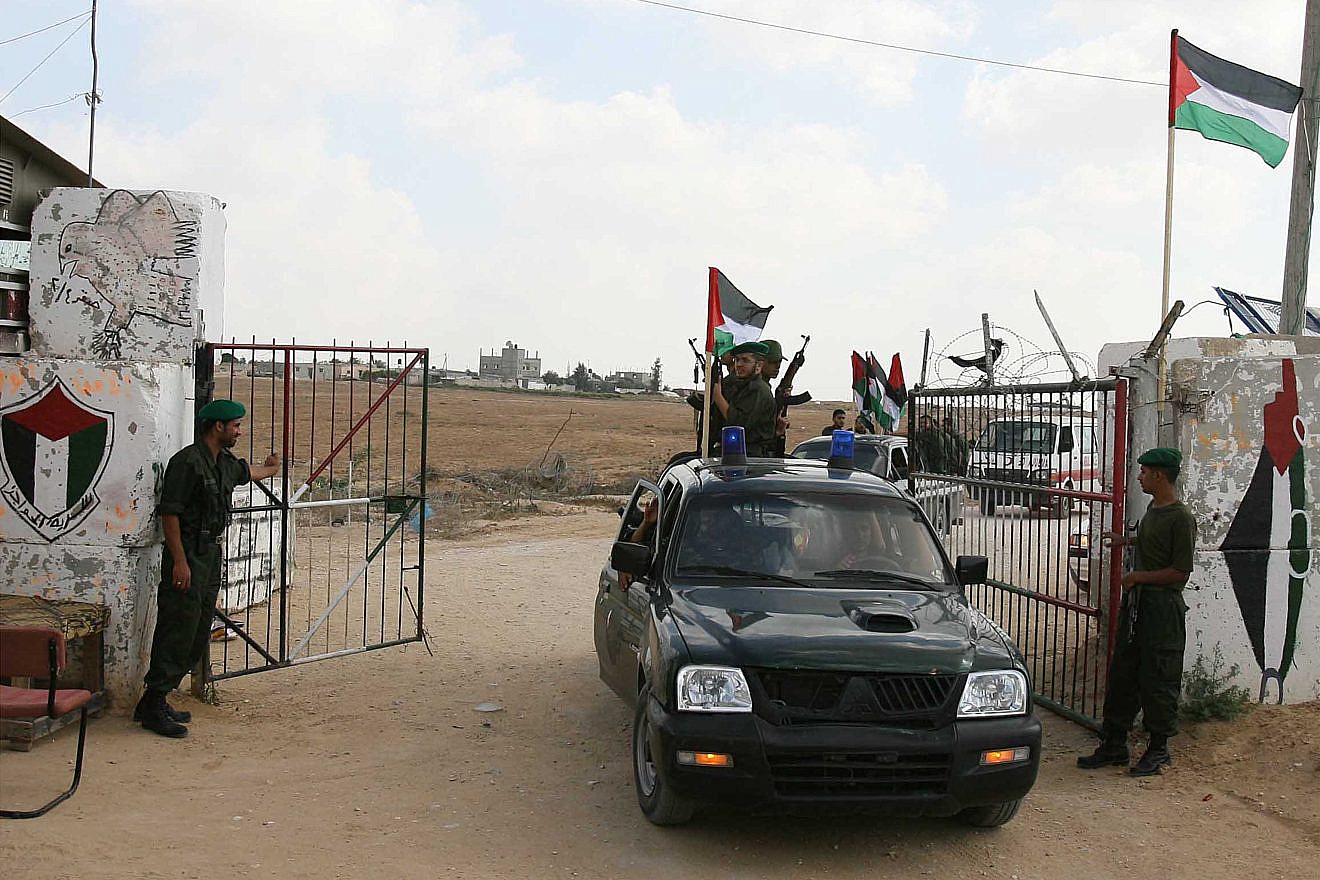
A Hamas security officer opens a gate to the Philadelphi Corridor between Egypt and Gaza near Rafah, July, 1, 2007. Photo by Ahmad Khateib/Flash90.

The Israel Defense Forces is preparing to shift in the coming weeks from high-intensity warfare to targeted operations the Gaza Strip, a transition it calls moving from Stage B to C. The Israeli military plans, however, on continuing to hold the 8.7-mile (14-kilometer) Philadelphi Corridor, which runs along the Gaza-Egypt border.

This continued Israeli control of the border will be critical in preventing the resurgence of Hamas’s smuggling operation and will help dampen the Iran-backed terror army’s hopes to rebuild itself.

Richard Goldberg, senior adviser at the Washington-based Foundation for Defense of Democracies, told JNS, “History would repeat itself the minute the IDF abandons the Philadelphi Corridor, with Hamas rebuilding its smuggling operations. Egypt was obviously complicit in the Hamas tunneling operation and cannot be trusted with the border.

“The U.N. which is pro-Hamas, is not an option. That leaves the IDF to continue destroying all existing tunnel infrastructure and interdict future tunneling and other smuggling attempts.”

The Philadelphi Corridor, which Israel seized as part of its Rafah offensive, has historically been the route for Hamas to smuggle weapons and contraband from Egypt’s Sinai Peninsula. By maintaining a presence in this corridor, the IDF aims to ensure that Hamas is unable to rebuild its terror capabilities.

The Philadelphi Corridor has been a focal point for years, turning into a smuggling zone even before Israel’s disengagement from Gaza in 2005, and evolving into a monstrous network of tunnels in the years that followed.

The network of tunnels facilitated the flow of arms, explosives and other contraband, bolstering Hamas’s massive military infrastructure throughout Gaza.

The tunnels sneaking under the Philadelphi Corridor also enabled the transfer of luxury goods, cigarettes and other materials for the Gazan black market, all of which was taxed by Hamas, feeding its war chest.

Chronic corruption

Many observers have pointed to chronic corruption at the Rafah crossing, where bribes were allegedly paid to Egyptian security officials to facilitate smuggling. Additionally, high-level Egyptian figures are allegedly involved in these operations, organizing the passage of Gaza residents into Egypt for a fee. It is possible that this is why Egypt also failed to dismantle the dozens of tunnels that the IDF is now finding and destroying.

IDF Chief of Staff Lt. Gen. Herzi Halevi, who visited the Rafah area on Tuesday, said that the military killed more than 900 terrorists, including commanders, during the Rafah operation.

“The reason we are working here week after week is now focused on the destruction of the terrorist infrastructure and the destruction of the underground infrastructure, which takes time,” Halevi continued. “Therefore, this is a long campaign, because we do not want to leave Rafah with the terrorist infrastructure intact. There are those we eliminated underground, and some that tried to emerge above ground, and we eliminated them.”

He added, “This ongoing effort of ours, this pursuit, is very, very important. They should feel exhausted, while we feel energized and determined. When we move to the next phase, we will adapt appropriate measures for that phase, bring new tactics, provide logistical support in a different way that fits that phase, and all these things ultimately are focused by our determination, perseverance and patience, wearing down the other side and accomplishing our missions. A lot of willpower, a lot of patience and perseverance, and the results will speak for themselves going forward.”

As long as the IDF maintains control of the Gaza-Egypt border, Hamas’s efforts to rebuild its terror army will be significantly hindered.

Securing the Philadelphi Corridor ensures that Hamas remains isolated from its external sources of weapons and materials, which are crucial for its military operations. It will also harm Hamas’s domestic arms production ambitions, since homemade production sites also rely on material entering the Strip.

In that sense, the Philadelphi Corridor can be compared the Israel’s strategic control of the Jordan Valley, which enables it to intercept and disrupt many Iranian arms smuggling efforts via Jordan into Judea and Samaria (although some smuggling runs have gotten through).

The IDF is also continually expanding a “sterile zone” around the Corridor, as part of its ongoing counter-tunnel and terror infrastructure destruction operations, Israel’s Channel 12 reported on June 30.

The failure of Egypt over the years to put a stop to the tunnels means Israel must take matters into its own hands. The IDF’s continued presence in the Philadelphi Corridor ensures that Israel retains control over a critical aspect of its national security, without relying on external actors.


Yaakov Lappin is an Israel-based military affairs correspondent and analyst. He is the in-house analyst at the Miryam Institute; a research associate at the Alma Research and Education Center; and a research associate at the Begin-Sadat Center for Strategic Studies at Bar-Ilan University. He is a frequent guest commentator on international television news networks, including Sky News and i24 News. Lappin is the author of Virtual Caliphate: Exposing the Islamist State on the Internet. Follow him at: www.patreon.com/yaakovlappin.


Zawartość publikowanych artykułów i materiałów nie reprezentuje poglądów ani opinii Reunion’68,
ani też webmastera Blogu Reunion’68, chyba ze jest to wyraźnie zaznaczone.
Twoje uwagi, linki, własne artykuły lub wiadomości prześlij na adres:
webmaster@reunion68.com


Pro-Hamas Groups Planning to Crash Fourth of July With Riotous US Protests

Pro-Hamas Groups Planning to Crash Fourth of July With Riotous US Protests

Dion J. Pierre


Illustrative: A statue of George Washington tied with a Palestinian flag and a keffiyeh inside a pro-Hamas encampment is pictured at George Washington University in Washington, DC, US, May 2, 2024. Photo: REUTERS/Craig Hudson

Pro-Hamas groups are planning to disrupt Fourth of July celebrations marking US Independence Day in Philadelphia and New York City with “All Out for Gaza” protests, demonstrating again an ideological link between their anti-Zionism and anti-Americanism.

“Philly, mark your calendars: July 4,” said an announcement circulated on social media by two groups, The Philly Palestine Coalition (PPC) and CodePink, the latter of which has ties to the virulent antisemite Louis Farrakhan through its proxy Linda Sarsour and has itself promoted antisemitic conspiracies of Jewish power and control.

The Philly Palestine Coalition, meanwhile, came under national scrutiny in December when it organized what lawmakers and other government officials described as an antisemitic demonstration targeting a restaurant owned by American–Israeli Michael Solomonov, making outlandish accusations against the famed chef and the Jewish state. The group has a history of backing the Palestinian terrorist group Hamas, calling for the destruction of Israel, and ridiculing victims of Hamas’ violence.

The two groups made clear in their latest social media announcement that Thursday’s planned demonstrations won’t just be protests against Israel but the US as well.

“For the past 9 months, this country’s continued to support, fund, and oversee this ongoing genocide and warmongering all over the world,” the announcement continued, referring to the US government’s overall backing of Israel’s war against Hamas in Gaza.

“This July 4th, join us as we stand with the resistance and support Palestine, not AmeriKKKa!” the post continued, combining “America” with the infamous acronym of the Ku Klux Klan. “We don’t celebrate the legacy of genocide, colonialism, and slavery that July 4th symbolizes but struggle for true liberation for all.”

The post concluded with emojis of the Palestinian flag.

The Philadelphia protest will take place in Rittenhouse Square, while the New York City protest will take place in Union Square, located in the Manhattan borough.

Similar to far-right, white nationalist organizations, CodePink has, through its campaigns and social media activity, attempted to undermine the legitimacy of the state by spreading falsehoods about the foreign policy objectives of the US and its allies, including Israel, which it has spuriously accused of committing a genocide in Gaza and manipulating US elections.

One of CodePink’s board members is lawyer Huwaida Arraf, an anti-Zionist activist who has shared on social media atrocity propaganda manufactured by Hamas to misrepresent Israel’s actions in the Palestinian territories. He was also the co-founder of International Solidarity Movement (ISM), a group that was linked to terrorists in a 2004 investigation conducted by the FBI.

CodePink publicly boasts ties to other groups linked to terror, including American Muslims for Palestine (AMP), an advocacy group that, according to a landmark report published last year by the National Association of Scholars (NAS), “retains ties to terrorist groups operating in the Palestinian territories.”

In 2019, CodePink defended US Rep. Ilhan Omar’s (D-MN) saying that support for Israel is “all about the Benjamins, baby,” an evocation of antisemitic tropes concerning Jewish influence through money. In a statement posted to its website, the organization accused Jews of attacking “people of color,” a tactic that has been appropriated by far-right groups to defend minority public figures of color who embrace and traffic in antisemitic conspiracies.

“Everyone who works in Washington, DC knows that when an elected official crosses AIPAC [the America Israel Public Affairs Committee, a pro-Israel lobbying organization in the US], uses its enormous power to exact revenge,” CodePink said. “We are seeing it now as they try to destroy a brand new, inspirational congresswoman: Ilhan Omar. We won’t stand for it again. Every moment that we allow false accusations of anti-Semitism [sic] to dominate the national conversation, we ignore the actual issues … The pro-Israel lobby has been looking for any reason to attack Ilhan Omar, but don’t let them dictate the terms of the debate.”

The Philly Palestine Coalition (PPC) was the principal orchestrator of illegal “Gaza Solidarity Encampments” at the University of Pennsylvania and Drexel University, according to an investigative report by The Washington Free Beacon, demonstrations which resulted in dozens of antisemitic incidents, vandalism, and hate speech.

At the University of Pennsylvania, protesters, students, and non-students who were sent there by PPC vandalized a statue of Benjamin Franklin. At Drexel University, during the time of PPC’s involvement in protests, the Raymond G. Perelman Center for Jewish Life was vandalized, with the perpetrators removing large channel letters spelling out Perelman’s name from a brick structure bearing the building’s name.

A month later, Drexel University was pushed into lockdown when the PPC-backed group “Drexel Palestine Coalition” (DPC) set up an encampment and flooded it with non-students. DPC then demanded that the school adopt the boycott, divestment, and sanctions (BDS) movement against Israel and “terminate” its Hillel and Chabad chapters.

“These organizations must be replaced by non-Zionist Jewish ones that in no way support the ongoing genocide, occupation, or apartheid in Palestine,” DPC said in a statement posted on social media.

DPC also demanded that the university abolish its police, grant amnesty to any protester charged with violating school rules, and reduce the salary of the university’s president John Fry by “60 percent.” Footage of their demonstration showed some aggressive behavior, including the dismantling of police barricades.

“Since Oct. 7, we have seen pro-Hamas activists abuse the First Amendment to rationalize their support for terrorism under the guise of ‘free speech,’ turning America on its head by spreading anti-American values,” Asaf Romirowsky, an expert on the Middle East and executive director of Scholars for Peace in the Middle East told The Algemeiner on Tuesday. “With July 4th around the corner we are now seeing yet again another egregious attempt by pro-Hamas groups, including CodePink, to subvert our democracy by presenting anti-democratic values as ‘democratic’ but instead showing their roots in an ideological nexus of Marxism, Communism, and antisemitism.”

He continued, “The continuous attempt to push their unbridled defenses of Hamas in every aspect of American life is part of a consistent strategy to marginalize and exclude Israelis and Jews from the American zeitgeist as a pretext for increasingly crude antisemitism.”


Zawartość publikowanych artykułów i materiałów nie reprezentuje poglądów ani opinii Reunion’68,
ani też webmastera Blogu Reunion’68, chyba ze jest to wyraźnie zaznaczone.
Twoje uwagi, linki, własne artykuły lub wiadomości prześlij na adres:
webmaster@reunion68.com


Weganizm w Izraelu jest uważany za rasistowski wobec Palestyńczyków. Oczywiście.

Weganizm w Izraelu jest uważany za rasistowski wobec Palestyńczyków. Oczywiście.


Elder of Ziyon Tłumaczenie: Małgorzata Koraszewska

Na początku tego roku czasopismo „Settler Colonial Studies” opublikowało następujący artykuł:

Wegański nacjonalizm?: izraelski ruch na rzecz praw zwierząt w czasach walki z terroryzmem

Hiroshi Yasui

STRESZCZENIE

W ostatnich latach w Izraelu coraz większe znaczenie zyskuje ruch na rzecz praw i dobrostanu zwierząt (ruch na rzecz praw zwierząt), równolegle z praktyką etycznego weganizmu. Wraz z tym trendem w kilku badaniach rozważa się i analizuje kolonialne aspekty izraelskiego ruchu na rzecz praw zwierząt i jego znaczenie dla kwestii palestyńskiej z perspektywy Krytycznych Studiów nad Zwierzętami. Krytycznie analizując wcześniejsze badania na temat weganizmu i kolonializmu, poprzez analizę dyskursów politycznych czołowych aktywistów i osób publicznych w ramach nowo popularnego izraelskiego nurtu wegańskiego, a także wywiady z próbą izraelskich wegan, ten artykuł pokaże, w jaki sposób weganizm w Izraelu jest powiązany z narracją o izraelskiej wyższości narodowej. Takie dyskursy można śmiało nazwać „wegańskim nacjonalizmem”. Wegański nacjonalizm to ramy dyskursywne i regulacyjne, w których weganizm jest uważany za dowód moralnej wyższości narodu w kontekście kolonializmu osadniczego, pośrednio podkreślając barbarzyństwo i zacofanie „terrorystów”. Jednocześnie, jak wskazuje artykuł napisany przez Izraelskie Siły Obronne, w tym kontekście weganie prezentują mile widziany, pociągający wizerunek, który rezonuje, mimo że różni się od wizerunku silniejszego, solidniejszego i potężniejszego karnisty [wyznawca ideologii pozwalającej na jedzenie i wykorzystywanie zwierząt – przeciwieństwo weganina. przyp. tłum.] tradycyjnie faworyzowanego przez syjonistów.

Jak widzieliśmy w przypadku „pinkwashingu”, zasada oskarżenia polega na tym, że kiedy Izraelczycy robią coś, co jest zgodne z ulubionymi sprawami ruchu postępowego, należy to interpretować jako dowód na to, że Izraelczycy próbują ukryć swój z natury zły charakter. 

Nie mam dostępu do artykułu, ale widzę przypisy. Żaden przypis, jaki widziałem, nie potwierdza jego tezy.  

Na przykład widzę dwa odniesienia do strony internetowej IDF, gdzie rzekomo jesteśmy narażeni na narrację o żydowskiej supremacji moralnej, która poniża Palestyńczyków jako niemoralnych zjadaczy mięsa.

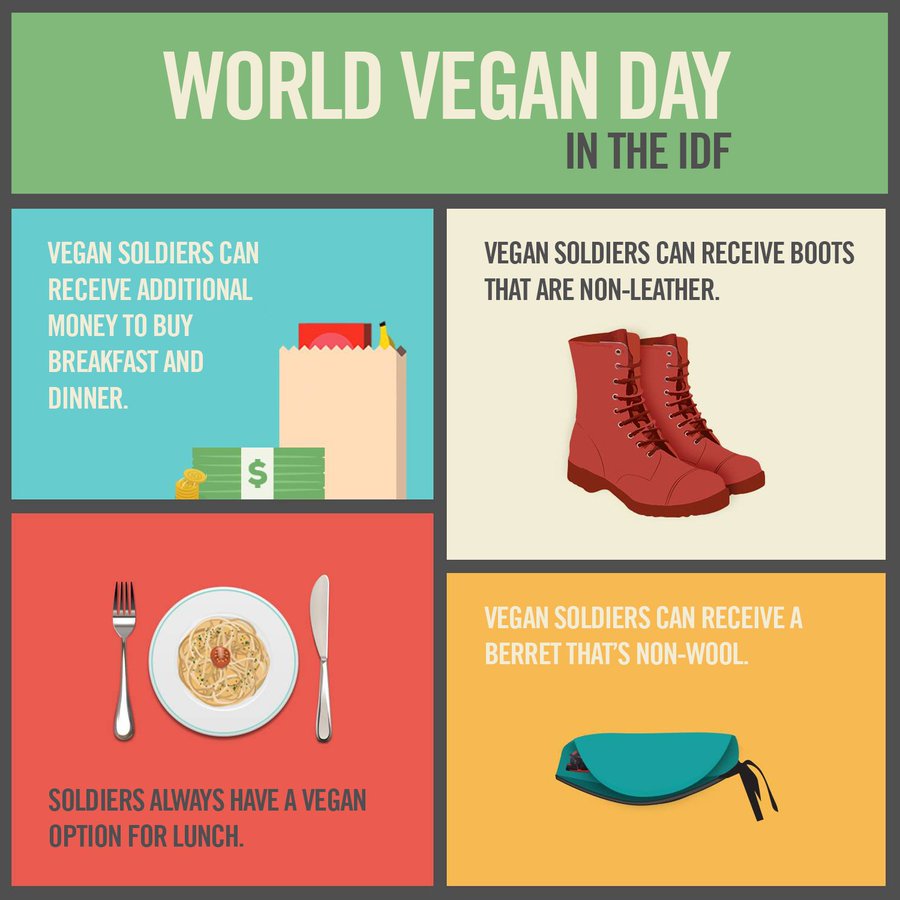
Jednym z nich był artykuł z 2017 roku w czasopiśmie IDF, który opisuje, w jaki sposób armia uwzględnia wegan, zarówno jeśli chodzi o wybór jedzenia, jak i odzieży, a drugim był bardziej obszerny artykuł o trudnościach bycia weganinem w IDF oraz o tym, jak armia pracuje nad tym, aby każdy czuł się dobrze. Omówiono nawet dylemat żołnierza, który zabija ludzi będąc weganinem:

Od czasu do czasu wegańscy wojownicy spotykają ludzi, którzy twierdzą, że sama ich rola jako wojownika jest niezgodna z ich aspiracjami do moralności, która wyraża się w wegańskim stylu życia. Major Friedman bardzo dobrze wie, jak sobie poradzić z tymi twierdzeniami. „Po prostu uważam, że to nieprawda. Zaciągnąłem się do wojska, żeby walczyć w obronie naszego kraju. W armii są bardzo jasne rozkazy, a nasza armia jest armią moralną. Jeśli w armii jest żołnierz, który robi coś, co jest zabronione, to zostaje ukarany – odpowiada. – Nie widzę związku między oszczędzaniem zwierząt a oszczędzaniem ludzi, którzy chcą zaszkodzić krajowi. Nasza armia nie jest armią przeznaczoną do zabijania, jest armią mającą na celu ochronę”.

Nie mogę znaleźć niczego w IDF, co choćby sugerowałoby, że uważa się ona za moralnie lepszą od jedzących mięso Palestyńczyków. Byłoby to absurdalne, skoro większość żołnierzy nadal je mięso. Ale jest uzasadniona duma, że oferuje żołnierzom wegańskim wybór jedzenia i odzieży.

Najbliższym przykładem wykorzystania przez IDF praw zwierząt do celów moralnych, jaki mogłem znaleźć, był ten tweet (który po prostu wskazuje, że Hamas krzywdzi zwierzęta): 

https://x.com/IDF/status/1029448371646423041?ref_src=twsrc%5Etfw%7Ctwcamp%5Etweetembed%7Ctwterm%5E1029448371646423041%7Ctwgr%5Ecbeed9d360869099de3fe872a386a296d47cb27a%7Ctwcon%5Es1_&ref_url=https%3A%2F%2Felderofziyon.blogspot.com%2F2024%2F06%2Fveganism-in-israel-is-considered-racist.htmlKiedy robi to PETA, jest to moralne; kiedy robi to IDF, jest to niemoralne.

Mówiąc o PETA, na ich blogu opublikowano pochlebny artykuł na temat praw zwierząt w Izraelu (niecytowany w tym artykule: „Jeśli chodzi o uznawanie naturalnych praw zwierząt, Izrael wyprzedza wiele innych krajów. Izrael od dawna zakazuje sprzedaży produktów do pielęgnacji osobistej i gospodarstwa domowego, które są testowane na zwierzętach. Był to pierwszy kraj, który wprowadził zakaz używania wozów i powozów zaprzężonych w konie i osły do celów zawodowych”.

Inny artykuł, do którego autor omawianej pracy daje odnośnik, a który obala jego próby demonizowania Izraela, pochodzi z Vegan Review:

Okrzyknięta „najbardziej wściekłą weganką Izraela”, Tal Gilboa jest aktywistką, który robi różnicę.

W 2019 r., po dziesięciu latach działalności na rzecz praw zwierząt, została mianowana przez premiera Izraela jego doradczynią ds. dobrostanu zwierząt. Niektórzy postrzegali to jako manewr polityczny na rzecz Benjamina Netanjahu, ale dla Gilboa był to po prostu „historyczny dzień dla zwierząt”.

„W walce o zwierzęta nie ma lewicy ani prawicy – wyjaśniła. – Jeśli poprawia to dobrostan zwierząt i łagodzi ich cierpienie, jest to słuszna decyzja”.

Głos Gilboa nieco łagodnieje, gdy mówi o klanie Netanjahu. „To, co administracja Netanjahu zrobiła dla zwierząt, jest wzorowe – mówi. – To powinno mieć miejsce na całym świecie – działać w ramach panującego rządu, zamiast czekać, aż uformują się małe nisze zajmujące się prawami zwierząt; te nisze nie dają rezultatów”.

W ciągu czterech miesięcy na swoim nowym stanowisku Gilboa osiągnęła więcej, niż kiedykolwiek marzyła. Do jej zwycięstw dla zwierząt należy zakaz handlu futrami i polowania na niektóre gatunki ptaków. Pomogła także w opracowaniu ustawy Kaya (nazwanej na cześć psa Netanjahu), zgodnie z którą zaszczepione psy podejrzane o ugryzienie kogoś mogą zostać poddane kwarantannie w domu, zamiast być odbierane siłą właścicielom.

Żadne z tych źródeł nawet w najmniejszym stopniu nie pasuje do tego dziwacznego streszczenia. Aby obwiniać całe izraelskie społeczeństwo, autor musi uciekać się do cytowania zastępcy burmistrza Jerozolimy, który nazwał terrorystów „zwierzętami”, rzucając tym słowem jak obelgą.

Także jeśli przeszukasz ogólnie hasło dotyczące weganizmu w Izraelu, znajdziesz wiele artykułów, ale żaden z tych, które znalazłem, nie wspomina w jakikolwiek sposób o Palestyńczykach.

Chociaż nie ma dowodów na to, że Izraelczycy wykorzystują weganizm, aby ustawiać się jako osoby moralnie czyste w przeciwieństwie do Palestyńczyków, ogólnie rzecz biorąc, weganie są dobrze znani z tego, że są nieznośnie zadowoleni z własnej wyższości moralnej nad wszystkimi innymi.

Trudno oprzeć się wrażeniu, że autor tego artykułu przenosi swój własny pogląd, że jest moralnie lepszy od osób jedzących mięso, Izraelczyków i Palestyńczyków. To nonsens, ale tylko to wyjaśnia tę pracę, której własne przypisy nie potwierdzają tezy badacza.

Publikacja w „Settler Colonial Studies” sprawia, że cała dziedzina badań nad kolonializmem osadników wygląda jak kiepski dowcip. 


Link do oryginału: https://elderofziyon.blogspot.com/2024/06/veganism-in-israel-is-considered-racist.html
Elder of Ziyon, 23 czerwca 2024


Zawartość publikowanych artykułów i materiałów nie reprezentuje poglądów ani opinii Reunion’68,
ani też webmastera Blogu Reunion’68, chyba ze jest to wyraźnie zaznaczone.
Twoje uwagi, linki, własne artykuły lub wiadomości prześlij na adres:
webmaster@reunion68.com

In 21st-century Europe, Jews need new allies

In 21st-century Europe, Jews need new allies

JONATHAN S. TOBIN


If many French Jews are backing Marine Le Pen and National Rally, it’s because the alternatives are an antisemitic left and a center that can’t or won’t defend them.

.
French far-right Rassemblement National Rally Party leader Marine Le Pen, followed by party president Jordan Bardella, arrives on stage during an evening gathering on the final day of the European Parliament election, at the Pavillon Chesnaie du Roy in Paris, on June 9, 2024. Photo by Julien De Rose/AFP via Getty Images.

The shock and dismay about the results of the first round of the French parliamentary elections held last weekend on the part of most liberal observers of European politics is palpable. The victory of the right-wing National Rally Party led The New York Times to publish a number of dirge-like analyses declaring that the French were on the verge of catastrophe. That echoed the pronouncements of the country’s own liberal establishment about the vote. The possibility that the party led by Marine Le Pen would win a majority of the National Assembly after the second round to be held next Sunday is viewed by the leaders of the traditional mainstream parties of the center and left as nothing short of a disaster. For them, the likes of National Rally, Le Pen and even her 28-year-old protégé Jordan Bardella, who is in line to be France’s next prime minister if his party controls parliament, are no better than fascists.

One of the most curious elements of National Rally’s triumph is the fact that what may well be a significant percentage of the demographic slice of the French public that had hitherto been most deeply opposed to the party is now backing it. As a panicked article in Foreign Policy magazine plaintively asked this week, “Why are French Jews supporting the far right?”

Figures like famed Nazi hunter Serge Klarsfeld, as well as leading intellectual and author Alain Finkelkraut, have said that voting for National Rally is now an acceptable and even perhaps necessary action on the part of French Jews. As much as its steady progress towards electoral success in the last two decades, this is also a measure of both the sea change in opinion about the party and the increasingly desperate position of the French Jewish community as antisemitic invective and violence have become commonplace.

Antisemitism on the left

While historian Robert Zaretsky, the author of the Foreign Policy article, thinks that there is no excuse for this shift in opinion, the reality of contemporary France and the efforts of the National Rally party to move beyond its origins have made it inevitable. And the circumstances of the elections may have even made it necessary.

A huge immigrant population of Muslims—estimated to make up anywhere from 8% to 10% of the population—brought with them their contempt and hatred for Jews and Israel from their countries of origin. Suburban neighborhoods known as banlieues, where Muslims predominate on the outskirts of cities like Marseilles have been referred to as “no-go” zones for non-Muslims, as well as a source of violence against Jews. At the same time, the parties of the French left have largely embraced the same spirit of intolerance for Jews and Zionism that has been so apparent on American college campuses since the Oct. 7 Hamas terrorist attacks on Israel. Jean-Luc Mélenchon, the founder of France Unbowed—the coalition of Socialists, Communists, Greens and others on the left, and its candidate for president in the last three elections—is a virulent opponent of Israel.

These two forces have combined not merely to mainstream antisemitic attitudes and positions, but to be seen as incitement to the string of antisemitic hate crimes that have rocked France in recent years.

French President Emanuel Macron has opposed National Rally and the parties on the left. But in the current circumstances, he is allying himself with the left to stop Le Pen’s party from winning a majority. That feels like a betrayal to many French Jews, who rightly see the alliance of Marxists and Islamists—and not the right—as the main threat to their precarious existence.

Yet if they are now voting for National Rally, it’s not so much a case of them taking leave of their senses as it is one in which they are rationally assessing the situation and choosing new allies rather than allowing the past to dictate their actions.

From Dreyfus to Vichy to Le Pen

In the late 19th and throughout much of the 20th century, there was no doubt about which end of the French political spectrum was fundamentally antisemitic. The treason accusations against French Jewish Army officer Alfred Dreyfus in the 1890s helped galvanize a right-wing movement that coalesced behind the toxic myth that French Jews were a foreign and traitorous presence in the country. The anti-Dreyfusards were a manifestation of the same argument that had raged in France since 1789 about the legitimacy of the French Revolution. But it was only in the white heat of that controversy that old religious prejudices against Jews merged with modern notions of racism that had recently created the term “antisemitism.”

Jew-hatred was a feature of the French right throughout the decades that followed and became a core tenet after the collapse of the Third Republic after France was defeated by Nazi Germany in June 1940. The collaborationist Vichy regime that ruled part of the country under the leadership of Marshal Philippe Pétain and Pierre Laval actively assisted the Nazis in the roundup of Jews, dooming approximately 21% of them to death.

While the open antisemitism of Vichy was suppressed in French political culture in the decades after the war, and especially on the right by the dominance of Charles De Gaulle (who is remembered for his hostility to Israel in his last years in power, though embodied the resistance to Vichy and was opposed to antisemitism in France), it lingered on the margins of society. It seemed to come back to life in the waning years of the 20th century, and then at the start of the 21st, with the emergence of Jean Marie Le Pen and his National Front Party.

Le Pen was open about his antisemitism and even Holocaust revisionist beliefs. He represented not just traditional antisemitic rightists but the spirit of resentment felt by those who regarded France’s loss of Algeria and the subsequent ouster of about a million French citizens from that country (known as Pied-noirs) as an unforgivable defeat. As the surge of immigration from North Africa and former French colonies boosted the Muslim population, that resentment grew and led to limited electoral success for Le Pen. France was shocked when he made it into the second round of the French presidential election in 2002. Still, Le Pen only garnered 17.8% of the vote as the forces of the center, traditional Gaullist right and the left united in revulsion at even the theoretical prospect of his attaining power to support President Jacques Chirac.

Marine Le Pen’s shift

Le Pen was replaced as the head of his party in 2011 by his daughter, Marine, who is now 55. She set about the long and difficult task of rebranding and remaking it into something that could appeal to more than just the extreme right. French intellectual Bernard-Henri Lévy has referred to her as “the far-right with a human face,” but there is no denying that she has worked hard to transcend her father’s legacy. She even went as far as expelling him from the party she renamed National Rally for comments he made in 2015 dismissing the gas chambers used by the Nazis in the Holocaust as a “detail of history.” She forbade all mention of such Vichyite beliefs as well as any talk about France’s colonial wars.

While there’s little doubt that there are still some in its ranks who are more than comfortable with the prejudices articulated by the elder Le Pen, the party she currently heads is not the same as the one her father founded. And, to the chagrin of other parties, it has steadily gained support because of the growing influence of the Muslim population and the refusal of the parties of the mainstream right to do anything about it. Marine Le Pen made the presidential runoff in 2022 and won 33.9% of the vote, even though President Emanuel Macron easily won re-election.

But as Macron’s failures have grown, it is Marine Le Pen and National Rally that have now eclipsed his Renaissance Party, as well as what is left of the old Gaullist conservatives that the French president helped destroy as the main alternative to the parties of the left. And while her strong opposition to Islamism and support for the State of Israel, especially in the aftermath of the Oct. 7 attacks, are dismissed by mainstream media and the French liberal establishment as merely an attempt to cover up her party’s past, her positions stand in strong contrast to those of the left and even Macron. Both still regard her raising the issue of immigration as a threat to the essential nature of the French Republic.

As is the case elsewhere in Europe, questions about the collapse of national identity are changing the political landscape of France. Leftist sentiment that despises the legacy of Western civilization and the rise of an aggressive Islamist presence in nations where there are large numbers of immigrants has fueled a response from populist rightist parties. Like National Rally, such political factions are despised by the political establishments in Europe.  Some of them also have legacies from a fascist or antisemitic past that are worrisome. In the cases of Italian Prime Minister Georgia Meloni’s Brothers of Italy party and Netherlands political leader Geert Wilders’ Party for Freedom, such problems have been successfully eclipsed. In Germany, the AfD Party seems unable to do the same.

During the recent European Union elections where populist parties won big, the National Rally was particularly successful. Worried about the implications of that victory for his government in Paris, Macron called a snap parliamentary election, hoping that he could duplicate past votes when, faced with the possibility of Le Pen’s party actually gaining power, French voters recoiled from the prospect. But he miscalculated.  The anger in France about the failures of Macron’s technocratic government to deal with the economy or the immigration issue led to the public more or less duplicating the results of the E.U. election last weekend, essentially eviscerating Macron’s party.

In response, Macron is trying to pull together a joint effort with the left to prevent National Rally from gaining a parliamentary majority. That would stop Bardella from becoming prime minister. Such a victory for Le Pen’s party would not only be unprecedented but also set her up for what might well be a successful run for the presidency of France in 2027 after Macron finishes his second term in office.

The Jewish dilemma

That leaves French Jews with an interesting dilemma. If they follow the lead of Macron, they will be empowering a left-wing faction that is not merely hostile to Israel but allied to forces that make it impossible for them to continue to live in the country due to justified fears of prejudice and violence. And that is why a great many of them have decided that throwing in with Le Pen is the only rational alternative.

Doing so requires not just disregarding the history of the French right. It also involves embracing the pushback against Islamism that can be branded as illiberal. Le Pen wants to ban the wearing of Muslim headscarves in public—an item of apparel that is considered a symbol of a dangerous shift in the culture of hyper-secular France and a threat to French national identity. In the past, Le Pen has also asked Jews to renounce their right to wear kippahs in public as a necessary sacrifice in order to defeat the threat of Islamism. That’s something the Jewish community can never accept.

We don’t know what a France led by Le Pen or Bardella will look like. Perhaps it will be like Hungary, where the populist right led by Viktor Orbán has proved to be both philo-semitic and pro-Israel despite Hungary’s troubled past. Perhaps not. But with French Jewish life more precarious than at any time since the Holocaust, supporting a party that is intent on rolling back Muslim political influence can be defended as a reasonable choice rather than a betrayal.

It’s easy for liberal Jews, especially those not currently living in Europe, to rule out alliances with groups that are opposed to intolerant Islamist and Marxist parties that present a clear and present threat to Jewish life. But to take such a stand is not so much a defense of liberal values as a refusal to live in the present. European Jewry must deal with the challenges of living in the 21st century rather than the past. Those who condemn French Jews for seeing Le Pen and National Rally as a lifeline are prioritizing the political interests of the left and European political establishments, not those of an embattled Jewish community.


Jonathan S. Tobin is editor-in-chief of JNS (Jewish News Syndicate). Follow him @jonathans_tobin.


Zawartość publikowanych artykułów i materiałów nie reprezentuje poglądów ani opinii Reunion’68,
ani też webmastera Blogu Reunion’68, chyba ze jest to wyraźnie zaznaczone.
Twoje uwagi, linki, własne artykuły lub wiadomości prześlij na adres:
webmaster@reunion68.com