Archive | 2025/01/29

Nie daj się złapać w pułapkę negocjacji nuklearnych Iranu: jest to strategia na kupienie czasu

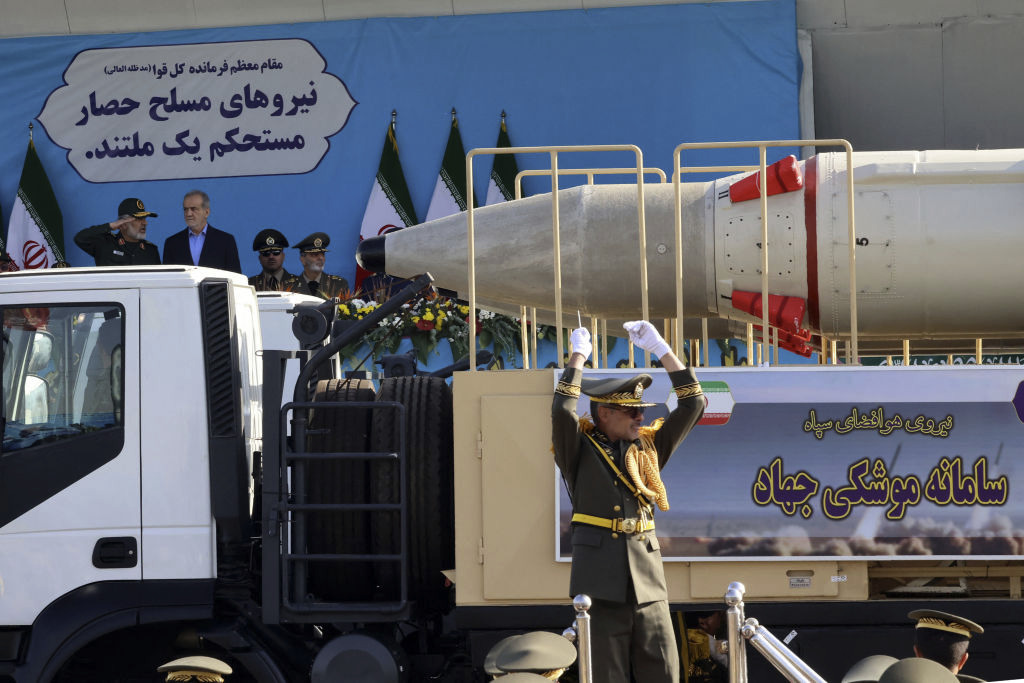
Cel reżimu irańskiego jest jasny: zyskać na czasie, osiągnąć korzystną umowę podobną do tej, którą wręczyła mu administracja Obamy, zabezpieczyć złagodzenie sankcji i możliwości dokończenia prac nad bronią jądrową. Na zdjęciu: prezydent Iranu Masoud Pezeszkian i dowódca Sił Powietrzno-Kosmicznych Korpusu Strażników Rewolucji Islamskiej Amir Ali Hadżizadeh patrzą na rakietę Dżihad prezentowaną na paradzie w Teheranie 21 września 2024 r. (Zdjęcie: Atta Kenare/AFP via Getty Images)

Nie daj się złapać w pułapkę negocjacji nuklearnych Iranu: jest to strategia na kupienie czasu

Majid Rafizadeh
Tłumaczenie: Małgorzata Koraszewska


Reżim irański wykonał nagły i wyrachowany ruch zaangażowania się w rozmowy o broni jądrowej. Wielka Brytania, Francja i Niemcy ogłosiły, że negocjacje rozpoczną się niebawem.

Na wypadek, gdyby ktoś pomyślał, że to prawdziwa próba dyplomacji, informuję, że nią nie jest. Raczej jest to manewr mający na celu oszukańcze kupowanie czasu, unikanie sankcji i powstrzymanie działań nadchodzącej administracji Trumpa.

Reżim Iranu manipuluje, najwyraźniej mając nadzieję na wprowadzenie świata w błąd i zapobieżenie poważnym konsekwencjom – mianowicie utracie programu broni jądrowej – którego istnieniu, co jest zdumiewające, zaprzecza, a także, co ważniejsze, utracie swojej władzy. Ich ruch nie jest wyrazem dobrej woli ani “wystawianiem czułek” – jest wszystkim, tylko nie tym. To taktyka znana każdemu czterolatkowi i absolutnie nie należy tego brać za dobrą monetę.

Wydaje się, że wielu ludzi Zachodu zauroczyła złudna wizja możliwości przekupienia, namówienia lub wynegocjowania czegokolwiek z żądnymi władzy irańskimi dżihadystami, że możliwe jest namówienie ich do porzucenia marzeń o “eksporcie rewolucji”, o broni nuklearnej, która spowoduje, że próba przeciwstawienia się im będzie zbyt ryzykowna, i o ponownym rozpoczęciu realizacji ich długoterminowego celu, jakim jest hegemonia na Bliskim Wschodzie – z ostatecznym celem zadania “Śmierci Ameryce” i “Śmierci Izraelowi”.

Można by zapytać, dlaczego reżim irański nagle teraz stara się o wznowienie rozmów nuklearnych? Przez ostatnie cztery lata, za rządów Bidena, Iran szybko rozwijał program broni jądrowej, udając, że negocjuje, i otwarcie sprzeciwiał się Międzynarodowej Agencji Energii Atomowej (MAEA) i odmawiał inspektorom dostępu do obiektów nuklearnych kraju. Skąd więc ta zmiana? Odpowiedź nie leży w żadnej nowej chęci współpracy, ale w połączeniu czynników, które znacznie osłabiły pozycję Iranu.

Pierwszym jest osłabiona pozycja militarna Iranu, w dużej mierze z powodu zdziesiątkowania przez Izrael dwóch jego pełnomocników, Hamasu i Hezbollahu, a także kilku otrzeźwiających ciosów w sam Iran. Zmniejszyło to zdolności reżimu do przeprowadzania ataków i destabilizacji regionu, zanim reżim zdobył broń jądrową.

To wysiłki Izraela pośrednio przyczyniły się do upadku reżimu Assada w Syrii z rąk sponsorowanej przez Turcję grupy terrorystycznej Haj’at Tahrir al-Szam (HTS), kierowanej przez Ahmeda Al-Szaraa, wcześniej znanego pod swoim “terrorystycznym” imieniem Abu Mohammad al-Dżoulani. Nawiasem mówiąc, “Szam” oznacza cały Lewant, nie tylko Syrię: Liban, Izrael, Jordanię, Cypr i turecką prowincję Hatay (Aleksandrettę).

Prezydent Turcji Recep Tayyip Erdoğan, który popiera HTS, najwyraźniej uważa, że neoosmańska Turcja w końcu zastąpi Iran w roli hegemona w regionie, a on sam zostanie sułtanem.

Gdy Izrael osłabił Hezbollah – wiernego sojusznika Iranu – syryjski prezydent Baszar Assad utracił krytyczne wsparcie militarne. HTS był w stanie przebić się przez siły zbrojne Assada w ciągu zaledwie 10 dni i obalić Assada – który szybko wsiadł do samolotu do Moskwy.

Zaledwie półtora roku temu Iran miał pełną kontrolę, kierując swoich pełnomocników do ataku na Izrael, aby to oni otrzymywali ataki odwetowe zamiast Teheranu, i zbrojąc Rosję przeciwko Ukrainie. Podobnie jak Rosja, Iran rozpoczął wojnę. Morał tej historii powinien być prawdopodobnie taki: zanim zaczniesz wojnę zastanów się, czy jesteś gotowy ją przegrać?

Drugim powodem, dla którego Iran nagle dyszy, by wynegocjować nową umowę nuklearną, jest zbliżająca się inauguracja prezydenta-elekta Donalda J. Trumpa 20 stycznia. Ta perspektywa musi wywołać ogromny niepokój wśród irańskiego kierownictwa. Oczekuje się, że Trump ponownie aktywuje swoją politykę “maksymalnej presji” na Iran. Najgorszy koszmar reżimu, jakim jest powrót Trumpa do władzy, stanowcze poparcie dla Izraela i zaostrzenie sankcji, to pakiet, którego rządzący mułłowie nie mogą spokojnie zaakceptować. W rezultacie Iran próbuje negocjować w desperackiej próbie zdobycia chwilowego wytchnienia.

Desperację reżimu irańskiego widać w jego nagłej propozycji rozmów. Gdyby Iran nadal miał taką samą siłę i wpływy, jakie miał zaledwie rok temu, nie szukałby negocjacji. Zamiast tego niewątpliwie kontynuowałby w postawie wojowniczej.

Cel reżimu jest jasny: zyskać na czasie, osiągnąć korzystne porozumienie, podobne do tego, jakie zaproponowała mu administracja Obamy, zapewnić sobie złagodzenie sankcji i możliwość dokończenia prac nad bronią jądrową.

Jeśli Iran nie zostanie powstrzymany, będzie on kontynuował potajemnie rozwijanie programu zbrojeń nuklearnych – oczywiście bez względu na jakiekolwiek zawarte porozumienia.

Do prezydenta Trumpa: Proszę nie dać się nabrać na jedwabiste gesty Iranu. Ten reżim jest wyłącznie oszustwem. Używa dyplomacji jako narzędzia, żeby zyskać przestrzeń do oddychania i odzyskania siły. Jego infrastruktura nuklearna musi zostać całkowicie zdemontowana, aby trwale wyeliminować zagrożenie, jakie stwarza dla globalnego bezpieczeństwa.

Wdawanie się w ich grę negocjacyjną tylko osłabi naród irański, który desperacko pragnie zmiany reżimu. Należy mieć nadzieję, że nowa administracja Trumpa w pełni wesprze naród irański w jego walce o wolność. Nie pozwólcie, aby ta podła gra reżimu trwała. Taki wynik byłby korzystny tylko dla fanatycznej teokracji i, jak to miało miejsce w przeszłości, zaszkodziłby Stanom Zjednoczonym i Zachodowi. Wspierani przez Iran pełnomocnicy od 7 października 2023 r. zaatakowali wojska amerykańskie na Bliskim Wschodzie ponad 150 razy.

Co ważniejsze, proszę nie poprzestawajcie na pozbawianiu Iranu możliwości posiadania broni jądrowej. Sam reżim sieje spustoszenie wśród swoich sąsiadów, wśród narodu irańskiego i na świecie od ponad czterdziestu lat. Dzięki Izraelowi Iran jest teraz na kolanach.

Czy nowa administracja Trumpa da się oszukać i pozwoli Iranowi ponownie zagrozić regionowi, gdy tylko skończy się kadencja Trumpa? Prośba Iranu o negocjacje wydaje się niestety częścią większej strategii, która ma umożliwić mu wznowienie rządów terroru. Administracja Trumpa nie może pozwolić, by się to udało. Teraz jest czas, żeby raz na zawsze zlikwidować to zagrożenie. Uczyńmy Persję bezpieczną! — dla narodu irańskiego i dla trwałego pokoju na świecie.


Majid Rafizadeh: Amerykański politolog irańskiego pochodzenia. Wykładowca na Harvard University, Przewodniczący International American Council. Członek zarządu Harvard International Review.


Zawartość publikowanych artykułów i materiałów nie reprezentuje poglądów ani opinii Reunion’68,
ani też webmastera Blogu Reunion’68, chyba ze jest to wyraźnie zaznaczone.
Twoje uwagi, linki, własne artykuły lub wiadomości prześlij na adres:
webmaster@reunion68.com



Netanyahu is first foreign leader invited by Trump to White House, Israel says

Netanyahu is first foreign leader invited by Trump to White House, Israel says

Izzy Salant


Sen. Rick Scott told JNS he looks forward to working with Trump and Netanyahu “on securing the release of the hostages and continuing the strategic objectives to secure the region.”

.
Israeli Prime Minister Benjamin Netanyahu meets with U.S. President Donald Trump at the White House, March 5, 2018. Photo by Haim Zach/GPO.

U.S. President Donald Trump invited Israeli Prime Minister Benjamin Netanyahu to visit the White House on Feb. 4, the Prime Minister’s Office stated on Tuesday.

The reported visit wasn’t mentioned at the Trump administration’s first White House press briefing on Tuesday, and the administration hasn’t commented on it publicly.

Sen. Rick Scott (R-Fla.) told JNS that he is “very glad to see my friend Prime Minister Benjamin Netanyahu, the leader of Israel and our greatest ally in the Middle East, slated as the first state visit to Trump’s White House.”

“I look forward to working with President Trump and the prime minister on securing the release of the hostages and continuing the strategic objectives to secure the region,” Scott said.

Former President Joe Biden invited Netanyahu to the White House for the first time of his tenure on July 25, 2024—some 20 months after Netanyahu was re-elected in November 2022.

David May, research manager and a senior research analyst at the Foundation for Defense of Democracies, told JNS that “Biden and Trump started their presidencies at very different points of Israeli politics.”

“When Biden took office, Israel was in the middle of a political impasse, and Bibi didn’t return to office until two years into Biden’s term. Trump started his second term with Israel at war against genocidal enemies,” May said.

“That being said, the immediate invitation is a strong indication of the importance Trump and his team place on the U.S.-Israel relationship,” May told JNS. “Trump has started his term with several moves that help Israel and a return to not having daylight between the two allies in public.”

Rep. Andy Barr (R-Ky.) thanked Trump for inviting Netanyahu. “It’s crucial that America stands with our key ally, Israel, to promote security, stability and our shared democratic values in the region,” he wrote.

The Associated Press reported on Jan. 27 that Trump “teased the upcoming visit in a conversation with reporters aboard Air Force One, but didn’t provide scheduling details.”

“I’m going to be speaking with Bibi Netanyahu in the not-too-distant future,” Trump said.

An image of what appeared to be an invitation that Trump sent to Netanyahu circulated on social media. “I would like to formally invite you to the White House next week,” states the letter, dated Jan. 28 and signed by Trump.

“I look forward to discussing how we can bring peace to Israel and its neighbors, and efforts to counter our shared adversaries,” it adds. “It will be my honor to host you as my first foreign leader during my second term.”


Zawartość publikowanych artykułów i materiałów nie reprezentuje poglądów ani opinii Reunion’68,
ani też webmastera Blogu Reunion’68, chyba ze jest to wyraźnie zaznaczone.
Twoje uwagi, linki, własne artykuły lub wiadomości prześlij na adres:
webmaster@reunion68.com


Trump Forced Israel to Surrender; Why Isn’t He Receiving the Blame?

Trump Forced Israel to Surrender; Why Isn’t He Receiving the Blame?

Mitchell Bard


Israel’s Prime Minister Benjamin Netanyahu meets with US President Donald Trump during a meeting in the Oval Office at the White House in Washington, DC, Sept. 15, 2020. Photo: REUTERS/Tom Brenner

Shortly after the Gaza war began, I reminded readers that US presidents — not Israeli prime ministers — end Israel’s wars. Predictably, President Joe Biden ended Israel’s war in Lebanon, and President-elect Donald Trump stopped the fighting in Gaza.

While Jewish Democrats welcomed the release of hostages, they couldn’t help but revel in the discomfort of Trump’s Jewish supporters, watching their carefully constructed myth of the “most pro-Israel president in history” unravel. The leader they idolized as someone who would never pressure Israel forced Prime Minister Benjamin Netanyahu — known for his staunch resistance to outside influence — into surrendering. Ironically, Trump achieved what his supporters falsely accused Biden of doing: preventing Israel’s destruction of Hamas.

Trump demanded that a deal be struck before his inauguration or there would be “hell to pay.” He never said what kind of deal he supported or what the penalty would be — but his supporters assumed the message was directed at Hamas. Instead, Israel is paying the price, as it always does, because the US has leverage over the Jews and not their enemies. Anyone with an honest appraisal of Trump knows that he did not care about Netanyahu’s political future or Israel’s for that matter; he wanted to claim the mantle of peacemaker and win a Nobel Prize.

If Trump’s supporters didn’t get the message from the hostage deal, he reinforced it by demanding that Israel complete its withdrawal from Lebanon in accordance with the ceasefire agreement. Biden reportedly had considered granting Israel an extension to finish cleaning up and giving the Lebanese army the chance to deploy. Trump, however, clearly doesn’t care any more about the threat to Israel from Hezbollah than the ongoing danger of Hamas if it interferes with his legacy.

Some of Trump’s biggest Jewish supporters were in such denial of Trump’s betrayal they tried to blame his negotiator, Steve Witkoff, who forced Netanyahu to show up on Shabbat to meet him to receive the president-elect’s message. Witkoff was touted for being a Jew when he was appointed, but was suspected of freelancing in collaboration with the Biden administration and the Qataris, with whom he has business relations, to strong-arm the prime minister to accept a deal that 24 hours earlier was considered by Netanyahu a threat to Israel’s future. It was preposterous that any Trump minion would act without his approval, and the conspiracy theory collapsed when the president-elect proudly claimed credit for the “EPIC” deal.

Incidentally, some Biden bashers were convinced that the president would take some Obama-like action to undermine Israel as late as his final day in office. Instead, his administration lifted restrictions on weapons that had been held up. The surprises they predicted would occur post-election proved to be steps to help rather than harm Israel.

Meanwhile, in their belief that Trump was Israel’s greatest friend, his Jewish supporters shrugged off his antisemitic remarks, his support for white supremacists (some of whom he just pardoned), repeated complaints about Jewish ingratitude for his pro-Israel policies, solicitation of Arab and Muslim Americans when he thought he might need them in Michigan, and more. Now, they must reckon with his duplicity.

Trump’s track record shows that he cares about Trump — Israel’s welfare and Jewish interests are secondary to his personal ambitions. It does help Israel that he clearly does not like Palestinians and understands that jihadists are a threat — first and foremost to the United States.

Adding to the hypocrisy, after railing against Qatar’s nefarious actions for more than a year, MAGA Jews have been mostly silent about Trump’s nomination of Pam Bondi to be attorney general. She failed to disclose her work as a lobbyist for Qatar in her official nomination documents. When asked about it in a congressional hearing, Bondi failed to answer why she didn’t mention the job, but said, “I am very proud of the work that I did. It was a short time and I wish that it had been longer, for Qatar.”

Understanding that currying favor is the prerequisite to any relationship with Trump, Netanyahu went groveling to Mar-a-Lago during the election and bit the bullet on the hostage deal (though he has twisted himself in knots to try to prove he didn’t surrender) in the hope that it would pay dividends later. One supposition is that Netanyahu’s concession will win Trump’s approval for taking military action against Iran. The idea is reinforced by the anti-Iranian remarks made by Trump and his advisers, but may be a miscalculation given the president’s clear objective set out in his inaugural speech in which he took credit for the hostage release: “My proudest legacy will be that of a peacemaker and unifier.” A war with Iran would directly contradict his aspirations for a Nobel Prize.

Showing loyalty to Trump paid immediate dividends on inauguration day, when Trump began dismantling the Biden legacy. Among the blizzard of executive orders and rescissions of Biden’s actions were the lifting of sanctions on Jewish settlers and reinstating restrictions on staff of the International Criminal Court.

Trump also ordered the suspension of US foreign assistance programs for 90 days while they are reviewed for alignment with his policy goals. That has been interpreted as a precursor to cutting aid to the Palestinians and UNRWA. The order does not apply to Israel, and, despite the isolationist slant of the administration and opposition to foreign assistance in general, Trump is not only expected to continue support for Israel but to end the embargo on the transfer of 2,000-pound bombs imposed by Biden.

Trump’s focus on Saudi-Israeli normalization is yet another example of his peacemaking ambitions. Though Biden laid the groundwork for these discussions, Trump is poised to take full credit for any breakthrough — a move that could greatly benefit Israel while burnishing his legacy.

Though his Jewish supporters refuse to admit it, Trump’s actions often harmed Israel in his first term — while also doing a great deal to legitimately earn their praise. The past week is proof that his second term will very likely lead to similar results for Israel.

Mitchell Bard is a foreign policy analyst and authority on US-Israel relations who has written and edited 22 books including: The Arab Lobby, Death to the Infidels: Radical Islam’s War Against the Jews, and After Anatevka: Tevye in Palestine.


Zawartość publikowanych artykułów i materiałów nie reprezentuje poglądów ani opinii Reunion’68,
ani też webmastera Blogu Reunion’68, chyba ze jest to wyraźnie zaznaczone.
Twoje uwagi, linki, własne artykuły lub wiadomości prześlij na adres:
webmaster@reunion68.com