Archive | April 2025

Saudi Arabia, US Advance Civil Nuclear Deal, Sidestepping Israeli Normalization

Saudi Arabia, US Advance Civil Nuclear Deal, Sidestepping Israeli Normalization

i24 News and Algemeiner Staff


Saudi Crown Prince Mohammed bin Salman attends the 45th Gulf Cooperation Council (GCC) Summit in Kuwait city, Kuwait, Dec. 1, 2024. Photo: Bandar Algaloud/Courtesy of Saudi Royal Court/Handout via REUTERS

The United States and Saudi Arabia are moving toward a landmark agreement on civilian nuclear cooperation, signaling a deepening energy partnership that notably excludes any linkage to Saudi normalization with Israel.

According to US Energy Secretary Chris Wright, the two countries are nearing a preliminary accord aimed at developing a Saudi civil nuclear program.

Wright, during his first official visit to Riyadh as energy secretary, stated that the two sides are “on the right track” and that further details on the agreement would be disclosed later this year.

The prospective deal represents a significant shift from the Biden administration’s earlier strategy, which sought to tie such an agreement to a broader geopolitical goal: normalizing relations between Saudi Arabia and Israel. That condition now appears to have been dropped, with the current negotiations focused solely on energy collaboration.

“For a US partnership in the nuclear field here, there will definitely be a 123-type agreement,” Wright told reporters, referencing Section 123 of the US Atomic Energy Act of 1954. Such agreements are legally required for the US to export nuclear technology and materials to other countries.

However, key hurdles remain—chief among them, US nonproliferation standards. According to Wright, Saudi Arabia has yet to agree to restrictions that would prevent uranium enrichment or the reprocessing of spent fuel, two technologies that can be used in the development of nuclear weapons.

This reluctance raises alarms in Washington and beyond. Crown Prince Mohammed bin Salman has publicly stated that if Iran acquires nuclear weapons, Saudi Arabia would pursue the same path. That position, combined with the Kingdom’s resistance to strict nonproliferation terms, is heightening concerns among arms control experts and some members of the US Congress.

While the agreement is still in the preliminary stages, it is a key energy alliance in the Gulf while managing nuclear risks in a volatile region.

The memorandum is expected to be finalized later this year. Until then, the world will be watching closely to see whether this deal sets a new precedent for US nuclear partnerships—or reopens a heated debate on nuclear proliferation in the Middle East.


Zawartość publikowanych artykułów i materiałów nie reprezentuje poglądów ani opinii Reunion’68,
ani też webmastera Blogu Reunion’68, chyba ze jest to wyraźnie zaznaczone.
Twoje uwagi, linki, własne artykuły lub wiadomości prześlij na adres:
webmaster@reunion68.com


Did Iran ally Qatar purchase Trump envoy Steve Witkoff?

Did Iran ally Qatar purchase Trump envoy Steve Witkoff?

Jonathan S. Tobin


“Think Twice” with Jonathan Tobin and guest Michael Pregent, Ep. 173

How does Qatar get away with it? That’s the question that JNS editor-in-chief Jonathan Tobin is asking. Qatar is not only a close ally of Iran and a funder of Hamas, but also does the most to spread Islamist ideology and hatred for Israel in America. It’s also gotten away with posing as an honest broker in the Middle East and an American ally.

He’s joined in this week’s episode of “Think Twice” by veteran Middle East analyst and former U.S. military officer Michael Pregent, who has some of the answers to the question of Qatar’s successful influence operation. According to him, it starts with American leaders in both parties who want to be flattered, but it is also largely driven by the Gulf emirate’s buying of influence among opinion leaders, business people and politicians. As Pregent points out, there are a lot of lobbyists and other figures in Washington, D.C., who “couldn’t pay their mortgages” without the money they get either directly or indirectly from Qatar.

The most prominent example is Steve Witkoff, President Donald Trump’s special envoy to the Middle East. While many have been puzzled by Witkoff’s public comments, including those made on Tucker Carlson’s podcast in which he declared, contrary to the facts, that the Qataris are loyal U.S. allies, honest brokers, and not allied with Iran and Hamas. As Pregent points out, this clueless endorsement of the emirate must be seen in the context of Qatar’s decision to bail him out on a real estate deal gone bad to the tune of $623 million.

That calls into question Trump’s decision to allow Witkoff to be the lead negotiator in a new diplomatic initiative aimed at persuading Iran to give up its nuclear program. Pregent notes that while the Obama and Biden administrations had envoys determined to appease leaders in Tehran, they did so because they believed in that dangerous policy. Witkoff is a diplomatic novice who is being played by people who helped him financially.

Witkoff is the most outrageous example of how a rogue nation works to exploit its financial clout to influence U.S. policy. Pregent says examples of Qatar’s influence peddling abound in the United States, including its efforts to gain support from members of Congress, including both Republicans and Democrats, and its funding of Middle East studies departments at colleges where anti-Zionism has been mainstreamed. On top of that, Qatar owns Al Jazeera, the Islamist propaganda news outlet far too often treated as a reliable source of information by many in the West.

Listen/Subscribe to weekly episodes on SpotifyApple PodcastsGoogle PodcastsiHeart Radio or wherever you listen to your podcasts.

Watch new episodes every week by subscribing to the JNS YouTube Channel.

This episode of “Think Twice” is sponsored by The Jewish Future Promise—ensuring a vibrant and thriving future for Jews and Israel.
Sign the promise: https://jewishfuturepromise.org/jns/

JNS will host its inaugural International Policy Summit on Monday, April 28, 2025. This daylong event will convene government officials, policymakers, diplomats, security experts, leaders of pro-Israel organizations, and influencers for vital discussions aimed at addressing Israel’s critical challenges and opportunities in a post-Oct. 7 world.
Registration at this point is for invitees only. However, you can submit a request for registration using the following link.


Zawartość publikowanych artykułów i materiałów nie reprezentuje poglądów ani opinii Reunion’68,
ani też webmastera Blogu Reunion’68, chyba ze jest to wyraźnie zaznaczone.
Twoje uwagi, linki, własne artykuły lub wiadomości prześlij na adres:
webmaster@reunion68.com


The Passover Story for Seder

The Passover Story for Seder


Joshua Huff


I love how this passage tells us of God’s love for His people and points us towards the ultimate Lamb of God, Jesus, who would free us from slavery to sin.


Zawartość publikowanych artykułów i materiałów nie reprezentuje poglądów ani opinii Reunion’68,
ani też webmastera Blogu Reunion’68, chyba ze jest to wyraźnie zaznaczone.
Twoje uwagi, linki, własne artykuły lub wiadomości prześlij na adres:
webmaster@reunion68.com


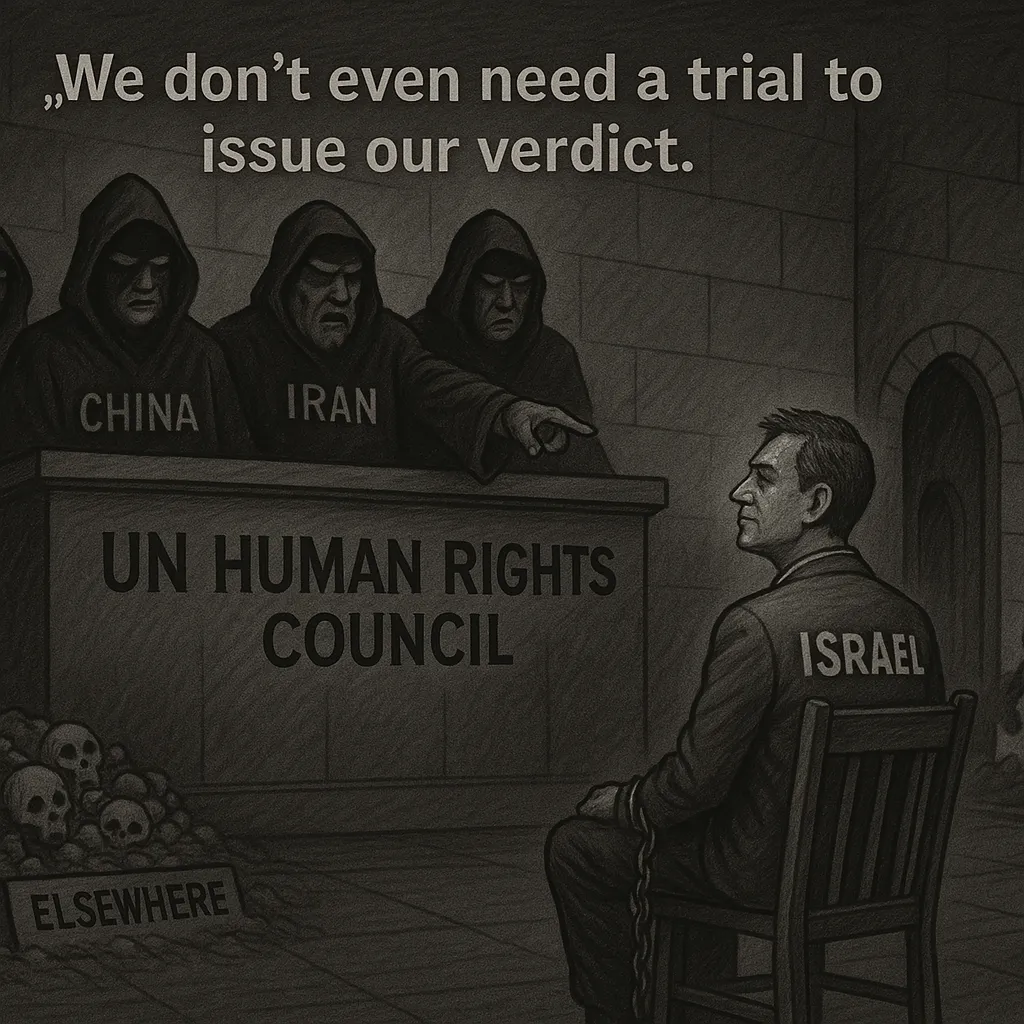
Wojna ONZ z sukcesem Żydów

[Nie potrzebujemy procesu, by wydać wyrok]


Wojna ONZ z sukcesem Żydów

Elder of Ziyon
Tłumaczenie: Małgorzata Koraszewska


(Jest to kontynuacja mojej serii „Jednolita teoria pola antysemityzmu”.)

Żydów oskarżano o najgorsze zbrodnie w każdej epoce: zabójstwo Boga, zatruwanie studni, kontrolowanie rządów i wywoływanie wojen światowych. 

Dziś oskarżenia są równie absurdalne, ale mnożą się szybciej niż kiedykolwiek. Być może najbardziej widocznym źródłem antysemityzmu jest dziś społeczność międzynarodowa i organizacje pozarządowe.

Od czasu powstania Organizacji Narodów Zjednoczonych świat przechodził przez fazy potępiania szeroko nagłośnionych zbrodni – i prędzej czy później o te właśnie zbrodnie oskarżany był Izrael. 

Kolonializm zmienił się z akceptowalnego na przestępczy dopiero po II wojnie światowej. Narody arabskie oskarżyły Izrael o kolonializm jeszcze przed powstaniem Izraela. Abdul Rahman Hassan Azzam, przewodniczący Ligi Arabskiej, powiedział Anglo American Commission w 1946 r.: „Syjonista, nowy Żyd, chce dominować i udaje, że ma szczególną misję cywilizacyjną, z którą wraca do zacofanej, zdegenerowanej rasy, aby wprowadzić elementy postępu na obszar, który nie chce postępu. Cóż, takie było roszczenie każdej potęgi, która chciała kolonizować i dążyła do dominacji”.

Rasizm stał się nowym złem w latach 60., wraz z erą praw obywatelskich. W 1975 r. ONZ uchwaliła rezolucję uznającą syjonizm za formę rasizmu.

W latach 80. państwa zaczęły nakładać sankcje na RPA za politykę apartheidu. Konferencja w Durbanie w 2001 r., zorganizowana w latach 90., oskarżyła Izrael o apartheid

Ostatnio liczba oskarżeń przeciwko Izraelowi przerodziła się w tsunami: jeśli supremacja białych jest zła, to Izrael musi być winny „supremacji żydowskiej”. Jeśli ludobójstwo jest złem ostatecznym, to Izrael musi być winny tej odrażającej zbrodni. 

Nie tylko porwano mechanizm rezolucji ONZ, by używać go jako amunicji przeciwko Izraelowi. Samo prawo międzynarodowe zostało zmienione tylko i wyłącznie dla Izraela. W Statucie Rzymskim zmieniono język z Konwencji Genewskich, by stosować go konkretnie do osiedli izraelskich – to zaś uczyniło zbrodnię wojenną z budowania domów przez Żydów na ich ojczystej ziemi, najbardziej antykolonialnego aktu, jaki można sobie wyobrazić.

Komisja Praw Człowieka ONZ stawała się coraz bardziej antyizraelska z roku na rok. Od lat 70. do 2002 r. aż jedna trzecia jej rezolucji dotyczących poszczególnych krajów była skierowana przeciwko Izraelowi, podczas gdy ignorowano najgorsze kraje łamiące prawa człowieka. W 2002 r., w szczytowym momencie serii ataków terrorystycznych, w których zginęły setki Izraelczyków, uchwaliła rezolucję nie potępiającą palestyńskich zamachowców-samobójców, ale potwierdzającą „uzasadnione prawo narodu palestyńskiego do stawiania oporu izraelskiej okupacji”. Światowy organ praw człowieka właściwie zalegalizował terror.

Komisję Praw Człowieka ONZ rozwiązano w 2006 r., nie z powodu jej antyizraelskiego nastawienia, ale dlatego, że konsekwentnie wybierała na członków najgorsze kraje łamiące prawa człowieka, w tym Sudan podczas czystek etnicznych w Darfurze. Te dwie kwestie są jednak powiązane: gdy polityka antyizraelska i proterrorystyczna zostaje znormalizowana przez organy międzynarodowe, nigdy się na tym nie kończy.

Rada Praw Człowieka (UNHRC), która zastąpiła Komisję Praw Człowieka, jest jeszcze gorsza. Oprócz nieproporcjonalnej, ogromnej obsesji na punkcie Izraela, wyrażanej w liczbie rezolucji przeciwko Izraelowi, ma również stały punkt w swoim programie, punkt 7, poświęcony krytyce Izraela. Żaden inny kraj nie ma takiego punktu. Co więcej, w 2021 r. UNHRC powołała stałą Komisję Śledczą (COI) przeciwko Izraelowi, która jest pierwszą i jedyną taką komisją, która nie ma ograniczenia czasowego. Sama ta komisja wydaje miliony dolarów każdego roku. 

ONZ ściśle współpracuje z organizacjami pozarządowymi. Organizacje praw człowieka, takie jak Amnesty International i Human Rights Watch, podzielają obsesję ONZ na punkcie Izraela, poświęcając mu więcej i znacznie obszerniejszych raportów, oskarżając Izrael o więcej przestępstw niż jakikolwiek inny naród. Raport Amnesty na temat masowych morderstw, gwałtów i przesiedleń cywilów w Darfurze w 2016 r. był tylko nieznacznie dłuższy niż ich raport potępiający Airbnb za zezwalanie na prezentację ofert domów należących do Żydów w Judei i Samarii w 2019 r. Ich priorytety są niemoralne. 

Nie ma dosłownie żadnego aspektu ludzkiej egzystencji, którego nie zamieniono w broń przeciwko Izraelowi. Palestyńczycy podpisali międzynarodowe traktaty, których, jak przyznają, nie mają żadnego zamiaru przestrzegać, ale spotkania odpowiadających za nie komisji ONZ są idealnym miejscem do atakowania Izraela za rzekome naruszenia praw środowiskowych, praw kobiet, praw dzieci, ochrony oceanów. Ich żądania i żądania innych wrogów Izraela zmuszają światową federację piłkarską FIFA do niekończących się debat na temat członkostwa Izraela. 

Instytucje takie jak ONZ i wielkie organizacje pozarządowe promują uniwersalistyczną wizję globalnych norm, które mają uchylić i zastąpić tradycyjne pojęcia suwerenności narodowej. Twierdzą, że muszą to robić, aby egzekwować minimalne standardy praw człowieka, ale przykłady krajów, które najbardziej naruszają prawa człowieka, a które mogą narzucić własne programy organom światowym, dowodzą, że polityka bierze górę nad uczciwością, sprawiedliwością i równością, o które rzekomo walczą.

Ich nieproporcjonalne skupienie się na Izraelu ujawnia jednak coś więcej. Kiedy już pominiemy ich zniekształcenia i kłamstwa, staje się jasne, że Izrael jest olśniewającą historią sukcesu praw człowieka i liberalnych ideałów. Jest to szczególnie imponujące, biorąc pod uwagę trwały stan wojny narzucony państwu żydowskiemu. Zdolność Izraela do utrzymania bezpieczeństwa w obliczu międzynarodowych praw, które są stosowane wyłącznie do niego; jego zdolność do zapewnienia równych praw swojej arabskiej mniejszości, jego bohaterskie próby zminimalizowania ofiar cywilnych wśród wrogów w najtrudniejszych okolicznościach wojennych, z jakimi kiedykolwiek musiał zmierzyć się jakikolwiek naród zachodni, pokazują, że to nie wady Izraela są przyczyną tak niepohamowanej nienawiści – ale właśnie izraelski sukces. 

ONZ i organizacje pozarządowe całkowicie zawiodły i nie potrafiły zmienić postaw i działań krajów, w których najbardziej łamie się prawa człowieka. Te międzynarodowe organizacje nie są po prostu bezsilne wobec zbrodni przeciwko ludzkości – one milcząco je akceptują. 

Tymczasem partykularystyczne państwo żydowskie odnosi sukces tam, gdzie nawet najbardziej podziwiane kraje zawodzą. Ten żydowski i izraelski sukces stanowi zagrożenie dla ich filozofii. 

Wszystkie kraje Bliskiego Wschodu z wyjątkiem Izraela, to kraje muzułmańskie (większość arabskich), systematycznie łamiące prawa człowieka, bez żadnego zainteresowania ze strony ONZ i organizacji pozarządowych. Uważają jednak, że państwo żydowskie narusza ich ideały. Powodem nie jest samookreślenie się Izraela, ale sukces Izraela w budowaniu społeczeństwa równych praw dla wszystkich obywateli – czego ci samozwańczy arbitrzy moralni nie mogą zaakceptować. 


Zawartość publikowanych artykułów i materiałów nie reprezentuje poglądów ani opinii Reunion’68,
ani też webmastera Blogu Reunion’68, chyba ze jest to wyraźnie zaznaczone.
Twoje uwagi, linki, własne artykuły lub wiadomości prześlij na adres:
webmaster@reunion68.com


Who are the young Jews turning against Israel?

Who are the young Jews turning against Israel?

Jane Prinsley


Radical new groups for Jews who do not support Zionism have formed on campuses up and down the UK

Members of the Jewish Bloc for Palestine take part in a Free Gaza protest in central London (Photo: Getty Images)

British Jews in their twenties are the least likely age group in the community to identify as Zionist, according to the Institute for Jewish Policy Research. Its survey of the community found that 57 per cent of twentysomethings self-identified as Zionist (compared to 63 per cent for UK Jewry as a whole).

When JPR asked why some respondents felt “not accepted” in Jewish spaces, it found the most common reason was their “views on Israel/Zionism”. Most of these perceived their views as being further to the left than most of the Jewish communities of which they are part.

In the last 17 months, radical Jewish student groups have emerged to cater to Jews who do not support Zionism. From Leeds, Liverpool, Brighton and Birkbeck to Edinburgh, Warwick, Cardiff, Cambridge and UCL, students have formed Jewish communities, or kehillot, on campuses which already have Jewish societies (Jsocs).

A founding member of Leeds Kehillah, who wished to remain anonymous, said she wanted to “create a space for Jewish people with non or anti-Zionist beliefs”. According to the student, who is a member of a Masorti community and participated in a youth movement, the kehillah has 15 to 20 active members from all denominations, and hosts festivals, Shabbat dinners, and educational events.

The student, who has been labelled a “self-hating Jew,” claimed, “There is a feeling of ostracisation [in mainstream Jewish spaces] when the majority of people think one thing and you think another.”

She grew up in a family with strong connections to Israel but started to question her Zionism during events at her shul. “A lot of people think your Judaism is dependent on how Zionist you are rather than your cultural beliefs, heritage, traditions, blood. I am Jewish through and through, but I am anti-Zionist,” she said.

During a conference of kehillot in Manchester last December, with Yiddish and klezmer workshops and sessions on Israeli and Arab activism, students were offered funding from far-left Jewish campaign group, Na’amod.

The kehillot gathering in Manchester was supported by Na’amod

The Jewish bloc

One can hardly miss the “Jewish bloc” at Gaza rallies, often accompanied by a Na’amod banner. While some of the bloc belong to Charedi sect Neturei Karta, and others are part of older fringe groups such as Jewish Voice for Labour and Jewish Network for Palestine, some belong to shuls, schools and youth groups at the centre of Zionist Jewish Britain.

Attending anti-Israel demonstrations is complicated for some young Jews. Antisemitic rhetoric has been reported at some rallies – which is why Jewish protesters attend in groups, according to the Leeds Kehillah student who has been part of the “Jewish bloc” at various protests.

But discomfort about antisemitism is less important to her than the situation in Gaza: “Are we going to focus on the rise of antisemitism or the rise of death tolls in Gaza and the West Bank? They are totally different things – both important, but one is very urgent.”

Why have they turned against Israel?

Robert Cohen – who has interviewed 50 people for a PhD on the attitudes of young British Jews who “feel sympathetic towards the Palestinian people” – has found they were were “very aware of antisemitism,” but “chose not to centre it as their response to what has happened since October 7”.

His research suggests that Generation Z (aged 13 to 28) have a “dislike of hypocrisy and a strong commitment to authenticity”. For these progressive Jews, “the Jewish education and values that they have been raised on are intersecting with their Gen-Z sensibilities”.

It was “wrong to assume this group are disconnected from their Judaism, and nor are they tokenising these values,” said Cohen, who criticised those who have condemned young anti-Zionists as being “lefty Jews who want to fit in with their peers, or Revolutionary Communists”.

His interviewees said it was because of their Jewish values – not in spite of them – that they sympathised with the Palestinian perspective.

For this group, October 7 did not shift their attitude towards Zionism. The Leeds student said she was “sickened” by the Hamas attack and was frustrated that anti-Israel protests rarely call for the return of the hostages. “I wish there would be a chant for the hostages,” she said, but added that most protesters “just want the killing to stop and ‘ceasefire now’ is chanted at every rally”.

Cohen suggested that members of this group of young people “see Zionism as a project of Jewish renewal and [also] a project of settler colonialism. Generation Z can hold multiple truths simultaneously, which older generations would typically see as being in conflict.”

NEW YORK, NEW YORK – FEBRUARY 07: Members of the activist group Jewish Voice for Peace join others in protesting President Joe Biden’s visit to Manhattan. (Photo by Spencer Platt/Getty Images)

Amos Schonfield, a trustee for Yachad, which opposes the occupation of the West Bank, said the young Jews he had spoken to who have broken away from Zionism had no memory of the Oslo Accords, Yitzhak Rabin or a tangible pathway to peace with the Palestinians. All they had known was Prime Minister Benjamin Netanyahu and “a powerful Israel.”

Older generations had “a very different experience of what Israel is. Decades ago, people were praying for Israel’s very survival. They remember Israel as a vulnerable country,” Schonfield said.

“We end up in a situation where we have different imaginations when it comes to what Israel is.”

Compounding this are the echo chambers online, where people can find groups who think the same things. Young anti-Zionists are influenced by discussions in America, as well as access to Palestinian perspectives on social media.

What does this mean for the mainstream?

Whether this anti-Israel subgroup represents a growing divide between young and old remains to be seen. Ben Freeman, 26-year-old executive director of the Pinsker Centre – a think tank which aims to give students a balanced understanding of the region – says anti-Zionist Jews are a “growing minority, but still a minority.”

“Their voices are being amplified because they are a convenient minority with all the antisemitism on campus,” Freeman said.

He is calling for the community to have “nuanced difficult conversations” with young people about Israel. “We speak to so many students who say, ‘my Israel education was one-dimensional.’”

This is also a worry for Sam Cohen, the RSY Netzer representative on the Board of Deputies. Speaking during a Board meeting last year, Cohen asked what the community was doing to address young people turning away from Israel.

He said, “If the Jewish community is interested in ensuring the young are existentially supported then there needs to be engagement with Israel.”

Some groups, including the Pinsker Centre, are trying to address this challenge. “A lot of students who have grown up in the Jewish community and go to university don’t feel equipped to understand why people don’t like Israel. No one has been willing to have complicated conversations with them.

“If all we can do is have hasbarah about baby tomatoes and irrigation, then we are not equipping young people to be open and engaged,” Freeman said.

“Students are desperate for sensitive conversations around Israel,” he added.

Another organisation, I-gnite, seeks to “empower students, parents and teachers” to express their relationship with Israel and runs a programme with Jewish schools group PaJeS that provides Israel and antisemitism education in Jewish secondary schools.

An I-gnite spokesperson said that Jewish children can grow up in “a bubble,” and arriving on campus surrounded by non-Jewish students “can be a shock.”

At university, “Whether they like it or not, students’ identity may be defined by their Jewishness, and they might be expected to have a view on Israel and the conflict,” she said.

“Studying Israel or contemporary antisemitism was never a dedicated area of study in Jewish schools. We are encouraging schools to expose students to some of these issues; it is a duty of care that schools have.”

UJIA data shows for teens going on Israel tour over a thirty year period

The majority are still with Israel

Despite the challenges around anti-Zionism, those who run youth movements say that engagement with Israel remains high.

United Jewish Israel Appeal (UJIA) has analysed the 30-year trends of Israel tour. While numbers dipped between 2000 and 2004 – the “Intifada effect” – then during the pandemic and again in the current Gaza war, the trend is up this year, with more than 800 young people signed up across the different movements.

The largest Orthodox youth movement, Bnei Akiva, is taking more than 170 teens to Israel this summer, its highest number since before the pandemic. The movement’s gap year numbers are also high, with 50 young people in Israel this year. Meanwhile, Masorti Judaism’s youth movement, Noam, is taking 60 teens to Israel, a “mega year,” said the movement’s organiser.

So by no means are all young Jews turning against Israel; quite the opposite might be true of the majority. But this is happening as kehilllot form on campuses up and down the country. As Gen-z would say: two things can be true at once.


Zawartość publikowanych artykułów i materiałów nie reprezentuje poglądów ani opinii Reunion’68,
ani też webmastera Blogu Reunion’68, chyba ze jest to wyraźnie zaznaczone.
Twoje uwagi, linki, własne artykuły lub wiadomości prześlij na adres:
webmaster@reunion68.com