

Archive | 2026/11/27

Badanie: Media coraz częściej używają określenia „okupowany Zachodni Brzeg” jako standardowego opisu tego terytorium


Badanie: Media coraz częściej używają określenia „okupowany Zachodni Brzeg” jako standardowego opisu tego terytorium

Sharon Levy


Nazywanie Zachodniego Brzegu „okupowanym”, szczególnie na początku artykułu, kształtuje sposób, w jaki czytelnicy postrzegają to terytorium.


Z badań przeprowadzonych przez HonestReporting wynika, że określenie „okupowany Zachodni Brzeg” jest coraz częściej używane w artykułach prasowych dotyczących tego spornego terytorium. W porównaniu z analogicznym sześciomiesięcznym okresem ubiegłego roku odsetek artykułów zawierających to sformułowanie wzrósł w tym roku o 13,3 punktu procentowego. Ponadto w tym samym okresie odsetek artykułów zawierających inne określenia związane z „okupacją” zwiększył się o 9,4 punktu procentowego.

Język, którym dziennikarze posługują się do opisywania miejsc i wydarzeń, nie jest przypadkowy. Wyznacza on kontekst, w którym czytelnicy rozumieją przedstawianą historię, kształtując ramy interpretacyjne, przez które postrzegane są opisywane osoby i wydarzenia.

Ma to szczególne znaczenie w przypadku relacjonowania wydarzeń na Zachodnim Brzegu / w Judei i Samarii – terytorium położonym na zachodnim brzegu Jordanu, które Izrael zdobył na Jordanii podczas wojny sześciodniowej w 1967 roku. Status tego obszaru pozostaje przedmiotem sporu, zarówno w samym Izraelu, jak i na arenie międzynarodowej. Mimo to media często pomijają kontekst historyczny, który doprowadził do zajęcia tego terytorium przez Izrael w wojnie obronnej, a także pochodzenie nazwy „Zachodni Brzeg”.

@HonestReporting

Hey

@AP

, your own reporting exposes the flaw in your terminology. If Israel captured the area from Jordan in 1967, it means the territory was either previously occupied by Jordan, or its legal status is disputed – not “occupied” by Israel today.

8:52 AM · 10 cze 2026

HonestReporting.ai Labs przeanalizowało 5370 artykułów opublikowanych od maja do października 2025 roku oraz w tych samych miesiącach 2026 roku. Materiał badawczy pochodził z 17 międzynarodowych redakcji informacyjnych, w tym BBC, CNN, „The Guardian”, „The New York Times”, NBC i Associated Press. Celem analizy było ustalenie, jak często termin „okupowany” jest używany w odniesieniu do Zachodniego Brzegu. Okazało się, że określenie to nie tylko pojawia się coraz częściej w relacjach medialnych, lecz także coraz częściej występuje na początku artykułów, czyli tam, gdzie czytelnicy po raz pierwszy stykają się z opisywanym tematem.

Określenie „okupowany Zachodni Brzeg” pojawiło się w 2485 artykułach, co stanowi 46,3 proc. wszystkich przeanalizowanych publikacji. Jego użycie nie ograniczało się do jednej redakcji – odnotowano je we wszystkich mediach objętych analizą. Po uwzględnieniu szerszej grupy określeń, takich jak „okupowany”, „okupacja” i „okupowanie”, liczba artykułów wzrosła do 3348, czyli 62,3 proc. całości.

Porównanie dwóch sześciomiesięcznych okresów wykazało, że odsetek artykułów dotyczących Zachodniego Brzegu, w których pojawiało się sformułowanie „okupowany Zachodni Brzeg”, wzrósł z 38,9 proc. w okresie od maja do października 2025 roku do 52,2 proc. w okresie od maja do października 2026 roku. Jednocześnie odsetek artykułów zawierających jakąkolwiek terminologię związaną z okupacją zwiększył się z 57,7 proc. do 67,1 proc.

Liczby w nawiasach przedstawiają liczbę artykułów z okresów maj–październik 2025 r. oraz maj–październik 2026 r. Okres od listopada 2025 r. do kwietnia 2026 r. (1284 artykuły) nie został uwzględniony w tym porównaniu.

Stosowanie tej terminologii nie wynika z cytowania przez dziennikarzy wypowiedzi polityków, aktywistów czy organizacji praw człowieka. W próbie obejmującej 60 artykułów z pięciu największych redakcji w 50 przypadkach sformułowanie „okupowany Zachodni Brzeg” zostało użyte bezpośrednio przez samych dziennikarzy, a nie jako cytat czy określenie przypisane innemu źródłu. Na podstawie tej próby można oszacować, że od 1850 do 2100 artykułów posługuje się tym terminem jako własnym określeniem redakcyjnym.

Chociaż wszystkie analizowane redakcje stosowały taki język, częstotliwość używania tego określenia znacznie się między nimi różniła. BBC używało sformułowania „okupowany Zachodni Brzeg” w 71 proc. artykułów wspominających o tym terytorium. Kolejne miejsca zajęły CNN – 68 proc., NBC – 64 proc., „Los Angeles Times” – 61 proc. oraz Reuters – 60 proc. Dla porównania Fox News stosował to określenie w 12 proc. swoich materiałów. Ustalono również, że Reuters, „The New York Times” i CBS częściej posługiwały się sformułowaniem „Zachodni Brzeg okupowany przez Izrael”. Kiedy takie określenia zaczynają być używane bezpośrednio przez redakcję, stają się elementem jej własnego sposobu przedstawiania tematu.

Język „okupacji” przesunął się na początek artykułów

Zmiana dotyczy nie tylko częstotliwości używania tego terminu, lecz także miejsca, w którym pojawia się on w artykule. Terminologia związana z „okupacją” jest coraz częściej wprowadzana na początku tekstu, a nietylko w jego dalszej części.

Zmiana języka jest szczególnie widoczna we wstępach artykułów, gdzie czytelnicy po raz pierwszy zapoznają się z tematem. Między dwoma analizowanymi okresami odsetek artykułów zawierających terminologię związaną z okupacją już w pierwszym zdaniu wzrósł z 8,5 proc. do 15,4 proc. Podobny wzrost odnotowano w przypadku występowania takich określeń w pierwszych trzech zdaniach – z 14,9 proc. do 24,2 proc. Jednocześnie odsetek artykułów, w których Zachodni Brzeg określano jako „okupowany” już przy pierwszej wzmiance o nim, zwiększył się z 35 proc. do 46,3 proc.

Z kolei w nagłówkach i streszczeniach termin ten pojawiał się jedynie w około 3 proc. artykułów. Wskazuje to, że choć rzadko jest wykorzystywany do zachęcania czytelników do kliknięcia w tekst, po jego otwarciu pojawia się na początku artykułu, kształtując sposób, w jaki odbiorcy rozumieją przedstawiane wydarzenia.

W kilku dużych redakcjach odnotowano szczególnie wyraźny wzrost częstotliwości stosowania terminologii związanej z okupacją w pierwszych trzech zdaniach artykułów. W „The New York Times” odsetek ten wzrósł z 4,6 proc. do 24,3 proc., w „The Guardian” – z 6,2 proc. do 21,7 proc., w Reutersie z 33 proc. do 47,9 proc., a w BBC – z 30,3 proc. do 46,3 proc.

Przykład CNN pokazuje zarówno wzrost częstotliwości używania tej terminologii, jak i sposób, w jaki określenie stosowane początkowo sporadycznie może stać się domyślnym sposobem opisywania terytorium. Odsetek artykułów CNN, w których słowo „okupowany” pojawiało się przy pierwszej wzmiance o Zachodnim Brzegu jako własne określenie redakcji (bez cytowania lub przypisywania go innemu źródłu), wzrósł z 32 proc. w okresie od maja do lipca 2025 roku do 69 proc. w okresie od listopada 2025 roku do stycznia 2026 roku.

W miarę jak słowo „okupowany” stawało się coraz bardziej standardowym określeniem, alternatywne sposoby opisywania tego terytorium pozostawały znacznie mniej rozpowszechnione. Kiedy już się pojawiały, często umieszczano je w dalszych częściach artykułów. Aż 41 proc. zdań zawierających terminologię związaną z okupacją przypada na pierwszą jedną trzecią artykułu, w porównaniu z 25 proc. w przypadku określenia „Judea i Samaria”. Sformułowania odnoszące się do 1967 roku, kiedy Izrael zdobył to terytorium na Jordanii, pojawiają się w pierwszej jednej trzeciej artykułu w 25 proc. przypadków, natomiast określenie „sporny” – w 12 proc.

Towarzyszące ramy interpretacyjne

Termin „okupacja” jest często używany w połączeniu z innymi określeniami. Na przykład słowo „nielegalny” w relacjach dotyczących osiedli, placówek osadniczych i związanych z nimi kwestii pojawia się w 957 artykułach, co stanowi 18 proc. całości. Aż 86 proc. tych artykułów zawiera również terminologię związaną z okupacją. Udział artykułów używających określenia „nielegalny” w relacjach dotyczących Zachodniego Brzegu mniej więcej się podwoił – z 13 proc. w okresie maj–październik 2025 roku do 26 proc. w okresie maj–październik 2026 roku. Najwyższy poziom osiągnął w sierpniu i wrześniu 2026 roku, równolegle z doniesieniami o sankcjach dotyczących osadnictwa nakładanych przez Wielką Brytanię, Holandię i Unię Europejską.

Jednocześnie oficjalne stanowisko Izraela znacznie rzadziej pojawiało się obok tej terminologii – przedstawiano je jedynie w około co ósmym takim artykule.

Podobnie termin „apartheid” odnotowano w 266 artykułach, czyli w 5 proc. publikacji dotyczących Zachodniego Brzegu. Jednak 75 proc. tych artykułów zawierało również różne sformułowania odnoszące się do „okupacji”. Podobny schemat zaobserwowano w przypadku terminu „aneksja”, który pojawił się w 879 artykułach, czyli w 16,4 proc. wszystkich publikacji, a w 73 proc. przypadków towarzyszyła mu terminologia związana z „okupacją”. Łączne stosowanie takich określeń przyczynia się do budowania szerszej narracji na temat Zachodniego Brzegu, mimo że każde z nich ma odrębne konsekwencje prawne i polityczne.

Wnioski

Nie ulega wątpliwości, że istnieje uzasadniona przestrzeń do debaty na temat Zachodniego Brzegu, jego obecnego statusu i przyszłości. Jednak kiedy dziennikarze przyjmują określoną kwalifikację prawną jako standardowy sposób opisywania tego terytorium, zamiast przypisywać takie stanowisko konkretnej organizacji lub przedstawiać związany z nim kontekst, czytelnikom prezentuje się interpretację jako fakt.

Ostatecznie określenie „okupowany” stało się w międzynarodowych mediach terminem powszechnie przyjętym i standardowym. Kształtuje ono nie tylko sposób opisywania Zachodniego Brzegu, lecz także kontekst, w którym czytelnicy rozumieją wydarzenia rozgrywające się na tym terytorium.


Link do oryginału: https://honestreporting.com/study-the-media-is-increasingly-using-occupied-west-bank-as-the-default-descriptor/?share=1

HonestReporting, 15 listopada 2026

Sharon Levy

Urodzona w Toronto Sharon Levy przeprowadziła się do Izraela w październiku 2023 roku i pełniła różne funkcje w instytucjach zajmujących się rzecznictwem na rzecz Izraela oraz działalnością badawczą. Uzyskała tytuł magistra w dziedzinie nauk o zarządzeniu, ze specjalizacją w zwalczaniu terroryzmu i cyberbezpieczeństwie, na Uniwersytecie Reichmana.


Zawartość publikowanych artykułów i materiałów nie reprezentuje poglądów ani opinii Reunion’68,
ani też webmastera Blogu Reunion’68, chyba ze jest to wyraźnie zaznaczone.
Twoje uwagi, linki, własne artykuły lub wiadomości prześlij na adres:
webmaster@reunion68.com


Don’t drag Israel into the NVIDIA and Jensen Huang scandal


Don’t drag Israel into the NVIDIA and Jensen Huang scandal

Jonathan S. Tobin


A company that is too big to be allowed to fail is essential to both the Jewish state’s and America’s economy. But the political implications of the scandal may be daunting.

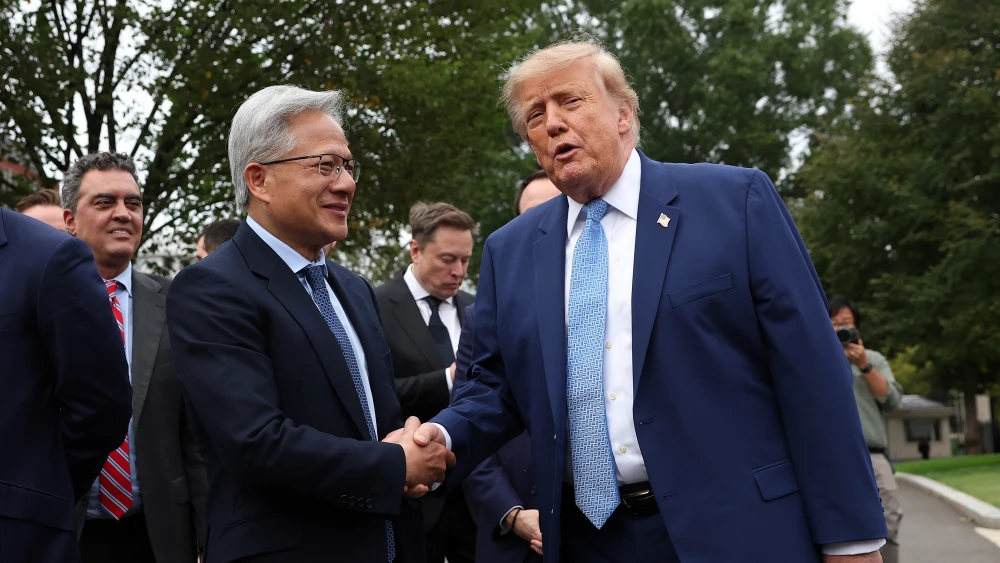
U.S. President Donald Trump greets NVIDIA CEO Jensen Huang outside the West Wing of the White House in Washington, D.C., on Sept. 29, 2026. Photo by Kevin Dietsch/Getty Images.Kevin Dietsch/Getty Images

One of the curious sidebars of the NVIDIA/Jensen Huang scandal was the way in which Israel’s leaders welcomed the controversial CEO’s return to the helm at one of the world’s most powerful companies. This aspect of the story was mostly ignored in the international media in the midst of a torrent of commentary.

The focus of the press, which initially pointed to Huang’s extramarital misbehavior and the question of whether he was a target of a Communist Chinese intelligence operation, shifted. It has since been dealing with President Donald Trump’s decisive role in reinstating him as the head of NVIDIA.

That Israeli Prime Minister Benjamin Netanyahu and President Isaac Herzog would be pleased by Huang’s return to power, with the latter calling him personally to congratulate him, might strike some as odd. But Israel has as large a stake as the United States in the well-being of a company whose headquarters are in Santa Clara, Calif. And that’s why the Jewish state and its friends cannot regard the certain prospect of congressional investigations about Trump’s decision and NVIDIA’s conduct with anything but concern.

As a hostile article in Al Jazeera pointed out, the close ties between NVIDIA and Israel are liable to be brought up as part of the discussion about the scandal. The rapturous reception afforded the libelous documentary, “Naza,” was a foretaste of what may soon happen to this topic. The importance of AI to the Jewish state’s economy, and even its efforts to defend itself against Iran and its Hamas, Hezbollah and Houthi terrorist proxies, is bound to become integrated into the general anger about NVIDIA, China and data centers in the United States.

Luddite fears

The essentially Luddite critique of AI, along with the apocalyptic fears the technology generates among those who believe it threatens the future of humanity, is clearly overblown; few really know where it will take us or whether its ultimate impact will be deleterious. But Israel’s connection to a discussion that can veer between rational concerns and conspiracy theories isn’t likely to help those attempting to hold back the tsunami of antisemitic blood libels that have undermined the Jewish state’s reputation in the West.

Yet if NVIDIA becomes part of the Democrats’ efforts to impeach Trump and/or other figures in the administration, the company’s ties to Israel are bound to be raised. And that’s something both the administration in Washington and the Israeli government—no matter who is leading it in the final years of Trump’s presidency—need to be prepared to counter. Moreover, if all of this winds up undermining the company, the backwash from such a development will do great harm to Israel, too.

Some economists and observers praised Trump for acting in what many believe is the best interests of the global economy by preserving the value of a company that has become the main engine of growth in the United States. As the primary supplier of hardware for the artificial-intelligence boom, NVIDIA is the principal propeller of the rise in stock-market values and wealth, as well as key to investment in manufacturing infrastructure.

That’s because it is at the center of the semiconductor industry, the main element of computing that allows modern manufacturing to continue. Without semiconductor chips, everything grinds to a halt. Their production, therefore, is a strategic resource at the heart of 21st-century geopolitics and economics.

In short, anything that is that important to the Gross Domestic Product of the world’s largest nation and all who trade with it is simply too big to fail.

An end to the AI boom?

Despite a record of misbehavior and a dalliance that rendered him vulnerable to being in thrall to Beijing, Huang’s undoubted talents and abilities seem to have made him indispensable at the company he built. Or at least that’s what investors think. And since a dramatic slide in the company’s value could set off a chain reaction of failure throughout the global economy, it is tantamount to being objectively true that the company would fail without him.

If it were just a matter of forgiving him for offenses—the kind that go beyond garden-variety #metoo infractions that would be unforgivable for the head of a lesser company—the whole episode might have been chalked up to nothing more than a bad example it sets for the corporate world.

The problem is that Trump’s intervention in the affair and the imminent Democratic Party takeover of Congress make the discussion about NVIDIA and Huang one that transcends issues of sexual immorality. Instead, it now revolves around potential conflicts of interest relating to whether Trump’s personal finances were involved in his pressure to have Huang reinstated. There are also the security implications of the Commerce Department winking at some of NVIDIA’s dealings that might undermine U.S. security and benefit America’s leading geostrategic rival.

It’s impossible to predict where this will lead. The Democrats’ majorities in both houses of Congress present an irresistible temptation not merely to satisfy themselves with damaging investigations, but to make another attempt to impeach, convict and throw Trump out of the White House before his term is up. The odds of a conviction are still low, but the size of the Democrats’ Senate majority—56 seats—makes it theoretically possible to get to the required two-thirds vote necessary for such an outcome if they can get 11 Republicans to join them.

Trump’s supporters likely figure that another impeachment, like every previous modern impeachment, will help him more than hurt him. In the same way that the Democrats’ lawfare efforts to bankrupt and imprison him during President Joe Biden’s administration set in motion the events that led to his re-election in 2024, another impeachment would be seen as an overreach.

But the impact this debate would have on NVIDIA will affect more than Trump’s prospects of beating back his opponents. The general unpopularity of data centers and the fears about AI—whether rational or irrational—could play a role in sabotaging the benefits the growth of the industry provides to the U.S. economy.

Combine that with the prospect of what the eminent economic historian, Niall Ferguson, writes in The Free Press about the inevitable end to the AI boom. He thinks the great technological revolution of artificial intelligence is running into “powerful, structural headwinds” that would have arisen no matter whom Jensen Huang slept with or what he did to its employees at its corporate headquarters.

And that will deeply affect Israel’s economy as well as support for it in the United States.

The Israel connection

NVIDIA’s purchase of the Israeli high-tech firm Mellanox, which was finalized in April 2020 at a staggering price of $7 billion, is believed to have been key to the firm’s success in recent years. The integration of Mellanox’s innovations and technology into NVIDIA’s operations enabled it to sell complete high-speed AI data-center systems rather than standalone parts.

This is a tribute to the genius of Israel’s “Start-Up Nation” high-tech economy and its outsized contribution to the global economy. It’s also made the Jewish state dangerously dependent on one company.

According to various sources, including the Bank of Israel, NVIDIA’s operations added 2.2 percentage points to the projection for Israel’s Gross Domestic Product growth in 2026. That raised the prediction for Israeli GDP to 5.6%, as opposed to its being 3.4% without the company’s contributions. The same forecasts say it will add 2.4 percentage points in 2027. In 2025, NVIDIA accounted for about 40% of Israel’s economic growth.

The fact that NVIDIA employs approximately 6,000 people makes it important but not necessarily vital for a country whose population is more than 10 million. But it also generates more than 10 billion shekels—approximately $3 billion—in Israeli tax revenue, giving a major boost to the country’s tax receipts and its potential growth.

That’s even more important when you consider that this has largely taken place during a time of war, when Israel’s economy has been under severe strain and the burden this has placed on its national treasury. The fact that Israel’s finances have not only not collapsed despite the massive costs of three years of war, but remained strong during this time period, can be credited at least in part to NVIDIA’s contributions and those of other high-tech companies that benefit from its presence in the Jewish state.

The fact that Netanyahu and Herzog agree about how important NVIDIA is to Israel, with no one in any of the other major parties now contending to lead the next government complaining about their siding with Trump and Huang in this controversy, speaks to a consensus about the issue in the Jewish state.

Nor is there any easy solution available to the Israelis to make themselves less dependent on NVIDIA. Like the United States, Israel appears fated to ride the AI boom wherever it may lead. Doomsayers notwithstanding, this doesn’t necessarily mean that it’s condemned to suffer an economic crash, which could potentially do even more harm to Jerusalem than Washington.

Yet not holding a company that large accountable for its conduct undermines democracy and renders the West even more vulnerable to subversion from China and its Russian, Iranian and terrorist allies.

The consequences of NVIDIA hysteria

We do need to understand, however, that the general enthusiasm for tarring and feathering Trump and Huang for what happened with NVIDIA that may well cross party lines in the United States will have fallout that goes beyond its impact on either man or even the administration.

The more we encourage hysteria about AI, the less intelligent the discourse will be about a subject that is of vital importance to global economics and stability. Halting AI research or development is bad for the United States and a gift to China. Why else would Beijing operate in this fashion, attempting to undermine the dominance of a company that is a global asset to the West?

Moreover, that hysteria is also bound to cross over into the same antisemitic tropes that have been mainstreamed by some of the same media outlets that are eager to demonize AI.

Those who will seek to exploit the NVIDIA scandals for political gain once the Democrats take over Congress should be held accountable if their hunger for taking down Trump winds up fueling a parallel effort to hold Israel responsible for all the ills associated with AI data centers.

Antisemitism’s adaptability stems from the way its advocates always claim that the Jews are going to take away whatever they value most or impose upon them what they fear most. It would be surprising if those in the media and in politics who hate Trump and Israel, regardless of their opinions about AI, didn’t wind up playing this card in the struggles over this issue that lie ahead.


Jonathan S. Tobin is editor-in-chief of the Jewish News Syndicate, a senior contributor for The Federalist, a columnist for Newsweek and a contributor to many other publications. He covers the American political scene, foreign policy, the U.S.-Israel relationship, Middle East diplomacy, the Jewish world and the arts. He hosts the JNS “Think Twice” podcast, both the weekly video program and the “Jonathan Tobin Daily” program, which are available on all major audio platforms and YouTube. Previously, he was executive editor, then senior online editor and chief political blogger, for Commentary magazine. Before that, he was editor-in-chief of The Jewish Exponent in Philadelphia and editor of the Connecticut Jewish Ledger. He has won more than 60 awards for commentary, art criticism and other writing. He appears regularly on television, commenting on politics and foreign policy. Born in New York City, he studied history at Columbia University.


Zawartość publikowanych artykułów i materiałów nie reprezentuje poglądów ani opinii Reunion’68,
ani też webmastera Blogu Reunion’68, chyba ze jest to wyraźnie zaznaczone.
Twoje uwagi, linki, własne artykuły lub wiadomości prześlij na adres:
webmaster@reunion68.com


Former Hamas Hostage Amit Soussana to Be Nominated for 2027 Nobel Peace Prize


Former Hamas Hostage Amit Soussana to Be Nominated for 2027 Nobel Peace Prize

Shiryn Ghermezian


Released hostage Amit Soussana, kidnapped during the deadly Oct. 7 attack by Hamas, talks to the press in front of her destroyed home at the Kibbutz Kfar Aza, Israel, Jan. 29, 2024. Photo: REUTERS/Alexandre Meneghini

Israel’s Minister of Innovation, Science, and Technology, Gila Gamliel, has announced that for the 2027 Nobel Peace Prize she will nominate Amit Soussana, an Israeli lawyer who was abducted on Oct. 7, 2023, by Hamas-led terrorists from her home in southern Israel and sexually assaulted and tortured during her 55 days in captivity.

The announcement coincided with International Day for the Fight Against Violence Against Women on Wednesday.

Gamliel, who is also a member of Israel’s security cabinet, said she will submit the nomination together with World Women’s International Zionist Organization (WIZO) President Anat Vidor. The nomination will be submitted to the Norwegian Nobel Committee, which selects the Nobel Peace Prize laureates. Gamliel is qualified to nominate candidates for a Nobel Prize due to the fact that she is a government official and Knesset member.

The deadline for submissions is Jan. 31, 2027.

“Amit has spoken courageously — openly and without hiding her face — about the sexual violence she endured while in Hamas captivity, transforming her testimony into a global campaign against the use of sexual violence as a weapon of war,” Gamliel wrote in a post on Instagram.

Soussana was abducted from her home in Kibbutz Kfar Aza on Oct. 7, 2023, and beaten and dragged to the Gaza Strip by her captors. In 2024, after her release, she became the first former hostage to publicly recount the sexual violence she experienced in captivity without remaining anonymous. Her courage led other survivors to share their testimonies about the sexual assault they endured.

Soussana has talked about her sexual abuse at the United Nations and the White House, and her testimony was featured in the documentary “Screams Before Silence.” She spoke to The New York Times for eight hours in March 2024 about what she experienced.

“He came towards me and shoved the gun at my forehead,” she recalled. “He sat on the edge of the bath … He kept punching me and put his gun in my face … Then he dragged me to the bedroom.”

In March 2025, Soussana received the US Secretary of State’s International Women of Courage Award.

There is precedent for someone receiving the Nobel Prize after overcoming sexual abuse during conflict.

In 2018, the Nobel Peace Prize was awarded to Nadia Murad and Dr. Denis Mukwege for their efforts to stop the use of sexual violence in war and armed conflict. Murad was born in northern Iraq and a member of the Yazidi minority. She was 21 when militants from the Islamic State terrorist organization invaded her village in 2014, abducted her, and held her as a sex slave with other young women. Murad was raped and threatened with execution before she eventually managed to escape captivity.


Zawartość publikowanych artykułów i materiałów nie reprezentuje poglądów ani opinii Reunion’68,
ani też webmastera Blogu Reunion’68, chyba ze jest to wyraźnie zaznaczone.
Twoje uwagi, linki, własne artykuły lub wiadomości prześlij na adres:
webmaster@reunion68.com