Iran Rejects US Talks, Signals It May Block UN From Nuclear Sites as Trump Leaves Door Open to Future Bombings

Iran Rejects US Talks, Signals It May Block UN From Nuclear Sites as Trump Leaves Door Open to Future Bombings

Ailin Vilches Arguello


Iran’s Foreign Minister Abbas Araghchi addresses a special session of the Human Rights Council at the United Nations in Geneva, Switzerland, June 20, 2025. REUTERS/Denis Balibouse

Iran announced Friday that it will not engage in nuclear talks with the United States, rejecting a two-week deadline set by US President Donald Trump for renewed negotiations aimed at resolving the ongoing standoff over Tehran’s nuclear program.

In a televised speech, Iranian Foreign Minister Abbas Araghchi condemned what he described as Washington’s “complicity in the Israeli regime’s war of aggression against Iran,” and slammed recent US military strikes as a betrayal of diplomacy and a blow to any prospects for dialogue.

“Americans want to negotiate and have sent messages several times, but we clearly said that as long as [the Israeli] aggression doesn’t stop, there’s no place for dialogue,” the top Iranian diplomat said in an address on state television.

“No agreement has been made on the restart of negotiations. There has not even been any talk of negotiations,” Araghchi continued. “The subject of negotiations is out of question at present.”

However, he reassured that Tehran remains committed to diplomacy, but the decision to resume negotiations with Washington must be carefully evaluated.

“It is still early to say that the conditions are right for negotiations,” Araghchi said.

Meanwhile, Trump said he would consider carrying out further strikes on Iran if US intelligence reveals new concerns about the country’s uranium enrichment program.

“Sure, without question, absolutely,” Trump said Friday during a press briefing when asked if a second wave of bombings was possible.

During his speech, he also addressed the recent American and Israeli strikes on Iran’s nuclear facilities, acknowledging that the damage was significant but adding that the regime is still assessing its full extent.

For its part, US intelligence officials have reported that Tehran’s nuclear sites were “severely damaged” during the American airstrikes last weekend.

Araghchi’s comments came as he met on Friday with his counterparts from Britain, France, Germany, and the European Union’s Foreign Policy Chief Kaja Kallas in Geneva — marking their first meeting since the Iran-Israel war began.

Europe is actively urging Iran to reengage in talks with the White House in an effort to avert any further escalation of tensions.

In a post on X, Araghchi also announced that Iran may reject any requests by the International Atomic Energy Agency (IAEA), the UN nuclear watchdog, to visit the country’s nuclear sites.

He said this latest decision was “a direct result of [IAEA Director-General, Rafael Grossi]’s regrettable role in obfuscating the fact that the Agency — a full decade ago — already closed all past issues.”

“Through this malign action, he directly facilitated the adoption of a politically-motivated resolution against Iran by the IAEA BoG [Board of Governors] as well as the unlawful Israeli and US bombings of Iranian nuclear sites,” the Iranian top diplomas said in a post on X.

“In an astounding betrayal of his duties, Grossi has additionally failed to explicitly condemn such blatant violations of IAEA safeguards and its Statute,” Araghchi continued. 

Iran’s critique of Grossi comes as the Iranian parliament voted this week to suspend cooperation with the IAEA “until the safety and security of [the country’s] nuclear activities can be guaranteed.”

“The IAEA and its Director-General are fully responsible for this sordid state of affairs,” Araghchi wrote in his post on X.


Zawartość publikowanych artykułów i materiałów nie reprezentuje poglądów ani opinii Reunion’68,
ani też webmastera Blogu Reunion’68, chyba ze jest to wyraźnie zaznaczone.
Twoje uwagi, linki, własne artykuły lub wiadomości prześlij na adres:
webmaster@reunion68.com


“Israel Hajom”: Netanjahu zgodził się zakończyć wojnę w Strefie Gazy w ciągu dwóch tygodni

Ofiary izraelskiego ataku w Deir al-Balah w drodze do szpitala Al-Aksa Martyrs w centralnej części Strefy Gazy, 26 czerwca 2025 r. (Fot. REUTERS/Ramadan Abed)


“Israel Hajom”: Netanjahu zgodził się zakończyć wojnę w Strefie Gazy w ciągu dwóch tygodni

Wojciech Podgórski / PAP


Premier Izraela Benjamin Netanjahu doszedł do takich wniosków w rozmowie z prezydentem USA Donaldem Trumpem. Plan przywódców zakłada też uznanie Izraela przez kolejne państwa arabskie.

Netanjahu i Trump zgodzili się na kilka punktów, które mają zostać “szybko wcielone w życie”. Do ustaleń doszło w trakcie rozmowy przeprowadzonej bezpośrednio po ataku USA na irańskie instalacje nuklearne, a informację podał w czwartek (26 czerwca) izraelski dziennik “Israel Hajom” (bezpłatna, najbardziej rozpowszechniona gazeta w kraju), powołując się na zaznajomione ze sprawą źródło.

“W ciągu dwóch tygodni ma się zakończyć wojna w Strefie Gazy. Odpowiedzialność za palestyńskie terytorium mają przejąć cztery państwa arabskie, w tym Egipt i Zjednoczone Emiraty Arabskie. Przywódcy Hamasu zostaną wygnani, a wszyscy izraelscy zakładnicy uwolnieni” – zdradza szczegóły “Israel Hajom”.

Gazeta dodaje, że “wiele państw świata przyjmie licznych mieszkańców Strefy Gazy, którzy chcą z niej wyemigrować”.

Wojna w Strefie Gazy. Netanjahu ogłasza zwycięstwo

Po publikacji tych doniesień premier Netanjahu opublikował nagranie, w którym podkreślił, że Izrael ma szansę na „drastyczne rozszerzenie” swoich porozumień normalizacyjnych.

– Walczyliśmy dzielnie z Iranem – i odnieśliśmy wielkie zwycięstwo – podkreślił Netanjahu. I dodał:

– To zwycięstwo otwiera okazję do dramatycznego rozszerzenia porozumień pokojowych. Ciężko nad tym pracujemy.

A potem jeszcze zaznaczył: – Wraz z uwolnieniem naszych zakładników i pokonaniem Hamasu jest tu okno możliwości, którego nie wolno przegapić. Nie można zmarnować ani jednego dnia.

Jak ma wyglądać niepodległe państwo palestyńskie?

Przywódcy USA i Izraela mieli też zgodzić się na rozszerzenie tzw. Porozumień Abrahamowych o kolejne państwa arabskie i muzułmańskie, w pierwszej kolejności Arabię Saudyjską i Syrię. Porozumienia Abrahamowe to seria zawieranych przy współpracy z USA umów normalizujących stosunki między Izraelem a państwami arabskimi. Za pierwszej kadencji Trumpa udało się nimi objąć m.in. ZEA, Bahrajn i Maroko.

By osiągnąć ten cel, Izrael ma “zadeklarować swoją gotowość do rozwiązania konfliktu z Palestyńczykami w ramach “rozwiązania dwupaństwowego”, czego warunkiem będzie zreformowanie Autonomii Palestyńskiej” – zaznacza “Israel Hajom”.

Premier Izraela Benjamin Netanjahu Fot. REUTERS/Jack Guez

Jako rozwiązanie dwupaństwowe określa się ideę utworzenia, obok Izraela, niepodległego państwa palestyńskiego. Jest to program wspierany m.in. przez UE i ONZ. Przez ostatnie lata wspierała go również dyplomacja USA. Trump w czasie drugiej kadencji nie przedstawił na ten temat swojego stanowiska.

Obecny rząd Izraela do tej pory odrzucał rozwiązanie dwupaństwowe. Arabia Saudyjska podkreślała natomiast, że przyjęcie planu utworzenia niepodległej Palestyny jest warunkiem unormowania relacji z Izraelem.

Netanjahu i Trump mieli się jednocześnie zgodzić na to, że USA uznają suwerenność Izraela nad niektórymi obszarami okupowanego Zachodniego Brzegu. Autonomia Palestyńska chce, by Zachodni Brzeg i Stref Gazy weszły w skład przyszłego państwa palestyńskiego.

Dramatyczna sytuacja w Strefie Gazy

Wojna w Strefie Gazy trwa od 7 października 2023 r., gdy w ataku Hamasu na południe Izraela zginęło około 1200 osób, a 251 zostało porwanych. Kilkudziesięciu zakładników wciąż pozostaje w rękach terrorystów. Według danych kontrolowanej przez Hamas administracji izraelski odwet pochłonął już życie około 56,2 tys. Palestyńczyków, głównie cywilów.

Strefa Gazy jest zrujnowana, panuje w niej kryzys humanitarny. Nasila się też międzynarodowa krytyka Izraela dotycząca tragicznych dla ludności cywilnej skutków ofensywy i nieprzepuszczania wystarczającej ilości pomocy humanitarnej.

Izrael nie przedstawił do tej pory spójnej wizji powojennej przyszłości Strefy Gazy, ale wykluczał, by przy władzy mógł tam pozostać Hamas. Izrael nie zgadza się też na administrowanie tym obszarem przez Autonomię Palestyńską. Państwa arabskie przedstawiły własny program odbudowy tego terytorium, który zakłada, że docelowo rządziłaby nim Autonomia Palestyńska.


Redagowała Alicja Lehmann


Zawartość publikowanych artykułów i materiałów nie reprezentuje poglądów ani opinii Reunion’68,
ani też webmastera Blogu Reunion’68, chyba ze jest to wyraźnie zaznaczone.
Twoje uwagi, linki, własne artykuły lub wiadomości prześlij na adres:
webmaster@reunion68.com


Mamdani and AOC are the Democrats of the future

Mamdani and AOC are the Democrats of the future
Jonathan S. Tobin

The radical candidate’s primary victory means more about what lies ahead for the party than it does about prospects for the survival of American Jews.

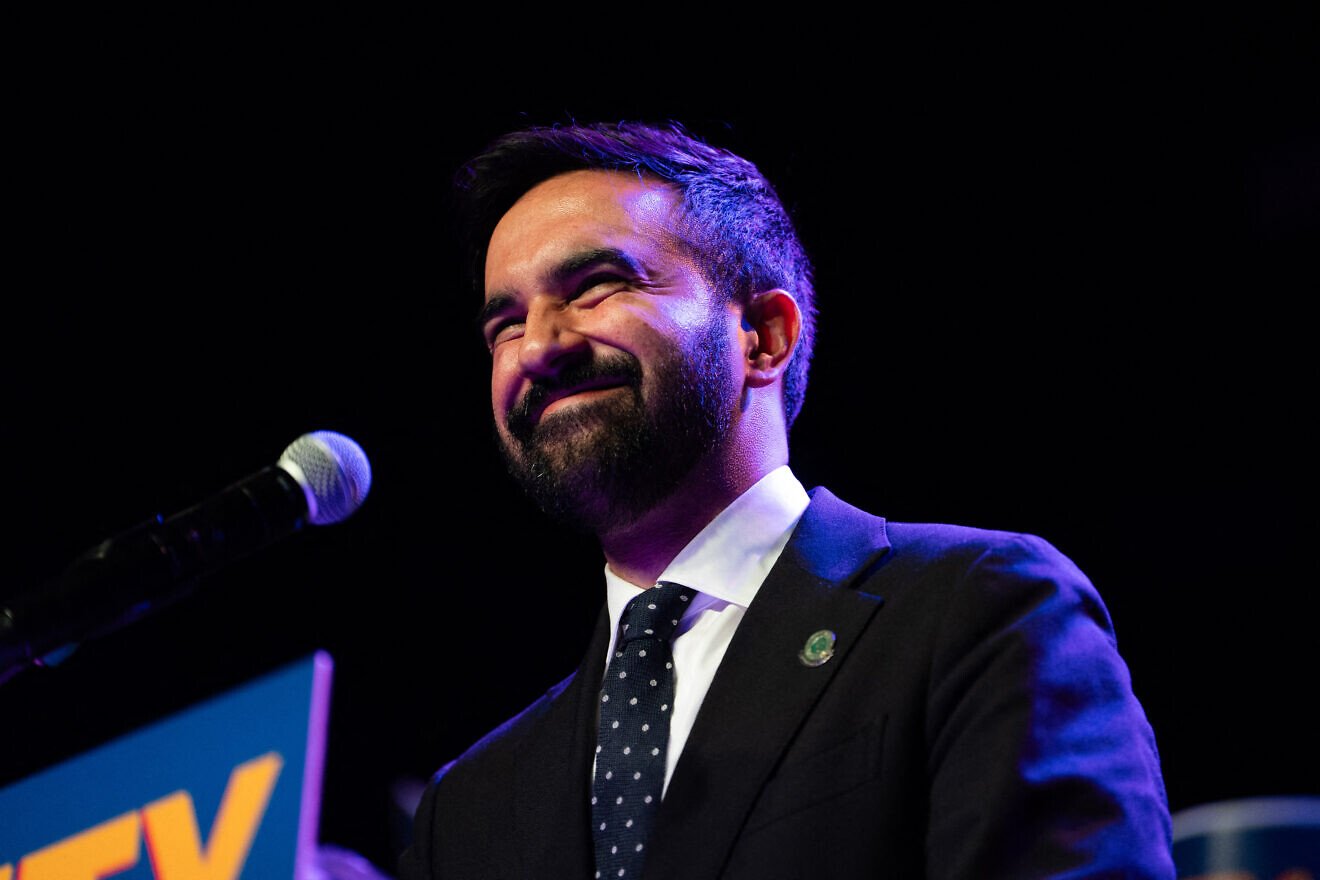
Zohran Mamdani speaks during his first major mayoral campaign rally at Brooklyn Steel in Brooklyn, N.Y., on May 2 2025. Photo by Madison Swart/Hans Lucas/AFP via Getty Images.

It was no small irony that I learned the news that Zohran Mamdani would be the Democratic candidate for mayor of New York City and the odds-on favorite to win the general election while I was in Medora, N.D., some 1,755 miles from the city of my birth.

I was born in Manhattan, grew up in the New York City area, went to college at Columbia University, and spent much of my early life in and around the city. Though it’s been many years since I resided there, I have always thought of myself as a New Yorker, regularly attending cultural events in the city and rooting for its sports teams. Rural, oil-drilling, country-music-loving North Dakota is about as far from New York in terms of culture and politics as you can get while remaining in the continental United States.

But as many American Jews were panicking about the victory of Mamdani, a far-left Socialist who sides with those who seek Israel’s destruction, being in North Dakota on a trip with members of the Council for a Secure America to learn more about the intersection of interests between supporters of Israel and those who work in the domestic energy industry turned out to be a piece of unexpected good timing. I found myself surrounded by non-Jews who are ardent supporters of the Jewish state and simply appalled by the surge in antisemitism in this country, of which events in New York City are just the latest evidence.

Tempering despair

That was both a comfort on a day when a lot of New York Jews are talking about leaving a Big Apple, as well as a reminder that the current despair about the future of American Jewry should be tempered by remembering some basic truths about the overwhelming majority of our fellow citizens who do not practice the same faith.

North Dakota is among the least ethnically diverse and one of the whitest states in the union (82.9%), as well as the reddest. President Donald Trump won the state with 67% of its votes, with only West Virginia and Wyoming giving him more support. As such, it is no more representative of the United States as a whole than deep-blue, ethnically and racially diverse New York City, where those who call themselves white make up only 31% of the population.

The truth to keep in mind this week as the country reels from the news that someone like Mamdani may well be the chief executive of its largest and most Jewish city is that North Dakotans are far closer to the national norm in terms of their attitudes toward Israel and antisemitism than the 43.5% of New Yorkers who voted for him.

Polls have shown that the vast majority of Americans have continued to oppose the hatred of Jews and attacks on them, even after the surge was set off by the Hamas-led Palestinian Arab terror attacks on southern Israeli communities on Oct. 7, 2023. And though the tsunami of anti-Israel and antisemitic propaganda about the war on Hamas and its Iranian sponsors has resulted in a decline in support for Israel, a strong plurality of Americans still back the small, beleaguered nation.

The real divide is along party lines, with Republicans—and to a lesser extent, independents—backing Israel by huge majorities. Among Democrats, support for Israel has become a minority opinion.

And that is why it is important to understand the Mamdani win as revealing more about the future of the Democratic Party, both in terms of its attitudes toward Jews and Israel, as well as a sharp turn to the left on other issues than it does about America as a whole.

As I wrote in April, in the aftermath of their 2024 defeat at the hands of Trump and the GOP, all of the enthusiasm and energy among Democrats has increasingly shifted to the hard-left intersectional wing of the party. There are still many moderate Democrats who are heavily represented among its officeholders. Among them are those like Pennsylvania Gov. Josh Shapiro (who is Jewish), who credibly aspires to the 2028 presidential nomination. And it has a few stalwart and vocal supporters of Israel, such as Sen. John Fetterman, also in Pennsylvania, and Rep. Ritchie Torres in New York.

A left-wing Democratic base

But the party’s base belongs to the hard left, especially among the younger generation of voters and politicians. It is to people like Rep. Alexandra Ocasio-Cortez (D-N.Y.), the leader of the progressive “Squad” in the U.S House of Representatives, who many Democrats are now looking for leadership. The faction of the party that was led by Sen. Bernie Sanders (I-Vt.) was bested by the party’s establishment in 2016 and 2020 when it nominated Hillary Clinton and former President Joe Biden. And it never had a chance in 2024 when the fix was in for the visibly declining incumbent, who was replaced in an undemocratic coup by Vice President Kamala Harris of California.

Mamdani’s win in New York is another sign that the party’s base belongs to those who are deeply influenced by toxic left-wing ideologies like critical race theory, intersectionality and settler-colonialism, all of which falsely label Jews and Israel as “white” oppressors. Mamdani, a Muslim who is, like AOC, a Democratic Socialist, is a former college chapter president of the anti-Israel, antisemitic Students for Justice in Palestine; a supporter of the antisemitic BDS movement; opposes the existence of Israel as a Jewish state; wants to “free Palestine” from the Jews; and won’t even admit that the phrase “globalize the intifada” is, like the ubiquitous chants of “from the river to the sea,” a call for terrorism and genocide of the Jews. Like AOC, he also subscribes to a catalog of far-left ideas about the economy and environmentalism that seek to destroy the canon of Western civilization, which would also ruin the country.

There are specific circumstances that enabled his win. The demography of New York City has shifted in the time since a Republican like Rudy Giuliani or even a moderate liberal like Michael Bloomberg won the mayoralty. A critical mass of white ethnic or working-class moderate voters has left the city and gone elsewhere for better opportunities, lower taxes, and less congestion and crime.

Incumbent Mayor Eric Adams left the Democratic Party to run as an independent after the Trump administration ended his prosecution on federal corruption charges. The fact that his most credible moderate primary opponent—former New York Gov. Andrew Cuomo, who was compromised by multiple incidents involving sexual harassment and calamitous decisions that led to the deaths of thousands during the COVID pandemic—came into the race with so much baggage may have made his victory in a multi-candidate race inevitable.

If Mamdani is to be defeated in November, Adams, Cuomo (who can run on an independent line) and Republican candidate Curtis Sliwa will have to unite, with two of them withdrawing in favor of a single candidate. Since that is highly unlikely, New York is likely to find itself governed by someone who is not merely a hard left radical, but a supporter of antisemitic and anti-Israel causes.

Redefining Jew-hatred

This will also give a boost to those on the left, including New York Times columnists Peter Beinart and M. Gessen, who seek to redefine the term “antisemitism” to allow open Jew-haters to claim that they are innocent of the charge. That this kind of gaslighting is regularly platformed in the Times—the publication that is the flagship of American liberalism as well as the most influential newspaper in New York—remains deeply concerning.

While no one thinks an election in New York City is a bellwether for American politics generally, it will put more wind in the sails of Sanders, AOC and others on the hard left who appear to be the future of the Democratic Party. Democrats seem to be prioritizing their obsessive hatred of Trump over a willingness to consider policies and candidates that might win back the sensible middle of American politics, in addition to working-class voters who have abandoned them and think of the president as their champion.

Party leaders fail

Democratic Party leaders like Majority Leader Chuck Schumer (D-N.Y.), who pretends to be the shomer or “guardian” of Israel and the Jews but is more worried about running afoul of the radical left, have made it clear that they are not going to stand up against AOC and Mamdani. Though they don’t share their beliefs, officeholders in both major parties always follow the lead of the base.

That is a shocking and disappointing development for an American Jewish community that is already reeling from an enormous increase in antisemitism that has gone mainstream in legacy media, academia, the arts and popular culture. Some younger Jews, indoctrinated by the radical left throughout their years in school, have embraced people like Mamdani and tend to rationalize his anti-Zionistic and antisemitic rhetoric. That leaves most liberal Jews, who still make up a large majority of the community, without a political home.

This means the battle against antisemitism is now largely being waged by the political right and, in particular, by Trump, who is pro-Israel and waging a much-needed war on academic institutions that have normalized antisemitism and the war on the West.

Jews are not alone

That’s a difficult truth for liberal Jews who hate the president. But it is a reminder that most Americans, whether politically moderate or residents of deep red states like North Dakota, observe the mainstreaming of antisemitism in New York with horror, and oppose people like Mamdani and other radical Democrats. And the more that the Democratic base swings to the left, the more likely it is that their party is going to continue losing national elections.

The shift among Democrats is good news for the GOP but bad news for the Jewish community. It’s also bad for the country as a whole to have one of its two major parties fall into the hands of radicals. And it represents a sea change for Jews in New York, who are now realizing that they may be better off moving to a red state like Florida. As worrisome as this is, it is also a moment for Jews to realize that they are not alone. Hard as it may be to accept that they are now under siege in institutions and cities where they once felt most at home, most Americans outside the nation’s metropolis stand by them.


Jonathan S. Tobin is editor-in-chief of the Jewish News Syndicate, a senior contributor for The Federalist, a columnist for Newsweek and a contributor to many other publications. He covers the American political scene, foreign policy, the U.S.-Israel relationship, Middle East diplomacy, the Jewish world and the arts. He hosts the JNS “Think Twice” podcast, both the weekly video program and the “Jonathan Tobin Daily” program, which are available on all major audio platforms and YouTube. Previously, he was executive editor, then senior online editor and chief political blogger, for Commentary magazine. Before that, he was editor-in-chief of The Jewish Exponent in Philadelphia and editor of the Connecticut Jewish Ledger. He has won more than 60 awards for commentary, art criticism and other writing. He appears regularly on television, commenting on politics and foreign policy. Born in New York City, he studied history at Columbia University.


Zawartość publikowanych artykułów i materiałów nie reprezentuje poglądów ani opinii Reunion’68,
ani też webmastera Blogu Reunion’68, chyba ze jest to wyraźnie zaznaczone.
Twoje uwagi, linki, własne artykuły lub wiadomości prześlij na adres:
webmaster@reunion68.com

US Justice Department Warns of Threats to Jewish Targets as Concern Mounts Over Iranian Sleeper Cells

US Justice Department Warns of Threats to Jewish Targets as Concern Mounts Over Iranian Sleeper Cells

Ailin Vilches Arguello


Iran’s Supreme Leader Ayatollah Ali Khamenei listens to the national anthem as Air Force officers salute during their meeting in Tehran, Iran, Feb. 7, 2025. Photo: Office of the Iranian Supreme Leader/WANA (West Asia News Agency)/Handout via REUTERS

The US Department of Justice is closely tracking potential threats to the Jewish community nationwide amid growing concerns over Iranian sleeper cells launching attacks and fallout from recent American and Israeli military strikes on Iran’s nuclear facilities.

On Wednesday, US Attorney General Pam Bondi reiterated the Trump administration’s recent warnings about potential Iran-linked sleeper cells and domestic radicalization, following escalating tensions in the Middle East during the 12-day Iran-Israel war.

During her testimony on Capitol Hill, Bondi reassured lawmakers that all federal agencies are working around the clock to keep Americans safe and are closely monitoring any potential national security threats.

Sleeper cells are covert operatives or terrorists embedded in rival countries who remain dormant until they receive orders to act and carry out attacks.

“Iran, of course, is a threat. They have been a threat, and they always will be a threat to our country,” Bondi said in her testimony. “And we are working hand in hand with all of our agencies to protect Americans and to keep us safe.”

Tehran’s ability to coordinate or inspire attacks on American soil has long been a concern for US law enforcement and intelligence officials — a fear that only deepened after US President Donald Trump ordered the assassination of Iranian General Qasem Soleimani in 2020.

According to Janatan Sayeh, a research analyst at the Foundation for Defense of Democracies (FDD), a Washington, DC-based think tank, the threat from sleeper cells remains credible due to the Iranian regime’s ongoing desire to avenge Soleimani’s death.

“Tehran takes its reputation seriously and holds long-standing grudges,” Sayeh told The Algemeiner. “Its defeat in the recent 12-Day War, when top generals, nuclear scientists, and major nuclear infrastructure were lost, will likely deepen its motivation to retaliate, including the possibility of action on US soil.”

Last weekend, US Immigration and Customs Enforcement (ICE) agents arrested a former member of Iran’s Islamic Revolutionary Guard Corps (IRGC) with suspected Hezbollah ties, a former Iranian army sniper, and a terror watchlist suspect during a sweep targeting illegal Iranian migrants across the country. Both the IRGC and Hezbollah, an Iranian proxy based in Lebanon, are US-designated terrorist organizations.

When entering the US, Iranian migrants are flagged as “special interest aliens” and undergo heightened federal screening for possible terrorism ties, given Washington’s designation of Tehran as a state sponsor of terrorism.

In last weekend’s ICE operation, five of the 11 Iranians arrested had prior criminal convictions, including grand larceny as well as drug and firearm possession.

Bondi noted that the administration had arrested 1,500 undocumented Iranian immigrants in the US, saying she would discuss the issue further in a classified setting.

“Have they invaded our country? Absolutely,” Bondi said.

For decades, Iran and its proxy Hezbollah have established a strong foothold in the Western Hemisphere, leveraging alliances with governments such as Cuba, Venezuela, and Nicaragua to expand their influence and support terrorist operations and illicit activities.

Backed by Tehran with an estimated $700 million in annual funding, Hezbollah is regarded by experts as the world’s most technically sophisticated terrorist organization, although the group suffered severe losses during its war with Israel last year. Active in at least 15 US cities, the Islamist movement was responsible for more American deaths than any other terrorist group prior to 9/11.

“While the [Iranian] regime often tries to obscure its role to deflect responsibility, that effort doesn’t always succeed, especially given how deeply Israel has penetrated its intelligence apparatus,” Sayeh told The Algemeiner.

“To hedge against these vulnerabilities, Tehran has strengthened ties with Western criminal networks. This allows the regime to distance itself from the assassination and terror plots it orchestrates,” he continued.

Following the US strikes on Iran’s nuclear sites, law enforcement agencies across the country have ramped up surveillance of Iran-backed operatives amid growing fears of retaliation.

Beyond facilitating illicit financing, these operatives act as sleeper agents, poised to carry out terrorist attacks on US soil on behalf of Iran if given such an order.

According to NBC News, Iranian officials warned Trump during last week’s G7 summit that they would deploy “sleeper cells” to carry out attacks on American soil if Washington decided to strike.

Although no specific or credible threats have yet emerged, US Customs and Border Protection says the threat of sleeper cells has “never been higher.”

But this is far from a recent development. It’s an ongoing pattern, with Iranian and Hezbollah agents repeatedly documented over the past two decades surveilling and collecting intelligence on multiple targets throughout the US.

“Tehran has a record of using Iranian nationals to carry out assassination plots and attacks inside the United States,” Sayeh told The Algemeiner. “These operations are typically run by either the Ministry of Intelligence or the IRGC, often through coordination between specialized departments.”

One notable case is the foiled 2011 plot in which US authorities uncovered an Iranian plan to assassinate the then-Saudi ambassador to the US by bombing Café Milano, a Washington, DC, restaurant frequented by American officials.

In May 2023, the Justice Department announced that Alexei Saab, 46, was sentenced to 12 years in prison followed by three years of supervised release for receiving military-type training from Hezbollah, marriage fraud, and making false statements.

In 2000, Saab entered the United States, where he lived while remaining a Hezbollah operative who “continued to receive military training in Lebanon and conducted numerous operations.” According to law enforcement and Saab’s own admission, he surveilled various “soft targets” in the US for potential future attacks.

One Hezbollah operative told the FBI during interviews in 2016 and 2017 that if the US and Iran went to war “the US sleeper cell would expect to be called upon to act.” That operative, Ali Mohamed Kourani, and another Hezbollah member were carrying out preoperational surveillance for potential Hezbollah attacks in the US and Panama, according to federal prosecutors.


Zawartość publikowanych artykułów i materiałów nie reprezentuje poglądów ani opinii Reunion’68,
ani też webmastera Blogu Reunion’68, chyba ze jest to wyraźnie zaznaczone.
Twoje uwagi, linki, własne artykuły lub wiadomości prześlij na adres:
webmaster@reunion68.com

Wyobraź sobie, że Hitler pozostał nietknięty


Wyobraź sobie, że Hitler pozostał nietknięty

Joshua Hoffman
Tłumaczenie:  ChatGPT and Andrzej KOraszewski


Pozwolić najwyższemu przywódcy Iranu, Alemu Chameneiemu, wyjść z tej wojny bez szwanku to jak pozwolić Hitlerowi wycofać się do Berlina w 1944 roku — z poturbowaną armią, ale z nietkniętą ideologią.

Czy potrafisz wyobrazić sobie świat, w którym architekci ludobójstwa mogą działać dalej bezkarnie — nadal trzymają się władzy i wciąż wierzą, że mieli rację?

To nie jest alternatywna historia. To ostrzeżenie.

Bo po 12-dniowej wojnie między Izraelem a Iranem właśnie z takim scenariuszem flirtuje dziś świat. Najwyższy Przywódca Iranu, Ali Chamenei, przeżył. Jego reżim nadal jest chroniony. Jego machina propagandowa nadaje. Jego Gwardia Rewolucyjna nadal maszeruje. Jego rakiety mogą być osłabione, jego zastępcze siły zdezorientowane, jego program nuklearny cofnięty — ale on sam pozostaje nietknięty.

I to jest poważny błąd.

W latach 30. XX wieku świat odwracał wzrok od rosnącego zagrożenia. Neville Chamberlain spotkał się z Adolfem Hitlerem, uśmiechnął się do kamer i wrócił do domu machając kartką papieru, która miała rzekomo gwarantować „pokój dla naszych czasów”.

Ale celem Hitlera nigdy nie był pokój — tylko podbój, dominacja i ludobójstwo. Wszystkie sygnały były obecne: Mein Kampf, prześladowania Żydów, remilitaryzacja Nadrenii, aneksja Austrii. Ale przywódcy woleli złudzenia niż konfrontację.

Hitlerowi dano czas. A z czasem zbudował machinę śmierci na gigantyczną skalę.

Ali Chamenei też dostał czas — ponad trzy dekady. W tym czasie zbudował nielegalny program nuklearny, finansował światowy terroryzm i eksportował fundamentalistyczną ideologię, która rozpala wojny zastępcze od Bejrutu po Bagdad i Sanę. Jego slogany — „Śmierć Ameryce!”, „Śmierć Izraelowi!” — to nie metafory. To deklaracje misji.

Przez dziesięciolecia społeczność międzynarodowa traktowała irański reżim jak problem do zarządzania, a nie zagrożenie do zneutralizowania. Ale Iran pod rządami Chameneiego nie pozostał w swoim pudełku — on podpalił cały region. Polityka powstrzymywania nie działa, gdy reżim żywi się śmiercią.

Nie miejmy złudzeń: Chamenei to Hitler naszego pokolenia. I tak jak Hitler, największe zagrożenie stanowi nie w broni, którą posiada, lecz w ideologii, którą dowodzi. Jego reżim, oparty na radykalnym szyickim mesjanizmie, wierzy w doprowadzenie do globalnej katastrofy, która ma przynieść boskie zbawienie. Nie da się odstraszyć człowieka, który chce podpalić świat.

Oczywiście, od razu słychać kontrargument: „Nie można porównywać Chameneiego do Hitlera. Hitler zabił sześć milionów Żydów. Chamenei nie.”

Bądźmy szczerzy, dlaczego tak jest: nie dlatego, że Chamenei nie chciał — tylko dlatego, że nie mógł. Bo tym razem Żydzi mają F-35. Mają jednostki cybernetyczne, systemy obrony przeciwrakietowej, okręty podwodne, satelity, siły specjalne, wyjątkowy wywiad i broń nuklearną.

Hitler uderzył najpierw w Żydów bezpaństwowych i bezbronnych. Chamenei najpierw uderzył w państwo żydowskie — uzbrojone, nieustępliwe i niechętne do cichej śmierci. I to jest jedyna różnica.

Więc nie, Chamenei nie zamordował sześciu milionów Żydów — ale do tego wzywa. To finansuje. To zbroi. O tym marzy. Nazywa Izrael „rakiem, który trzeba wyciąć”: „Reżim syjonistyczny to nowotwór, który bez wątpienia zostanie wykorzeniony i zniszczony” — powiedział w 2020 roku.

Co więcej, otacza Izrael organizacjami terrorystycznymi w Libanie, Syrii, Gazie i na Zachodnim Brzegu — i uzbraja je po zęby, instruując tamtejszych „przywódców”, by uczyli dzieci, że męczeństwo to najwyższa cnota, a Izrael musi zostać zniszczony. Na domiar złego irańskie podręczniki szkolne promują męczeństwo i dżihad od najmłodszych lat — tak jak Hitlerjugend uczyła chłopców umierać za Führera.

Dowodzi Korpusem Strażników Rewolucji Islamskiej — paramilitarnym imperium, które nie tylko brutalnie tłumi opozycję wewnętrzną, ale eksportuje terror za granicę. Elitarna jednostka Al-Kuds (część Korpusu) to w zasadzie globalna agencja terrorystyczna działająca w Iraku, Syrii, Libanie, Jemenie, Gazie i dalej. Jak SS, są fanatycznie lojalni wobec Najwyższego Przywódcy i działają ponad prawem.

Zajmuje ziemie na całym Bliskim Wschodzie, by otoczyć dwóch samookreślonych wrogów irańskiego reżimu (Izrael i Arabię Saudyjską), rozwijając przy tym komórki terrorystyczne w Europie i Ameryce Północnej. Ekspansjonizm Iranu jest wolniejszy i subtelniejszy niż blitzkrieg Hitlera, ale równie celowy — i o wiele bardziej globalny.

Wykonuje egzekucje na dysydentach politycznych, więzi dziennikarzy, cenzuruje internet i brutalnie tłumi protesty kobiet i studentów. Jego reżim zabił tysiące Irańczyków tylko za to, że domagali się podstawowych praw — tak jak reżim Hitlera mordował Niemców i mniejszości.

Radykalizuje społeczności muzułmańskie w diasporze, finansuje meczety i ośrodki w Europie i Ameryce Łacińskiej, które promują ideologię Chomeiniego, oraz werbuje komórki terrorystyczne za granicą. Jego bojówki nie walczą tylko na Bliskim Wschodzie — planują ataki w Buenos Aires, Bułgarii, Francji i dalej.

Od dziesięcioleci próbuje zbudować broń nuklearną. Już samo to może czynić Chameneiego groźniejszym. Hitler musiał najeżdżać kraje i budować obozy; Chamenei chce mieć bombę, by dokończyć dzieło w sekundę.

Neguje Holokaust, a zaraz potem grozi kolejnym. Intencja, przygotowanie i możliwość — tak definiuje się zagrożenie. Chamenei ma dwie pierwsze. Jedyną przeszkodą jest siła Izraela.

Najgorsze jest to, że pełni funkcję „najwyższego przywódcy” od 1989 roku. To ponad 35 lat. Ma o 23 lata więcej niż Hitler na zatruwanie umysłów, budowanie sojuszy i przekształcanie regionu według wizji swojego reżimu.

A mimo to Chamenei nadal żyje i rządzi, bo Zachód jak zwykle szepcze swoje obawy: „Zmiana reżimu to skomplikowana sprawa.” „To, co przyjdzie po nim, może być gorsze.” „Nie wybiegajmy za bardzo do przodu.” I tak wracamy do starego frazesu: lepszy diabeł, którego znamy, niż ten, którego nie znamy.

Ale czy dziś ktokolwiek twierdziłby, że świat byłby lepszy, gdyby Hitler pozostał u władzy? Czy ktoś powiedziałby, że należało go zostawić w spokoju, bo jego usunięcie mogło wywołać chaos?

Oczywiście, że nie.

Świat stał się bezpieczniejszy, gdy Hitler zniknął. Tak samo będzie, gdy zniknie Chamenei. Irańczycy nie są naszymi wrogami; wielu z nich ryzykowało życiem protestując przeciwko Chameneiemu, krzycząc na ulicach „śmierć dyktatorowi”. Są ofiarami, nie winowajcami. Zakończenie reżimu byłoby wyzwoleniem, a nie inwazją.

Poza tym Bliski Wschód zasługuje na szansę pokoju bez sznurków pociąganych przez ajatollaha. Wyobraź sobie Bliski Wschód, w którym dzieci w Libanie dorastają bez rakiet Hezbollahu nad głowami, gdzie irackie miasta nie są bazami dla szyickich bojówek, gdzie Jemen się odbudowuje, a Gaza należy do marzycieli, nie do terrorystów. Taki świat jest możliwy tylko wtedy, gdy żelazny uścisk irańskiej teokracji zostanie złamany. A to zaczyna się od zakończenia panowania Chameneiego.

Tymczasem rzeczywistość wygląda tak: od Izraela wymaga się wyższych standardów prowadzenia wojny niż od Iranu — podstawowych standardów człowieczeństwa. Chamenei finansuje szkolenie dzieci-żołnierzy w Jemenie, morderczo dyskryminuje kobiety i wzywa do ludobójstwa — a mimo to Izraelowi mówi się: „Nie zrzucajcie bomb. Jeśli to zrobicie, to poważne naruszenie. Sprowadźcie pilotów do domu, natychmiast.”

Powiedzmy to jasno: powściągliwość też ma swoją cenę. Moralne zamglenie również. Pozwolenie, by teokratyczny ludobójca wyszedł z wojny żywy, nie jest oznaką dojrzałości. To akt zaniedbania.

Świat już wie, co się dzieje, gdy nienawiść zakorzenia się w salonach władzy. Nie potrzebujemy więcej lekcji historii. Potrzebujemy odwagi, by zastosować te, które już poznaliśmy.

86-letni Chamenei nie powinien umrzeć ze starości. Nie powinien przekazać władzy kolejnemu fanatykowi. Nie powinien mieć szansy na odbudowę, dozbrojenie i odzyskanie siły. Opóźniona sprawiedliwość to nie sprawiedliwość. To przyzwolenie.

W 2025 roku Izrael zrobił to, czego nikt inny nie odważył się zrobić. Zadziałał prewencyjnie — po raz kolejny — i przypomniał światu, że bezpieczeństwo Żydów nie podlega negocjacjom. Ale ta odwaga musi przynieść dojrzały owoc.

Pozwolić Chameneiemu wyjść z tej wojny to jak pozwolić Hitlerowi wycofać się do Berlina w 1944 roku — z poturbowaną armią, ale z nietkniętą ideologią. To nie czas na ugodowość. To czas na odważne przywództwo.

Świat cywilizowany nie może sobie pozwolić na to, by pozostawić Hitlera naszych czasów nietkniętym.


Joshua Hoffman, przedsiębiorca, autor książki “Journeys of the Jewish Spirit”.


Zawartość publikowanych artykułów i materiałów nie reprezentuje poglądów ani opinii Reunion’68,
ani też webmastera Blogu Reunion’68, chyba ze jest to wyraźnie zaznaczone.
Twoje uwagi, linki, własne artykuły lub wiadomości prześlij na adres:
webmaster@reunion68.com