
IDF Says Iran Strikes May Wrap in ‘One or Two Weeks’ as Speculation Swirls Over US Role

IDF Says Iran Strikes May Wrap in ‘One or Two Weeks’ as Speculation Swirls Over US Role

Debbie Weiss


US President Donald Trump speaks at the White House in Washington, DC, US, June 12, 2025. Photo: REUTERS/Evelyn Hockstein

Amid ongoing Israeli airstrikes and Iranian missile launches on Tuesday and estimations by Jerusalem that its campaign would end soon, debate intensified over whether the United States would enter the conflict in the 90th hour, with experts divided on how far Washington may go. 

Backchannel efforts suggest the regime in Iran is seeking off-ramps, with the Wall Street Journal on Monday reporting that Iranian diplomats had “signaled” through Arab intermediaries their willingness to return to negotiations.

But US President Donald Trump has publicly dismissed the prospect of a negotiated ceasefire.

“We’re not looking for a ceasefire,” he said, but rather for a “real end” to Iran’s nuclear ambitions. After two months of stalled negotiations, he added, “I’m not in the mood to negotiate.”

Trump later posted a message on social media that read “UNCONDITIONAL SURRENDER!” without elaborating, further fueling speculation that the US may take military action against Iran or at least not stop Israel from fully completing its campaign.

Military officials said Tuesday that Israel expects its current campaign targeting Iran’s nuclear program to meet its primary objectives “within one to two weeks.” Its aim — to eliminate what Israel views as the core threat posed by both Tehran’s nuclear weapons efforts and its long-range missile capabilities — would be fulfilled by then, Israel Defense Forces (IDF) brass said.  

Since the start of the operation, Israeli strikes have hit multiple elements of Iran’s nuclear infrastructure. According to the officials, the attacks have caused extensive damage at two major enrichment sites — Natanz and Isfahan — and eliminated at least nine senior nuclear scientists involved in bomb development. Additional strikes have targeted facilities supporting the program, including command nodes and administrative offices tied to Iran’s nuclear operations. Israeli strikes have also taken out 40 percent of Iran’s ballistic missile launchers and destroyed 70 Iranian air defense batteries since the start of the campaign on Thursday night.

One potential target that Israel has so far not hit is Iran’s supreme leader, Ayatollah Ali Khamenei. However, Trump noted on social media on Tuesday that could change.

“We know exactly where the so-called ‘Supreme Leader’ is hiding. He is an easy target, but is safe there – We are not going to take him out (kill!), at least not for now,” Trump posted. “But we don’t want missiles shot at civilians, or American soldiers. Our patience is wearing thin.”

Jonathan Ruhe, director of foreign policy at the Jewish Institute for National Security of America, said Trump’s recent military posturing might be designed to strengthen US leverage rather than signal imminent intervention.

“Trump has shown an inclination to always want to play peacemaker, staying above the fray and bringing both sides together when he believes US available leverage is at a maximum,” Ruhe told The Algemeiner.

Ruhe added that Trump’s increasingly explicit threats to join the war was “one more way to try to build US leverage against Iran.”

Eyal Hulata, Israel’s former national security adviser, voiced skepticism about American involvement. “I’d be very surprised if the Americans join the war themselves,” he said on call with reporters on Tuesday. “Israel is proving that it’s pretty much capable of handling the situation so far.”

Hulata noted, however, that US calculations could shift if Iran followed through on threats to strike American personnel or energy infrastructure in Gulf states like Saudi Arabia or the UAE. “That will change the American calculus,” he said.

While Israel continued its strikes in its so-called Operation Rising Lion, reports surfaced that senior Islamic Revolutionary Guard Corps (IRGC) leaders were abandoning their posts. The IRGC, an Iranian military force and internationally designated terrorist organization, also reportedly controls a substantial portion of Iran’s oil industry and broader economy.

Ruhe cautioned that the collapse of the Islamic Republic, if it came, would not follow a linear trajectory. “Regime collapse is always gradual until it’s sudden,” he said. “One key factor determining whether regimes disintegrate or survive is not whether the people take to the streets and protest and conduct subversion — which we’re already seeing initial indications of — but whether the security services decide to fire on them and try to put them down or whether they drop their guns and melt into the crowds, disobey orders, or simply flee. That second factor is now very much in play.”

While the heavy losses suffered by the Revolutionary Guards, particularly among senior commanders, could spark defections or widespread disorder that might prevent the regime from suppressing uprisings, Ruhe cautioned that Iran’s internal security apparatus remained significantly more “robust, pervasive, and capable” than the non-state actors Israel has confronted over the past two years, like Hamas and Hezbollah.

“It’s also very possible, amid all this chaos, that the regime doesn’t so much disintegrate as fracture and we see an abrupt turnover in leadership in which the clerics, including supreme leader [Ali] Khamenei, give way to a more militarized government of IRGC diehards willing to fight on no matter the cost.”

Divisions remain within the US intelligence community over how close Iran actually was to a bomb. A CNN report published Tuesday, citing American intelligence, estimated that Tehran was “up to three years away” from building a nuclear weapon.

However, a White House assessment released Tuesday to counter the CNN report cited CENTCOM Commander Gen. Erik Kurilla as saying that Iran was “mere steps” from weapons-grade uranium enrichment. Iran had amassed 400 kilograms of uranium enriched to 60 percent purity, close to the roughly 90 percent of weapons grade — double its stockpile from six months earlier. According to the White House, if Tehran accelerated enrichment, it could produce one bomb within a week and as many as ten within three weeks.

A recent analysis by the Institute for Science and International Security found that if Iran chooses to “break out” toward a bomb, it would have enough highly enriched uranium at two of its main facilities, Fordow and Natanz, “for 11 nuclear weapons in the first month, enough for 15 nuclear weapons by the end of the second month, 19 by the end of the third month, 21 by the end of the fourth month, and 22 by the end of the fifth month.”

Ruhe noted that even before reaching full weapons-grade enrichment, Iran had accumulated enough material to assemble a crude device that could be used for a test with its existing stockpiles of 60 percent enriched uranium.

This sense of urgency was sharpened by increasing calls from Iran’s security establishment, including advisors to the supreme leader, to “simply finish the bomb very quickly,” Ruhe said. Ruhe also pointed to the risks of misjudging Iran’s timeline. Israel had long assumed Iran would complete enrichment first and only then move to weaponization over the course of months or years. But Tehran increasingly pursued both tracks in parallel, and, as Ruhe noted, one lesson from past breakouts is that there may never be a “clear and detectable ‘go’ order from the top leadership to finish the bomb.”

“Israel’s increasing sense of urgency to strike after the horrors of Oct. 7 reflects its new security calculus where there is no margin of error to assume they could detect the last turn of the screwdriver on a bomb with enough time to act and to stop it,” he continued.

This was also a key reason behind Israel’s decision to strike Iran’s scientific brain trust in addition to its known nuclear facilities.

For his part, Hulata highlighted the asymmetric warfare Israel wages with its adversaries and the difference between Israel’s precision targeting and Iran’s indiscriminate missile barrages against civilians. “When it’s Hamas, then people say well it’s a terror organization so what do you expect, but Iran is a serious country,” he said. Even so, he continued, “the damage to Israel in this conflict so far is way below what we all would have expected.”


Zawartość publikowanych artykułów i materiałów nie reprezentuje poglądów ani opinii Reunion’68,
ani też webmastera Blogu Reunion’68, chyba ze jest to wyraźnie zaznaczone.
Twoje uwagi, linki, własne artykuły lub wiadomości prześlij na adres:
webmaster@reunion68.com


Chirurgiczny atak na tyranię islamistyczną


Chirurgiczny atak na tyranię islamistyczną

Brendan O’Neill
Tłumaczenie: Małgorzata Koraszewska


Odważny atak Izraela na Iran zadał druzgocący cios barbarzyńskiemu, wojowniczemu reżimowi.


Świat obudził się do wiadomości o dekapitacji. W piątek wczesnym rankiem, czasu izraelskiego, siły powietrzne państwa żydowskiego uderzyły ze zdumiewającą precyzją w tyranów i infrastrukturę reżimu irańskiego. Najważniejsi przywódcy republiki islamskiej zostali wyeliminowani. Jej obiekty nuklearne zostały zredukowane do spopielonych ruin. Nikt nie może sobie pozwolić na luksus politycznej obojętności w tej chwili, a tym bardziej na moralne tchórzostwo, które maskuje się jako pacyfizm. Stawka jest zbyt wysoka. Wydarzenia zmuszają nas do wyrwania się z beztroski i opowiedzenia się po którejś stronie.

Z tego, co wiemy, wydaje się, że był to jeden z ataków na wrogi reżim wykonanych z największą chirurgiczną precyzją w dotychczasowej historii wojen. Te zdjęcia apartamentowców całkowicie nienaruszonych, z wyjątkiem piętra, na którym mieszkał któryś z irańskich despotów, są świadectwem precyzji śmiałego nalotu Izraela. Lista zabitych jest osłupiająca. Należą do nich generał Mohammad Bagheri, szef sztabu wojskowego, i Hossein Salami, przywódca Strażników Rewolucji Islamskiej. Wyobraźcie sobie radość rodzin 500 młodych ludzi, których zamordowały zbiry Salamiego w 2022 r. za zbrodnię wyznawania poglądu, że kobiety zasługują na „życie i wolność”.

Tak po prostu, nie ma już dwóch głównych wojskowych autokratów reżimu. Człowiek odpowiedzialny za mordercze, imperialne przedsięwzięcia zagraniczne Iranu (Bagheri) i człowiek oskarżony o egzekwowanie nieprzejednanych dyktatów republiki przeciwko jej własnym marzącym o wolności obywatelom (Salami) nie istnieją już. Zaledwie w tym tygodniu Salami powiedział: „Nasza następna konfrontacja z Izraelczykami będzie o wiele bardziej miażdżąca, dewastująca i destrukcyjna”. Tak, ale dla ciebie.

Inni przywódcy wojskowi również zostali zabici. Podobnie jak naukowcy zajmujący się budową bomb atomowych, w tym Fereydoun Abbasi-Davani, były szef irańskiej Organizacji Energii Atomowej. Izrael twierdzi, że ci reżimowi naukowcy rozwijali „program jądrowy” dla „celów wojskowych”. Bezlitośnie dążyli do „zamiany uranu w bomby”. Rzeczywiście, głównym uzasadnieniem operacji Powstający Lew, jak nazwano misję, było „wyeliminowanie irańskiego zagrożenia nuklearnego”.

Naturalnie, biorąc pod uwagę, że jest to przedsięwzięcie militarne państwa, które celebryci i aktywiści uwielbiają nienawidzić, operacja Izraela już teraz jest owiana fałszywą narracją i krzykliwym potępieniem. Izrael jest „zbójeckim” krajem, który rozpoczął „niesprowokowany” atak na biedny Iran, krzyczą moralnie zagubieni lewicowcy z Zachodu. Powtarzają za samym reżimem irańskim, który napisał na Twitterze: „Pamiętajcie, że to nie my to zainicjowaliśmy”. Przepraszam za język, ale tak, kurwa, to wy zaczęliście. Wy to zainicjowaliście, kiedy sponsorowaliście największe masowe morderstwo Żydów od czasów nazistów i największe wygnanie Żydów od czasów wojen arabskich w latach 40.

To najemnik reżimu irańskiego, Hamas, rozpoczął obecną wojnę w Gazie, wysyłając armię 6000 uzbrojonych faszystów, żeby gwałcili izraelskie kobiety i mordowali izraelskie rodziny. I to najemnik reżimu irańskiego, Hezbollah, jeszcze bardziej podgrzał atmosferę codziennymi bombardowaniami północnego Izraela, które zmusiły 60 tysięcy Izraelczyków do opuszczenia swoich domów – największa liczba Żydów uciekających od wojny od czasu skutków wojny arabsko-izraelskiej z 1948 roku. Wykrztuś to wreszcie: Iran rozpoczął tę wojnę.

Izrael jest teraz oskarżany o „eskalację” napięć. Dlaczego jest to eskalacja, gdy państwo żydowskie likwiduje generała reżimu irańskiego, ale nie, gdy sojusznicy tego generała porywają matkę i jej dwójkę dzieci za „zbrodnię” bycia Żydami w Ziemi Świętej? Ci, którzy bardziej załamują ręce nad śmiercią generała Mohammada Bagheriego niż nad śmiercią Shiri, Ariela i Kfira Bibas, utracili prawo do tytułu przyzwoitych ludzi. Stanęli po jednej stronie, nawet jeśli odmawiają przyznania tego: po stronie islamo-faszyzmu przeciwko narodowi żydowskiemu.

Pokaż mi jedno państwo na Ziemi, które tolerowałoby istnienie pobliskiego reżimu, który wysłał swoich najemników, żeby gwałcili i mordowali twój naród i przysiągł ci unicestwienie. Izrael ma rację, mówiąc, że reżim irański „dąży do zniszczenia państwa Izrael, co nie tylko jest ideą, ale wiążącą dyrektywą”. Wynika to jasno z oświadczeń Iranu, jego terroryzmu i wywoływania wojen. Ci, którzy mówią o operacji Izraela jako o „wojnie o zmianę reżimu”, sprytnie porównując ją do daremnych, lekkomyślnych wojen mocarstw zachodnich w Iraku, Afganistanie i Libii, są po prostu dwulicowi. Izrael ostrożnie atakuje reżim, który go zaatakował, a nie gwałtownie wkracza do odległego kraju w pogoni za ulotnym moralnym popisem dla pokazania własnej ważności w świecie rozpadającego się ładu.

Obie strony muszą teraz „zachować powściągliwość”, mówią przywódcy Europy z mazgajowatym konformizmem. „Wzywamy wszystkie strony do wycofania się”, mówi Keir Starmer. Wolimy nie zauważać faktu, że Izrael zachowuje powściągliwość i przeprowadza precyzyjne ataki, zamiast naśladować śmiertelnie infantylny „szok i przerażenie”, które Wielka Brytania i Ameryka stosowały w Iraku z tak niszczycielskim skutkiem. Powiedzmy to bardziej dosadnie, wzywanie Izraela do „zachowania powściągliwości” wobec reżimu, który sponsorował faszystowską rzeź przeciwko Żydom, wywołuje mdłości.

Można sobie wyobrazić Starmera i resztę wydających tchórzliwe okrzyki w każdym kryzysowym momencie historii ludzkości. Do Ameryki po Pearl Harbor lub do Wolnej Armii Francuskiej po nazistowskim podboju Francji: „Okażcie powściągliwość. Cofnijcie się. Nie róbcie niczego zbyt ryzykownego”. To moralne tchórzostwo przebrane za dyplomację, brak kręgosłupa w szacie zwolennika pokoju. Jeszcze gorzej jest na tak zwanej lewicy, która wyraźnie wzywa Izrael i tylko Izrael do złożenia broni. To, że ci ludzie teraz wylewają łzy z powodu zabicia islamistycznych tyranów przez Izrael, potwierdza, że to nie tragiczna śmierć palestyńskich cywilów przerażała ich w wojnie w Gazie – byli oburzeni zuchwałością państwa żydowskiego, które śmiało bronić się przed swoimi wrogami. Ich „pacyfizm” maskuje obrzydliwie obojętną postawę wobec mordowania Żydów przez fanatyków religijnych.

Wojna jest okropna i czasami jest konieczna. Konfrontacja Izraela z republiką islamską jest cynicznie wykorzystywana przez amerykańskich jastrzębi wojennych, którzy od dawna marzą o zemście za upokorzenia, jakich USA doznały podczas rewolucji irańskiej. I jest cynicznie potępiana jako przestępstwo przez lewicowców, którzy wydają się wierzyć, że każdy akt żydowskiej samoobrony jest z definicji zbrodnią wojenną. Reszta z nas ma moralny obowiązek wznieść się ponad cały ten narcystyczny bełkot i odpowiedzieć na następujące pytanie: czy jesteśmy po stronie reżimu, który sponsoruje masowe mordy Żydów, eksport islamistycznego terroru i brutalne represje wobec kobiet i homoseksualistów, czy też po stronie Izraela? Wiem, co ja odpowiedziałem.


Brendan O’Neill – brytyjski dziennikarz, redaktor naczelny magazynu „Spiked” , autor głośnej książki A Heretic’s Manifesto: Essays on the Unsayable.


Zawartość publikowanych artykułów i materiałów nie reprezentuje poglądów ani opinii Reunion’68,
ani też webmastera Blogu Reunion’68, chyba ze jest to wyraźnie zaznaczone.
Twoje uwagi, linki, własne artykuły lub wiadomości prześlij na adres:
webmaster@reunion68.com

Israel Just Ended China’s Great Power Status in the Middle East

Israel Just Ended China’s Great Power Status in the Middle East

Gordon G. Chang


  • “There were some very, very relieved people in the Gulf as the sun rose this morning…. The Saudis know that China had armed their enemy Iran with nukes and lesser weapons and fully backed the Houthis, who have been waging war on the Kingdom for years.” — Jonathan Bass, Chief Executive Officer, Argent LNG, to Gatestone Institute, June 13, 2025.
  • “The Chinese state is only as strong as its main energy provider, and that main energy provider, which so far has not been able to counter Israeli strikes, is unlikely to survive this war in its current form.” — Brandon Weichert, author of The Shadow War: Iran’s Quest for Supremacy, to Gatestone Institute, June 13, 2025.
  • “With the loss of Syria and Hezbollah, Iran no longer has a command and control center in Damascus, only a two hour drive from Beirut. That means China can no longer manipulate events there.” — Jonathan Bass, to Gatestone Institute, June 13, 2025.
  • China has a Trump problem in the wider region as well. With the exception of Iran, almost everybody, including Iran’s partner Qatar, seems to love the American president. Trump took the Gulf by storm in his three-nation — Saudi Arabia, Qatar, and the United Arab Emirates — trip in May.

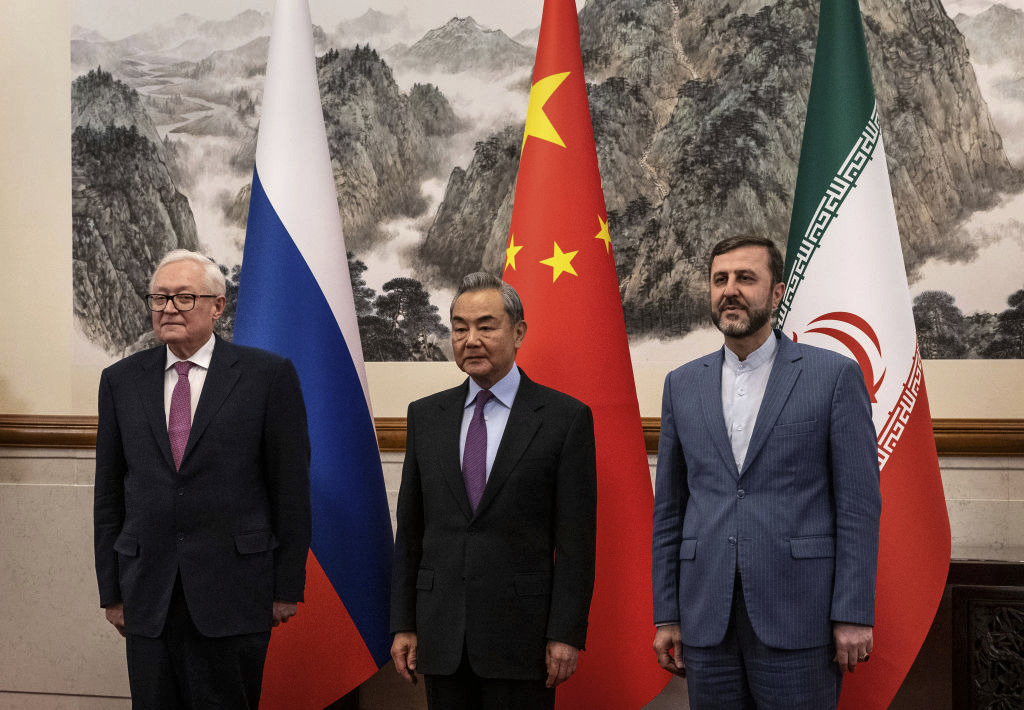
Narratives will change as the fighting between Iran and Israel continues, but one conclusion is already evident: China, Iran’s long-time backer, is a victim of the fighting. That is a quick reversal of fortunes. Only last year, the Chinese looked ascendant in the region. Pictured: Chinese Foreign Minister Wang Yi (C), Russian Deputy Foreign Minister Sergey Ryabkov (L) and Iranian Deputy Foreign Minister Kazeem Gharibabadi meet on March 14, 2025 in Beijing. (Photo by Getty Images)

Israeli air and drone strikes during the early hours of June 13th crippled Iran — and severely set back Tehran’s regional ambitions. The Israel Defense Forces hit nuclear weapons development facilities and ballistic missile sites, and killed senior military officers, including Major General Mohammad Bagheri, the armed forces chief of staff, and Major General Hossein Salami, the commander-in-chief of the Islamic Revolutionary Guard Corps (IRGC).

Iranian media announced the death of Ali Shamkhani, Supreme Leader Ayatollah Ali Khamenei’s top adviser.

Tehran said that Israel’s action was a “declaration of war.” This war is continuing, and Iran has struck back with ballistic missile and drone attacks.

Narratives will change as the fighting continues, but one conclusion is already evident: China, Iran’s long-time backer, is a victim of the fighting. That is a quick reversal of fortunes. Only last year, the Chinese looked ascendant in the region.

“China is closely following Israel’s attacks on Iran and is deeply concerned about the potential grave consequences of the operations,” the Chinese foreign ministry stated on X a few hours after the initial attacks. “China opposes actions that violate Iran’s sovereignty, security, and territorial integrity, and opposes moves that escalate tensions or enlarge conflicts.”

“China stands ready to play a constructive role in helping ease the situation,” it added.

Beijing may stand ready, but, apart from the Iranian regime itself, the region is not looking for Chinese assistance.

For instance, Saudi Arabia and neighboring Gulf states are, as academic and analyst Christopher Balding put it, “quietly happy” that Israel has set back Iran in general and its nuclear weapons program in particular. “There were some very, very relieved people in the Gulf as the sun rose this morning,” Jonathan Bass told Gatestone the day after Israel’s initial attack.

As Bass, who travels extensively in the region for Argent LNG points out, the losses sustained by the Iranian military and the IRGC give the Sunni Muslim states fewer reasons to cooperate with Tehran. “The Saudis were not particularly happy with Chinese attempts to forge a relationship between them and the Iranians,” Bass said. “The March 2023 deal was not popular in the Kingdom.”

Bass was referring to the China-brokered pact that led long-time enemies Riyadh and Tehran to reestablish diplomatic relations.

“The Saudis,” Bass pointed out, “know that China had armed their enemy Iran with nukes and lesser weapons and fully backed the Houthis, who have been waging war on the Kingdom for years.”

Yes, the Chinese regime did all that, and the Kingdom has been looking for payback for a long time.

Beijing may also suffer another setback. China has been taking more than 90% of Iran’s exports of crude oil in recent years. Israeli strikes on June 14th hit a processing plant in Iran’s South Pars gas field, the world’s largest. There are reports that Israel also attacked Iran’s Abadan oil refinery. If the strikes on Iranian energy sites continue, Beijing could soon be scrambling for hydrocarbons.

“As Iran’s largest purchaser of energy, China stands the most to lose from the potential fall of Iran’s theocracy,” Brandon Weichert, author of The Shadow War: Iran’s Quest for Supremacy, told this site. “The Chinese state is only as strong as its main energy provider, and that main energy provider, which so far has not been able to counter Israeli strikes, is unlikely to survive this war in its current form.”

The possible loss of the Iranian regime reverses two years of fast Chinese progress in the region. “China is the head, Iran is the shoulder, Qatar is the elbow, and the proxies—Hamas, the Houthis, and Hezbollah—are the fingers,” Bass notes. “Without the shoulder, the head cannot move either the elbow or the fingers.”

The decimation of Iran also sets back China in another crucial part of the region. “With the loss of Syria and Hezbollah, Iran no longer has a command and control center in Damascus, only a two-hour drive from Beirut,” Bass points out. “That means China can no longer manipulate events there.”

Syria, once a promising target for Chinese domination, is leaving Beijing’s sphere of influence. The country’s new leader, former militant Ahmed al-Sharaa, is fast moving Syria closer to the United States.

Sharaa has a willing partner: U.S. President Donald J. Trump. While in Saudi Arabia last month, Trump met with Sharaa after announcing that the U.S. would drop its Assad-era sanctions on his country.

China has a Trump problem in the wider region as well. With the exception of Iran, almost everybody, including Iran’s partner Qatar, expresses love for the American president. Trump took the Gulf by storm in his three-nation — Saudi Arabia, Qatar, and the United Arab Emirates — trip in May.

Chinese leaders obviously thought that their backing of Iran would let them ride into control of the region. A proxy war is a sly maneuver when the proxies do well, but it can lead to disaster when the proxies are being ground into the dust.

China’s proxies — and China itself — are now being ground into the dust.


Gordon G. Chang is the author of Plan Red: China’s Project to Destroy America, a Gatestone Institute distinguished senior fellow, and a member of its Advisory Board.


Zawartość publikowanych artykułów i materiałów nie reprezentuje poglądów ani opinii Reunion’68,
ani też webmastera Blogu Reunion’68, chyba ze jest to wyraźnie zaznaczone.
Twoje uwagi, linki, własne artykuły lub wiadomości prześlij na adres:
webmaster@reunion68.com


Russia, China Maintain Cautious Diplomacy Amid Israel-Iran Conflict, Despite Deepening Ties With Tehran

Russia, China Maintain Cautious Diplomacy Amid Israel-Iran Conflict, Despite Deepening Ties With Tehran

Ailin Vilches Arguello


Smoke billows following missile attack from Iran on Israel, at Tel Aviv, Israel, June 13, 2025. Photo: REUTERS/Gideon Markowicz ISRAEL

Despite deepening their ties with Iran, Russia and China have held back from concrete action amid Israel’s recent attacks, choosing cautious diplomacy over direct support for their supposed partner.

Last week, Israel launched a broad preemptive attack on Iran, targeting military installations and nuclear sites across the country in what officials described as an effort to neutralize an imminent nuclear threat, as nuclear negotiations between the United States and Tehran appear on the brink of collapse.

The Israeli strike killed several of Iran’s top military commanders and dealt a major blow to the country’s retaliatory capabilities by destroying not only much of its ballistic missile stockpiles but also crippling its launch platforms.

According to Janatan Sayeh, a research analyst at the Foundation for Defense of Democracies (FDD), a Washington, DC-based think tank, Israel’s air superiority, combined with the element of surprise and Iran’s weakened air defenses, has left the Islamic regime incapable of sustaining its nightly missile attacks.

Tehran’s “only path to narrowing the battlefield gap lies in external military support,” Sayeh told The Algemeiner. “Yet Moscow, having previously depended on Iranian drones and missiles for its war in Ukraine, is unlikely to offer more than diplomatic backing.”

“That leaves China — a longtime economic lifeline for Tehran through illicit oil purchases — as the regime’s only potential partner in rebuilding its military infrastructure,” he continued.

So far, as the conflict between Israel and Iran continues to escalate, Beijing and Moscow have offered their so-called ally little more than public condemnation of the Israeli military campaign and formal offers to mediate the conflict.

“China is highly concerned about Israel’s attacks on Iran and deeply worried about the potential serious consequences of these actions,” Chinese Foreign Ministry spokesman Lin Jian said in a statement.

“China opposes any violation of Iran’s sovereignty, security, and territorial integrity, and opposes actions that escalate tensions and expand the conflict,” he continued.

The Chinese diplomat also urged both Middle Eastern adversaries to take greater action in promoting regional peace and stability and to avoid further escalating hostilities.

“China is willing to play a constructive role in helping to de-escalate the situation,” Jian said.

According to Jack Burnham, a research analyst at FDD, China’s capacity to offer Tehran support beyond diplomatic channels is limited by the country’s inability to effectively manage rapidly evolving crises.

“Having built the foundations of Iran’s missile program, Beijing can now only watch as it goes up in flames — incapable of projecting power on a scale that could tip the balance of power and wary of committing resources during a period of heightened tensions in its own region,” Burnham told The Algemeiner.

As China seeks to establish itself as a key power in the Middle East and counter Western influence, Beijing sees this conflict as an opportunity to position itself as a peace broker and leverage its partnership with Iran.

China, a key diplomatic and economic backer of Tehran, has moved to deepen ties in recent years — signing a 25-year cooperation agreement, holding joint naval drills, and continuing to purchase Iranian oil despite US sanctions.

Amid US-Iran nuclear talks, Chinese officials have consistently opposed Washington’s sanctions on Tehran and defended the country’s right to enrich uranium.

For its part, Russia also proposed on Monday to mediate the conflict between Israel and Iran, while reiterating that its earlier offer to store Iranian uranium on Russian soil still stands.

According to the Kremlin, Russian President Vladimir Putin held talks with Israeli Prime Minister Benjamin Netanyahu and Iranian President Masoud Pezeshkian to discuss the ongoing conflict.

During the conversations, he emphasized “the importance of resuming the negotiations and resolving any issues pertaining to Iran’s nuclear program exclusively via political and diplomatic means.”

After US President Donald Trump suggested that Putin could play a role in mediating efforts between Iran and Israel, the European Union rejected the idea, saying that Russia has “zero credibility” as a potential mediator between the two adversaries.

“There has been a recent Russia-Iran partnership agreement, which signals deepening cooperation across multiple areas, including foreign policy and defense. In light of such, Russia cannot be an objective mediator,” EU spokesman Anouar El Anouni said in a statement.

Similar to China, Russia has expanded its ties with Iran to counter Western influence in the Middle East and mitigate the impact of US sanctions. For example, Russia pledged earlier this year to fund the construction of new nuclear power plants in Iran as part of a broader energy partnership that also includes a major gas deal between the two countries.


Zawartość publikowanych artykułów i materiałów nie reprezentuje poglądów ani opinii Reunion’68,
ani też webmastera Blogu Reunion’68, chyba ze jest to wyraźnie zaznaczone.
Twoje uwagi, linki, własne artykuły lub wiadomości prześlij na adres:
webmaster@reunion68.com


Skorumpowana sprawa sądowa: Proces Netanjahu ma podłoże polityczne

Premier Beniamin Netanjahu przybywa na rozprawę w swoim procesie w Sądzie Okręgowym w Tel Awiwie, 16 grudnia 2024 r. Zdjęcie: Yossi Zeliger/POOL.


Skorumpowana sprawa sądowa: Proces Netanjahu ma podłoże polityczne

David Isaac
Tłumaczenie: Małgorzata Koraszewska


Trzeciego czerwca 2025 r. w piątym już roku procesu rozpoczęło się przesłuchanie krzyżowe premiera Izraela, Benjamina Netanjahu, przed Sądem Okręgowym w Tel Awiwie.

Podczas gdy proces trwa, eksperci prawni mówią JNS, że sprawa upadła z powodu braku  dowodów. Netanjahu miał rację mówiąc, sprawa jest motywowana politycznie i coraz więcej Izraelczyków zaczyna to rozumieć.

„Śledząc uważnie tę sprawę od jej rozpoczęcia aż do dziś, nie mam wątpliwości, że twierdzenie Netanjahu, że jest to prześladowanie polityczne, jest słuszne” – powiedziała Talia Einhorn, profesor prawa i członek tytularny Międzynarodowej Akademii Prawa Porównawczego, w wywiadzie dla JNS.

Haim Szain, prawnik i wykładowca prawa na uczelni Szaare Miszpat w Hod Haszaron, zgodził się z tym, wyjaśniając JNS, że izraelska opozycja polityczna zdała sobie sprawę, że nie uda jej się odzyskać parlamentu w wyborach, dlatego skupiła się na przejęciu kontroli innymi środkami, a mianowicie za pośrednictwem Sądu Najwyższego, Biura Prokuratora Generalnego, prasy i środowiska akademickiego.

„To, czego nie udało im się zrobić w wyborach, robią poprzez system sądowniczy, przy wsparciu środowiska akademickiego i mediów. Od jakiegoś czasu rozumiemy, że są to spreparowanie oskarżenia” – powiedział.

Netanjahu oskarżony jest o korupcję w trzech odrębnych sprawach: 1000 i 2000 (w obu przypadkach zarzut dotyczy „naruszenia zaufania”) oraz 4000 (przekupstwo, oszustwo i naruszenie zaufania).

Przesłuchanie krzyżowe rozpoczęło się 3 czerwca od sprawy 1000, prowadzonej przez prokuratora Jehonatana Tadmora. Każda sprawa ma swój własny zespół prokuratorów. (Analitycy twierdzą, że proces będzie kosztował państwo wiele milionów dolarów w kosztach prawnych.) Jednak pomimo zainwestowanych środków, prokuratura zachowywała się w sposób niedbały i nieprofesjonalny, mówią eksperci.

Na przykład w sprawie nr 1000 premier jest oskarżony o przyjmowanie wartościowych przedmiotów na przestrzeni trzech lat, głównie cygar i szampana o wartości setek tysięcy dolarów, od dwóch bogatych biznesmenów, Australijczyka Jamesa Packera i Izraelczyka Arnona Milchana.

Chociaż w opinii publicznej cygara i szampan są najbardziej kojarzone z procesem Netanjahu, Einhorn powiedziała, że zarzut opiera się wyłącznie na słowach jednego świadka, Hadas Klein. Żadne dowody ani dodatkowe zeznania nie popierają jej twierdzeń i nie przeprowadzono żadnego dochodzenia w celu ich potwierdzenia.

Królowa dowodów

Wyjaśniając ten brak, Einhorn powiedziała: „Niestety, w izraelskim systemie prawnym przyznanie się do winy jest uważane za królową dowodów. W rezultacie organy ścigania ograniczają się do robienia wszystkiego, co w ich mocy, aby zmusić ludzi do przyznania się do winy lub zostania świadkami koronnymi składającymi zeznania przeciwko innym, niekoniecznie nawet wspólnikom w tym samym przestępstwie.

Chociaż w zasadzie to na oskarżycielu ciąży obowiązek udowodnienia, że oskarżony jest winny poza wszelką uzasadnioną wątpliwością. Jak powiedziała, w praktyce oskarżyciel nie czuje się zobowiązany do podejmowania niezbędnych wysiłków w celu znalezienia dowodów kryminalistycznych, które potwierdzą winę oskarżonego”.

Z procesów wynika, że zdecydowana większość szampana i cygar, które według Klein wysłano do Netanjahu, była przeznaczona dla wielu gości Milchana i Packera. Zeznania Milchana wskazują, że Netanjahu otrzymywał takie prezenty tylko na urodziny i święta.

„Niestety, jeśli chodzi o sprawę nr 1000, nadal znaczna część opinii publicznej uważa, że premier Netanjahu otrzymywał regularne dostawy cennych prezentów od Arnona Milchana i Jamesa Packera” – powiedziała Einhorn.

To amatorszczyzna oskarżenia najbardziej niepokoi Szaina. Zarówno on, jak i Einhorn zgadzają się, że kluczowym powodem niedbalstwa oskarżenia jest to, że Prokuratura Stanowa nie wierzyła, że Netanjahu będzie się bronił przed zarzutami.

„Prokuratura Stanowa była pewna, że Netanjahu uzyska opinię prawną od swojego prawnika, który powie mu: ‘Nie rób tego’. A każdy normalny człowiek poddałby się, przyjąłby ugodę i przeszedł na emeryturę. Sprawa zamknięta” – powiedział Szain. „I pozwolili sobie na niezwykłą niedbałość. Skończyło się na wielkiej niespodziance”.

Jak dotąd w przesłuchaniu krzyżowym Netanjahu prokuratura nie wniosła nic nowego. „Pluszowa zabawka, Bugs Bunny, i kilka cygar sprzed lat pokazują, że pozew nie ma żadnej realnej treści” – powiedział Szain, mówiąc o próbie prokuratora Tadmora udowodnienia, że Milchan dawał Netanjahu prezenty w nadziei na przyszłe przysługi, nawiązując do pluszowego królika Bugs Bunny, którą Milchan przywiózł dla syna Netanjahu, Jaira, w 1996 r.
Według relacji „Ynet” z rozprawy, wielokrotne powoływanie się przez Tadmora na prezent w postaci zabawki dla dziecka, wykroczyło nawet poza cierpliwość sędziów. Jeden z nich przerwał rozprawę i powiedział: „Możemy już zostawić sprawę tego Bugs Bunny”.

Innym haniebnym aspektem procesu są brutalne metody stosowane w celu zmuszenia byłych bliskich współpracowników Netanjahu do zgody na odgrywanie roli świadków koronnych, powiedział Szain. „To niewiarygodne. Najwyraźniej popełniano przestępstwa kryminalne wobec ludzi tylko po to, aby zgodzili się być świadkami koronnymi i dostarczyli wszelkiego rodzaju dowodów przeciwko Netanjahu”.

Jeden ze świadków w sprawie 4000, były szef personelu Netanjahu, Szlomo Filber, złożył w lutym pozew w związku z napaścią seksualną, której, jak twierdzi, doznał ze strony strażnika więziennego, by złamać go w areszcie.

W sprawie 4000 prokuratura utrzymuje, że Netanjahu uzyskał 315 pozytywnych artykułów na stronie internetowej Walla w zamian za przysługi regulacyjne na rzecz Bezeq, firmy telekomunikacyjnej należącej do Shaula Elovitcha, który był również właścicielem Walla.

(W 2018 r. Elovitch również zgłosił nadużycia ze strony władz, twierdząc, że podczas pobytu w areszcie śledczy grozili mu, by „przyznał się do czegoś, czego nigdy nie zrobił”).

Funkcja „wyczyść filtr”


W sprawie 4000 prokuratura okręgowa była zażenowana, gdy adwokat Elovitcha, Jack Chen, otrzymał od prokuratury arkusz programu Excel (prokuratura, zgodnie z prawem, musi udostępniać obronie wszelkie informacje), pokazujący 315 przypadków, w których Netanjahu lub jego współpracownicy rzekomo bezprawnie ingerowali w celu uzyskania przychylnych premierowi relacji medialnych.

Chen zauważył funkcję „wyczyść filtr”. Gdy na nią kliknął, wyskoczyły dziesiątki tysięcy „przefiltrowanych” incydentów, pokazujących, że Ilan Jeszua, dyrektor wykonawczy Walla, kontaktował się z wieloma innymi politykami, obiecując im przychylne relacje, szczególnie z prezydentem Izraela Isaakiem Herzogiem.

„Sąd wyraził już opinię, że w sprawie 4000 nie było przekupstwa. Zasugerował nawet Prokuraturze Stanowej, aby zmieniła akt oskarżenia. Oczywiście Prokuratura Stanowa się nie zgodziła” – powiedział Szain.

Einhorn stwierdziła, że proces „stawia bardzo złą ocenę wszystkim organom ścigania – śledczym policji, prokuratorowi stanowemu, oskarżycielowi i prokuratorowi generalnemu”.

Reforma jest rozpaczliwie potrzebna, powiedziała. Chociaż powiedziała, że potrzeba wielu reform, podała dwa przykłady: 1) przyznania się do winy [jako jedyny dowód] powinny być zakazane, chyba że oskarżony przedstawi również dowody potwierdzające; i 2) podejrzany powinien mieć zapewnioną obecność prawnika podczas przesłuchania, co jest standardową praktyką w innych jurysdykcjach. „Obecność prawnika zapobiegłaby nadużyciom takim jak te, które widzieliśmy w sprawie Netanjahu” – powiedziała.

Wynik procesu pozostaje niepewny. Sędziowie mogą obawiać się reakcji opinii publicznej, jeśli uniewinnią Netanjahu. Ujawniłoby to oskarżenie jako oszustwo i ujawniło, że zmarnowano miliony szekli na polityczny proces. Podczas gdy Szain nie wierzy, że Netanjahu zostanie uznany za winnego przekupstwa, może zostać uznany za winnego mniejszych zarzutów, takich jak „naruszenie zaufania — coś marginalnego, czego szczegółów nikt dokładnie nie zrozumie”.

„Niestety, jest to sprawa polityczna i gra o władzę, w której system prawny chroni swoje własne uprawnienia – powiedziała Einhorn. – Sędziowie są świadomi, że jeśli uniewinnią premiera, osoby biorące udział w tym spisku powinny zostać oskarżone. Sędziowie będą musieli wykazać się wielką odwagą, aby uniewinnić, w obliczu wrogich mediów i bardzo potężnych organów ścigania”.

Nasi rozmówcy zgodzili się, że jeśli cokolwiek dobrego wyniknie z tego procesu, to będzie to fakt, że większość społeczeństwa Izraela zrozumiała, że system sądowniczy wymaga reformy, nawet jeśli lewicowa prasa głównego nurtu w Izraelu zrobiła wszystko, co mogła, by przedstawić prokuraturę w jak najlepszym świetle.

„Społeczeństwo Izraela rozumie, że należy wprowadzić zmiany w systemie sądowniczym  – powiedział Szain. – Nie ma obywatela w państwie Izrael, który miałby pewność, że nie zostanie oskarżony i że nie zostanie przeciwko niemu wszczęta sprawa. Jeśli można to zrobić premierowi, można to zrobić każdemu z nas”.


David Isaac jest publicystą JNS.


Zawartość publikowanych artykułów i materiałów nie reprezentuje poglądów ani opinii Reunion’68,
ani też webmastera Blogu Reunion’68, chyba ze jest to wyraźnie zaznaczone.
Twoje uwagi, linki, własne artykuły lub wiadomości prześlij na adres:
webmaster@reunion68.com