Genocide in Syria: Jihadists Massacre Druze, Christians, ‘Infidels’

Genocide in Syria: Jihadists Massacre Druze, Christians, ‘Infidels’

Uzay Bulut


  • Ever since the terrorist group Hayat Tahrir al-Sham (HTS) conquered the Syrian capital Damascus with Turkey’s help in December of 2024, HTS fighters and their affiliated militias — often offshoots of ISIS and al-Qaeda — have been massacring religious minorities throughout the country. The internet has been flooded with images… of Alawite men, women and children being barbarically shot at close range.
  • Most recently, after slaughtering Alawites, HTS and Syria’s new Islamic regime, under the self-proclaimed “presidency” of former jihadist commander Ahmed al-Sharaa, are massacring other religious minorities in the country, including Christians and Druze.
  • HTS is still designated as a terrorist organization by the UN, EU, US and UK.
  • Qatar and Turkey are apparently the powers behind the new regime in Damascus.
  • Sunnis in Inkhil, Daraa, were filmed running buses for those who want to go after the Druze. HTS supporters in Idlib waved ISIS flags and incited against the Druze and Jews.
  • Endless footage from Syria signals that HTS and its supporters have a genocidal intent towards all religious minorities in the region.
  • “The targeted areas were the places of Alawites and Christians. Many innocent Christian victims were also killed. Residents of some of those places were forced to leave their homes. Then they were shot and killed. Then their houses, property, and cars were stolen.” — John X, Patriarch of the Greek Orthodox Church of Antioch, March 9, 2025.
  • The fate of these communities should not be left to al-Qaeda and ISIS terrorists in Syria. Moreover, Syria should not be left to the savagery of al-Sharaa and his HTS offshoots of ISIS and al-Qaeda, or to Turkey’s terrorist mastermind, Erdogan.
  • For years, Erdogan has repeatedly vowed to “liberate Jerusalem,” as he seems to be attempting to rebuild the Ottoman Empire and install himself as Sultan. Now, with HTS and his other proxy militias in Syria, Erdogan finally has the unimpeded path he has been waiting for to do it.
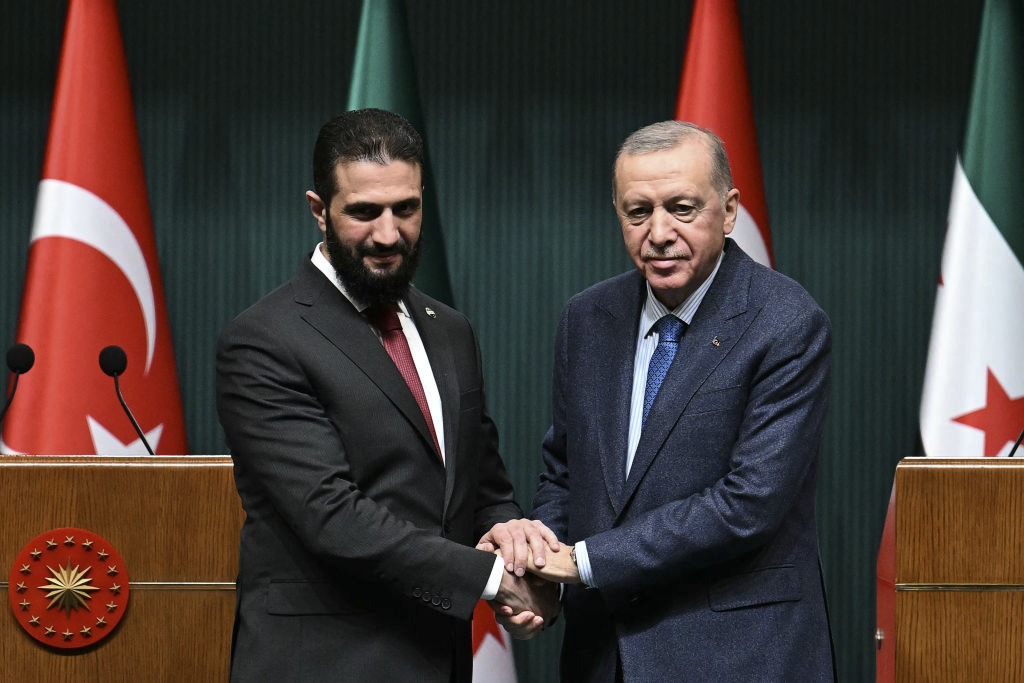
The fate of Syria’s Druze, Alawite and Christian communities should not be left to al-Qaeda and ISIS terrorists. Moreover, Syria should not be left to the savagery of its President Ahmed al-Sharaa and his HTS offshoots of ISIS and al-Qaeda, or to terrorist mastermind Turkish President Recep Tayyip Erdogan. Pictured: Al-Sharaa shakes hands with Erdogan during a press conference in Ankara, Turkey on February 4, 2025. (Photo by Ozan Kose/AFP via Getty Images)

Ever since the terrorist group Hayat Tahrir al-Sham (HTS) conquered the Syrian capital Damascus with Turkey’s help in December of 2024, HTS fighters and their affiliated militias — often offshoots of ISIS and al-Qaeda — have been massacring religious minorities throughout the country. The internet has been flooded with images — some discredited as old or manipulated, but many not — of Alawite men, women and children being barbarically shot at close range.

Most recently, after slaughtering Alawites, HTS and Syria’s new Islamic regime, under the self-proclaimed “presidency” of former jihadist commander Ahmed al-Sharaa, are massacring other religious minorities in the country, including Christians and Druze.

HTS is still designated as a terrorist organization by the UN, EU, US and UK.

The ongoing massacres against religious minorities in Syria should not surprise anyone given that the country is currently ruled by al-Sharaa, a former member of al-Qaeda and the al-Nusra Front. He joined offshoots of al-Qaeda in 2003, fought for the terror group in Iraq for several years, and was imprisoned by the Americans between 2006 and 2011.

As journalist Adi Nirman notes:

“Al-Sharaa, who until recently was known by his alias ‘al-Julani,’ is a longtime jihadist who was part of the ranks of organizations associated with al-Qaida and ISIS, and even orchestrated an attack against Israel – milestones that led to his designation as a ‘Specially Designated Global Terrorist’ by the US, with a reward of approximately $10 million for information leading to his capture.”

In 2011, Abu Bakr al-Baghdadi — then the leader of the Islamic State in Iraq (ISI), previously known as al-Qaeda in Iraq — sent al-Sharaa to spearhead his group’s entry into Syria.

The U.S. State Department designated al-Sharaa as a terrorist in 2013. Its “Rewards for Justice” program offered $10 million for information leading to him, and noted that “he remains the leader of [the al-Qaeda-affiliated Jabhat al-Nusra], which is at the core of HTS.”

President Joe Biden rescinded that bounty in December 2024, presumably in the hope that al-Sharaa would turn out to be another Konrad Adenauer, who healed Germany after the Second World War.

The UN Security Council nevertheless designates HTS as a terrorist group due to its links with al-Qaeda and ISIS. The designation has been transposed to EU law and — theoretically — is to be followed by all 27 EU member states.

Qatar and Turkey are apparently the powers behind the new regime in Damascus. Turkey’s involvement in the rise of HTS appears to be extensive. Both Turkey and HTS both been have been occupying and exploiting parts of northwest Syria since at least 2017. Turkey’s President Recep Tayyip Erdogan evidently provided arms and assistance to the HTS during its December advance to Damascus and allowed the terror group to run a key border crossing in northwest Syria.

Since HTS took over Syria, jihadists have committed massacres against the members of the Alawite minority, and the persecution of Syrian Christians has skyrocketed.

Starting in April, rampant violence has been committed against the Druze by Syria’s new government. Al-Sharaa seems to be hoping that dapper Western tailoring will fool the West into assuming that his thoughts align with his wardrobe. The Sunni Muslims of HTS have caused the deaths of countless Druze civilians. Videos posted on social media show HTS forces executing Druze civilians in the town of Sahnaya. Other HTS footage shows Druze civilians abducted and humiliated.

The Druze are just one of the many religious and ethnic groups in the Middle East. Separated by national borders drawn after the breakup of the Ottoman Empire in the early 1923, more than a million now live scattered among Israel, Syria, Lebanon and Jordan.

A leader of Syria’s Druze minority, Sheikh Hikmat al-Hijri, has condemned the jihadist violence in Jaramana and Sahnaya, towns near Damascus, as a “genocidal campaign” against Syrian Druze. Hijri urged immediate intervention by “international forces to maintain peace and prevent the continuation of these crimes”.

Syria’s new regime announced that to ensure security, it would deploy forces in Sahnaya, and accused “outlaw groups” of instigating the clashes.

Hijri said he no longer trusts “an entity pretending to be a government… because the government does not kill its people through its extremist militias… and then claim they were unruly elements after the massacres”. “The government [should] protect its people,” he added.

The attacks against the Druze came after a “deepfake” video was circulated on social media that showed a Syrian Druze Sheikh, Marwan Kiwan, appearing to denounce Islam’s prophet Mohammed, angering Muslims. According to a report in the Abu-Dhabi-based news website The National:

“Druze spiritual leaders and Muslims across the country warned that the video was an attempt to ignite sectarian strife. The Syrian Interior Ministry said on Tuesday that the voice in the video was not Sheikh Kiwan’s and that it was working to determine who altered the video and would mete out ‘strict punishment’.

“Ahmad Al Zuaiter, a prominent resident of Jaramana, said militants from nearby areas of Ghouta fired mortar rounds into the district overnight and tried to enter through a checkpoint known as Al Nassem that is manned by Druze members of the newly established police.

“The dead included six Druze, mostly members of the police force, while the rest were attackers, Mr Al Zuaiter said.

“Sheikh Hikmat Al Hijri, the spiritual leader of Syria’s Druze, said the attack was carried out by ‘takfiri, terrorist gangs’, meaning militants who justify the killings of members of other sects because they are non-Muslims.”

The fake video, and the historic Islamic animosity towards the Druze and other non-Muslims, appear to be the driving motives of the ongoing violence against religious minorities in Syria. There are no reliable figures for the exact number of casualties, but sources on the ground said hundreds of Druze are estimated to have been executed by Islamists.

A Syrian Christian, on condition of anonymity, told Gatestone:

“The city of Suwayda is where the largest number of Druze reside.

“In the city of Jaramana, the Druze live in large numbers. Sahnaya and Ashrafiyet Sahnaya are small cities, where the Druze live and HTS terrorists attacked those cities recently. The Druze lost control of those two cities to the HTS. They are being subject to massacres and ethnic cleansing right now.

“Suwayda is under attack. The Druze issued general mobilization there and are in self-defense. The Druze outside the city of Suwayda are essentially besieged.

“There is a major media blackout in those towns right now, and the Druze at the moment are mainly focused on defense.”

According to the Israeli news website Ynet:

“Jaramana, a mixed Druze-Christian city near Damascus, is in a vulnerable position. Unlike the Druze stronghold of Suwayda in southern Syria—where the community is more independent and armed—the Druze of Jaramana lack the ability to defend themselves. Israel has closely monitored the situation, concerned that Syria’s new leadership could test the Druze population’s standing, making it a red line for Jerusalem.”

Meanwhile, radical Sunni Muslims have taken to the streets in Syria, calling for jihadist violence against the Druze and other religious minorities. Sunnis in the city of Homs marched against the Druze and Jews, declaring jihad against both communities. They shouted slogans such as:

“Khaybar Khaybar, O Jew – the army of Mohammed has returned (in reference to Islam’s prophet Mohammed’s massacre against Jews in Khaybar, Arabia in 629.)

“Listen, listen O Druze!”

“Listen, O enemy of Islam: war and fire – no peace!”

“At your service, O messenger of Allah!”

In another video, protestors in the city of Hama are heard screaming:

“This is Sunni Hama! We want to exterminate the Druze! In the path of Allah, we march! We seek to raise the banner high! So that the religion may regain its glory or our blood will be spilled.”

Sunni jihadists also took to Hama’s central al-Assi square and chanted slogans, including:

“Khaybar, Khaybar, O Jews, the army of Muhammad will return”

“There is no God but Allah, & the Druze are the enemies of Allah, & the kafir (infidel) is the enemy of Allah”

“Allahu akbar!”

Sunni students at Homs University have been filmed shouting slogans inciting violence against the Druze: “For the attention of [HTS] General Security: Any Druze we see in the dorms, we’re slaughtering! Inform those who are absent!”

The students also announced that they will “pour fire and bullets” on anyone who defends the Druze or “defends Sultan al-Atrash” (leader of the 1925 Great Syrian Revolt). Incitement by Sunni students against minorities at other Syrian universities has also led to Druze students being evacuated.

On April 30, in Damascus, mosques in Eastern Ghouta were heard calling for mass Sunni mobilization:

“To all young men carrying weapons: proceed and gather at the municipal building. General mobilization! All armed young men must head to the municipal building immediately.”

Sunnis in Inkhil, Daraa, were filmed running buses for those who want to go after the Druze. HTS supporters in Idlib waved ISIS flags and incited against the Druze and Jews.

Endless footage from Syria signals that HTS and its supporters have a genocidal intent towards all religious minorities in the region.

In another video, sword-wielding HTS terrorists threaten to wage jihad against the Druze. One of them is heard saying, in part:

“We say to you, O enemy of Allah, O accursed Druze, you have nothing from us, but the severing sword…. Allahu akbar!”

On May 2 and 3, Israel reportedly launched its heaviest airstrikes so far this year on Syria. It included bombing a building near the presidential palace in Damascus. The Israel Defense Forces Arabic-language spokesman, Avichay Adraee, said “warplanes attacked… the area near Ahmed Hussein al-Sharaa’s palace in Damascus.”

In a joint statement, Israeli Prime Minister Benjamin Netanyahu and Defense Minister Israel Katz called it a “clear message” to Syria’s new rulers.

“We will not allow forces to be sent south of Damascus or any threat to the Druze community,” they said. The Israel’s military later added that its forces deployed in southern Syria were ready to protect the Druze minority.

Hours later, Israel carried out more than 20 strikes on military targets across Syria, according to the Syrian Observatory for Human Rights.

Syrian reports also indicate that the Israeli military facilitated the delivery of humanitarian aid to the Druze village of Khadr in Syria’s Quneitra province. The aid, organized by Israel’s Druze religious council, was designated for villages near the Israeli border, with additional shipments planned for other areas.

At the same time, threats against Syrian Christians keep escalating. In the “Valley of the Christians,” armed jihadists and Sunni students from Hwash University, chanting jihadist slogans and holding public prayers in a show of force, stormed the Christian village of al-Mzayneh.

Nikolas Farantouris, a Member of European Parliament from Greece, visited Syria on March 8-9, and spoke with the representatives of the Syrian Christian community, including Syria’s Greek Orthodox Patriarch John X. In a letter Farantouris submitted to the president of the European Parliament, he wrote, “Reliable data indicate 7,000 massacres of Christians and Alawites and unprecedented atrocities against civilians.”

Patriarch John X said during a sermon on March 9:

“The bloody events taking place on the Syrian coast left many dead and wounded…. In many cities, towns, and villages, their houses were burnt, and their properties have been stolen. The targeted areas were the places of Alawites and Christians. Many innocent Christian victims were also killed. Residents of some of those places were forced to leave their homes. Then they were shot and killed. Then their houses, property, and cars were stolen.”

The mass killings of hundreds of civilians from the Alawite minority in the western coastal region last month and the ongoing massacres against the Druze community have also heightened fears among other minority communities — including the Christians, Yazidis and Kurds — and sparked calls for international protection.

The fate of these communities should not be left to al-Qaeda and ISIS terrorists in Syria. Moreover, Syria should not be left to the savagery of al-Sharaa and his HTS offshoots of ISIS and al-Qaeda, or to Turkey’s terrorist mastermind, Erdogan.

For years, Erdogan has repeatedly vowed to “liberate Jerusalem,” as he seems to be attempting to rebuild the Ottoman Empire and install himself as Sultan. Now, with HTS and his other proxy militias in Syria, Erdogan finally has the unimpeded path he has been waiting for to do it.


Uzay Bulut, a Turkish journalist, is a Distinguished Senior Fellow at Gatestone Institute.


Zawartość publikowanych artykułów i materiałów nie reprezentuje poglądów ani opinii Reunion’68,
ani też webmastera Blogu Reunion’68, chyba ze jest to wyraźnie zaznaczone.
Twoje uwagi, linki, własne artykuły lub wiadomości prześlij na adres:
webmaster@reunion68.com


Trump Signs Major Deals With Qatar as New Report Reveals Doha’s $40 Billion Influence Network Across US

Trump Signs Major Deals With Qatar as New Report Reveals Doha’s $40 Billion Influence Network Across US

Corey Walker


US President Donald Trump and Qatar’s Emir Tamim bin Hamad Al Thani attend a signing ceremony in Doha, Qatar, May 14, 2025. Photo: REUTERS/Brian Snyder

As US President Donald Trump visited Qatar on Wednesday as part of his three-country tour of the Middle East, a new report exposed the extent of Qatar’s far-reaching financial entanglements within American institutions, shedding light on what experts describe as a coordinated effort to influence US policy making and public opinion in Doha’s favor. 

According to the report, which was published by the Middle East Forum (MEF), a US-based think tank, Qatar has attempted to expand its soft power in the US by spending $33.4 billion on business and real estate projects, over $6 billion on universities, and $72 million on American lobbyists since 2012.

“Qatar, a tiny Gulf emirate with just 300,000 citizens, has deployed nearly $40 billion across our nation’s institutions since 2012. This is not mere investment. It is calculated influence,” MEF executive director Gregg Roman wrote in the report’s foreword. “The pattern is clear: Qatar targets critical infrastructure, including our energy grid. It bankrolls academic departments that foment campus unrest, buys Manhattan skyscrapers, and infiltrates Silicon Valley. Its capital flows to Washington insiders who shape Middle East policy.”

The report, written by the MEF’s Benjamin Baird, came amid mounting scrutiny over Trump’s announcement that he plans to accept a $400 million luxury private jet from Qatar as a gift. It was also published as Trump was in the Middle East this week visiting Saudi Arabia, Qatar, and the United Arab Emirates to speak with regional leaders and strike several economic deals.

On Wednesday, when Trump was in Qatar, he signed what the White House touted as a sweeping “economic exchange” worth at least $1.2 trillion with the Qatari government.

The agreement will likely fuel criticism from experts and lawmakers who have warned about Qatar’s long-standing support for Islamist terrorist organizations such as Hamas and extensive investments in the US.

In 2015, for example, the Qatar Investment Authority (QIA), the country’s sovereign wealth fund, announced plans to invest $45 billion in the US over five years. According to MEF’s analysis, that target has likely been met — or exceeded — amid the continued growth of QIA’s global asset base.

Of the $39.8 billion in Qatari money traced by MEF, an estimated $33.43 billion went into commercial ventures like real estate, private equity, and hedge funds. The QIA acquired stakes in the Empire State Building and the Plaza Hotel, with QIA’s Manhattan real estate investments alone totaling at least $6.2 billion.

Qatar has also invested deeply in US critical infrastructure, including the power grid, liquified natural gas production, oil pipelines, and plastics manufacturing, raising concerns among national security experts.

The report also revealed that Qatar has emerged as the largest foreign donor to American higher education, giving US universities a staggering $6.25 billion since 2012. Between January 2023 and October 2024, Qatari contributions totaled roughly $980 million.

Qatar’s financial ties to American universities have come under intensifying scrutiny following the surge in pro-Hamas, anti-Israel Israel campus protests in the aftermath of the Hamas-led Oct. 7, 2023, massacre across southern Israel. Observers argue that foreign actors, including Qatar, have used generous donations to encourage universities to hire radical academics and startup anti-Israel academic programs.

A 2023 from the Study of Global Antisemitism and Policy found that concealed donations from foreign governments, especially Qatar, to US educational institutions have been associated with an increase in antisemitic incidents on campus and the erosion of liberal norms.

Despite the prevalence of what MEF described as Qatar’s “influence network” in the US, Trump on Sunday announced that the Department of Defense would receive a luxury Boeing 747-8 jumbo jet as a “gift, free of charge” from Qatar. According to Trump, the jet will serve as a replacement to “the 40-year-old Air Force One.” It will be considered property of the US federal government until the end of Trump’s term in office, after which ownership of the aircraft will be transferred to the Trump presidential library foundation.

On Monday, Trump defended his controversial decision to accept the $400 million luxury jet.

“I think it’s a great gesture from Qatar. I appreciate it very much,” he said while speaking to reporters in the Oval Office. “I would never be one to turn down that kind of an offer. I mean, I could be a stupid person and say, ‘No, we don’t want a free, very expensive airplane.’ But it was — I thought it was a great gesture.”

The US president argued that the Qatari government gifted him the jet because he has “helped them a lot over the years in terms of security and safety.”

Trump’s plan to accept the splashy airliner set off a firestorm of criticism among foreign policy experts and some lawmakers, especially Democrats, with skeptics accusing the president of violating the Emoluments Clause of the US Constitution, which prohibits federal officials from accepting gifts from foreign countries without the consent of Congress. Others expressed concern that Doha could use the gift as leverage to influence US policy in the Middle East.

Democratic Senate leader Chuck Schumer (NY) suggested that the gift from Qatar is an attempt to bribe Trump and gain “influence” in the US government.

Rep. Ritchie Torres (D-NY) also lambasted Trump’s announcement and called for a probe into Qatar’s gift. In a letter addressed to the Government Accountability Office comptroller general, the Defense Department acting inspector general, and the Office of Government Ethics acting director, Torres suggested that the gift likely runs afoul of the Emoluments Clause.

“With an estimated value of $400 million, the aerial palace would constitute the most valuable gift ever conferred on a president by a foreign government,” Torres posted on X/Twitter. “Just as troubling as the gift itself is the identity of the benefactor. Qatar is not a neutral party on the world stage. It has a deeply troubling history of financing a barbaric terrorist organization that has the blood of Americans on its hands.”

Meanwhile, Trump on Wednesday signed a series of agreements totaling at least $1.2 trillion with Qatar’s Emir Sheikh Tamim bin Hamad Al Thani in Doha.

The deal includes a $96 billion order of Boeing jets and GE Aerospace engines. Beyond aircraft, the deals encompass over $243.5 billion in trade and infrastructure agreements with companies such as McDermott and Parsons, and a $1 billion joint venture in quantum technologies.

Alongside commercial investments, the US signed major defense deals with Qatar, including nearly $3 billion for advanced drone systems and counter-drone technology from Raytheon and General Atomics. A broader $38 billion framework agreement for military cooperation, including potential expansion at Al Udeid Air Base, further cements Qatar’s strategic influence in US defense planning.


Zawartość publikowanych artykułów i materiałów nie reprezentuje poglądów ani opinii Reunion’68,
ani też webmastera Blogu Reunion’68, chyba ze jest to wyraźnie zaznaczone.
Twoje uwagi, linki, własne artykuły lub wiadomości prześlij na adres:
webmaster@reunion68.com


Benjamin Netanjahu kontra Edward Said: globalna wojna o idee przebudzone

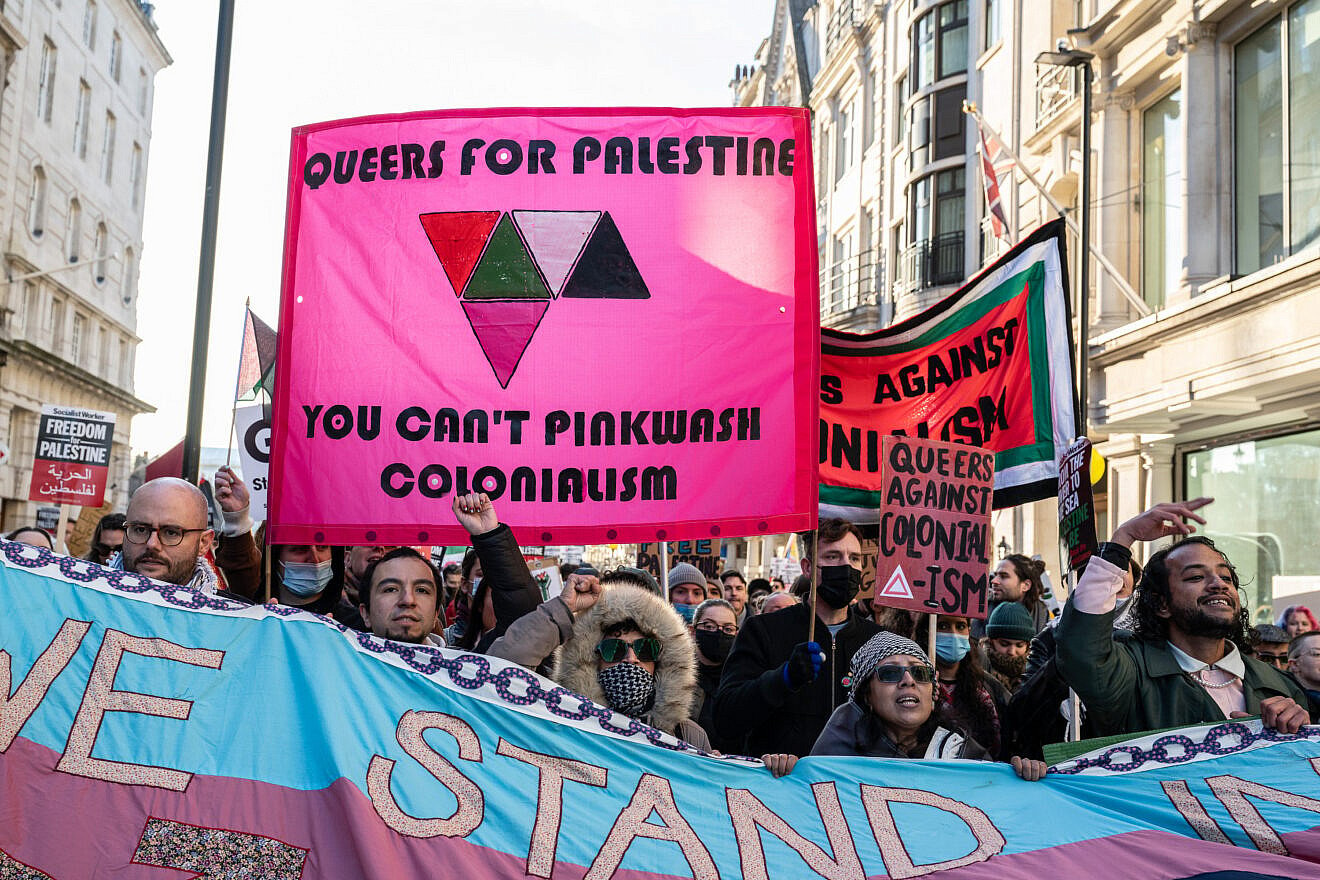
Queer Bloc na antyizraelskim proteście w Londynie, 25 listopada 2023. Zrzut ekranu.


Benjamin Netanjahu kontra Edward Said: globalna wojna o idee przebudzone

Gadi Taub
Tłumaczenie: Małgorzata Koraszewska


Izrael musi teraz udowodnić, że Zachód można odwieść od drogi prowadzącej do kulturowego samobójstwa.

Wojna w Gazie ma znaczenie wykraczające daleko poza jej regionalne aspekty militarne. Odgrywa ona ważną rolę w globalnej wojnie idei, kluczowym froncie w światowej walce z ideologią przebudzenia.

Jej wynik będzie miał znaczenie dla przyszłości liberalnej demokracji. Ponieważ ta wojna jest testem jednego z najważniejszych pytań naszych czasów: czy Zachód odzyska wystarczającą pewność siebie, aby bronić własnych wartości?

To właśnie nadaje pilności bitwie o ramy przedstawiania tej wojny, która rozpoczęła się niemal natychmiast po jej wybuchu. Przebudzeni nie musieli czekać, aż zwęglone, okaleczone i zbezczeszczone ciała żydowskich ofiar ostygną, aby wiedzieć, która strona jest zła.

Zachodni „postępowi” intelektualiści zaczęli niemal natychmiast sugerować, że potrzeba „więcej kontekstu”. A „kontekstem” była, jak można było przewidzieć, „okupacja” — nieważne, że Gaza nie była pod rządami Izraela od 2005 r.

Wyszkoleni w studiach postkolonialnych i obeznani z polityką tożsamości, przebudzeni żywią wrogość do syjonizmu, która jest czymś więcej niż tylko pozycją na ich liście do odrzucenia. Jest to test lakmusowy, za pomocą którego decydują, kto jest „po właściwej stronie historii”.

Palestyńczycy są, w tym ujęciu, tubylczymi ludźmi kolorowymi, a Żydzi są białymi Europejczykami, którzy skolonizowali ziemie palestyńskie. Wszystkie inne szczegóły muszą pasować do tego moralnego schematu.

Gdy wywłaszczenie Indian Ameryki Północnej przeszło do minionej historii, niewolnictwo wymarło na Zachodzie, a europejskie rządy zniknęły z Dalekiego i Bliskiego Wschodu, pozostał tylko syjonizm, który ucieleśnia grzechy Zachodu. Izrael jest, według przebudzonych, tylną strażą zachodniego kolonializmu i nacjonalizmu XIX wieku, ostatnim śladem wstecznych ideologii Zachodu.

Żądanie jego zniszczenia jest zatem zarówno oznaką moralności, jak i rytuałem zadośćuczynienia. To tak, jakby syjonizm był dla przebudzonych lalką voodoo: dźgając ją, pokazuje się, że przezwyciężyło się grzechy Zachodu. Pozbywając się w ten sposób swojego starego, złego „ja”, zachodnie elity przebudzonych są gotowe poświęcić się zadośćuczynianiu dawnym ofiarom swojej cywilizacji, zwracając się przeciwko niej i przeciwko temu, co symbolizuje jej grzeszną przeszłość.

Przebudzeni próbują w istocie oczyścić się z antysemityzmu przeszłości, utrwalając antysemityzm w teraźniejszości, teraz pod przykrywką antysyjonizmu. Grzechy nazistów zostaną odkupione przez nazywanie syjonistów nazistami.

W tym kontekście kulturowym powinno być jasne, dlaczego bitwa o przedstawianie tej wojny nie dotyczy tylko prawa Izraela do obrony przed Hamasem, Hezbollahem i Iranem. Dotyczy prawa Izraela do istnienia. Dotyczy również samej legitymacji syjonizmu.

Oznacza to, że nacisk premiera Izraela Benjamina Netanjahu na moralne uzasadnienie wojny jest również żądaniem wyrzucenia całej budowli, na podstawie której zachodnie „postępowe” elity nadają sens światu — nie pomijając ich własnej polityki wewnętrznej. Jeśli syjonizm jest dla przebudzonych współczesnym paradygmatycznym przykładem grzechów Zachodu, to jego legitymizacja oznacza odrzucenie idei, że grzechy Zachodu mogą wyjaśnić wszelkie zło, które spotkało świat. Co z kolei oznacza zawalenie się całego gmachu przebudzonych.

Dla Netanjahu Izrael, jak najdalszy od reliktu złej, starej kolonialnej przeszłości, jest pionierem, wskazującym drogę do bezpieczniejszej przyszłości. Jest linią frontu zachodniej cywilizacji w jej wojnie z barbarzyństwem. Jest awangardą, która teraz spieszy, by bronić granic cywilizacji tam, gdzie zostały one brutalnie naruszone.

„Jeśli zapamiętacie jedną rzecz z tego przemówienia, zapamiętajcie to” – powiedział Netanjahu w lipcu 2024 r. na wspólnym posiedzeniu Kongresu USA. „Nasi wrogowie są waszymi wrogami; nasza walka jest waszą walką; a nasze zwycięstwo będzie waszym zwycięstwem”.

Podobne wątki poruszył w swoim przemówieniu do Zgromadzenia Ogólnego Narodów Zjednoczonych w październiku, kiedy mówił o „dzikich mordercach”, którzy chcą zniszczyć „naszą wspólną cywilizację”.

W Kongresie Netanjahu zwrócił również uwagę na współpracę zewnętrznych wrogów Zachodu z jego wewnętrznymi, przebudzonymi krytykantami.

„Mam wiadomość dla tych protestujących” – powiedział, odnosząc się do demonstrantów przeciwko jego obecności na Kapitolu, niosących transparenty „Geje dla Gazy”. „Kiedy tyrani z Teheranu, którzy wieszają gejów na dźwigach i mordują kobiety za to, że nie zakrywają włosów, chwalą, promują i finansują was, oficjalnie staliście się pożytecznymi idiotami Iranu”.

Przebudzoność jest chorobą autoimmunologiczną. Atakuje naszą zdolność do obrony naszych wartości. Jej relatywizm moralny najpierw twierdzi, że wszystkie kultury są równe, a następnie przez bramę nieograniczonej tolerancji wpuszcza do swojego wnętrza wartości antyzachodnie. Na koniec odwraca moralność, wykorzystując zachodnie poczucie winy, aby zakazać jakiejkolwiek krytyki rasistowskich, mizoginistycznych, antygejowskich, antysemickich i antyzachodnich ideologii — o ile pochodzą one od grup uznanych za ofiary Zachodu.
 
Szkody wyrządzone przez tę moralną inwersję są wszędzie takie same. To właśnie skłoniło brytyjskie władze do przymykania oczu na gangi groomingu w imię „stosunków społecznych”; to właśnie skłoniło studentów do poparcia ludobójstwa Żydów w imię „antyrasizmu”; to właśnie skłoniło sądy do wysyłania gwałcicieli do więzień dla kobiet; i to właśnie upoważniło do sterylizacji dzieci w imię „afirmacji gender”.

To również skłoniło Międzynarodowy Trybunał Sprawiedliwości w Hadze do argumentowania, że Izrael, a nie Hamas, powinien być sądzony za ludobójstwo. Osiągnęło to szczyt absurdu, gdy Judith Butler, feministyczna wyrocznia, broniła sadystycznego barbarzyńskiego gwałtu i okaleczenia kobiet żydowskich jako „zbrojnego oporu”.

Ta inwersja jest rzeczywiście wszechobecna na lewicy: instynktowną reakcją administracji Bidena na masakrę Żydów 7 października 2023 r. było powołanie grupy zadaniowej do walki z „islamofobią”.

Misją Netanjahu nie jest oczywiście argumentowanie za subtelnościami teorii queer ani wskazywanie sprzeczności w naukach zmarłego palestyńsko-amerykańskiego aktywisty profesora Edwarda Saida. Jednak jego instynkt wytykania relatywizmu kulturowego i moralnego trafia w samo sedno problemu.

„To nie jest starcie cywilizacji – powiedział Kongresowi, nawiązując do popularnej książki Samuela Huntingtona. – To starcie barbarzyństwa z cywilizacją. To starcie tych, którzy gloryfikują śmierć, z tymi, którzy uświęcają życie”.

Ujmując wojnę w ten sposób i nazywając barbarzyństwo po imieniu, Netanjahu chciał obalić światopogląd, a nie tylko opinię. Jego wezwanie dotyczyło odbudowania naszego układu odpornościowego, abyśmy mogli odzyskać jasność moralną i odróżniać dobro od zła. Jego przemówienie było praktycznie przeciwieństwem światopoglądu głoszonego w Kairze 4 czerwca 2009 r. przez najbardziej wpływowego ucznia Saida — Baracka Husseina Obamę.

Uczniowie samego Obamy wciąż byli u steru, gdy Netanjahu przemawiał do Kongresu. Nie mógł tego powiedzieć wprost, ale musiał być w pełni świadomy, że prosił największe supermocarstwa świata o wyrzucenie moralnego kompasu Obamy i zmianę kursu. Przypadło więc przywódcy małego kraju wzywanie Ameryki i Zachodu jako całości do opamiętania.

„Aby siły cywilizacji odniosły zwycięstwo, Ameryka i Izrael muszą stanąć razem” – powiedział, dodając słynne powiedzenie Ronalda Reagana z czasów zimnej wojny: „Bo kiedy stoimy razem, dzieje się coś bardzo prostego – my wygrywamy, oni przegrywają”.

Mimo owacji na stojąco, jaką otrzymał od senatorów i przedstawicieli Izby Reprezentantów, Netanjahu stanął przed administracją, która odmówiła podjęcia wyzwania, a nawet nazwania zła po imieniu. Nie tylko próbowała udobruchać barbarzyńców; wręcz odmawiała nazywania ich właściwym imieniem.

Najwyższy czas przywrócić prawdę naszemu językowi. Słowo „barbarzyństwo” musi powrócić do naszego leksykonu, jeśli mamy zrozumieć znaczenie wojny na Bliskim Wschodzie, a także niemal każdego centralnego aspektu polityki — krajowej i zagranicznej — w każdej zachodniej demokracji.

Pytanie nie brzmi, czy termin ten daje nam wskazówkę co do rzekomych pozostałości rasizmu u tych, którzy go używają. Nie jest to błędne określenie mające na celu usprawiedliwienie dominacji Zachodu nad niewinnymi ofiarami. Jest to dokładny, prawdziwy opis potężnych wrogów, którzy, gdy mówią, że chcą zniszczyć zachodnią cywilizację, to właśnie chcą zrobić.

Izraelowi przypadła w udziale nie tylko walka z tymi barbarzyńcami o własne przetrwanie, ale także obudzenie Zachodu z jego „przebudzonych” marzeń i nakłonienie go do powrotu do swoich wartości. My, Izraelczycy, nie jesteśmy nieprzyjemną resztką waszej pełnej win przeszłości. Jesteśmy kluczem do waszego przyszłego przetrwania. To było głębsze znaczenie przemówienia Netanjahu.

Nie wszystkie wartości są sobie równe. Nie będziemy w stanie bronić naszych, jeśli będziemy nadal używać wysterylizowanego języka z czasów Obamy i mówić o „radykalnym ekstremizmie”, zamiast nazywać terrorystów z Hamasu, pakistańskie gangi groomingu w Wielkiej Brytanii, muzułmańskich morderców dziennikarzy z „Charlie Hebdo” we Francji lub zabójcę reżysera geja Theo Van Gogha w Holandii imieniem, które ich prawdziwie opisuje: dżihadystyczni barbarzyńcy. Wrogowie humanizmu. Wrogowie liberalizmu i demokracji.

To nie jest tylko teoria. Izrael walczy teraz nie tylko z wrogiem militarnym. Prowadzi również jednoczesną wojnę kulturową przeciwko konstelacji jednostronnych organizacji „praw człowieka”, ośrodków analitycznych i organizacji pozarządowych, stronniczych trybunałów międzynarodowych, przebudzonych gazet, „postępowych” mediów i platform mediów społecznościowych, skorumpowanych uniwersytetów i aktywistów pokojowych, którzy próbują związać nam ręce.

Musimy otwarcie im się przeciwstawić. Musimy przejść do ofensywy i zniszczyć ich moralną wiarygodność. Przede wszystkim musimy wygrać na polu bitwy, pomimo ich najlepszych starań, aby nas powstrzymać, ponieważ jest to kluczowe nie tylko dla istnienia Izraela. Istotne jest również pokazanie, że demokracje potrafią się obronić. Że nie pozwolą, aby ich moralizatorskie elity obróciły ich wartości przeciwko nim, żądając w efekcie poddania się barbarzyńcom.

Nie możemy porzucić naszych wartości, udając, że przestrzegamy ich bardziej skrupulatnie. Izrael musi teraz udowodnić, że Zachód można zawrócić z drogi kulturowego samobójstwa.

Teraz jesteśmy również żołnierzami Zachodu na froncie tej wojnie kulturowej.


Adaptacja wypowiedzi autora na JNS International Policy Summit.


Gadi Taub izraelski historyk i dziennikarz, nauczyciel akademicki, znany również jako autor popularnych książeczek dla dziec


Zawartość publikowanych artykułów i materiałów nie reprezentuje poglądów ani opinii Reunion’68,
ani też webmastera Blogu Reunion’68, chyba ze jest to wyraźnie zaznaczone.
Twoje uwagi, linki, własne artykuły lub wiadomości prześlij na adres:
webmaster@reunion68.com


The pope’s ‘divisions’ and the war against the Jews

The pope’s ‘divisions’ and the war against the Jews

Jonathan S. Tobin


Non-Catholics need to respect the powerful symbolism of the papacy. But neutrality about a genocidal struggle against Israel’s existence is neither moral nor acceptable.

Pope Leo XIV attends an audience with thousands of journalists and media workers at Paul VI Hall in Vatican City, Vatican, on May 12, 2025. The audience with journalists has become a tradition among newly elected popes. Photo by Vatican Media via Vatican Pool/Getty Images.

In an era when religion seems to be in steep decline throughout Europe and North America, it might strike some people as curious that the election of a new pope would be treated as such an earth-shaking event. But even as secularism increasingly dominates public discourse, the persistence of faith and the attention devoted to the leadership of a denomination so integral to the history of Western civilization as Catholicism is a reminder that some things transcend popular culture—and that is something all people of goodwill should celebrate.

So, it is understandable that the accession of Pope Leo XIV, the first American pope, should be greeted with universal respect. That should also apply to the Jewish community, which now approaches the papacy with the sort of expectations of understanding and support that would have been unimaginable before the second half of the 20th century. The question is not where the church stands on the points of contention of the past, but how its spiritual leadership will be deployed in the present.

Soviet dictator Joseph Stalin’s much-quoted comment, in which he derisively asked “how many divisions” the pope had in his time, is generally and rightfully thought of as a clueless dismissal of the power that can stem from spiritual leadership. The Catholic Church and its new leader face many challenges, not least the fact that a growing percentage of its estimated 1.4 billion believers are in the Third World rather than Europe or the United States. It must also grapple with the conflicting demands that it be more accessible and modern while at the same time staying true to its core doctrines.

Yet the question is not whether Pope Leo XIV will be able to exercise considerable influence over world opinion on a variety of topics or whether it will be well-meaning, regardless of where people stand on the issues. Rather, it is whether the Vatican and the church it leads will play a role in combating one particularly pernicious problem with which its institutions were once closely associated. While we should not assume anything but good intentions from the pope, it is still apt to ask whether his “divisions” can or will be deployed to stem the rising tide of antisemitism sweeping across the globe as opposed to merely paying lip service to this plague—or worse, unwittingly abetting it.

Transcending the past

After the groundbreaking stands of the Second Vatican Council and then the papacy of John Paul II (1978-2005), the historic antagonism between the Church and the Jews, as well as the State of Israel, was put aside and replaced with a more open and respectful relationship. The publication of “Nostra Aetate,” the 1965 Catholic declaration on the relationship of the Church with non-Christian religions, rejected the deicide myth and established a new norm; the assumption that Catholics hated Jews became a relic of the past. That was followed up by the open philosemitism of John Paul II and the historic decision of the Vatican to recognize Israel in 1993. That put the unhappy history of relations between the papacy and the Jews firmly behind them.

Nevertheless, most Jews and Israelis were disappointed by the Church’s somewhat feeble response to the unprecedented increase in antisemitism that followed the Hamas-led Palestinian Arab terror attacks in southern Israel on Oct. 7, 2023.

To be fair, the late Pope Francis condemned antisemitism and the increase in Jew-hatred after Oct. 7. But in the last year and a half, the Vatican appeared as critical of Israel’s war of self-defense against genocidal Hamas terrorism as it was in stating its horror about the Oct. 7 atrocities against Israelis.

To many of its constituents in Europe, around the world, and particularly in the Middle East, that morally ambivalent stand about a conflict fundamentally rooted in a desire to destroy the Jewish state seems fair. It also conforms to the Church’s general opposition to war, no matter the cause or circumstances. So, it was not surprising that Pope Leo issued a call for a ceasefire in the Gaza Strip (as well as in the war between Russia and Ukraine) as part of his first Sunday sermon, even though that would essentially allow a terrorist regime to emerge triumphant from the destructive war it began.

Even more troubling, at times during the past 19 months, the Church has either seemed to endorse the false Hamas narrative about Israeli war crimes or harkened back to symbolism that is a reminder of its antisemitic past.

Some of this is connected to the Church’s worries about Middle Eastern Catholics, including the small remnant living under Islamist rule in Gaza, as well as the Latin Patriarchate in Jerusalem, which seems far more interested in promoting anti-Israel Palestinian nationalism than anything else.

In this case, an understandable concern for Catholic safety in a region where, outside of Israel, religious freedom is tenuous or non-existent has most often given way to something far more troubling: a belief that the Vatican’s chief obligation there is to not contradict Arab and Muslim hatred for Jews and the Jewish state.

That is the context for any discussion about the new pope and the future of Catholic-Jewish relations.

Assumptions about papal politics

Pope Leo is in a difficult position in speaking out on any issue, let alone one as fraught as antisemitism and the global war on Israel.

His election has led to a torrent of commentary in which he is being shoehorned into various secular and political debates. That is particularly true in the United States, where some on the left are hoping that he will assume the stance of a spiritual leader to the “resistance” to President Donald Trump, as, for example, New York Times columnist David French—a rabid Never Trumper—seems to want him to be. In turn, some on the political right are making the same assumption because of his background in advocating for illegal immigrants. Yet his stands on other issues, particularly those relating to traditional morality and gender ideology, may put him on the same side of the aisle as pro-Trump conservatives.

All those attempts to inject the papacy into U.S. cultural and political warfare are likely futile. The papal version of “soft power” can be formidable, but it doesn’t translate well into American partisan disputes. That is something that will likely prove to be true, even if Pope Leo dislikes Trump or Vice President JD Vance, who converted to Catholicism as an adult. The left may fantasize about Leo assuming the same role in aiding their campaigns against Trump that Pope John Paul II had in opposing Soviet despotism in Eastern Europe in the last years of the Cold War. But the papacy and the American church simply aren’t set up to be a religious auxiliary to the Democrats or any political party.

His need to avoid being drawn into partisan arguments in a democracy, however, is not the same thing as reluctance to play a role in stemming the current rising tide of antisemitism and support for Israel’s destruction.

Contemporary Jew-hatred

No one should expect the pope to endorse any military campaign or government. But the connection between those in the Catholic world who have embraced “liberation theology”—a Marxist-influenced variant of faith that is linked to other “progressive” causes aligned with the international movement to destroy the one Jewish state on the planet—and antisemitism is something that directly concerns the Church. That’s especially true since, while his predecessor was not an adherent of liberation theology, many of his positions, as well as those of the current pope, seem adjacent to them in some ways.

Contemporary antisemitism is something that is different from the sort of hatred of Jews with which the Church was long associated. That was also true of the racist prejudice of the Nazis, which directly contradicted Catholic doctrine. Today’s antisemites target Jews not because they think Jews killed Jesus or should convert to Christianity. Instead, they are part of a bizarre red/green alliance of Marxists and Islamists.

They view Jews as part of the class of “white oppressors” according to the tenets of woke ideology like critical race theory, intersectionality and settler-colonialism, who must be defeated. Or they despise them as a dhimmi minority of second-class citizens condemned to perpetual subjugation to Muslims, as well as having no right to sovereignty in the Middle East, even in their ancient homeland, where they are the indigenous people.

And as much as the Vatican opposes hatred of Jews, in general, it has been awfully quiet about specifically condemning the way supposed sympathy for the Palestinian Arabs has weaponized these ideas, as well as traditional antisemitic tropes.

A general abhorrence for all wars and concern about the fate of those who live in Gaza may have led many to wrongly condemn Israel’s justified effort to eradicate Hamas. Still, there is no excuse for allowing that to cause the Church to refuse to see how such moral equivalence is the foundation for an international movement that demonizes Jews and their state.

Anyone who comments on the papacy must do so with both respect and deference to its enormous symbolic importance to Catholics—something that transcends politics and culture. And there is no question that the contemporary Church is an institution that is vastly different from the one in the past that was rightly distrusted by Jews.

Nevertheless, neutrality about a war being fought by Palestinian terrorists and other Iranian proxies for the genocide of Jews and the end of Israel is neither moral nor in the interests of non-Muslim minorities in the Middle East. It is not unreasonable to expect the pope to use his influence to oppose those who act as the witting or unwitting allies of this despicable cause, whether or not they cloak themselves in the language of “human rights.”

It is a tribute to the courage and the righteousness of some of Pope Leo’s predecessors who fought against antisemitism that contemporary Jews can feel that they have a right to expect more from him than moral equivalence about a new war on the Jews. We should wish him well and hope he proves equal to their example.


Jonathan S. Tobin is editor-in-chief of the Jewish News Syndicate, a senior contributor for The Federalist, a columnist for Newsweek and a contributor to many other publications. He covers the American political scene, foreign policy, the U.S.-Israel relationship, Middle East diplomacy, the Jewish world and the arts. He hosts the JNS “Think Twice” podcast, both the weekly video program and the “Jonathan Tobin Daily” program, which are available on all major audio platforms and YouTube. Previously, he was executive editor, then senior online editor and chief political blogger, for Commentary magazine. Before that, he was editor-in-chief of The Jewish Exponent in Philadelphia and editor of the Connecticut Jewish Ledger. He has won more than 60 awards for commentary, art criticism and other writing. He appears regularly on television, commenting on politics and foreign policy. Born in New York City, he studied history at Columbia University.


Zawartość publikowanych artykułów i materiałów nie reprezentuje poglądów ani opinii Reunion’68,
ani też webmastera Blogu Reunion’68, chyba ze jest to wyraźnie zaznaczone.
Twoje uwagi, linki, własne artykuły lub wiadomości prześlij na adres:
webmaster@reunion68.com

Trump Calls on Saudi Arabia to Join Abraham Accords During Visit to Riyadh

Trump Calls on Saudi Arabia to Join Abraham Accords During Visit to Riyadh

Corey Walker


US President Donald Trump speaks at the Saudi-US Investment Forum, in Riyadh, Saudi Arabia, May 13, 2025. Photo: REUTERS/Hamad I Mohammed

US President Donald Trump called on Saudi Arabia to join the Abraham Accords and officially recognize Israel while speaking at the Saudi-US Investment Forum in Riyadh on Tuesday.

“With the historic Abraham Accords that we’re so proud of, all the momentum was aimed at peace, aimed very successfully,” Trump said, referring to a series of historic US-brokered normalization agreements between Israel and several Arab countries during his first term in office.

“It’s been an amazing thing, the Abraham Accords, and it’s my fervent hope, wish, and even my dream that Saudi Arabia — a place I have such respect for, especially over the last fairly short period of time, what you’ve been able to do — but will soon be joining the Abraham Accords,” Trump added.

Trump argued that joining the Abraham Accords would be “a tremendous tribute” to Saudi Arabia and that agreeing to recognize Israel is “very important for the future of the Middle East.”

“It will be a special day in the Middle East, with the whole world watching, when Saudi Arabia joins us. And you’ll be greatly honoring me, and you’ll be greatly honoring all of those people that have fought so hard for the Middle East,” Trump stated. 

During the first Trump administration from 2017-2021, the White House helped broker the Abraham Accords, a series of historic normalization agreements between Israel and several countries in the Arab world: Sudan, Bahrain, Morocco, and the United Arab Emirates.

Since returning to the White House, Trump has vowed to expand on the Abraham Accords, arguing that bolstering the normalization agreements will help foster greater peace and prosperity in the broader Middle East. According to recent reports, however, the US is no longer demanding Saudi Arabia normalize ties with Israel as a condition for progress on civil nuclear cooperation talks.

During his remarks on Tuesday, the US president also lambasted Iran, saying that he plans to exert “massive, maximum pressure” against Tehran. Trump vowed to “drive Iranian oil exports to zero” if the White House and Iran cannot successfully broker a deal to place restrictions on Tehran’s nuclear program.  

“If Iran’s leadership rejects this olive branch and continues to attack their neighbors, then we will have no choice but to inflict massive, maximum pressure … and take all action required to stop the regime from ever having a nuclear weapon. Iran will never have a nuclear weapon,” Trump said, vowing to never allow Tehran to threaten the US or its allies “with terrorism or nuclear attack.”

Iran, the world’s foremost state sponsor of terrorism, maintains that its nuclear program is for civilian purposes rather than building weapons. However, the International Atomic Energy Agency (IAEA), the UN’s nuclear watchdog, reported last year that Iran had greatly accelerated uranium enrichment to close to weapons grade at its Fordow site dug into a mountain.


Zawartość publikowanych artykułów i materiałów nie reprezentuje poglądów ani opinii Reunion’68,
ani też webmastera Blogu Reunion’68, chyba ze jest to wyraźnie zaznaczone.
Twoje uwagi, linki, własne artykuły lub wiadomości prześlij na adres:
webmaster@reunion68.com