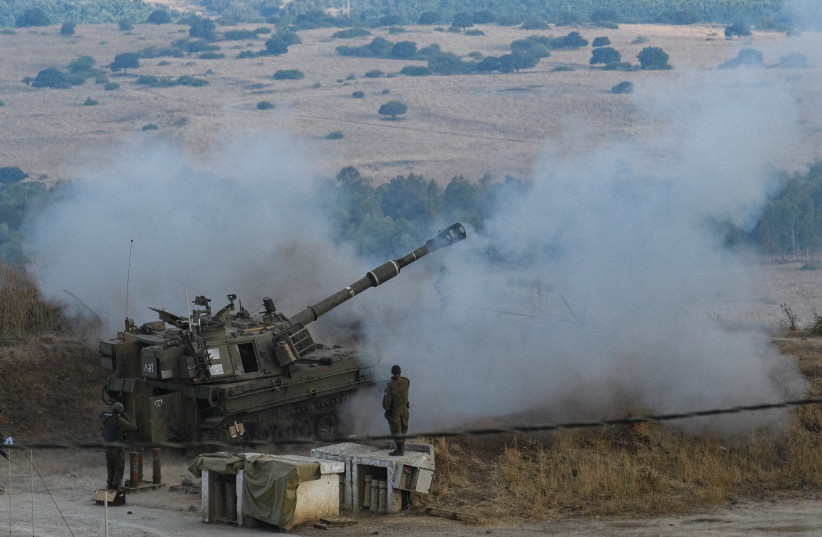
IDF fires on 5 Lebanese who try to cross into Kfar Kila as 60-day withdrawal deadline expires

IDF fires on 5 Lebanese who try to cross into Kfar Kila as 60-day withdrawal deadline expires

YONAH JEREMY BOB


Shooting likely wounded some of those who approached
.

UN peacekeepers (UNIFIL) stand near their vehicles in Kfar Kila village near the border with Israel, southern Lebanon, August 31, 2023. / (photo credit: REUTERS/AZIZ TAHER)

The IDF on Sunday morning fired on five Lebanese persons who tried to cross into Kfar Kila in southern Lebanon, given that the 60-day deadline for the military to withdraw passed earlier Sunday morning.

Sources indicated to the Jerusalem Post and Lebanese media and security sources reported that five Lebanese were wounded by the fire.

Despite the indications and reports, the IDF publicly only said that there had been an incident, that soldiers had opened fire to compel the Lebanese persons to distance themselves from IDF positions, and that whether anyone was wounded was being probed.

Kfar Kila is one of some dozens of locations where the IDF has said it will not fully withdraw from at this time, claiming that the Lebanese army is not fully deploying to all of southern Lebanon and is also frequently not destroying Hezbollah weapons when it takes up certain positions.

Further, the IDF has noted specific instances in which it has asked the Lebanese army to eliminate specific Hezbollah weapons, where the Lebanese army has not done so or only started the process of doing so on such a delayed basis that the IDF had to destroy the Hezbollah weapons lest the terror group succeed in moving them and hiding them at a new location.

The Lebanese government, Hezbollah, and France have all said that Israel is violating the November 27 ceasefire deal with Hezbollah even though the terror group has not launched rockets or mortars into Israel since the end of November.

The IDF already started withdrawing from significant portions of southern Lebanon in late December.

However, Israel has said that following the 2006 Second Lebanon War, it made the mistake of allowing Hezbollah to bully UNIFIL and the Lebanese army and to return to southern Lebanon where it will up a massive rocket firing and potential invasion capability, such that the IDF will act more aggressively this time to prevent a recurrence of such events.

Staying beyond the deadline?

Israel has not said definitively how long it will overstay the deadline in the parts of southern Lebanon from where it has not yet withdrawn, but various officials leaked a potential 30-day extension to the Post and other media.

Alternatively, if the Lebanese army deploys faster to the rest of southern Lebanon, the IDF might feel compelled to complete its withdrawal faster as well.

On Friday, Trump administration officials said that there should be a short additional extension for Israel’s presence in southern Lebanon to address Israeli security concerns but did not endorse a full 30-day extension and appeared concerned about the ceasefire falling apart.

Prior to leaving office, the Biden administration had acknowledged that the Lebanese army’s compliance with ensuring Hezbollah was not in southern Lebanon had only been partial but was still pushing for Israel to withdraw by the 60-day deadline and was clearly emphasizing that a collapse of the ceasefire would be the worst case scenario.

Although Hezbollah threatened to fire on Israel if Israel extended its presence beyond 60 days, as of late Sunday morning, the group seemed to be hoping global diplomatic pressure would get Israel to leave without too long of an extension and without having to return to war. 


Zawartość publikowanych artykułów i materiałów nie reprezentuje poglądów ani opinii Reunion’68,
ani też webmastera Blogu Reunion’68, chyba ze jest to wyraźnie zaznaczone.
Twoje uwagi, linki, własne artykuły lub wiadomości prześlij na adres:
webmaster@reunion68.com


W sobotę kolejna wymiana izraelskich zakładniczek. Mimo że Hamas miał złamać wcześniejsze uzgodnienia

Protest rodzin izraelskich zakładników, porwanych 7 października 2023 r., domagających się uwolnienia swoich bliskich, Tel Awiw w Izraelu, 24 stycznia 2025 r.


W sobotę kolejna wymiana izraelskich zakładniczek. Mimo że Hamas miał złamać wcześniejsze uzgodnienia

Wojciech Podgórski /  PAP


Wsobotę dojdzie jednak do kolejnej wymiany izraelskich zakładniczek więzionych w Strefie Gazy na palestyńskich więźniów. Mimo że Hamas złamał wcześniejsze uzgodnienia dotyczące kolejności wymiany.
Hamas ogłosił w piątek listę czterech zakładniczek, które mają być wymienione w sobotę na kilkudziesięciu palestyńskich więźniów. Znalazły się na niej cztery izraelskie żołnierki: Karina Ariew, Daniella Gilboa, Naama Lewi i Liri Albag.

Izrael poinformował mediatorów, którzy pośredniczyli w zawarciu obowiązującego od niedzieli zawieszenia broni, że lista narusza przyjęte wcześniej ustalenia – przekazała izraelska stacja Kanał 12.

Izraelskie zakładniczki: Karina Ariev, Naama Levy, Liri Albag i Daniela Gilboa, żołnierki porwane przez bojowników Hamasu ze swojej bazy wojskowej 7 października 2023 r. Fot. REUTERS/Courtesy Of Bring Them Home Now

Według stacji spór dotyczy kolejności uwalniania zakładników. Zgodnie z umową najpierw miały zostać wymienione porwane dzieci i kobiety niesłużące w armii, później żołnierki, w dalszej kolejności osoby starsze, mężczyźni, na końcu zwłoki zabitych jeńców.

Premier Benjamin Netanjahu przeprowadził konsultacje z szefami służb bezpieczeństwa. Postanowiono, że sobotnia wymiana dojdzie do skutku, ponieważ naruszenie umowy przez Hamas nie jest na tyle poważne, by zrywać całe porozumienie – napisał portal Times of Israel.

Strefa Gazy. Hamas zapewnia, że podtrzymuje wcześniejsze ustalenia

Od niedzieli obowiązuje pierwszy etap zawieszenia broni w trwającej ponad 15 miesięcy wojnie Izraela z Hamasem w Strefie Gazy. Porozumienie zakłada, że w pierwszej, trwającej 42 dni części rozejmu dojdzie do wymiany 33 zakładników Hamasu na ok. 1900 Palestyńczyków przetrzymywanych w izraelskich więzieniach.

Już w niedzielę 19 stycznia wolność odzyskały trzy zakładniczki wymienione na 90 palestyńskich więźniów – kobiety i nastolatków. Podczas ataku 7 października 2023 r. Hamas porwał 251 osób, 91 z nich wciąż jest więzionych. Według izraelskiej armii co najmniej 34 osoby z tej grupy nie żyją.

Times of Israel poinformował, że Hamas zapewnił zaangażowane strony, iż podtrzymuje wcześniejsze ustalenia, a przyczyną złamania ustalonej kolejności są komplikacje techniczne. Jedna z cywilnych zakładniczek jest przetrzymywana przez inną organizację terrorystyczną, Palestyński Islamski Dżihad, w której trwają wewnętrzne spory dotyczące wymiany – dodał Kanał 12.

Przyjęty harmonogram zakłada, że za każdą cywilną zakładniczkę Izrael wypuści 30 palestyńskich więźniów, a za każdą żołnierkę – 50. Izraelska służba więzienna otrzymała już listę osadzonych, którzy mają zostać zwolnieni w ramach sobotniej wymiany – uzupełnił Times of Israel.


Zawartość publikowanych artykułów i materiałów nie reprezentuje poglądów ani opinii Reunion’68,
ani też webmastera Blogu Reunion’68, chyba ze jest to wyraźnie zaznaczone.
Twoje uwagi, linki, własne artykuły lub wiadomości prześlij na adres:
webmaster@reunion68.com


How Swedish MEP Alice Teodorescu Mawe became Israel’s most outspoken European ally

How Swedish MEP Alice Teodorescu Mawe became Israel’s most outspoken European ally

Batya Levinthal


At home and in the European Parliament, the staunch advocate for Jews and Israel is leading the fight against overt antisemitism, as well as Jew-hatred masquerading as anti-Zionism

.
Swedish Christian MEP Alice Teodorescu Måwe. (Courtesy of EPP Group)

Less than a day after three female hostages were released as part of Israel’s ceasefire and hostage deal with the Hamas terror group, Swedish politician Alice Teodorescu Mawe fired off a searing invective during a speech to the European Parliament that targeted the Red Cross and Hamas and its supporters — and she did it while wearing a yellow pin in support of the hostages.

“The masks have fallen from the so-called freedom fighters, who, together with many of those taken for innocent civilians, surrounded like hyenas the three young women who were taken from Hamas’s violence yesterday,” she said.

Calling out “the West’s spineless politicians, activist journalists and corrupt judicial institutions,” Teodorescu Mawe called for tougher measures against Hamas “now that the masked monsters have been unmasked, stomping on a Red Cross ambulance — and thus on our Western values.”

Her outspoken comments might be considered remarkable coming from another source — especially in a political climate in Europe that has not been particularly friendly to Israel during the last 15 months of its multi-front war — but for Teodorescu Mawe, it was just another Monday.

In recent months, the politician has captured attention and ignited public debate with her unapologetic candor. From defending Israel’s right to self-defense after the October 7, 2023, Hamas-led massacre to advocating for expelling antisemites from Sweden and proposing that Swedish citizenship should be contingent on recognizing Israel’s legitimacy, her advocacy has been as resolute as it is viral.

“Every time a Jewish person thanks me for my position, I get sad because my reaction should be the norm,” she told The Times of Israel in a recent interview.

Teodorescu Mawe’s support for Israel and Jewish causes has grown amid rising Middle Eastern immigration and escalating antisemitism in Sweden and Europe. Her July 2024 appointment as Sweden’s sole center-right Christian Democrat MEP has further amplified her voice on the international stage.

Born of strong convictions

Teodorescu Mawe was born in Bucharest, Romania, in 1984, and her family moved to the southern Swedish city of Lund, where she was raised, in 1989. Her parents, who fled their homeland to escape the constraints of dictatorship, poverty, and repression, significantly shaped her worldview.

“They often spoke about values, principles, and what makes a good society,” Teodorescu Mawe said, crediting her parents for instilling in her a deep understanding of freedom, democracy and human rights from a young age.

Her mother admired the Jewish people and their resilience in the face of adversity, which sparked Teodorescu Mawe’s own interest in Holocaust history.

“For a couple of years, that was the only thing I read,” she said, adding that she was particularly moved by the danger of “silent complicity.”

This literary deep dive not only shaped her lifelong commitment to speaking out against injustice but also set off a defining intellectual journey toward diplomacy.

On her road to politics, Teodorescu Mawe earned a law degree from Lund University in 2008. She then began her career in Brussels, Belgium, as a trainee for Svenskt Naringsliv, an organization advocating for pro-business interests with a focus on EU labor law issues.

Alice Teodorescu Måwe condemns the November antisemitic riots in Amsterdam that targeted Jews and Israeli fans of Maccabi Tel Aviv, at a European Parliament Plenary session in Brussels, Belgium. (European Parliament

Concurrently with other jobs, she spent most of her working years as an editorial writer for various local news outlets, including the liberal-conservative Svenska Dagbladet, the conservative tabloids Barometern and Gotlands Allehanda, and the liberal-leaning Göteborgs-Posten, where she was the political editor from 2015 to 2019. From 2019 to 2020, she was a member of the Swedish Moderate Party, and later joined the Christian Democrats in 2024.

In her work, Teodorescu Mawe often tackled themes of migration and integration, voicing concern about the lack of Muslim assimilation in Sweden, where the demographic constitutes roughly 8% of the population. “Antisemitic attitudes didn’t start on October 7,” she said.

While physically in Sweden, many immigrants remain “mentally in the Middle East, bringing these perspectives with them and creating a clash of societies,” she said.

Confronting rising antisemitism in Europe

Despite the recent timing of her Swedish MEP appointment, Teodorescu Mawe said she felt an “obligation” to view the harrowing footage of the October 7 atrocities, which saw thousands of Hamas-led terrorists brutally murder some 1,200 people and kidnap 251 more to the Gaza Strip during a full-scale invasion of southern Israel by air, land and sea. The slaughter was chillingly characterized by widespread acts of torture, mutilation and rape.

“The worst part was the joy of the Hamas fighters, their complete lack of empathy,” Teodorescu Mawe said.

Antisemitic attacks have surged in many countries since October 7, with reports of a 400% increase in harassment of European Jews, according to an EU Agency for Fundamental Rights survey from 2024. Teodorescu Mawe found the “shameful” celebrations after October 7 in the streets of Sweden equally troubling. She believes these events serve as a reminder that society has “learned nothing from the Holocaust” and that significant change is needed. 

A protester stands on an Israeli flag during an anti-Israel demonstration ahead of the second semi-final at the Eurovision Song Contest in Malmo, Sweden, May 9, 2024. (AP Photo/Martin Meissner)

Teodorescu Mawe said she is fighting against the “erosion of European and Western values” as Jews again become scapegoats. In this, she highlights the shifting stigmas around antisemitism where “the Muslim is now the victim, and the Jew is white. And if you’re white, you can’t possibly be a victim.”

Additionally, she has sharply criticized fellow journalists and politicians for their “double standard,” disproportionately focusing on Israel while ignoring Palestinian responsibility.

“Painting Palestinians solely as victims diminishes their role as equal partners in a solution,” she argued, adding that it also perpetuates antisemitism and fuels calls to “globalize the intifada.”

The courage of convictions

Teodorescu Mawe’s defiant stance on Israel, antisemitism, and rising Muslim immigration and integration has drawn fierce criticism, primarily from those on the left.

“I’ve been called slurs like a Jewish whore, a spy, an enabler of genocide, and a defender of child killers,” she said, recounting the vitriol directed her way.

Despite the attacks, she remains resolute. “I’m not here to be popular,” said Teodorescu Mawe. “When you’re too dependent on your career or image, fear drives your decisions. I refuse to let that happen.” Hoping to set an example, she added, “If I don’t stand up for European Jews and Israel now, then when and what would I stand up for?”

Alice Teodorescu Måwe hosts an event at the European Parliament to commemorate one year since the October 7 atrocities, in Brussels, Belgium, October 7, 2024. (EPP Group)

She has also issued several controversial policy proposals, such as tying Swedish citizenship to recognizing Israel’s legitimacy and deporting individuals involved in antisemitism. These proposals, introduced shortly after the one-year commemoration of the October 7 attacks, have since triggered a backlash. However, she views them as necessary steps to address Europe’s failure to integrate Muslim communities, which she holds has allowed “intolerant” attitudes to flourish.

“Anti-Zionism is antisemitism,” she said. “Criticism of Israel has replaced direct attacks on Jews, but the intent remains the same.”

Looking forward

While she acknowledges the difficulties in Sweden, Teodorescu Mawe believes more must be done under the leadership of the Moderates — the currently governing Swedish party — to combat antisemitism. She emphasizes that raising public awareness is a crucial first step, an initiative she actively champions through her political platform and public advocacy.

Teodorescu Mawe points out that “many Swedes agree with [her] but are too terrified to speak out, having seen the consequences of those who raise their voices.”

Nevertheless, she urges them to resist fear and confront intolerance head-on.

“We need to back Israel, which is at the front line of this war. Their hate isn’t limited to Jews — they hate the West and will turn against us when it suits them,” she said.


Zawartość publikowanych artykułów i materiałów nie reprezentuje poglądów ani opinii Reunion’68,
ani też webmastera Blogu Reunion’68, chyba ze jest to wyraźnie zaznaczone.
Twoje uwagi, linki, własne artykuły lub wiadomości prześlij na adres:
webmaster@reunion68.com


Hamas Names Four Israeli Female Soldier Hostages to Be Freed in Second Swap

Hamas Names Four Israeli Female Soldier Hostages to Be Freed in Second Swap

Reuters and Algemeiner Staff


Families and supporters of Israeli hostages kidnapped during the deadly Oct. 7, 2023 attack by Hamas gather to demand a deal that will bring back all the hostages held in Gaza, outside a meeting between hostage representatives and Israeli Prime Minister Benjamin Netanyahu, in Jerusalem, Jan. 14, 2025. Photo: REUTERS/Ammar Awad

Palestinian terrorist group Hamas announced the names on Friday of four Israeli women soldier hostages to be released in exchange for Palestinian prisoners in the second swap under the ceasefire deal in Gaza.

Karina Ariev, Daniella Gilboa, Naama Levy, and Liri Albag would be released on Saturday, the group said

A combination picture shows Israeli hostages Karina Ariev, Naama Levy, Liri Albag, and Daniela Gilboa, soldiers who were seized from their army base in southern Israel during the deadly Oct. 7, 2023 attack by Hamas, in these undated handout pictures. Photo: Courtesy of Bring Them Home Now/Handout via REUTER

The exchange, expected to begin on Saturday afternoon, follows the release on the ceasefire’s first day last Sunday of three Israeli women and 90 Palestinian prisoners, the first such exchange for more than a year.

Prime Minister Benjamin Netanyahu’s office confirmed that the list had been received from the mediators. Israel’s response would be presented later, it said in a statement.

Israeli media reported that the list of hostages slated for release was not in line with the original agreement, but it was not immediately clear whether this would have any impact on the planned exchange.

Later on Friday, a Hamas official told Reuters Israel had asked through the mediators that the group replaces one of the soldiers, Albag, with a female civilian, Arbel Yehoud.

Asked why the switch had been requested, he replied: “It is technical and has to do with the situation in the field,” without elaborating.

In the six-week first phase of the Gaza ceasefire, Israel has agreed to release 50 Palestinian prisoners for every female soldier released, officials have said. That suggests that 200 Palestinian prisoners would be released in return for the four. The Palestinians slated to be released from Israeli jails were largely detained for involvement in terrorist activities.

The Hamas prisoners media office said it expected to get the names of 200 Palestinians to be freed on Saturday in the coming hours. It said the list was expected to include 120 prisoners serving life sentences and 80 prisoners with other lengthy sentences.

Since the release of the first three women on Sunday and the recovery of the body of an Israeli soldier missing for a decade, Israel says 94 Israelis and foreigners remain held in Gaza.

The ceasefire agreement, worked out after months of on-off negotiations brokered by Qatar and Egypt and backed by the United States, halted the fighting for the first time since a truce that lasted just a week in November 2023.

In the first phase, Hamas has agreed to release 33 hostages in exchange for hundreds of Palestinian prisoners held in Israeli jails.

In a subsequent phase, the two sides would negotiate the exchange of the remaining hostages and the withdrawal of Israeli forces from Gaza.

Hamas started the war when it led an invasion of and massacre across southern Israel on Oct. 7, 2023. During the onslaught, Palestinian terrorists murdered 1,200 people and kidnapped 251 hostages. Israel responded with a military campaign aimed at freeing the hostages and dismantling Hamas’s military and governing capabilities in neighboring Gaza.

The release of the first three hostages last week brought an emotional response from Israelis. But the phased release has drawn protests from some Israelis who fear the deal will break down after women, children, elderly, and ill hostages are freed in the first phase, condemning male hostages of military age whose fate is not to be resolved until later.

Others, including some in the government, feel the deal hands a victory to Hamas, which has reasserted its presence in Gaza despite vows of Israeli leaders to destroy it. Hardliners, including Finance Minister Bezalel Smotrich, have demanded that Israel resume fighting at the end of the first phase.

Most of Hamas‘s top leadership and thousands of its fighters have been killed but the group’s police have returned to the streets since the ceasefire.


Zawartość publikowanych artykułów i materiałów nie reprezentuje poglądów ani opinii Reunion’68,
ani też webmastera Blogu Reunion’68, chyba ze jest to wyraźnie zaznaczone.
Twoje uwagi, linki, własne artykuły lub wiadomości prześlij na adres:
webmaster@reunion68.com


Hańba Czerwonego Krzyża, który znowu służy mordercom Żydów

Izraelczycy i rodziny zakładników przetrzymywanych przez terrorystów Hamasu w Strefie Gazy protestują w Tel Awiwie przed spotkaniem przewodniczącej Międzynarodowego Komitetu Czerwonego Krzyża Mirjany Spoljaric Egger, 14 grudnia 2023 r. Zdjęcie: Avshalom Sassoni/Flash90.


Hańba Czerwonego Krzyża, który znowu służy mordercom Żydów

Mitchell Bard
Tłumaczenie: Małgorzata Koraszewska


To był radosny moment, gdy trzy izraelskie zakładniczki zostały w końcu uwolnione po 15 miesiącach przerażającej niewoli. Radość przyćmił obrzydliwy spektakl zorganizowany przez Hamas i umożliwiony przez Czerwony Krzyż. Ten upokarzający epizod uwypuklił fakt kompletnego braku udzielenia jakiejkolwiek pomocy żydowskim ofiarom przez tę organizację, przywołując gorzkie wspomnienia jej bezczynności podczas Holokaustu.

W listopadzie 2023 r. pisałem o postawie Międzynarodowego Komitetu Czerwonego Krzyża (MKCK) od początku wojny. 7 października 2023 r. MKCK wydał oświadczenie wyrażające zaniepokojenie „przemocą zbrojną w Izraelu i na okupowanych terytoriach”. Ta mdła odpowiedź zignorowała rzeź cywilów dokonaną przez terrorystów z Hamasu w próbie  przedstawienia tego, co się stało, jako wzajemnej przemocy, z sugestią, że winę za tę przemoc ponosi Izrael.

Kilka dni później Międzynarodowy Komitet Czerwonego Krzyża wydał kolejne oświadczenie, w którym potępiał „umyślne zabijanie cywilów”, ale unikał identyfikacji tak sprawców, jak i ofiar. Jednocześnie skrytykował izraelskie „bombardowania w dzielnicach mieszkalnych”, wyprowadzając fałszywą równoważność między masakrami terrorystycznymi a obronnymi działaniami wojskowymi.

Minął ponad miesiąc, zanim Amerykański Czerwony Krzyż powiedział, że Międzynarodowy Komitet Czerwonego Krzyża „poszukiwał wszelkich możliwych sposobów, aby uwolnić wszystkich pozostałych zakładników”. Jednak MKCK nadal milczał, uznając, że jego doświadczenie (takie jak ignorowanie Holokaustu) podpowiadało, iż jest najskuteczniejszy, kiedy działa po cichu. Cóż, udało mu się sprawić, że był i niewidoczny, i nieskuteczny. Nie udało mu się uwolnić ani jednego zakładnika, ani udzielić im jakiejkolwiek pomocy.

Podczas przekazywania zakładniczek zachowywali się, jakby byli bohaterami, choć w rzeczywistości byli kierowcami Ubera, którzy przewozili uwolnionych zakładników kilka kilometrów do czekającego na nich wojskowego helikoptera.

Najpierw jednak odegrali teatralną rolę w groteskowym spektaklu Hamasu, w którym ciężko uzbrojeni zamaskowani terroryści w świeżo wypranych mundurach dostarczali i otaczali zakładniczki. Setki szydzących cywilów ustawiły się wzdłuż ulic, świętując odczłowieczenie kobiet aż do końca ich gehenny. Cywile, w tym dzieci — często przedstawiane jako niewinne ofiary „ludobójstwa” — aktywnie uczestniczyli w poniżaniu porwanych podczas masakry dokonanej przez Hamas.

Izraelki otrzymały „torby z prezentami”, jakby opuszczały bat micwę, ale zamiast okrzyków mazel tov! słyszały tylko mrożące krew w żyłach okrzyki Allahu Akbar. Czerwony Krzyż dosłownie poparł tę farsę, podpisując przygotowane wspólnie z Hamasem „certyfikaty uwolnienia”, które zakładniczki były zmuszone podpisać przed pozowaniem do zdjęć z porywaczami, trzymając te dokumenty w rękach.

Trzeba oddać Hamasowi sprawiedliwość; ich umiejętności w manipulacji mediami nie zmniejszyły się wraz z utratą władzy. Terroryści wraz ze swoimi współpracownikami z Al-Dżaziry starannie zaaranżowali przekazanie zakładniczek, aby pokazać zdjęcia zaprojektowane tak, by świat miał wrażenie powszechnie udzielanego im poparcia i ich prężności militarnej. Wobec swoich zwolenników Hamas chciał udawać, że tysiące bojówkarzy przeżyło wojnę i mogą realizować swój cel, jakim jest dokonywanie kolejnych masakr. Późniejsze zdjęcia lotnicze ujawniły, że tłum składał się z zaledwie kilkuset osób stłoczonych w wąskiej uliczce, co było częścią wyrachowanej strategii medialnej mającej na celu przedstawienie Hamasu jako zwycięskiego pomimo zdziesiątkowania go.

W tym tygodniu, Czerwony Krzyż może przynajmniej upewnić się, że nie bierze udziału w kolejnej terrorystycznej sesji zdjęciowej, która promuje narrację Hamasu. Organizacja, wspierana przez Stany Zjednoczone, Katar i Egipt, musi zapewnić, że przyszłe transfery będą odbywać się w neutralnych, bezpiecznych miejscach, bez uzbrojonego personelu lub cywilnych obserwatorów. Hamasowi udało się utrzymać w tajemnicy lokalizację zakładników przez tak długi czas; niech zachowają tę tajemnicę także o miejscu wymiany.

Czerwony Krzyż nie powinien pozwolić, by jego reputacja została jeszcze bardziej zszargana przez udział w haniebnym znęcaniu się nad niewinnymi Izraelczykami, którzy cudem przeżyli miesiące tortur i znęcania się bez jego pomocy medycznej lub jakiejkolwiek innej. 


Mitchell Geoffrey Bard -Amerykański analityk polityki zagranicznej, redaktor i autor, który specjalizuje się w polityce USA – Bliski Wschód. Jest dyrektorem wykonawczym organizacji non-profit American-Israeli Cooperative Enterprise i dyrektorem Jewish Virtual Library.


Zawartość publikowanych artykułów i materiałów nie reprezentuje poglądów ani opinii Reunion’68,
ani też webmastera Blogu Reunion’68, chyba ze jest to wyraźnie zaznaczone.
Twoje uwagi, linki, własne artykuły lub wiadomości prześlij na adres:
webmaster@reunion68.com