Israel Film Festival in Los Angeles Concludes Its Sold-Out Run With More Than 7,000 Attendees

Israel Film Festival in Los Angeles Concludes Its Sold-Out Run With More Than 7,000 Attendees

Shiryn Ghermezian


From left: Ynon Kreiz, Gal Gadot, and Meir Fenigstein attend the 36th Israel Film Festival in Los Angeles opening night on Nov 13, 2024 in Los Angeles. Photo: Jordan Strauss/JanuaryImages

The 36th Israel Film Festival in Los Angeles recently ended with sold-out screenings, more than 7,000 attendees, and the most sponsors in its history of nearly four decades.

The film festival, which is the largest display of Israeli films in the United States, took place Nov. 13-26 after a two-year hiatus due to the ongoing Israel-Hamas war. It ran across six theaters located in Beverly Hills, West Los Angeles, and Encino, and included screenings of more than 40 feature films, documentaries, and student short films from Israel’s film schools. Audience members were also treated to post-screening Q&A’s with a total of 20 Israeli filmmakers and other members of the film industry.

“Los Angeles audiences thoroughly embraced the return of the Israel Film Festival, which had been postponed due to the war in the Middle East,” said Meir Fenigstein, founder and executive director of the Israel Film Festival. “Residents from Santa Monica and Beverly Hills to the San Fernando valley gathered to be entertained and celebrate Israeli culture, storytelling, its filmmakers, and talent both behind and in front of the camera. As our hearts ache for so many affected by the war, the sense of community was pervasive as people shared, learned, and were reminded of all that Israel has to offer.”

“Come Closer,” which is Tom Nesher’s directorial debut and Israel’s submission for the Academy Awards in the category of best international feature film, received the film festival’s Audience Choice Award for Best Feature Film. The film is about a young woman named Eden who struggles to cope with the sudden death of her brother. After he is killed in a car accident, Eden discovers that her brother had a secret girlfriend. The two women lean on each other for support and bond in their grief, but their relationship becomes obsessive, passionate, and dangerous.

The Audience Choice Award for Best Documentary was given to “The Child Within Me,” directed by Yaniv Amoday and Eti Aneta and winner of the Ophir Award for Best Documentary Film. The film spotlights the musical career and personal life of Israeli musician Yehuda Poliker. The festival’s Audience Choice Award for Best Student Film was awarded to “Girl NO. 60427,” which is about a young girl who finds and reads a secret notebook that her grandmother kept during the Holocaust. The film was directed by Shulamit Lifshitz, who is a student at The Ma’aleh School of Film and Television in Jerusalem, and previously won the BAFTA Student Film Award for Best Live Action Film.

Israeli actress and producer Gal Gadot awarded the 2024 IFF Industry Leadership Award to Mattel Chairman and Chief Executive Officer Ynon Kreiz, who helped spearhead the company’s first and highly successful global film “Barbie.” The 2024 IFF Lifetime Achievement Award was given to Israeli actor and comedian Shaike Levi.

This was the first year that the Israel Film Festival hosted a Community Partner screening series, in which nonprofit Jewish and Israeli organizations in Los Angeles sponsored more than 20 exclusive premiere screenings for their members. The festival also hosted for the first time a panel of Israeli-American producers discussing the possibility of co-productions between American and Israeli film industries.

The 37th Israel Film Festival in Los Angeles is scheduled to take place in November 2025.


Zawartość publikowanych artykułów i materiałów nie reprezentuje poglądów ani opinii Reunion’68,
ani też webmastera Blogu Reunion’68, chyba ze jest to wyraźnie zaznaczone.
Twoje uwagi, linki, własne artykuły lub wiadomości prześlij na adres:
webmaster@reunion68.com


Tajwan: przetrwanie Ukrainy jest naszym przetrwaniem

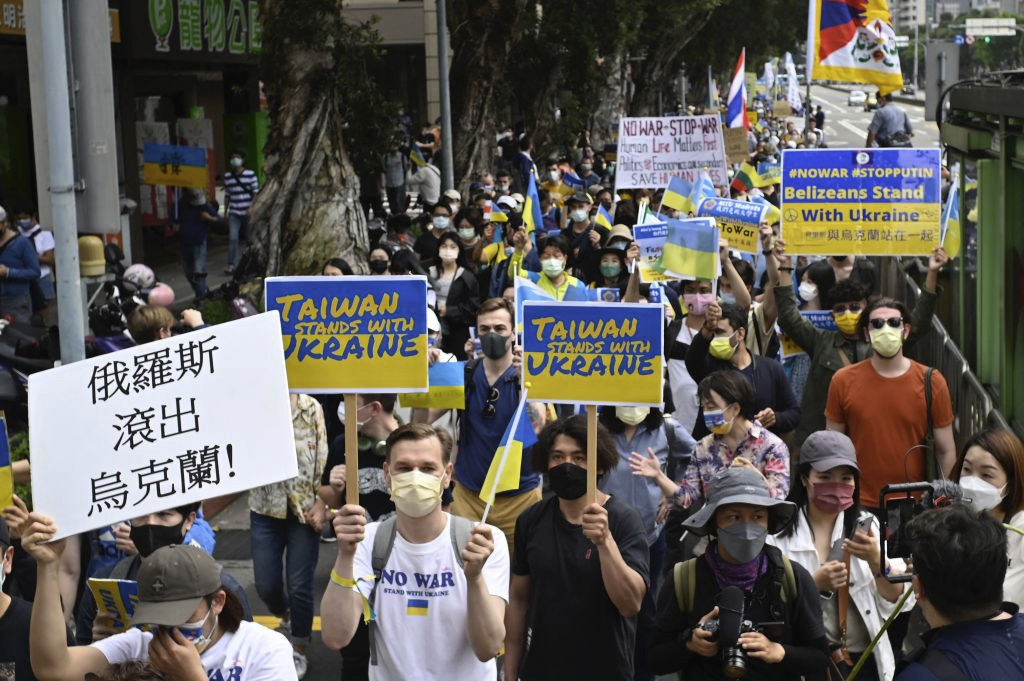
Najlepszym sposobem na powstrzymanie Chin przed atakiem na Tajwan jest pokonanie Rosji w Europie. Jak powiedziała w tym miesiącu była prezydent Tajwanu Tsai Ing-wen: “Ukraińskie zwycięstwo będzie najskuteczniejszym środkiem odstraszającym przed przyszłą agresją”. Na zdjęciu: Tajwańczycy na marszu poparcia dla Ukrainy w Tajpej 13 marca 2022 r. (Zdjęcie: Sam Yeh/AFP via Getty Images)


Tajwan: przetrwanie Ukrainy jest naszym przetrwaniem

Gordon G. Chang

Tłumaczenie: Małgorzata Koraszewska


“Powinniśmy odciąć amerykańską pomoc wojskową dla Ukrainy, dopóki nasi europejscy sojusznicy nie staną do walki” – powiedział senator USA Josh Hawley w przemówieniu w Heritage Foundation w lutym 2023 r. “To się nie stanie, dopóki będziemy wykonywać ich pracę za nich”.

Wielu, jeśli nie większość Amerykanów, zgodziłaby się z senatorem z Missouri, ale czy ma on rację?

Tytuł przemówienia Hawleya brzmiał “Chiny i Ukraina: Czas na prawdę”. Prawda jest jednak taka, że Stany Zjednoczone mają obowiązek bronić Ukrainy — i zdecydowanie leży to w ich interesie.

Dlaczego? Na początek: Ameryka chce powstrzymać rozprzestrzenianie się broni jądrowej.

W grudniu 1994 r. Ukraina zgodziła się oddać broń nuklearną, którą przejęła po rozpadzie Związku Radzieckiego. W zamian Ukraina otrzymała gwarancje terytorialne od Stanów Zjednoczonych, Wielkiej Brytanii i Rosji, zawarte w Memorandum o gwarancjach bezpieczeństwa w związku z przystąpieniem Ukrainy do Traktatu o nierozprzestrzenianiu broni jądrowej. Dokument ten jest powszechnie znany jako Memorandum Budapesztańskie.

W Memorandum Budapesztańskim trzy strony złożyły byłej republice radzieckiej sześć obietnic, z których najważniejsza brzmiała: “ich zobowiązanie wobec Ukrainy, zgodnie z zasadami Aktu Końcowego KBWE, do poszanowania niepodległości i suwerenności oraz istniejących granic Ukrainy”.

“Niektórzy twierdzą, że skoro Stany Zjednoczone nie dokonały inwazji na Ukrainę, to dotrzymały zobowiązań wynikających z Memorandum Budapaszteńskiego” – napisał Steven Pifer z Brookings Institution i były ambasador USA na Ukrainie w 2019 r. “To prawda, w bardzo wąskim sensie. Jednak podczas negocjacji zapewnień bezpieczeństwa przedstawiciele USA powiedzieli swoim ukraińskim odpowiednikom, że gdyby Rosja je naruszyła, Stany Zjednoczone wykażą się silnym zainteresowaniem i odpowiedzą”.

Jeśli Rosja utrzyma zajęte terytorium — a z pewnością, jeśli zdobędzie jeszcze więcej — kraje uwierzą, że amerykańskie obietnice ich obrony są nic nie warte i zaczną budować własne środki odstraszania nuklearnego.

Oprócz ignorowania zobowiązań Ameryki wynikających z Memorandum Budapesztańskiego, grupa optująca za “porzuceniem Ukrainy” uważa, że obrona Ukrainy podważa zdolność USA do wykonania ważniejszego zadania: ochrony Tajwanu. Argumentem jest to, że zasoby amerykańskie są ograniczone i Waszyngton musi dokonać wyboru.

“Mówienie, że powinniśmy stawiać Tajwan ponad Ukrainą, jest jak twierdzenie, że wóz strażacki powinien być zaparkowany daleko od ognia, aby chronić go na wypadek pożaru, który może wybuchnąć w przyszłości, zamiast gasić pożar w już płonącym domu” – argumentował John Walters, prezes Hudson Institute, podczas spotkania w swoim think tanku w kwietniu 2023 r.

Ma rację.

“Kiedykolwiek myślisz, że zaczęła się III wojna światowa, Chiny walczą w niej już teraz – powiedział w tym miesiącu Gatestone Kenneth Abramowitz z Citizens for National Security. – Walczą z resztą świata w Ukrainie, w Izraelu i wszędzie indziej. Musimy stawić czoła złym siłom wszędzie tam, gdzie nas atakują. To nie jest jak menu w restauracji, gdzie musisz wybrać tylko jedną potrawę”.

Istnieje wiele powodów, aby wybrać Ukrainę. Prezydent Rosji Władimir Putin nie poprzestanie na tym, tak jak nie poprzestał na rozbiciu Gruzji w 2008 r. lub zajęciu Krymu w 2014 r. “Jeśli Ukraina upadnie, Polska, republiki bałtyckie i inne państwa członkowskie NATO staną w obliczu egzystencjalnych zagrożeń” – powiedział Greg Scarlatoiu, przewodniczący Komitetu na rzecz Praw Człowieka w Korei Północnej. Wtedy USA i ich partnerzy z NATO będą jeszcze bardziej obciążeni — i mniej zdolni do obrony Tajwanu — niż są teraz.

Chiny również nie zatrzymają się same. Chiny na przykład przejęły Scarborough Shoal od Filipin na początku 2012 r. Administracja Obamy, gdy wiceprezydent Joe Biden odpowiadał za politykę zagraniczną, nie sprzeciwiła się temu zuchwałemu przejęciu przez Chiny.

Kiedy chińscy przywódcy zobaczyli, że Waszyngton nie reaguje, szybko wystąpili przeciwko Second Thomas Shoal i innym filipińskim rafom na Morzu Południowochińskim, zaatakowali japońskie wysepki na Morzu Wschodniochińskim i zaczęli zajmować i militaryzować elementy łańcucha wysp Spratly. Obama i Biden zalegalizowali najgorsze elementy chińskiego systemu politycznego, pokazując wszystkim innym, że agresja się opłaca.

Chiny prą dziś do przodu, tocząc wojny zastępcze na Ukrainie — Pekin dał zielone światło inwazji deklaracją partnerstwa “bez ograniczeń” tuż przed atakiem Władimira Putina. Najlepszym sposobem, aby powstrzymać Chiny przed atakiem na Tajwan, jest pokonanie ich pełnomocników, zwłaszcza Rosji w Europie.

“Ukraina nie będzie decydować o tym, czy Pekin zaatakuje Tajwan – powiedział Elbridge Colby, który przewodzi ruchowi przeciwko obronie Ukrainy. – Zamiast tego, tym, co jest najważniejsze dla odstraszania od wojny o Tajwan, jest równowaga militarna w Azji”. W tej chwili ta równowaga może być lub nie być korzystna dla Chin, ale myślę, że najważniejszym czynnikiem jest ocena Pekinu (który nie jest skłonny do ponoszenia strat w ludziach), czy Ameryka i jej partnerzy mają wolę obrony Tajwanu.

Przecież to właśnie ten postrzegany brak woli sprawił, że Putin uwierzył, że może dokonać inwazji na Ukrainę. Inwazja nastąpiła wkrótce po katastrofalnym wycofaniu się Bidena z Afganistanu i jego słabych publicznych oświadczeniach w dniach poprzedzających atak.

To właśnie wycofanie z Afganistanu dodało otuchy Chinom. Gdy Afganistan upadał, główną narracją propagandową Pekinu było to, że USA nie mogą mieć nadziei na przeciwstawienie się Chinom, ponieważ nie mogą poradzić sobie nawet z talibami.

Pekin następnie zaatakował rządzącą Tajwanem organizację, Demokratyczną Partię Postępową. “Władze DPP muszą zachować trzeźwy umysł, a siły secesjonistyczne powinny zarezerwować sobie możliwość obudzenia się ze swoich snów” – stwierdzono w artykule redakcyjnym “Global Times”, pisma kontrolowanego przez “Dziennik Ludowy”. “Z tego, co wydarzyło się w Afganistanie, powinni zrozumieć, że gdy tylko wybuchnie wojna w Cieśninie, obrona wyspy załamie się w ciągu kilku godzin, a wojsko USA nie przyjdzie z pomocą”.

Co gorsza, przywódcy Chin wydają się uważać, że USA nie są w stanie przyjść z pomocą. “Nie potrafią już wygrać wojny” – powiedział Lu Xiang z Chińskiej Akademii Nauk Społecznych w wywiadzie dla “Global Times”, gdy talibowie zdobyli Kabul.

Utrata Ukrainy sprawi, że Chiny będą jeszcze bardziej pewne tej oceny.

Tajwańczycy uważają, że ich bezpieczeństwo jest ściśle powiązane z wydarzeniami w Europie Wschodniej. “Przetrwanie Ukrainy jest przetrwaniem Tajwanu” – oświadczył Bi-khim Hsaio w zeszłym roku, który był przedstawicielem Tajwanu w Waszyngtonie zanim został wiceprezydentem tej wyspiarskiej republiki. “Sukces Ukrainy jest sukcesem Tajwanu. Nasza przyszłość jest ściśle powiązana”.

Jak powiedziała 23 listopada Tsai Ing-wen, która w maju zrezygnowała z urzędu prezydenta Tajwanu : “Zwycięstwo Ukrainy będzie najskuteczniejszym środkiem odstraszającym przed przyszłą agresją”.


Gordon Chang jest amerykańskim badaczem i komentatorem politycznym. Jest autorem książki Plan Red: China’s Project to Destroy America and The Coming Collapse of China.


Zawartość publikowanych artykułów i materiałów nie reprezentuje poglądów ani opinii Reunion’68,
ani też webmastera Blogu Reunion’68, chyba ze jest to wyraźnie zaznaczone.
Twoje uwagi, linki, własne artykuły lub wiadomości prześlij na adres:
webmaster@reunion68.com


Is domestic terrorism the next step for antisemitic radicals?

Is domestic terrorism the next step for antisemitic radicals?

Jonathan S. Tobin


Pro-Palestinian activists rally in front of Tisch Hospital at NYU Langone Health in New York City on June 14, 2024. Photo by Michael M. Santiago/Getty Images.

Americans were shocked and outraged by the assassination of Brian Thompson, the CEO of the UnitedHealthcare insurance company. Or at least most Americans were. Some were apparently happy about it, as a torrent of hate on social media directed towards the victim and sympathy for the murderer indicated.

Thoughtful people may be perplexed as to how it is that some are treating the alleged killer, Luigi Mangione, 26, as a sort of folk hero on whose behalf a crowdfunded legal defense fund has been established, and Thompson, 50, a husband and father, as a villain. It’s hard not to draw a connection between this incident and the way that many supposedly educated Americans have reacted in much the same manner to the atrocities committed by Hamas and Palestinian terrorists on Oct. 7, 2023. The attack on an insurance executive has prompted worries that this won’t be the last instance of violence directed at someone in the health-care industry.

There’s no need to wait to see if a similar pattern will emerge in response to the demonization of Israel. The growing list of crimes and threats against Jews from those who sympathize with Hamas and its goals has already shown us that the line that separates violent rhetoric from assaults and murderous terrorism can be razor-thin.

After two “pro-Palestine activists,” as The Washington Post sympathetically described them, were banned from George Mason University in Virginia, the response from many on campus and by antisemitic groups like the Council on American Islamic Relations (CAIR), as well as the liberal press, was to label them as innocent victims of a Jewish-directed purge of those who “criticize” Israel.

The duo was brought to the attention of the police because they were suspected of committing acts of antisemitic vandalism. Given that they were members of the Students for Justice in Palestine group that supports the assault on Israel and the terrorists’ goal of Jewish genocide, they were prime suspects. But when police found weapons, ammunition and Arabic armbands calling for death to the Jews at their home, the university was blamed for persecuting them by other left-wing campus groups. As the CAMERA media monitoring group noted, being open supporters of terrorism didn’t prevent the Post from buying into the narrative that the real story was the suppression of “pro-Palestine” activism. The appalling fact that students at a respected institution of higher education possessed material and arms that could potentially be used against their peers to put their sympathies into action seemed an afterthought.

What happened at George Mason is one case among an increasingly lengthy list of incidents in which “pro-Palestine” advocacy has become violent. That is the context in which we should be thinking about the death of Brian Thompson and why it is that so many people were ready to justify or rationalize it. Rather than discuss that incident in isolation, the link between antisemitic rhetoric associated with Israel by left-wing propagandists and their followers since Oct. 7 and the catalogue of violent incidents committed against Jews in the United States must be understood as an indication of where such activity leads.

Pushed too far?

We can’t be surprised when people like former Washington Post reporter Taylor Lorenz, who is notorious for her unhinged comments on a variety of issues, share posts that express support for what happened to Thompson. What’s even worse is the willingness of supposedly respectable public figures to rationalize the crime as an understandable reaction to what they claimed was an unjust health-care system.

That was the position taken by Sen. Elizabeth Warren (D-Mass.) and Rep. Alexandria Ocasio-Cortez (D-N.Y.)—the leader of the left-wing “Squad” in the U.S. House of Representatives who may soon be elevated to the post of ranking Democratic member on the House Oversight Committee. Their condemnations of the murder of Thompson were followed by a “Yes, but” addendum in which they claimed that such things are what we can expect when “people are pushed too far.”

The question of how American health care might be improved or made less inequitable, as well as whether insurance companies are to blame for all that is wrong with the system, are topics that can inspire plenty of spirited debate. Advocacy for the reform or abolition of insurance companies, socialized medicine or even the prosecution of their executives is one thing. But the comments about the murder of Thompson reflect a growing willingness on the left to treat politically motivated violence as a natural response to anything they don’t like. That’s something that cannot be ignored, even if assassination is also deprecated by insurance-industry critics as an ineffective strategy to effect the change they want.

A history of politically charged violence

This wouldn’t be the first time in American history that policy debates morphed into political violence. Anarchist bombings and assassinations of public figures, such as President William McKinley in 1901, were seen by some as a response to the excesses of capitalism in a period that historians call the “Gilded Age.” In the 1960s, an element of the movement protesting American involvement in the Vietnam War similarly became violent as the Weather Underground engaged in a campaign of domestic terrorism that involved larceny, murder as well as bombings of sites like the U.S. Capitol in Washington, D.C.

That’s an ominous precedent for the latest iteration of left-wing activism that focuses its hate against Jews and Israel.

There is a clear distinction in the law between advocating for violent outcomes and committing violence. Even those who want to see all Jews dead still possess the same First Amendment right to free speech as their neighbors who are not hate-mongers, so long as it is unconnected to actual violence. But as we’ve seen many times in the past, both in the United States and elsewhere, terrorism doesn’t arise in a vacuum. People who support genocide and terrorism in principle—such as those who chant “From the river to the sea” and “Globalize the intifada” on college campuses and in the streets of American cities—may well eventually conclude that participating in such acts themselves is justifiable. If Hamas murderers, rapists and kidnappers are your heroes and their actions are held up as an understandable reaction to “occupation,” why wouldn’t we expect a certain percentage of those glorifying Oct. 7 to seek to emulate it?

It’s not good enough for those who oppose insurance companies or Israel to merely say that nothing justifies violence while also supporting the agendas of those who cross the line from preaching about issues to attempted murder. Once people see where a desire to seek scapegoats or to apply toxic Marxist ideology to political disputes leads, there is an obligation on the part of responsible citizens to disavow such causes, as opposed to treating them as “wake-up calls” that should impel us to do their bidding.

Who needs a ‘wake-up call’?

Pro-Hamas mobs continue to make their presence felt on college campuses and in public discourse. But the presumption on the part of much of the liberal mainstream media and many Democratic politicians that they are merely well-meaning “idealists” who want a better world or less suffering for Palestinians is mistaken. Their worldview has been formed by toxic radical ideologies like critical race theory and intersectionality that allow for little or no nuance when discussing complex problems like the conflict between Israel and its foes, and the demonization of those who disagree with them.

Some of the protesters are foreign students from Muslim or Arab nations where the hatred of Jews and the support for violence against Israel is commonplace. And groups like SJP have received funding from foreign nations like the terrorist-supporting regime in Iran. Many educational institutions also are financed in part by Hamas allies like Qatar.

Put all that together and you have a recipe not just for a surge in antisemitism driven from the left but also a very real possibility that organized violence in the form of domestic terrorism might follow.

In the past four years, the U.S. Department of Justice has shown little interest in investigating the very real threat of domestic terror from Hamas sympathizers. Instead, it has wasted considerable time and energy chasing after peaceful conservatives who have protested against COVID-19 policies, woke indoctrination in the schools or abortion as if they were domestic terrorists. Reversing this should be a priority for the incoming administration of President-elect Donald Trump.

The chattering classes who dominate public discourse, along with the left-wing politicians who seek their approval, need to understand that the “wake-up call” that is truly needed is not about forcing the country to adopt their policy choices. Rather, it is the recognition that on Israel and other issues, their misguided rhetoric has created an atmosphere in which murder and terror are not just imaginable but perhaps inevitable.


Jonathan S. Tobin is editor-in-chief of the Jewish News Syndicate, a senior contributor for The Federalist, a columnist for Newsweek and a contributor to many other publications. He covers the American political scene, foreign policy, the U.S.-Israel relationship, Middle East diplomacy, the Jewish world and the arts. He hosts the JNS “Think Twice” podcast, both the weekly video program and the “Jonathan Tobin Daily” program, which are available on all major audio platforms and YouTube. Previously, he was executive editor, then senior online editor and chief political blogger, for Commentary magazine. Before that, he was editor-in-chief of The Jewish Exponent in Philadelphia and editor of the Connecticut Jewish Ledger. He has won more than 60 awards for commentary, art criticism and other writing. He appears regularly on television, commenting on politics and foreign policy. Born in New York City, he studied history at Columbia University.


Zawartość publikowanych artykułów i materiałów nie reprezentuje poglądów ani opinii Reunion’68,
ani też webmastera Blogu Reunion’68, chyba ze jest to wyraźnie zaznaczone.
Twoje uwagi, linki, własne artykuły lub wiadomości prześlij na adres:
webmaster@reunion68.com


South African Jews Demand President Condemn Alleged Bombing Attempt at Jewish Center

South African Jews Demand President Condemn Alleged Bombing Attempt at Jewish Center

Algemeiner Staff


South African President Cyril Ramaphosa in Chatsworth, South Africa, May 18, 2024. Photo: REUTERS/Rogan Ward

South Africa’s Jewish community has called on President Cyril Ramaphosa to condemn a recent alleged attempted bombing of a Jewish community center in Cape Town, decrying his silence on the global surge in antisemitism following the outbreak of the Israel-Hamas war last year.

The local Cape Town branch of the South African Jewish Board of Deputies (SAJBD), the umbrella group of the country’s Jewish community, released a statement last Friday saying that an “improvised explosive device” had been thrown over the front wall into the community center and “failed to detonate.”

No one was hurt and no damage was caused in the incident. The facility, located in the neighborhood of Gardens, reportedly contains offices for many Jewish community organizations, including a women’s group, a youth movement, and a Jewish newspaper, among others.

Cape Town Mayor Geordin Hill-Lewis confirmed earlier this week that city police were helping the South African Police Service (SAPS) investigate the matter and analyze closed-circuit television (CCTV) footage to find the perpetrator. He added that the case has been handed to South Africa’s Directorate for Priority Crime Investigation, known as the Hawks.

“We have evidence showing the perpetrators committing the act, and all available evidence has been handed over to the authorities,” Cape SAJBD executive director Daniel Bloch told the South African Jewish Report.

However, Hill-Lewis said that law enforcement had not yet determined the nature of the device.

“Should the SAPS investigation confirm that this was an attempted attack on the Jewish Community Center, I know I would speak for all Capetonians in condemning such an attempt in the strongest possible terms,” the mayor said in a statement. “Cape Town is a city of peace-loving people, where differences of faith and opinion are expressed loudly and fully, but always peacefully.”

Amid the investigation, SAJBD national director Wendy Kahn on Thursday shared a statement with The Algemeiner demanding South African President Ramaphosa condemn the alleged bombing attempt, noting he has been silent on the incident for a week.

“This was an act of antisemitism aimed at the Jewish community, whether intended to intimidate or to cause physical harm. It was an illegal act that constitutes a hate crime,” Kahn said. “This incident is concerning not only to South African Jewry, but also to the greater South African society and has garnered much global attention. Arson and bomb attacks against Jewish institutions have become sadly commonplace in other parts of the world, but this is the first time in many years that a Jewish communal facility in South Africa has been targeted.”

The apparent bombing attempt occurred on the same day that arsonists heavily damaged a synagogue in Melbourne, Australia, in what both law enforcement and political leaders called an antisemitic attack.

“The Mayor of Cape Town, the SA Police Services, and now the Hawks have approached the situation with the extreme gravity that it deserves.  However, nearly a week later, there has still been no word of condemnation nor any expression of support for South Africa’s Jewish community from President Ramaphosa,” the SAJBD statement continued. “This is not the first time that events that have directly affected the SA Jewish community have been met with silence from the presidency.”

Kahn called Ramaphosa’s silence “all the more perplexing” given how other world leaders have stood with their Jewish communities when they have experienced threats.

“Our own country’s elected president, however, has, in nearly a week, failed to condemn this incident,” the statement concluded. “A year ago, on Dec. 13, the Jewish communal leadership met with the president to express concerns about growing antisemitism that was spiraling in our country, and to call for him to speak out against this hate.  A year later we are again forced to call on our president to speak out against this violent attack clearly aimed at our community.”

The South African Jewish community has repeatedly lambasted Ramaphosa and his ruling African National Congress (ANC) for insufficiently combating antisemitism and being one of the harshest critics of Israel since the Palestinian terrorist group invaded the Jewish state last Oct. 7 and launched the war in Gaza.

For the past year, the South African government has been pursuing its case at the International Court of Justice (ICJ) accusing Israel of committing “state-led genocide” in its defensive war against Hamas in Gaza. In late October, South Africa filed the bulk of the relevant material to support its allegations, a move that the SAJBD slammed as a demonstration of “grandstanding” rather than actual concern for those killed in the Middle Eastern conflict.

South Africa temporarily withdrew its diplomats from Israel and shuttered its embassy in Tel Aviv shortly after the Oct. 7 Hamas pogrom, saying that the Pretoria government was “extremely concerned at the continued killing of children and innocent civilians” in Gaza.

Then in December, South Africa hosted two Hamas officials who attended a government-sponsored conference in solidarity with the Palestinians. One of the officials had been sanctioned by the US government for his role with the terrorist organization.

In May, members of South Africa’s Jewish community protested Foreign Minister Naledi Pandor’s call for students and university leaders to intensify the anti-Israel demonstrations that have engulfed college campuses across the US.

Later that month, Ramaphosa led the crowd at an election rally in a chant of “From the river to the sea, Palestine shall be free” — a popular slogan among anti-Israel activists that has been widely interpreted as a genocidal call for the destruction of the Jewish state, which is located between the Jordan River and the Mediterranean Sea.

Ramaphosa’s ANC has also supported a proposal by the City of Johannesburg to rename the street on which the US Consulate is located after notorious Palestinian terrorist Leila Khaled, who hijacked a Tel Aviv-bound plane in 1969 and attempted another hijacking, this time of an El Al flight, in 1970.

The government’s ardent opposition to Israel did not help its performance in elections earlier this year, when the ANC lost its majority in parliament for the first time in South Africa’s post-apartheid democratic history. However, it still remained the largest party and retained power at the national level through a coalition.

While Ramaphosa has not commented on last week’s alleged bombing attempt at the Jewish community center in Cape Town, he has continued speaking against Israel. In a message posted to X/Twitter on Thursday, the South African president falsely described the Israeli military campaign against Hamas terrorists as “Israel’s war on the people of Gaza,” comparing it to Russia’s invasion of Ukraine.


Zawartość publikowanych artykułów i materiałów nie reprezentuje poglądów ani opinii Reunion’68,
ani też webmastera Blogu Reunion’68, chyba ze jest to wyraźnie zaznaczone.
Twoje uwagi, linki, własne artykuły lub wiadomości prześlij na adres:
webmaster@reunion68.com


Oportuniści z organizacji bez sumienia

Zrzut z ekranu wideo: https://scontent.fbma5-1.fna.fbcdn.net/v/t39.30808-6/470224848_8962485630457022_7373743009935647224_n.jpg?_nc_cat=106&ccb=1-7&_nc_sid=127cfc&_nc_ohc=hjkPE219rcAQ7kNvgEMgMCA&_nc_zt=23&_nc_ht=scontent.fbma5-1.fna&_nc_gid=ACQQDaTd-ksENq-qRJTj9xa&oh=00_AYD3xzyZWoNUJhONrWH-sKurGqXL_v7ikoAvfW8fgvDPGg&oe=6761DDEB


Oportuniści z organizacji bez sumienia

Andrzej Koraszewski


Ojczyzna António Manuela de Oliveira Guterresa w czasach rządów Antonio de Oliviera Salazara była wierną córą Watykanu i nadal (dyskretnie) była wierna naukom Adolfa Hitlera. W 1961 roku czterdziestoletni londyński adwokat, Peter Benenson, jechał pewnego dnia metrem i podobnie jak większość innych pasażerów przeglądał gazetę. Jego uwagę zwróciła drobna notka o dwóch portugalskich studentach skazanych na siedem lat więzienia za wzniesienie toastu za wolność Portugalii. Benenson uświadomił sobie, że skazani za słowa są również skazani na zapomnienie, gniją latami w więzieniach dyktatorów i nikt o nich nie walczy. Postanowił, że musi napisać o tym artykuł. Nazwał takich skazańców „więźniami sumienia”.

Peter Benenson uważał, że zwykli ludzie mogą domagać się od tyranów uwolnienia więźniów sumienia, mogą wywierać presję na swoich polityków, żeby potępiali wykorzystywanie systemu sprawiedliwości  dla celów politycznych, mogą naciskać na media, żeby zaczęły zauważać los ludzi skazanych za słowa.

Przyszły sekretarz Organizacji Narodów Zjednoczonych w Jednej Sprawie miał wtedy zaledwie dwanaście lat, artykuły Benensona poruszyły wielu zwykłych ludzi i pojawiła się idea założenia Amnesty International. Zwykli ludzie zasypywali więzienia pocztówkami adresowanymi do skazanych za słowa, pisali listy do prezydentów, premierów i ministrów demokratycznych i tyrańskich krajów, zbierali szczegółowe informacje i molestowali dziennikarzy lokalnej prasy, że warto o gnijących za słowa skazańcach napisać. Oczywiście nikt nie dawał żadnych dotacji na tę działalność, wszystkie koszty ludzie pokrywali z własnej kieszeni, nie było żadnych biur, ani dostojników z zawrotnymi wynagrodzeniami.          

Powoli ta działalność zaczęła być dostrzegana, zyskując szacunek i przyciągając również ludzi chcących się pokazać w świetle coraz mocniejszych reflektorów. Podczas gdy początkowo redakcje opędzały się od działaczy Amnesty International, po kilku latach to dziennikarze zaczęli brylować w lokalnych i krajowych zarządach. Niebawem więźniowie sumienia przestali być ważni, a priorytetem stały się SPRAWY. Amnesty Interniational zaczęła dostawać milionowe dotacje  (jak łatwo się domyśleć zawsze z jakimiś jawnymi lub domyślnymi oczekiwaniami), powoli organizacja założona przez wspaniałych ludzi przechodziła w ręce łajdaków używających pierwotnej marki i idei Petera Benensona jako listka figowego.      

Być może jeden pozornie drobny incydent ilustruje lepiej tę przemianę niż wszystko inne. Zaledwie miesiąc po strasznych wydarzeniach 7 października 2023 roku, we Włoszech pracownicy Amnesty International zostali przyłapani na zdzieraniu zdjęć porwanych do Gazy żydowskich dzieci i wrzucaniu ich do kosza na śmieci. Mamy tylko krótki zapis wideo, na którym mężczyzna pokazuje zdarte plakaty. Nie musisz znać włoskiego, żeby rozumieć bezmiar kontrastu między ideą Benensona, a dzisiejszą praktyką Amnesty International i mentalnością ludzi, którzy w niej pracują. Trudno o większy kontrast między wezwaniem do empatii dla skazanych za słowa i nienawistną pogardą dla dzieci porwanych za to, że urodziły się Żydami. Benenson nigdy nie został członkiem Amnesty International, czy obawiał się, że autorytet moralny zbudowanej na jego idei organizacji może zostać wykorzystany w najbardziej perwersyjny sposób? Prawdopodobnie. Kradzież autorytetów moralnych jest znana od zarania dziejów.

Między podróżą Benensona londyńskim metrem w 1961 roku a wyczynem włoskich działaczy Amnesty International w 2023 roku zdarzyło się bardzo wiele. Czy początkiem tego wrogiego przejęcia wspaniałej organizacji była decyzja o rozszerzeniu działalności Amnesty Interniational o kampanię przeciw karze śmierci? Tak niewinny i mogłoby się zdawać szlachetny krok. Tyle tylko, że naruszało to statutowe założenie, że Amnesty nigdy nie zajmuje się więźniami skazanymi za kryminalne przestępstwa, terror i przemoc.  

Dziś, nawet ludzie nie zwracający uwagi na największe zboczenie tej organizacji, jakim jest notoryczny antysemityzm, mogą zauważyć, że ta organizacja mało przypomina Amnesty International z lat 60. ubiegłego wieku. Pozbawienie Aleksieja Nawalnego w lutym 2021 roku statusu więźnia sumienia wywołało tak wiele protestów, że kierownictwo AI szybko postanowiło się z tego wycofać.

Kwestia kontaktów i wręcz współpracy z terrorystami wypływała wielokrotnie, aż wreszcie, członkini kierownictwa AI, Gita Sahgal w 2010 roku ujawniła prasie powiązania AI z Moazzamem Beggiem, dyrektorem grupy kampanijnej Cage (wcześniej Cageprisoners), która reprezentuje mężczyzn przetrzymywanych w Guantanamo w warunkach pozasądowych. Określiła go mianem „najsłynniejszego brytyjskiego zwolennika talibów”.

Kierownictwo Amnesty zawiesiło ją, a następnie zwolniło, uzasadniając to ordynarnym kłamstwem, że nie podniosła tej sprawy w normalnym trybie służbowym. Sprawa Begga była zaledwie czubkiem góry lodowej, a jednak szybko dało się ją wyciszyć. Kradzież marki autorytetu moralnego jest intratna, pozwala każdą krytykę obrócić w atak złych ludzi na z definicji świętych i szlachetnych.

Raporty AI są często krytykowane za ich oparcie na anonimowych świadkach i słabych dowodach, za tendencyjność, płytkość i kardynalne błędy prawnicze. W 2022 roku Amnesty przyznała, że straciła jedną trzecią wpływów z dotacji po raporcie o rzekomych ukraińskich zbrodniach wojennych. 

Amnesty International twierdzi, że nie przyjmuje żadnych funduszy na badania nad prawami człowieka od rządów ani od partii politycznych. W rzeczywistości brytyjski rząd był trzecim co do wielkości darczyńcą Amnesty International w 2009 r. z hojną darowizną w wysokości 800 000 funtów. W 2011 r. Amnesty International otrzymała 842 000 funtów od brytyjskiego Departamentu Rozwoju Międzynarodowego. Jak podawał „Global Times” otrzymała również obfite darowizny od Komisji Europejskiej, Holandii i Stanów Zjednoczonych. W 2016 r. darowizna od Fundacji Open Society George’a Sorosa pomogła zwiększyć przychody Amnesty International Ireland o 8 procent. Ponieważ irlandzkie prawo dotyczące finansowania kampanii zabrania zagranicznych darowizn na rzecz grup zaangażowanych w wybory lub referenda organizowane w kraju, Komisja ds. Standardów w Urzędach Publicznych zażądała od Amnesty International zwrotu pieniędzy, czego ta ostatnia odmówiła.

Prawdę mówiąc organizacje obrony praw człowieka obracające dziesiątkami milionów dolarów nie są specjalne oddane idei przejrzystości, zaś instytucje, które powinny tego od nich oczekiwać, nie wydają się być specjalnie dociekliwe.

Przez moment głośna była sprawa darowizny dla innej przejętej organizacji obrony praw człowieka – Human Rights Watch, która otrzymała solidną dotację od saudyjskiego magnata, Mohameda Bin Issy Al Jabera. Główny (ówczesny) dyrektor HRW nie tylko zaakceptował warunek nie wspierania grup LGBT w regionie (czytaj nie informowania o  prześladowaniach homoseksualistów z krajów arabskich), ale wiedział o ciemnych interesach tego miliardera. Umowa zawarta była w 2012 roku, ale sprawa wypłynęła dopiero w 2020 roku, kiedy okazało się, że  saudyjski magnat wykorzystuje półniewolniczą siłę roboczą, że Ken Roth o tym wiedział, a nawet rozmawiał z darczyńcą o problemie, ale nadal przyjmował dotacje od szlachetnego Saudyjczyka. Kiedy sprawa stała się głośna, HRW pospiesznie zwróciła pieniądze, udając, że nic się nie stało.

Zarówno HRW, jak i Amnesty International oskarżane są o zdradę pierwotnych założeń tych organizacji, jak i o notoryczny antysemityzm. (Założyciel HRW, nieżyjący już Robert Bernstein, odciął się od tej organizacji, uznając, że w rękach Kena Rotha stała się przeciwieństwem organizacji, którą zakładał.)

Czy problem systemowego antysemityzmu takich organizacji jak HRW, AI czy ONZ jest istotny i czy te oskarżenia są uzasadnione? Wielu argumentuje, że te oskarżenia są próbą wyciszenia wszelkiej krytyki Izraela. Sami oskarżeni stanowczo odrzucają te zarzuty. Potwierdzają je jednak statystyki oraz język i treść raportów, oświadczeń i rezolucji. Niewielu pamięta, że istniała kiedyś Komisja Praw Człowieka ONZ i że została zlikwidowana w związku z chronicznym antysemityzmem, w nadziei że nowa Rada Praw Człowieka będzie mniej antysemicka (co okazało się absolutnie niemożliwe, ponieważ demokratyczna organizacja narodów systematycznie łamiących prawa człowieka potrzebuje kozła ofiarnego jak powietrza, żeby móc udawać kontynuację organizacji założonej po drugiej wojnie światowej).

Antysemickie tendencje Amnesty International były widoczne już wcześniej, ale upadek Związku Radzieckiego zmienił pole bitwy o prawa człowieka. Wydarzeniem, które ujawniło oblicze nowego wspaniałego świata, była konferencja ONZ przeciw rasizmowi zorganizowana w Durbanie w 2001 roku. 

Amnesty International grała pierwsze skrzypce na tym sabacie czarownic, podpowiadając najwłaściwszy sposób walki z rasizmem. Jak czytaliśmy w oświadczeniu, ówczesnej przewodniczącej AI, Irene Khan, „Nadal pozostają poważne różnice zdań w kwestii zwalczania dziedzictwa niewolnictwa i kolonializmu oraz kwestii dyskryminacji Palestyńczyków przez Izrael.” Ukryta sugestia, że przezwyciężenie tych różnic wymaga całej koncentracji uwagi na kwestii żydowskiej, nie umknęła uwadze tego gremium.

Orgii antysemityzmu w wykonaniu organizatorów tej konferencji towarzyszyły okrzyki zewnętrznych sympatyków, że „Hitler miał rację”.

Czy możemy zrozumieć ten wybuch antysemityzmu właśnie w tym momencie historycznym? Jesteśmy skazani na domysły i spekulacje. Zniknął Związek Radziecki, opiekun „krajów niezaangażowanych” (lub jak kto woli rozwijających się), Chiny flirtowały z kapitalizmem lewica poszukiwała nowej ojczyzny proletariatu, najlepszą propozycją wydawała się mityczna Palestyna, która pozwalała łączyć dobrze zakorzenione uprzedzenia  z frustracjami wolnych ale niezdolnych do posługiwania się wolnością oraz sytych i znudzonych demokracją. Efektem był kolejny sojusz oddanych utopiom skrajności.

W 1939 roku widzieliśmy defiladę Armii Czerwonej i Wehrmachtu w Brześciu. Niebawem Stalin miał wydać rozkaz rozstrzelania oficerów wywiadu ostrzegających, że Hitler przygotowuje się do wojny ze Związkiem Radzieckim. W 1979 roku widzieliśmy wspólne harce irańskich komunistów z islamistami, z których ci pierwsi nie domyślali się, że natychmiast po obaleniu szacha zaczną się aresztowania, a potem masowe mordowanie komunistów.

W Durbanie rozpoczął się nowy etap wspólnej walki z amerykańskim imperializmem. Amnesty, HRW, ONZ byli teraz awangardą awangardy. Parady zachodniej lewicy ze skrajnie prawicową patriarchalną awangardą islamu walczącą o światowy kalifa odbywają się teraz w Londynie, Waszyngtonie, Paryżu innych stolicach zachodniego świata. Opowieści Amnesty International o izraelskim ludobójstwie, apartheidzie, o osadniczym kolonializmie i innych żydowskich grzechach są ważną częścią intersekcjonalnej walki o dusze umysłowego proletariatu. Nie, nie mają nic wspólnego z ideą Petera Benensona zrodzoną  w londyńskim metrze, ani z tymi, którzy ją wtedy podchwycili.

P. S. Publikujemy dziś artykuł o porwaniu przez władze w Algierii francuskojęzycznego pisarza Boualema Sansala. Głównym powodem była najprawdopodobniej jego wizyta w Izraelu i kontakty z izraelskimi pisarzami. Jak 6 grudnia informował francuski dziennik „Le Figaro”, Amnesty International odmówiła zajęcia się tą sprawą ze względu na brak dowodów, że jest zatrzymany. Autor artykułu pisze:

Czy łatwiej było uzyskać informacje w Gazie, w środku wojny między Izraelem a Hamasem (którego Amnesty International nie chce określić jako ruchu terrorystycznego) niż w Algierii? Organizacja pozarządowa w rzeczywistości odmówiła oficjalnego potępienia zatrzymania francusko-algierskiego pisarza Boualema Sansala przez algierski wymiar sprawiedliwości ze względu na brak wystarczających informacji, jak Amnesty International podaje na X (Twitter) za pośrednictwem konta swojego francuskiego oddziału. Jednakże ta sama organizacja pozarządowa opublikowała właśnie raport  potwierdzający istnienie „ludobójstwa w Gazie.”


Zawartość publikowanych artykułów i materiałów nie reprezentuje poglądów ani opinii Reunion’68,
ani też webmastera Blogu Reunion’68, chyba ze jest to wyraźnie zaznaczone.
Twoje uwagi, linki, własne artykuły lub wiadomości prześlij na adres:
webmaster@reunion68.com