Izrael cierpi na nadmiar demokracji

Antyrządowe protesty w Tel Awiwie (Zrzut z ekranu wideo)

Izrael cierpi na nadmiar demokracji


Victor Rosenthal
Tłumaczenie: Małgorzata Koraszewska


Państwo Izrael jest dziś bardziej zagrożone niż kiedykolwiek od 1948 r., włącznie z 1973 rokiem. Ugrzęzło w Gazie, podczas gdy jego wrogowie czekają na swoją kolej w Libanie, Syrii, AP, Jemenie, Iraku i Iranie – który może już posiadać broń nuklearną. Bezprecedensowa kampania podżegania antysemickiego niszczy poparcie społeczne dla Izraela na całym świecie, a rząd za rządem karze go, uznając „Państwo Palestyna” na jego terytorium. Im bardziej ludobójczy są jego wrogowie, tym częściej jest fałszywie oskarżany o ludobójstwo. Jego decyzja o ustawieniu się jako satelita Stanów Zjednoczonych przyniosła gorzkie owoce, ponieważ o polityce USA w coraz większym stopniu decydują elementy pragnące zniknięcia Izraela; jednocześnie wrogowie USA traktują go jako forpocztę amerykańskiej potęgi, którą należy wyeliminować.

Elity polityczne, wywiadowcze i wojskowe Izraela okazały się niekompetentne. Nie udało im się przewidzieć, zapobiec, ani nawet skutecznie zareagować na inwazję z 7 października. Zamienili militarne sukcesy wojny w coś, co wydaje się być poddaniem się wszystkim żądaniom Hamasu.

Przez lata kreowali wizerunek Izraela jako worka treningowego, a nie dumnego i potężnego narodu, jakim jest. Pomimo naszej armii uzbrojonej w broń nuklearną, pozwolili Iranowi otoczyć nas swoimi grupami terrorystycznymi, a nawet ustanowić w Libanie siły odstraszające, którym boimy się rzucić wyzwanie. Pozwolili samemu Iranowi zdobyć broń nuklearną.

W dniu 13 kwietnia 2024 r. Iran przeprowadził atak na Izrael, w którym wykorzystano setki dronów, rakiet manewrujących i rakiet balistycznych, co było największym takim atakiem w historii wojskowości. Wszystkie oprócz kilku zostały przechwycone przez Izrael z pewną pomocą USA i innych; koszt tej operacji obronnej dla Izraela oszacowano na ponad 1 miliard dolarów. Gdyby atak się powiódł, cele wojskowe i infrastrukturalne uległyby ogromnym zniszczeniom, a także byłoby bardzo wiele ofiar śmiertelnych. Izrael odpowiedział kilka dni później, niszcząc jakieś instalacje radarowe w Iranie. Słabość reakcji Izraela była wynikiem nacisków USA i odstraszającego efektu irańskiego pełnomocnika Hezbollahu

W kraju nasi przywódcy pozwolili AP na systematyczne pożeranie części Strefy C w Judei/Samarii, która na mocy traktatu międzynarodowego powinna znajdować się pod pełną izraelską kontrolą. Zezwolili, a następnie legitymizowali nielegalne osadnictwo Beduinów na Negewie. Pozwolili na rozkwit arabskich syndykatów przestępczych na Negewie i w Galilei, a także w miastach arabskich i miastach mieszanych arabsko-żydowskich.

Dziesiątki tysięcy obywateli Izraela uciekło ze swoich domów: na południu ze strachu przed odradzającym się terroryzmem Hamasu, a na północy przed codziennymi bombardowaniami Hezbollahu rakietami i bronią przeciwpancerną, które spustoszyły miasta i miasteczka w okolicy. Kiedy to piszę, w północnych miastach płoną wielkie pożary wywołane rakietami Hezbollahu.

Nasze rządy są nieskuteczne, są sparaliżowane sporami w kwestiach takich jak reforma sądownictwa i projekt charedim, nękane przez potężne lobby i grupy, którymi manipulują różne podmioty polityczne. Dwie największe mniejszości, izraelscy Arabowie i charedim, utrzymują w naszym państwie autonomiczne „państwa”, w których prawa i nieformalne porozumienia regulujące resztę populacji niekoniecznie mają zastosowanie.

Wielu izraelskich Arabów, z godnym uwagi wyjątkiem Druzów i niewielkiej liczby Beduinów, nie akceptuje zasady, że Izrael jest państwem żydowskim, nie służy w wojsku i w wielu przypadkach unika płacenia podatków i innych obowiązków. Charedim odmawiają służby wojskowej i utrzymują system edukacji, w którym nie naucza się „świeckich” przedmiotów, takich jak matematyka i współczesny język hebrajski.

Z powodu wojny żołnierze rezerwy mają teraz służyć przez 90 dni w roku, co jest destrukcyjne dla życia rodzinnego, pracy, a zwłaszcza niezależnych przedsiębiorstw. Jednocześnie dziesiątki tysięcy uczniów jesziwy zostało zwolnionych z poboru. Próby zmiany tego stanu spotkały się z demonstracjami blokującymi główne drogi i groźbami obalenia rządu ze strony polityków charedich. Rządy izraelskie od dziesięcioleci bezskutecznie próbują znaleźć kompromis umożliwiający podział obciążeń związanych z bezpieczeństwem.

***

Co można zrobić? Co trzeba zrobić, aby zachować państwo żydowskie, zapobiec kolejnemu rozproszeniu Żydów i przywrócić Izraelowi rolę obrońcy społeczności żydowskich w diasporze? Jak zawsze, istnieją odpowiedzi krótkoterminowe i długoterminowe. Dziś naszym najważniejszym zmartwieniem musi być wojna w Gazie. Dopóki Hamas będzie nadal kontrolował Strefę, faktycznie stracimy dużą część naszego kraju, która pozostanie niezdatna do zamieszkania, a Siły Obronne Izraela będą unieruchomione i niezdolne do reagowania na inne zagrożenia. Co ważniejsze, jeśli Izrael zostanie pokonany przez taktykę terroru Hamasu – i nie dajcie się zwieść, porozumienie na wzór tego ogłoszonego w zeszłym tygodniu przez prezydenta USA będzie odebrane przez cały świat jako miażdżąca porażka – nasi wrogowie na wszystkich frontach przyniosą nam więcej 7 październików.

Strategia zwycięstwa Hamasu zależy od dwóch głównych słabości Izraela: publicznej troski o zakładników (i manipulacji tą obawą przez działaczy politycznych sprzeciwiających się rządowi) oraz podatności Izraela na naciski amerykańskie.

Okrucieństwo Hamasu i sytuacja zakładników rozdziera serca wszystkich Izraelczyków. Ale jeśli nie zdarzy się cud, nie ma rozwiązania, które sprowadzi ich do domu za cenę, na jaką naród może sobie pozwolić. Musimy powiedzieć ich rodzinom: nie możemy przehandlować państwa żydowskiego za waszych bliskich. Musimy zrobić wszystko, co w naszej mocy, aby ich ocalić, ale nie możemy w tym celu poddać się naszemu morderczemu wrogowi. Złudzeniem jest myślenie, że możemy zgodzić się na 6-tygodniowe zawieszenie broni (nie wspominając o innych żądanych ustępstwach), biorąc pod uwagę presję ze strony Ameryki i innych frontów wojny, a następnie powrócić, aby wykończyć Hamas. To się nie zdarzy.

Administracja USA zrobiła i nadal robi wszystko, co w jej mocy, poza interwencją wojskową po stronie Hamasu, aby uniemożliwić Izraelowi osiągnięcie zdecydowanego zwycięstwa. Izraelscy przywódcy muszą zrozumieć, że nie możemy wygrać, jeśli będziemy przestrzegać dyrektyw Waszyngtonu. Muszą powiedzieć Amerykanom wszystko, co chcą usłyszeć, ale rozkazać IDF dokończyć robotę, odsunąć Hamas od władzy i zniszczyć jego potencjał militarny.

***

Pisanie tego jest bolesne, ale obawiam się, że nasz obecny rząd może nie być w stanie podjąć działań niezbędnych do przetrwania państwa. Co gorsza, struktura polityczna naszego państwa może być źle przystosowana do przetrwania na dzisiejszym Bliskim Wschodzie.

Podsumowałbym problem stwierdzeniem, że Izrael cierpi na nadmiar demokracji. Jest wiele rzeczy wspaniałych w prawdziwie demokratycznym państwie: teoretycznie potrafi ono zachowywać się sprawiedliwie wobec jednostek o różnorodnych interesach i potrzebach. Jest to sposób na dostosowanie polityki kraju do „powszechnej woli” społeczeństwa, według słów Rousseau. Niestety są pewne szczególne sytuacje, w których demokracja nie jest optymalna.

Jednym z nich jest stan wojny. W czasie wojny należy podejmować decyzje, które sprzyjają zwycięstwu, ale powodują cierpienie społeczeństwa lub wpływowych grup. Często takich decyzji nie można podjąć w sposób demokratyczny.1 Przykładem jest pytanie, czy Izrael powinien zaakceptować porozumienie, które uwolni część zakładników, ale także uwolni wielu uwięzionych terrorystów i nałoży ograniczenia na prowadzenie wojny.

Innym problematycznym przypadkiem są duże mniejszości, które wykorzystują instytucje demokratyczne, takie jak wybory, do prowadzenia „polityki tożsamości”, a nie polityki zorientowanej na konkretne problemy. W Izraelu, oprócz podziałów etnicznych i religijnych, spotykamy ugruntowane podgrupy ideologiczne. W latach 2019–2021 w połączeniu z naszym skomplikowanym systemem wyborczym doprowadziły do czterech wyborów parlamentarnych w ciągu dwóch lat. Napięcie między wybranym Knesetem a niezależną biurokracją, która reprezentuje dawną elitę rządzącą Izraela, gwarantuje impas w ważnych kwestiach. Ponadto trwająca niemal dekadę próba obalenia premiera Netanjahu przy wykorzystaniu wymiaru sprawiedliwości, przy wsparciu większości mediów i środowiska akademickiego, odwracała uwagę i obciążała obie strony.

Izrael jest niemal stale pogrążony w wojnie i obdarzony dużymi mniejszościami etnicznymi/religijnymi. Zatem jego aspiracje do bycia państwem demokratycznym działają przeciwko możliwości stworzenia skutecznego rządu. A wyzwania stojące przed małym państwem żydowskim na Bliskim Wschodzie absolutnie wymagają przywództwa, które funkcjonuje optymalnie.

Biorąc pod uwagę stosunki władzy w naszym społeczeństwie politycznym, jest mało prawdopodobne, aby istniała gładka droga, (na przykład wspólnie wykuta konstytucja), do nowej formy rządów. Jednak odpowiedzialność państwa wobec obywateli i narodu żydowskiego jako całości wymaga, aby w każdym przypadku dokonało ono tej zmiany, niezależnie od zakłócenia normalnego życia, jakie może to za sobą pociągać.
________________________

1 Ale czy demokracje nie pokonały nazistów podczas II wojny światowej? W rzeczywistości zarówno Roosevelt, jak i Churchill zachowywali się jak dosłowni dyktatorzy. A Stalin…


Victor Rosenthal – Urodzony w Stanach Zjednoczonych, studiował informatykę i filozofię na University of Pittsburgh. Zajmował się rozwijaniem programów komputerowych. Mieszka obecnie w Izraelu. Publikuje w izraelskiej prasie. Jego artykuły często zamieszcza Elder of Ziyon.


Zawartość publikowanych artykułów i materiałów nie reprezentuje poglądów ani opinii Reunion’68,
ani też webmastera Blogu Reunion’68, chyba ze jest to wyraźnie zaznaczone.
Twoje uwagi, linki, własne artykuły lub wiadomości prześlij na adres:
webmaster@reunion68.com


Notes from the safest place in Europe for Jews

Notes from the safest place in Europe for Jews

JONATHAN S. TOBIN


Hungary’s government is despised by liberals. But Budapest is Israel’s only real ally in the European Union and, as long as Viktor Orbán remains in power, the Jews there are safe.

.
Viktor Orbán, Hungary’s prime minister, arrives to attend in an informal meeting of heads of state or government in Prague on Oct. 7, 2022. Credit: Alexandros Michailidis/Shutterstock.

This is a perilous time to be a Jew. The world responded to the greatest mass slaughter of Jews since the Holocaust with a surge of antisemitism and sympathy for those who committed the atrocities of Oct. 7, rather than its victims. Israel’s efforts to eradicate the genocidal terrorists of Hamas who launched that attack have not just been opposed but demonized in a way that enlightened liberal opinion did not condemn the orgy of murder, rape, torture, kidnapping and wanton destruction that occurred on that day.

And while Jews everywhere celebrated the heroic rescue of four hostages this past weekend by Israeli security forces, the same mainstream corporate media that has been acting as Hamas’s stenographers throughout the eight months of the current war reacted by emphasizing the deaths of the Palestinians holding them captive.

Yet as bad as the situation has become in the United States, where elite college campuses have become hotbeds of support for Hamas, it is arguably worse in Europe. It is not just a matter of the governments of Western Europe opposing Israel’s military campaign and seeking to prevent the defeat of Hamas in concert with the Biden administration. Spain, Norway and Ireland chose to reward the Palestinians for their terrorism by formally recognizing their fictional statehood. More than that, a sinister red-green alliance of leftists and supporters of political Islam has created a situation in which Jewish communities throughout the continent feel themselves under siege. Many are choosing not to wear religious markers such as kippahs and Stars of David, and still others have taken off the mezuzahs once affixed to their homes.

But not in Hungary.

Spend a week in that Eastern European country, as I just did, and the one thing you can count on is that you won’t see its landmarks being the site of mass demonstrations of supporters of jihad and Hamas terror, as is the case elsewhere, including the United States. That is something that would be unimaginable right now in America, but the reason is that the Hungarian government has banned pro-Hamas demonstrations. They’ve deemed it an open expression of antisemitism and a threat to public order. Their rationale is to treat pro-Hamas activism as morally equivalent to open advocacy for Nazism, which in Hungary and most other places in Europe is illegal.

A safe place in Europe

As I discovered in conversations with both liberal and Orthodox Jews, as well as non-Jews, the Jewish community in Budapest feels safe in a way that is not the case in London, Paris or Berlin. When you visit Hungary, no one tells you not to wear kippahs or Jewish stars in public. Orthodox Jews are not an uncommon sight on the streets of the Hungarian capital and act as if they have no fear of being attacked for their beliefs.

Meanwhile, the Hungarian government is easily the Jewish state’s best friend in Europe. As knowledgeable sources have made clear to me, Budapest is Jerusalem’s only reliable ally within the European Union, always ready to disrupt the E.U. Commission’s quest for consensus on behalf of its consistent anti-Israel agenda, sometimes displaying more willingness to fight supporters of the Palestinians than the Israelis themselves.

Understanding Orbán

What is the reason for this alliance that, at least on its surface, has little basis in the history of the Jewish experience in Hungary? It boils down to the decisions of a single highly controversial person: Hungarian Prime Minister Viktor Orbán.

Orbán, widely despised by American liberals, is routinely denounced as a tyrant and opponent of democracy, or as an ally of the even more-hated Russian President Vladimir Putin. He’s often accused of being an antisemite because of his long-standing feud with the Hungarian-born leftist billionaire George Soros, who remains a convenient punching bag for Orbán and his Fidesz Party. Fidesz is often likened to other right-wing populist parties that are on the rise in Europe. Such comparisons, as well as those of Orbán to former U.S. President Donald Trump or Israeli Prime Minister Benjamin Netanyahu, with whom he has close relations, are simplifications or just plain misleading. Love him or hate him, Orbán is a remarkable and singular figure. Though this is just one prism through which one can view him, his stance as a bulwark against European antisemitism needs to be both understood and appreciated.

His career began in the last decade of the Soviet Empire when, as a young law student and activist, he was part of the opposition to the Communist government. It is no small irony (and one that is often pointed out in debates about him today in Hungary) that he earned a scholarship to Oxford University in Great Britain—from the Soros Foundation since during that era, the billionaire’s philanthropy was primarily focused on promoting freedom behind the Iron Curtain. After the fall of the Berlin Wall and the birth of Hungarian democracy, Fidesz grew from its student-activist origins into a parliamentary faction that was considered a moderate liberal party. But under Orban’s leadership, it turned to the right on social issues while becoming populist in terms of its opposition to pure market capitalism.

In a stunning victory, Orbán led Fidesz to power for the first time in Hungary’s 1998 elections. He served as prime minister for four years in what was generally considered a successful term in office but failed to win re-election in 2002.

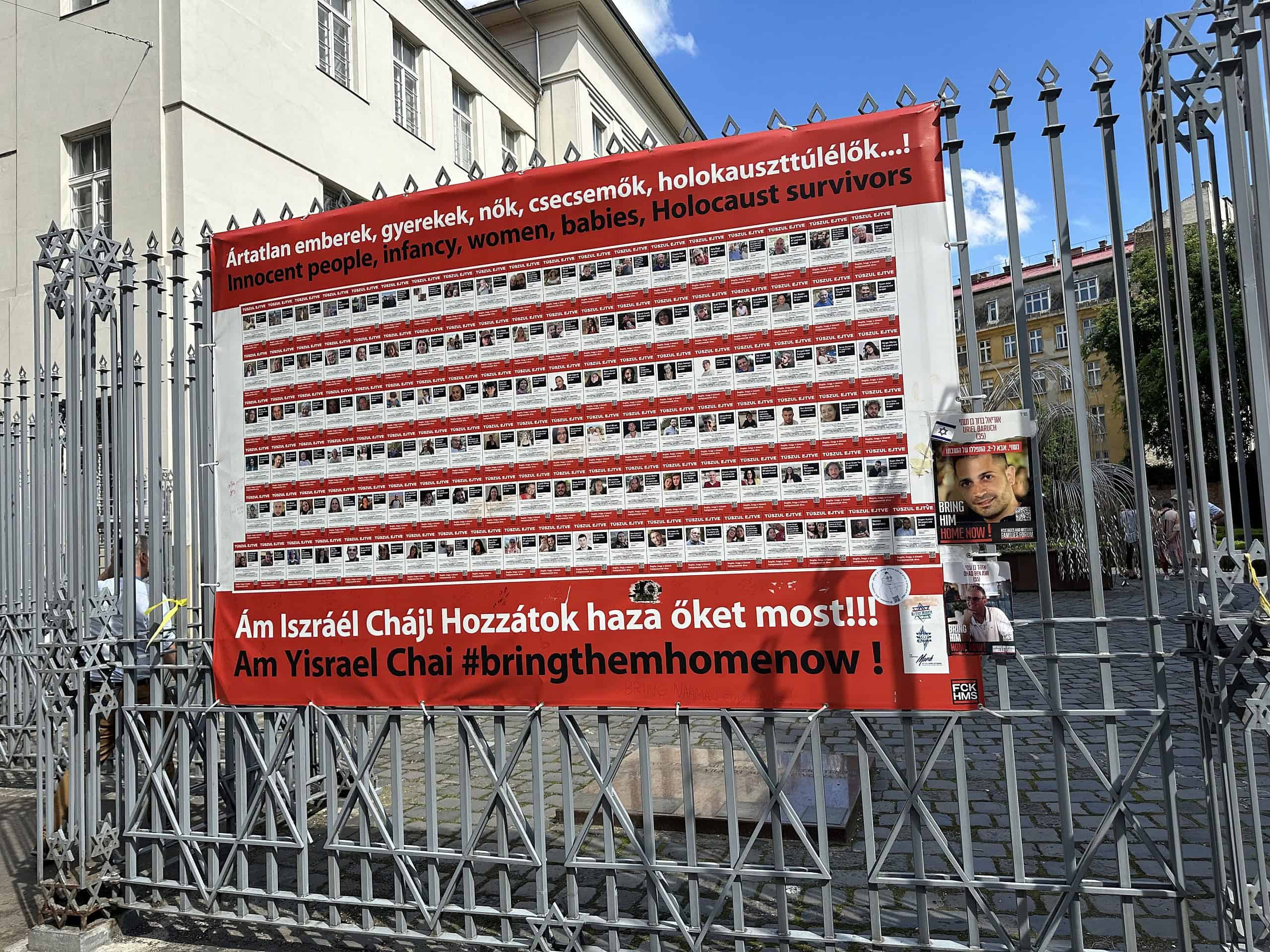
A poster in Budapest of the hostages taken by Hamas terrorists on Oct. 7 into captivity in the Gaza Strip, June 2024. Photo by Jonathan S. Tobin.

Not unlike Netanyahu, who also served a single term as Israel’s prime minister from 1996 to 1999 before being defeated, Orbán learned from his mistakes. His victory in 2010 was also similar to that of Netanyahu, whose return to power in 2009 was as much the function of the political incompetence and the abysmal policy failures of his opponents as his own brilliance, Orban became prime minister again after liberal leader and Prime Minister Ferenc Gyurcsány (whose wife, Klára Dobrev, who is Jewish, now leads one of the parties opposing Orbán) was caught on tape boasting of lying nonstop to the public to hold onto power.

Is he an authoritarian?

Since then, Orbán has consolidated and retained power by skillful maneuvering with the aid of wealthy supporters who dominate the Hungarian media. His government has been notoriously corrupt, though whether it is more corrupt than those in many other post-Communist nations (such as Ukraine, whose far more flagrant political and economic corruption has been ignored because of the Russian invasion) is debatable.

With only slightly more than three decades of experience as a free country, Hungary is far from being a perfect democracy. And while he is routinely denounced as an authoritarian, there are no political prisons or gulags in Hungary, and his opponents are free to denounce him wherever they like. Though Orbán ruthlessly uses the advantages of incumbency to keep winning elections to the dismay of foreign critics, his political opponents have gained ground in recent years and control the country’s largest cities, including Budapest.

Klára Dobrev. Credit: Wikimedia Commons.

Indeed, even as right-wing populist parties won victories across the continent in Sunday’s elections for the parliament of the European Union, Fidesz saw its margin of support reduced because of the emergence of a new party led by a former supporter Peter Magyar, who ran on an anti-corruption platform.

All of this means that for all its flaws, Orbán’s Hungary is a democracy. His supporters don’t dominate Hungary’s press to any greater degree than the left dominates the corporate media in the United States or Israel. That many of those who call him an authoritarian cheered on the Russia collusion hoax employed by Democrats to hamstring the Trump administration, the conspiracy of Internet moguls and mainstream media outlets to cover up evidence of Biden family corruption in the final weeks of the 2020 election and then the attempt by Democrats to bankrupt and then imprison the leader of the opposition to the current U.S. government (something Orbán has never stooped to) shows how lacking in credibility that charge truly is.

But if Orbán isn’t really an authoritarian, then why does the left hate him so much?

Part of it stems from a 2014 speech in which he said his vision for Hungary was for an “illiberal democracy.” Since then, neither he nor his allies have ever been able to adequately explain what that phrase meant. But suffice it to say that it represented a desire to push back against the free-market capitalist spirit that dominates the E.U., which, in the view of some of the union’s smaller countries, stands for the domination of the continent’s economy by Germany and other Western powers.

It also symbolizes his embrace of social conservatism. Hungary, like the rest of Europe, is afflicted by rapidly declining birth rates, as well as a collapse of faith in traditional values and faith. Orbán has prioritized policies that reward families for having more children, and he opposes the embrace of the LGBTQ+ agenda in a way that no other European or American leader has done. Still, there are no anti-gay laws or prohibitions, and discrimination on the basis of sexual orientation is illegal in Hungary. Yet unlike in the rest of Europe or the United States, public buildings in Budapest are not bedecked with rainbow flags during the gay-pride month of June.

But as grievous as that may be in the eyes of many people, it is his stand against unlimited immigration, especially from the Middle East and North Africa, that has earned Orbán the enduring enmity of liberals. While much of the E.U.—and specifically, Germany under the leadership of former Chancellor Angela Merkel—threw open the gates of their nations to largely Muslim emigrants and millions of refugees from the Syrian civil war in the 2010s, Orbán viewed this wave of immigration as a threat to Hungary’s identity and future.

While much of Europe is being transformed by mass immigration, Hungary has held the line against it and helped lead other Eastern European countries to do the same.

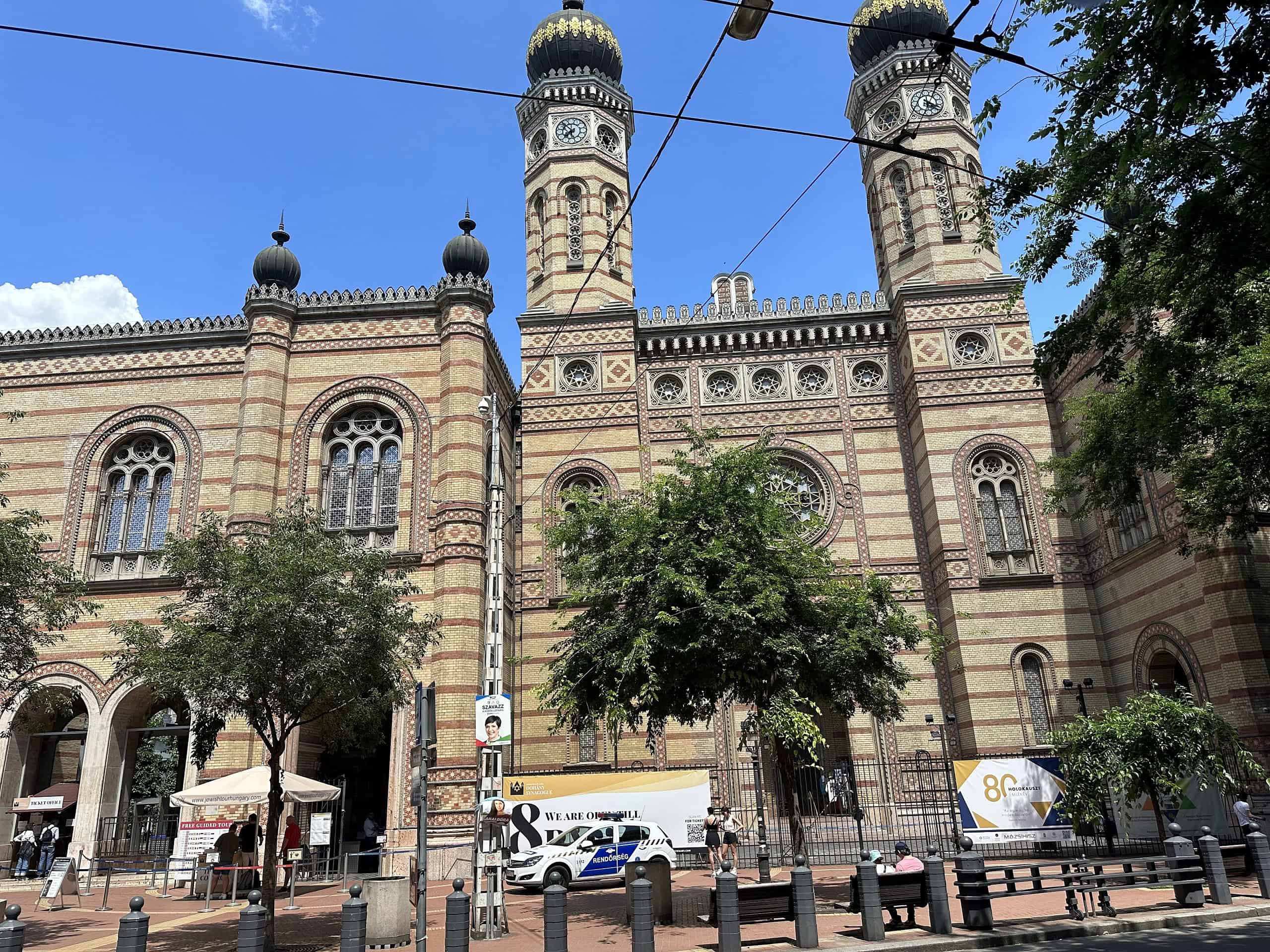
The Great Synagogue (also known as the Dohány Street Synagogue) in Budapest, Hungary, in June 2024. Photo by Jonathan S. Tobin.

The difference in Hungary

With memories of the long Soviet occupation, as well as their nation’s heroic and tragic 1956 revolt against communism (during which the United States and NATO never lifted a finger to help them) not forgotten, it would be a mistake to see Orbán or most Hungarians having much sympathy for Putin or Russia. However, they also have the same history of resentment against Ukrainians and are deeply suspicious of the West. Their history as the only non-Slavic or Germanic people in the region, coupled with having a language that is unrelated to any other in Europe other than Finland, marks them as outliers.

That explains a lot about both their past (during which they suffered terribly during invasions of Europe by Mongols and Ottomans) and the present, including Orbán’s dubious decision to embrace China as an alternative to domination by Western Europe or the United States. Still, there is a common ground between the ideas that motivate Fidesz and that of other conservative movements around the globe, reflected in the work of the Danube Institute think tank, whose members I spoke with. Yet Hungary is a special and different place, and Hungarian policies and ideas should be viewed in their own context and not that of other nations.

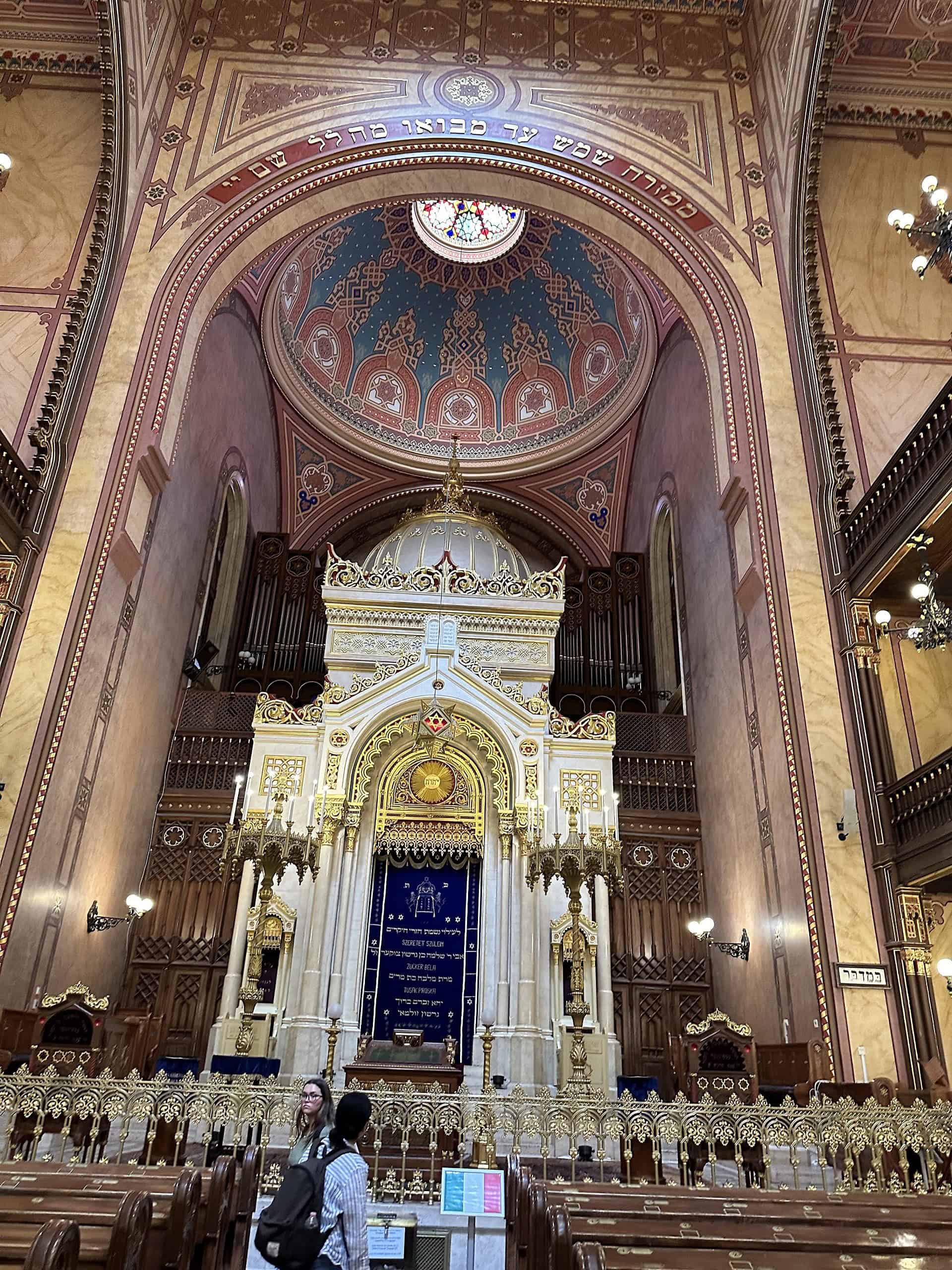
Hungary, Great Synagogue of Budapest, InteriorThe Great Synagogue (also known as the Dohány Street Synagogue) in Budapest, Hungary, in June 2024. Photo by Jonathan S. Tobin.

The key is immigration

If you want to know why Hungary is a place where Jews live in safety when compared to nations like Britain and France, which are considered far more democratic by observers, a big part of the answer lies in Orbán’s immigration policies. If there is no red-green alliance in Budapest that can send throngs of protesters to the streets to intimidate both governments and Jews—as is the case in London and Paris—it is because there is no large Muslim immigrant community there that seeks to impose their culture and antisemitic views on their new homes.

Liberal observers viewed with alarm the gains of populist parties that are against unlimited immigration in the E.U. elections, as well as other recent votes. While some of these parties have roots in the continent’s fascist past, their popularity is based on the justified fears of people about their nation’s future so long as they cannot control their borders or prevent their heritage from being transformed into something they no longer recognize by Muslim immigrants who don’t share their cultural or political values.

To confuse opposition to Soros with antisemitism might be more understandable in Hungary with its unfortunate history. But there, the billionaire is a symbol not so much of Jewish villainy as of support for leftist policies that hurt Hungarians, much as his campaign to elect pro-crime prosecutors in the United States has done more damage to America than perhaps that of any other individual. To label Orbán an antisemite because of his Soros-bashing isn’t any more legitimate than when Democrats do the same to Republicans in the United States over their noticing the baleful influence of his massive giving to leftist (including anti-Israel) causes.

In Hungary, Fidesz joined with other parties to essentially drive the openly antisemitic Jobbik Party out of the mainstream in the last decade. Both Jews and non-Jews I spoke with conceded that antisemitism—which played a major role in the past there, and evidence of which is abundant in the Holocaust memorials in Budapest that commemorate the slaughter of most of its Jewish population in 1944—is far from dead in Hungary. Indeed, polls have shown that antisemitic attitudes are present in a significant percentage of the population and perhaps far higher than in other countries where Jews do live in fear.

An uncertain future

Hungarian Jews have a history of engagement with their nation. It was a stronghold of the Haskalah, or Jewish Enlightenment, in the 19th century as Jews embraced secular learning and integration into their host countries. The beautiful Great Synagogue in Budapest was built by and is still run by the Neolog movement, which is somewhat analogous to Conservative Judaism in the United States. Zionist leaders like Theodor Herzl (who was born across the street from the Great Synagogue) and Moses Hess were Hungarian.

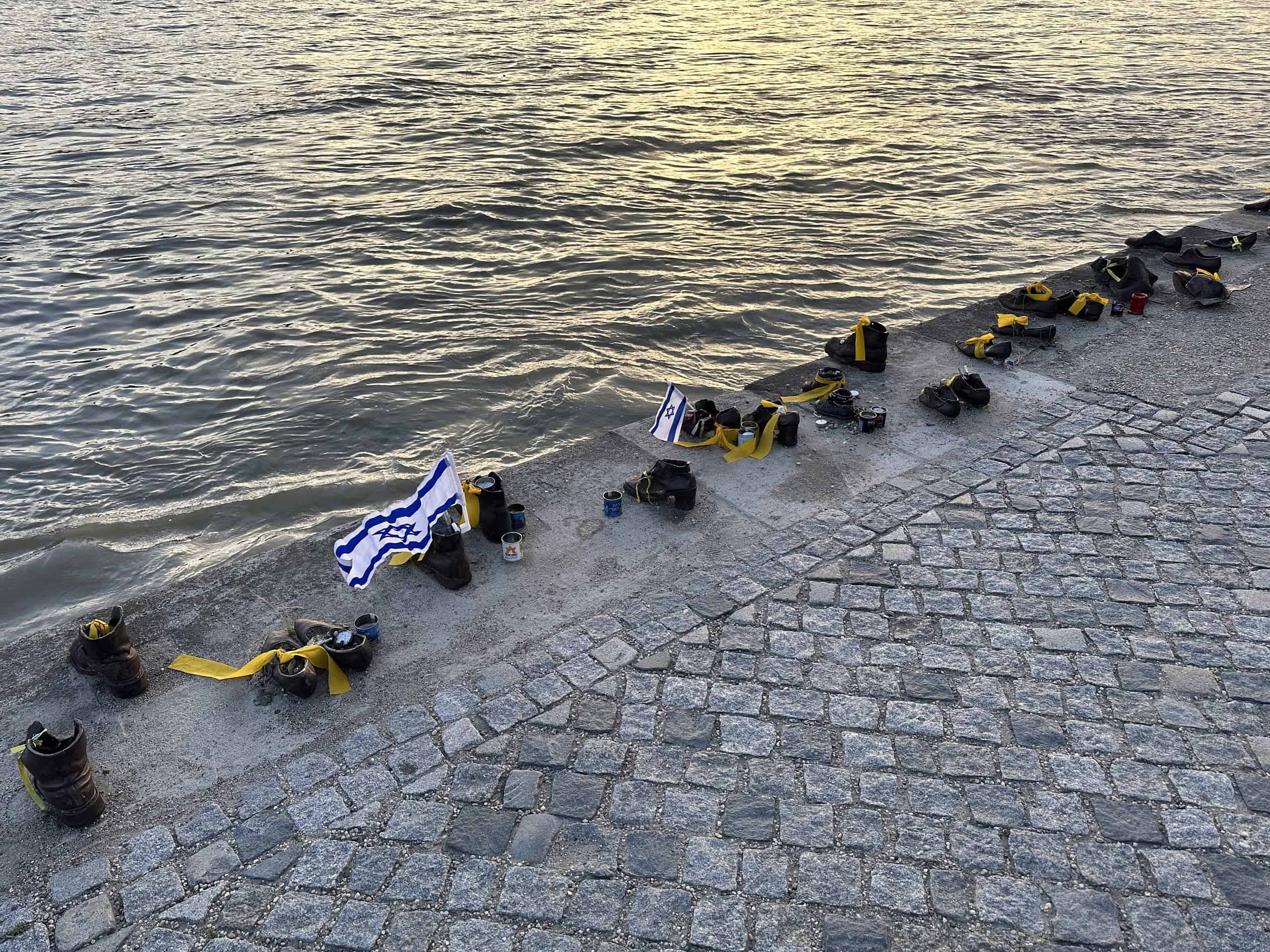
Budapest, Hungary, “Shoes in Danube River”“Shoes on the Danube River” memorial to Hungarian Jews killed during World War II and the Holocaust, many of whom were shot, killed and thrown into the Danube in Budapest, June 2024. Photo by Jonathan S. Tobin.

While Orthodox Judaism is undergoing something of a revival there thanks to the brilliant outreach efforts of the Chabad-Lubavitch movement, which has close ties to Orbán, the majority of the approximate 100,000-strong Hungarian Jewish community are still loosely affiliated with the Neolog stream. The majority of them are politically liberal and oppose Orbán. But even liberal Jews told me that they understood that he was the main reason why antisemitism was kept in check and they are so secure. Though only a fool would underestimate or count him out, sooner or later, his time in power will come to an end. When that happens, Hungary’s status as a bright spot for Jews as well as a fiercely loyal ally of Israel will be in doubt.

For now, that means a stay in Budapest means encountering a nation where there is no sign of the antisemitic surge that is part of everyday life in Western Europe and even the United States. 

Mass pro-Hamas demonstrations, such as the disgraceful orgy of Jew-bashing that took place last weekend across from the White House in Washington, D.C., or the besieging of a showing of a film about the attack on the Nova music festival in New York City don’t happen in Budapest. The capital’s synagogues don’t have to worry about antisemitic graffiti and the poster of the Israeli hostages taken by Hamas on the gates of the Great Synagogue hangs proudly and untouched by vandals. And rather than sniping at Israel or supporting efforts to criminalize its efforts to defeat Hamas and rescue its hostages, Hungary is holding the line in defense of the Jewish state.

To many who think Orbán is beyond the pale, his support for Jews and Israel is an unimportant detail.  Yet at a time when Jewish lives and rights are at risk everywhere, to ignore the truth about Hungary and the Jews today would be as irresponsible as it would be self-destructive.


Jonathan S. Tobin is editor-in-chief of JNS (Jewish News Syndicate). Follow him @jonathans_tobin.


Zawartość publikowanych artykułów i materiałów nie reprezentuje poglądów ani opinii Reunion’68,
ani też webmastera Blogu Reunion’68, chyba ze jest to wyraźnie zaznaczone.
Twoje uwagi, linki, własne artykuły lub wiadomości prześlij na adres:
webmaster@reunion68.com


Is the real Mount Sinai in Saudi Arabia instead of Egypt?

Is the real Mount Sinai in Saudi Arabia instead of Egypt?

BRIAN SCHRAUGER


There is virtually no evidence of human activity in the supposed Mount Sinai in Egypt. Is the real location for where God gave the Jews the Ten Commandments in Saudi Arabia?

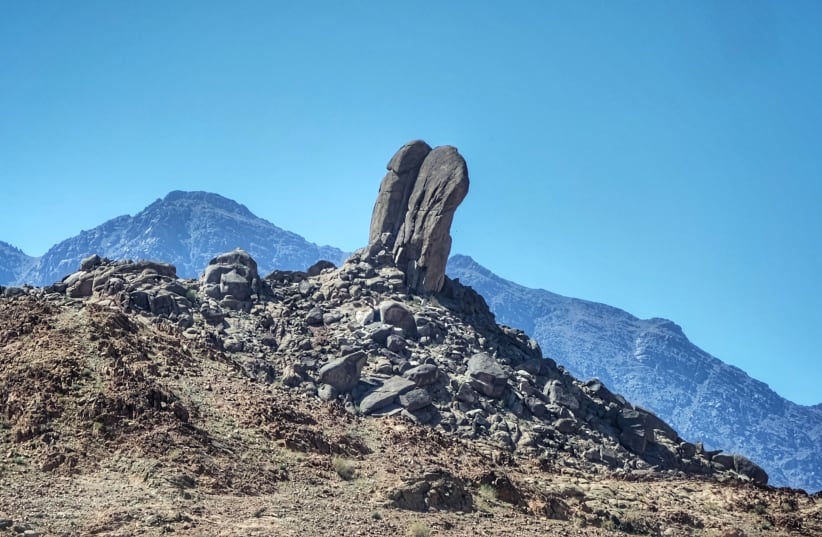
The split Rock of Horeb. / (photo credit: BRIAN SCHRAUGER)

“It just doesn’t fit,” I told my son in 2007. At the time, he was a student at the Hebrew University of Jerusalem. During a break in his classes, we decided to explore a coastal town in the Sinai Peninsula. One night, after a long, cold climb to a somewhat distant mountain peak, we witnessed a beautiful sunrise illuminating the desolate landscape of rock-strewn mountains with the golden hue of morning light.

The mountain we had climbed is the conventional location for Mount Sinai deep in the south-central part of Egypt’s Sinai Peninsula. What we saw that morning was stunning.

In the unforgiving desert light of day, what we did not see was perplexing.

In Israel, most ancient sites have left abundant evidence of the events that happened there. An outline of the 2,000-year-old site of Roman encampment around Masada is clear. Even older is the Jordan Valley footprint site, where Israelites gathered shortly after entering the land about 3,400 years ago.

In stark contrast, and in a place where there has been virtually no human activity for three and a half millennia, there was nothing to suggest that a large group of people had populated the area: no encampment outlines, no petroglyphs, and no apparent place where a large number of people and their livestock had settled.

Stars bursting above the triangular peak of the mountain that may be Mount Sinai in the middle of the night, in Saudi Arabia. (credit: BRIAN SCHRAUGER)

At the base of the mountain, we entered St. Catherine’s Monastery, established about halfway through the 6th century CE. Perhaps we would find evidence there.

Encompassed within its walls, it boasted the still-living burning bush and a tiny well said to be the Well of Moses, an unlikely size to supply herds of goats, thirsty camels, and a significant number of people for the daily water they would have needed. The monastery is about 1,500 years old but, regardless, had the taint of a sensationalist fabrication; holy relic bait to lure donations.

“This cannot be the real Mount Sinai,” I said to my son. “Maybe the real place is in Saudi Arabia.”

Is Mount Sinai in Saudi Arabia?

IN THE early 1980s, a Christian adventurist, Ron Wyatt, claimed to have found the real Mount Sinai in Saudi Arabia’s Tabuk Province near the country’s southwest border that abuts the Gulf of Aqaba. Because Wyatt was not an archaeologist and was known to claim melodramatic finds of biblical sites, his assertion was intriguing but not given a lot of credence by credentialed professionals.

The site was also fenced off by Saudi officials. It was not a place open for exploration. Regardless, a few years later, two more Christian explorers, Robert Cornuke and Larry Williams, snuck into the area, filmed what they saw, and released it to the public. Their documentary, The Search for the Real Mount Sinai, is available today on YouTube.

Thirty-six years later, in April of this year, I had the opportunity to visit the area with a group of five. Driving far afield from paved roads in a Toyota Land Cruiser, we followed dusty, bumpy tracks to the still undeveloped locations for Mount Sinai and its related landmarks of biblical events.

Would the area, like the site near St. Catherine’s Monastery, be interesting but not compelling?

Hardly. Unlike the Sinai Peninsula, everything we saw in Saudi Arabia fit the biblical narrative and did so with an abundance of archaeological and geographical evidence.

On the first day of exploration, we set out to find the Rock of Horeb, the rock split by Moses’ rod overlooking the plains of Rephidim. According to the biblical text, when the masses became angry with Moses for lack of water, God told him to make his way to “the rock at Horeb.”

Driving into jagged hills on the apparent plains of Rephidim, millions of rocks were everywhere. How is it that one rock among countless others would be a known landmark – then and now?

As we drove, rounding one hill after another, suddenly it appeared. Emerging from the peak of a stony platform, a solitary, huge, 12-meter torso-shaped rock towered over the plain below. Split down the middle, it was impossible to miss.

Climbing the natural platform on which it stood, we saw that its size was breathtaking. Standing at the base of the split, looking down at the landscape below, it was easy to see how hundreds of thousands, maybe more, were able to assemble and witness what, as instructed, Moses did.

Dry as a rock today as it was 3,500 years ago, there was a curious symmetry with the Red Sea crossing.

Only a few weeks earlier, Moses’ staff had split the Gulf of Aqaba. One key assumption for the proposition that Saudi Arabia is the place in which Mount Sinai towers is that Jewish refugees from Goshen had been led to a mountain-locked seashore delta, today called Nueiba, in the Sinai Peninsula. A solitary pillar still stands there, called the Pillar of Solomon, indicating that in millennia past, this was the commonly known place of crossing.

When the sea was split, it created a 17-km. path of dry land on which an entire population, including livestock, made their way to safety on the other side. If, in fact, this is where the crossing happened, its depiction in Cecil B. DeMille’s 1956 film The Ten Commandments is surprisingly accurate.

And the symmetry? From water, God made a solid, arid path. Days later, from an arid rock, He created a geyser of water. Both the water and the rock had been split in two.

ALLEGEDLY, THIS is also where Jewish refugees battled the Amalekites. They were victorious only as long as Moses held up his arms, perhaps the same posture as when he parted the sea. In this event, however, his arms grew weary. When they sagged, the warriors of Israel began to lose.

Recognizing the problem, Aaron and Hur gave him a rock to sit on, and then held up his arms. Accordingly, the Amalekites were defeated.

But is there evidence?

Huge stone altars adorn the nearby plain. And at a nearby place where non-combatants could easily witness the battle, there are dozens of petroglyphs: gazelles, lions, hunters, and… footprints.

The footprint as a Jewish symbol was reinforced by God just before the children of Israel entered the Promised Land.

“Every place on which the sole of your foot steps shall be yours,” God says in Deuteronomy 11:24.

Accordingly, the earliest gathering sites in the Promised Land were called gilgals. All of them are shaped like a footprint, visibly definable to this day.

Finding footprint petroglyphs on countless rocks is a provocative indicator, if not proof, that a lot of Jews were gathered here, on the plains of Rephidim – in Saudi Arabia.

The next place where “the sons of Israel” were led was to “the wilderness of Sinai,” where they encamped “in front of the mountain,” obviously another well-known landmark among an ocean of stony pinnacles.

The tallest of them all, today a blackened triangular peak, was called Mount Sinai. According to the Torah, when Moses was summoned there to meet with God and receive His law, he disappeared into a thick cloud resonating with continual thunder and lightning. When, after five or six weeks, he did not reappear, a movement began to merge, or syncretize, with the God who brought His people out of Egypt with the Egyptian goddess of love, Hathor.

Depicted as what can only be described as a very sexy cow, Hathor was worshiped by the Egyptians; also, it seems, by the Jewish slaves who lived there for 400 years.

The proposed Saudi site for the altar of the golden calf is a dramatic natural circle of rocks upon which, it seems, the glittering idol was set.

Proof? The rocks supporting the base are covered with petroglyphs and now faint paintings of cows. Portrayals include men dancing on the backs of cows, provocatively lifting their tails, and celebrating as if at a party. On a nearby mural, all the men are visibly aroused. Clearly, the art is not intended to depict farmers and their cattle.

If this is the right location, it is a dramatic witness to the lingering presence of Egypt inside the hearts of those only recently delivered from it.

TODAY, THE Saudi site for Mount Sinai remains a compelling geographical testament to its authenticity. Moving toward the mountain’s base, there are the remains of what appears to have been a bullpen, through which cattle were herded to a place of slaughter, butchering, and sacrifice. Scattered around the site are the cut-down marble bases of a structure that once was there, apparently sanctifying it.

Mount Sinai itself, including a cave of Elijah on its ascent, is the pièce de résistance, anchoring all the other sites in a terrestrial landscape, and perfectly fitting the biblical narrative.

In this area, still called Midian by Saudi archaeologists, there is a compelling case to be made: This is Mount Sinai.■


Zawartość publikowanych artykułów i materiałów nie reprezentuje poglądów ani opinii Reunion’68,
ani też webmastera Blogu Reunion’68, chyba ze jest to wyraźnie zaznaczone.
Twoje uwagi, linki, własne artykuły lub wiadomości prześlij na adres:
webmaster@reunion68.com

Kiedy zaczynałem antysemici byli jak dinozaury.

Kiedy zaczynałem antysemici byli jak dinozaury. Dziś maszerujący nacjonaliści nikogo nie dziwią

Michał Nogaś


Pisarz Mikołaj Łozinski (Fot. Albert Zawada / Agencja Gazeta)

W komentarzach pod wywiadem antysemici żądali: podaj swoje prawdziwe nazwisko! Pomyślałem: czemu nie? Mój dziadek nazywał się Stramer. To znaczy: krzepki, mocny.

Czas nagle nie tylko się zatrzymał, ale też ruszył do tyłu, i to dziesięć razy szybciej. Dziś widok maszerujących przez miasto nacjonalistów już nikogo nie dziwi. Czasy, które opisuję w książce, są dużo bliższe naszym niż jeszcze osiem lat temu – mówi Mikołaj Łoziński. W swojej nowej książce opisuje losy asymilujących się polskich Żydów. Mimo że to fikcja tytuł jest jest prawdziwym nazwiskiem jego dziadka – Stramer.

Michał Nogaś: Twoja trzecia powieść, „Stramer”, ukazuje się po ośmiu latach od poprzedniej. Dlaczego tak długo kazałeś czekać?

Mikołaj Łoziński: Nie wiem, czybym się zdecydował na pisanie tej książki, gdybym wiedział, że zabierze mi tyle czasu. Na szczęście nie wiedziałem.

Ta historia szóstki rodzeństwa w przedwojennym Tarnowie od dawna za mną chodziła, ale dopiero kiedy urodziły mi się dzieci, poczułem, że jestem gotowy. Na początku miałem w głowie tylko ostatnią scenę na plaży. Widocznie potrzebowałem prawie ośmiu lat, żeby do niej dojść.

Najpierw, na dwa lata, zamknąłem się w archiwach. „Stramer” zaczyna się na początku XX w. i trwa do pierwszych lat II wojny. Musiałem jakoś dostać się do tego przedwojennego świata, żeby później spróbować go na mój sposób opisać. Jeździłem do Tarnowa, Krakowa, Lwowa i Paryża, siedziałem godzinami w różnych bibliotekach. Im dłużej czytałem o tamtej przeszłości, tym więcej nabierała odcieni i niuansów. A przedwojenni polscy Żydzi przestawali być Żydami z czarno-białej fotografii. W „Stramerze” starałem się wydobyć jak najwięcej kolorów.

Po raz pierwszy pracowałem trochę jak detektyw. Próbowałem – poza kwerendą i podróżami do miejsc, w których pojawiali się moi bohaterowie – znaleźć świadków wydarzeń sprzed ponad 80 lat. Zdarzało się, że ci, do których docierałem, zapominali, co chcieli mi opowiedzieć, nagle tracili pamięć. Nie dlatego, że ktoś im groził czy czegoś się bali, ale z powodu starości. Inni nie przychodzili na umówione spotkania, urywał mi się z nimi kontakt, przestawali odbierać telefon. A ja po kilku dniach znajdowałem nekrolog w gazecie.

Kiedy zaczynałem pisać „Stramera” w 2011 r., myślałem, że piszę powieść stricte historyczną. Ten świat wydawał się daleki, niepasujący do dzisiejszego, otwartego, europejskiego.

Myślałem, że najtrudniejsze będzie wyobrażenie sobie i wiarygodne opisanie młodych radykałów, zwłaszcza nacjonalistów, antysemitów. Wydawali mi się tak niemożliwi i odlegli jak epoka dinozaurów.

Bałem się, że nie starczy mi wyobraźni, żeby prawdziwie ich opisać. Że wyjdą w powieści sztucznie, stereotypowo, jak rekonstrukcje historyczne. Ale z pomocą przyszła rzeczywistość, która bardzo zmieniła się przez te osiem lat. Jakby czas nagle nie tylko się zatrzymał, ale też ruszył do tyłu, i to dziesięć razy szybciej. Dziś widok maszerujących przez miasto nacjonalistów już nikogo nie dziwi. Czasy, które opisuję w książce, są dużo bliższe naszym niż jeszcze osiem lat temu.

Dlaczego Tarnów?

– Z Tarnowa pochodził tata mojego taty. Miał na nazwisko Stramer.

Najpierw chciałem dać moim bohaterom inne nazwisko, bo książka jest fikcją jedynie luźno inspirowaną losami jego i jego rodzeństwa. Ale kilka lat temu udzieliliśmy z moim starszym bratem Pawłem wywiadu w „Newsweeku” o tym, jak to jest mieć w Polsce żydowskie pochodzenie. On potem został skopiowany na jakieś nacjonalistyczne strony, znalazłem pod nim 500 komentarzy, które z grubsza można było podzielić na dwie grupy. Pierwsza: spierdalajcie do Izraela! Druga: podajcie swoje prawdziwe nazwiska! Ten drugi pomysł mnie zainspirował. Pomyślałem: czemu nie? Mimo że to powieść, czyli fikcja, nadam tej rodzinie prawdziwe nazwisko mojego dziadka. Po niemiecku Stramer znaczy krzepki, mocny. To nazwisko zawsze mi się podobało. Po II wojnie znikło, odeszło razem z prawie całym żydowskim światem. Nawet antysemici mają swój pozytywny udział w powstaniu tej powieści.

Wychodzę z założenia, że antysemityzm jest problemem antysemitów. Ale ponieważ są takie czasy, że rządzący próbują nas coraz mocniej dzielić, staram się skupiać na tym, co może nas łączyć. Nawet ostatnio znalazłem jedną rzecz, która łączy Żydów i antysemitów. I jedni, i drudzy są zafiksowani na jednym temacie. Cały czas chcą mówić o Żydach. Zachęcam więc również antysemitów do zajrzenia do mojej nowej książki, znajdą tam coś dla siebie.

W Tarnowie wspaniale się mną zaopiekowano, spotkałem wielu życzliwych ludzi. Adama Bartosza z Muzeum Okręgowego, Mariolę Górę z tarnowskiej biblioteki. Ciepło przyjęto mnie nawet w zakładzie karnym, gdzie miałem spotkanie autorskie.

Jestem zauroczony Tarnowem. To porządne, piękne miasto, wspaniała architektura. Wygląda, jakby było budowane z przekonaniem, że to na całe lata. Szkoła wygląda jak szkoła, poczta jak poczta, dworzec jak dworzec.

Te instytucje budzą zaufanie. Przed wojną było tam nawet najnowocześniejsze więzienie w Polsce. W takim świecie wychowali się moi bohaterowie i mój dziadek. W świecie, który miał trwać.

Przychodzą mi do głowy dwa wspomnienia z pracy w archiwach. Raz zostałem wyproszony ze specjalnej sali, w której oglądałem nagrane przez Fundację Spielberga wstrząsające wywiady z ocalałymi z Holocaustu. Kiedy zapytałem dlaczego, sympatyczna pani odpowiedziała, że to polecenie kierownika działu. „Ale dlaczego?” – nie odpuszczałem, byłem w połowie pracy, przejęty i może też dlatego podejrzliwy. „Tylko na chwilę, za pół godziny może pan wrócić”. „Ale o co chodzi?”. „No… o łososia”. „Jakiego łososia?”. „Takiego w folii, kierownikowi działu wypadł łosoś przez okno i tylko z tego pomieszczenia można się dostać na podwórko. Bo inaczej dobiorą się do niego koty”.

W innym archiwum czytałem świadectwa z obozu janowskiego – festiwal okrucieństwa. Zaczęło mnie ściskać w gardle. Poczułem, że się duszę. Że muszę natychmiast wyjść. Wybiegłem na ulicę. Zrozumiałem, że już dostałem swoją dawkę, i więcej nie wróciłem do wojennych świadectw.

Barwnie pokazałeś życie codzienne w przedwojennej wielokulturowej Polsce.

–Im bardziej wgłębiałem się w tamten świat, tym bardziej rozumiałem, że ta uboga żydowska rodzina Stramerów – rodzice, szóstka dzieci, pies i kot, wszyscy w jednym pokoju z kuchnią – to typowy polski dom tamtych czasów. Polscy Żydzi stanowili ponad 40 proc. populacji w Tarnowie, zresztą mocno niejednorodnej. Od wierzących w Boga, po wierzących w komunizm. Na przykład ojciec rodziny, Nathan, nienawidzi komunistów, ale tak się składa, że dwóch z jego synów to komuniści, a trzeci aspiruje.

Dla mnie „Stramer” to książka o rodzinnej bliskości, o związkach między rodzicami, między rodzeństwem. Ale też o szukaniu dla siebie właściwego miejsca w trudnych i ciekawych czasach, które ukształtowały przecież nie tylko moich bohaterów. I o tym, z czego zdałem sobie sprawę już po napisaniu powieści: że jesteśmy mądrzejsi od poprzednich pokoleń tylko o tyle, że wiemy, co się z nimi stało, a oni nie wiedzieli, nie znali swojej przyszłości. Tak jak my dziś nie znamy naszej.

Pytasz, dokąd prowadzi coraz silniejszy dzisiaj nacjonalizm. Dla mnie najlepsza odpowiedź to słowa Einsteina: szaleństwem jest robić wciąż to samo i oczekiwać różnych rezultatów.

Nacjonalizm zawsze prowadzi do tego samego. Ale czy nasze codzienne życie toczy się w cieniu czegoś, co nadchodzi? Żyjemy codziennością.

Przed Zagładą Stramerowie też żyli swoimi miłościami, romansami, nadziejami na lepszą przyszłość. Kolejnymi próbami rozkręcania biznesu przez ich ojca, żyjącego w cieniu swojego starszego nowojorskiego brata. Nathan wrócił z Nowego Jorku, gdzie spędził kilka lat, do Tarnowa, bo był bardzo zakochany w pięknej dziewczynie. Ożenił się, pojawiły się dzieci, zaczęło się życie zwykłej rodziny tamtych czasów. Z planami na przyszłość, marzeniami, tęsknotami.

Chciałem opisać właśnie tę normalność, wczuć się w nią najlepiej, jak potrafię. Dorastanie dzieci, przepychanki między rodzeństwem, podwórkowe życie, podrywanie dziewczyn, kłopoty w szkole. Może dlatego tak długo pisałem?

Najpierw próbowałem napisać „Stramera” tak jak „Reisefieber“, a zwłaszcza „Książkę”. Krótkie zdania, minimum postaci i stron. Ale to nie szło, nie pasowało, czułem, że wychodzi sztucznie. Mijały miesiące. Zaliczyłem kilka takich falstartów. Ruszyło niespodziewanie dopiero wtedy, kiedy zacząłem pisać zupełnie inaczej, jakby nie w moim stylu – długie zdania, dużo postaci pierwszo-, drugo- i trzecioplanowych, długie rozdziały. Złamałem wszystkie własne zasady i to pomogło.

Najważniejsze było dla mnie, żeby moi bohaterowie byli prawdziwi, niejednoznaczni. Próbowałem wczuć się w nich, zrozumieć, nie oceniać. Nathan jest jednocześnie ciepły i serdeczny, ale jest też cholerykiem. Tęskni za Nowym Jorkiem, życie w Tarnowie wydaje mu się niepełne. Wtrąca amerykańskie słowa, których nikt z rodziny nie rozumie. Żyje równolegle, cały czas myślami wraca na nowojorskie nabrzeże, gdzie pożegnał się z bratem. Wyobraża sobie, jak by wyglądało jego życie, gdyby został w Ameryce.

Ja też czasem zastanawiam się nad alternatywnymi scenariuszami mojego życia. Co by się stało, gdybym na jakimś lotnisku został, zamiast polecieć, albo poleciał, zamiast zostać?

Dwóch synów Stramerów mocno uwierzyło w komunizm. Czym ich kusił?

– Dla polskich Żydów był drogą do asymilacji. Obiecywał równość, sprawiedliwość, Żydzi mogli być tacy jak wszyscy. Z obywateli szóstej kategorii stawali się obywatelami pierwszej. Poza tym hasła równości i sprawiedliwości trafiają do młodych ludzi. To na pewno ich pociągnęło.

Synowie Nathana po prostu wierzyli w komunizm. W tamtych czasach komunizm był jedyną alternatywą dla faszyzmu. Jeden z nich ruszył do Hiszpanii, by wziąć udział w wojnie domowej. To była dla niego walka o wolność i demokrację. Inna sprawa jak to wyglądało na miejscu… Rozmawiałem o tym z dziećmi ochotników, którzy pojechali do Hiszpanii. Wydało mi się symptomatyczne, że mój dziadek, który walczył w Hiszpanii, nigdy o tym nie wspominał, nie chwalił się. Przywiózł dwie pamiątki – skórzany bukłak na wino i kastaniety. I anegdotkę o tym, jak kiedyś z całym oddziałem nocował w jakiejś stodole, a rano, kiedy się obudził, okazało się, że wszyscy już sobie poszli i o nim zapomnieli.

Dziś wiadomo, że komunizm okazał się równie zbrodniczy jak faszyzm. Często się je razem zestawia, ale zapomina się o jednej zasadniczej różnicy. Faszyzm otwarcie obiecywał piekło, które potem wprowadzał. Natomiast komunizm obiecywał raj na ziemi, a wprowadził piekło.

W dzisiejszym kontekście politycznym często się zastanawiam, już abstrahując od „Stramera”, dlaczego mimo wiedzy o jego zbrodniach niektórzy ludzie w latach 50., 60. decydowali się trwać przy komunizmie. To był często jakiś rodzaj ślepej wiary czy amoku. A dlaczego dziś po latach ludzie popierają rządy, które otwarcie idą w stronę autorytaryzmu? Nie chcą widzieć łamania prawa, afer, demoralizacji? Są impregnowani na argumenty, bo chyba też wierzą, a wiara to dogmaty, a dogmaty nie podlegają dyskusji.

Nacjonalizm, podobnie jak komunizm, daje łatwe odpowiedzi na trudne pytania. Na tym właśnie polega siła systemów totalitarnych – nie szukają niuansów. Im bardziej świat się komplikuje, tym bardziej nacjonalizm staje się atrakcyjny. Nacjonalistyczna wspólnota daje siłę i moc. Nacjonaliści już nie są zagubieni w świecie, mają siebie nawzajem i rozumieją, co nadaje życiu sens. Ameryka dla Amerykanów, Polska dla Polaków, Rosja dla Rosjan.

Przyznałeś, że tytuł książki to nazwisko dziadka, że chciałeś w ten sposób pamięć o tym nazwisku i o dziadku przechować, zapisać w literaturze.

– Mój tata, któremu zadedykowałem „Stramera”, powiedział mi, że zwykle ludzie mają babcię i dziadka, a potem ci dziadkowie umierają. A on najpierw nie miał dziadków, a teraz dzięki mojej powieści ich zyskał.

Ja mojego dziadka prawie nie pamiętam. Zmarł, kiedy miałem cztery lata. Znam tylko jego bardzo pozytywny obraz, który pielęgnuje mój tata. Najmądrzejszego człowieka na świecie, wykształconego, cierpliwego, silnego, a jednocześnie wrażliwego, ogromnie podobającego się kobietom. Taki superbohater. Nawet kiedyś ułożyłem o tym wierszyk: „Mój tata swojego ojca Romana/ traktuje jak supermana/ wciąż żeni się i rozwodzi,/ bo myśli, że o to chodzi”.


Mikołaj Łoziński – ur. w 1980 r. Pisarz, scenarzysta, fotograf i tłumacz. Zadebiutował powieścią „Reisefieber” (2006), za którą otrzymał Nagrodę Kościelskich i był nominowany do Nike. Z kolei „Książka” (2011) przyniosła mu Paszport „Polityki”. Pisze również dla dzieci, wydał „Bajki dla Idy” (2008, z ilustracjami Ewy Stiasny) oraz „Prawdziwą bajkę” (2013, z ilustracjami Marty Ignerskiej). Syn Marcela, brat Pawła – dokumentalistów. Mieszka w Warszawie.

Książki autora dostępne są w formie e-booków w Publio.pl >>

Mikołaj Łoziński 'Stramer'Mikołaj Łoziński ‘Stramer’ Materiały prasowe

Stramer, Mikołaj Łoziński, Wydawnictwo Literackie


Zawartość publikowanych artykułów i materiałów nie reprezentuje poglądów ani opinii Reunion’68,
ani też webmastera Blogu Reunion’68, chyba ze jest to wyraźnie zaznaczone.
Twoje uwagi, linki, własne artykuły lub wiadomości prześlij na adres:
webmaster@reunion68.com

Harvard’s Golden Age Turns to Mud

Harvard’s Golden Age Turns to Mud


SHABBOS KESTENBAUM


Being a Jew at Harvard is way worse than you think

.
CRAIG F. WALKER/THE BOSTON GLOBE VIA GETTY IMAGES

“I was called antisemitic by power and money because they want power and money.”

Thus said Harvard’s 2024 commencement speaker, Maria Ressa. Fittingly, her deployment of antisemitic tropes in front of tens of thousands of students, professors, and families at graduation last week encapsulated the absolute chaos that has engulfed Harvard University for the last year.

Even as I took my seat at commencement, I was handed a newspaper, The Harvard Crimeson (a pun on the country’s oldest newspaper, The Harvard Crimson) which accused Jews of racism for arguing that calls for an intifada are a direct call for violence. The 10-page paper went on to defend chants of “from water to water Palestine is Arab,” “from the river to the sea,” and “globalize the intifada.”

I shouldn’t have been surprised. After all, just the week prior, dozens of students and faculty gathered by the gates of Harvard to gleefully exclaim “intifada, intifada, coming to America.”

This of course followed an almost monthlong illegal encampment of students and professors in the center of Harvard Yard demanding a complete and total divestment from “the Zionist entity.” Although the participants used bolt cutters in an attempt to break open Harvard’s gates, depicted our Jewish President as a devil replete with horns and a tail, violated all time, place, and manner restrictions, called for the violent destruction of the Jewish state, and established a self-appointed security system that monitored and recorded Jews like me on our way to class, they were handsomely rewarded.

In exchange for packing up their foul-smelling tents and open-air laundry, all graduate and almost all undergraduate students had their suspensions revoked. The encampment leaders will meet with senior university officials to discuss a Palestinian studies department, and the Harvard Management Corporation, which oversees Harvard’s $50 billion endowment, will invite them for a seat at the table to discuss divestment, and President Garber personally asked for reinstatements and an expeditious disciplinary process.

Banner depicting Alan Garber as a demonic creature / 
COURTESY THE AUTHOR

That same week, the Harvard antisemitism task force, led by a professor who has repeatedly labeled antisemitism at Harvard as “exaggerated,” quietly updated their timeline. Rather than submit recommendations to combat Jew-hatred during the spring semester as promised, the task force now has a revised date of fall 2024.

Although both the Harvard Jewish Alumni Alliance (HJAA) and the House Committee on Education and the Workforce released damning reports pertaining to the systematic silencing of Jewish and Israeli voices on campus, the university has yet to announce or implement a single policy in response.

In fact, although the reports found that a Jewish student was spat on, an Israeli student was asked to leave class as her nationality made classmates “uncomfortable,” another Israeli was assaulted at the business school, a staff member taunted me with a machete and challenged me to debate the Jewish involvement in the 9/11 terrorist attacks, Harvard didn’t acknowledge these incidents publicly or failed to address them for months.

On the contrary, Harvard recently announced its policy of neutrality, refraining from issuing statements pertaining to public policy or affairs. Just the day before this announcement, the Harvard Palestine Solidarity Committee, which in late April was told to “cease all organizational activities for the remainder of the Spring 2024 term,” called for escalating protests to an “open intifada in every capital and city.” Although this university has made it its business to opine on all societal issues from George Floyd to Ukraine, open threats against Jewish students will no longer be denounced.

Paradoxically, this comes as Harvard is fighting in court to dismiss, with prejudice, our lawsuit that alleges pervasive and systemic antisemitism. Their argument? “Harvard is committed to combating antisemitism and ensuring that our Jewish students, faculty, staff, and alumni know they are safe, valued, and embraced in our community.” Reality tells a different story.

Despite countless op-eds and interviews, seldom are the personal experiences and stories of the students themselves highlighted. As a result, too often Harvard professors themselves belittle the plight of Jewish students and publicly denounce not the antisemitism, but the mere accusations of antisemitism, on campus.

As a Jewish student at Harvard University, I have had my learning interrupted by students calling for the globalization of the intifada, sat directly next to classmates who praised the terrorist groups Hamas, Hezbollah, and the Houthis, listened to 34 student groups blame the largest massacre of Jews since the Holocaust on Jews themselves, been exposed to countless death threats, and perhaps most infamously, had a university president who described calls for Jewish genocide to be “context-dependent.”

According to Hillel International, in the 1970s, Jews accounted for roughly 25% of Harvard’s student population. In 2023, that number is estimated to be lower than 5%. For Ivy League institutions across America, the percentage plummets are relatively equivalent. Even President Gay’s historic inauguration ceremony, which I proudly attended and which was centered around the causes of “courage” and “diversity,” had no kosher food.

While Harvard took the extraordinary step to raise the Ukrainian flag on its campus following Russia’s illegal invasion of the country, we were told a similar display of solidarity would not be permitted, and the request to fly the Israeli flag after the Hamas attacks was denied. Although Claudine Gay, as dean of the Faculty of Arts and Sciences, immediately sent out an email forcefully condemning the murder of George Floyd and the racial undertones that allowed for it to happen, no equivalent response, certainly not one with such moral clarity, has been issued to Jewish students.

Indeed, the antisemitism and Hamas sympathies are not confined to Harvard students. They extend to, and are promoted by, Harvard faculty.

Earlier in the year, close to 100 Harvard faculty and staff published a cartoon depicting the hand of a Jew, imprinted with the Star of David and the dollar sign, holding nooses around the necks of an Arab and a Black man.

To this day, these faculty have not been disciplined in any way. They continue to teach and spread their poison with impunity. In many cases I have been a student in their classroom, pass them in the hallways, and see their names featured prominently on lectures.

Only days later, Harvard proudly hosted antisemite Noura Erakat, who participated on a panel with internationally designated terrorist and senior Hamas official Ghazi Hamad who has promised to repeat Oct. 7 “again and again … October 7, October 10, October one-millionth.”

In early April, Harvard deployed 24/7 private security to stand guard in front of the Palestine Solidarity Committee’s “Apartheid Wall.” The wall was replete with offensive Holocaust imagery and a quote from the U.S.-designated terrorist group Popular Front for the Liberation of Palestine. However, when it came to Chabad installing a menorah during Chanukah, not only did Harvard not provide any security, but also instructed that it be removed each night.

But back to commencement.

While I resigned myself to the hourslong spectacle of each successive speaker lambasting the “genocide in Gaza” and “complicity of the [Harvard] administration,” I was shocked, but not surprised, to see close to 1,000 students, faculty, and supporters interrupt the commencement and stage a mass walkout. While yelling about divestment and the supposedly draconian measures of temporarily suspending a handful of antisemitic students, the group demonstrated their hallmark tactic: making the narrative about themselves while ruining a public event for everyone else.

Conveniently, Harvard will no longer have to comment on, let alone denounce, the disaster that was commencement.

While I can provide countless more examples and infuriating testimony, I will conclude with these words: I have seldom experienced such disdain and contempt for a minority group as the way in which Harvard treats its Jewish student population.

This is the reality of being a Jew at Harvard in 2024.


Shabbos Kestenbaum is a graduate student at Harvard University, researching the intersections between between public policy and contemporary Jewish life in the United States. He has testified before Congress and is the lead plaintiff against Harvard University alleging pervasive and systemic antisemitism.


Zawartość publikowanych artykułów i materiałów nie reprezentuje poglądów ani opinii Reunion’68,
ani też webmastera Blogu Reunion’68, chyba ze jest to wyraźnie zaznaczone.
Twoje uwagi, linki, własne artykuły lub wiadomości prześlij na adres:
webmaster@reunion68.com