Archives

Research team develops first AI method to date human remains up to 10,000 years old

Research team develops first AI method to date human remains up to 10,000 years old

JERUSALEM POST STAFF


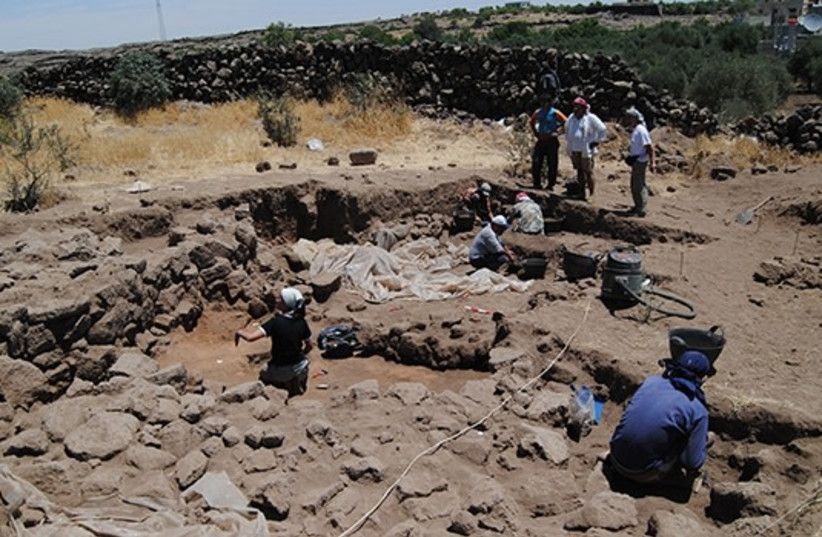
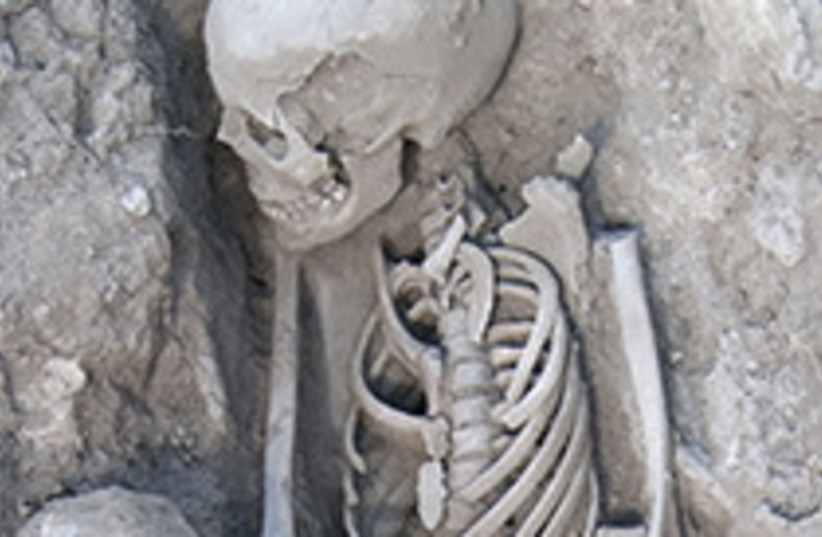
The team looked at 5,000 human remains from the Late Mesolithic period and determined accurate dates for how old they are.
.

Human remains in graves dated to the Umayyad.
(photo credit: JONATHAN SANTANA)

An international research team led by Lund University in Sweden has developed a method that can accurately date human remains that are up to 10,000 years old by analyzing DNA with the help of AI.

In a peer-reviewed study published in the journal Cell Reports Methods on Monday, researchers developed the temporal population structure (TPS) – which is a dating method for genomes ranging from the Late Mesolithic period to the present. 

The research team looked at 5,000 human remains from the Late Mesolithic period and determined accurate dates for how old they are.

“Unreliable dating is a major problem, resulting in vague and contradictory results,” according to Eran Elhaik, a Lund University researcher in molecular cell biology.

“Our method uses artificial intelligence to date genomes via their DNA with great accuracy,” he said. Researchers do not expect TPS to replace radiocarbon dating.

Human remains in graves dated to the Umayyad. (credit: JONATHAN SANTANA)

“Unreliable dating is a major problem, resulting in vague and contradictory results. Our method uses artificial intelligence to date genomes via their DNA with great accuracy.”

Eran Elhaik

TPS vs. Radiocarbon dating

Radiocarbon dating has been the standard method before TPS to determine how old ancient remains are, but it has not always been accurate. TPS can be used when radiocarbon dating is unable to develop alternative hypotheses for samples younger than 10,000 years.


Zawartość publikowanych artykułów i materiałów nie reprezentuje poglądów ani opinii Reunion’68,
ani też webmastera Blogu Reunion’68, chyba ze jest to wyraźnie zaznaczone.
Twoje uwagi, linki, własne artykuły lub wiadomości prześlij na adres:
webmaster@reunion68.com


Russia is losing in Ukraine – who will it blame? Analysis

Russia is losing in Ukraine – who will it blame? Analysis

SETH J. FRANTZMAN


If Moscow can blame its Ukrainian separatist partners for its failures, perhaps Russia can save face.
.
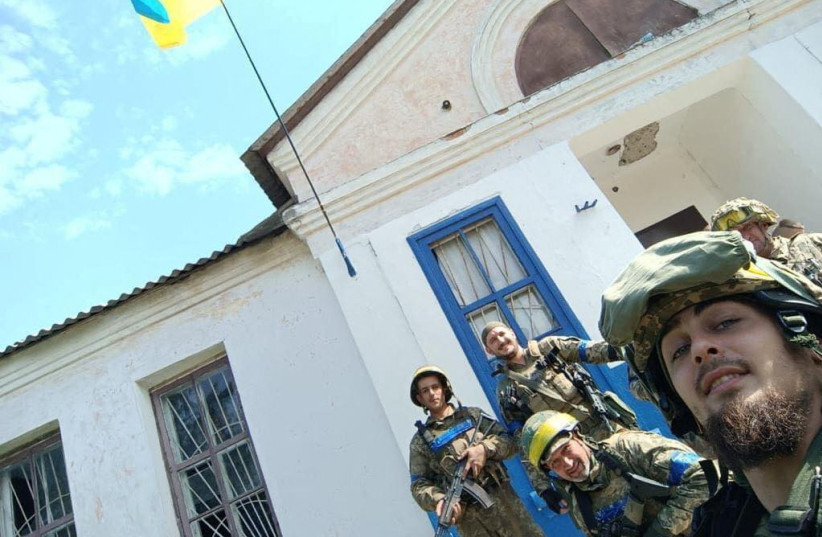
Service members pose for a picture with a Ukrainian national flag in the village of Vasylenkove, recently liberated by Ukrainian Armed Forces, amid Russia’s attack on Ukraine, in Kharkiv region, Ukraine, in this handout picture released September 10, 2022. / (photo credit: Press service of the Territorial Defence of the Ukrainian Armed Forces/Handout via REUTERS)

Russia’s state-owned TASS news agency published an interesting article on Sunday. The article quoted the head of the “Donetsk People’s Republic,” a breakaway republic that Russia has recognized as a country but which is actually part of Ukraine.

The article claimed that Denis Pushilin, the head of the separatist area, “said the situation along the combat line in the Donetsk People’s Republic is tense but the forces of the people’s militia hold it under control.” In reality, Russia and pro-Moscow forces in the DPR have been seeing huge setbacks as a Ukrainian offensive pushes them back.

The article appears to have been written in order to highlight the failure of the DPR, this breakaway area that Moscow set up as a fake country. Moscow has used the separatist area to fight Ukraine, and as a location in which to put on trial some foreign volunteers and Ukrainians captured by Russian troops.

Russia has been trying to fight the war against Ukraine using non-Russians. Moscow has used the people of Donetsk to fight their fellow Ukrainians since 2014, when Russia first invaded Ukraine and annexed Crimea and set up the Donetsk and Luhansk People’s Republics.

“The situation of the frontline is tense but under control,” the DPR head told TASS. The report also included a claim that DPR forces were “still in control of the airport,” and said “Pushilin described some Ukrainian reports that Kyiv’s forces took the airport as false.”
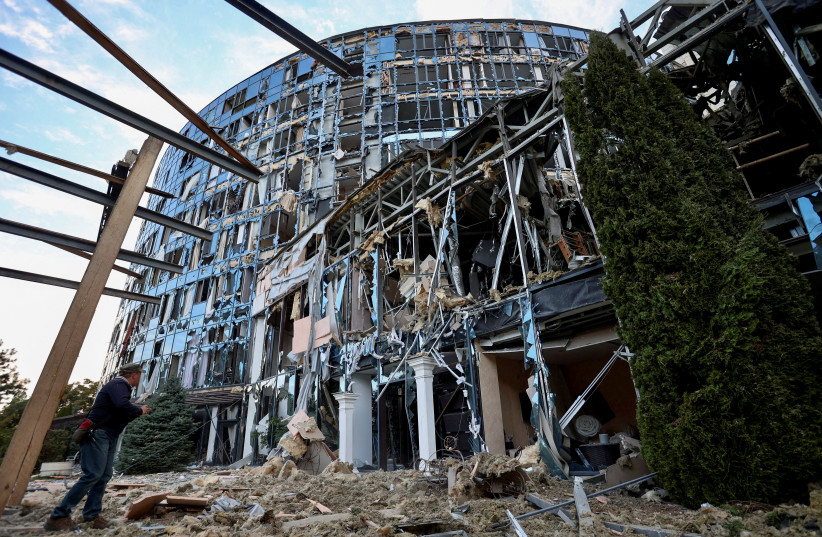
A man stands next to a business and entertainment centre heavily damaged by a Russian military strike, amid Russia’s attack on Ukraine, in Kharkiv, Ukraine September 9, 2022 (credit: REUTERS/VIKTORIIA YAKYMENKO)

Pro-Russian forces reportedly complained about NATO-supplied equipment.

A disguised Russian retreat 

A second article from TASS said Russian troops were “regrouping” and “redeploying.” These are the propaganda terms used by authoritarian regimes when their forces are retreating.

“In order to achieve the declared goals of the special military operation for the liberation of Donbass, it was decided to regroup the Russian forces stationed near Balakleya and Izyum to boost efforts in the Donetsk direction,” the Russians said.

“According to the Russian Defense Ministry spokesman, for that purpose, an operation of reorganizing and redeploying the Izyum-Balakleya grouping to the Donetsk People’s Republic has been carried out in the past three days,” the report said

Ukraine’s successful counteroffensive

OVERALL, THE recent picture in Ukraine has been one of a successful operation to push back the Russians. In the last days of August, the Ukrainians launched a counter-offensive on the Kherson front line near Mykolaiv. A week later, Ukraine launched a second offensive in the area of Kharkiv.

While it is not entirely clear how well the advances have proceeded on both fronts, the overall appearance is that Ukraine has used a feint in the south to distract the Russians, while the main attack was in Kharkiv. Reports show the Russians being pushed back and numerous areas being liberated by Ukraine.

Losses have been heavy, however. It remains to be seen if weapons supplied by the West, and advice and training, are paying off, and how Moscow will react.

Russia is attending the Shanghai Cooperation Organization this week alongside other authoritarian regimes. It won’t want to be seen as losing in Ukraine. However, if Moscow can blame its Ukrainian separatist partners for the failure and pretend it is fighting the war with these proxies, then perhaps Russia can save face.

Moscow has been reluctant to commit huge numbers of troops and planes to Ukraine, preferring to fight an operation with one hand tied behind its back. This is because Russia wants to fight this war using other people. It hopes to destroy Ukraine without having to sacrifice ordinary Russians, and risk calling into question President Vladimir Putin’s leadership. In short, Russia wants an easy war in which others pay the price for its policies.

What happens when the price begins to grow for Moscow and the humiliation grows?

What happens as the cost of this war and the humiliation of its defeats continue to grow? Russia has already been pushed back on other front lines since it invaded on February 24. At each turn for the worse for Moscow, the regime has shrugged off losses of equipment, launched a few cruise missiles and then settled in for more attrition on the battlefield.

This indicates that Moscow thinks time is on its side. It thinks if it fights in Ukraine for years, as it did in Syria and elsewhere, that somehow it will begin to win because the fighting is done on Ukrainian land. For instance, Europe’s largest nuclear plant at Zaporizhzhia has now been shut down. Clearly, Moscow’s goal is to do war on the cheap, terrorize Ukraine, use proxies and minorities from Russia’s periphery to fight the war, and starve Ukraine of resources. Russia has, for example, tried to take over the trade of grain and other resources.

It’s unclear if Russia will react to the recent Ukrainian offensive. If it prefers to use separatists and proxies to fight and then abandons them or blames them for the debacle, Moscow could be setting up a stratagem that enables it to save face by blaming others. If Russia feels it is losing too much material, it might respond with more attacks on Ukrainian cities. The question is whether NATO powers have equipped Ukraine with the right weapons and defenses to stop any Russian reaction.


Zawartość publikowanych artykułów i materiałów nie reprezentuje poglądów ani opinii Reunion’68,
ani też webmastera Blogu Reunion’68, chyba ze jest to wyraźnie zaznaczone.
Twoje uwagi, linki, własne artykuły lub wiadomości prześlij na adres:
webmaster@reunion68.com


News From Israel- September 11, 2022

News From Israel- September 11, 2022

ILTV Israel News


Iran refusing to back down from demands that may soon tank nuclear talks. And of course, Tehran blaming Israel in the process.

Israel joining the world in paying last respects to her majesty, the late Queen Elizabeth II.

Gal Gadot no longer the only Israeli actress to get the superhero treatment – as Shtisel and Unorthodox star, Shira Haas joins the MCU…


Zawartość publikowanych artykułów i materiałów nie reprezentuje poglądów ani opinii Reunion’68,
ani też webmastera Blogu Reunion’68, chyba ze jest to wyraźnie zaznaczone.
Twoje uwagi, linki, własne artykuły lub wiadomości prześlij na adres:
webmaster@reunion68.com


Have archaeologists found the home of St. Peter? – study

Have archaeologists found the home of St. Peter? – study

JERUSALEM POST STAFF


While the location of the Biblical Bethsaida is still debated, archaeologists believe this new find may help settle the debate.

.
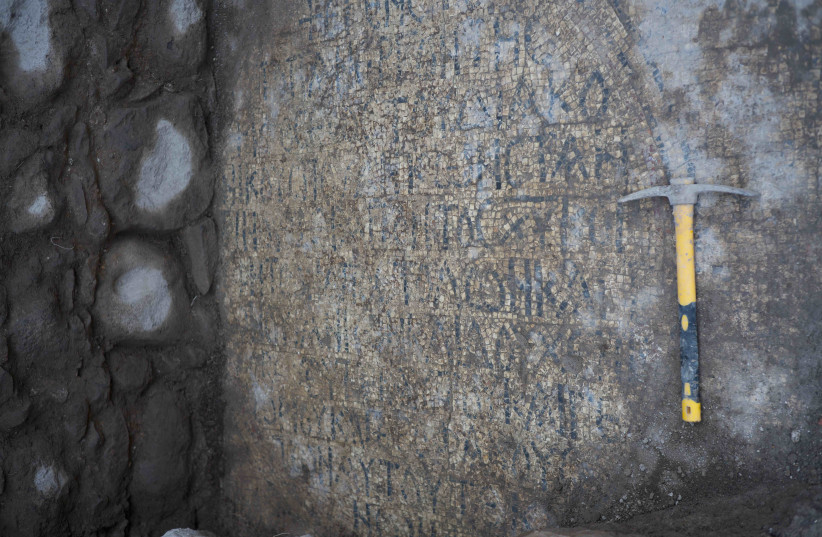
Greek inscription found at the “Church of the Apostles” at the el Araj/Beit haBek dig. / (photo credit: Zachary Wong)

A group of archaeologists believe that they have found the site of the home of St. Peter in the remains of an ancient church on the northeast shore of the Kinneret (Sea of Galilee) in a site which may be the biblical Bethsaida, the birthplace of three of Jesus’ Apostles – Peter, Andrew and Philip.

Archaeologists from Kinneret College in Israel and Nyack College, NY, led by Prof. Mordechai Aviam and Prof. Steven Notley, found a large Greek inscription during excavations in a structure called the “Church of the Apostles” at the el Araj/Beit haBek dig. The structure dates back to the Byzantine period.

The inscription, which was translated by Prof. Leah Di Segni of the Hebrew University in Jerusalem and Prof. Yaakov Ashkenazi of Kinneret College, references a donor “Constantine, the servant of Christ” a petition for St. Peter to pray on behalf of the person. The inscription refers to Peter as “chief and commander of the heavenly apostles.”

The title “chief and commander of the heavenly apostles” is routinely used by Byzantine Christian writers to refer to the Apostle Peter, according to archaeologists.

The inscription is framed with a round medallion made of two lines of black tesserae (small pieces of hard material used to make a mosaic) and is part of a larger mosaic floor of the church’s sacristy (the room where sacred vessels and vestments are kept.”

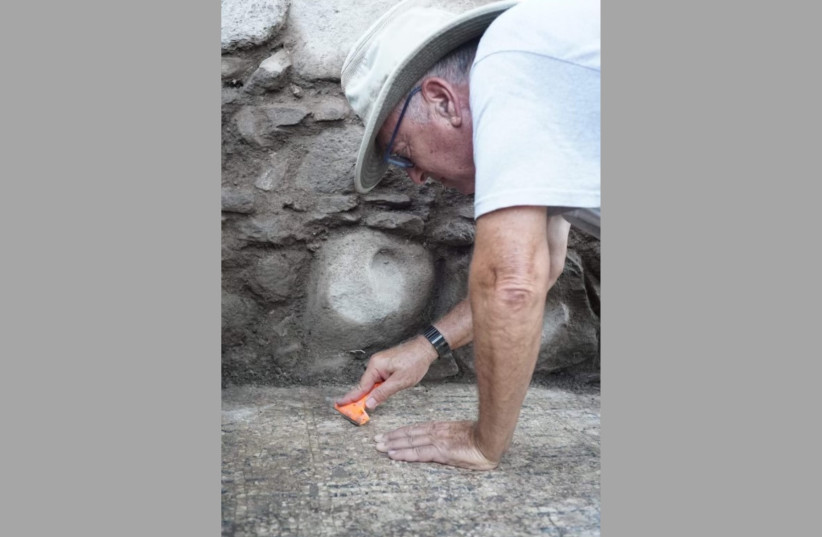
Prof. Mordechai Aviam cleaning the inscription. (credit: Zachary Wong)

Archaeologists say this is the ‘strongest indicator’ Peter had a special link with the basilica

“This discovery is our strongest indicator that Peter had a special association with the basilica, and it was likely dedicated to him. Since Byzantine Christian tradition routinely identified Peter’s home in Bethsaida, and not in Capernaum as is often thought today, it seems likely that the basilica commemorates his house,” said Steven Notley, academic director of the dig, in a press release.

The archaeologists added that the discovery of the inscription bolsters the connection of the basilica to the church described by the 8th-century bishop of Eichstätt, Willibald, who reported that the church was built over the home of Peter and Andrew. Willibald stated during a pilgrimage to the Holy Land that he stayed overnight at a place that he was told “is Bethsaida from which came Peter and Andrew. There is now a church where previously was their house.”

“One of the goals of this dig was to check whether we have at the site a layer from the 1st century, which will allow us to suggest a better candidate for the identification of Biblical Bethsaida. Not only did we find significant remains from this period, but we also found this important church and the monastery around it,” says archaeologist Mordechai Aviam, archaeological director of the excavation.

Roman remains found at the site are linked to descriptions by Flavius Josephus, who stated that the village of Bethsaida became a small polis called Julias.

Excavations at the site will resume in October, after the cleaning of the entire church in order to answer the question of its different phases and to uncover any other additional inscriptions that may be at the site.

The exact location of the village of Bethsaida is unknown and there are multiple sites that are considered potential candidates for the biblical village, including the et-Tell site located north of the Kinneret.


Zawartość publikowanych artykułów i materiałów nie reprezentuje poglądów ani opinii Reunion’68,
ani też webmastera Blogu Reunion’68, chyba ze jest to wyraźnie zaznaczone.
Twoje uwagi, linki, własne artykuły lub wiadomości prześlij na adres:
webmaster@reunion68.com


The Siege of Masada (73 AD) – Last Stand of the Great Jewish Revolt

The Siege of Masada (73 AD) – Last Stand of the Great Jewish Revolt

Invicta


In 73 AD Masada, the impregnable mountain fortress in the Judaean desert, stood as the final holdout against the onslaught of Rome’s legions. The siege that followed would mark the final, bloody suppression of the Jewish revolt with an encounter whose awe inspiring remains can still be seen in the desert today!

HD Drone Footage provided by JPWorthington Media
https://www.pond5.com/artist/jpworthi…


Zawartość publikowanych artykułów i materiałów nie reprezentuje poglądów ani opinii Reunion’68,
ani też webmastera Blogu Reunion’68, chyba ze jest to wyraźnie zaznaczone.
Twoje uwagi, linki, własne artykuły lub wiadomości prześlij na adres:
webmaster@reunion68.com