Archives

Settler leaders reject anti-reform strike, Efrat mayor calls for referendum

Settler leaders reject anti-reform strike, Efrat mayor calls for referendum

TZVI JOFFRE


The Federation of Local Authorities declared a strike in Israel after mass protests broke out in response to Netanyahu firing Defense Minister Yoav Gallant.
.

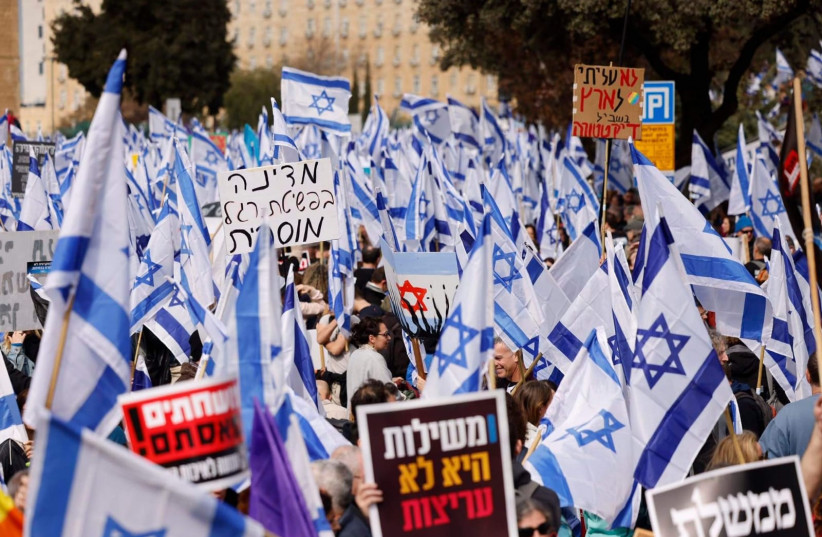
The masses protest outside of the Knesset against the judicial reform. (photo credit: MARC ISRAEL SELLEM)

The leaders of the Samaria, Binyamin and Gush Etzion regional councils rejected a strike declared by the Federation of Local Authorities in Israel on Monday, with the Samaria and Binyamin regional councils announcing that they would continue to provide services to the public.

“Following the announcement of the Federation of Local Authorities about the shutdown of the economy, the Samaria Regional Council will not go on strike and will continue to provide services,” said Samaria Regional Council head Yossi Dagan.

The head of the Binyamin Regional Council Israel Ganz announced on Monday that the services of the Council are operating as usual and the council is not taking part in any kind of strike.

The Federation of Local Authorities announced a strike on Monday morning after mass protests broke out across Israel on Sunday night in response to a decision by Prime Minister Benjamin Netanyahu to fire Defense Minister Yoav Gallant after Gallant publicly expressed concerns about the security ramifications of the government’s efforts to pass the judicial reform.

Efrat mayor called for referendum

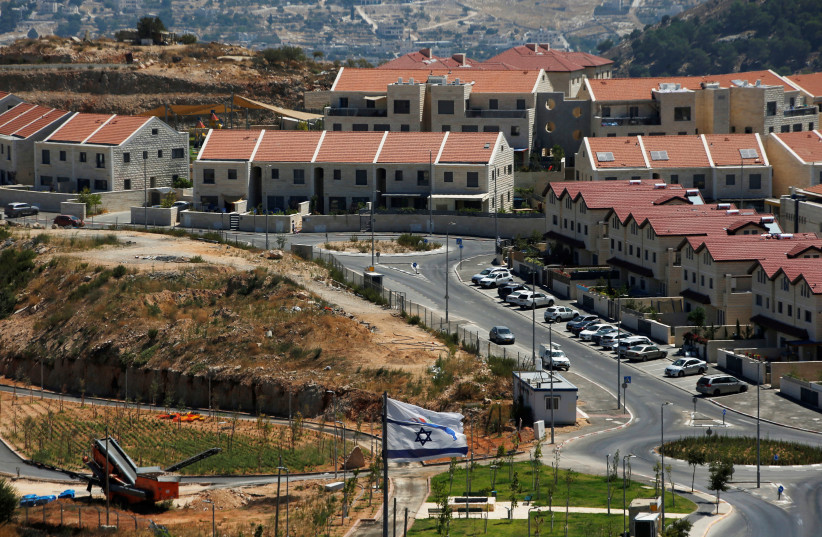
The Israeli national flag flutters as apartments are seen in the background in the Israeli settlement of Efrat in the West Bank August 18, 2020. (credit: RONEN ZVULUN/REUTERS)

Additionally, on Monday, Efrat Mayor Oded Revivi called for a referendum to be held on the reform in which the opposition would prepare one version and the coalition would prepare another version and the public would vote for one or the other.

“The crisis, the demonstrations against the reform and those planned tonight in support of it – along with the political upheaval – necessitates holding a referendum on an outline that will be presented by the coalition and an outline that will be presented by the opposition,” said Revivi. “There is currently no other option on the table that will stop the snowball.”

Revivi noted that a referendum will force the parties to conduct a “substantive, concrete and in-depth discussion” about the meanings of the changes in the reform.

A referendum will also create a target date to get out of the crisis and return to day-to-day affairs, says Revivi, advising that such a referendum take place after Yom Haatzmaut.

Religious Zionist MK Zvi Sukkot rejected the opposition to the reform expressed on Monday, saying that right-wing voters were being “trampled” by the protests and the left-wing parties, comparing the situation to the Disengagement from the Gaza Strip and northern Samaria.

“In the State of Israel 2023, after 70 years, the Right is allowed to vote and be elected in the elections, to sit here on the chairs and hold the titles of MK and minister – but that’s it,” said Sukkot.

Referencing the Disengagement, Sukkot added “[right-wing voters] remember how in those days the country was full of orange ribbons – yet no one was moved by their protest. Their tears did not melt cold hearts. Their houses were destroyed, their graves were dug, their mouths were shut. They remember how they were trampled then, and they see how they are trampled today.”


Zawartość publikowanych artykułów i materiałów nie reprezentuje poglądów ani opinii Reunion’68,
ani też webmastera Blogu Reunion’68, chyba ze jest to wyraźnie zaznaczone.
Twoje uwagi, linki, własne artykuły lub wiadomości prześlij na adres:
webmaster@reunion68.com


Israel Daily News – March 23, 2023

Israel Daily News – March 23, 2023

ILTV Israel News


The Knesset passing the recusal bill, with tens of thousands protesting all around the country

Meantime; Prime Minister Benjamin Netanyahu is flying to London in the midst of a diplomatic crisis.

And finally… A taste of the holy land’s finest export with ILTV’S wine of the week…


Zawartość publikowanych artykułów i materiałów nie reprezentuje poglądów ani opinii Reunion’68,
ani też webmastera Blogu Reunion’68, chyba ze jest to wyraźnie zaznaczone.
Twoje uwagi, linki, własne artykuły lub wiadomości prześlij na adres:
webmaster@reunion68.com


Constitutional crisis: Can High Court strike down reform bills? – analysis

Constitutional crisis: Can High Court strike down reform bills? – analysis

MICHAEL STARR


The question of whether the court should be able to review Basic Law amendments has been a gap in Israel’s legal structure that reformists say they are attempting to fill.
.

Judicial reform supporters wave Likud flags and hold signs reading “The leftist minority will not determine Israel” and “Leftist traitors” at a protest on Saturday night, March 18, 2023. / (photo credit: ERIK MARMOR/FLASH90)

Concerns about an impending Israeli constitutional crisis surged on Tuesday as opposition members called for the High Court of Justice to strike down judicial reform laws – and coalition members debated whether they would accept the court’s decision.

Judicial reform negotiation attempts have all but failed with the complete rejection by the coalition of President Isaac Herzog’s “People’s Directive.” The opposition has little recourse against the reform after the coalition decided on Monday to proceed with a unilateral compromise on it – and the final Knesset readings on the amendment to the judge selection committee Basic Law are set to be held before the parliamentary Passover recess.

Opposition leaders have increasingly turned to the possibility that the High Court of Justice would engage in a judicial review of the judicial reform bills as a final hope. Former attorney-general Avichai Mandelblit expressed confidence on March 12 that the court would strike down the legislation; the next day, Yisrael Beytenu head Avigdor Liberman called on the court to cancel the bill.

Justice Minister Yariv Levin on the court’s decision

Justice Minister Yariv Levin said on Monday that he wouldn’t accept the High Court’s judicial review of the Basic Law amendment regarding the composition of the judge selection committee, which will see its final Knesset readings before the Passover break. Economy Minister Nir Barkat said that he would accept the court’s ruling, only out of concern that its rejection could lead to a constitutional crisis.

This is when the government comes into unresolvable conflict with the constitution, often in a way that falls between the gaps in the legal structure. While Israel lacks a formal written constitution, it does have the quasi-constitutional Basic Laws.
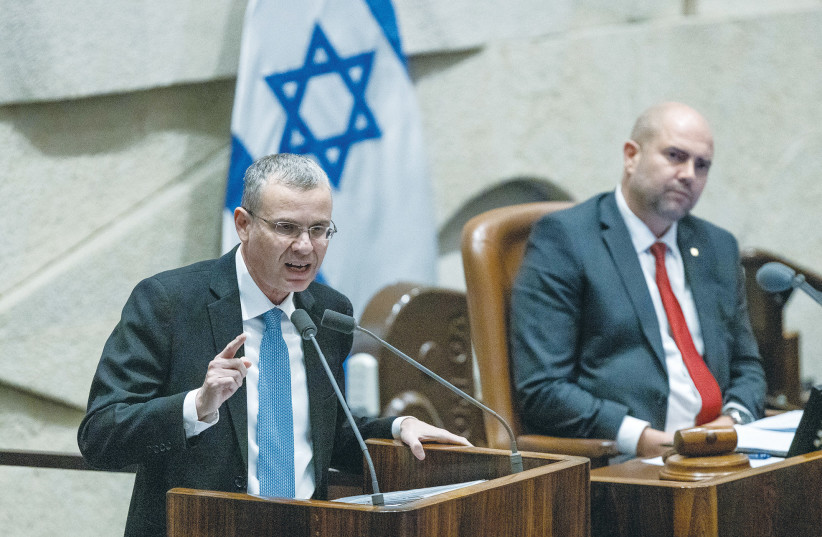
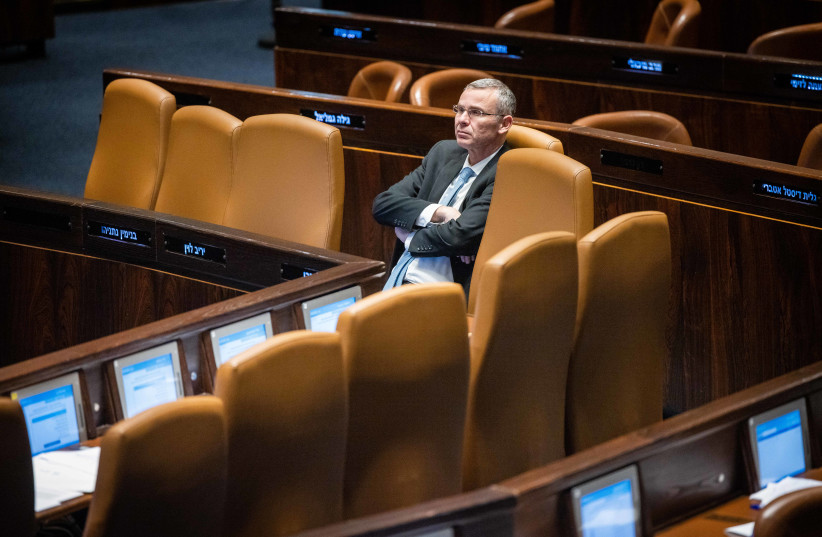
JUSTICE MINISTER Yariv Levin addresses the Knesset plenum last week, before voting took place in a first reading on judicial reform legislation. The government has remained inactive in clarifying the reform’s purpose, says the writer. (credit: YONATAN SINDEL/FLASH90)

Bar-Ilan University law professor Avi Bell said that there is no law that authorizes the court to strike down Basic Laws, or even regular legislation.

“When the court declared its ‘constitutional revolution’ in the mid-1990s, giving itself the power to cancel legislation, its justification included the claim that the Knesset acts as a constitutional assembly when it enacts Basic Laws and that Basic Laws are really a constitution, so the court is just enforcing the Knesset’s constitution when it strikes down non-Basic Laws,” explained Bell. “Obviously, this justification cannot possibly excuse a court decision to nullify Basic Laws.”

Given the powers that the court had granted itself, and the desire to protect those abilities, said Bell, it was possible that the court could determine that it could cancel Basic Laws.

Hebrew University law professor Yoav Dotan said that the ability to strike down a Basic Law was complicated, explaining that the idea of judicial review itself leans on the supremacy of the Basic Laws over regular legislation.

In comparison to other states, courts have in extreme cases reviewed constitution amendments, but this has been rare, said Dotan. Where Israel differs is the lack of a special method for creating its constitutional articles.

“It doesn’t differ from regular legislation by the Knesset,” he said, “so it’s very easy for the Knesset by regular political procedure to change them, which makes the option or the possibility of judicial intervention even more relevant.”

There is little precedent for review of Basic Laws, said Dotan. The High Court has intervened a few times on the technical level. When the Knesset attempted to temporarily amend the Basic Law addressing the budget, the court ruled that as a fundamental state article, such a thing wasn’t possible.

“So far, they haven’t gone all the way by saying that the Basic Law is undemocratic or something like that, to strike down a Basic Law,” Dotan said.

The grounding by which the court could make its ruling would be based on just this, the law professor said, claiming that the law must conform to principles of democracy, separation of powers, or the values of the Declaration of Independence. Ultimately, Dotan said much of this was speculative as it was such untrodden territory.

The question of whether the court should be able to review Basic Law amendments has been a gap in Israel’s legal structure that reformists say they are attempting to fill. Versions of the Judge Selection Committee bill have contained provisions to bar the court from interfering in Basic Laws.

“One of the central motivations for the proposed judicial reform is that the Court acts as if it is above the law in striking down legislation of the Knesset,” said Bell. “No law authorizes the court to strike down laws due to insufficient discussion in committee, for example, but the court has nevertheless done so.”

The Likud responded to the discourse on the looming crisis by saying that calls to strike down the law were a reason for the reform, and noted an emerging tradition in every reform outline from Herzog and Rothman to Friedmann, which had accepted that xourt review of Basic Laws should be disallowed.

“The Court’s overreach will be the constitutional crisis,” said Bell. “Obviously, there is a danger that matters will go downhill from there.”

If the court determined that it had the power to strike down Basic Laws, and the government refused to accept the decision, each branch would be mutually rejecting the legitimacy of the other. The court would not be accepting the constitutive authority of the Knesset, and the government would be rejecting the court as an interpreter and protector of the law. This could extend to all other legal and governance matters and relations between the judiciary and the legislative and executive branches, a scenario for which there is no precedent.

What would happen next is unclear, said Dotan.

“Nobody can make clear predictions here, because this is unstudied terrain, certainly for Israel”

The likelihood of the court striking down the judge selection amendment was quite high if the government continued with its current legislative path, Dotan estimated.

Bell said that the high probability was a political issue, not a legal one. He said that it depended on the individual justices, the expected backlash from the media, and whether the opposition would back its activism.

“I can only hope that members of the court’s anti-reformist camp will persuade the justices to take a less reckless course.”


Zawartość publikowanych artykułów i materiałów nie reprezentuje poglądów ani opinii Reunion’68,
ani też webmastera Blogu Reunion’68, chyba ze jest to wyraźnie zaznaczone.
Twoje uwagi, linki, własne artykuły lub wiadomości prześlij na adres:
webmaster@reunion68.com


Izrael jest podzielony, ale palestyńscy terroryści biorą na cel wszystkich Żydów

ŻYDZI MODLĄ SIĘ w piątek rano na miejscu ataku terrorystycznego na ulicy Dizengoffa w Tel Awiwie. „Arabscy terroryści nigdy nie próbują zabić tylko pewnego typu Żydów”.(źródło zdjęcia: AVSHALOM SASSONI/FLASH90)


Izrael jest podzielony, ale palestyńscy terroryści biorą na cel wszystkich Żydów

Stephen M. Flatow

Tłumaczenie: Małgorzata Koraszewska


Izraelczycy są gniewni i podzieleni. Krzyczą na siebie i organizują wściekłe demonstracje. Mnożą się oskarżenia i wyzwiska. Ale po raz kolejny palestyńscy terroryści przypominają nam, że w ostatecznym rozrachunku to, co łączy Izraelczyków, jest ważniejsze niż nieporozumienia dotyczące tej lub innej propozycji politycznej.

W czwartkowy wieczór [9 marca] palestyński terrorysta podszedł do kawiarni w Tel Awiwie i zaczął strzelać. Nie strzelał do żołnierzy ani „osadników”. Próbował dokonać masakry nieuzbrojonych izraelskich cywilów siedzących w ekskluzywnej kawiarni w sercu świeckiego, politycznie lewicowego Tel Awiwu.

Tego samego wieczoru 72 km dalej, inny palestyński arabski terrorysta próbował zmasakrować izraelskich cywilów. Wsiadł do autobusu w mieście ortodoksyjnych Żydów (charedi), Beitar Illit, niedaleko Jerozolimy, i podłożył bombę. Z bomby zaczął wydobywać się dym, ale w jednym z tych niezliczonych cudów, których codziennie doświadczają Izraelczycy, urządzenie nie wybuchło natychmiast. Dało to ekspertom od usuwania bomb kluczowe minuty, których potrzebowali do jej zneutralizowania.

Gdyby niedoszły morderca w Tel Awiwie umiał strzelać celniej, nie wiadomo ilu świeckich Izraelczyków zostałoby zamordowanych. Gdyby niedoszły morderca w Beitar Illit miał większe doświadczenie w konstruowaniu bomb, wielu ortodoksyjnych Izraelczyków zostałoby zamordowanych.

Zastanówmy się przez chwilę, jak bardzo różnią się te dwa segmenty izraelskiego społeczeństwa: co noszą. Co jedzą. Ile mają dzieci. Książki, które czytają. Filmy, które oglądają (lub nie oglądają). Gdzie wyjeżdżają na wakacje. Co robią w Szabat. Przy takich miarach świeccy izraelscy Żydzi i ortodoksyjni izraelscy Żydzi są tak różni jak dzień i noc.

Ulica Dizengoffa w Tel Awiwie po strzelaninie 9 maja 2023 r. (źródło: UNITED HATZALAH‏)

Ale te różnice nie mogłyby mniej obchodzić palestyńskich terrorystów. Podobnie jak inni brutalni wrogowie narodu żydowskiego na przestrzeni dziejów, nigdy nie próbują zabić tylko określonego typu Żydów. Nie obchodzi ich, czy izraelski Żyd jest bardziej religijny, czy mniej religijny. Nie obchodzi ich, czy mieszka w Tel Awiwie, czy w placówce na wzgórzu.

Broń automatyczna, z której strzelają terroryści, bomby, które podkładają, kamienie, którymi rzucają, noże, którymi dźgają, są wymierzone we wszystkich Żydów.

Życie i śmierć: najważniejsze, co łączy Izraelczyków

Właśnie dlatego, mimo wszystkich gorących sporów społecznych i politycznych, które obecnie trawią ten kraj, Izraelczycy pozostają niezwykle zjednoczeni w najważniejszej ze wszystkich kwestii: życia i śmierci.

Jeśli chodzi o potrzebę podjęcia zdecydowanych działań przeciwko palestyńskiemu terroryzmowi arabskiemu, istnieje pełen konsensus między prawicą a lewicą. W tej kluczowej kwestii istnieje stopień jedności, jaki trudno znaleźć w jakimkolwiek innym kraju, w tym w USA.

Rozważcie, jak członkowie Knesetu głosowali nad niedawną ustawą zezwalającą na deportację skazanych terrorystów, którzy otrzymują dotacje finansowe od Autonomii Palestyńskiej.

„New York Times” opisał ustawę jako „surową”, „twardą” i produkt „skrajnie prawicowego” rządu. W rzeczywistości nowe ustawodawstwo reprezentuje centrowe, a nie prawicowe stanowisko w dzisiejszym Izraelu. Została przyjęta zadziwiającą przewagą głosów: 94 do 10.

Wśród zwolenników znalazły się główne lewicowe partie opozycyjne, Jest Przyszłość Jaira Lapida i Jedność Narodowa Benny’ego Gantza.

Posłowie z lewicowej Partii Pracy byli nieobecni na głosowaniu, ale nie dlatego, że sprzeciwiali się ustawie. „Poparliśmy projekt ustawy, kiedy został po raz pierwszy zaproponowany” – wyjaśnił rzecznik Partii Pracy. Zdecydowali się jednak nie uczestniczyć w głosowaniu w proteście przeciwko niektórym posunięciom rządu w polityce wewnętrznej.

Weźmy też pod uwagę szerokie społeczne poparcie dla „Operacji Przełamać Falę” armii izraelskiej, strategii wysyłania sił bezpieczeństwa do miast zarządzanych przez Autonomię Palestyńską w pościgu za terrorystami. Po fali strzelanin, zamachów bombowych i pchnięć nożami, w wyniku których zginęło 19 Izraelczyków na początku 2022 r., lewicowy rząd kierowany przez Naftalego Bennetta rozpoczął operację. Następca Bennetta, Jair Lapid, kontynuował akcję – przy wsparciu swoich lewicowych sojuszników, Partii Pracy i Meretz, bo ściganie terrorystów nigdy nie było stanowiskiem „prawicowym” lub „lewicowym”.

Rzecznik izraelskiej armii powiedział niedawno, że w ciągu pierwszych ośmiu miesięcy operacji Przełamać Falę (od marca do listopada 2022 r.) siły bezpieczeństwa „udaremniły około 500 ataków terrorystycznych”. Przechwyciły „co najmniej 250 sztuk broni” i „785 tysięcy dolarów w gotówce”, które miały zostać wykorzystane do sfinansowania ataków terrorystycznych. Aresztowano ponad 2500 terrorystów.

Jedynymi krytykami operacji armii są orędownicy sprawy palestyńskiej, którzy są w środowisku akademickim, mediach i grupach ekstremistycznych. Nie lubią operacji Przełamać Falę, bo ich strona przegrywa.

Może być niepokojące, gdy Izraelczycy tak gwałtownie spierają się o różnice w polityce wewnętrznej. Pocieszeniem jest jednak pamięć, że jeśli chodzi o kwestię, która liczy się najbardziej – wytępienie terroryzmu i zapewnienie przetrwania państwa żydowskiego – narodowy konsensus Izraela jest silny. Nie powinno być potrzeby ataków terrorystycznych Arabów palestyńskich w Tel Awiwie i Beitar Illit, aby przypomnieć nam o łączących nas więziach.


*Stephen Flatow – Amerykański prawnik, który zainicjował szereg procesów przeciwko Islamskiej Republice Iranu w związku ze sponsorowaniem terroryzmu przez to państwo. Jego córka zginęła w zamachu terrorystycznym w 1995 roku. Wielokrotnie pomagał rządowi USA zidentyfikować organizacje, które pośredniczyły w nielegalnym przekazywaniu pieniędzy do Iranu.


Zawartość publikowanych artykułów i materiałów nie reprezentuje poglądów ani opinii Reunion’68,
ani też webmastera Blogu Reunion’68, chyba ze jest to wyraźnie zaznaczone.
Twoje uwagi, linki, własne artykuły lub wiadomości prześlij na adres:
webmaster@reunion68.com


Yariv Levin: I will disobey if High Court rules against judicial reform billYariv Levin: I will disobey if High Court rules against judicial reform bill

Yariv Levin: I will disobey if High Court rules against judicial reform bill

ELIAV BREUER


“If the justice minister refuses to obey the law, why should the citizens obey the government,” opposition head Yair Lapid argued.

.Justice Minister Yariv Levin at a discussion and a vote on the government’s judicial overhaul plans in the assembly hall of the Knesset, the Israeli parliament in Jerusalem, on February 20, 2023 / (photo credit: YONATAN SINDEL/FLASH90)

If the High Court of Justice strikes down the bill to change the makeup of the Judicial Appointment Committee which gives the coalition the ability to appoint two justices per term to the High Court without the opposition’s approval, Justice Minister Yariv Levin will not respect the ruling, Levin said in an interview on Channel 14 on Monday night, soon after the Likud decided to support the bill and pass it before the Knesset recesses on April 2.

Such a ruling would be “crossing a red line and we certainly will not accept it,” Levin said.

“We legislated and implemented without fear the mandate that the public gave us … this democratic resolution will be respected, and we will have a method for appointing judges that is fair, just and includes everyone,” Levin said.

Opposition leader MK Yair Lapid responded soon after, “This is it, the masks have come down. The gun is on the table. The real prime minister Yariv Levin is bringing us into complete chaos and a constitutional crisis with no return. If the justice minister calls on the government not to obey the law, why should the citizens of Israel obey the government?”

Previous justice minister, National Unity MK Gideon Sa’ar, said that “Levin’s threat against the court crosses a red line. It is unprecedented that the justice minister says in advance that he will not respect a ruling that is not to his liking. The complete opposite of Menahem Begin’s path. A government that does not respect a court ruling loses its legitimacy,” Sa’ar said.

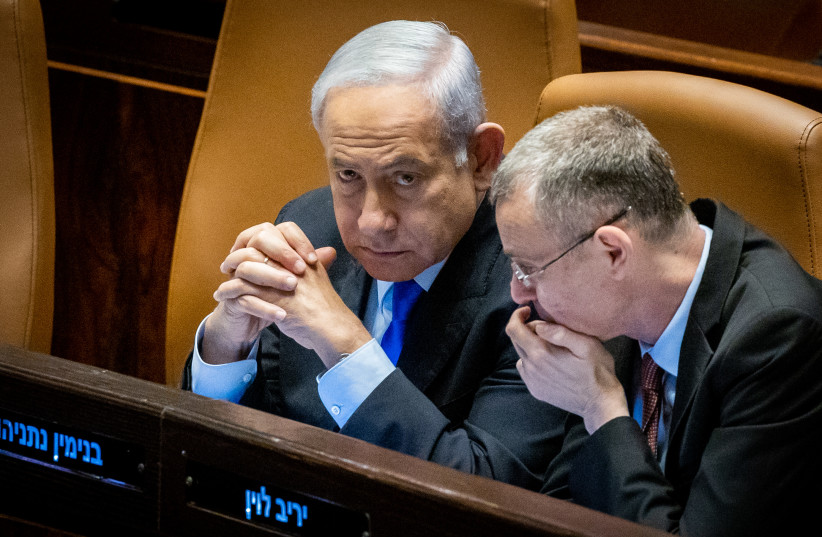
Benjamin Netanyahu with Justice Minister Yariv Levin during a discussion and a vote in the assembly hall of the Knesset, the Israeli parliament in Jerusalem, on March 6, 2023 (credit: Yonatan Sindel/Flash90/Reuters)

Likud: High Court has no reason to intervene

The Likud put out a statement on Tuesday.

“The absurd discussion about constitutional crisis only emphasizes how necessary the judicial reform is in order to return the proper balance to the government branches.

Economy Minister Nir Barkat said on Tuesday that while he supported the bill, “I do not support in any way blindly walking into a constitutional crisis in Israel.”

If the High Court strikes down the bill, Barkat said he will respect the ruling to the letter.

“I will not lend my vote or hand to chaos in which the citizens of Israel lose faith in the government and judicial system simultaneously,” he said.

According to the new proposal, which was first presented by Knesset Constitution, Law and Justice Committee chairman MK Simcha Rothman on Sunday evening, adapted by all of the coalition leaders late Sunday night and approved by the Likud and Religious Zionist Party in faction votes on Monday, the Judicial Appointments Committee will include 11 members instead of the current nine, while six out of the eleven will come from coalition parties – three ministers and three Knesset members.

The remaining five are two opposition Knesset members and three judges, one of whom is the Chief Justice.

For appointments to the High Court, the other two justices would also be High Court judges, but for lower courts, the two would be replaced by a district court president and a magistrate’s court president. Appointments for lower courts require a majority of seven out of eleven, but High Court appointments would require a simple majority of six.

This gives the coalition an automatic majority, but the coalition will only be able to choose two High Court Justices per term without the approval of the opposition. A third appointment in a given Knesset term requires the approval of an opposition MK, and a fourth appointment also requires the approval of one of the judges.

According to Israeli Law, High Court judges retire automatically when they turn 70. Two judges, Chief Justice Esther Hayut and Justice Anat Baron, are scheduled to retire in October. The coalition will thus control the appointments to both vacancies. The following vacancy is scheduled a year later, in October 2024.


Zawartość publikowanych artykułów i materiałów nie reprezentuje poglądów ani opinii Reunion’68,
ani też webmastera Blogu Reunion’68, chyba ze jest to wyraźnie zaznaczone.
Twoje uwagi, linki, własne artykuły lub wiadomości prześlij na adres:
webmaster@reunion68.com