Archive | June 2015

Kino recenzje: Córka rabina

Córka rabina

Katarzyna Kozłowska


Życie codzienne ortodoksji żydowskiej w wyznaniach kobiety na pograniczu światów

W książce „Córka rabina” miesza się opowieść kobiety poszukującej prawdy z intymnym i szczerym wyznaniem najgłębszych lęków, dalece odchodząca od jednostajnych spraw religijnych.

Błyskotliwie napisana, językiem kompletnie przystępnym dla laików, autobiografia to historia radykalnej społeczności ortodoksyjnych Żydów widziana oczami Revy Mann. Historia spisana daje wrażenie autentycznego współuczestniczenia w poszukiwania sensu życia oraz jego ukrytych prawd. Nasze współuczestniczenie będzie polegało na wsiąknięciu w skórę dziewczyny wyzwolonej, tej wychowanej w liberalnym Londynie oraz jej przemianie u wzgórz Jerozolimy, próbie bycia świętą Żydówką na wzór biblijny.

„Skąd człowiek może wiedzieć, że odpokutował już za wszystko? Być może dzisiaj nie plami nas grzech, ale w przeszłości przecież grzeszyliśmy”

Trajektoria losu córki rabina to podróż od dna upodlenia do świadomego wyboru bycia stateczną małżonką rozmodlonego ucznia szkoły talmudzkiej. Potwornie osobista, autobiograficzna jazda bez cienia hipokryzji a także nazywająca po imieniu i z zachowaniem każdego detalu swoje ekscesy. Mann otwiera drzwi do świata zamkniętej społeczności „ja, pokutująca za mnóstwo różnych występków, pragnąca zmienić swoje dotychczasowe życie i żyć wedle prawa żydowskiego”.

„Jestem córką ortodoksyjnego rabina, jak i wnuczką rabina, który był kiedyś naczelnym rabinem Izraela, więc dobrze znam ich religijny świat”. Jednak jak sama autorka przyznaje po pobycie w żeńskiej jesziwie spędzonej na nauce praw szabasu, „świat ortodoksji jest jeszcze bardziej skomplikowany niż sądziłam”. Obdarzona zmysłem obserwacji z wrodzoną lekkością wnika w starannie chroniony świat uczennic narodu wybranego, nagminnie prowokując: „Tora nigdzie nie zabrania lesbijskich stosunków seksualnych, w przeciwieństwie do homoseksualizmu uważanego za wielką obrzydliwość”. Jej lesbijskie doświadczenie z Amerykanką z Arizony to pociecha odnaleziona, migocący płomień Tory w oczach dziewczyny i strach, że donos do rabinów przekreśli szanse dziewczyn na znalezienie dobrego męża i zbudowanie prawdziwie świętej żydowskiej rodziny.

Młode dziewczyny szukające bogobojnego przyszłego męża przeważnie spotykają się w recepcji hotelu King David w Jerozolimie. Bohaterka po wielu próbach znajduje chasyda Symchę, który w ramach oświadczyn wręcza jej…żydowski modlitewnik z psalmami. „Szkoda, że nie wychodzisz za tego adwokata, Philipa Newmana, tylko za jakiegoś Symchę”. Rabinaccy rodzice nie będą z zachwytem wykrzykiwać Mazeł Tow. Świat podług żydowskiej religii z pewnością nie jest czarno biały jak laikom się wydaje.

„Szwirat ha- kelim – kiedy pęka łupina, uwolnione zostają iskry prawdy”

Maksyma chasydzka

Piękne są opisy codziennego życia młodego zespolonego pod chupą małżeństwa. Jerozolima w dzielnicach ortodoksyjnych wciąż wygląda jak dziewiętnastowieczna Polska. Mąż Revy Symcha większość czasu spędza na modłach i różnych spotkaniach szabasowych. „Czuje się tak samotna jak dzień szabasu, kiedy Bóg stworzył wszystkie dni tygodnia i połączył je w pary: niedzielę z poniedziałkiem, wtorek ze środą, a czwartek z piątkiem – lecz kiedy usłyszał, jak sobota, czyli szabas szlocha w samotności, ponieważ nie ma towarzystwa, zaproponował, że On sam zostanie jej partnerem”.

W książce o córce rabina mnóstwo jest ponadto fantastycznych wskazówek jak i po co rozwijały się pewne mody, przesądy czy zabawne nieporozumienia wynikające z braku ludzkiego spoiwa z tym dziwnym światem ortodoksji życzącym sobie gut szabes. Na przykład czemu w tropikalnym Izraelu chasydki noszą dwie pary grubych rajstop naraz? Instytucja swatki jako norma? Jak ukoszernić gotujące się jajko? Dlaczego młodzieńcy w czasie czytania Tory kiwają się w przód i w tył? Co to jest święto Purim? Na te i inne ciekawe pytania Reva Mann odpowiada nam z dużą dozą ironii oraz z błyskiem zapalanej przysłowiowej żarówki „Ależ to proste!” Na styku dwóch światów jak żaden inny człowiek rozumie wagę dziwnych pytań przeważnie bez odpowiedzi. Z Mann wszystko jest jasne jak żydowski bajgiel.

Mimo trudów i znojów w jej biografii uwaga jest skupiona na żyjącej tkance świata zwyczajów i obyczajów ortodoksyjnych Żydów a także pełen ezoterycznego dociekania i cytatów ze świętych Ksiąg. Jednak tu i ówdzie słychać klaksony w Tel Awiwie i rock ‘n’ rollowy pogłos młodości spędzonej w Londynie. Genialne rozpisanie śniadania chasydzkiego męża Revy Symchy oraz posiłek pracownika fizycznego remontującego ich mieszkanie pokazuje głęboką przepaść i niepewność Revy co do dalszego trwania w nazbyt zakleszczonej sytuacji. „Nie mogę już dłużej oddzielać tych dwóch sfer mojej osobowości niczym nabiału i mięsa w kuchennym kredensie.” Pojawienie się na świecie dzieci Adele, Jankiela, Lei buduje kolejne mury niezrozumienia. Bohaterce głównej jest nieswojo w pułapce między szyderstwami rodziców a pobożnością męża. Mąż Symcha nie zwraca uwagi na rzeczywistość sam wyglądając niczym przedpotopowy mędrzec, starając się zachowywać bardziej religijnie od największych rabinów. Jak uważa Reva deformując przy tym świętość zamieniając ją w niereformowalny dogmat. Atmosfera pożycia dwojga ludzi jest gęsta od niewypowiedzianych wyrzutów.

Mimo wszystko, nie odnajdziemy tutaj potwornie ciężkich terminów Shoah ani Auschwitz. To raczej mimo wszystko życiowa historia przeplatana wydarzeniami radosnymi oraz słabszymi momentami życiowego zachwiania (choroba siostry Michelle, rozwód, rak, samobójstwo matki). Książka napisana lekkim, fantastycznym piórem opisuje przenikanie dwóch zakazanych sobie światów tej religijnej ortodoksji i liberalnej świeckości oraz końcowe wyzwolenie z okowów. „Kręgi, które zataczałam wokół Symchy pod chupą, powoli się rozchodzą, pozwalając mi niemal tanecznie wkroczyć w nowe życie”. O jakie wyzwolenie chodzi i jak wygląda życie po życiu, po odpowiedź warto sięgnąć do książki.

Mann, Reva. 2010, Córka rabina o seksie, narkotykach i ortodoksyjnych Żydach opowieść prawdziwa. „The Rabbi’s Daughter”. Wydawnictwo Cyklady, tłum. Maciej Świerkocki


twoje uwagi, linki, wlasne artykuly, lub wiadomosci przeslij do: webmaster@reunion68.com



Sheldon Adelson To Host Secret Anti-BDS Summit for Jewish Donors

Sheldon Adelson To Host Secret Anti-BDS Summit for Jewish Donors

Nathan Guttman


Nathan Guttman

Nathan Guttman

Nathan Guttman staff writer, is the Forward’s Washington bureau chief. He joined the staff in 2006 after serving for five years as Washington correspondent for the Israeli dailies Ha’aretz and The Jerusalem Post. In Israel, he was the features editor for Ha’aretz and chief editor of Channel 1 TV evening news. He was born in Canada and grew up in Israel. He is a graduate of the Hebrew University of Jerusalem. Contact Nathan at guttman@forward.com, or follow him on Twitter @nathanguttman


Washington – Leading Jewish mega-donors have summoned pro-Israel activists for a closed-door meeting in Las Vegas to establish, and fund, successful strategies for countering the wave of anti-Israel activity on college campuses.

The meeting, taking place this weekend, will be hosted by casino billionaire Sheldon Adelson and was organized by several other top Jewish funders, including Hollywood entertainment mogul Haim Saban, Israeli-born real-estate developer Adam Milstein and Canadian businesswoman Heather Reisman.

Organizers have sought to keep the gathering secret and have declined to respond to inquiries from the Forward that would confirm the upcoming meeting with two separate informed sources.

The planned Vegas summit marks a shift in approach on the issue of anti-Israel activity on college campuses, whose growth in recent years has captured a top spot on the Jewish communal agenda, The initiative, in this case, did not come from students on the ground, nor did it emerge from work of the many organizations involved in pro-Israel activism on campus. Instead, it is an idea coming from wealthy Jewish philanthropists who have decided to take action. Their communiqués to Jewish groups invite them to come and brainstorm with them during a weekend gathering at the Venetian, Adelson’s luxury hotel on the Las Vegas Strip.

Saban, a Los Angeles billionaire who is also a major Democratic donor with close ties to the Clintons, has been discussing the idea for more than a year, one source with firsthand information of the initiative said. Saban has spoken to Israeli officials, including the former ambassador to Washington Michael Oren and top officials in the Israeli foreign ministry, about setting up a special task force to deal with increased calls on campuses to adopt measures of boycott, divestment and sanctions against Israel, measures commonly referred to as BDS.

According to an official in the Jewish community, it was another California philanthropist of Israeli background, Milstein, who put together the initiative. He got mega-donor Adelson and Reisman, who in recent years has been increasingly involved in initiatives to support Israel, on board.

The donors’ invitation came as somewhat of a surprise to at least some of the invitees. An official with one major group said leaders of the organizations were not aware of the initiative before receiving the last-minute invite and had not been consulted as it was crystallized. The official added that leaders of these groups were not quite certain what the goal of the Vegas summit is. Another Jewish organization official made clear that while his group intends to participate, it will not dispatch a top-level leader to the event.

All Jewish organizations contacted by the Forward declined to speak on record, citing the request of organizers to keep the gathering away from the public eye.

According to several prospective participants, Jewish groups planning to attend the meeting include Hillel, StandWithUs, the Anti-Defamation League and the Jewish Federations of North America. The Israel Action Network, a communal body created specifically to counter BDS and delegitimization of Israel, will not attend, although it will be represented by one of its parent organizations, JFNA.

J Street U, which is the student arm of the dovish Israel lobby, has a presence on most campuses and opposes BDS, was not invited.

The purpose, an official with one of the groups invited said, was to “find the best strategies” for countering campus anti-Israel campaigns and to “make sure there is funding” for those programs. However, groups were not asked to prepare a pitch to present to the panel of Jewish mega-donors.

Another official explained that the request for secrecy was “reasonable” because “it makes sense not to have the public in the room when you sit with funders to set priorities.”

Campus activity has been among the fastest-growing fields in Jewish organizations. Most major groups, including the American Israel Public Affairs Committee, the ADL and the American Jewish Committee, have set up operations geared at students, alongside groups whose main focus has always been campus activity, such as Hillel and ICC. Yet despite the growth in pro-Israel activism, pro-Palestinian-driven protests and resolutions have been on the rise. The past year has seen a record number of 15 universities adopt resolutions demanding divestiture of college funds from Israel.


twoje uwagi, linki, wlasne artykuly, lub wiadomosci przeslij do: webmaster@reunion68.com


Kto prześladował Żydów we Francji Vichy? Niemcy czy jednak Francuzi?

Kto prześladował Żydów we Francji Vichy? Niemcy czy jednak Francuzi?

Kamil Janicki


Plakat antysemickiej wystawy w Paryżu.

Plakat antysemickiej wystawy w Paryżu.

Jestem antysemitą dłużej niż pan. W tych sprawach mógłbym być pańskim ojcem”. Tymi słowami francuski podsekretarz stanu odpowiedzialny za sprawy żydowskie, Xavier Vallat, pouczał zbył mało gorliwego… oficera SS.

Na fali zainteresowania „Złotymi żniwami” Jana T. Grossa warto powrócić do kontrowersyjnego tematu udziału nie tylko Polaków, ale też przedstawicieli innych narodów w niemieckim ludobójstwie na Żydach. Czy antysemityzm mieszkańców okupowanej Europy był wyłącznie pochodną nazistowskiego programu, czy może szerokie grupy społeczne wykorzystały okazję do dania upustu własnym, głęboko zakorzenionym uprzedzeniom i nienawiści?

Pisząc o Polsce można pytać o zachowania chłopów, marginesu społecznego, radykalnych grup społecznych itd. A jak rzecz wyglądała w państwie, które przynajmniej przez pierwszą połowę wojny cieszyło się sporą wewnętrzną niezależnością?

Cytat za: http://ciekawostkihistoryczne.pl/2011/05/13/kto-przesladowal-zydow-we-francji-vichy-niemcy-czy-jednak-francuzi/#ixzz3c4Oa0g5n
Dzięki za udostępnienie fragmentu. Nie mamy nic przeciwko cytowaniu naszych tekstów, ale: 1) zawsze dołączaj linka, 2) Cytuj, a nie kradnij. Nie zamieszczaj na innych stronach fragmentów większych niż 30% artykułu.

Xavier Vallat, podsekretarz stanu odpowiedzialny za sprawy żydowskie we Franci Vichy - zapiekły antysemita.

Xavier Vallat, podsekretarz stanu odpowiedzialny za sprawy żydowskie we Franci Vichy – zapiekły antysemita.

Antysemityzm po francusku

Zgodnie z popularnym poglądem antysemityzm z czasów II wojny światowej nie był wcale problemem Francuzów. Państwo Vichy – czyli południowa Francja, w której naziści zamontowali posłuszny sobie rząd – rzekomo jedynie podporządkowywało się niemieckim mocodawcom, ewentualnie asystując w dokonywanych przez nich deportacjach i akcjach internowania.

A jak to wyglądało w rzeczywistości? Odpowiedzi najlepiej poszukać w klasycznej pracy Roberta O. Paxtona „Francja Vichy”, która dzięki wydawnictwu „Bukowy Las” właśnie ukazała się w Polsce.

Przede wszystkim na początku wojny Niemców tak naprawdę nie interesowała sytuacja Żydów we Francji Vichy. Jak pisze Paxton, nie przewidywano dla Francji miejsca w Wielkiej Europejskiej Strefie Gospodarczej (Grosswirtschaftsraum) i nie uważano, że należy ją „oczyścić” z Żydów.

Stąd francuskiego rządu początkowo nie spotykały ani żadne naciski, ani szykany czy wymagania w kwestii żydowskiej – dano mu niemal całkowicie wolną rękę. Naziści potraktowali wręcz Francję jako swoisty Madagaskar i właśnie do niej wysłali w październiku 1940 roku sześć tysięcy Żydów z zachodnich Niemiec.

Czytaj dalej tu: Kto prześladował Żydów….


twoje uwagi, linki, wlasne artykuly, lub wiadomosci przeslij do: webmaster@reunion68.com



The lost children of the Holocaust

The lost children of the Holocaust

Tali Farkash


Polish researcher explores the untold story of Jewish children who were adopted by Christian parents during World War II and experienced a difficult identity crisis at the end of the war, some refusing to return to their families or to Judaism.

About a million Jewish children lived in Poland before World War II. Only few of them survived the Holocaust, mostly after being “adopted” by non-Jewish parents. But for an unclear reason, the story of these “miracle children” was pushed aside and neglected by historians for many decades.

Until Prof. Joanna Beata Michlic came along. Prof. Michlic is a Jew of Polish descent, a social historian who specializes in Holocaust research and in its effects on children and family. She embarked on a journey retracing those children’s footsteps, delved into archives of Jewish organizations, orphanages and kibbutzim in Israel, and collected live testimonies. She also spent some time in Israel as a scholar as part of the prestigious Fullbright program, which advances academic-scientific cooperation between the United States and Israel.
Her study presents a grim picture of a serious identity crisis, families which fell apart following because of the war and families which fell apart at the end of the war.

“Childhood in the Holocaust is an issue which has been pushed aside,” Michlic says about the exclusion of children’s experiences from the academic research. “There is a dispute over the use of survivors’ testimonies, particularly children, and it’s extremely problematic, because if you look at research as a source of understanding history, the children and their experiences aren’t even there.”

A history of a Holocaust without children

Prof. Michlic is the founder of the Hadassah-Brandeis Institute and a lecturer at the University of Bristol in the United Kingdom, and is a sort of enigma. She was born and raised in Poland. A study she conducted as a student about anti-Semitism in her country led her to information documenting the human story of the Jewish children who were saved by Polish families during the Holocaust.

Why was there no interest in what the children had to say?

“There was a feeling that the information was distorted. Children’s testimonies are naturally less accurate. Their interpretation of reality is sometimes different. The fact that they were young made historians question their ability to remember. A child was of course the ultimate victim, and his testimony was a symbol – but only on the psychological level.

“Historians didn’t feel that it was an important voice through which the circumstances and historical events – and the history of the childhood in general – during and after the Holocaust, should be examined. And this is, in my opinion, an important part of the documentation. It’s true that children have a different sense of time, a different outlook. Very small children couldn’t even remember their name. They lost the reality of who they were, as they were unable to use their real name for a while.”

Parents turned into strangers

In her study, Prof. Michlic documents heart-rending descriptions of tragedies and traumas suffered by the lucky children who survived with a false identity.

“It was so traumatic,” she says, “that after the war, when the children’s relatives arrived to take them home, they saw them as complete strangers. Some of the Jewish children who were transferred to a Jewish orphanage in Poland after the war tried to escape to the people they saw as their parents. The emotional connection between them was very deep in some cases, and the separation was heart-rending.”

Who were the Christians who took in those children?

“The rescuers came from a very wide variety. Some took care of them as if they were their own children. Others expressed anti-Semitic views and some were violent towards the adoptive children, as well as towards their biological children. There were also cases in which families murdered the children they were entrusted with.

“In homes in which children were abused – sexual abuse too, by the way – they were very happy to find out about their Jewishness and leave. But in families in which they felt loved and appreciated, there were huge difficulties. Some of the parents didn’t even know that the child they adopted was Jewish, and the separation was heart-rending. It took some of them years to really say goodbye.”

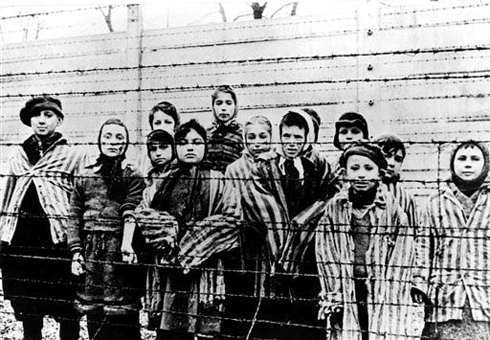
Children in the Holocaust. 'The separation from their adoptive families was heart-rending. It took some of them years to really say goodbye'

Children in the Holocaust. ‘The separation from their adoptive families was heart-rending. It took some of them years to really say goodbye’

Michlic further notes that under the Soviet regime, “the issue because a taboo. The Polish families were afraid to reveal their connection to the Jews’ children, and therefore did not maintain it. The archives were sealed. Only today, when they have become local culture heroes, the issue can be discussed openly. But most of them are no longer alive, and the relations between them and the children they raised were broken in a very traumatic way.

“One of the most wonderful places to learn about the connection was through letters the children wrote to Jewish organizations during the civil struggle in Poland, asking that their rescuers be protected.”

Jewish kids praying to Virgin Mary

The documentation discovered by Michlic described dozens of cases of difficulties in bidding farewell to the adoptive family. Sara Avinun, one of the interviewees in Michlic’s research, documented her story in the book “Rising from the Abyss,” which Michlic sees as one of the most powerful and important depictions of the child experience during the Holocaust. But this documentation, she says, didn’t receive the proper research attention in previous years either.

“She describes the experiences of a little girl, who at a certain stage, after a number of difficult experiences of sexual abuse, abandonment and more, found herself in a Christian orphanage. She was taken away from there by a childless Polish couple and created a renewed childhood for herself,” Michlic says.

“After the war, when she was nine years old, her uncle arrived, and she simply refused to go with them. She escaped back to her ‘parents,’ until her grandfather took her away forcibly. He was a religious person and he put her in a kibbutz with other children, because he felt that the gaps between them were too big and he wanted her to reaccept her Jewish identity.”

Avinun’s story ended well. “She has a wonderful family and a Jewish identity, but for a long time she kept in touch with her adoptive parents, who didn’t even know she was Jewish. There were periods of great difficulties, of a mixed identity, of a rejection of anything related to Judaism and Jews. The adoptive mother refused to acknowledge the fact that the daughter was Jewish, and just wanted her back even many years later.

“And there were children who decided to stay with their Christian identity, and kept their Jewish identity a secret for many years. This group has been shrinking in recent years. There were children who found out the truth as adults, like Romuald (Jakub) Weksler-Waszkinel, who was already a Catholic priest when he learned the truth, and to this very day he lives in Israel to this very day with a split Jewish-Catholic identity.”

Some of the children found it difficult to get used to the idea that one can be Jewish again (Archive photo: AP)

Some of the children found it difficult to get used to the idea that one can be Jewish again (Archive photo: AP)

According to Michlic, “Even if the parents survived, there were children who wanted to officially convert to Christianity. These experiences, unfortunately, were not part of the historical memory for many years. Some of the children didn’t really talk about it and suppressed it, but even those who did were not heard. And so you could see a child who wants to immigrate to Israel on the one hand, and continues to go to church every Sunday on the other hand.”

The division of the religious identity continued. Michlic describes many cases in which small children continued to pray to Virgin Mary, or kept her pictures. And it accompanied them even when they already knew they were Jewish.

“Others,” she explains, “found it difficult to get used to the idea that one can be Jewish again. These are children whose entire family, community, was erased. They were afraid to return to their Jewishness, afraid to speak Yiddish. In many cases, they were raised on anti-Semitic stories, which increased their revulsion towards the discovery.”

Trauma moved on to next generation

How did the families that survived the horror deal with the new difficulty?

“We know that the best results were achieved in cases in which the children were not forced to abandon their Christian beliefs. The family rehabilitation was the hardest. The Jewish identity was just one problem among a slew of difficult problems. For example, according to the Jewish organizations’ documentation, most of them faced difficulties concerning food.

There were children, boys, who were forced to dress up as girls in hiding, and they continued to dress as girls for years, and their gender had to be restored. Some of the lucky children who managed to survive the Holocaust with one parent, and arrived in Israel, succeeded in developing very close relations. But what happened in cases in which the parent remarried?

“We must remember that the parents who survived had their own problems. They survived concentration camps, death camps, even Soviet occupation, and years of hiding in Aryan areas. Some suffered from mental and emotional problems. They didn’t always have the ability to deal with the child’s traumas. Children were sometimes left in orphanages for a long time, until their parents managed to get back on their feet.”

And what happened when the parents didn’t survive?

“It wasn’t always clear who was responsible for the children. Sometimes it was an aunt or uncle, sometimes an extended family. Today we know from research that children who were taken care of by relatives sometimes felt like they don’t belong and didn’t receive the level of care they needed. Some of them just didn’t know how to deal with a child who had gone through what they went through.
“Most of the children,” Prof. Michlic concludes sadly, “were not smiling ‘poster kids,’ but scarred children with difficult problems. The untreated trauma moved on, when they became parents, to the second and third generation. Today’s Israelis have been raised and are still being raised in the shadow of this trauma. It isn’t over yet.”


twoje uwagi, linki, wlasne artykuly, lub wiadomosci przeslij do: webmaster@reunion68.com


Opowiada Andrzej Szpilman, syn „Pianisty” Władysława Szpilmana

Opowiada Andrzej Szpilman, syn „Pianisty” Władysława Szpilmana

Władysław Szpilman

Andrzej Szpilman, dziś ceniony lekarz stomatolog, kompozytor i producent muzyczny, jako dwunastoletni chłopiec niespodziewanie natknął się na autobiograficzną ksiażkę ojca, Władysława Szpilmana, ocalałego z getta warszawskiego…

…Książka została wydana po raz pierwszy w Polsce w 1945 roku, w opracowaniu Jerzego Waltera. Mimo małego nakładu, ze względu na powojenne trudności wydawnicze, publikacja była przekazywana z rąk do rąk czytelników i już wtedy cieszyła się dość dużą popularnością. Po latach dowiedział się o niej niemiecki kolega Andrzeja Szpilmana, i tak zrodził się pomysł na ponowne jej wydanie, tym razem w Niemczech


Autobiografia Władyslawa Szpilmana pt. „Pianista” wydana w kilku językach zdobyła ogromny sukces na arenie międzynarodowej stając się światowym wydarzeniem literackim. W Niemczech wyszedł nawet podręcznik oparty na „Pianiście”, w którym bardzo wnikliwie omawia się historię nazizmu i Holocaustu w Europie. W 2002 roku powstał film w reżyserii Romana Polańskiego „Pianista” nagrodzony 3 Oscarami i Zlotą Palmą w Cannes.

Władysław and Andrzej Szpilman

Czy Pana ojciec chciał, aby książka została ponownie wydana?
– Mój ojciec uważał, że nikogo ta książka już nie zainteresuje. Mineło przecież tyle lat… – opowiada dziś Andrzej Szpilman…

Kiedy poznał Pan historię ojca?
– Muszę powiedzieć, że późno dowiedzialem się o tej sprawie, chociażby dlatego, że nikt mi nie przybliżył wiadomości, że jestem Żydem, że mam pochodzenie żydowskie; co świadczy wbrew temu co się mówi o Polakach, o dość nikłym antysemityźmie w Polsce. Chociaż to byly inne czasy, i nikt na pewno nie obnosił się ze swoim żydowskim pochodzeniem, moje nazwisko było, ze względu na popularność ojca, jednoznaczne.

■ Czy w Pana domu często poruszano temat wojennych doświadczeń ojca?
– Nie. W domu nigdy na ten temat raczej nie rozmawialismy aż do momentu wydania tej książki.

■ Jakie wrażenie zrobiła na Panu opowieść o losach ojca, gdy po raz pierwszy trafiła w Pana ręce?
– Uważałem, że była to książka sensacyjna, ale nie była to „moja historia”.

■ Kiedy dowiedziały się o historii dziadka Pana dzieci?
– Po wydaniu książki, mój dom wypełnił się dziennikarzami, dzieci miały okazję uczestniczyć w codziennych wywiadach prasowych radia i telewizji. Mój syn, Daniel, jako chłopiec nawet wziął udział w filmie Polańskiego.

■ Jak skontaktował się Pan z Polańskim?
– Polański sam zgłosił się do mnie. Wydałem książke w Niemczech, a następnie historia ojca trafiła na rynki wydawnicze w Stanach Zjednoczonych, Anglii, Japonii i we Włoszech. Polański dostał tę książkę od swojego przyjaciela w prezencie urodzinowym i po lekturze postanowił zrealizować na jej podstawie film.

■ Czy Pan osobiście wybierał utwory muzyczne do filmu „Pianista”? Dlaczego właśnie taki, a nie inny utwór muzyczny został wybrany w scenie, w której ukrywający się bohater filmu, Władysław Szpilman zostaje nakryty przez niemieckiego kapitana Wilma Hosenfelda?
– Nie miałem wpływu na wybór utworów muzycznych w filmie, natomiast w opisanej scenie ojciec grał Nokturn cis-moll Chopina. Polański wybrał utwor dluższy ze względu na dramaturgię filmową.

■ W jednym z wywiadów powiedział Pan, że po tym co się stało w czasie wojny, wielu Żydom trudno było nadal wierzyc w Boga.
– Trudno było uwierzyć w fakt, ze Bóg istnieje, skoro dopuscił do tak straszliwych zbrodni.

■ Co sądzi Pan o tej grupie ludzi, którzy negują istnienie obozów koncentracyjnych?
– Na szczęscie są to wyjątki. Podejrzewam, że to nie jest nawet zauważalna grupa, to są psychopaci.

■ Gdzie pracuje Pan teraz jako stomatolog i jaką dziedziną stomatologii Pan się zajmuje?
– Wyjeżdżam niedługo do pracy na trzy lata do Bonn, i potem być może znów wrócę do Szwajcarii. Wcześniej pracowałem naukowo na Uniwersytecie w Hamburgu w Zakładzie Stomatologii Zachowawczej.

■ Jakie są Pana plany muzyczne w najbliższym czasie?
– Planuję co najmniej siedem koncertów w Polsce z okazji 100-letniej rocznicy urodzin mojego ojca. Za kilka dni będę uczestniczył też w przyznaniu nagrody Hosenfeld-Szpilman na Uniwersytecie Leuphana w Luneburgu w Niemczech dla pani Nalewajek za wystawę „Muzyka w okupowanej Polsce”.

■ Czy czuje się Pan emigrantem?
– Nie, nie czuję się emigrantem chociaż od wielu lat mieszkam i pracuję poza granicami Polski.

Dziekuję serdecznie za rozmowę.
Rozmawiała Agnieszka Barbara Gorzkowska

Wywiad opublikował www.naszswiat.net


twoje uwagi, linki, wlasne artykuly, lub wiadomosci przeslij do: webmaster@reunion68.com