Archive | June 2021

Nikki Haley warns Biden Iran policy ‘death wish’ to Israel

Nikki Haley warns Biden Iran policy ‘death wish’ to Israel

MAAYAN JAFFE-HOFFMAN


Former US Ambassador to the UN Nikki Haley spent Sunday touring rocket-tattered southern Israel and Monday in meetings with top Israeli officials.

US Ambassador to the UN Nikki Haley meets with Prime Minister Benjamin Netanyahu in Jerusalem / (photo credit: AMOS BEN GERSHOM, GPO)

Reentering the Iranian nuclear deal is a “death wish” for Israel and the world, former US ambassador to the United Nations Nikki Haley warned Monday.

“The idea right now that you have multiple countries around the world, including the United States, looking to figure out how to redo this Iran deal is nothing more than a death wish for Israel and eventually a death wish for the world,” she said during a conversation with a select group of reporters from her Jerusalem hotel.

Haley was in the country on a solidarity mission organized by Christians United for Israel. She spent Sunday touring the rocket-tattered South and Monday in meetings with top Israeli officials, including Foreign Minister Yair Lapid and former prime minister Benjamin Netanyahu.

Although she was in touch with Prime Minister Naftali Bennett’s office, she was unable to meet with him, she said.

Haley lashed out at the Biden administration’s recent efforts to engage with the Islamic Republic, saying Biden’s “falling over himself to get back into the Iran deal is pretty disgusting.”

“Iran is never going to change its ways,” she said. “It is never going to stop saying death to Israel. It is never going to stop saying death to America. And the only way that we can effect change is to pull the money back and pull the purse strings back.”

Iran directly funds Israel’s enemies, including Hamas and Hezbollah, Haley said.

“If you fund Iran, you are funding terrorists that want to kill Israel,” she said.

Haley spent time on the Lebanese-Israel border during her tenure as UN ambassador from 2017-2018. What happened last month during the 12-day conflict with Hamas pales in comparison to the threat posed by Hezbollah, she said.

Twelve Israelis were killed during Operation Guardian of the Walls, including two children, and several hundred were wounded. On the Palestinian side, the Gaza Health Ministry said more than 200 people were killed.

“You have Hezbollah waiting in the wings, and Hezbollah makes Hamas look like child’s play,” Haley said. “Hezbollah is going to be the next issue” for Israel.

She also condemned Biden for failing to thank the Arab countries, such as the United Arab Emirates and Bahrain, which normalized ties with Israel as part of the Abraham Accords under former US president Donald Trump. Haley accused Biden of “slapping them in the face” by engaging in talks with Iran.

“You cannot be friends with Israel, and you cannot say thank you to the people who want to be friends with Israel, by getting back into the Iran deal,” she said.

Israel “did a great job showing what happens when you mess with them,” Haley said, adding that she believes Israel will survive because “you cannot destroy what God has blessed, and God blessed Israel.”
However, “I don’t want Israel standing alone,” Haley concluded.


Zawartość publikowanych artykułów i materiałów nie reprezentuje poglądów ani opinii Reunion’68,
ani też webmastera Blogu Reunion’68, chyba ze jest to wyraźnie zaznaczone.
Twoje uwagi, linki, własne artykuły lub wiadomości prześlij na adres:
webmaster@reunion68.com


Koniec ery Netanjahu, dzieje się historia. Izrael ma nowy rząd

Reuters / Forum


Koniec ery Netanjahu, dzieje się historia. Izrael ma nowy rząd

AGNIESZKA ZAGNER


Głosowanie w Knesecie kończy erę Beniamina Netanjahu, premiera Izraela przez ostatnich 12 lat. Do rządu wchodzą Arabowie. Czy szeroka koalicja ma szansę przetrwać?

.

Stało się. To była bardzo gorąca niedziela w Knesecie: tradycyjnie tego dnia nie odbywają się głosowania, ale tak się tym razem ułożył kalendarz. O mały włos głosowanie zostałoby przesunięte ze względu na pożar w okolicy autostrady nr 1 – interweniowała policja, która pomogła dotrzeć do ulokowanego w Jerozolimie parlamentu trzem członkom Knesetu. A dosłownie każdy głos mógł przesądzić o politycznym losie Izraela.

Koniec ery Netanjahu

Za rządem Naftalego Bennetta opowiedziało się 60 osób, 59 było przeciw, deputowany arabskiej partii Ra′am Said al-Harumi wstrzymał się od głosu. Narodził się nowy rząd, który po 12 latach odsuwa od władzy Beniamina Netanjahu, najdłużej urzędującego nieprzerwanie premiera Izraela, nie wspominając już jego panowania w latach 1996–99.

Nowy gabinet nie ma łatwego zadania. Przy stole zasiada ośmiu liderów różnych ugrupowań, to dużo ludzi i oczekiwań. Ministrów jest 27, w tym osiem kobiet. Umowa koalicyjna zakłada, że do sierpnia 2023 r. premierem będzie Bennett, szef Jaminy (ugrupowania nawet bardziej prawicowego niż Likud), a ministrem dyplomacji Jair Lapid. Potem nastąpi zmiana – Lapid obejmie fotel premiera, a Bennett zostanie ministrem spraw wewnętrznych (do tego czasu urząd ten będzie pełnić Ajelet Szaked, numer dwa w jego ugrupowaniu). Ministrem obrony jest Benny Ganc, Sa′ar ministrem sprawiedliwości, który w gabinecie Lapida zostanie szefem dyplomacji. Arabowie nie dostali żadnej teki, ale mają swojego człowieka w kancelarii premiera i resorcie spraw wewnętrznych.

Naftali Bennett nie jest gołębiem izraelskiej polityki, zasłynął, promując rozbudowę osiedli na Zachodnim Brzegu i aneksję tych terenów. Ma 49 lat i wiele sukcesów na koncie: służbę w elitarnej jednostce, błyskotliwą karierę w biznesie technologicznym, która uczyniła z niego milionera. W polityce stał się kimś, z kim trzeba się liczyć. Jako szef Żydowskiego Domu, partii skrajnie nacjonalistycznej, był ministrem ds. diaspory, gospodarki, edukacji, a także obrony w gabinecie Netanjahu. Co tylko dowodzi, że swobodnie mógłby – gdyby chciał – dogadać się z szefem Likudu i wejść do prawicowego rządu z partiami religijnymi na pokładzie. Bennett jest pierwszym premierem Izraela, który nosi kipę.

Tym razem ułożyło się jednak inaczej. Likud wprawdzie wygrał wybory, ale Netanjahu nie znalazł większości. Przez ostatnie lata zraził do siebie wszystkich i stał się niewiarygodny, co potwierdził, gdy nie oddał stołka premiera Benny′emu Gancowi. Trudno w takich warunkach negocjować: upadła nawet złożona last minute byłemu partyjnemu koledze Gideonowi Sa′arowi oferta, że to on jako pierwszy będzie premierem. Bibiemu, jak nazywają Netanjahu, nikt już nie wierzy.

Paradoksem jest, że na czele rządu staje polityk, który gwarantuje poparcie zaledwie sześciu z siedmiorga deputowanych swojej partii. Tyle że w obecnych realiach inna opcja nie wchodziła w grę. Gdyby i teraz politycy się nie dogadali, Izrael miałby przed sobą piąte z rzędu przedterminowe wybory, a tego scenariusza starano się za wszelką cenę uniknąć.

Arabowie wchodzą do rządu

Historia dzieje się też dlatego, że po raz pierwszy oficjalnie częścią obozu władzy zostaje ugrupowanie arabskie, a nawet islamskie – partia Ra′am. Jej lider Mansur Abbas jest pragmatykiem. Wchodzi do rządu zdominowanego przez prawicę nie po to, by doprowadzić do powstania państwa palestyńskiego, ale by spełnić konkretne postulaty swoich wyborców. Wsparcie oświaty, wyrównanie szans w społeczności izraelskich Arabów, walka z przestępczością i ułatwienie transportu dla wykluczonych grup beduinów na Negewie – wszystko to zapisano w umowie koalicyjnej i na wszystko przewidziano konkretne miliardy szekli. To nie jest rząd z miłości, ale z rozsądku, przynajmniej dla Arabów – zresztą bez nich, tych zaledwie trzech głosów, żaden by nie powstał.

Do układanki trzeba dodać świeckie ugrupowanie Awigdora Libermana Nasz Dom Izrael, który dla odmiany darzy Arabów całkowitą niechęcią (co nie stanęło, jak widać, na przeszkodzi, by wejść z nimi do gabinetu). Ukłonem wobec Libermana ma być m.in. ustawa umożliwiająca transport w szabat. Gniewają się na to ugrupowania religijne, choć i te nastroje Bennett w niedzielnym wystąpieniu próbował tonować, zapewniając, że rząd zadba o Charedim (religijnych ortodoksów), powstanie też komisja do zbadania okoliczności tragedii na górze Meron, gdzie zginęło 45 osób.

Nowy rząd Izraela. Czy przetrwa?

Duet Bennett–Lapid nie będzie miał łatwego życia, co ujawniło się już podczas niedzielnej debaty w Knesecie. Bennett nie mógł przedstawić swobodnie założeń swego rządu, bo przerywali mu zwolennicy Netanjahu. Sam ustępujący premier uważa, że nowo wyłoniony rząd to wyborcze oszustwo (zabrzmiał niczym jego przyjaciel Donald Trump). Po głosowaniu uścisnął jednak dłoń Bennettowi, sugerując, że władzę przekazuje pokojowo.

Nowy rząd będzie miał kłopoty z twardą opozycją – na pewno nie może liczyć na spokój Likudu, partii religijnych czy skrajnie prawicowego Religijnego Syjonizmu. Problemem będą też jego własne szeregi i konieczność pogodzenia ognia z wodą: prawicowych zapędów Bennetta z lewicowymi poglądami Merecu czy Partii Pracy, Libermana z Abbasem, zwłaszcza gdyby sytuacja z Hamasem znów się zaogniła. Ten rząd jest inny, bo nie będzie w nim Netanjahu, ale wiele założeń dotychczasowej polityki izraelskiej się nie zmieni: twardy kurs wobec Iranu czy priorytetowa kwestia bezpieczeństwa. W tym sensie będzie to rząd kontynuacji.

Znając Netanjahu, można mieć pewność, że nie odpuści. Jest jednak w trudnym położeniu: poniósł porażkę, bo nie utworzył rządu, toczy się w jego sprawie poważny proces kryminalny, grozi mu nawet więzienie. Co pewnie tym bardziej go motywuje, by odzyskać władzę: nad Izraelem i w jakimś sensie nad własnym życiem.


Zawartość publikowanych artykułów i materiałów nie reprezentuje poglądów ani opinii Reunion’68,
ani też webmastera Blogu Reunion’68, chyba ze jest to wyraźnie zaznaczone.
Twoje uwagi, linki, własne artykuły lub wiadomości prześlij na adres:
webmaster@reunion68.com


Koniec ery Netanjahu. Po 12 latach Izrael ma nowego premiera

Yair Lapid (z lewej) i nowy premier Izraela Naftali Bennett chwilę po przegłosowaniu w Knessecie upadku rządu Netanjahu (Fot. Ariel Schalit / AP Photo)


Koniec ery Netanjahu. Po 12 latach Izrael ma nowego premiera

Robert Stefanicki


Jednym głosem przewagi ośmiopartyjna koalicja “anty-Netanjahu” uzyskała w niedzielę wotum zaufania w Knesecie. Na czele rządu stanie prawicowy nacjonalista Naftali Bennett.

.

Bennett jest liderem partii Jamina (W Prawo), która w ostatnich wyborach zdobyła zaledwie siedem ze 120 mandatów. Jednak bez niego nie udałoby się sklecić większości.

Zgodnie z umową koalicyjną Bennett będzie sprawował urząd do września 2023 r., wtedy zastąpi go Jair Lapid, lider centrowej partii Jesh Atid (Jest Przyszłość) będący motorem powstania nowej koalicji i jej przywódcą.

Osiem partii o sprzecznych programach

Ale jest wątpliwe, czy rząd do tego czasu dotrwa. Dysponuje on większością zaledwie jednego mandatu, podczas gdy osiem partii go tworzących ma wzajemnie sprzeczne programy i ideologie. Tarcia mogą wystąpić przede wszystkim w kwestii palestyńskiej – Jamina i inna prawicowa partia Nowa Nadzieja to zwolennicy osadnictwa żydowskiego na okupowanym Zachodnim Brzegu, czemu sprzeciwiają się koalicjanci lewicowi oraz Raam, pierwsza w historii arabska partia w izraelskim rządzie.

Różnice są też na niwie obyczajowej – postępowe partie chcą promować prawa osób LGBT, jak adopcja dzieci przez pary homoseksualne, a islamistyczna Raam jest temu przeciwna.

Umowa koalicyjna sfinalizowana w piątek sugeruje, że nowy rząd zamierza skupiać się głównie na mniej kontrowersyjnych kwestiach gospodarczych i społecznych, takich jak uchwalenie budżetu państwa czy budowa szpitali. Pola minowe – jak konflikt izraelsko-palestyński – będzie się starał omijać.

– Nikt nie będzie musiał rezygnować ze swojej ideologii – powiedział Bennett – ale wszyscy będą musieli odłożyć realizację niektórych swoich marzeń… Skupimy się na tym, co można osiągnąć, zamiast dyskutować o tym, czego nie można.

Być może najważniejszym zadaniem stojącym przez nowym rządem będzie uchwalenie przepisu, który zapobiegłby powrotowi na stanowisko premiera Beniamina Netanjahu. Pojawił się pomysł narzucenia limitu czasowego w sprawowaniu tego urzędu do ośmiu lat. Alternatywnie można by przyjąć, że premierem nie może być polityk formalnie oskarżony w sprawie karnej.

Aktualnie przed sądem toczy się proces Beniamina Netanjahu, któremu postawiono zarzuty korupcji, oszustwa i nadużycia zaufania publicznego. Utrata stanowiska premiera niweczy jego nadzieje na immunitet. Może też zachęcić rywali wewnątrz jego partii Likud, by rzucili mu skuteczniejsze niż dotąd wyzwanie.

Netanjahu mówi o spisku

Netanjahu – najdłużej urzędujący przywódca Izraela – na razie pozostaje szefem tej największej partii w parlamencie i będzie liderem opozycji. W przemówieniu przed parlamentem wyjaśnił, że nie ma planów rezygnacji z przywództwa. Obiecał, że postara się bardzo szybko obalić nowy rząd, który nazwał „niebezpieczną koalicją oszustów i kapitulantów”.

Wcześniej przekonywał, że jest ofiarą spisku „głębokiego państwa” – utajnionych struktur chcących wpłynąć na przyszłość kraju. – Wykorzeniają dobro i zastępują je złem – mówił w telewizji Kanał 20. – Boję się o los narodu.

Przez chwilę Netanjahu wydawał się podążać drogą Donalda Trumpa, próbując wywołać rewoltę swoich zwolenników. – Jesteśmy świadkami największego oszustwa wyborczego w historii kraju – stwierdził na spotkaniu Likudu, gdy pojawiła się wiadomość, że opozycja stworzy koalicję.

Jego zwolennicy organizowali gniewne wiece przed domami członków nowego rządu. Niektórzy parlamentarzyści twierdzą, że im i ich rodzinom grożono śmiercią. Hejt w internecie stał się tak powszechny, że kilkorgu członkom nowego rządu przydzielono ochroniarzy, a nawet przeprowadzono ich do innych domów.

Szef służb ostrzega przed radykalizacją i przemocą

Z kolei ultraortodoksyjni partnerzy koalicyjni Netanjahu rzucili się na „zdrajcę” Bennetta, obwołując go zagrożeniem dla religii; jeden nawet wezwał go do zdjęcia jarmułki noszonej przez pobożnych Żydów.

Niektórzy Izraelczycy porównują to do napięć, które w styczniu doprowadziły do szturmu na amerykański Kapitol, innym przypomina się podżeganie prowadzące do zabójstwa izraelskiego premiera Icchaka Rabina w 1995 r.

W rzadkim publicznym oświadczeniu Nadaw Argaman, szef agencji bezpieczeństwa wewnętrznego Szin Bet, ostrzegł przed „wzrostem radykalizacji i brutalnym, jątrzącym dyskursem” w mediach społecznościowych, co jego zdaniem może prowadzić do przemocy.

W czwartek Likud wydał oświadczenie na Twitterze w języku angielskim, w którym stwierdzono, że komentarze Netanjahu o oszustwach nie miały sugerować, że chodziło o wadliwy proces liczenia głosów, do którego ma on „pełne zaufanie”.

„Pokojowy transfer władzy nie podlega dyskusji”, zapewniła partia ustępującego premiera.

W rozmowie z agencją AP Gail Talszir, politolożka z Uniwersytetu Hebrajskiego, powiedziała, że spodziewa się niestabilności w najbliższych miesiącach. – Będziemy mieć bardzo asertywnego i agresywnego szefa opozycji, czyli Netanjahu, który będzie chciał sprawić, że ta koalicja będzie krótkotrwała i że jak najszybciej odbędą się kolejne wybory – powiedziała Talszir. – W Izraelu nie pamiętamy już, jak wygląda normalna polityka – dodała.


Zawartość publikowanych artykułów i materiałów nie reprezentuje poglądów ani opinii Reunion’68,
ani też webmastera Blogu Reunion’68, chyba ze jest to wyraźnie zaznaczone.
Twoje uwagi, linki, własne artykuły lub wiadomości prześlij na adres:
webmaster@reunion68.com


News from Israel – June 13, 2021

Your News from Israel – June 13, 2021

ILTV Israel News


*

– Israel’s 36th government to be sworn in today… this, ending Netanyahu’s 12 year term as Israeli premier…

– Then… what do Israelis think of the new unity government?

– And following a Washington Post report, what is the status of Israel’s relations with neighboring Jordan?


Zawartość publikowanych artykułów i materiałów nie reprezentuje poglądów ani opinii Reunion’68,
ani też webmastera Blogu Reunion’68, chyba ze jest to wyraźnie zaznaczone.
Twoje uwagi, linki, własne artykuły lub wiadomości prześlij na adres:
webmaster@reunion68.com


‘The Nazis Are Already Dead’

‘The Nazis Are Already Dead’

ALLAN GERSON


Before he could embark on a job prosecuting Nazi collaborators, a prosecutor first had to convince his parents that it was a good idea.

COURTESY NEW ACADEMIA PUBLISHING

When federal prosecutor Allan Gerson took a job with the Department of Justice’s Office of Special Investigations, his mission was prosecuting aged Nazi collaborators. But as he described in his new, posthumously published memoir Lies That Matter, the decision to join OSI wasn’t a simple one; he had to explain it to his parents, who were Holocaust survivors.

En route to Miami, to the first real conversation with my parents since taking the OSI job, I tried out lines that would explain my decision and why I had held off telling them about it for more than two weeks. At 34, I was still seeking parental approval.

But this was no ordinary job, and it went to the core of their being, their suffering. So I both hoped and expected that they would be thrilled with my announcement, view the new position as tied to divine justice, even though they didn’t believe much in God. The reality, it occurred to me, was that they might believe my new venture could backfire into an “andere falsche Got,” another false God, as my father would often mutter under his breath when yet another hope was dashed by disappointment.

Though nearly three decades had passed since they reconstituted their lives in America, the past nevertheless gnawed mercilessly at them both. It could not be avenged. It could only be absorbed as a memory by clinging to it like a hapless swimmer to a raft. They believed that the Holocaust had not merely turned the murdered Jews of Zamość into victims, but that somehow, their death rested on a higher plane. They were martyrs, and martyrs cried out to be honored.

Yet despite my reservations, I believed my parents would approve of, if not embrace, my new position. Could anyone have a stronger desire to see Nazi collaborators brought to justice? Could anyone have a greater stake in forcing the enablers to give up their reinvented American lives, to lose their United States citizenship, and to face deportation? And if that meant being dispatched to the Soviet Union to face a quickie trial for treason with a firing squad in its wake, so be it. My parents could surely live with that. The martyred deserved no less.

I realized that it might not be so easy for them, that other considerations might come into play. My parents had refrained from telling me many of the specifics about how they survived the war or how they made it to America, the part of their lives placed in my imaginary “Better Not To Know” box. This reticence was not uncommon among Holocaust survivors. Some memories are better left undisturbed.

They had been living for the past six months at Point East, a retirement community in North Miami Beach. It was pleasant enough, a reprieve from the harsh winters in the north and the burden of running a dry cleaning and tailoring establishment in the Bronx, which they had done for the previous 20 years. They had carefully saved their pennies, and when they saw their opportunity to move south, they seized it and had already made the adjustment. In no time, my father had become president of a new Jewish cultural center at their retirement enclave.

As I entered their condo, a warm sea breeze flowed through the open windows. My mother’s hug was, as always, nearly overbearing. My father’s approach was quite the opposite: a hand shake rendered without making eye contact. As Ma served her apple cake, I turned to explaining my mission.

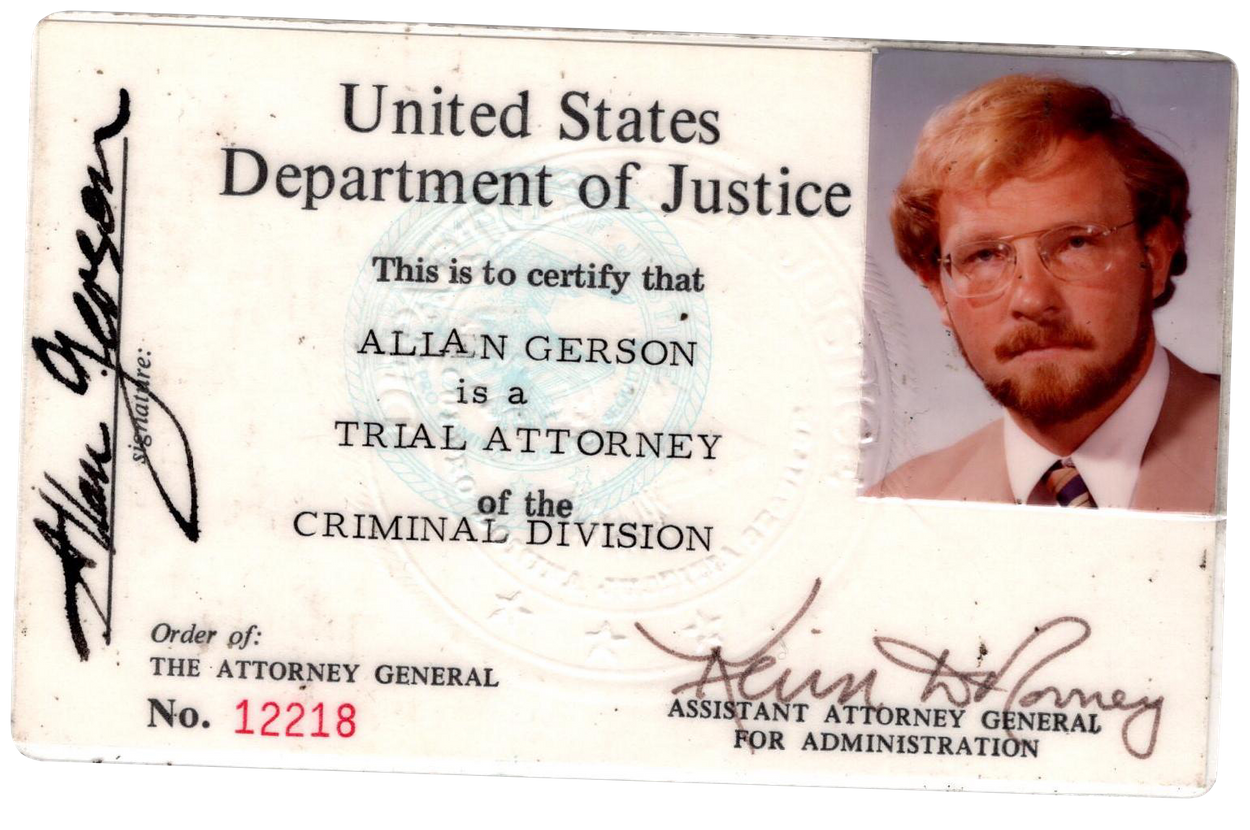
“It’s called OSI, the Office of Special Investigations, and it’s a new part of the U.S. Justice Department,” I said. “The mandate is to track down Nazi collaborators who are living in America and to deport them.” Then, beaming, I drew from my pocket my new badge and my Justice Department ID card, which included my headshot. But instead of visible pride, a curtain of dead silence descended. My mother’s face hardened as my father’s gaze sunk.

Perhaps they were waiting for some elaboration, so I began again. “What the badge signifies,” I said, “is that you’re looking at OSI’s first trial attorney.” But the only look I got from my mother, still beautiful after all these years, was one of consternation, as if I had just announced my intention to abandon the practice of law in favor of becoming a professional thug.

My father’s face remained blank, his eyes still averting my gaze as his fingers stayed busy nudging with his fork the last bit of pastry.

He looked up, breaking the icy silence. “My son, I don’t know if this is really good for you,” he said, peering into the distance through his thick farsighted lenses. “You were doing so well at your job.”

That was true, at least by all outward appearances. While at DOJ’s Civil Division, I had argued cases all over the country, most of them successfully. My salary was sufficient to keep Joan and Daniela, then a two-year-old charmer, warm and fed. But I desired something on a grander scale, something tied to promoting fundamental human rights, if not making a difference in matters of war and peace. At OSI I had the opportunity to make sure that the bad guys who were living the good life here in America wouldn’t win in the end. Didn’t he get that?

Besides, although I had resisted the idea that my family history should be a driving factor in my work at OSI, the fact is that once I became immersed in the work, reading the files and visualizing the accounts of the death camps, I recognized that I was indeed now in a position to in some small way avenge my parents’ suffering and my family’s deaths.

But this calculus didn’t seem to be getting across. My parents continued to seem uneasy, which only befuddled me more and more as we fell into an awkward silence.

I looked around the room. The balcony door was open, the sun bathing the living room in a soft glow. I had seen their Florida place once before, several months earlier, when I helped them settle in. Their condo had since become a hybrid of Miami tropical with Bronx stolid decor: a new white sofa and chairs squared off against the dark mahogany credenza and oversized cocktail table that they had brought from their residence up north. The marriage of styles captured the past and present of my parents’ lives in America.

I knew it wasn’t good asking my father directly why he wasn’t happy. He would always say when such questions were asked: “if man darf schoen fragen, ist schoen garnicts veg,” if one has to ask, it’s already worthless. But I nudged him on to reveal what it was about my new job that was bugging him.

“Because what you’re after was a long time ago. The Nazis are already dead.”

“Not all of them, Dad, and not their helpers.”

“And you’re the one who’s going to catch these people and deport them? As if this is your destiny?”

I explained to him that we were not going to be trying them for war crimes in the death camps and elsewhere, but that we were pursuing the collaborators on visa fraud. When they applied for U.S. visas, they swore that they had never assisted in persecution, but that’s what they did. So, their visas are invalid because they were based on lies. As a result, their U.S. citizenship can be revoked.

“Then,” I concluded, “we can then get rid of them.”

“You mean, deported?” he said

“Yes, precisely.”

That was hardly assuring. “Herzach si, mein son,” Listen here, my son, he said after pausing for a long moment, as if to measure his words. “So many people lied back then. It wasn’t so easy to get into America after the war, when the quota for Jews lightened a bit and then tightened. You had to have a relative as a sponsor. And a job waiting for you in an occupation considered in demand. Do you remember our friend David?”

“Of course, in New York.”
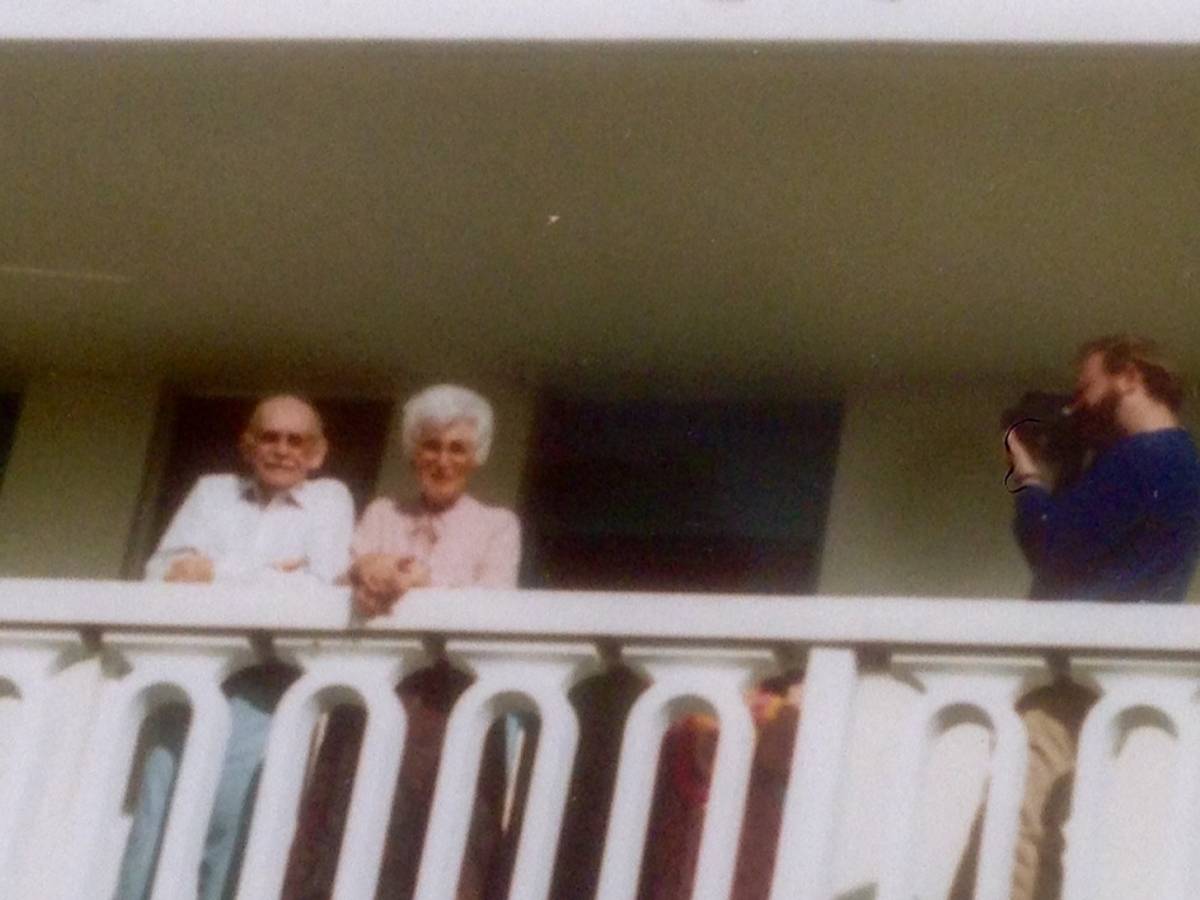
Morton and Paula Gerson, the author’s parents, and Allan Gerson, Miami, 1983COURTESY NEW ACADEMIA PUBLISHING

“Yes, David, who had tuberculosis, swore when the Americans interviewed him that he was healthier than a cow. And Joseph, who lives next door to us now.” Dad pointed out the window to the neighboring condo. “Joseph claimed he was a carpenter, and the fact is, he doesn’t know a hammer from a sickle.”

He paused, and then said slowly, quietly, “And don’t forget our own not-so-straight path to becoming citizens here, the risks we took, what we endured.”

I realize what my father was getting at; that we too might be in jeopardy. Or if not us directly, perhaps my Uncle Henik, for he had survived Auschwitz. But how?

“I’m trying to understand. What are you getting at, Dad?” I said as I took up my teacup to steady myself against a growing agitation.

I fell back on the nuances of the law. “OSI won’t be concerned about white lies Jewish survivors made,” I said, thinking I had gotten to the source of his concerns.

“What is ‘a white lie?’”

“It’s one that isn’t a crucial misrepresentation; it’s not a lie like claiming you weren’t a guard at a death camp or saying you didn’t round up the Jews to send them to their death when you did. The ones that did that, who voluntarily chose to help the Nazis, they’re the ones, the only ones, we are after.”

But I had managed only a dent in his universe of concern. “That’s still a wide net that could catch many Jews.”

“Please,” I said. “OSI’s only purpose is to go after Nazi collaborators living in America. It’s about those who had a choice, and they chose to help Hitler.”

My mother sat back on the couch. Crossing her legs, she placed a napkin over her knees. Her own plate of strudel remained untouched. Her silence hung heavily over every word of my give-and-take with Dad.

“So technically, if I understand correctly, although I am of course not a lawyer like you,” Dad said, determined to make his point, “OSI will be taking away their citizenship not because of what they did, the atrocities they committed, but because they lied about it. It’s a little like getting Al Capone for tax evasion, no?”

“No, Dad. Putting Al Capone on trial for tax evasion didn’t shed any further light on organized crime. It was simply a way of putting him away in prison.”

“So how is OSI different?” he asked

I placed my cup of tea on the table. “Don’t you see? It’s the opposite. We put these collaborators on trial for immigration fraud, and during the course of that trial we will shed light on the role they, and collaboration generally, played in perpetration of the Holocaust.”

“So, it will be about the Holocaust?” my father asked.

“Yes, of course!” I replied, perhaps too readily. I sought out my father’s eyes. “It’ll be about the Holocaust itself. How it was perpetrated. Who the willing helpers were, how the collaborators made it possible.”

“Oy Gottenu, Oh, my God, have mercy,” Ma suddenly uttered, breaking her silence with a deep sigh.

“So now why all of sudden this new push?” she asked. “All these years and the government never cared about these people before. So why is the U.S. government now in such a big hurry?”

She sat upright, staring at me as if I were on trial. “Haven’t you moved around enough? You have degrees galore. You don’t want to lay down roots? You have to settle down.”

I folded my arms into a self-protective barrier. “Look, Congress has had a number of reports of Nazi collaborators living undisturbed in America.

“So?” Ma sighed again. I could see her thinking that I was walking into this blindly, chasing ghosts, leaving prudence by the wayside. “You think we don’t know that?”

She held her arms out from her sides, as if closing in on her summation. “But what about your future? Where is your future in this?”

I stood my ground. “Look. I want to do this because it’s important. I thought you—you and Dad, more than anyone—would understand that.”

My mother burrowed her fork into a piece of strudel. “If it’s so important, let others do it! You are not made for this kind of work.” That hurt. Did she think I was too soft?

Dad joined in, his voice calm but resolute. “Maybe your mother is right. Maybe you should let others do it.”

What could be going through their minds? It was one thing to repeatedly proclaim “never forgive, never forget”; quite another to have their son go into the maelstrom, confront these tormentors, the embodiment of the beast that had engulfed their lives in such untold misery. What parent wouldn’t want to spare their child from re-experiencing their torment, and at the price of passing on an otherwise sensible career? Then this thought occurred to me: perhaps there was unspoken matter that they didn’t want to touch upon.

I pushed those thoughts aside. Our conversation had reached an impasse. There was nothing I could do to relieve their anxiety.

“Dad, I’ve made my decision,” I said, as I stood up. “I respect everything you and Ma have said, I really do, but I have to follow my instincts. Please don’t worry. I assure you that it will all work out for the best.”

“Allevai, It should only be so,” Ma said. She hugged me, and Dad patted me on the back as if to say, I am proud of you, regardless of what you do.

My whirlwind visit had spiraled in ways I hadn’t anticipated. As I headed to the rental car for the trip back to the airport, I gave them one last look. They stood on the balcony overhead, waving a cheerless goodbye. I waved back.

Excerpted from Lies That Matter by Allan Gerson (New Academia Publishing/VELLUM 2021).


Allan Gerson was an international lawyer, widely recognized as the first American attorney to successfully sue a foreign government for complicity in acts of terrorism. He wrote The Price of Terror: How the Families of Pan Am 103 Brought Libya to Justice (with Jerry Adler), and The Kirkpatrick Mission: Diplomacy Without Apology, documenting the years as senior counsel to the U.S. ambassador to the United Nations. He also was a trial attorney at the U.S. Department of Justice, a senior fellow at the American Enterprise Institute and Council on Foreign Relations, and a distinguished professor of international law at George Mason University. He died on December 1, 2019.


Zawartość publikowanych artykułów i materiałów nie reprezentuje poglądów ani opinii Reunion’68,
ani też webmastera Blogu Reunion’68, chyba ze jest to wyraźnie zaznaczone.
Twoje uwagi, linki, własne artykuły lub wiadomości prześlij na adres:
webmaster@reunion68.com