Archive | April 2024

IDF explains mistaken deaths of WCK aid workers, consequences in place

IDF explains mistaken deaths of WCK aid workers, consequences in place

YONAH JEREMY BOB


After the unfortunate sequence of events resulting in the IDF’s fatal error, claiming the lives of seven aid workers from World Central Kitchen (WCK), the IDF issued a statement about the incident.
.

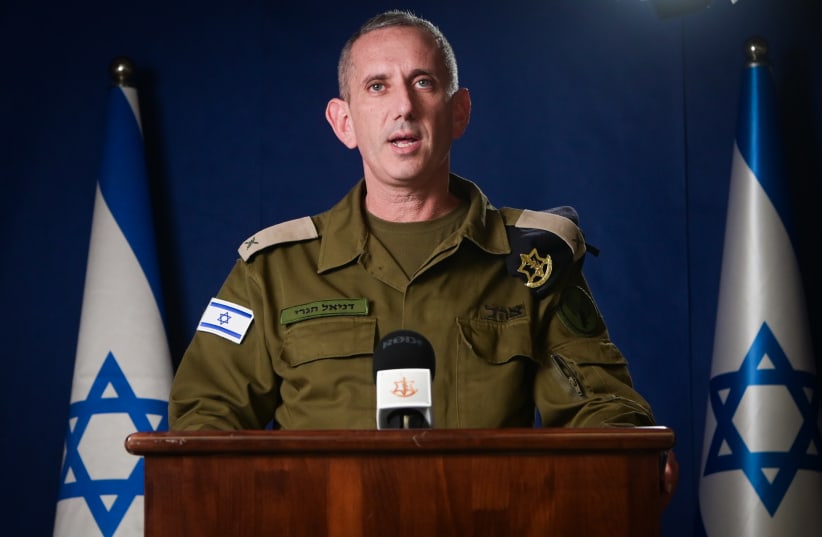
IDF Spokesperson Daniel Hagari gives a statement to the media in Tel Aviv on October 16, 2023 / (photo credit: AVSHALOM SASSONI/FLASH90)

In a statement on Friday, the Israel Defense Forces (IDF) on Friday explained the series of errors which led it to mistakenly kill seven World Central Kitchens aid workers on Monday night.

According to the IDF, there were seven different actions points in the incident regarding attacking the three WCK.

There were multiple suspicious actions which the drone unit saw.

The drone unit said it saw a Hamas terrorist climb onto one of the trucks and fire in the air at what it called action point two.

According to the IDF, this tactic is frequent and is used by Hamas to send signals to other Hamas fighters in the area regarding his position.

At action point three, the convoy split up.

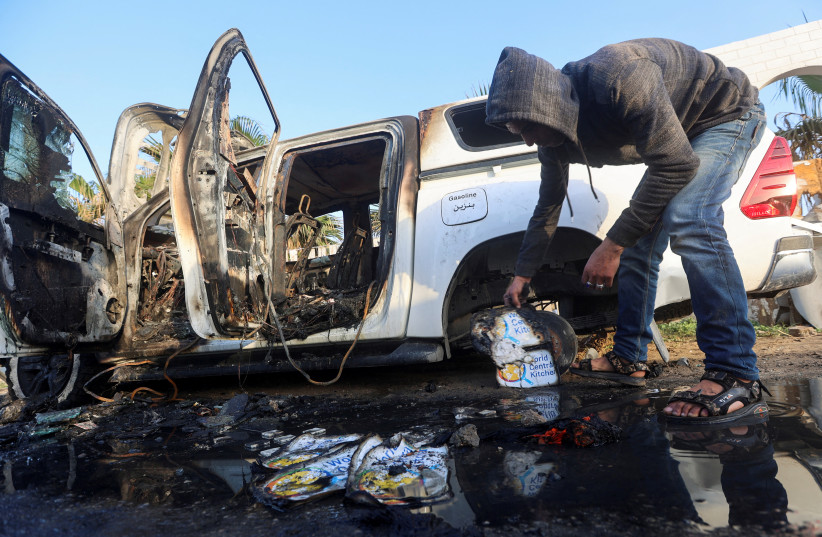
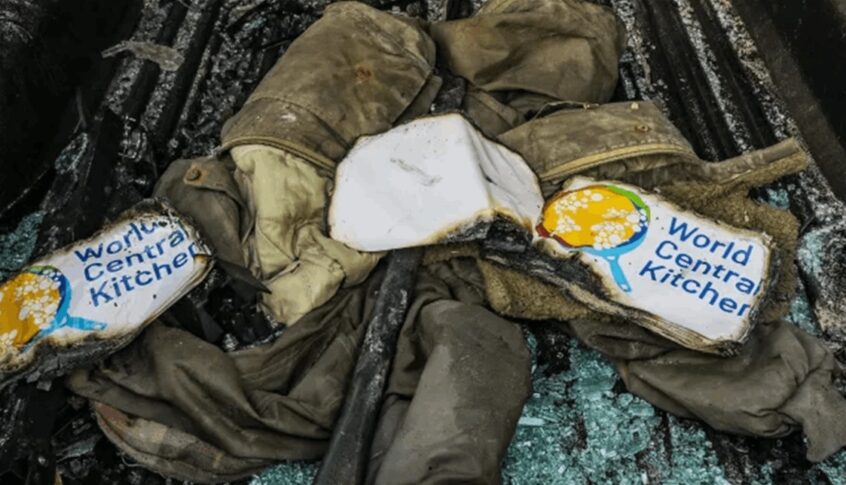
A Palestinian inspects near a vehicle where employees from the World Central Kitchen (WCK), including foreigners, were killed in an Israeli airstrike (credit: Ahmed Zakot/Reuters)

At action point four, the convoy entered a hangar which obscured which vehicles might be going in and out and who might be in the vehicles compared to who was in the vehicles before entering the hangar.

In the first four action points, the IDF drone unit refrained from attacking the aid trucks because they questioned their commanders and were ordered by Division 162 Brig. Gen. Itzik Cohen not to, despite a suspicion of Hamas terrorists being involved.

At the fifth action point, the aid trucks had left the hangar.

IDF tried to call aid workers, was unable to reach them

As the events developed, the IDF tried to call the aid workers involved in the field and was unable to reach them.

Next, the IDF called the WCK headquarters. The WCK headquarters tried to call its own aid workers in the field who also did not answer.

When vehicles left the hangar, the IDF drone unit believed that this was not the same vehicles and believed that these were Hamas vehicles.

According to the IDF, attacking the trucks after all of this was a mistaken identity issue, but could not lead to criminal charges.

Accordingly, the drone unit believed that the order not to attack no longer applied.

Around a kilometer later, the drone unit believed it had the right to engage the trucks.

Also, the drone unit had thermal imaging that did not see the WCK aid worker sign posted on the roof of the trucks.

When the drone unit attacked three times, it believed that the “coast was clear” completely to attack what it believed were clearly Hamas targets.

The IDF said that even though this could not be a criminal issue, that a colonel and major involved in the attack were being fired from their positions as they still could have refrained from attacking based on a general worry that it could still be aid workers.

Likewise, Cohen and his commanding officer, Maj. Gen. Yoel Finkleman were censured for not having standing orders which would have infused even grater restraint within their troops.

Further, the IDF said that only an attack on the first truck could be somewhat more justified because only there had the drones positively identified a Hamas terrorists, whereas the suspicions about Hamas terrorists in the second and third trucks were based on more on conjecture regarding the character pf the trucks themselves.

Regarding identifying the trucks themselves, the IDF said that a source of complexity was the Toyota pickup trucks involved which usually are a characteristic of Hamas and were not usually used by the aid workers.

The IDF was uncertain about what happened to any of the Hamas terrorists who might have weaved in or out of the incident.

The IDF said it had presented the findings to the WCK and were still in a process of answering questions, and were not sure how the organization would respond.

Following the incident, the WCK suspended all operations in the Gaza Strip and appeared to be leaning to permanently ending all operations.


Zawartość publikowanych artykułów i materiałów nie reprezentuje poglądów ani opinii Reunion’68,
ani też webmastera Blogu Reunion’68, chyba ze jest to wyraźnie zaznaczone.
Twoje uwagi, linki, własne artykuły lub wiadomości prześlij na adres:
webmaster@reunion68.com


Author Won’t Back Down After Receiving Hate for Publishing Children’s Book About Jewish Heritage Amid Gaza War

Author Won’t Back Down After Receiving Hate for Publishing Children’s Book About Jewish Heritage Amid Gaza War

Shiryn Ghermezian


The cover of “Under the Rockets’ Glow: Shira’s Journey to Courage.” Photo: Screenshot

A first-time children’s book author who has been targeted with thousands of hate messages and negative comments and reviews online for publishing a book that highlights the Jewish people’s heritage amid the ongoing Israel-Hamas war said he’s not letting the backlash have an effect on him.

“There’s Israeli soldiers who are putting their lives on the line to protect the land of Israel. If I take a little bit of heat online, it’s the least I can do if this is actually bringing value to people,” Roman Sandler, 34, told The Algemeiner on Wednesday. “I see the hate as kind of a corroboration that I’m on the right track because if you’re not pissing anyone off you’re not doing the right sort of thing. You’re not doing something important.”

The father of three self-published a children’s book in January titled Under the Rockets’ Glow: Shira’s Journey to Courage. It’s about a young girl named Shira and her father, who teaches her about her Jewish heritage and history, from Abraham to modern-day Israel, to help her find courage one night as rockets rain down outside her bedroom window. The story concludes with Shira falling asleep, feeling safe while dreaming about a world full of peace.

A portion of all proceeds from the book will be donated to the victims of the deadly Oct. 7 Hamas attacks in southern Israel, during which the terrorists slaughtered 1,200 people and took hundreds of others as hostages back to the Gaza Strip. The book is also dedicated to victims of the massacre and soldiers in the Israel Defense Forces who are “currently risking their lives to defend Israel and subdue evil in our midst.”

Sandler, who lives in California with his family, told The Algemeiner that he was inspired to write the children’s book after having a hard time explaining the gravity of the ongoing Israel-Hamas war to his five-year-old daughter, and not being able to find any decent resources to help her understand the situation. The author, whose wife has Israeli roots, also wanted to help children understand “the first principles of who we are as a [Jewish] people, why we’re in Israel, our connection to the land, and why it’s worth fighting for,” he explained.

“I didn’t think I did anything that controversial,” Sandler added. “But I think that even the sole point that the Jews have a stake to the land of Israel is unfortunately a controversial point.”

In February, the children’s book garnered the attention of Jewish actress and former Jeopardy! host Mayim Bialik, who praised it in an Instagram post. After the Big Bang Theory star posted about the book on social media, sales for Under the Rockets’ Glow went up tremendously, but Sandler and the book also began receiving hate messages from anti-Israel activists. The book was additionally review bombed on Amazon and Google, which dragged down its ratings, and Sandler was sent thousands of threatening messages on social media.

“I think just the fact that Mayim [Bialik] posted it as comforting to Israelis in present times just automatically to the pro-Palestinian movement makes it a bad thing because [to them], it can’t be comforting to Israelis and say the Jewish narrative without somehow infringing the Palestinian narrative,” Sandler told The Algemeiner. “I think that’s how they see it, unfortunately.”

Across TikTok, Facebook, X/Twitter, and other platforms, Sandler was called “genocidal zionist scum”; compared to Nazis; and falsely accused of promoting genocide for writing a “propaganda children’s book to indoctrinate israeli [sic] children with hateful lies, while tens of thousands of Palestinians die at the hands of this brutal illegal occupation.” His book was described as “Zionist trash” aimed at “radicalizing Jewish kids” and “glorifying ethnic cleansing.” It was also labeled as “Zionist propaganda designed to brainwash you and your little ones into supporting genocide.”

Photo: Screenshot

“Lying to kids about Israel’s barbarity is a Zionist tradition,” wrote one X user. Others encouraged pro-Palestinian individuals to leave negative reviews online for the book. However, most of the negative reviews left on the book’s Amazon page are from unverified purchases, Sandler noted, meaning they were written most likely by online users who have not even purchased and read Under the Rockets’ Glow.

Despite all the negativity that Sandler’s book has faced, many parents online have thanked him for writing a book that has helped their own children.

One Amazon reviewer, a parent from Israel, said the book has helped “comfort my children with their trauma” and “give them strength and hope” when Israel experiences rocket attacks.

“This book is beautiful and heartwarming, speaks about how we need to be brave and courageous, just like all of our Jewish ancestors as they faced similar hardships, and reminding them of our beautiful history of survival,” added the Amazon reviewer and verified purchaser. “My kids love reading it now eveynight [sic], and I often hold back tears reading it [to] them, trying to smile and be positive for them.”

“Oct. 7th is a dark day that is hard to explain to our kids,” said another reviewer and verified purchaser on Amazon. “But I think [Under the Rockets’ Glow] can give strength to the young Jewish children (and their parents!) in the US who have seen such a rise of antisemitism here that it often feels dangerous and scary. Thank you for helping provide that strength for our kids and helping them understand the Jewish people’s [connection] to the land of Israel.”

Under the Rockets’ Glow has also been praised as educational and helpful in having kids understand the Israel-Hamas war.

Photo: Screenshot

Sandler has no immediate plans to write another children’s book but is not ruling it out, despite the negativity he’s faced with his first publication. Reflecting on all the positivity surrounding Under the Rockets’ Glow, he said, “I think a lot of people are very glad this book exists, just because there is so much hate out there. [The book is] something that can say their story and provide context to their children in such hard times.”


Under the Rockets’ Glow: Shira’s Journey to Courage is available to purchase on Amazon as well as some independent Jewish bookstores in New York and Toronto, Canada.


Zawartość publikowanych artykułów i materiałów nie reprezentuje poglądów ani opinii Reunion’68,
ani też webmastera Blogu Reunion’68, chyba ze jest to wyraźnie zaznaczone.
Twoje uwagi, linki, własne artykuły lub wiadomości prześlij na adres:
webmaster@reunion68.com


Poniedziałkowa tragedia i historia amerykańskich pomyłek


Poniedziałkowa tragedia i historia amerykańskich pomyłek

Elder of Ziyon
Tłumaczenie: Małgorzata Koraszewska


Błędne obranie za cel pracowników organizacji humanitarnych z World Central Kitchen nigdy nie powinno było mieć miejsca. Ktokolwiek jest odpowiedzialny za decyzję o uderzeniu, powinien ponieść konsekwencje. Jest to nie tylko tragiczna pomyłka, ale także zdarzenie szkodzące Izraelowi i IDF.

Jednakże reakcja świata bardziej wskazuje na założenie, że jest to w jakiś sposób charakterystyczne dla działań armii izraelskiej, co jest absolutnym kłamstwem. 

Taka sugestia prawdopodobnie stanowi świadome pominięcie faktu, że IDF wykonuje niesamowitą robotę w tej wojnie. Większość działań, które podejmuje IDF, jest dosłownie bezprecedensowa dla jakiejkolwiek armii w historii. Uczelnie wojskowe będą studiować tę kampanię przez nadchodzące dziesięciolecia.

Choć część podstawowej pracy była oczywiście dokonana wcześniej – w szczególności ścisła integracja sił powietrznych, marynarki wojennej, wojsk lądowych i artylerii, w ramach której wojska lądowe mogą wezwać do ataku inne formacje – faktyczne wdrożenie odbyło się na bieżąco, przy czym żołnierzami są głównie rezerwiści, którzy uczą się nowych procedur w trakcie działań po zaledwie kilku tygodniach szkolenia. 

IDF jest w stanie zdobyć informacje wywiadowcze i uczynić je użytecznymi w ciągu godzin lub dni, a nie miesięcy. Udało jej się przetestować zupełnie nowe, nigdy wcześniej nie widziane metody walki w miastach i tunelach – rozpoznawanie twarzy i inne nowe technologie, robotykę, sztuczną inteligencję oraz wiele nowych metod, które wciąż pozostają tajemnicą. 

Co ważne, IDF jest elastyczna. Kilkakrotnie radykalnie zmieniała kampanię wojskową. Udoskonalała się w czasie rzeczywistym. 

Jeszcze większe wrażenie robi logistyka – podzielenie Gazy na setki obszarów i kierowanie ludności, by uniknęła nalotów, za pomocą wiadomości telefonicznych i dronów z głośnikami, a także staroświeckich ulotek. Skanowanie i przepuszczanie pomocy humanitarnej. Koordynacja pomocy z wieloma stronami trzecimi. 

Wiele z tego jest zupełnie nowe i nigdy wcześniej nie widziane w żadnej wojnie. Wszystkie wojny są skomplikowane, ale złożoność tej wojny wykracza daleko poza to, o czym mówią jakiekolwiek media. Izrael nie wybrał czasu na tę wojnę. To jakby zbudować podstawowy prom kosmiczny, który wystartuje w ciągu dwóch tygodni i oczekiwać od niego codziennego ulepszania go w trakcie lotu. Każdy błąd jest wyolbrzymiany i krytykowany, a fakt, że w ogóle leci i ulepsza się z każdym dniem na bieżąco, jest niesamowity.

Robi to wszystko obserwowana bliżej i staranniej niż jakakolwiek armia w historii. I przy tym wychodzi poza to, co zrobiły inne zachodnie armie, aby zminimalizować liczbę ofiar śmiertelnych wśród cywilów podczas działań wojennych w miastach. Nigdy przed Hamasem wroga strona nie opierała się na śmierci własnych cywilów jako głównej części swojej strategii. 

W ciągu ostatnich dwudziestu lat podczas wojen Stany Zjednoczone, Wielka Brytania i inne mocarstwa zachodnie zabiły dziesiątki tysięcy cywilów. Nikt nie oskarżył ich o celowe atakowanie cywilów, mimo że było tysiące cywilnych ofiar w znacznie mniej wymagających warunkach. 

W latach 2003-2005 koalicja pod przywództwem USA zabiła w Iraku 9 000 cywilów.

W lipcu 2008 r. Stany Zjednoczone uderzyły w afgańskie wesele, myśląc, że to duża liczba terrorystów. Zginęło 47 afgańskich cywilów, w tym panna młoda. W listopadzie w podobnym ataku powietrznym na wesele zginęło 37 cywilów, głównie kobiet i dzieci. 

W kolejnym nalocie USA w 2009 roku  zginęło od 86 do 147 afgańskich cywilów.

We wrześniu 2012 r. amerykański dron ostrzelał ciężarówkę w Jemenie, zabijając 12 cywilów, w tym troje dzieci i kobietę w ciąży. 

2015 r. Stany Zjednoczone wystrzeliły ponad 200 pocisków w kierunku budynku szpitala w Kunduz w Afganistanie, zabijając 42 pacjentów i personel. Kilka dni później przyznały się do błędu, twierdząc, że miały informacje, że w budynku przebywają talibowie.  

W marcu 2017 r . Stany Zjednoczone zrzuciły 500-funtową bombę na budynek, w którym w kontrolowanej przez ISIS Syrii schroniło się około 50 osób.

W 2018 r. armia amerykańska wystrzeliła rakietę Hellfire w stronę matki i córki w Somalii, a gdy próbowały uciec, trafili je ponownie, zabijając obie.  

W 2021 roku amerykański dron zabił w Kabulu 10 cywilów, w tym pracownika organizacji humanitarnej i siedmioro dzieci. Nie była to decyzja podejmowana w ułamku sekundy – obserwowali pojazd przez osiem godzin, nie biorąc pod uwagę, że być może obserwowane przez nich osoby są niewinne. 

W maju ubiegłego roku Stany Zjednoczone ogłosiły zabójstwo przywódcy Al-Kaidy, ale ofiarą był w rzeczywistości 56-letni były murarz.

Niedawno, w lutym tego roku w wyniku amerykańskich nalotów w Iraku zginęli cywile

W prawie wszystkich tych przypadkach Stany Zjednoczone przyznały się do błędów dopiero po tygodniach lub miesiącach, jeśli w ogóle, i często pod presją opublikowały jakiekolwiek wyniki dochodzeń. 

Kiedy więc Joe Biden, który był prezydentem i wiceprezydentem podczas wielu amerykańskich nalotów, w których zginęło tak wielu cywilów, mówi, że jest „oburzony” na Izrael, jest to czymś więcej niż tylko hipokryzją. Historia przejrzystego badania błędów i opornego przyznawania się do nich przez Stany Zjednoczone jest okropna w porównaniu do Izraela. 

Jest jeszcze jedna różnica pomiędzy amerykańskimi i izraelskimi nalotami. Obywatele USA nie są bezpośrednio zagrożeni przez terrorystów z Bliskiego Wschodu, ale małżonkowie i rodzice izraelskich żołnierzy są codziennie tylko o minutę od śmierci w wyniku uderzenia rakiety lub z rąk terrorysty. Odwrotny błąd, który pozwala terroryście przeżyć, może mieć druzgocące konsekwencje dla ludzi, którzy mieszkają, pracują lub studiują zaledwie w odległości krótkiej jazdy samochodem. 

Wojny są złożone. Jest wielu ludzi, którzy robią wiele rzeczy, a komunikacja między różnymi sekcjami nie zawsze jest idealna. Błędy popełniają nawet najlepsze armie. A najbardziej profesjonalne armie na świecie, zapewniające najlepszą ochronę praw człowieka, czasami zabijają cywilów, mimo że starają się tego uniknąć jak tylko mogą.

Jeżeli Biden jest tak oburzony błędami Izraela, powinien wziąć osobistą odpowiedzialność za zabójstwa cywilów przez USA w takim samym stopniu, jak robi to Izrael. O ile wiem, nie przeprosił publicznie za ani jedno zabójstwo cywilów przez swoje siły zbrojne, tak jak zrobił to we wtorek Netanjahu. 

Nie usprawiedliwiam izraelskiego uderzenia – to nie powinno było mieć miejsca i możecie być pewni, że błędy, które doprowadziły do tego ataku, zostaną sprawdzone i naprawione. Jednak to oburzenie wszystkich mocarstw zachodnich z powodu tego, co dzieje się podczas każdej wojny, jest więcej niż tylko nieszczere. 

Hamas rozpoczął tę wojnę, Hamas czerpie korzyści ze śmierci pracowników organizacji humanitarnych, i Hamas jest stroną ostatecznie odpowiedzialną za ich śmierć. Pokonanie terrorystów jest rzeczą moralną i nie zawsze można to zrobić tak antyseptycznie, jak wszyscy by sobie tego życzyli. 


Elder of Ziyon – blog amerykańskiego badacza antysemityzmu w mediach i organizacjach.


Zawartość publikowanych artykułów i materiałów nie reprezentuje poglądów ani opinii Reunion’68,
ani też webmastera Blogu Reunion’68, chyba ze jest to wyraźnie zaznaczone.
Twoje uwagi, linki, własne artykuły lub wiadomości prześlij na adres:
webmaster@reunion68.com


Is Trump really abandoning Israel?

Is Trump really abandoning Israel?

JONATHAN S. TOBIN


His remarks about the war on Hamas are spun in a way that recalls every previous controversy about things he’s said—and with just as much accuracy.

.
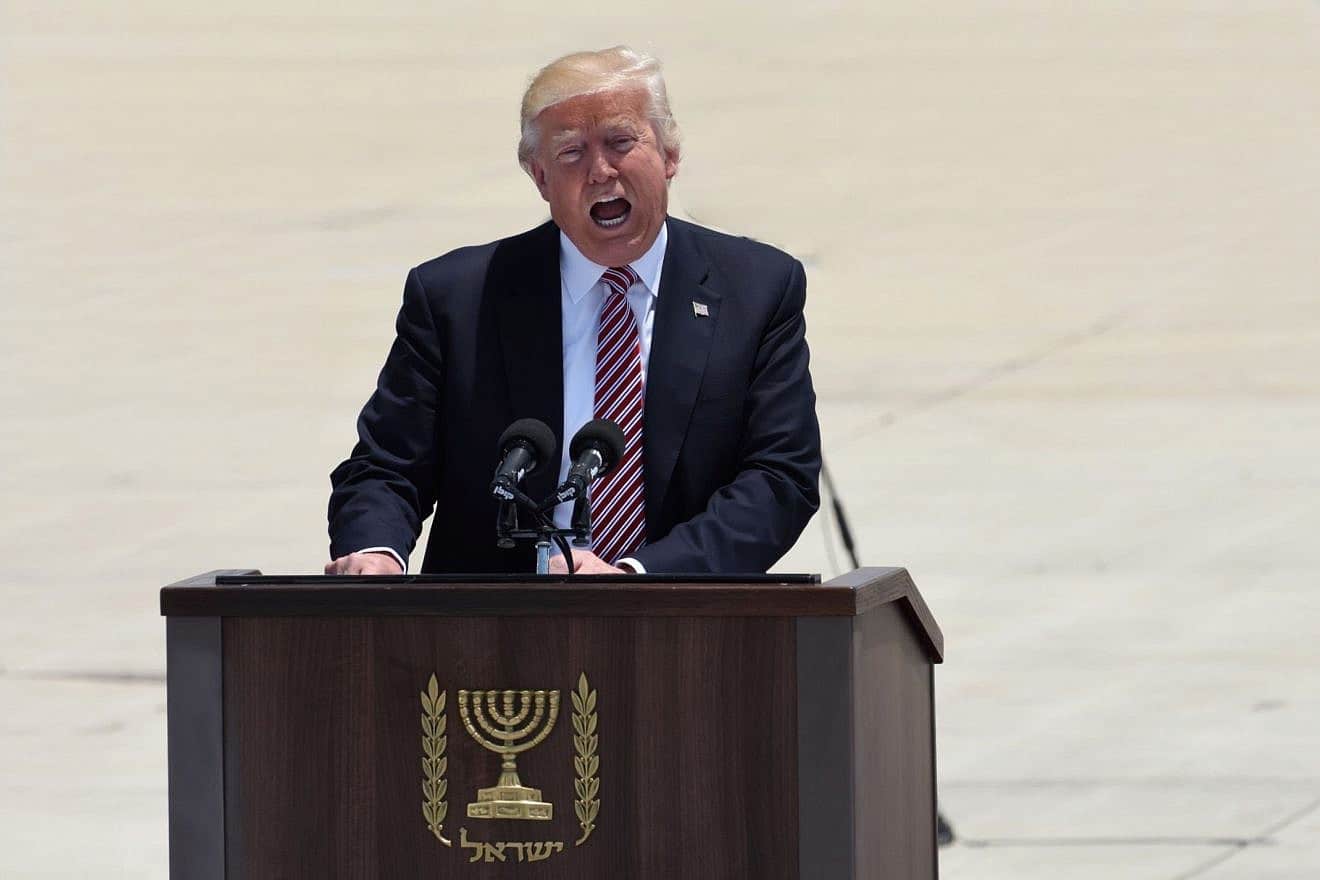
U.S. President Donald Trump carry a speech during an official welcoming ceremony on his arrival in Israel at Ben-Gurion International Airport, May, 22 2017. Credit: Muhammad Aamir Sumsum/Shutterstock.

Has Donald Trump turned on Israel? That’s the question some people have been asking in the wake of an interview he gave to Israel Hayom. Trump’s presidency was the friendliest to Israel of any in history. But the interview became fodder for the latest controversy generated by something he has said with some willing to interpret it as evidence that he has allowed his personal dislike of Israeli Prime Minister Benjamin Netanyahu to impact his attitude towards the Jewish state.

While speaking of Israel’s war on Hamas, he was quoted as saying the following: “You have to finish up your war. To finish it up. You gotta get it done. And, I am sure you will do that. And we gotta get to peace, we can’t have this going on.”

Trump also criticized the way Israel has been allowing itself to be portrayed in the international press, saying that by distributing video and photos of its strikes on terrorist targets in Gaza that it was hurting itself: “Israel has to get better with the promotional and with the public relations because right now they’re really being hurt very badly. I think in a public relations sense.”

He then went into specifics:

“I think Israel made a very big mistake. I wanted to call and say don’t do it. These photos and shots. I mean, moving shots of bombs being dropped into buildings in Gaza. And I said, Oh, that’s a terrible portrait. It’s a very bad picture for the world. The world is seeing this. … Every night, I would watch buildings pour down on people. It would say it was given by the Defense Ministry, and said whoever’s providing that that’s a bad image. Go and do what you have to do. But you don’t do that. And I think that’s one of the reasons that there has been a lot of kickback. If people didn’t see that, every single night I’d watch and every single one of those. … And I think Israel wanted to show that it’s tough, but sometimes you shouldn’t be doing that. … Israel has to be very careful because you’re losing a lot of the world, you’re losing a lot of support, you have to finish up, you have to get the job done. And you have to get on to peace, to get on to a normal life for Israel, and for everybody else.”

What did he mean?

That was portrayed by some news outlets critical of Israel, like The New York Times, as well as some that are supportive of it, as his abandoning the cause of Israel. That was the way the two Israel Hayom journalists who conducted the interview seemed to interpret the remarks. My former colleague John Podhoretz, editor of Commentary, agreed, saying that Trump’s rhetoric was not dissimilar to that of President Joe Biden, who, he said, at least was also still supplying Israel with arms while creating a “a sense of instability in the relationship between the United States and Israel” with highly critical rhetoric. He believes that Trump’s comments “exacerbated that instability.”

It is entirely reasonable to question whether a second Trump presidency would be as supportive of Israel as the first. It’s also worth asking whether he might be influenced by some figures on the right who are either clearly unsupportive of Israel, such as former Fox News host Tucker Carlson, or right-wing talker Candace Owens, who has crossed over into open antisemitism.

But I believe those jumping to conclusions about the meaning of this interview are misinterpreting Trump’s words.

It’s just as easy to see the comments about finishing up the war as Trump taking the opposite stance of Biden, who has been trying to stop Israel from completing the destruction of the Hamas terrorist organization’s military power by taking their last bastion in Rafah. Trump seems to be urging them to do whatever it takes to accomplish that goal and to do it as soon as possible.

Rather than joining the crowd of those bashing Israel for attacking Hamas strongholds in the Gaza Strip, the former president and certain Republican candidate in November may again be doing the opposite. It can be argued, as David Friedman, Trump’s U.S. ambassador to Israel, sees it, that he’s just telling the Israelis to stop being so transparent about their military efforts and to pay more attention—as they should—to how their justified war is being portrayed in a hostile international press. Indeed, given Trump’s record on the Middle East, that would be the simplest way to make sense of his latest remarks.

Falling for Trump’s game again

But more than that, those who are taking deep dives into the interview and trying to use it as a way to predict what will happen if he wins the 2024 election are simply doing what the press always does to Trump utterances: taking them far too seriously altogether.

It’s been nearly nine years since that day in June 2015 when Donald Trump came down the escalator at his eponymous tower in New York City and into our lives, and yet many of us have learned nothing about him in all that time. That is most true of the chattering classes who for the most part regarded his entry into politics with horror and have clearly never recovered from the trauma his political success inflicted upon them.

Throughout the ups and downs of all that followed—his free-flowing comments about events of the day, grandiose statements without fact-checking and anything else that popped into his head—have prompted reactions that followed a consistent pattern. Trump says something that is viewed by many as outrageous, inappropriate or troubling. The press reacts with horror, with his opponents and critics providing detailed analyses of why it was so wrong and the long-term consequences. More than that, they always seem to speak or write with the expectation that this gaffe, blunder or atrocious broadside will cause Trump’s followers and supporters to finally see him for who he is and abandon him.

Despite those apocalyptic expectations and no matter how outraged some people are about him, these incidents always amount to nothing. Trump laughs and moves on. His supporters are either unmoved or enjoy the way that he can drive his opponents off the deep end at the drop of a hat. Critics are left fulminating but still waiting in watchful expectation that some future utterance will provide the proof that will destroy him.

After almost a decade of this routine, you’d think that some of those who react in this way would finally catch on to what he’s doing.

Trump has no filter. He will say anything that he thinks at any given moment and doesn’t deeply consider the implications of his words, often out of pure disinterest. More than that, he often speaks in this manner deliberately to cause outrage or get under the skin of his opponents. He is not so much providing commentary or analysis in the way that public figures generally do, as he trolls the media, the political establishment and everyone who despises him. The half of the country that supports him is delighted by his ability to so upset the people they believe hate them as much as they do Trump.

The point that too many people seem to forget or simply don’t want to accept is that Trump speaks in a manner completely different from any other politician.

Whether good, bad or indifferent, almost everyone else in the governing class acts as if they believe that what public figures say matters desperately and therefore attempt to speak in a manner in which their comments are carefully prepared. They try—successfully or not—to convey exactly what they mean in order to avoid confusion and send clear messages to friends and foes.

When they go off-script, speak in haste or bungle the speeches prepared for them by aides and handlers—or even worse, say what is really on their minds but which they didn’t want the public to know—we call it a “gaffe.” We then expect the offender to either apologize for their words or retract them, and expect some serious consequences for speaking out of turn or saying something that offends.

Seriously, but not literally

Trump doesn’t play by those rules and, contrary to the expectations of just about everyone who covers politics, for the most part, it hasn’t hurt him. In fact, his ability to drive the political class crazy is a strength, not a weakness.

As journalist Salena Zito wrote in one of the most insightful pieces of commentary ever published, “The press takes him literally, but not seriously; his supporters take him seriously, but not literally.”

That’s as true today as when she first wrote it in The Atlantic in 2016, but somehow much of the country seems to not have learned it or quickly forget it the next time he says something controversial. Whether it concerns comments or gestures, treating anything he does in the way we should judge the carefully considered actions and statements that, for example, come out of the Biden administration with respect to Israel or any other issue is a glaring mistake. Good or bad, it won’t have much impact on what he says next week, let alone how he might govern next year.

Moreover, Trump’s contempt for the press and the inside-the-Beltway luminaries and so-called experts has only grown over the years.

The unprecedented soft coup attempt in the form of the Russian collusion hoax by which the political and intelligence establishment sought to overturn the 2016 result made it difficult for him to govern. The conduct of many of those same forces, coupled with Silicon Valley oligarchs to ensure his defeat in 2020 by means both fair and foul, further embittered him and led to his ill-judged actions that challenged the election results and culminated in the disgraceful U.S. Capitol riot on Jan. 6, 2021. The subsequent efforts of Democrats to imprison or knock him off the ballot in 2024 with a banana republic-style lawfare campaign has caused Trump and much of the Republican Party to simply dismiss the corporate media’s coverage of his campaign.

All of which makes any analysis of virtually anything Trump says a fool’s errand, and that’s just the way he likes it.

Pondering the future

We do well to wonder whether the turn against Israel on the part of some on the right, like Carlson and Owens, is having any impact on him. Carlson has been seen socializing with the Trump clan and seemed to have his ear while he was in the White House. But he also had no impact on his policies towards Israel or Iran. There is a big difference between Trump’s “America First” approach to foreign policy, and Carlson’s and Owens’s more isolationist “America only” attitude that is also inherently hostile to Israel. Carlson is still more court jester to Trump than adviser, and the toxic Owens will have no more influence on him than the equally antisemitic Kanye West, whom he foolishly invited to dinner at Mar-a-lago in 2022.

Nor do I think that his feud with Netanyahu will necessarily influence policy towards the Jewish state even if both are leading their respective countries next January.

Everything with Trump is transactional, and he wrongly interpreted the prime minister’s congratulating Biden—as he was obligated to do—on winning in 2020 as a personal insult. But Trump is always ready to forgive former foes or critics if they bend the knee to him. If he wins in November, then Netanyahu will go back to flattering Trump as he did while the former president was moving the U.S. embassy from Tel Aviv to Jerusalem; recognizing Israeli sovereignty over the Golan; supporting the normalization between Israel and more moderate Muslim countries; and bypassing the Palestinians to push for peace with the Arab and Muslim world. If so, all will probably be well between the two men.

Still, friends of Israel aren’t wrong to be disappointed that Trump hasn’t done more to be supportive of the Jewish state since Oct. 7.

Even if he wants Israel to win the war, he should have been speaking out consistently on the issue. Instead, most of his comments were self-referential. His claim that if he were president—or if Biden had adopted his policies on Iran, Israel and the Palestinians—the current war would never have happened might be true. But the atrocities of Oct. 7 and the subsequent surge in antisemitism should have been a moment for him to transcend his impulse to see everything as being about himself. Again, it’s always foolish to expect Trump to be anything other than the person he’s always been.

The only way to judge the Trump-Biden matchup with respect to their Israel policies remains their records while they were in the White House. Given the current difficulties with Washington, as Biden pressures Israel to stop the war and let Hamas win, the notion that there is no difference between the two doesn’t seem sensible.


Jonathan S. Tobin – is editor-in-chief of JNS (Jewish News Syndicate). Follow him @jonathans_tobin.


Zawartość publikowanych artykułów i materiałów nie reprezentuje poglądów ani opinii Reunion’68,
ani też webmastera Blogu Reunion’68, chyba ze jest to wyraźnie zaznaczone.
Twoje uwagi, linki, własne artykuły lub wiadomości prześlij na adres:
webmaster@reunion68.com


Jewish people in Belgium ‘consider leaving country’ amid spike in antisemitism

Jewish people in Belgium ‘consider leaving country’ amid spike in antisemitism

Sky News


Zawartość publikowanych artykułów i materiałów nie reprezentuje poglądów ani opinii Reunion’68,
ani też webmastera Blogu Reunion’68, chyba ze jest to wyraźnie zaznaczone.
Twoje uwagi, linki, własne artykuły lub wiadomości prześlij na adres:
webmaster@reunion68.com