Archive | February 2025

The Obama Doctrine

The Obama Doctrine

Jeffrey Goldberg
[April 2016]
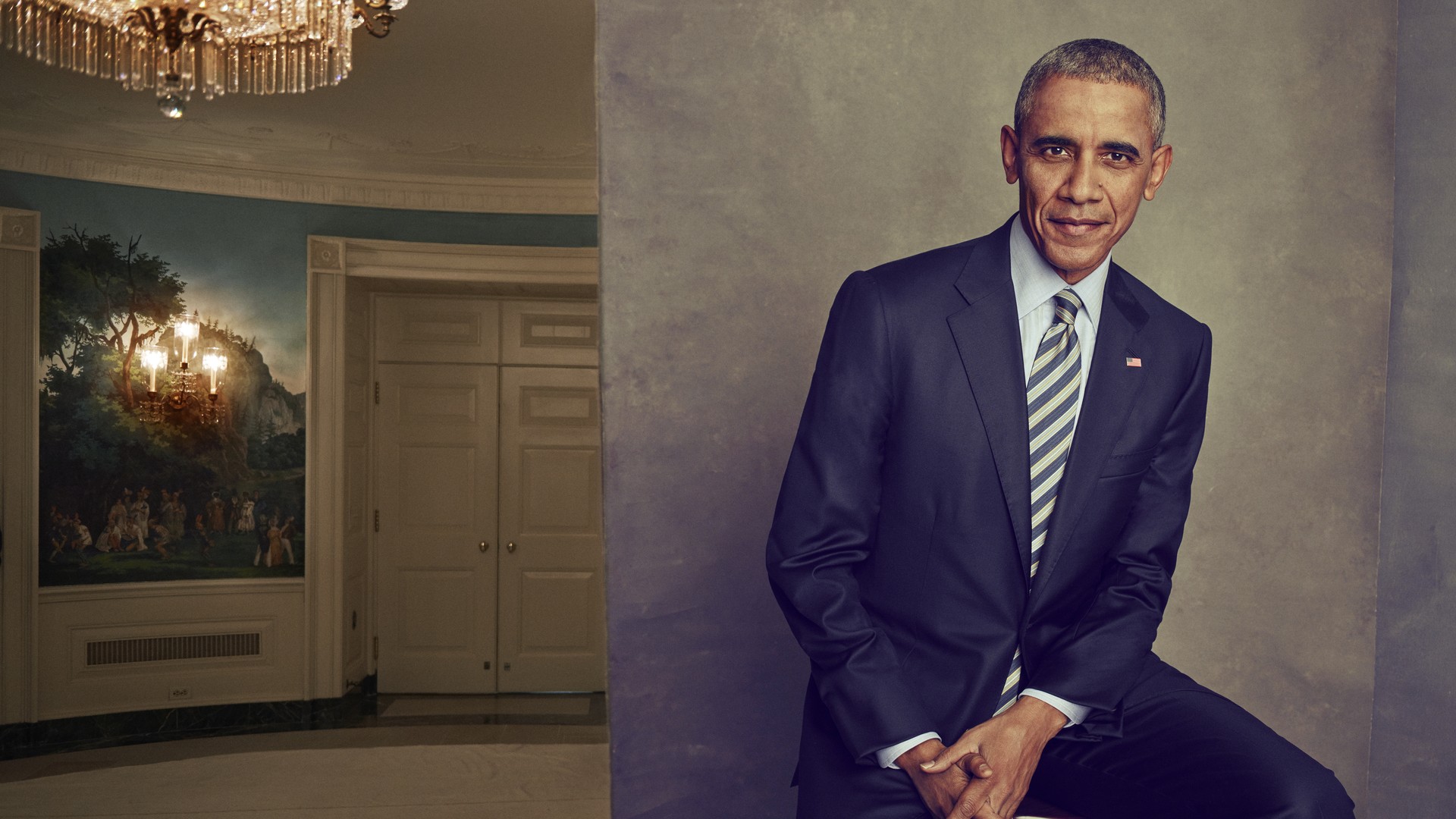

Ruven Afanador

  1. Why Ukraine will always be vulnerable to Russian domination

Russia’s invasion of Crimea in early 2014, and its decision to use force to buttress the rule of its client Bashar al-Assad, have been cited by Obama’s critics as proof that the post-red-line world no longer fears America.

So when I talked with the president in the Oval Office in late January, I again raised this question of deterrent credibility. “The argument is made,” I said, “that Vladimir Putin watched you in Syria and thought, He’s too logical, he’s too rational, he’s too into retrenchment. I’m going to push him a little bit further in Ukraine.”

Obama didn’t much like my line of inquiry. “Look, this theory is so easily disposed of that I’m always puzzled by how people make the argument. I don’t think anybody thought that George W. Bush was overly rational or cautious in his use of military force. And as I recall, because apparently nobody in this town does, Putin went into Georgia on Bush’s watch, right smack dab in the middle of us having over 100,000 troops deployed in Iraq.” Obama was referring to Putin’s 2008 invasion of Georgia, a former Soviet republic, which was undertaken for many of the same reasons Putin later invaded Ukraine—to keep an ex–Soviet republic in Russia’s sphere of influence.

“Putin acted in Ukraine in response to a client state that was about to slip out of his grasp. And he improvised in a way to hang on to his control there,” he said. “He’s done the exact same thing in Syria, at enormous cost to the well-being of his own country. And the notion that somehow Russia is in a stronger position now, in Syria or in Ukraine, than they were before they invaded Ukraine or before he had to deploy military forces to Syria is to fundamentally misunderstand the nature of power in foreign affairs or in the world generally. Real power means you can get what you want without having to exert violence. Russia was much more powerful when Ukraine looked like an independent country but was a kleptocracy that he could pull the strings on.”

Obama’s theory here is simple: Ukraine is a core Russian interest but not an American one, so Russia will always be able to maintain escalatory dominance there.

“The fact is that Ukraine, which is a non-nato country, is going to be vulnerable to military domination by Russia no matter what we do,” he said.

I asked Obama whether his position on Ukraine was realistic or fatalistic.

“It’s realistic,” he said. “But this is an example of where we have to be very clear about what our core interests are and what we are willing to go to war for. And at the end of the day, there’s always going to be some ambiguity.” He then offered up a critique he had heard directed against him, in order to knock it down. “I think that the best argument you can make on the side of those who are critics of my foreign policy is that the president doesn’t exploit ambiguity enough. He doesn’t maybe react in ways that might cause people to think, Wow, this guy might be a little crazy.”

“The ‘crazy Nixon’ approach,” I said: Confuse and frighten your enemies by making them think you’re capable of committing irrational acts.

“But let’s examine the Nixon theory,” he said. “So we dropped more ordnance on Cambodia and Laos than on Europe in World War II, and yet, ultimately, Nixon withdrew, Kissinger went to Paris, and all we left behind was chaos, slaughter, and authoritarian governments that finally, over time, have emerged from that hell. When I go to visit those countries, I’m going to be trying to figure out how we can, today, help them remove bombs that are still blowing off the legs of little kids. In what way did that strategy promote our interests?”

But what if Putin were threatening to move against, say, Moldova—another vulnerable post-Soviet state? Wouldn’t it be helpful for Putin to believe that Obama might get angry and irrational about that?

“There is no evidence in modern American foreign policy that that’s how people respond. People respond based on what their imperatives are, and if it’s really important to somebody, and it’s not that important to us, they know that, and we know that,” he said. “There are ways to deter, but it requires you to be very clear ahead of time about what is worth going to war for and what is not. Now, if there is somebody in this town that would claim that we would consider going to war with Russia over Crimea and eastern Ukraine, they should speak up and be very clear about it. The idea that talking tough or engaging in some military action that is tangential to that particular area is somehow going to influence the decision making of Russia or China is contrary to all the evidence we have seen over the last 50 years.”

Obama went on to say that the belief in the possibilities of projected toughness is rooted in “mythologies” about Ronald Reagan’s foreign policy.

“If you think about, let’s say, the Iran hostage crisis, there is a narrative that has been promoted today by some of the Republican candidates that the day Reagan was elected, because he looked tough, the Iranians decided, ‘We better turn over these hostages,’ ” he said. “In fact what had happened was that there was a long negotiation with the Iranians and because they so disliked Carter—even though the negotiations had been completed—they held those hostages until the day Reagan got elected. Reagan’s posture, his rhetoric, etc., had nothing to do with their release. When you think of the military actions that Reagan took, you have Grenada—which is hard to argue helped our ability to shape world events, although it was good politics for him back home. You have the Iran-Contra affair, in which we supported right-wing paramilitaries and did nothing to enhance our image in Central America, and it wasn’t successful at all.” He reminded me that Reagan’s great foe, Daniel Ortega, is today the unrepentant president of Nicaragua.

Obama also cited Reagan’s decision to almost immediately pull U.S. forces from Lebanon after 241 servicemen were killed in a Hezbollah attack in 1983. “Apparently all these things really helped us gain credibility with the Russians and the Chinese,” because “that’s the narrative that is told,” he said sarcastically. “Now, I actually think that Ronald Reagan had a great success in foreign policy, which was to recognize the opportunity that Gorbachev presented and to engage in extensive diplomacy—which was roundly criticized by some of the same people who now use Ronald Reagan to promote the notion that we should go around bombing people.”

In a conversation at the end of January, I asked the president to describe for me the threats he worries about most as he prepares, in the coming months, to hand off power to his successor.

“As I survey the next 20 years, climate change worries me profoundly because of the effects that it has on all the other problems that we face,” he said. “If you start seeing more severe drought; more significant famine; more displacement from the Indian subcontinent and coastal regions in Africa and Asia; the continuing problems of scarcity, refugees, poverty, disease—this makes every other problem we’ve got worse. That’s above and beyond just the existential issues of a planet that starts getting into a bad feedback loop.”

Terrorism, he said, is also a long-term problem “when combined with the problem of failed states.”

What country does he consider the greatest challenge to America in the coming decades? “In terms of traditional great-state relations, I do believe that the relationship between the United States and China is going to be the most critical,” he said. “If we get that right and China continues on a peaceful rise, then we have a partner that is growing in capability and sharing with us the burdens and responsibilities of maintaining an international order. If China fails; if it is not able to maintain a trajectory that satisfies its population and has to resort to nationalism as an organizing principle; if it feels so overwhelmed that it never takes on the responsibilities of a country its size in maintaining the international order; if it views the world only in terms of regional spheres of influence—then not only do we see the potential for conflict with China, but we will find ourselves having more difficulty dealing with these other challenges that are going to come.”

Many people, I noted, want the president to be more forceful in confronting China, especially in the South China Sea. Hillary Clinton, for one, has been heard to say in private settings, “I don’t want my grandchildren to live in a world dominated by the Chinese.”

“I’ve been very explicit in saying that we have more to fear from a weakened, threatened China than a successful, rising China,” Obama said. “I think we have to be firm where China’s actions are undermining international interests, and if you look at how we’ve operated in the South China Sea, we have been able to mobilize most of Asia to isolate China in ways that have surprised China, frankly, and have very much served our interest in strengthening our alliances.”

A weak, flailing Russia constitutes a threat as well, though not quite a top-tier threat. “Unlike China, they have demographic problems, economic structural problems, that would require not only vision but a generation to overcome,” Obama said. “The path that Putin is taking is not going to help them overcome those challenges. But in that environment, the temptation to project military force to show greatness is strong, and that’s what Putin’s inclination is. So I don’t underestimate the dangers there.”
Obama returned to a point he had made repeatedly to me, one that he hopes the country, and the next president, absorbs: “You know, the notion that diplomacy and technocrats and bureaucrats somehow are helping to keep America safe and secure, most people think, Eh, that’s nonsense. But it’s true. And by the way, it’s the element of American power that the rest of the world appreciates unambiguously. When we deploy troops, there’s always a sense on the part of other countries that, even where necessary, sovereignty is being violated.”

Over the past year, John Kerry has visited the White House regularly to ask Obama to violate Syria’s sovereignty. On several occasions, Kerry has asked Obama to launch missiles at specific regime targets, under cover of night, to “send a message” to the regime. The goal, Kerry has said, is not to overthrow Assad but to encourage him, and Iran and Russia, to negotiate peace. When the Assad alliance has had the upper hand on the battlefield, as it has these past several months, it has shown no inclination to take seriously Kerry’s entreaties to negotiate in good faith. A few cruise missiles, Kerry has argued, might concentrate the attention of Assad and his backers. “Kerry’s looking like a chump with the Russians, because he has no leverage,” a senior administration official told me.

The U.S. wouldn’t have to claim credit for the attacks, Kerry has told Obama—but Assad would surely know the missiles’ return address.

Obama has steadfastly resisted Kerry’s requests, and seems to have grown impatient with his lobbying. Recently, when Kerry handed Obama a written outline of new steps to bring more pressure to bear on Assad, Obama said, “Oh, another proposal?” Administration officials have told me that Vice President Biden, too, has become frustrated with Kerry’s demands for action. He has said privately to the secretary of state, “John, remember Vietnam? Remember how that started?” At a National Security Council meeting held at the Pentagon in December, Obama announced that no one except the secretary of defense should bring him proposals for military action. Pentagon officials understood Obama’s announcement to be a brushback pitch directed at Kerry.

One day in January, in Kerry’s office at the State Department, I expressed the obvious: He has more of a bias toward action than the president does.

“I do, probably,” Kerry acknowledged. “Look, the final say on these things is in his hands … I’d say that I think we’ve had a very symbiotic, synergistic, whatever you call it, relationship, which works very effectively. Because I’ll come in with the bias toward ‘Let’s try to do this, let’s try to do that, let’s get this done.’ ”

Obama’s caution on Syria has vexed those in the administration who have seen opportunities, at different moments over the past four years, to tilt the battlefield against Assad. Some thought that Putin’s decision to fight on behalf of Assad would prompt Obama to intensify American efforts to help anti-regime rebels. But Obama, at least as of this writing, would not be moved, in part because he believed that it was not his business to stop Russia from making what he thought was a terrible mistake. “They are overextended. They’re bleeding,” he told me. “And their economy has contracted for three years in a row, drastically.”

In recent National Security Council meetings, Obama’s strategy was occasionally referred to as the “Tom Sawyer approach.” Obama’s view was that if Putin wanted to expend his regime’s resources by painting the fence in Syria, the U.S. should let him. By late winter, though, when it appeared that Russia was making advances in its campaign to solidify Assad’s rule, the White House began discussing ways to deepen support for the rebels, though the president’s ambivalence about more-extensive engagement remained. In conversations I had with National Security Council officials over the past couple of months, I sensed a foreboding that an event—another San Bernardino–style attack, for instance—would compel the United States to take new and direct action in Syria. For Obama, this would be a nightmare.

If there had been no Iraq, no Afghanistan, and no Libya, Obama told me, he might be more apt to take risks in Syria. “A president does not make decisions in a vacuum. He does not have a blank slate. Any president who was thoughtful, I believe, would recognize that after over a decade of war, with obligations that are still to this day requiring great amounts of resources and attention in Afghanistan, with the experience of Iraq, with the strains that it’s placed on our military—any thoughtful president would hesitate about making a renewed commitment in the exact same region of the world with some of the exact same dynamics and the same probability of an unsatisfactory outcome.”

Are you too cautious?, I asked.

“No,” he said. “Do I think that had we not invaded Iraq and were we not still involved in sending billions of dollars and a number of military trainers and advisers into Afghanistan, would I potentially have thought about taking on some additional risk to help try to shape the Syria situation? I don’t know.”

What has struck me is that, even as his secretary of state warns about a dire, Syria-fueled European apocalypse, Obama has not recategorized the country’s civil war as a top-tier security threat.

Obama’s hesitation to join the battle for Syria is held out as proof by his critics that he is too naive; his decision in 2013 not to fire missiles is proof, they argue, that he is a bluffer.

This critique frustrates the president. “Nobody remembers bin Laden anymore,” he says. “Nobody talks about me ordering 30,000 more troops into Afghanistan.” The red-line crisis, he said, “is the point of the inverted pyramid upon which all other theories rest.”

One afternoon in late January, as I was leaving the Oval Office, I mentioned to Obama a moment from an interview in 2012 when he told me that he would not allow Iran to gain possession of a nuclear weapon. “You said, ‘I’m the president of the United States, I don’t bluff.’ ”

He said, “I don’t.”

Shortly after that interview four years ago, Ehud Barak, who was then the defense minister of Israel, asked me whether I thought Obama’s no-bluff promise was itself a bluff. I answered that I found it difficult to imagine that the leader of the United States would bluff about something so consequential. But Barak’s question had stayed with me. So as I stood in the doorway with the president, I asked: “Was it a bluff?” I told him that few people now believe he actually would have attacked Iran to keep it from getting a nuclear weapon.

“That’s interesting,” he said, noncommittally.

I started to talk: “Do you—”

He interrupted. “I actually would have,” he said, meaning that he would have struck Iran’s nuclear facilities. “If I saw them break out.”

He added, “Now, the argument that can’t be resolved, because it’s entirely situational, was what constitutes them getting” the bomb. “This was the argument I was having with Bibi Netanyahu.” Netanyahu wanted Obama to prevent Iran from being capable of building a bomb, not merely from possessing a bomb.

“You were right to believe it,” the president said. And then he made his key point. “This was in the category of an American interest.”

I was reminded then of something Derek Chollet, a former National Security Council official, told me: “Obama is a gambler, not a bluffer.”
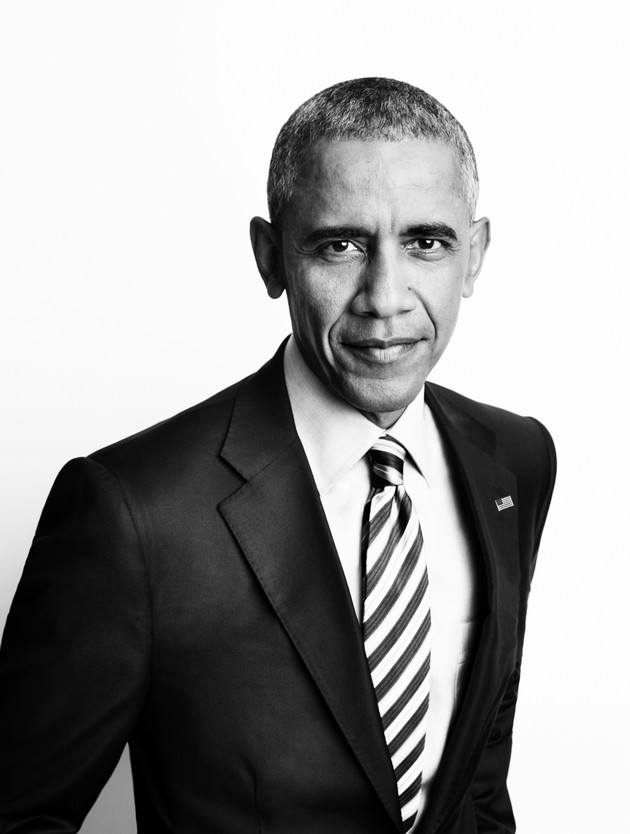
Ruven Afanador

The president has placed some huge bets. Last May, as he was trying to move the Iran nuclear deal through Congress, I told him that the agreement was making me nervous. His response was telling. “Look, 20 years from now, I’m still going to be around, God willing. If Iran has a nuclear weapon, it’s my name on this,” he said. “I think it’s fair to say that in addition to our profound national-security interests, I have a personal interest in locking this down.”

In the matter of the Syrian regime and its Iranian and Russian sponsors, Obama has bet, and seems prepared to continue betting, that the price of direct U.S. action would be higher than the price of inaction. And he is sanguine enough to live with the perilous ambiguities of his decisions. Though in his Nobel Peace Prize speech in 2009, Obama said, “Inaction tears at our conscience and can lead to more costly intervention later,” today the opinions of humanitarian interventionists do not seem to move him, at least not publicly. He undoubtedly knows that a next-generation Samantha Power will write critically of his unwillingness to do more to prevent the continuing slaughter in Syria. (For that matter, Samantha Power will also be the subject of criticism from the next Samantha Power.) As he comes to the end of his presidency, Obama believes he has done his country a large favor by keeping it out of the maelstrom—and he believes, I suspect, that historians will one day judge him wise for having done so.

Inside the West Wing, officials say that Obama, as a president who inherited a financial crisis and two active wars from his predecessor, is keen to leave “a clean barn” to whoever succeeds him. This is why the fight against isis, a group he considers to be a direct, though not existential, threat to the U.S., is his most urgent priority for the remainder of his presidency; killing the so-called caliph of the Islamic State, Abu Bakr al-Baghdadi, is one of the top goals of the American national-security apparatus in Obama’s last year.

Of course, isis was midwifed into existence, in part, by the Assad regime. Yet by Obama’s stringent standards, Assad’s continued rule for the moment still doesn’t rise to the level of direct challenge to America’s national security.

This is what is so controversial about the president’s approach, and what will be controversial for years to come—the standard he has used to define what, exactly, constitutes a direct threat.

Obama has come to a number of dovetailing conclusions about the world, and about America’s role in it. The first is that the Middle East is no longer terribly important to American interests. The second is that even if the Middle East were surpassingly important, there would still be little an American president could do to make it a better place. The third is that the innate American desire to fix the sorts of problems that manifest themselves most drastically in the Middle East inevitably leads to warfare, to the deaths of U.S. soldiers, and to the eventual hemorrhaging of U.S. credibility and power. The fourth is that the world cannot afford to see the diminishment of U.S. power. Just as the leaders of several American allies have found Obama’s leadership inadequate to the tasks before him, he himself has found world leadership wanting: global partners who often lack the vision and the will to spend political capital in pursuit of broad, progressive goals, and adversaries who are not, in his mind, as rational as he is. Obama believes that history has sides, and that America’s adversaries—and some of its putative allies—have situated themselves on the wrong one, a place where tribalism, fundamentalism, sectarianism, and militarism still flourish. What they don’t understand is that history is bending in his direction.

“The central argument is that by keeping America from immersing itself in the crises of the Middle East, the foreign-policy establishment believes that the president is precipitating our decline,” Ben Rhodes told me. “But the president himself takes the opposite view, which is that overextension in the Middle East will ultimately harm our economy, harm our ability to look for other opportunities and to deal with other challenges, and, most important, endanger the lives of American service members for reasons that are not in the direct American national-security interest.”

If you are a supporter of the president, his strategy makes eminent sense: Double down in those parts of the world where success is plausible, and limit America’s exposure to the rest. His critics believe, however, that problems like those presented by the Middle East don’t solve themselves—that, without American intervention, they metastasize.

At the moment, Syria, where history appears to be bending toward greater chaos, poses the most direct challenge to the president’s worldview.

George W. Bush was also a gambler, not a bluffer. He will be remembered harshly for the things he did in the Middle East. Barack Obama is gambling that he will be judged well for the things he didn’t do.


Zawartość publikowanych artykułów i materiałów nie reprezentuje poglądów ani opinii Reunion’68,
ani też webmastera Blogu Reunion’68, chyba ze jest to wyraźnie zaznaczone.
Twoje uwagi, linki, własne artykuły lub wiadomości prześlij na adres:
webmaster@reunion68.com


Israeli Singer Noa Kirel Leads New Rom-Com Series With Argentine Pop Star Agustin Bernasconi

Israeli Singer Noa Kirel Leads New Rom-Com Series With Argentine Pop Star Agustin Bernasconi

Shiryn Ghermezian


Agustín Bernasconi and Noa Kirel co-star in the new series “NOA.” Photo: Provided

Israeli singer Noa Kirel is starring alongside Argentine actor and fellow pop singer Agustín Bernasconi in a new music-centered romantic comedy series that will begin filming in March, The Algemeiner has learned.

The 25-episode series “NOA,” which will be filmed entirely in Argentina, is a global co-production from Argentina’s FAM Contenidos and Israel’s entertainment studio Sipur.

In the series, Noa (Kirel) travels to Argentina to meet her boyfriend, after months of having a long-distance relationship, but things don’t turn out the way she thought they would. She then meets Tomy (Bernasconi), “a young man who tries to reconcile with his past and forge a new life away from music, all while Noa begins a journey of discovery in search of her musical identity, while dealing with pressure from her parents and her new reality in Buenos Aires,” according to a provided synopsis.

Kirel is a singer, rapper, songwriter, dancer, and actress. She competed on behalf of Israel in the Eurovision Song Contest in 2023 and finished third with her song “Unicorn.” She was also formerly a judge on “Israel’s Got Talent.”

Bernasconi is an Argentine actor, singer, composer, and musician, with over 100 million views on YouTube.

“It will be a great experience to star in the series with Noa,” said Bernasconi. “She is an exceptional artist, and we complement each other very well.”

“NOA” producer and Dori Media Group founder Yair Dori, who originated the series, said: “I am very proud to be part of this great project, which I believe will have a very solid performance worldwide.”

Sipur CEO Emilio Schenker added: “NOA marks the beginning of our co-financing and co-producing major IP franchises globally. I can’t think of a better team or first project to invest in outside of Israel. It fits perfectly with our mandate to bring high-quality fiction, documentary, and unscripted projects to the world through high-level strategic partnerships and the support of powerful investors.”

Sipur’s latest projects include the Hebrew-language scripted drama series “Bad Boy,” from original “Euphoria” creator and Academy Award-nominated screenwriter Ron Leshem and Hagar Ben-Asher. Netflix acquired streaming rights for “Bad Boy” in November 2024. Sipur’s recent works also include the medical thriller series “Heart of a Killer,” starring “Tehran” lead actress Niv Sultan, the documentary “We Will Dance Again,” “The Devil’s Confession: The Lost Eichmann Tapes,” and the documentary series “Munich ’72” about the Palestinian terrorist attack on Israeli athletes at the 1972 Olympic Games in Munich, Germany.

The showrunners for “NOA” are Alejandro Cacetta and Mili Roque Pitt, and the director is Mauro Scandolari.


Zawartość publikowanych artykułów i materiałów nie reprezentuje poglądów ani opinii Reunion’68,
ani też webmastera Blogu Reunion’68, chyba ze jest to wyraźnie zaznaczone.
Twoje uwagi, linki, własne artykuły lub wiadomości prześlij na adres:
webmaster@reunion68.com


Marian Turski – świadek epok i sumienie współczesnego świata

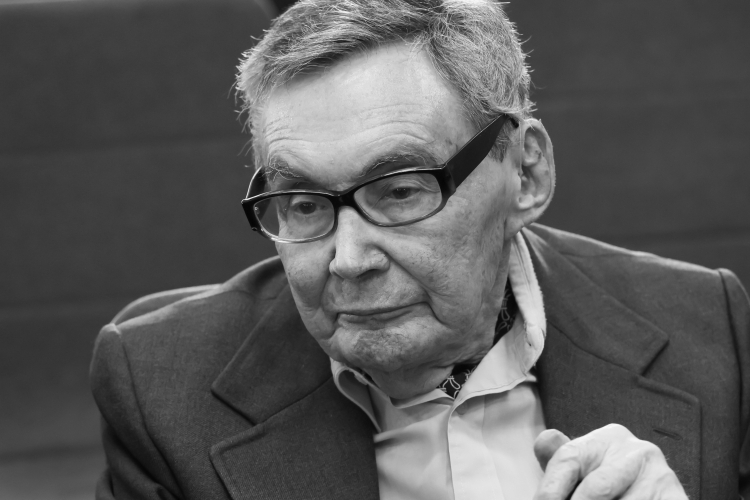
Marian Turski (1926-2025), fot. PAP/Leszek Szymański


Marian Turski – świadek epok i sumienie współczesnego świata

Agata Szwedowicz, Józef Krzyk


We wtorek (18 lutego) zmarł Marian Turski – były więzień obozu koncentracyjnego Auschwitz i do końca życia redaktor tygodnika “Polityka”. Nazywany był “sumieniem współczesnego świata” i “pamięcią tego świata, który uległ zagładzie”.

“Świadek epok, dziennikarz, historyk, oświęcimiak. Przyjaciel, przenikliwy obserwator, wybitny mówca i słuchacz, człowiek niezwykłej wrażliwości, życzliwości, ciepła. (…) W swojej misji świadka historii Marian Turski przez dziesięciolecia podróżował, a właściwie pielgrzymował po świecie wciąż tak samo intensywnie: jego przemówienia na forum Zgromadzenia Ogólnego ONZ, UNESCO, światowych organizacji i fundacji były słuchane i odbierane jako swoisty testament Pokolenia Holokaustu, głos przestrogi, ale i nadziei” – tak Mariana Turskiego wspomina redakcja “Polityki”, gdzie przez wiele lat był redaktorem.

Urodził się 26 czerwca 1926 r. w Druskiennikach w rodzinie polskich Żydów jako Mosze Turbowicz. Po wybuchu wojny wraz z rodziną znalazł się w getcie łódzkim. W grudniu 1942 r. wstąpił tam do konspiracyjnej antyfaszystowskiej organizacji “Lewa Związkowa” kierowanej przez członków KPP. W 1943 był robotnikiem w wytwórni kiełbas, a następnie w przedsiębiorstwie budowlanym na Marysinie. W tym okresie zdał tzw. małą maturę na tajnych kompletach. Został wywieziony z łódzkiego getta w sierpniu 1944 r., jednym z ostatnich transportów do KL Auschwitz. W styczniu 1945 r. wobec zbliżania się Armii Czerwonej Niemcy zarządzili ewakuację obozu, a Marian Turski znalazł się w tej grupie więźniów, która została wywieziona do Buchenwaldu. Stamtąd trzy miesiące później, gdy do Buchenwaldu podchodziły już wojska amerykańskie – do Theresienstadt na terenie dzisiejszych Czech. Tam, chory na tyfus, doczekał wyzwolenia.

Holokaust pozbawił go najbliższych: z 43 osób przeżyły tylko cztery. W sierpniu 1945 r. wrócił do Polski i zamieszkał na Dolnym Śląsku – w Mieroszowie i Wałbrzychu. Wstąpił do Związku Walki Młodych (ZWM), a w listopadzie tego samego roku przyjęto go do PPR. Następnej jesieni przeniósł się do Wrocławia, gdzie przez dwa lata studiował prawo i historię na Uniwersytecie Wrocławskim, pracował w Wydziału Propagandy Komitetu Wojewódzkiego PPR we Wrocławiu, był też korespondentem “Trybuny Dolnośląskiej”. W listopadzie 1946 r. otrzymał pracę w Wojewódzkim Urzędzie Kontroli Prasy, Publikacji i Widowisk we Wrocławiu, działał też w Związku Akademickim Młodzieży Polskiej.

W połowie lat 50. Turski był redaktorem naczelnym “Sztandaru Młodych”, w 1957 r. został publicystą, a od 1958 r., przez prawie 70 lat, pełnił funkcję kierownika działu historycznego tygodnika “Polityka”.”Myślę, że była i jest szkołą racjonalizmu. Nasi czytelnicy, dawni i współcześni, szukają chyba u nas odpowiedzi na pytanie, jak żyć w nowym społeczeństwie, jak się odnaleźć w nowych sytuacjach. A my od dekad próbujemy szukać racjonalnego pierwiastka w rozchwianym świecie”– mówił Turski o “Polityce”.

“Jego poglądy na świat kształtowały się wśród kolegów z Lewicy Związkowej w łódzkim getcie. Był zaangażowany w popieranie ruchów wyzwoleńczych w Afryce. Brał udział w marszu z Martinem Lutherem Kingiem z Selmy do Montgomery w Alabamie w 1965 r. Pracował na rzecz jak najlepszych stosunków polsko-żydowskich, był gorącym orędownikiem pojednania polsko-niemieckiego, strażnikiem i kustoszem pamięci polskich Żydów. Za tę działalność uhonorowany najwyższymi odznaczeniami wielu państw. W 2013 r. Marian Turski został odznaczony przez prezydenta Niemiec Joachima Gaucka Wielkim Krzyżem Zasługi” – przypomina “Polityka”.

Marian Turski był pomysłodawcą, współtwórcą i przewodniczącym Rady Muzeum Historii Żydów Polskich Polin, a także wiceprzewodniczącym Stowarzyszenia Żydowski Instytut Historyczny, członkiem zarządu głównego Stowarzyszenia Żydów Kombatantów i Poszkodowanych w II Wojnie Światowej, Międzynarodowej Rady Oświęcimskiej oraz Rady stowarzyszenia prowadzącego Dom Konferencji Wansee. “Autorytet o światowym znaczeniu, rzecznik porozumienia polsko-żydowskiego, publicysta, historyk. Polski Żyd. Osoba, bez której nie byłoby naszego muzeum i nie było takiego muzeum – stojącego po stronie mniejszości, wykluczanych, krzywdzonych” – tak Turskiego wspomina dyrektor Muzeum Polin Zygmunt Stępiński.

Gdy Marian Turski przemówił w dniu obchodów 75. rocznicy wyzwolenia Auschwitz 27 stycznia 2020 r., jego słowa obiegły cały świat. Powołując się na swojego przyjaciela Romana Kenta, Marian Turski zaproponował przyjęcie jedenastego przykazania: “Nie bądź obojętny”. “I to chciałbym powiedzieć mojej córce, to chciałbym powiedzieć moim wnukom. Rówieśnikom mojej córki, moich wnuków, gdziekolwiek mieszkają: w Polsce, w Izraelu, w Ameryce, w Europie Zachodniej, w Europie Wschodniej. To bardzo ważne. Nie bądźcie obojętni, kiedy widzicie, że przeszłość jest naciągana do aktualnych potrzeb polityki. Nie bądźcie obojętni, kiedy jakakolwiek mniejszość jest dyskryminowana. Istotą demokracji jest to, że większość rządzi, ale demokracja na tym polega, że prawa mniejszości muszą być chronione. Nie bądźcie obojętni, kiedy jakakolwiek władza narusza przyjęte umowy społeczne, już istniejące. Bądźcie wierni temu przykazaniu. Jedenaste przykazanie: +Nie bądź obojętny!+. Bo jeżeli będziecie obojętni – to nawet się nie obejrzycie jak na was, na waszych potomków jakiś Auschwitz nagle spadnie z nieba” – powiedział Turski.

Głośnym echem odbiły się też słowa Mariana Turskiego wygłoszone trzy lata później – z okazji 80. rocznicy powstania w getcie warszawskim. Odniósł się bowiem do agresji Rosji na Ukrainę. “Czy mogę być obojętny, czy mogę milczeć, gdy dzisiaj armia rosyjska dokonuje agresji na sąsiada i zaboru jego ziem? Czy mogę milczeć, gdy rakiety rosyjskie niszczą infrastrukturę ukraińską – domy, szpitale, zabytki kultury? (…) Czy mogę milczeć, gdy widzę los Buczy, a wiem jak Niemcy unicestwili polski Michniów, białoruski Chatyń, czeskie Lidice czy francuski Oradour?” – pytał w kwietniu 2023 r.

Zaznaczając, że “nie ma zamiaru umniejszać winy Niemców, zniewolonych przez faszyzm i popierających Hitlera” Turski podkreślił, że podglebiem popełnionych przez nich zbrodni był istniejący w Europie od wielu set lat antysemityzm. “I tu nie mogę nie zadawać pytań – dlaczego?! Dlaczego ludzie odczuwają strach przed kimś kogo uznano za obcego? Dlaczego uprzedzenia i przesądy, wobec tego obcego prowadzą do wyalienowania go ze społeczeństwa? Dlaczego ten wyalienowany człowiek jest potem dehumanizowany, odczłowieczany? Dlaczego antysemityzm przeszedł drogę od nieufności wobec obcego, poprzez wypychanie go ze społeczeństwa, poprzez fanatyczną nienawiść – do eksterminacji?” – pytał.

Ostatnie publiczne przemówienie wygłosił 27 stycznia 2025 r. podczas uroczystości z okazji 80. rocznicy wyzwolenia KL Auschwitz. Ponownie nawiązał do niestabilnej sytuacji politycznej i konfliktów militarnych w różnych regionach. “Drodzy przyjaciele, od co najmniej dwóch tysięcy lat naszej cywilizacji towarzyszy wizja apokalipsy. Oto pojawiają się czterej jeźdźcy apokalipsy: wojna, zaraza, głód i śmierć. Ludzie są porażeni strachem, sparaliżowani ze strachu. Czują się całkowicie bezradni. Co robić?” – mówił. I odpowiedział cytatem z rabina Nachmana z Bracławia: “Nie bać się wcale”.

O dziedzictwie Mariana Turskiego we wtorek mówili m.in. jego znajomi, współpracownicy i politycy. Pisarka Anna Bikont nazwała go “chodzącą pamięcią świata, który uległ zagładzie”. “Mówił, że zło zaczyna się od małych rzeczy, by w końcu doprowadzić do wielkiej porażki ludzkości. To przesłanie dzisiaj, w czasach Donalda Trumpa i Władimira Putina, jest bardzo aktualne” – powiedziała PAP Anna Bikont.

Prezydent Andrzej Duda zwrócił uwagę, że Marian Turski “dawał osobiste świadectwo młodym pokoleniom, aby nigdy więcej nie powtórzyła się tragedia Zagłady” i “konsekwentnie mówił o potrzebie kształtowania wrażliwości na zło”.

Postać Turskiego w rozmowie z PAP wspominała też historyczka prof. Bożena Szaynok z Uniwersytetu Wrocławskiego. “Pomimo bardzo trudnego życiorysu pozostawał człowiekiem niezwykle ciepłym, serdecznym, zauważającym ludzi wokół siebie” – podkreśliła. Zwróciła uwagę na nieprzeciętną wrażliwość Turskiego na drugiego człowieka. “Takich ludzi nie ma wielu, dlatego dzisiejszy dzień jest bardzo smutny. Ja wiem co Mariana spotkało podczas wojny i wiem jakim pozostał człowiekiem (…) oni nic nie stracił, że swoje serdeczności i wrażliwości” – dodała. prof. Szaynok.

Na tę samą stronę charakteru Mariana Turskiego zwrócił też uwagę Mirosław Ikonowicz, jego przyjaciel od czasów “Polityki” i wieloletni korespondent PAP. “Po śmierci Mariana świat, a na pewno mój świat, nie będzie już ten sam. Odszedł wielki i niezwykle wrażliwy człowiek” – podkreślił. “Często rozmawialiśmy ze sobą, choć ja przy nim stawałem się wręcz małomówny, bo Mariana najlepiej było słuchać. Chłonąłem jego wspomnienia, to była właściwie opowieść o ostatnim stuleciu historii świata, o najważniejszych, najbardziej dramatycznych wydarzeniach, jakie się rozegrały na ziemi, a w których Turski uczestniczył. I z których wychodził bez szwanku, bo, po prostu, miał w życiu szczęście” – mówił Mirosław Ikonowicz.

Adam Bodnar – minister sprawiedliwości, a wcześniej Rzecznik Praw Obywatelskich nazwał Turskiego “ocalałym i ocalającym, świadkiem historii, niestrudzonym nauczycielem pokoleń i sumieniem współczesnego świata”. “Całe swoje życie poświęcił walce o pamięć i ludzką godność. Przestrzegał nas przed obojętnością, bagatelizowaniem przejawów antysemityzmu, ksenofobii i pogardy dla inności. Uczył, że historia nie jest tylko przeszłością – jest zobowiązaniem, by budować świat oparty na dialogu, empatii i wzajemnym szacunku. (…) Teraz nasza kolej, by nie być obojętnymi” – dodał Adam Bodnar.

Marian Turski wielokrotnie był wyróżniany polskimi i zagranicznymi odznaczeniami oraz nagrodami. Otrzymał m.in. Krzyż Komandorski z Gwiazdą Orderu Odrodzenia Polski, Krzyż Oficerski Orderu Legii Honorowej, Order Zasługi RFN, honorowe obywatelstwo Łodzi i Warszawy i Złoty Medal Zasłużony Kulturze “Gloria Artis”.

Zmarł 18 lutego 2025 r. w wieku 98 lat.

W końcowym fragmencie swojego ostatniego przemówienia – 27 stycznia 2025 r. w Oświęcimiu – Marian Turski przestrzegł przed konsekwencjami nienawiści i zaapelował o pojednanie. “Nie bójmy się przekonywać samych siebie, że można rozwiązywać problemy między sąsiadami. Od setek lat, na różnych kontynentach, różne narody, narodowości lub grupy etniczne mieszkały i żyły obok siebie i między sobą. Uprzedzenia wzajemne, hejtowanie, nienawiść doprowadzały do konfliktów zbrojnych między tymi sąsiadującymi narodami i grupami etnicznymi. Kończyło się to zawsze przelewem krwi, ale są, na szczęście, doświadczenia pozytywne, gdy obie strony dochodzą do wniosku, że nie mają innego sposobu zapewnienia spokojnego, bezpiecznego życia swoim dzieciom, wnukom, przyszłym pokoleniom, niż doprowadzenie do kompromisu. Powołam się na dwa przykłady z Europy: Niemcy i Francuzi. Polacy i Litwini. Powtórzę: nie bójmy się przekonać samych siebie, że trzeba mieć wizję nie tylko tego, co dziś jest, ale tego, co będzie jutro, co będzie za kilkadziesiąt lat” – powiedział na zakończenie. (PAP)


Zawartość publikowanych artykułów i materiałów nie reprezentuje poglądów ani opinii Reunion’68,
ani też webmastera Blogu Reunion’68, chyba ze jest to wyraźnie zaznaczone.
Twoje uwagi, linki, własne artykuły lub wiadomości prześlij na adres:
webmaster@reunion68.com

Why Trump Must Insist on Removing Hamas From Power

Why Trump Must Insist on Removing Hamas From Power

Khaled Abu Toameh


  • One of the group’s senior officials, Osama Hamdan… also threatened that Hamas would not allow any non-Palestinian party to enter the Gaza Strip.
  • Iran’s ruling mullahs have already lost their strategic ally with the collapse of the Syrian regime of Bashar al-Assad. Losing the Gaza Strip would therefore be another severe blow to the Iranian regime, whose declared goal is to annihilate the “Zionist entity.”
  • Similarly, Hamas’s longtime patrons and funders in Qatar will do their utmost to ensure that the terrorist group remains in power.
  • Hamdan’s statements are a clear indication that Hamas intends to maintain its control of the Gaza Strip at any cost. They are also a sign that Hamas is determined to continue its terror attacks against Israel.
  • Any deal that allows Hamas to remain in power would be disastrous for Israel, the Palestinians, and Arab states threatened by the Iran-led “Axis of Resistance.”
  • It would also undermine the Trump administration’s credibility in the eyes of many in the Middle East. The Trump administration will appear as if it is only good at making empty threats.
  • There should be no reconstruction of the Gaza Strip as long as Iran’s proxies remain in power. The idea of allowing the Palestinian Authority to return to the Gaza Strip as a civilian body that pays salaries and funds projects should be rejected by the Trump administration.
  • Even if the PA is permitted to deploy its own security forces in the Gaza Strip, it does not mean that they would be able to disarm Hamas and other terrorist groups. The PA did not do so when it was in control of the Gaza Strip between 1994 and 2007, and the assumption that it would do so now is catastrophically wrong.

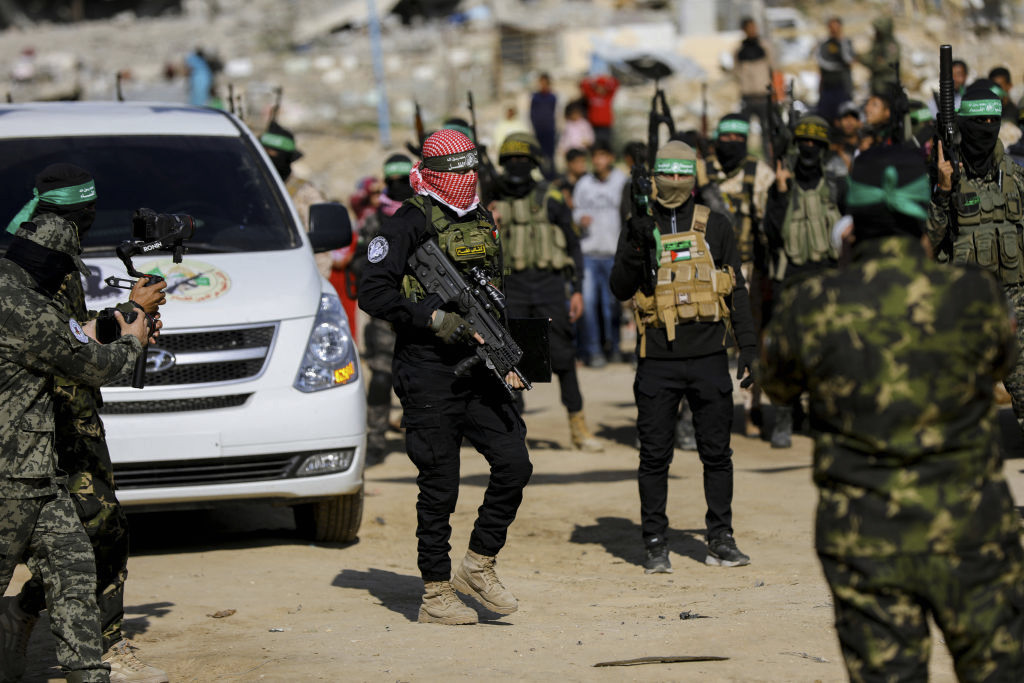
Any deal that allows Hamas to remain in power would be disastrous for Israel, the Palestinians, and Arab states threatened by the Iran-led “Axis of Resistance.” It would also undermine the Trump administration’s credibility in the eyes of many in the Middle East. Pictured: Terrorists in Gaza on February 15, 2025. (Photo by Moiz Salhi/Middle East Images/AFP via Getty Images)

The Iran-backed Palestinian terrorist group Hamas has reportedly expressed readiness to cede control of the Gaza Strip and hand it over to the Palestinian Authority (PA), headed by Mahmoud Abbas.

This assurance, however, does not mean that Hamas is willing to lay down its weapons or dismantle its military wing, Izz a-Din al-Qassam Brigades.

Hamas wants the PA to return to the Gaza Strip only to pay salaries and fund various projects, including the reconstruction of the devastation. That arrangement would still exempt Hamas of its duties and responsibilities towards the two million residents of the Gaza Strip and allow the terror group to rearm, regroup and rebuild its military capabilities.

Shortly after the report surfaced about Hamas’s purported willingness to relinquish control of the Gaza Strip, one of the group’s senior officials, Osama Hamdan, affirmed that his group has no intention of laying down its weapons or ending its rule over the coastal enclave. Hamas leaders, in addition, Hamdan stressed, will not leave the Gaza Strip.

“The issue of the weapons of the resistance and the leaders of the resistance is nonnegotiable,” Hamdan told the Qatari-owned Al-Jazeera television network, a self-appointed mouthpiece for Hamas. He also threatened that Hamas would not allow any non-Palestinian party to enter the Gaza Strip. “Anyone who wants to replace Israel, we will deal with them as if they were Israel,” Hamdan said. “Quite simply, anyone who wants to work on behalf of Israel [in the Gaza Strip] would have to bear the consequences of being an Israeli agent.”

The Hamas official’s threat is directed not only towards Abbas’s PA, but also against Arab countries that might be considering involvement in the administration of the Gaza Strip after the war, which began on October 7, 2023 when the terrorist group invaded Israel, murdering 1,200 Israelis and wounding thousands of others. Another 251 Israelis were kidnapped and held hostage by Hamas terrorists as well as “ordinary” Palestinians.

No Arab country will agree to play any role in the administration of the Gaza Strip as long as Hamas and other Palestinian terrorist groups continue to maintain an armed presence there. The same applies to the PA, which was expelled from the Gaza Strip by Hamas in 2007. That year, Hamas staged a violent and brutal coup during which dozens of PA loyalists were killed.

Since the beginning of the US-brokered Israel-Hamas ceasefire-hostage deal in mid-January, the PA and the Arab states, as well as the rest of the world, have seen the reemergence of Hamas and Palestinian Islamic Jihad (PIJ) masked terrorists on the streets of the Gaza Strip. The presence of the terrorists throughout the Gaza Strip aims to send a message to the PA and the Arab states that Hamas and PIJ remain in control despite the heavy casualties they suffered during the war.

The terror groups say they will not allow any other security forces to take control of the Gaza Strip. If that were to happen, Iran would lose one of its significant strongholds in the Middle East.

Iran’s ruling mullahs have already lost their strategic ally with the collapse of the Syrian regime of Bashar al-Assad. Furthermore, as a result of Israel’s military and security operations over the past 16 months, Iran’s Hezbollah proxy in Lebanon has been severely weakened. Losing the Gaza Strip would therefore be another severe blow to the Iranian regime, whose declared goal is to annihilate the “Zionist entity.”

Similarly, Hamas’s longtime patrons and funders in Qatar will do their utmost to ensure that the terrorist group remains in power.

Hamdan’s statements are a clear indication that Hamas intends to maintain its control of the Gaza Strip at any cost. They are also a sign that Hamas is determined to continue its terror attacks against Israel.

As Ahmed Fouad Alkhatib, a former Gaza resident and Senior Fellow at Atlantic Council, noted:

“It’s official – Hamas wants war and pre-emptively rebukes Egypt and Arab proposals for [the reconstruction of] Gaza…. [Hamdan] says that:

“1- Hamas won, and the idea of the resistance was victorious.

“2- Iran helped the resistance and will have a role in the future, whereas those who didn’t help the resistance can’t now expect to play a role (he’s talking about the Arab countries).

“3- Hamas, which brought unprecedented achievements, cannot be told that it won’t be part of the Palestinian national project.

“4- Anyone who wants to act in Israel’s stead and in its place will be treated as such and will have to deal with the consequences of that (he’s talking about any security arrangement that entails PA forces, Arab or international troops).

“5- Hamas won’t discuss disarming, the departure of its leaders [from Gaza], or disappearing from the scene and won’t leave or pay any prices for reconstruction.

“6- Hamas and team resistance have Iran, Turkey, and Africa (mainly referring to South Africa) as allies to provide support.

“7- Hamas will rebuild its capabilities in Gaza and will expand them further, with its most crucial strength being that it can slap (attack) Israel anytime it wants.

“This is a significant development and has immense implications for Gaza’s people, the region, Trump’s plan, and what’s going to unfold in the near future.”

Sami Abu Zuhri, another senior Hamas official, said this week that his group is going nowhere. He added that Israel’s effort to remove Hamas from power has failed, and he threatened to launch more attacks against Israelis:

“We say to [Israeli Prime Minister Benjamin] Netanyahu: We are capable of teaching you one lesson after the other. Hamas will stay [in power].”

The Trump administration and the rest of the international community need to take Hamas’s threats seriously. The Hamas leaders (most of whom live in a number of Arab and Islamic countries) are basically saying that they do not believe the Trump administration’s talk about removing Hamas from power. Ignoring Hamas’s threats means that there will be more October 7-style massacres of Israelis.

Any deal that allows Hamas to remain in power would be disastrous for Israel, the Palestinians, and Arab states threatened by the Iran-led “Axis of Resistance.”

It would also undermine the Trump administration’s credibility in the eyes of many in the Middle East. The Trump administration will appear as if it is only good at making empty threats.

There should be no reconstruction of the Gaza Strip as long as Iran’s proxies remain in power. The idea of allowing the Palestinian Authority to return to the Gaza Strip as a civilian body that pays salaries and funds projects should be rejected by the Trump administration.

Even if the PA is permitted to deploy its own security forces in the Gaza Strip, it does not mean that they would be able to disarm Hamas and other terrorist groups. The PA did not do so when it was in control of the Gaza Strip between 1994 and 2007, and the assumption that it would do so now is catastrophically wrong.


Khaled Abu Toameh is an award-winning journalist based in Jerusalem.


Zawartość publikowanych artykułów i materiałów nie reprezentuje poglądów ani opinii Reunion’68,
ani też webmastera Blogu Reunion’68, chyba ze jest to wyraźnie zaznaczone.
Twoje uwagi, linki, własne artykuły lub wiadomości prześlij na adres:
webmaster@reunion68.com

Robocza definicja antysemityzmu przyjęta przez Międzynarodowy Sojusz na rzecz Pamięci o Holokauście

Robocza definicja antysemityzmu przyjęta przez Międzynarodowy Sojusz na rzecz Pamięci o Holokauście

IHRA


Międzynarodowy Sojusz na rzecz Pamięci o Holokauście (IHRA) jednoczy rządy i ekspertów, aby umacniać, rozwijać i promować edukację, pamięć i badania na temat Holokaustu na całym świecie, a także aby dbać o wypełnianie zobowiązań wynikających z Deklaracji Sztokholmskiej z 2000 r.


Niewiążąca prawnie robocza definicja antysemityzmu została przyjęta przez 31 państw członkowskich IHRA w dniu 26 maja 2016 r:

“Antysemityzm to określone postrzeganie Żydów, które może się wyrażać jako nienawiść do nich. Antysemityzm przejawia się zarówno w słowach, jak i czynach skierowanych przeciwko Żydom lub osobom, które nie są Żydami, oraz ich własności, a także przeciw instytucjom i obiektom religijnym społeczności żydowskiej.”

Z myślą o ukierunkowaniu prac IHRA poniższe przykłady mogą służyć jako ilustracje:

Manifestacje antysemityzmu mogą obejmować ataki na państwo Izrael postrzegane jako zbiorowość żydowska. Jednak nie można uznać za antysemicką krytyki Izraela podobnej do kierowanej pod adresem jakiegokolwiek innego państwa. Antysemityzm bowiem często wiąże się z oskarżeniami Żydów o spiskowanie przeciwko ludzkości i jest często przywoływany w celu obarczania Żydów winą za to, że „dzieje się źle”. Obecny jest w mowie, piśmie, formach wizualnych i działaniu, bazując na złowrogich stereotypach i negatywnych cechach charakteru.

Współczesne przejawy antysemityzmu w życiu publicznym, mediach, szkołach, miejscach pracy i sferze religijnej mogą, biorąc pod uwagę ogólny kontekst, polegać między innymi na:

  1. nawoływaniu do zabijania lub krzywdzenia Żydów w imię radykalnej ideologii lub ekstremistycznych poglądów religijnych, pomocy w takich czynach lub usprawiedliwianiu ich;
  2. formułowaniu kłamliwych, odmawiających człowieczeństwa, demonizujących lub stereotypowych opinii o Żydach lub ich zbiorowej władzy, zwłaszcza, choć nie tylko, w postaci mitu o międzynarodowym spisku żydowskim lub o kontrolowaniu przez Żydów mediów, gospodarki, rządu lub innych społecznych instytucji;
  3. oskarżaniu Żydów jako narodu o odpowiedzialność za rzeczywiste lub wyimaginowane czyny popełnione przez jedną osobę lub grupę Żydów, a nawet za czyny popełnione przez osoby niebędące Żydami;
  4. negowaniu faktu, zakresu, mechanizmów (np. komór gazowych) lub intencjonalności ludobójstwa narodu żydowskiego dokonanego przez narodowosocjalistyczne Niemcy oraz ich zwolenników i sojuszników podczas II wojny światowej (Holokaust);
  5. oskarżaniu Żydów jako narodu lub Izraela jako państwa o wymyślenie lub wyolbrzymianie Holokaustu;
  6. oskarżaniu obywateli żydowskich o bycie bardziej lojalnym wobec państwa Izrael lub wobec rzekomych międzynarodowych interesów żydowskich niż wobec swojego kraju;
  7. odbieraniu Żydom prawa do samostanowienia, np. przez wyrażanie poglądu, że istnienie państwa Izrael jest przedsięwzięciem rasistowskim;
  8. stosowaniu podwójnej miary przez wymaganie od Izraela zachowania, którego nie oczekuje się lub nie wymaga od jakiegokolwiek innego państwa demokratycznego;
  9. wykorzystywaniu symboli i obrazów kojarzonych z klasycznym antysemityzmem (np. spowodowanie śmierci Jezusa, używanie krwi chrześcijańskich dzieci do rytuału religijnego) w charakterystyce Izraela lub Izraelczyków;
  10. porównywaniu współczesnej polityki Izraela z polityką nazistów;
  11. obarczaniu Żydów jako ogółu odpowiedzialnością za czyny państwa Izrael.

Antysemicki czyn uznawany jest za przestępstwo, gdy tak definiuje go prawo (np. negowanie Holokaustu lub rozpowszechnianie materiałów antysemickich w niektórych krajach).

Przestępstwo uznane jest za przejaw antysemityzmu, gdy cele ataków – niezależnie od tego, czy są to osoby, czy ich mienie, takie jak budynki, szkoły, miejsca modlitw i cmentarze – zostały wybrane, ponieważ są żydowskie lub związane z Żydami lub są postrzegane jako takie.

Dyskryminacja o charakterze antysemickim polega na odmawianiu Żydom możliwości lub usług dostępnych dla innych i jest ona nielegalna w wielu krajach.


Zawartość publikowanych artykułów i materiałów nie reprezentuje poglądów ani opinii Reunion’68,
ani też webmastera Blogu Reunion’68, chyba ze jest to wyraźnie zaznaczone.
Twoje uwagi, linki, własne artykuły lub wiadomości prześlij na adres:
webmaster@reunion68.com