
Archive | March 2025

Trump Vows to Hold Iran Responsible for Houthi Attacks, Warns of ‘Dire Consequences’

Trump Vows to Hold Iran Responsible for Houthi Attacks, Warns of ‘Dire Consequences’

Ailin Vilches Arguello


A Houthi fighter mans a machine gun mounted on a truck during a parade for people who attended Houthi military training as part of a mobilization campaign, in Sanaa, Yemen, Dec. 18, 2024. Photo: REUTERS/Khaled Abdullah

US President Donald Trump has declared that Iran will be held directly responsible for any future attacks by Yemen’s Houthi rebels, who have targeted US and Israeli ships in the Red Sea in retaliation for Jerusalem’s ongoing blockade of the Gaza Strip.

“Every shot fired by the Houthis will be looked upon, from this point forward, as being a shot fired from the weapons and leadership of IRAN, and IRAN will be held responsible, and suffer the consequences, and those consequences will be dire!” Trump said in a post on his Truth Social account on Monday.

Over the weekend, the US military launched strikes against the Houthis in Yemen after the Iran-backed terrorist group declared they had resumed attacks on ships “linked to Israel” in the Red Sea.

Since the Israel-Hamas war began in October 2023, the Houthis — whose slogan is “death to America, death to Israel, curse the Jews, and victory to Islam” — have targeted over 100 merchant vessels in the Red Sea with missiles and drones. They asserted that these attacks, which caused a massive disruption of global trade, were a show of support for Palestinians in Gaza following Hamas’s massacre across southern Israel on Oct. 7, 2023.

The attacks have forced vessels to avoid the Red Sea and Suez Canal in favor of longer routes around Africa, driving up travel and insurance costs.

“The hundreds of attacks being made by Houthi, the sinister mobsters and thugs based in Yemen, who are hated by the Yemeni people, all emanate from, and are created by, IRAN,” Trump wrote in his post on Truth Social.

“Any further attack or retaliation by the ‘Houthis’ will be met with great force, and there is no guarantee that that force will stop there,” he continued.

According to US officials, several senior Houthi commanders have been killed during the attacks. Meanwhile, local media reports said the Houthis claimed at least 53 people have been killed and 98 wounded as a result of the strikes.


On Sunday, US Defense Secretary Pete Hegseth said that Washington would conduct “unrelenting” strikes against the Houthis until the terrorist group ceases their military actions targeting US assets and international shipping.

“Iran has played ‘the innocent victim’ of rogue terrorists from which they’ve lost control, but they haven’t lost control,” Trump wrote in his post on Truth Social. “They’re dictating every move, giving them the weapons, supplying them with money and highly sophisticated Military equipment, and even, so-called, ‘Intelligence.’”

Over the weekend, Houthi leader Abdul-Malik al-Houthi called for mass protests, urging Yemenis to take to the streets in response to US airstrikes. Demonstrations were held in Yemen’s capital, Sanaa, and other Houthi-controlled areas, with crowds chanting “Death to America! Death to Israel!” during a rally broadcast on the Houthis’ Al-Masirah television network.

The Yemeni terrorist group warned that its attacks on shipping in the Red Sea will continue until US military strikes on Yemen stop. The Houthis also claimed two attacks in the past 24 hours against the USS Harry S. Truman in the northern Red Sea.

In January, the group signaled it would limit its attacks in the Red Sea corridor to only Israeli-affiliated ships after a ceasefire began in the Gaza Strip but warned that broader assaults could resume if necessary. Reports have indicated that the Houthis used Iranian-supplied ballistic and cruise missiles to carry out its attacks.

Earlier this month, Washington imposed sanctions on seven senior members of the Houthis, shortly after the Trump administration officially redesignated the Iran-backed rebels in Yemen as a foreign terrorist organization (FTO).

Several countries — including Saudi Arabia, Malaysia, the United Arab Emirates, Australia, Canada, New Zealand, and Israel — currently designate the Houthis as terrorists.

Last month, the United Nations announced it suspended its humanitarian operations in areas controlled by Houthi rebels, after they detained dozens of UN staffers, who remain unreleased.

The Houthis have been waging an insurgency in Yemen for two decades in a bid to overthrow the Yemeni government. They have controlled a significant portion of the country’s land in the north and along the Red Sea since 2014, when they captured it in the midst of a civil war.


Zawartość publikowanych artykułów i materiałów nie reprezentuje poglądów ani opinii Reunion’68,
ani też webmastera Blogu Reunion’68, chyba ze jest to wyraźnie zaznaczone.
Twoje uwagi, linki, własne artykuły lub wiadomości prześlij na adres:
webmaster@reunion68.com

Education minister threatens to defund Tel Aviv school that urged students to skip class in protest

Education minister threatens to defund Tel Aviv school that urged students to skip class in protest

JNS Staff


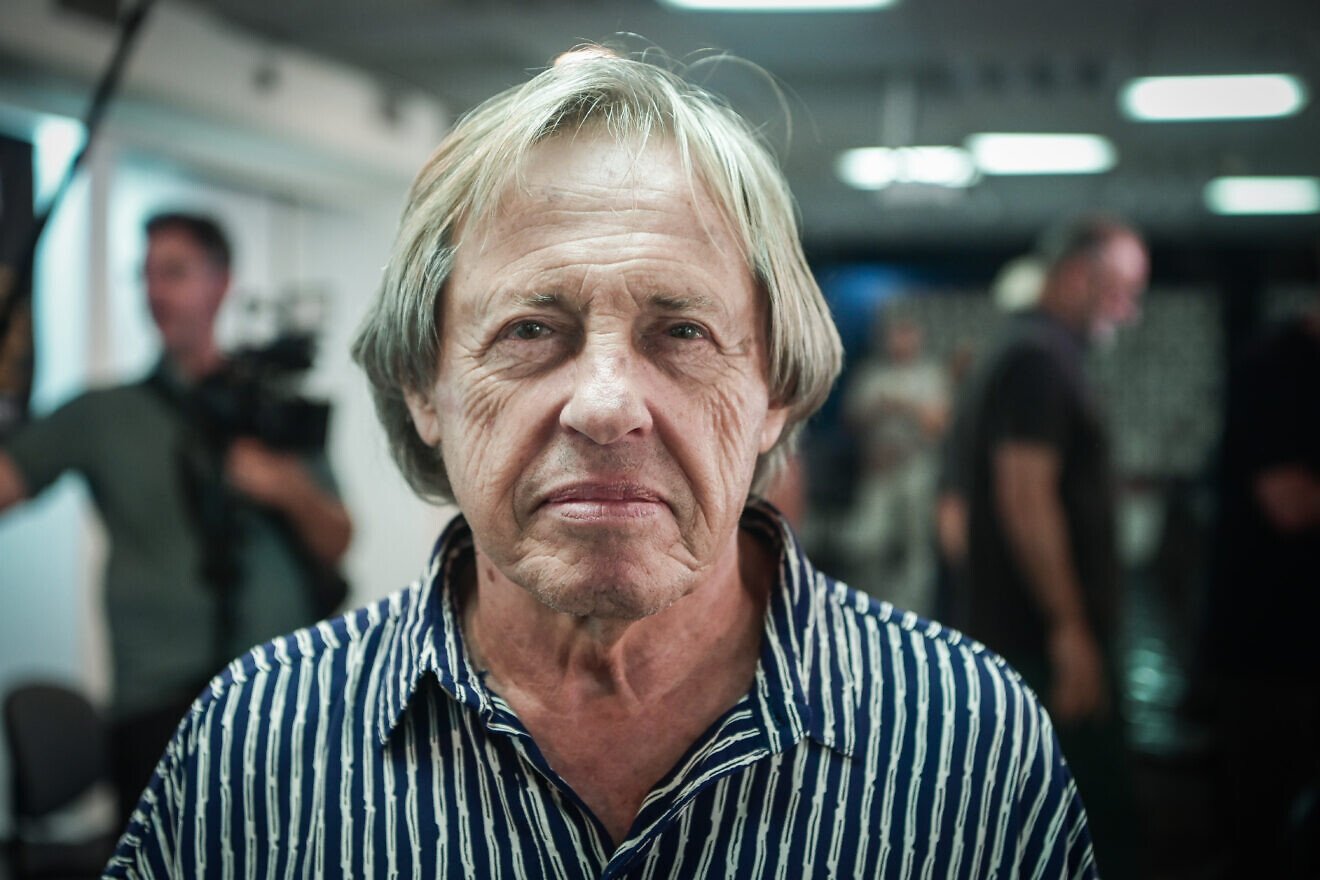
“Ze’ev Degani is a criminal,” Kisch said of the Herzliya Hebrew Gymnasium’s principal.

.
Ze’ev Degani, principal of the Herzliya Hebrew Gymnasium in Tel Aviv, Sept. 4, 2023. Photo by Avshalom Sassoni/Flash90.

Israeli Education Minister Yoav Kisch vowed Monday to “immediately” suspend the funding of the Herzliya Hebrew Gymnasium if the Tel Aviv high school would follow through on threats to cancel class to allow pupils to protest the pending firing of Shin Bet chief Ronen Bar.

“Ze’ev Degani is a criminal,” Kisch said of the school’s headmaster. He noted that Degani’s decision “to shut down class and dispatch students to a political protest is a serious and direct violation of the Compulsory Education Law,” which mandates school attendance until the age of 17.

“The education system is not a free-for-all, and we will not allow schools to become battlegrounds for political conflicts,” continued the minister.

“For this reason, Degani and the Herzliya Gymnasium’s executive board were summoned for an urgent hearing on Wednesday. If the school is indeed shut down, the funding that the Herzliya Gymnasium receives from the education system will be immediately halted,” he added.

“Schools are places for learning, not platforms for political propaganda. Politics will remain with the politicians,” concluded Kisch’s statement.

In a missive sent to his staff earlier on Monday, Degani reportedly wrote that the Jewish state’s democracy was “on the verge of collapse” due to Prime Minister Benjamin Netanyahu’s announcement he would seek the dismissal of Israel Security Agency (Shin Bet) chief Ronen Bar.

“We can no longer remain silent. The prime minister is turning the country into a dictatorship by acting against the law,” said Degani. “On Wednesday, it will be impossible to teach history and math at school.”

Netanyahu summoned Bar for an urgent meeting on Sunday evening, where he informed him that the government would consider his firing later this week due to a lack of confidence and “ongoing distrust.” The Cabinet vote is reportedly scheduled to take place on Wednesday.

In August 2023, Kisch vowed to “deal with” Degani after the Herzliya Gymnasium was found to encourage its students to evade mandatory military service in the Israel Defense Forces.

The far-left Youth Against Dictatorship group, which had been rallying teens to refuse army service, that month took over the school in protest against Netanyahu’s now-largely-shelved judicial reform plans. Degani was said to have officially approved the event before it took place.

Among other speakers, students heard from Saleh Diab, a violent terror supporter from eastern Jerusalem’s Shimon HaTzadik neighborhood.

Diab has been arrested numerous times for attacking Jews, including on suspicion of attacking Shabbat worshippers with an iron rod. In 2014, he served months in prison for aggravated assault on a Jewish neighbor.


Zawartość publikowanych artykułów i materiałów nie reprezentuje poglądów ani opinii Reunion’68,
ani też webmastera Blogu Reunion’68, chyba ze jest to wyraźnie zaznaczone.
Twoje uwagi, linki, własne artykuły lub wiadomości prześlij na adres:
webmaster@reunion68.com


Trump nakazał atak na stanowiska Hutich. “Wasz czas się skończył”

Protest w Jemenie przeciwko polityce Izraela wobec Strefy Gazy, 11.03.2025 (Fot. REUTERS/Khaled Abdullah)


Trump nakazał atak na stanowiska Hutich. “Wasz czas się skończył”

Tomasz Jakubowski


Prezydent Stanów Zjednoczonych wydał w sobotę rozkaz ostrzelania baz rebeliantów Huti w Jemenie.

– W wyniku nalotów USA na pozycje proirańskich rebeliantów Huti w Jemenie zginęło co najmniej 31 osób a ponad 100 zostało rannych – podała przedstawicielka służb medycznych Huti, Anees al-Asbahiw.

Celem nalotów była Sana, kontrolowana przez Huti stolica Jemenu, ale również obiekty wojskowe Huti w mieście Taiz w południowo-zachodnim Jemenie – pisał Reuters. Według informacji lokalnych mediów w Sanie ostrzelano siedzibę Najwyższej Rady Politycznej Huti, magazyny z bronią oraz centra dowodzenia. Lotnictwo USA zaatakowało też obiekty jemeńskich rebeliantów w prowincjach Saada, Damar i El-Beida. 

“Dziś rozkazałem wojskom Stanów Zjednoczonych rozpocząć zdecydowaną i potężną akcję militarną przeciwko terrorystom Huti w Jemenie. Prowadzą oni nieustanną kampanię piractwa, przemocy i terroryzmu przeciwko amerykańskim i innym statkom, samolotom i dronom” – napisał w sobotę Trump we własnym serwisie społecznościowym Truth Social.

Rozkazałem wojskom Stanów Zjednoczonych rozpocząć zdecydowaną i potężną akcję militarną przeciwko Huti w Jemenie’ – napisał w sobotę Donald Trump w mediach społecznościowych. Truth Social

Prezydent oskarżył przy okazji Joego Bidena o brak działań w tej sprawie. “Reakcja Joe Bidena była żałośnie słaba, więc niepohamowani Huti po prostu kontynuowali działania. Minął ponad rok, odkąd statek handlowy pod banderą USA bezpiecznie przepłynął przez Kanał Sueski, Morze Czerwone lub Zatokę Adeńską. Ostatni amerykański okręt wojenny, który przepłynął przez Morze Czerwone cztery miesiące temu, został zaatakowany przez Hutich kilkanaście razy. Finansowani przez Iran bandyci Huti wystrzeliwali pociski rakietowe w kierunku amerykańskich samolotów i atakowali naszych żołnierzy i sojuszników. Te nieustanne ataki kosztowały amerykańską i światową gospodarkę wiele miliardów dolarów, jednocześnie narażając życie niewinnych ludzi” – napisał.

Trump: Huti zdławili żeglugę

Podkreślił, że ataki Hutich na amerykańskie okręty nie będą tolerowane. “Użyjemy przeważającej siły śmiercionośnej, dopóki nie osiągniemy naszego celu. Huti zdławili żeglugę na jednej z najważniejszych dróg wodnych na świecie, zatrzymując ogromne obszary globalnego handlu i atakując podstawową zasadę wolności żeglugi, od której zależy międzynarodowy handel” – napisał Trump.

Prezydent USA dodał, że “dzielni wojownicy” przeprowadzają obecnie ataki z powietrza na bazy terrorystów, ich przywódców i obronę przeciwrakietową, aby chronić amerykańską żeglugę, zasoby powietrzne i morskie oraz przywrócić wolność żeglugi. “Żadne siły terrorystyczne nie powstrzymają amerykańskich statków handlowych i marynarki wojennej przed swobodnym żeglowaniem po drogach wodnych świata”.

Trump: “Wasz czas się skończył”

W długim poście amerykański przywódca zwrócił się bezpośrednio do terrorystów: “Wasz czas się skończył. Ataki muszą się skończyć. Począwszy od dziś. Jeśli się tak nie stanie, czeka was piekło, jakiego wcześniej nie doświadczyliście” – zagroził. 

Trump zwrócił się też do władz Iranu, by te przestały wspierać jemeńskich rebeliantów. “Nie zagrażajcie narodowi amerykańskiemu, jego prezydentowi, który otrzymał jeden z największych mandatów w historii prezydentury, ani światowym szlakom żeglugowym. Jeśli to zrobicie, uważacie, ponieważ Ameryka pociągnie was do pełnej odpowiedzialności i nie będziemy w tym mili” – podkreślił.

Walka z Huti

Huti to jedna ze stron wojny domowej w Jemenie, która z różną intensywnością, toczy się od 2015 r., ale rebelianci zdobyli już większość terytorium kraju wraz ze stolicą – Saną. Od listopada 2023 r. do stycznia tego roku Huti przeprowadzili przy pomocy dronów i rakiet ponad 100 ataków na statki pływające na trasie łączącej Azję z Europą przez Morze Czerwone i Kanał Sueski. Zatopili dwa statki. 

W grudniu 2023 roku USA i ich sojusznicy rozpoczęli międzynarodową operację wojskową “Prosperity Guardian”, która ma zapewnić bezpieczeństwo żeglugi na Morzu Czerwonym. Po koniec stycznia tego roku prezydent Trump ponowne umieścił jemeńskich Huti na liście organizacji terrorystycznych. “Działalność tej organizacji zagraża bezpieczeństwu amerykańskich cywilów i personelu na Bliskim Wschodzie, bezpieczeństwu naszych najbliższych partnerów regionalnych oraz stabilności globalnego handlu morskiego”- stwierdził.


Zawartość publikowanych artykułów i materiałów nie reprezentuje poglądów ani opinii Reunion’68,
ani też webmastera Blogu Reunion’68, chyba ze jest to wyraźnie zaznaczone.
Twoje uwagi, linki, własne artykuły lub wiadomości prześlij na adres:
webmaster@reunion68.com


Netanyahu to seek dismissal of Shin Bet director

Netanyahu to seek dismissal of Shin Bet director

Akiva Van Koningsveld


The Israeli premier cited an “ongoing lack of trust” between himself and Israel Security Agency head Ronen Bar • Netanyahu’s “expectation of a duty of personal loyalty” is “fundamentally illegitimate,” said Bar.

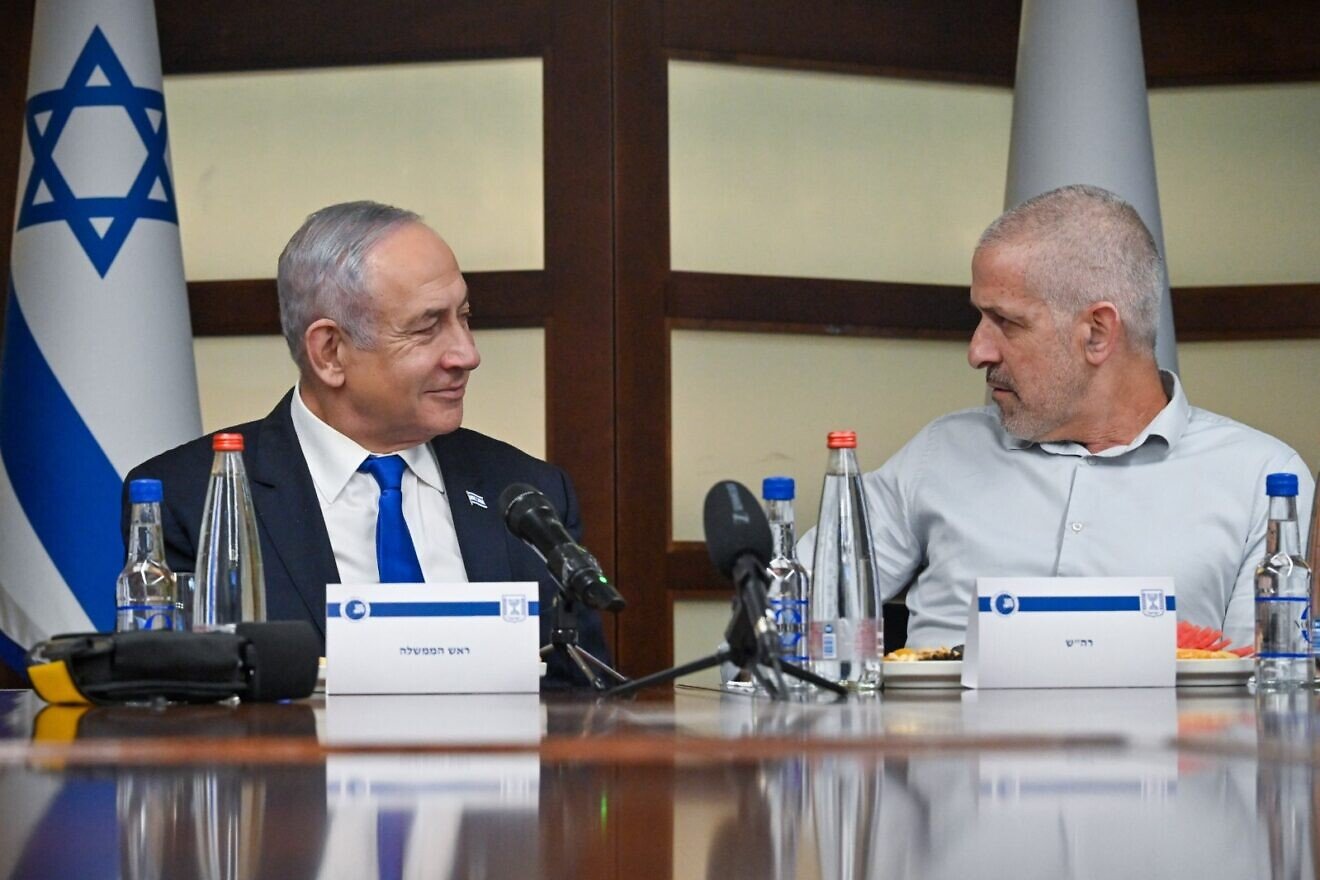
Israeli Prime Minister Benjamin Netanyahu with Shin Bet (Israel Security Agency) director Ronen Bar, April 18, 2024. Credit: Koby Gideon/GPO.

Israeli Prime Minister Benjamin Netanyahu announced on Sunday that he would be seeking the dismissal of Israel Security Agency (Shin Bet) director Ronen Bar, citing a lack of confidence and “ongoing distrust.”

“At all times, but especially in such an existential war, the prime minister must have full confidence in the head of the Shin Bet,” said Netanyahu in a statement released by the Prime Minister’s Office on Sunday night.

“But unfortunately, the situation is exactly the opposite—I do not have such confidence. I have an ongoing lack of trust in the Shin Bet chief. A distrust that has only grown over time,” the statement continued.

Due to this lack of trust, Netanyahu said he had decided to submit a resolution to the government calling for Bar to be fired before the end of his five-year term on Oct. 14, 2026.

“I wish to clarify,” Netanyahu continued, that “I have nothing but appreciation for the men and women of the ISA. They are doing important and dedicated work for the security of us all. As prime minister, who is responsible for the Shin Bet, I am convinced that this step is crucial in order to restore the organization, to achieve all of our war objectives, and to prevent the next tragedy,” referring to the Oct. 7, 2023, Hamas massacre.

The premier’s announcement came a month after he removed Bar from the Israeli team shuttling between Doha and Cairo to negotiate the future of the ceasefire deal with the Hamas terrorist organization.

Last week, Netanyahu accused Bar of holding off-the-record briefings with Israeli journalists in an attempt to tarnish his image.

Netanyahu has reportedly been attempting to oust Bar for months due to the Shin Bet’s failure in the run-up to the Oct. 7 attacks.

Bar was reportedly planning to remain in the post until the return of the remaining hostages from the Gaza Strip and the establishment of a state commission of inquiry into Oct. 7—something Netanyahu has resisted, preferring a political panel that would also include security officials.

According to the PMO, Netanyahu summoned Bar to his office for an urgent meeting on Sunday night, where he informed him that the Cabinet would consider his dismissal later this week. That vote is reportedly set to take place during a special meeting on Wednesday.

In a lengthy response to Netanyahu’s statement, Bar said that “the duty of loyalty placed on the Shin Bet is first and foremost to Israeli citizens.”

Netanyahu’s “expectation of a duty of personal loyalty, the purpose of which contradicts the public interest, is a fundamentally illegitimate expectation. It is contrary to the General Security Service Law and contrary to the patriotic values that guide the Shin Bet and its members,” said the head of the Israeli equivalent of the FBI.

Following reports that Bar was refusing to step down, Shin Bet officials clarified that the director would accept his dismissal if the decision passed.

Israeli Attorney General Gali Baharav-Miara, whose dismissal the government will discuss next week, informed Netanyahu on Sunday he could not fire Bar “until the factual and legal basis underlying your decision is fully examined, as well as your authority to address the matter at this time.”

The government’s freedom of action in this regard is limited by “the extraordinary sensitivity of the issue, its unprecedented nature, the concern that the process may be tainted by illegality and conflict of interest,” said Baharav-Miara, adding that the “role of the head of the Shin Bet is not a personal trust position serving the prime minister.”

In a response, Israeli Justice Minister Yariv Levin stated that, “The General Security Service Law explicitly states that the government has the authority to terminate the service of the head of the agency before the end of their term. This law should be known to the attorney general.”

He added, “In case anyone is confused, Israel is a democracy, and everyone in it, including the attorney general, is subject to the law.”

Israeli Finance Minister Bezalel Smotrich hailed Netanyahu’s decision to fire Bar as a “necessary step,” tweeting that “it would have been appropriate for the head of the Shin Bet to take real responsibility and resign at his own initiative over a year ago.”

“After such a significant failure as the one that occurred on Simchat Torah [Oct. 7], responsibility mandates vacating the position long ago,” he said, adding that the justifications Bar gave for his continuation in the job were “brazen, arrogant, and the complete opposite of democracy.

“Furthermore, in recent months, there have been significant disagreements between him and the political echelon, which will be addressed in due course, providing another reason why he cannot remain in his position,” Smotrich wrote.

Itamar Ben-Gvir, who leads the right-wing Otzma Yehudit opposition party, slammed Baharav-Miara’s opposition to the move, writing that “since the attorney general herself is in the midst of a dismissal process, perhaps it’s worth reminding her that the ‘conflict of interest’ can also apply to actions made against the government and its leader.”

He concluded: “It’s time to put an end to the deep state rule, and first and foremost—to expedite the dismissal of the attorney general.”

Meanwhile, opposition leader Yair Lapid of the Yesh Atid Party asserted that the prime minister was now seeking the dismissal of the Shin Bet director “for one reason only—the ‘Qatar-gate’ investigation.”

Last month, Baharav-Miara opened a criminal probe into what the Attorney-General’s Office described as “the connection between elements in the Prime Minister’s Office and elements linked to Qatar.”

Qatar, which has hosted the Hamas leadership and has provided the organization with hundreds of millions of dollars, played a role in mediating the freedom of hostages held by the terrorist group.

“For a year and a half, he saw no reason to fire him, but only when the investigation into Qatar’s infiltration of Netanyahu’s office and the funds transferred to his closest aides began did he suddenly feel an urgency to fire him immediately,” wrote Lapid in his statement on Sunday night.

Yair Golan, the leader of the far-left HaDemokratim (“The Democrats,” a merger of the former Labor and Meretz parties), described the issue in a statement as “a struggle for Israel’s security, future and character.”

“We will fight in the Knesset, in the courts and in the streets. We will stop Netanyahu’s attempted coup,” the left-wing leader vowed on Sunday.

Bar entered the ranks of the Israel Security Agency as a field agent in 1993, shortly after completing his mandatory Israel Defense Forces military service in the elite General Staff Reconnaissance Unit.

Bar was appointed as the head of the ISA’s Operations Division in 2011, became chief of the service’s resource development department five years later, and between 2018 and 2021 served as deputy director.

He was appointed director under then prime minister Naftali Bennett in October 2021.


Zawartość publikowanych artykułów i materiałów nie reprezentuje poglądów ani opinii Reunion’68,
ani też webmastera Blogu Reunion’68, chyba ze jest to wyraźnie zaznaczone.
Twoje uwagi, linki, własne artykuły lub wiadomości prześlij na adres:
webmaster@reunion68.com

It’s Time to Abolish the UN’s Pro-Hamas Bureaucracy

It’s Time to Abolish the UN’s Pro-Hamas Bureaucracy

Ben Cohen / JNS.org


Delegates react to the results during the United Nations General Assembly vote on a draft resolution that would recognize the Palestinians as qualified to become a full UN member, in New York City, US, May 10, 2024. Photo: REUTERS/Eduardo Munoz

We are currently experiencing the worst surge of antisemitism in living memory. But that realization shouldn’t lull us into thinking that the world prior to October 2023 was a relative bed of roses for the Jewish people. From the end of the Second World War until the Hamas massacre in Israel, there were myriad episodes and events which underlined that hatred and suspicion of Jews as a collective did not die out with the Nazis.

Later this year, we’ll mark the 50th anniversary of one of the most heinous of those outbursts, whose fallout we are still living with: the passage by the U.N. General Assembly of Resolution 3379 of Nov. 10, 1975, which determined that Zionism, the national liberation movement of the Jews, was a form of racism.

Israel and its allies have eight months to decide whether that anniversary will be marked as a posthumous victory or as a day of mourning.

Sure, one could argue that victory already came in 1991 when, in the wake of Iraq’s expulsion from occupied Kuwait and the consequent US attempt to convene regional peace negotiations, American diplomacy—which, in the immediate aftermath of the Cold War, was without a serious rival—secured the General Assembly’s repeal of its 1975 resolution. But that, sadly, was a fleeting victory for two reasons.

Firstly, the anti-Zionist ideology underpinning the resolution persists. Orchestrated by the Soviet Union, Resolution 3379 denounced Zionism as a “threat to world peace and security.” It drew an explicit linkage between Israel and the former white minority regimes in South Africa and Zimbabwe to demonstrate its charges of “racism” and “apartheid.” Those charges will sound eerily familiar to Jewish college students now weathering the pro-Hamas onslaught, all born long after 1975.

Secondly, while the General Assembly annulled Resolution 3379, the pro-Palestinian bureaucracy created within the United Nations at exactly the same time also persists. As a result, the world body still behaves as though “Zionism is racism” remains on the books. If the November anniversary is to carry any message of hope for Israelis and Jews, then it’s imperative to tackle and dismantle that bureaucracy, and its associated propaganda operation.

In the 18 months that have lapsed since the Hamas pogrom in Israel, we have seen that bureaucracy in action. UNRWA—the agency originally created in 1949 to deal with the first generation of Arab refugees from Israel’s War of Independence—has been a mainstay of anti-Israel messaging, unphased by the unmasking of dozens of its employees as Hamas operatives. The U.N. Human Rights Council, which dedicates an entire agenda item to Israel alone at its thrice-yearly deliberations while ignoring serial violators like Russia, Iran and North Korea, last week released a litany of fabricated accusations in the guise of a “report” that amounted to what Israel called a “blood libel.” One of the more noxious Israel-haters on the scene, Francesca Albanese, continues to serve as the U.N. special rapporteur on the “Occupied Palestinian Territories.”

It’s now time to focus on those elements of the Palestine bureaucracy that are comparatively hidden. The U.N.’s Department of Political Affairs operates a subsidiary Division for Palestinian Rights, whose job is to carry out the agenda of the Committee on the Exercise of the Inalienable Rights of the Palestinian People, consisting of 25 members and 24 observers drawn from the member states. Abolishing that committee, and therefore the division along with it, should become an explicit aim of the State of Israel, the various Jewish non-governmental organizations with observer status at the United Nations, and the broader community of research and advocacy organizations pushing for Israel’s sovereign equality within the U.N. system.

The committee was created on the very same day as the passage of the “Zionism-is-racism” resolution to give concrete expression to the anti-Zionist manifesto the resolution embodied. The “inalienable rights” that this committee represents include the “exercise by Palestinians of their inalienable right to return to their homes and property from which they have been displaced and uprooted.” Note the terminology used here—not “Palestinian refugees of the 1948-49 war,” but all Palestinians, including those born after 1948 in the Arab world, Europe, North America and Latin America. It doesn’t take tremendous insight to realize that it is a formula for the elimination of Jewish sovereignty in the land of Israel—the very same formula that drives the present pro-Hamas solidarity movement and gives it the undeserved gloss of human rights.

The costs of running this committee are estimated at $6 million annually. As I wrote a few months after Donald Trump’s first-term presidential inauguration, “In international organizational terms, that’s unremarkable, but when you consider how the money is spent, it’s little short of obscene. One would like to imagine that fact is one that President Trump will grasp instinctively, and act upon accordingly.” Trump’s dislike of bloated, politically charged bureaucracies hasn’t wavered in the interim. For that reason and assorted others, it is reasonable to expect that when former New York Rep. Elise Stefanik is finally confirmed as the administration’s choice as ambassador to the United Nations, she will make dismantling the committee a priority.

Last September, when the General Assembly passed a resolution demanding Israel’s immediate withdrawal from Judea and Samaria, warning that the Jewish state “must bear the legal consequences of all its internationally wrongful acts,” Stefanik issued a scathing response. “The United Nations overwhelmingly passed a disgraceful antisemitic resolution to demand that Israel surrender to barbaric terrorists who seek the destruction of both Israel and America,” she stated. “Once again the U.N.’s antisemitic rot is on full display as it punishes Israel for defending itself and rewards Iranian-backed terrorists.”

The “rot” Stefanik was referring to is (as she no doubt realizes) institutionalized and structural, embedded within the organization’s heart for 50 years, if not longer. In 1965—two years before the Six-Day War brought Israel control of the West Bank, Gaza and eastern Jerusalem—the Soviets insisted at the drafting sessions for the Convention on the Elimination of All Forms of Racial Discrimination that a condemnation of “Zionism” be included alongside “Nazism” and “antisemitism.” As the Israeli scholar Yohanan Manor observed, the convention debates “showed the Arabs and the Soviet Union that it was possible to have Zionism condemned if they could just find a way to secure the support of the Afro-Asian bloc.”

Ten years later, they achieved just that with the passage of Resolution 3379. How would the abolition of the committee be achieved? Many years ago, the late American diplomat Richard Schifter told me that “a significant number of ambassadors in New York vote against Israel without instructions from their governments. Because these resolutions involve budgetary questions, they require a two-thirds majority vote under the provisions of the U.N. Charter. So the answer to the problem is that you reach out to heads of government. You get them to give instructions to the ambassadors on how to vote.”

There is now a precedent for that: In August 2020, Ukrainian President Volodymyr Zelensky withdrew his country from the committee just a few months after his election. Given its commitment to protecting Israel within the United Nations, and its associated agencies and departments, the United States must pursue the same outcome with as many states as possible—between now and November and, if necessary, beyond.


Zawartość publikowanych artykułów i materiałów nie reprezentuje poglądów ani opinii Reunion’68,
ani też webmastera Blogu Reunion’68, chyba ze jest to wyraźnie zaznaczone.
Twoje uwagi, linki, własne artykuły lub wiadomości prześlij na adres:
webmaster@reunion68.com