
With Trump’s backing, Hamas’s defeat is now possible

With Trump’s backing, Hamas’s defeat is now possible

Jonathan S. Tobin


Israel’s goals of eradicating the terrorists and freeing the hostages remain mutually exclusive. Washington’s green light for a cutoff of aid to Gaza, however, can change the equation.
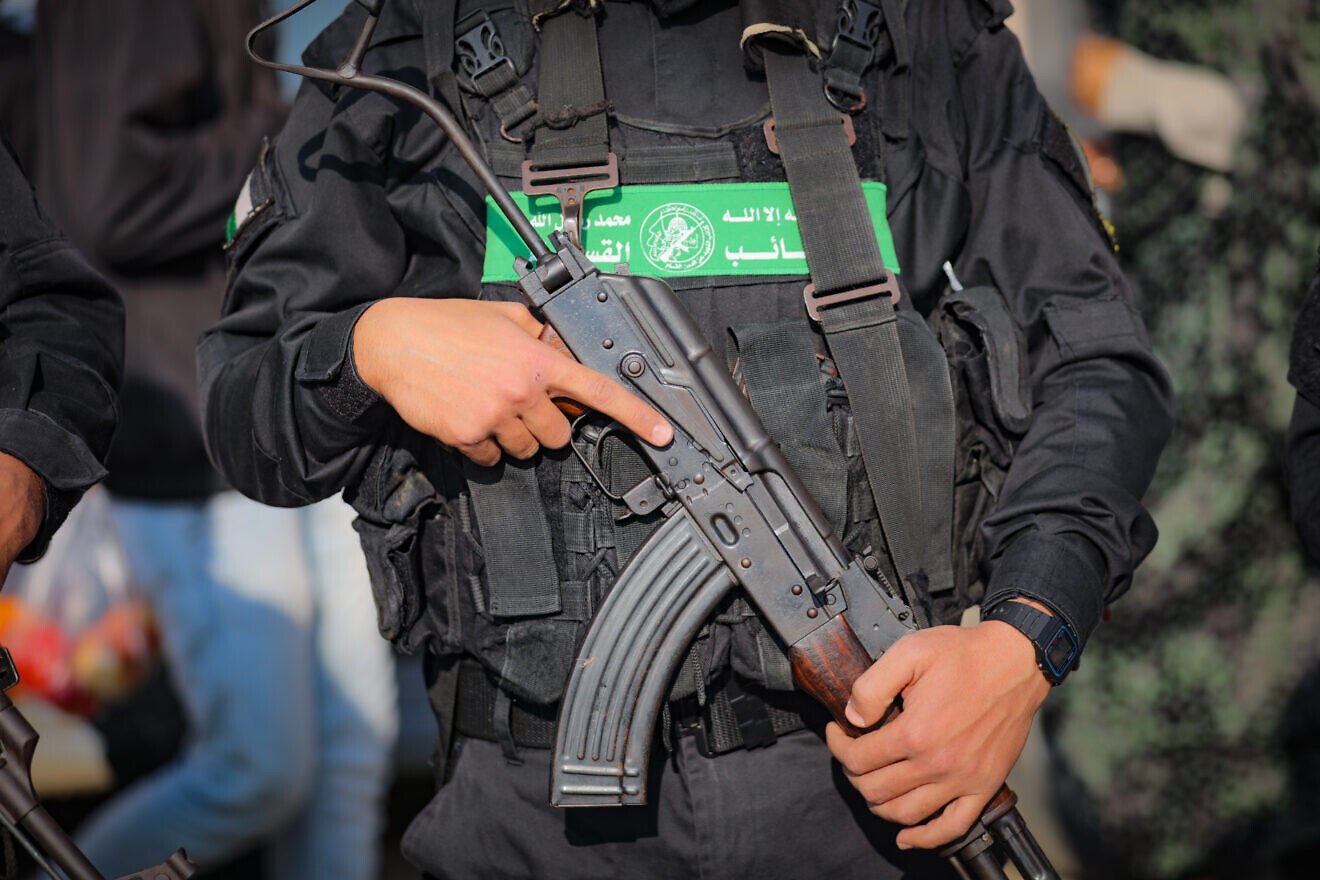
A Hamas terrorist at the funeral of Hamas council member Ghazi Abu Tamaa, in Al-Hajj Musa Mosque in Khan Yunis in Gaza, Feb. 4, 2025. Photo by Ali Hassan/Flash90.

For the last year and a half, it has been a self-fulfilling prophecy. Those who have claimed that Hamas couldn’t be defeated were right—but only because the rules of engagement of the war that the terrorists launched on Oct. 7, 2023, were set up to ensure that it survived. Those rules may now be about to change. Or at least they will if the Jewish state takes advantage of two factors that could alter the balance of power between it and the genocidal terrorists it seeks to destroy.

The change in power in Washington and the shocking exploitation of the ceasefire deal on the part of Hamas that so outraged the Israeli public has given Prime Minister Benjamin Netanyahu an opportunity to reset that agreement in a way that could either free all the hostages or lead to Hamas’s demise. The question is: Does he have sufficient support from his own people to do it?

That’s the context for the announcement this past weekend that Israel was halting the entry of humanitarian goods and supplies into the Gaza Strip until Hamas agrees to the framework for a second-phase deal along the lines proposed by the Trump administration. The goal is to set up a negotiation that would achieve at least one of Israel’s two main war goals: freeing all of the remaining hostages taken by the Palestinians on Oct. 7 and eradicating Hamas.

The problem with those goals is that they are mutually exclusive.

Will Hamas be allowed to win?

The only way to get all the hostages back is by assenting to an accord that will mean full Israeli withdrawal from Gaza. In spite of the various plans being floated for what will happen in the Strip after fighting truly ends, that means Hamas will emerge from the war not only alive but still in control of its ruined fiefdom.

At the same time, the only way to completely defeat Hamas—something difficult but not impossible—involves a decision on the part of Jerusalem that its war effort cannot be held hostage along with the Israelis still held by the terrorists.

This is glaringly obvious, though not being acknowledged by Netanyahu or the Trump administration. Yet the aid cutoff is a sign that Israel’s government is finally starting to act as if it is not committed to fighting Hamas with one hand tied behind its back.

An incomplete victory

The Israel Defense Forces destroyed Hamas’s organized military formations, killed much of its leadership and demolished a sizeable portion of its infrastructure—both above ground and in the hundreds of miles of tunnels it had built in the coastal enclave. But when a ceasefire/hostage release deal halted the fighting in January, it was also clear that the Islamist group that had ruled Gaza as an independent Palestinian state in all but name since 2007 was far from eradicated.

The constant admonitions of the Biden administration demanding that Israel avoid civilian casualties in Gaza, even if it meant letting the terrorists escape, was one part of the problem. Those warnings couldn’t be entirely ignored because they were backed up by threats of halting the supply of vital arms shipments, as well as the slow-walking of deliveries of those shipments that were allowed to be sent to Israel.

The other was that even while it was fighting the Islamist group, in addition to its allies and collaborators, Israel was forced to do something unprecedented in the history of warfare: aiding the civilian population under the control of its enemies. Moreover, it did so while knowing that much of the food, fuel and other supplies being shipped into Gaza daily were winding up in the hands of the very same group that started the war with unspeakable atrocities on Oct. 7.

Despite being falsely accused of war crimes and even committing “genocide” in Gaza, the IDF conducted urban combat in a situation in which its foes deliberately tried to get its own people killed. They did this by fighting around and even underneath them in tunnels and bunkers under hospitals, schools, mosques and civilian homes. Even when taking into account that the casualty statistics supplied by Hamas were wild exaggerations, roughly half the number of those killed in Gaza included Hamas and combatants of other terrorist groups. More than that, when realizing that approximately 80% of fatalities were Hamas members or their families, it’s clear that the charges against the IDF were utter falsehoods.

A dangerous ceasefire

Nevertheless, the ability of Hamas to maintain its much-diminished numbers is the result of pressure exerted on Israel by a Biden administration that was primarily interested in ending the war at any cost, even if it meant that the terrorists emerged triumphant.

Just as important, the terms of the ceasefire/hostage deal that President Joe Biden’s foreign-policy team crafted with their duplicitous Qatari partners seemed to lead to that same outcome. And though President Donald Trump was opposed to Hamas’s continued existence and threatened to unleash “all Hell” on the region if all the hostages weren’t released by his inauguration on Jan. 20, his desire to have the shooting stop in time for his swearing-in led his Middle East envoy, Steve Witkoff, to accept those same terms as he pushed the deal over the goal line in the days before Trump 2.0 took power.

That agreement did lead to the release of 30 hostages. But even as Israelis and every decent person celebrated their return home, their condition and the humiliating ceremonies that Hamas staged for their release, including a celebration when the bodies of the Bibas children were handed over, has also transformed the situation.

Netanyahu is under enormous domestic pressure to try to ransom the remaining living hostages, which may number no more than two dozen. He has also been empowered by the outrage against Hamas to not accept the same terms for a second phase of the ceasefire that would simply drag out the same process. That would further empower the terrorists and encourage them to believe they can continue to hang on amid the ruins of a war they started.

The Trump factor

The aid stoppage represents a fundamental change in the way Israel is treating an enemy that makes no secret of its desire to destroy the Jewish state and commit the genocide of its population. It puts Hamas on notice that the gloves may soon be coming off in the war unless it stops playing for time.

That has only been made possible by Trump’s victory last November.

Europe and much of the world still act as if Israel is the only country in the world not allowed to fight to win a war forced on it. But unlike Biden, Trump isn’t worried about international opinion about Gaza. Nor is he constrained to avoid whole-hearted support of the war on Hamas by a faction of his party as Biden was by the left-wing base of the Democrats, where hostility to Israel has gone mainstream. Trump wants the hostages freed, but he’s also floated a plan for not just ousting the terrorists but resettling Gazans elsewhere and turning the Strip into a resort. If Israel chooses to resume the war—the only way to make that or any other postwar plan that is predicated on a non-Hamas government there—he won’t protest or continue advocating for the fantasy of a Palestinian state as Biden did. Indeed, it’s likely that Trump will be cheering on an Israeli offensive.

The next days and weeks will be something of a game of chicken as Hamas and Israel go right up to the brink of war, with both sides daring each other to take responsibility for blowing up the ceasefire talks. The question of which of them has more to lose from such an outcome is open for debate. Netanyahu can’t let Hamas survive, but he also can’t be seen as writing off the lives of any remaining living hostages. Hamas wants to hold onto the hostages because so long as they do, they think they are safe. But they also know an Israel unfettered by American pressure could mean their doom.

Netanyahu now has far more weapons to pressure Hamas than he did before January. By having a partner in Washington who doesn’t believe that Hamas is an “idea” that can’t be defeated but a terror group that can and should be eradicated, he can finally start waging war on it in a way to accomplish that goal.

Such a decision will bring down more opprobrium on Israel than before. And it will likely further fuel the surge of antisemitism spreading across the globe from those who believe that one Jewish state on the planet is one too many. But if anything is certain, it’s that Hamas won’t give up the remaining hostages unless it retains its power and arms. And that is something neither Israel nor the Trump administration should accept.

It remains to be seen if Netanyahu can resist the pressure on him to throw away the sacrifices made by Israel’s soldiers to secure the lives of the hostages. If he does, the primary reason won’t be an American ally that doesn’t think an evil terrorist organization should be allowed to get away with mass murder.
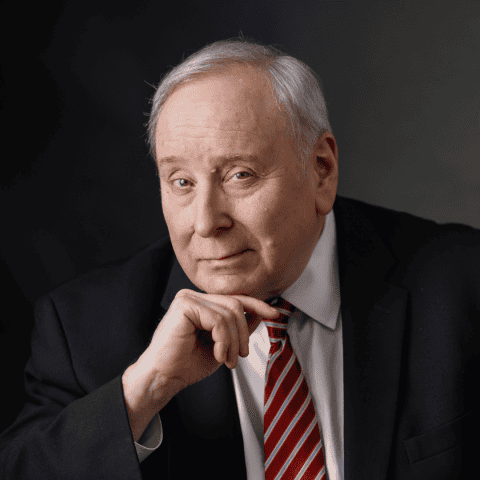

Jonathan S. Tobin is editor-in-chief of the Jewish News Syndicate, a senior contributor for The Federalist, a columnist for Newsweek and a contributor to many other publications. He covers the American political scene, foreign policy, the U.S.-Israel relationship, Middle East diplomacy, the Jewish world and the arts. He hosts the JNS “Think Twice” podcast, both the weekly video program and the “Jonathan Tobin Daily” program, which are available on all major audio platforms and YouTube. Previously, he was executive editor, then senior online editor and chief political blogger, for Commentary magazine. Before that, he was editor-in-chief of The Jewish Exponent in Philadelphia and editor of the Connecticut Jewish Ledger. He has won more than 60 awards for commentary, art criticism and other writing. He appears regularly on television, commenting on politics and foreign policy. Born in New York City, he studied history at Columbia University.


Zawartość publikowanych artykułów i materiałów nie reprezentuje poglądów ani opinii Reunion’68,
ani też webmastera Blogu Reunion’68, chyba ze jest to wyraźnie zaznaczone.
Twoje uwagi, linki, własne artykuły lub wiadomości prześlij na adres:
webmaster@reunion68.com


Hezbollah Admits Fall of Assad Regime in Syria a ‘Major Strategic Loss’ for Terror Group

Hezbollah Admits Fall of Assad Regime in Syria a ‘Major Strategic Loss’ for Terror Group

Ailin Vilches Arguello


Funeral ceremony for former Hezbollah leaders Hassan Nasrallah and Hashem Safieddine, outskirts of Beirut, Feb. 23, 2025. Photo: REUTERS/Thaier Al-Sudani

Hezbollah views the collapse of Bashar al-Assad’s regime in Syria as “a major strategic loss” that weakens its efforts against Israel, according to a co-founder of the Iran-backed Lebanese terrorist group, which continues to face mounting challenges after losing key leaders in its latest war with the Jewish state.

“There’s no doubt that the political transformation which took place in Syria was a major strategic loss — we can’t deny that,” Ali Fayyad, a long-time senior Hezbollah official who also serves as a member of the Lebanese parliament, told the Responsible Statecraft, an online magazine of the Quincy Institute for Responsible Statecraft think tank, in a new interview published on Tuesday.

Last month, Ahmed al-Sharaa became Damascus’s transitional president after leading a rebel campaign that ousted long-time Syrian leader Assad, whose Iran-backed rule had strained ties with the Arab world during the nearly 14-year Syrian war.

According to an announcement by the military command that led the offensive against Assad, Sharaa was given the authority to form a temporary legislative council for the transitional period and to suspend the country’s constitution.

The collapse of Assad’s regime was the result of an offensive spearheaded by Sharaa’s Islamist Hayat Tahrir al-Sham (HTS) group, a former al-Qaeda affiliate.

“Our previous ties with the [Assad] regime are linked to one specific issue related to the necessity of establishing a balance against Israel in a complicated regional struggle,” Fayyad said. “Our ties with the regime were strictly tied to these considerations.”

With the fall of the Assad regime, Shi’ite Hezbollah not only lost its main transit route for weapons deliveries from Iran via Syria but also must now contend with new leadership in Damascus aligned with the same Sunni extremist groups it once fought to support Assad.

During the interview, Fayyad explained that Hezbollah is not looking for trouble with Syria’s new leadership but rather supports Lebanon’s stance on maintaining balanced relations between the two countries. However, he also emphasized the importance of protecting minorities, respecting freedoms, and preventing the emergence of another oppressive regime in Syria.

“We are also keeping an eye on the stance of the new leadership in Syria towards Israel,” Fayyad said. “This stance is confusing and poses a lot of questions, as Israel infiltrated and occupied Syrian territory without any stance taken from the new leadership. This is something strange from every legal and political standpoint which you wouldn’t find in any other country.”

Following Assad’s fall in December, Israel moved troops into a buffer zone along the Syrian border to secure a military position to prevent terrorists from launching attacks against the Jewish state. The previously demilitarized zone in the Golan Heights was established under the 1974 Disengagement of Forces Agreement between Damascus and Jerusalem that ended the Yom Kippur War.

Syria’s new government has called for Israel to withdraw its forces but has used a noticeably less hostile tone than Hezbollah or its backers in Iran when speaking about the Jewish state.

Israeli Prime Minister Benjamin Netanyahu said last month that Israel would not tolerate the presence of HTS or any forces affiliated with Syria’s new rulers south of Damascus and demanded the area be demilitarized.

Also last month, Israel said it would keep troops in five locations in southern Lebanon past a Feb. 18 ceasefire deadline for their withdrawal, as Israeli leaders sought to reassure northern residents that they can return home safely.

In November, Lebanon and Israel reached a US-brokered ceasefire agreement that ended a year of fighting between the Jewish state and Hezbollah. Under the agreement, Israel was given 60 days to withdraw from Beirut’s southern border, allowing the Lebanese army and UN forces to take over security as Hezbollah disarms and moves away from Israel’s northern border.

Fayyad said that Lebanon has the right to use force, if needed, to put an end to the “Israeli occupation.”

“Hezbollah remains committed to resistance and considers that it is Lebanon’s right to confront any Israeli aggression,” he continued. “The Israelis being in five points is something which we consider to be occupation, and this gives Lebanon the right to use all possible means to liberate these occupied territories.”

Since Assad’s fall, the new Syrian government has sought to strengthen ties with Arab and Western leaders. Damascus’s new diplomatic relationships reflect a distancing from its previous allies, Iran and Russia. For example, Tehran has not reopened its embassy in Syria, which was a central part of its self-described “Axis of Resistance” against US-backed Israel, including Assad’s regime and a network of terrorist proxies — primarily Hezbollah in Lebanon.

The new Syrian government appears focused on reassuring the West and working to get sanctions lifted, which date back to 1979 when the US labeled Syria a state sponsor of terrorism and were significantly increased following Assad’s violent response to the anti-government protests.

The Assad regime’s brutal crackdown on opposition protests in 2011 sparked the Syrian civil war, during which Syria was suspended from the Arab League for more than a decade.

Referring to their relationship with Washington, Fayyad said Hezbollah has no bilateral issues with the United States but emphasized that their stance is tied to “the Palestinian cause and this alignment [with Israel] which ignores human rights and the UN laws and the right of the Palestinians to self-determination.”

“The problem with the American administration is this issue first of all and second this intervention in the affairs of other societies and countries, and exercising unjust hegemony over international relations,” he added.


Zawartość publikowanych artykułów i materiałów nie reprezentuje poglądów ani opinii Reunion’68,
ani też webmastera Blogu Reunion’68, chyba ze jest to wyraźnie zaznaczone.
Twoje uwagi, linki, własne artykuły lub wiadomości prześlij na adres:
webmaster@reunion68.com

Nie dajcie się oszukać: Autonomia Palestyńska nie wstrzymała wypłat dla terrorystów

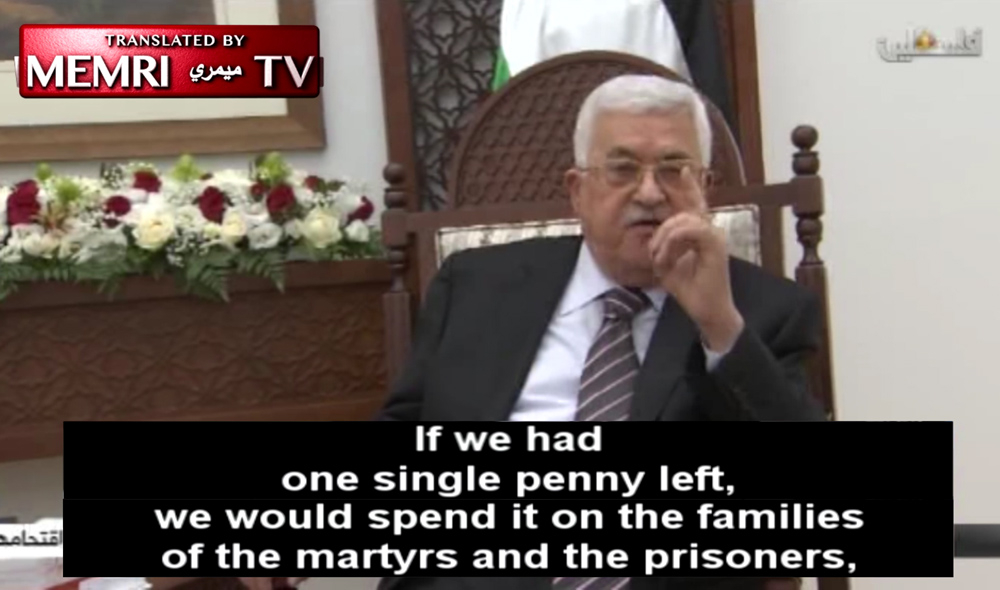
Czy prezydent Autonomii Palestyńskiej (AP) Mahmud Abbas wstrzymał wypłaty dla palestyńskich terrorystów i ich rodzin? Czy też po prostu próbuje oszukać Amerykanów, by przekonać ich do wznowienia pomocy finansowej dla PA? Prawda jest taka, że Abbas nie wstrzymał — i nigdy nie wstrzyma — wypłat dla terrorystów i ich rodzin. Na zdjęciu: 23 lipca 2018 r. podczas ceremonii ku czci palestyńskich terrorystów Abbas powiedział: “Nie zmniejszymy ani nie wstrzymamy zasiłków dla rodzin męczenników, więźniów i uwolnionych więźniów… gdyby pozostał nam choć jeden grosz, wydalibyśmy go na rodziny męczenników i więźniów”. (Źródło zdjęcia: MEMRI )


Nie dajcie się oszukać: Autonomia Palestyńska nie wstrzymała wypłat dla terrorystów

Bassam Tawil
Tłumaczenie: Małgorzata Koraszewska


Czy prezydent Autonomii Palestyńskiej (AP) Mahmoud Abbas wstrzymał wypłaty dla palestyńskich terrorystów i ich rodzin? Czy też po prostu próbuje oszukać Amerykanów, aby przekonać ich do wznowienia pomocy finansowej dla AP?

10 lutego amerykański portal Axios poinformował:

“Abbas wydał dekret odwołujący system wypłat dla rodzin palestyńskich więźniów w izraelskich więzieniach lub dla rodzin Palestyńczyków, którzy zginęli lub zostali ranni podczas ataków na Izraelczyków”.

Program płatności znany jest pod nazwą “Pay for Slay” [płaca za mordowanie].

Przedstawiciele Autonomii Palestyńskiej powiedzieli agencji Axios, że mają nadzieję, iż decyzja Abbasa poprawi stosunki z administracją Trumpa i Kongresem, a także doprowadzi do wznowienia amerykańskiej pomocy finansowej dla Autonomii Palestyńskiej.

W 2018 roku prezydent USA Donald Trump podpisał ustawę Taylor Force Act, która wstrzymała amerykańską pomoc dla Autonomii Palestyńskiej do czasu zaprzestania wypłacania przez Autonomię Palestyńską świadczeń osobom, które dopuściły się aktów terrorystycznych oraz rodzinom zmarłych terrorystów, za pośrednictwem “Funduszu Męczenników”.

Abbas jednak nie zakończył programu “płaca za mordowanie”. Po prostu zmienił jego nazwę, żeby oszukać i wprowadzić w błąd USA i inne zachodnie kraje-darczyńców.

Ruch Abbasa nie jest zmianą polityki. To nic innego jak podstępny manewr mający na celu przyciągnięcie większego międzynarodowego finansowania.

Autonomia Palestyńska jasno dała do zrozumienia, że wprowadzają tę zmianę nie dlatego, że uważają finansowanie terroryzmu za złe, ale dlatego, że potrzebują pieniędzy USA. Arabska wersja dekretu wyraźnie stwierdza, że głównym celem jest “przywrócenie międzynarodowych programów pomocowych, które zostały zawieszone w ostatnich latach, a które są nam potrzebne do wdrożenia programów rozwoju i odbudowy gospodarczej”.

“Abbas twierdzi, że zakończył program ‘płaca za mordowanie’ – ale to tylko zmiana nazwy” – twierdzi Misgav Institute for National Security and Zionist Strategy.

“Terroryści i ich rodziny nadal będą otrzymywać płatności, ale za pośrednictwem ‘fundacji’ pod kontrolą Abbasa, a nie ministerstwa. Nowa fundacja pozostaje związana z AP, co czyni z tego mylące posunięcie i nie jest prawdziwą reformą. AP musi naprawdę zakończyć płatności za terroryzm i podżeganie – a nie tylko zmienić sposób ich maskowania”.

Doniesienia o rzekomym anulowaniu płatności dla terrorystów opierały się na “dekrecie prezydenckim” wydanym przez Abbasa 10 lutego:

“Prezydent Mahmoud Abbas… wydał decyzję-prawo o anulowaniu artykułów zawartych w ustawach i rozporządzeniach dotyczących systemu wypłacania zasiłków finansowych rodzinom więźniów, męczenników i rannych… przenosząc skomputeryzowany program pomocy pieniężnej, jego bazę danych oraz jego alokacje finansowe, lokalne i międzynarodowe z Ministerstwa Rozwoju Społecznego do Palestyńskiej Narodowej Fundacji na rzecz Wzmocnienia Ekonomicznego.

Wszystkie rodziny, które korzystały z poprzednich praw, przepisów i regulacji, podlegają tym samym standardom stosowanym bez dyskryminacji wobec wszystkich rodzin korzystających z programów ochrony i pomocy społecznej”

Abbas w rzeczywistości mówi, że płatności nie będą już dokonywane przez rząd AP, ale przez nową organizację pozarządową zarządzaną przez Radę Powierniczą wyznaczoną przez niego. Ruch ten ma na celu uniknięcie bezpośredniego obwiniania go przez USA za utrzymanie tego programu pod pretekstem, że pieniądze pochodzą teraz od podmiotów prywatnych, a nie od rządu AP. Dekret po prostu “restrukturyzuje” system płatności, tak aby jego beneficjenci otrzymali takie same korzyści od Palestyńskiej Narodowej Fundacji Wzmocnienia Ekonomicznego.

“Czy Autonomia Palestyńska przestała płacić uwięzionym terrorystom?” – napisał Itamar Marcus, założyciel i dyrektor Palestinian Media Watch (PMW), który odegrał kluczową rolę w ujawnieniu programu “płaca za mordowanie”.

Nie. AP nie przestała płacić uwięzionym terrorystom, ale z powodu nacisków USA będzie płacić z innego konta, które obejmuje również beneficjentów pomocy społecznej. Według kilku źródeł AP/Fatah pensje pozostaną bardzo wysokie, identyczne jak wcześniej, podczas gdy według innej interpretacji prawa będą one oparte na potrzebach socjalnych. Prawo wydaje się być sformułowane celowo niejednoznacznie.

Różnica między wypłatami AP za terror dla osób, które dopuściły się morderstw, a wypłatami socjalnymi dla ludzi w potrzebie jest szokująca.

AP obecnie nagradza terrorystów w więzieniu kwotą od 1400 do 12 000 szekli [400–3500 dolarów] miesięcznie, w zależności od tego, jak długo przebywają w więzieniu. Świadczenia socjalne AP w zależności od potrzeb finansowych wahają się od 250 do 600 szekli miesięcznie [75–170 dolarów].

Podczas gdy wiele międzynarodowych mediów nadal twierdzi, że Abbas wstrzymał płatności dla terrorystów, Monica al-Dżaghoub, wysoka urzędniczka rządzącej frakcji Fatah w PA (kierowanej przez Abbasa), zaprzeczyła tym twierdzeniom. W wywiadzie dla należącego do Arabii Saudyjskiej kanału telewizyjnego Al-Hadath, al-Dżaghoub powiedziała:

“Te doniesienia są fałszywe. Prezydent Abbas nie wstrzymał wypłat pensji nikomu. Prezydent Abbas wydał ustawę, która przeniosła te pensje w całości do innej instytucji. Zamiast otrzymywać pensje od Palestyńskiej Komisji Więźniów, więźniowie będą od tej pory opłacani przez system opieki społecznej. Pensje nie ulegną zmianie”.

Palestyńska publicystka Dalal Irikat napisała:

“Dekret może mieć na celu restrukturyzację mechanizmu dostarczania wsparcia więźniom i rodzinom męczenników w sposób, który zmniejszy finansowe i polityczne prześladowania Autonomii Palestyńskiej… Zamiast wypłacać środki bezpośrednio, uwolnieni więźniowie zostaną objęci programami ‘wzmocnienia ekonomicznego’, co może być próbą obejścia izraelskich posunięć…”

Irikat nawiązuje do izraelskiego prawa uchwalonego w 2018 r., które nakazuje odliczanie kwoty wypłacanej terrorystom przez Autonomię Palestyńską od podatków i ceł pobieranych przez Izrael na rzecz Autonomii Palestyńskiej.

Prawda jest taka, że Abbas nie zaprzestał — i nigdy nie zaprzestanie — wypłat dla terrorystów i ich rodzin. Wie, że w chwili, gdy to zrobi, jego ludzie zbuntują się przeciwko niemu, oskarżą go o zdradę i będą chcieli go zabić.

Czas przypomnieć światu, co sam Abbas powiedział w przeszłości:

“Gdyby został nam choć jeden grosz, wydalibyśmy go na rodziny męczenników i więźniów. Uważamy męczenników i więźniów za gwiazdy na niebie narodu palestyńskiego i walki. Cenimy i szanujemy tę grupę ludzi. Tak jak to widzimy, torują oni drogę do wyzwolenia Palestyny dla dobra przyszłych pokoleń”.


Zawartość publikowanych artykułów i materiałów nie reprezentuje poglądów ani opinii Reunion’68,
ani też webmastera Blogu Reunion’68, chyba ze jest to wyraźnie zaznaczone.
Twoje uwagi, linki, własne artykuły lub wiadomości prześlij na adres:
webmaster@reunion68.com


Federal review of more than $5 billion in grants to Columbia over Jew-hatred

Federal review of more than $5 billion in grants to Columbia over Jew-hatred

JNS Staff


“Antisemitism—like racism—is a spiritual and moral malady that sickens societies and kills people with lethalities comparable to history’s most deadly plagues,” stated the U.S. secretary of health and human services.

A view of protesters demonstrating outside the campus of Columbia University in New York City, April 22, 2024. Credit: Evan Schneider/U.N. Photo.

Citing Columbia University’s “ongoing inaction in the face of relentless harassment of Jewish students,” the federal government is weighing halting $51.4 million in contracts with and is conducting a “comprehensive review” of more than $5 billion in promised grants to Columbia University.

The U.S. Department of Health and Human Services, Department of Education and the U.S. General Services Administration made the joint announcement on Monday.

Columbia’s endowment, for the fiscal year that ended on June 30, was valued at $14.8 billion.

“Americans have watched in horror for more than a year now, as Jewish students have been assaulted and harassed on elite university campuses—repeatedly overrun by antisemitic students and agitators,” stated Linda McMahon, who was confirmed earlier in the day as the U.S. education secretary.

“Unlawful encampments and demonstrations have completely paralyzed day-to-day campus operations, depriving Jewish students of learning opportunities to which they are entitled,” McMahon said.

“Institutions that receive federal funds have a responsibility to protect all students from discrimination,” she added. “Columbia’s apparent failure to uphold their end of this basic agreement raises very serious questions about the institution’s fitness to continue doing business with the United States government.”

Robert F. Kennedy, Jr., the U.S. secretary of health and human services, stated that “antisemitism—like racism—is a spiritual and moral malady that sickens societies and kills people with lethalities comparable to history’s most deadly plagues.”

“In recent years, the censorship and false narratives of woke cancel culture have transformed our great universities into greenhouses for this deadly and virulent pestilence,” he added.

Columbia stated that it is reviewing the announcement from the U.S. agencies and “is fully committed to combating antisemitism and all forms of discrimination, and we are resolute that calling for, promoting or glorifying violence or terror has no place at our university.”

“We look forward to ongoing work with the new federal administration to fight antisemitism, and we will continue to make all efforts to ensure the safety and wellbeing of our students, faculty and staff,” it said.

Rep. Tim Walberg (R-Mich.), chair of the House Education and the Workforce Committee, stated that “for more than a year, Columbia’s leaders have made public and private promises to Jewish students, faculty and members of Congress that the university would take the steps necessary to combat the rampant antisemitism on Columbia’s campus.”

“Columbia has failed to uphold its commitments, and this is unacceptable,” Walberg added. “The committee has been working hard on this issue and finally has a strong ally in the White House. The Trump administration has been clear: There is no place for antisemitism on American campuses.”


Zawartość publikowanych artykułów i materiałów nie reprezentuje poglądów ani opinii Reunion’68,
ani też webmastera Blogu Reunion’68, chyba ze jest to wyraźnie zaznaczone.
Twoje uwagi, linki, własne artykuły lub wiadomości prześlij na adres:
webmaster@reunion68.com


German Authorities Reopen Probe Into Deadly 1970 Arson Attack on Jewish Elderly Home

German Authorities Reopen Probe Into Deadly 1970 Arson Attack on Jewish Elderly Home

Ailin Vilches Arguello


An installation in downtown Munich commemorating the Feb. 13, 1970, arson attack on a Jewish community center in which seven elderly people died. Photo: @springermunich/X

Law enforcement in Germany has reopened a long-dormant investigation into the 1970 arson attack on a Jewish community center in the city of Munich that killed seven elderly residents, according to German media.

“On Jan. 31, 2025, the Munich Public Prosecutor’s Office launched an investigation into the arson attack on the Israelite Religious Community’s nursing home,” senior prosecutor Andreas Franck told the German tabloid newspaper Bild last week.

Franck, who also serves as the antisemitism commissioner of the Bavarian judiciary, will be leading the probe. He was recently contacted by a witness with new and “credible” information about possible perpetrators, Bild reported.

Fifty-five years later, the long-forgotten Feb. 13, 1970, attack, which took place during a wave of terrorism against Israeli and Jewish targets, remains unsolved.

One week before the arson, Palestinian terrorists opened fire on passengers lined up for a flight to Tel Aviv at Munich Airport, killing one person and injuring 23.

According to a report from German police at the time, the Palestinian terrorist organization that claimed responsibility for the Munich Airport attack denied any involvement in the fire at the Jewish community center.

On the night of the arson attack, unknown individuals set fire to a four-story building that housed a community center, a retirement home, and a synagogue, with 50 people inside, leaving 13 injured. Police later ruled the attack as arson after finding a gasoline can in the stairwell.

Five men and two women were killed in the attack: Regina Rivka Becher (59), David Jakubowicz (59), Rosa Drucker (59), Georg Eljakim Pfau (63), Leopold Arie Leib Gimpel (69), Siegfried Offenbacher (71), and Meir Max Blum (71). Among the victims, Jakubowicz and Pfau were survivors of Nazi concentration camps.

In 2012, fresh evidence suggested that the attack may have been carried out by an anti-Zionist anarchist group. However, Munich prosecutors later determined that the information was “inaccurate.”

In 2013, an anonymous source claimed in an article for the German magazine Focus that a member of the far-left extremist group Tupamaros West-Berlin (TW) was responsible for the attack. The investigation was closed in November 2017.

At the time of the arson, the West German government offered a reward of 75,000 marks ($20,500) for information leading to the capture of the arsonists responsible for the atrocity.

Then-West German President Gustav Heinemann condemned the attack, saying he was especially outraged because the victims had already endured immense suffering in their lives.


Zawartość publikowanych artykułów i materiałów nie reprezentuje poglądów ani opinii Reunion’68,
ani też webmastera Blogu Reunion’68, chyba ze jest to wyraźnie zaznaczone.
Twoje uwagi, linki, własne artykuły lub wiadomości prześlij na adres:
webmaster@reunion68.com