A History of Mass Relocation

A History of Mass Relocation


Brian Horowitz


What does the 20th century show us about President Trump’s proposal to permanently move the population of Gaza?
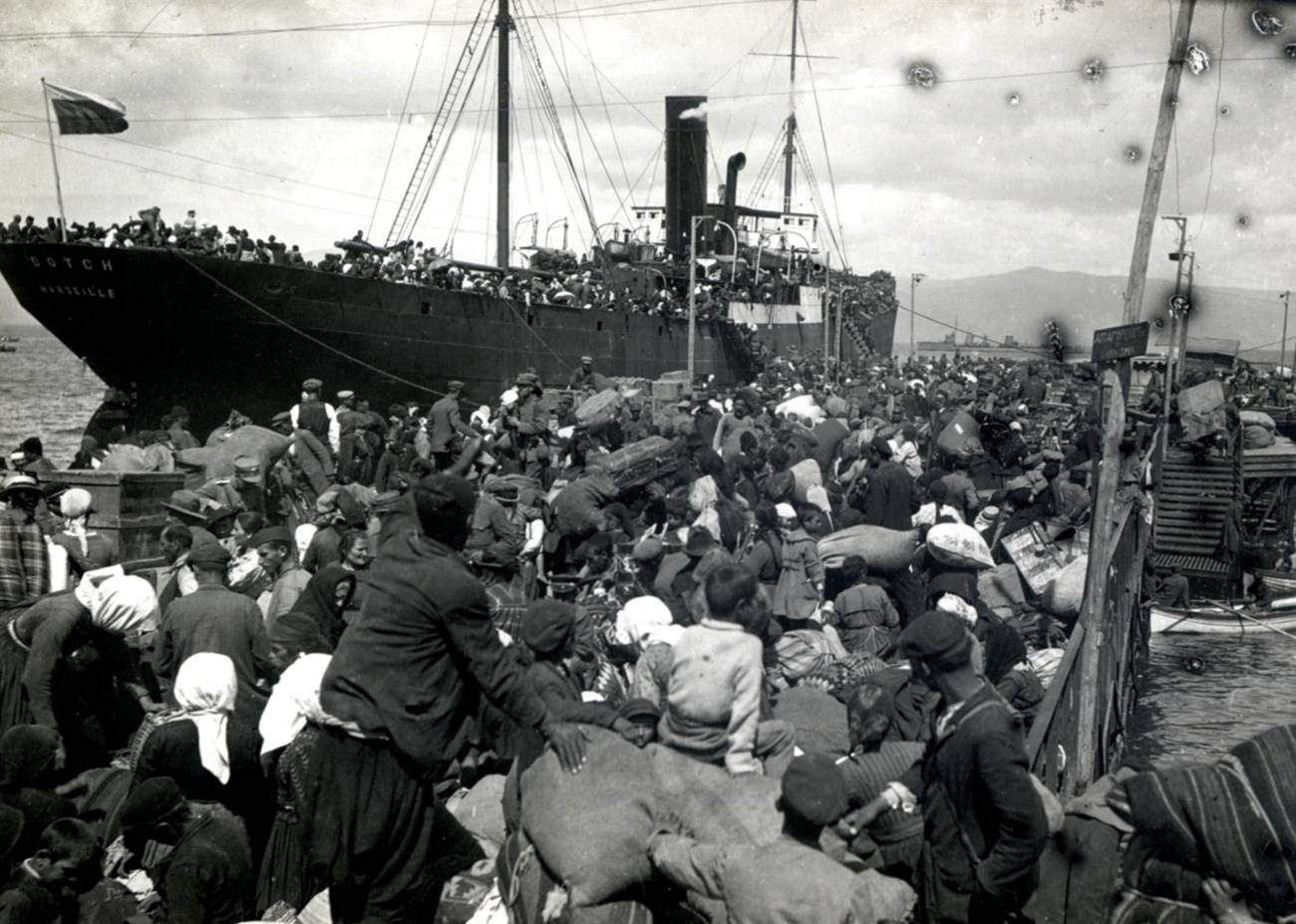
Greek refugees at the Port of Moudania (today Mudanya, Turkey), 1922 From the archives of the Society of Friends of the People, Athens, Greece

“Population transfer is a grave surgical operation, justifiable, not for cosmetic reasons, but only where the sole alternative would be chaos and destruction.” —Joseph Schechtman, 1953.

President Donald Trump’s proposal to permanently relocate the entire population of Gaza to neighboring countries has caused a storm of condemnation. Foreign leaders, U.N. officials and experts have decried the plan as ethnic cleansing, a violation of international law, and a war crime. But in the years before and after World War II, the imperial powers, the fledgling international bodies, and global leaders alike, operating within the post-Versailles order founded on the breakup of large multiethnic empires, saw population transfer, both voluntary and compulsory, as a humanitarian tool to avoid future wars. In fact, they considered it not only necessary and legal, but also morally justified and advantageous. For British Foreign Secretary Lord Curzon, who negotiated the 1923 Treaty of Lausanne, population transfer would achieve the “removal of old and deep-rooted causes of quarrel”—an act that reflected the very basis for the existence of nation-states, which gave a political voice to individual peoples.

A pressing problem for the post-Versailles order occurred when part of the people of one nation-state found itself trapped by map-makers and the realities of defensible geography into living in someone else’s national home. The problem was especially acute when these ethnic minorities became embroiled in war between the nation-state of their ethnicity and their country of birth. To avoid both national disenfranchisement, and to limit future wars, the answer to such problems, whenever practical, was population transfer. The first internationally sanctioned example of “unmixing populations” after the Great War was the voluntary exchange of respective ethnic minorities between Bulgaria and Greece. The Treaty of Lausanne then sanctioned the compulsory exchange of Greeks in Turkey and Turks in Greece. While 1.6 million people endured all kinds of suffering in the process, in the end the misery was widely judged to be worth the price as the transfer created a new reality in which ethnic, religious, and culturally monolithic populations were formed, putting an end to violence and conflict.

Understanding the complexities of migration, refugees, and population transfer desperately requires a capable historian. Fortunately we have one in Joseph Schechtman, a Russian Jew who authored seminal books such as European Population Transfers, 1939-1945 (1946); Population Transfers in Asia (1949); The Arab Refugee Problem (1952); and The Refugees in the World: Displacement and Dislocation (1964). Schechtman was a believer in the utility of mass population transfer, which he saw as a useful solution to thorny and bloody nationality disputes and presented a difficult subject in political terms that leaders, politicians, and ordinary people could understand.

Schechtman saw the postwar population transfers as beneficial to peace in the continent. ‘To have saddled the Polish state with millions of ardently nationalistic Germans,’ he wrote, ‘would have threatened not only the existence of Poland but the peace of Europe.’

His work has since fallen out of favor, however, because while it may be tempting to view large-scale demographic separations as neat and effective solutions, forcible movement of people from one place to another comes with a host of tragic consequences that are now considered taboo to advocate for—even if it also means saving lives. Of course, historically, transfers very frequently were less than orderly processes. Take the story of Jews displaced by the Russian army during World War I, which tells of tragedies that include death from exposure, starvation, destruction and loss of property, and mistreatment on the road to safety. Due to ineffective governments, the chance to exact vengeance, and opportunity to take someone else’s belongings, transfer is usually accompanied by tremendous suffering. To be sure, none of this bears any resemblance to what is currently under discussion for Gazans, who, despite repeatedly launching and losing wars against their more powerful neighbor, are being presented with an American offer to rebuild their lives elsewhere.

What has marred the idea of transfer, however, is that in the last century, it was often conducted to attain less high-minded goals. The Nazis, for example, pushed forces east and renamed parts of Poland and Czech territory in order to transfer the Slav population and make room for ethnic Germans. After the war, Stalin had his own plan, shifting borders westward, with Ukrainians pushing out Poles, and Czechs and Poles removing Germans.

Following World War II, similar developments accompanied a global wave of decolonization, which extended the logic of the ethno-state model that the world adopted at the end of World War I. Indians and Pakistanis exchanged populations in 1947 with a million killed as a result. The establishment of the State of Israel and its aftermath saw 750,000 Palestinians displaced across the Middle East and more than 850,000 Jews forced to leave their homes in Iraq, Iran, Syria, Egypt, Lebanon, and elsewhere. And of course there were the victims of the Holocaust as well as the DPs (displaced people), the survivors of the Nazi attempt to cleanse the world of Jews, who made their way to Israel in the late 1940s and afterward. No one sane would describe any of these population movements as ideal. However the alternatives appeared at the time and even today to be even less ideal, namely mass murder.

Joseph Schechtman was a product—and a keen observer—of this history. Born in a Jewish family in Odessa, Russian Empire, in 1891, Schechtman was largely Russified, meaning he lived in a Russian cultural environment. Besides the usual fare of Pushkin, Dostoevsky, and Tolstoy, Schechtman fell under the influence of the rising star in Zionism, Vladimir Jabotinsky, who was himself an Odessan. In 1918, the Zionist movement sent Schechtman to Kyiv where he joined the newly formed Ukrainian government in the Nationalities Rada. Young Schechtman witnessed the anti-Jewish pogroms that broke out in 1918 and grew in intensity in 1919 and 1920. He fled to Berlin in 1921 where he joined up with the Russian emigration that had escaped Bolshevik communism. In the mid-1920s, he moved to Paris when the German mark lost its value, and wrote several books on the violence against Jews in Ukraine.

He grew more involved with Jabotinsky, who by this time had become the leader of a militaristic branch of Zionism known as Revisionism (Ha-Tzohar). In the mid-1930s, Jabotinsky sent Schechtman to Poland, where Revisionism had become popular. The Revisionists tried to negotiate with the Polish government to clandestinely remove Jews from the country for migration to Palestine. Except for illegal efforts, all attempts to increase the small number of certificates that Britain dispensed failed. Britain refused to change its policy limiting Jewish emigration to Palestine in the late-1930s. Jabotinsky called for voluntary evacuation of Jews from Eastern Europe, but no country would accept more than a symbolic number. Jabotinsky’s widely-disbelieved prediction that the result would be the mass murder of European Jewry by the Nazis then proved to be fact.

In 1941, Schechtman somehow managed to escape Europe for America, where good fortune befell him. Jacob Robinson, the director of the Institute of Jewish Affairs, commissioned him to write a three-volume study on the history of population transfers, emphasizing the years 1939-42. According to Gil Rubin, a scholar of population transfers, Robinson was leading the discussions about the postwar future—what would minority rights and especially the Jewish question look like? Rubin notes that his selection of Schechtman seemed a strange appointment since, after all, Schechtman had no experience as a demographer. But “Schechtman’s study was the first and most detailed on the topic.”

Schechtman was recruited to participate in FDR’s “M” (Migration) Project, an effort to shape the postwar map through resettlement programs, which included resettling both the surviving Jews of Europe and American Jews across the globe to avoid their future concentration in any one nation-state. This effort was run by the Department of Strategic Services, the forerunner of the CIA, with the participation of leading American academics at Columbia University and the University of Chicago. In any case, scholars view Schechtman’s role in the M-Project as meaningful because his work there—despite targeting Jews for transfer—strongly reinforced his conviction that priority be given to state interests and affirmed the utility of population transfer as a national strategy.

In his writings, Schechtman maintained a level of objectivity and distance, but he was overall sympathetic to state efforts to promote ethnic uniformity. In Postwar Population Transfers in Europe, he wrote, “On the whole, the author is in favor of the transfer of ethnic groups as a solution to those nationality problems which have proved to be insoluble in any other way. He thinks, however, that not all population transfers dealt with in this study can be considered equally justifiable, and that some of them were hardly justifiable at all. He also stresses that the tremendous amount of hardship and suffering accompanying the early stages of some of the transfers could have been averted by proper organization, and that the implementation of the Potsdam decisions considerably ‘humanized’ the carrying out of the major transfers covered by these decisions.” The “Potsdam decisions” refer to the agreements of Stalin, Truman, and Churchill/Attlee that emerged from the meetings from July 17 to Aug. 2, 1945, to chart the plans for postwar Europe, which included plans for the evacuation of ethnic Germans from Czechoslovakia following Germany’s defeat.

Schechtman broadly shared the worldview of the Versailles-era diplomats and believed that forced population transfer solved more problems than it created. He wrote with sympathy for the postwar Soviet project: “The Soviet government had apparently endorsed the principle of transferring ethnic population groups as a means of solving intricate territorial and national problems. […] The Soviet leaders were trying to remove the very cause of the Polish-Russian border conflict by creating clear ethnic demarcation lines and by eliminating minorities, the mere existence of which would always furnish material for Irredentist propaganda and activities.” The view that ethnic minorities would be a sore that would never heal motivated many other transfers across Europe, Asia, and the Middle East. Schechtman maintained that efforts by states to prevent conflict by removing the causes of strife made sense. In any case, Schechtman underscored that transfer was a fact of life in the postwar years as countries attempted to define their future in a world of nation-states without significant national minorities.

When the question of Israel and Palestine came into focus, Schechtman remained consistent. His position largely paralleled the Israeli government that said that the Jews had been attacked, had won the war, and would not return to the status quo ante that had fostered a threat of annihilation. The Palestinians had to be assimilated by their brethren Arabs in those places they now found themselves. There was no going back to villages that, he acknowledged, no longer existed having been destroyed in the war or by the newly formed Israeli state. However, Schechtman went on, writing in his 1961 book On the Wings of Eagles: The Plight, Exodus, and Homecoming of Oriental Jewry, that the Jews of the Arab countries had themselves been victims of forcible eviction, so that the roughly 350,000 Jews from Arab lands that came to Israel in the early 1950s represented a standard form of population exchange.

Yet while world institutions like the U.N. and most political conversation continues to accept the post World War I order of ethnically based nation-states as a given, the foundational premises of that order have since come into question—particularly among scholars who would seek to substitute the standards of “international laws” and “human rights” for the collective “rights” of “peoples” to “self-determination” in nation-state form. Scholars today who write about Schechtman in connection with issues of migration, population transfer, and refugee studies—Mark Mazower, Laura Robson, and Geoffrey Levin, for example—express sharp criticism approaching wholesale condemnation. Columbia professor Mark Mazower contextualizes Schechtman while deploring his viewpoint. He writes, “Schechtman dreamed of eradicating the problem of minorities completely through all-encompassing compulsory population exchanges in the Middle East and South Asia. […] Although all-encompassing agreements were hard to reach—often because the states concerned did not have good enough relations—Schechtman’s dislike of minorities and his desire to make them disappear fit the mood of the postwar years better than the alternative.” Others, like Palestinian academic Nur Masalha, have portrayed Schechtman as a central ideologue of Zionist propaganda about “the demographic transformation of Palestine”:

One of the [1948] Transfer Committee’s initiatives was to invite Dr. Joseph Schechtman, a right-wing Zionist Revisionist leader and expert on ‘population transfer,’ to join its efforts. In 1952 Schechtman published a propagandistic work entitled The Arab Refugee Problem. Since then Schechtman would become the single most influential propagator of the Zionist myth of ‘voluntary’ exodus in 1948. [Emphasis mine]

Whether Schechtman really became “the single most influential propagator of the Zionist myth of ‘voluntary’exodus” is debatable. Nevertheless, scholars do attribute to him the formulation of our present-day conceptions of Israel in relation to the ethics and practice of population transfer.

His detractors have also charged that his ideas about how to treat minorities bore similarities with Nazi conceptions. However, rather than compare Schechtman with Nazi policy, it is more accurate to say that what underlay his thinking, including his sympathy with state power, was his understanding of Zionism. His convictions lay in Revisionism and its attraction to Herzl’s brand—as a national minority Jews were in danger, their persecution would not end until they acquired a land where they composed the majority. The goal for Schechtman was always a Jewish state in which Jews could defend themselves. Transfer of a hostile population that declared war on this project became a necessary means toward that end.

Certainly it did not escape Schechtman that while transfer could and did kill, it also could and did save people—including those who waged wars of aggression and lost. Examples after WWII from Czechoslovakia of Germans loaded on train cars and sent westward may appear tragic, but moving them saved them from vigilante killings and other acts of vengeance that were taking their toll. Schechtman also saw the postwar population transfers as beneficial to peace in the continent. “To have saddled the Polish state with millions of ardently nationalistic Germans,” he wrote, “would have threatened not only the existence of Poland but the peace of Europe.”

Despite subsequent occurrences, in the course of time population transfer as a tool of statecraft had become largely discredited. Schechtman’s viewpoint might have been widely seen as both practical and just in the late 1940s and early 1950s, but the state system of the World War II period and its epistemological premises had started to become less defensible by the early 1960s, even as there continued to be large-scale population transfers, such as during the French-Algerian War when French nationals and Jews left Algeria in large numbers—this time under the banner of decolonization, which posited differing and inherent group rights for the descendants of “the oppressed” and the descendants of “colonizers” and their allies.

In the world according to postcolonial theorists, Schechtman’s books, with their appeal to the crisis of war and social collapse as conditions for transfer based simply on majority and minority status, grounded in turn in a right to nationhood based on 19th-century Romantic ideas of peoplehood, were seen as obsolete. Schechtman himself recognized the shift. He wrote in 1963:

The two basic tendencies of [postwar international policy] are the protection of the rights and fundamental freedoms of the individual and the establishment and preservation of democracy. […] The new viewpoint was founded on the belief … that a universal, as opposed to a regional or group approach to the protection of the rights of the individual would remove the causes of irritation on the part of the states bound by the minorities treaties; with the implied stigma of inferiority removed, states were expected to be more ready to assume equal responsibilities toward their own citizens.

The old approach of minimizing ethnic and religious diversity was no longer de rigueur in the so-called rules-based system of states within the framework of the Cold War. Schechtman acknowledged that countries could not kick out people at will, create refugees out of its citizens even when minorities agitated majorities to exhaustion. Of course, shortly after Schechtman’s death, the conflict in Cyprus saw the transfer of Greek and Turkish Cypriots respectively to the northern and southern parts of the island. The last decade of the 20th century saw further population exchanges as a result of the conflict in the former Yugoslavia. All of these wars, to say nothing of those of the 21st century, likely would have spurred Schechtman to reconsider.

What might Schechtman say about Trump’s proposal? Schechtman in 1953 would probably have responded this way: “The removal of potentially dangerous ethnic minorities by itself does not, of course, carry an absolute guarantee of peace and stability. […] But it remains true that in any future, definitive settlement that is to bring peace to Europe and the world, ethnic homogeneity of political units must be a consideration of prime importance. Population transfers are justified only when they contribute to this higher aim.” In other words, in places where peace cannot be achieved otherwise, reducing sizable national minorities can be defended as “a higher aim.”

Trump’s call for moving the population of Gaza to neighboring countries represents the winds of 20th-century history gushing back into the denatured language of 21st-century international institutions. It remains to be seen if the U.S. president’s plan will materialize. However, while it is anathema to the denizens of the U.N. and other international bodies, Trump’s proposal would have made perfect sense to Schechtman, who saw ethnic conflict and the survival of states as a zero-sum game. Certainly residents of Donbas, Ukraine, Russia, post-Oct. 7 Israel, Gaza, and the Palestinian West Bank might all agree with that perspective, even as they might argue about who should go where.


Brian Horowitz holds the Sizeler Family Chair in Jewish Studies at Tulane University.


Zawartość publikowanych artykułów i materiałów nie reprezentuje poglądów ani opinii Reunion’68,
ani też webmastera Blogu Reunion’68, chyba ze jest to wyraźnie zaznaczone.
Twoje uwagi, linki, własne artykuły lub wiadomości prześlij na adres:
webmaster@reunion68.com

Stawianie czoła terroryzmowi i przesłanie wiadomości


Stawianie czoła terroryzmowi i przesłanie wiadomości

Liat Collins
Tłumaczenie: Małgorzata Koraszewska


Izrael musi skupić się na zwalczaniu terroryzmu teraz bardziej niż kiedykolwiek.

Zacznę od wywiadu, którego nie udzieliłam. W sobotni wieczór, kiedy włączyłam telefon po 25-godzinnej przerwie od wiadomości i mediów społecznościowych – ortodoksyjnego żydowskiego przestrzegania szabatu, które pozwala mi zachować zdrowy rozsądek – było wiele do nadrobienia. 

Uwolnienie sześciu zakładników z niewoli Hamasu i powrót ciała Sziri Bibas były najważniejszymi wiadomościami. Następnie zajrzałam do pominiętych wiadomości WhatsApp i zobaczyłam, że BBC Arabic poprosiło mnie o udzielenie wywiadu na żywo w niedzielę na temat… pogrzebu Hassana Nasrallaha.

Nie odpowiedziałam od razu. Najpierw odjęło mi mowę. Potem poczułam gniew, a nigdy nie jest dobrze odpowiadać w gniewie. Postanowiłam przespać się, zanim odpowiem. Miałam koszmarne sny.

W niedzielny poranek odpowiedziałam z większym niż należny szacunkiem, że nie zamierzam brać udziału w medialnej gloryfikacji zmarłego przywódcy Hezbollahu. 

Powiedziałam stacji, że w tym tygodniu skupię się na pogrzebach Sziri Bibas i jej synów Ariela i Kfira – zwłaszcza po okrutnej zamianie ciała Sziri na ciało anonimowej palestyńskiej kobiety w zeszły czwartek – oraz na pogrzebie 83-letniego pacyfisty Odeda Lifszyca, również porwanego z domu w kibucu Nir Oz 7 października 2023 r. i zamordowanego w niewoli.

„Nasrallah będzie pamiętany za liczne okrucieństwa terrorystyczne, w tym porwania, zamachy bombowe i morderstwa na całym świecie – napisałam. – Rakieta Hezbollahu, która zabiła 12 dzieci druzyjskich grających w piłkę nożną, należy do okrucieństw, o których nie wolno zapominać podczas pogrzebu Nasrallaha”.

Dwa niebieskie znaczniki pokazały, że moja wiadomość została przeczytana, ale nie jestem pewna, czy ktokolwiek „przyjął wiadomość” w głębszym sensie. Zespół produkcyjny BBC Arabic milczał. Najwyraźniej nie szukali kogoś, kto wypowiedziałby się na antenie o okrucieństwach popełnionych przez Hamas, Hezbollah i inne islamistyczne organizacje terrorystyczne.

Mega-masakra z 7 października – kiedy Hamas, Palestyński Islamski Dżihad i cywile z Gazy wpadli na tereny Izraela w szale gwałtów, okaleczeń, podpaleń, porwań i morderstw – doprowadziła do śmierci 1200 osób w Izraelu i 251 porwań. 

Pozostawiło to niewiele złudzeń co do natury sąsiadów, którzy byli zbyt blisko południowej granicy Izraela, byśmy mogli czuć się komfortowo. Podobnie masowe bombardowania rakietowe Hezbollahu i groźby inwazji na Galileę.

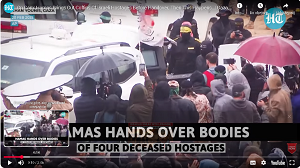
A jednak, gdy myślisz, że nasi wrogowie nie mogą upaść niżej, oni znajdują sposób, by przejść samych siebie. Rytuał przekazania czterech trumien w zeszłym tygodniu był tego przykładem: trumna, w której miały być szczątki Sziri, miała naklejone jej zdjęcie i opis „Aresztowana 7 października”.

“Aresztowana”!? Była 32-letnią matką porwaną z domu z dziewięciomiesięcznym dzieckiem i czteroletnim synem. Nagranie wideo pokazuje przerażenie na jej twarzy; słodki Ariel, ssący smoczek, wygląda na zdezorientowanego. Być może próbuje zrozumieć widok płonących domów i ciał sąsiadów leżących na ziemi. Być może widział, jak zastrzelono ukochanego psa rodziny, Tonto. Rodzice Sziri również zostali zamordowani w swoim domu.

Ukochany Batman Ariela nie przyszedł go uratować. Nikt tego nie zrobił. Jego ojciec zrobił, co mógł, by chronić rodzinę, ale on również został zawleczony do niewoli w Gazie, krwawiąc z ran głowy, które mu zadano. 

Ten odważny i szlachetny człowiek, Jarden Bibas, został zwolniony w wymianie za terrorystów na początku tego miesiąca. W środę jego piękna żona i dwaj zachwycający, uśmiechnięci synowie zostali pochowani w Izraelu. Ceremonia była prywatna, ale cały kraj pogrążył się w żałobie.

Pięcioletni Joav Avital, najlepszy przyjaciel Ariela Bibasa, czekał na powrót swojego towarzysza zabaw do przedszkola. Kiedy jego matka musiała mu wyjaśnić, że Ariel nie wróci, Joav oświadczył: „Moje serce boli… Nie mogę przestać o nim myśleć”.

Miliony z nas wiedzą, co chce powiedzieć. Jeśli twoje serce nie boli, gdy myślisz o Arielu, Kfirze i wszystkich dzieciach zamordowanych przez terrorystów, to je gdzieś zgubiłeś.

Ale wróćmy do rytuałów Hamasu z zeszłego tygodnia: na scenę wyprowadzone palestyńskie dzieci, które gratulowały terrorystom i szydziły z zabitych Żydów. W tle grała radosna muzyka, a na transparentach widniał karykatura (na podobieństwo wampira) Benjamina Netanjahu i napis, że izraelskie rakiety zabiły Lifszyca i rodzinę Bibas.

Raport z sekcji zwłok wykazał coś innego. Terroryści zamordowali niewinnych, rudowłosych chłopców i ich matkę gołymi rękami. Ciała zostały później roztrzaskane, aby ukryć przyczynę śmierci i podsycić palestyńską narrację. (I jest wielu, którzy uwierzyli w to kłamstwo.)

W sobotę sześciu żywych zakładników zostało uwolnionych w kolejnej dziwacznej i upokarzającej ceremonii. Omera Szem-Tova zmuszono do pocałowania swojego porywacza w czoło. 

Palestyńczycy przetrzymywali dwóch z uwolnionych mężczyzn przez ponad 10 lat – Averę Mengistu i Hiszama al-Sajeda. Obaj cierpieli na problemy psychiczne, zanim przekroczyli granicę z Gazą i zostali wzięci do niewoli. Międzynarodowy Komitet Czerwonego Krzyża nie zrobił nic przez dekadę. 

Żadnych wizyt. Żadnej presji, żeby ich uwolnić.

Kiedy al-Sajedowi oszczędzono ceremonii na scenie, niektórzy mówili, że stało się tak, ponieważ był Beduinem, a Hamas szanował jego muzułmańską wiarę. Jego ojciec ma odmienne zdanie. Krytykując Hamas i pytając świat arabski, dlaczego milczał, Szaaban al-Sajed powiedział, że jego syn wrócił jako pusta skorupa, niezdolny do komunikowania się w żadnym języku, i dlatego nie został wystawiony na scenie.

Ale było coś więcej. Kolejny łamiący serce zwrot akcji. W sobotni wieczór, w kolejnym ohydnym czynie Hamasu, ta organizacja terrorystyczna opublikowała nagranie dwóch izraelskich zakładników – Eviatara Davida i Guja Gilboa Dalala – przejeżdżających obok miejsca uwolnienia zakładników i błagających również o uwolnienie, tylko po to, by wrócić do tunelu terroru.

Obaj mężczyźni wyglądali na chudych i bladych, z ciemnymi sińcami pod oczyma. Międzynarodowy Czerwony Krzyż, który był obecny, aby uczestniczyć w „ceremonii uwolnienia”, nie zrobił nic. Jest dobry w tym, żeby nie widzieć izraelskich porwanych.

To jest okrucieństwo i zło, i to jest Hamas. Historie ocalałych, którzy powrócili z niewoli, to opowieści z piekła rodem – celowe głodzenie, deprywacja i maltretowanie; miesiące spędzone w kajdanach w ciemnych tunelach terroru.

Niektórzy jednak upierają się przy moralnej równoważności. Dziennikarz Matthew Kalman zauważył w tym tygodniu, że Jon Donnison z BBC napisał na Twitterze: „Propaganda Hamasu i Izraela przy uwalnianiu zakładników jest dość obrzydliwa”. Donnison później usunął post „ponieważ nie był stosowny” i przeprosił „jeśli kogoś uraził. To nie było moim zamiarem”.

Jaki więc był zamiar reportera, który na początku wojny rozpowszechnił oszczerczą pogłoskę, jakoby Izrael zbombardował szpital Al-Ahli w Strefie Gazy? (Później ustalono, że rakieta została wystrzelona przez terrorystów z Islamskiego Dżihadu, którzy chcieli uderzyć w Izrael, ale rakieta spadła przedwcześnie). Stronnicze doniesienia nie tylko zachęcają terrorystów, ale również przyczyniają się do wzrostu antysemityzmu na świecie.

W zeszłym tygodniu BBC wycofała się z emisji filmu dokumentalnego (po tym jak obejrzały go miliony widzów), który rzekomo przedstawiał codzienne życie w Strefie Gazy oczami dzieci. 

Śledztwo wykazało, że 13-letni narrator filmu „Gaza: How to Survive a Warzone” jest synem wysokiego rangą urzędnika Hamasu. Więcej propagandy – prawdopodobnie kosztem brytyjskiego podatnika. Więcej podżegania, które rozpala wojnę i terror wszędzie.


Terroryzm nadal kwitnie 

Terroryzm wciąż kwitnie. W czwartek wieczorem w rejonie Tel Awiwu eksplodowały trzy autobusy, a w dwóch kolejnych odkryto i rozbrojono bomby. 

Prawdopodobnie miały one eksplodować jednocześnie w zatłoczonych autobusach o godzinie 9 rano w piątek, zamiast eksplodować w pustych autobusach o godzinie 21 w czwartek. 

Ale, jak napisał Herb Keinon z „Jerusalem Post”, „kraj nie może polegać na cudach. Izrael nie może po prostu teraz otrzeć pot z czoła, westchnąć z ulgą z powodu uniknięcia koszmaru i iść dalej. To był atak mający na celu spowodowanie masowych ofiar i musi być traktowany jako taki”.

Oznacza to nasilenie walki z infrastrukturą terrorystyczną w Judei i Samarii, a także z głównym sponsorem światowego terroryzmu: Iranem.

Ogromna frekwencja na pogrzebie Nasrallaha i jego następcy – obaj wyeliminowani przez Izrael w zeszłym roku – pokazuje, że przywódca Hezbollahu nie żyje, ale jego terrorystyczny duch żyje nadal. Seth J. Frantzman z „Jerusalem Post” napisał, że w pogrzebie uczestniczyły delegacje z Iranu, Iraku, kontrolowanego przez Huti Jemenu, Turcji i innych krajów. Był to nie tylko ostatni hołd, ale także terrorystyczny pokaz siły.

Izrael wysłał własną delegację: myśliwce IAF przeleciały nad Bejrutem podczas pogrzebu. Niosły przesłanie, że wrogowie Izraela powinni uważać. Nie możemy sobie pozwolić na wybaczenie i zapomnienie.

To nie jest to, co BBC Arabic chce usłyszeć – ale przesłanie było głośne i wyraźne.


Liat Collins – Urodzona w Wielkiej Brytanii, osiadła w Izraelu w 1979 roku i hebrajskiego uczyła się już w mundurze IDF, studiowała sinologię i stosunki międzynarodowe. Pracowała w redakcji “Jerusalem Post” od 1988 roku. Przez wiele lat kierowała The International Jerusalem Post. Obecnie na emeryturze.


Zawartość publikowanych artykułów i materiałów nie reprezentuje poglądów ani opinii Reunion’68,
ani też webmastera Blogu Reunion’68, chyba ze jest to wyraźnie zaznaczone.
Twoje uwagi, linki, własne artykuły lub wiadomości prześlij na adres:
webmaster@reunion68.com


Federal task force to investigate Jew-hatred at 10 universities

Federal task force to investigate Jew-hatred at 10 universities

Vita Fellig


“There’s nothing that gets a university president’s attention like a call from the Justice Department,” Kenneth L. Marcus, chairman of the Brandeis Center, told JNS.

Leo Terrell, senior counsel to the assistant U.S. attorney general for civil rights, shakes U.S. President Donald Trump’s hand at a reception honoring Black History Month in the East Room of the White House, Feb. 20, 2025. Credit: Molly Riley/White House.

The U.S. Department of Justice announced on Friday that its federal task force to combat Jew-hatred will visit 10 university campuses that have experienced antisemitic incidents since the Hamas-led terrorist attacks in southern Israel on Oct. 7, 2023.

“The task force’s mandate is to bring the full force of the federal government to bear in our effort to eradicate antisemitism, particularly in schools,” stated Leo Terrell, senior counsel to the assistant U.S. attorney general for civil rights and a member of the task force. “These visits are just one of many steps this Administration is taking to deliver on that commitment.”

The federal task force plans to meet with leaders of and impacted students at Columbia University, George Washington University, Harvard University, Johns Hopkins University, New York University, Northwestern University, University of Minnesota, University of Southern California and the University of California’s campuses in Los Angeles (UCLA) and Berkeley.

Kenneth L. Marcus, chairman of the Louis D. Brandeis Center for Human Rights Under Law and a former U.S. assistant secretary of education, told JNS that the visits are likely to have quick impacts.

“The Justice Department has the power to bring original actions against colleges or universities as well as to intervene in pending matters, but they haven’t done much of this in recent years,” he said. “They’ve been particularly quiet about campus antisemitism throughout the Biden administration, which led to criticism of Merrick Garland’s Justice Department.”

“It’s astonishing that the Justice Department was silent for so long, and this is a welcome change,” he told JNS. “Unlike the Office of Civil Rights, the Justice Department rarely gets involved in campus antisemitism matters outside of desegregation, but when they do, it has a disproportionately large impact.”

“There’s nothing that gets a university president’s attention like a call from the Justice Department,” he added. “It has an immediate impact.”

The prospect of a Justice Department task force visit could serve as a warning sign to campuses facing ongoing antisemitism, such as Barnard College—which has a historic relationship with Columbia—prompting the schools to address in a timely fashion, according to Marcus.

“One would hope that institutions like Barnard would respond quickly to these issues now that the Department of Justice is involved,” he said. “It’s astonishing how weak some administrators have been in dealing with these serious problems, and they shouldn’t wait for the DOJ to step in.”

“But that’s what’s been happening,” he said. “Now, those who were unresponsive to Jewish students and organizations will likely get a more forceful response from the Department of Justice than they would have if they had been more proactive.”

Task forces can be about more talk than action, according to Marcus.

“They’re good at press releases but weak on follow-through,” he said. “But this is the Department of Justice bringing investigative power, and I expect it to be more than symbolic.”

Ari Shrage, head of Columbia’s Jewish Alumni Association, told JNS that this action by the Justice Department could be a watershed moment for Jewish college students.

“For the past 18 months, students have broken rules while the university puts out toothless statements instead of punishing students and banning masks,” he said. “Students who simply want to go to class suffer the consequences of the university’s leadership failures.”

“I hope that this and other government actions finally force the university to protect its Jewish students who simply want to go to school,” he added.


Zawartość publikowanych artykułów i materiałów nie reprezentuje poglądów ani opinii Reunion’68,
ani też webmastera Blogu Reunion’68, chyba ze jest to wyraźnie zaznaczone.
Twoje uwagi, linki, własne artykuły lub wiadomości prześlij na adres:
webmaster@reunion68.com


BBC Apologizes for ‘Unacceptable’ Mistakes With Gaza Documentary, Admits Palestinian Interviewees’ Ties to Hamas

BBC Apologizes for ‘Unacceptable’ Mistakes With Gaza Documentary, Admits Palestinian Interviewees’ Ties to Hamas

Shiryn Ghermezian


The BBC logo is seen at the entrance at Broadcasting House, the BBC headquarters in central London. Photo by Vuk Valcic / SOPA Images/Sipa USA via Reuters Connect

The British Broadcasting Corporation (BBC) on Thursday apologized for “unacceptable” and “serious flaws” during the filming of a documentary about Palestinian children living in the Gaza Strip.

The admission came after the BBC removed the documentary, titled “Gaza: How to Survive a Warzone,” from its iPlayer streaming platform on Feb. 21 when it was discovered that the film’s 13-year-old Palestinian narrator (now 14), Abdullah Al-Yazouri, was the son of a senior Hamas official.

The documentary was also taken down after it was revealed that two of the cameramen who worked on the BBC documentary had voiced support for Hamas, and following revelations about inaccurate translations in the film that masked the antisemitism of some participants. Examples of the latter issue include mistranslations in the film that refer to Hamas terrorists as an “army” and “jihad against the Jews” as “resistance against the Israelis,” according to Campaign Against Antisemitism (CAA), a British volunteer-based charity. The Telegraph cited at least five instances in the film where the Arabic word for “Jew”— “Yahud” or “Yahudy” — was mistranslated as “Israel” or “Israeli forces,” or removed altogether.

The BBC has also now admitted that licensing fee payments were given to the family of Al-Yazouri, who is the son of Hamas’s Deputy Minister of Agriculture Dr. Ayman Al-Yazouri. Pro-Israel researcher David Collier said the father and son come from the same family as Hamas founder Ibrahim Al-Yazouri. Hamas is designated as a terrorist organization by both the United Kingdom and United States.

Deborah Turness, the CEO of BBC News and Current Affairs, sent an e-mail to staff on Thursday that included a statement about the documentary, remarks which were publicly shared on Friday by a BBC spokesperson.

In the statement, the BBC said it takes complete editorial responsibility for the film and admitted that the corporation and Hoyo Films, the production company behind the documentary, have made “unacceptable” flaws in the making of the documentary. “BBC News takes full responsibility for these and the impact that these have had on the Corporation’s reputation. We apologize for this.”

The spokesperson added that the BBC was not informed in advance by Hoyo Films about Abdullah’s family connection to Hamas.

“During the production process, the independent production company was asked in writing a number of times by the BBC about any potential connections he and his family might have with Hamas,” the corporation explained. “Since transmission, they have acknowledged that they knew that the boy’s father was a deputy agriculture minister in the Hamas government; they have also acknowledged that they never told the BBC this fact. It was then the BBC’s own failing that we did not uncover that fact and the documentary was aired.”

Hoyo Films told the corporation that it paid Abdullah’s mother “a limited sum of money” for narrating the film by way of his sister’s bank account, according to the BBC. Hoyo Films “assured BBC” no payments were given to Hamas members or its affiliates “either directly, in kind, or as a gift,” and the corporation is “seeking additional assurance” about the film’s budget. The BBC said it will initiate a full audit of the film’s expenses and is asking Hoyo Films for financial accounts to help with the audit.

The BBC said the controversy surrounding the documentary had “damaged” public trust in the corporation’s journalism, and that “the processes and execution of this program fell short of our expectations.” The BBC also has “no plans to broadcast the program again in its current form or return it to iPlayer.” It added that it launched a review into the film, an initiative that the BBC Board discussed on Thursday.

Hoyo Films said it is working with the BBC to “help understand where mistakes have been made.” The production company added, “We feel this remains an important story to tell, and that our contributors – who have no say in the war – should have their voices heard.”

A separate statement from the BBC Board added, “The subject matter of the documentary was clearly a legitimate area to explore, but nothing is more important than trust and transparency in our journalism. While the board appreciates that mistakes can be made, the mistakes here are significant and damaging to the BBC.”

The CAA said on Friday the grave errors carried out by the BBC in connection to the documentary should result in resignations and a police investigation. The charity also called for an independent investigation into bias at the BBC and said pending the results of the investigation, the license fee should be suspended to stop additional funds from going to Abdullah’s family, and potentially Hamas. “Hundreds of people are contacting us telling us that they refuse to pay the license fee until they can be sure that the BBC is trustworthy,” the charity said.

A spokesperson for the CAA called BBC “a national treasure [that] has become a national embarrassment.”

“The BBC has now admitted that license fee funds were paid to the family of a senior Hamas official. It has not yet been able to rule out that further payments to Hamas were made as it continues to investigate where hundreds of thousands of pounds went,” the spokesperson noted. “The BBC’s statement is an exercise in desperate damage control and shows why an internal review is no substitute for an independent investigation into this documentary and the wider bias at the BBC that allowed it to be made and aired. Clearly those responsible must lose their jobs.”

“It is unconscionable that the British public should have to pay a license fee to an organization that gives that money to proscribed terrorists,” the spokesperson added. “It represents a shocking double standard in our law. Pending an independent investigation, the license fee must be suspended.”

During a press conference on Thursday, UK Prime Minister Keir Starmer said the secretary of state has had a meeting with the BBC regarding the documentary. On Friday, British Culture Secretary Lisa Nandy said she was going to have an “urgent meeting” with BBC Chairman Samir Shah that same day.

“I want assurances that no stone will be left unturned by the fact-finding review now commissioned by the BBC’s director general,” Nandy said. “This review must be comprehensive, rigorous, and get to the bottom of exactly what has happened in this case. It is critical for trust in the BBC that this review happens quickly, and that appropriate action is taken on its findings.”


Zawartość publikowanych artykułów i materiałów nie reprezentuje poglądów ani opinii Reunion’68,
ani też webmastera Blogu Reunion’68, chyba ze jest to wyraźnie zaznaczone.
Twoje uwagi, linki, własne artykuły lub wiadomości prześlij na adres:
webmaster@reunion68.com


Tajemnica popularności sprawy palestyńskiej

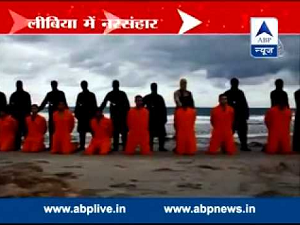
Terroryści Państwa Islamskiego z dumą pokazywali obcinanie głów 21 chrześcijanom w Libii 15 lutego 2015 roku. (Źródło zdjęcia: zrzut z ekranu wideo.)


Tajemnica popularności sprawy palestyńskiej


Andrzej Koraszewski


Barbarzyństwo. Obcinanie głów, gwałty, mordowanie dzieci, podpalenia, porwania, sadyzm, palenie kościołów, nawracanie mieczem, niewolnictwo i handel kobietami. Islamskie Państwo Iraku i Syrii (ISIS), Hamas, Hezbollah, Huti, Al Kaida, talibowie, Boko Haram. To garść tych, o których mogłeś słyszeć, są jeszcze dziesiątki innych, a wszystkie łączą te same metody, ten sam okrzyk Allahu Akbar, to samo żądanie podporządkowania wszystkich prawu szariatu. Precz z muzyką, precz z nauką, precz z demokracją. Islam jest rozwiązaniem. Czasem się łączą, częściej się spierają, mordują się wzajemnie, konkurują o to, kto jest bardziej radykalny, kto bardziej barbarzyński.

Ameryka jest Wielkim Szatanem. To z Ameryki płynie najgorsze zepsucie. Wszyscy niewierni są źli, chociaż niektórzy mogą się przydać jako chwilowi sojusznicy, zabije się ich później. Izrael jest Małym Szatanem. Mały, bo pogardzany, Mały, bo to ledwie widoczna plamka na mapie i otacza go muzułmański ocean, Mały, bo dopiero po likwidacji Małego Szatana rozpocznie się prawdziwa walka z Wielkim Szatanem.

Amerykański ekspert, Michael Doran, z Hudson Institute stanął przed pytaniem dlaczego świat patrzył z odrazą na ISIS, dlaczego Zachód zawiązał koalicję (z udziałem Rosji) i podjął z nim walkę, a Hamas chronił, karmił i wspierał mimo, że te grupy łączy ta sama barbarzyńska ideologia?

No tak, ISIS walczył z innymi muzułmanami, z Kurdami, z Jazydami, z chrześcijanami, ustanowił kalifat. Hamas, wywodzący się z Bractwa Muzułmańskiego (które też dąży do odbudowy islamskiego kalifatu), formułuje swoje cele odrobinę inaczej. Jego priorytetem jest walka z Żydami do dnia Sądu Ostatecznego, a bardziej konkretnie do ostatecznej likwidacji Izraela.

Michael Doran uważa, że administracja Bidena popełniła fundamentalny błąd, że ta wojna na Bliskim Wschodzie nigdy nie była wojną Gazy z Izraelem, ani Izraela z Gazą. To jest wojna Iranu z Zachodem.

Czy to znaczy, że Hamas atakując izraelskie skupiska ludności 7 października 2023  roku działał na rozkaz Teheranu? Zdaniem Dorana (i nie tylko jego), zdecydowanie tak, chociaż Irańczycy mogli nie być poinformowani o dacie ataku. (Sinwar mógł mieć tu swoje kalkulacje.) Tak czy inaczej, znakomity ekspert jest przekonany, że gdyby administracja Bidena od początku ogłosiła, że to wojna Islamskiej Republiki Iranu z Zachodem i sama wojna wyglądałaby inaczej, i reakcje świata byłyby inne.

To brzmi rozsądnie, ale rozumowanie ma kilka wad. Pierwszą i największą wadą jest to, że mamy tu krytykę wydarzeń, które już miały miejsce, więc dyskusja jest akademicka. Druga, że wojna propagandowa wyglądałaby prawdopodobnie identycznie. Jak podkreślał w tej rozmowie Eylon Levy, centrum propagandowe Hamasu jest w Katarze. Tak więc, aczkolwiek to Iran jest dziś głównym organizatorem islamskiej wojny z Zachodem i jego wartościami, sunnicki Katar, (podobnie jak Hamas i Turcja powiązany z Bractwem Muzułmańskim), nie tylko finansuje Hamas, nie tylko gości jego przywódców, ale jest centrum kierowanej na cały świat islamistycznej propagandy, której zwornikiem jest „sprawa palestyńska”.         

Katar zainwestował wiele miliardów dolarów w amerykańskie (i nie tylko amerykańskie) uniwersytety. Ma na swojej liście płac wielu zachodnich  dziennikarzy i polityków, nadająca z Doha Al Dżazira traktowana jest przez media zachodnie nie jak machina czysto propagandowa, ale jak wiarogodne źródło informacji.

W tej sytuacji niezależnie jak definiowałby tę wojnę Biały Dom, jej prezentacja w mediach i na uniwersytetach byłaby najprawdopodobniej identyczna. Dygnitarze Hamasu powtarzają dziś z dumą, że przywrócili i wzmocnili zarówno w świecie islamskim, jak i wśród niewiernych „sprawę palestyńską”. Zachodni eksperci formułują to inaczej, ale też przyznają, że w wojnie propagandowej Zachód przegrywa (z walną pomocą zachodniej lewicy).

Jak ta „sprawa palestyńska” jest prezentowana? Katar nie musi inwestować w takich miejscach jak Polska. Propaganda Al Dżaziry dociera do nas przez ocean, prezentowana jest przez wolontariuszy w wydestylowanej, często wręcz karykaturalnej formie.

Pani doktor Ewa Górska (pracownica naukowa Digital Justice Center we Wrocławiu), tak prezentuje „sprawę palestyńską”:

„Kwestia palestyńska to nie problem ‘bliskowschodni’, ale od samego początku europejski. Ma swoje korzenie w XIX-wiecznej Europie Środkowo-Wschodniej, gdzie splotły się idee państwa narodowego, imperializmu, rasizmu i antysemityzmu. Pogromy oraz marginalizacja skłoniły wielu Żydów do zwrócenia się ku idei migracji do ziemi biblijnej.”

Syjonizm to ruch nacjonalistyczny i kolonialny – stwierdza polska „uczona”, powtarzając to, co już słyszeliśmy setki razy ze studia w Doha. Zauważa pani doktor, że to nie jest tradycyjny kolonializm, ale kolonializm osadniczy, który wysiedla i zasiedla, zupełnie jak ci osadnicy w Ameryce czy Australii. „Uczona” nie wspomina o zasadniczej różnicy polegającej na tym, że Żydzi mieszkali nieprzerwanie w tej ziemi od tysięcy lat, (chociaż czasem ze znanych przyczyn ich liczebność spadała do niewielkich rozmiarów), że z tej ziemi byli wyganiani, że żaden „kolonializm osadniczy” nie znajduje w ziemi śladów swoich przodków, że „rdzenna ludność” arabska cudownie rozmnożyła się w tym samym czasie, w którym w wyniku najpierw osłabienia, a potem upadku imperium osmańskiego, do Eretz Israel najpierw zaczęli wracać Żydzi jemeńscy, a następnie europejscy. (Nawet jeśli Ewa Górska coś czytała o islamskim antyjudaizmie, to bardzo stanowczo odmawia przyjęcia go do swojej świadomości.)

Wraca też doktor Górska do ulubionej tezy Mahmuda Abbasa, że Izrael został stworzony, bo europejscy politycy chcieli się pozbyć paskudnych Żydów ze swoich krajów. Co więcej, Żydzi wcale tak bardzo nie tęsknili do ziemi biblijnej, bo rozważali inne możliwości. No ale jak im ci Brytyjczycy ułatwili Deklaracją Balfoura, to zaczęli kupować „palestyńską” ziemię, osadzać się i wypychać rdzennych Palestyńczyków. Głównym żydowskim narzędziem było przeobrażanie przyrody, sadzenie lasów sosnowych, „przejmowanie władzy nad przestrzenią”. Jednocześnie Żydzi „intensywnie rozwijali rolnictwo, żeby udowodnić Brytyjczykom, że Palestyna może wyżywić więcej żydowskich imigrantów.”          

Ta komiczna gimnastyka intelektualna ciągnie się strona za stroną. „Uczona” stara się nie wiedzieć, że przybysze kupowali malaryczne moczary i jałowe piachy (bo głównie to im oferowano), a sprzedający śmiali się w kułak z głupich Żydów. Nie, nie chcieli niczego udowodnić Brytyjczykom swoim rolnictwem, chcieli przetrwać we wrogim środowisku przyrody i ludzi. (Prawdą jest, że zmieniali malaryczne moczary i pustynie  w kwitnące  ziemie, co przyciągało masy rdzennych Arabów z sąsiednich wynędzniałych krajów.)

Manewry i zabawy językowe specjalistki z centrum digitalnej sprawiedliwości sporo pokazują. Jak niektórzy pamiętają w 1921 roku Mandat Palestyński został zredukowany o 78 procent,a jego wschodnia część za rzeką Jordan została przeznaczona na arabską Palestynę, czyli Transjordanię. Ewa Górska przywołuje spis ludności pomniejszonego Mandatu Palestyńskiego z 1922 roku (pomija słowo „mandat” i pisze o „Palestynie”), gdzie według tego spisu mieszkało wówczas 760 tysięcy osób, z czego tylko 11 procent wyznawało judaizm. Jej „Palestyna” to obszar „od rzeki do morza” czyli obejmujący Judeę i Samarię. W wyniku „nakby” (przegranej wojny eksterminacyjnej, w której pięć arabskich armii obiecywało oczyścić Izrael z Żydów), tereny dzisiejszego Izraela opuściło 750 do 800 tysięcy Arabów, w Izraelu pozostało ponad 100 tysięcy, znaczna część tych, którzy wyjechali w oczekiwaniu na oczyszczenie Izraela z Żydów udała się do Judei i Samarii, okupowanej przez uzbrojone i dowodzone przez Brytyjczyków wojska jordańskie. Skąd się wzięło w Mandacie tylu Arabów? Kto ich zachęcał do wyjazdu na krótki okres czasu, jak wielu Arabów zostało rzeczywiście wypędzonych ze swoich domów i dlaczego?

Ani na te pytania, ani na wiele innych digitalna sprawiedliwość nie ma odpowiedzi.    

Wypada zatem powrócić do percepcji barbarzyństwa w świadomości społeczeństw demokratycznego świata, czyli dlaczego barbarzyństwo talibów i ISIS wywołuje, jeśli nie stanowcze potępienie, to przynajmniej głęboką niechęć lub brak zainteresowania, a barbarzyństwo „Palestyńczyków” wywołuje empatię i gniew, że Izraelczycy utrudniają im mordowanie Żydów? Ideologia jest praktyczne ta sama, to samo zamiłowanie do sadystycznych mordów, ten sam apokaliptyczny patriarchalizm, ta sama brutalna dyskryminacja kobiet, ta sama nietolerancyjność wobec niewiernych i ten sam cel ostateczny – podporządkowania świata prawu szariatu i walki (jak to określa konstytucja Iranu), do chwili kiedy okrzyk „nie ma boga nad Allaha” będzie rozbrzmiewał na całym świecie.    

23 lutego 2025 r. sekretarz generalny libańskiego Hezbollahu, szejk Na’im Kassem, wygłosił 34-minutowe, nagrane wcześniej przemówienie podczas masowego pogrzebu dwóch przywódców Hezbollahu, Hassana Nasrallaha i Haszema Safi Al-Dina, którzy zostali zlikwidowani przez Izrael odpowiednio 27 września 2024 r. i 4 października 2024 r., na południowych przedmieściach Bejrutu. 

Sekretarz generalny Hezbollahu oświadczył, że Hezbollah „stawił czoła ‘izraelskiemu’ tworowi i stojącemu za nim największemu tyranowi, Ameryce, która prowadziła wojnę z Gazą, Palestyną, Libanem, Irakiem i Iranem… Presja na ruch oporu, jego bojowników i środowisko była bezprecedensowa, ale taki sam był odpowiadający temu poziom odporności”.

Ten naczelnik irańskiej armii zastępczej w Libanie najwyraźniej zgadza się z oceną amerykańskiego eksperta Michaela Dorana i dobrze wie, że nie jest to wojna Izraela z Hamasem, ani Hamasu z Izraelem, ale wojna islamu z Zachodem, której daleko do jej zakończenia. Wynik ciągu dalszego zależy nie tylko od tego, na ile Izrael zdoła stawić czoła temu zdeklarowanemu wrogowi Zachodu, a na ile Zachód będzie mu krępował ręce, ale również od tego, na ile uda się zatrzymać propagandową ofensywę szyickiego Teheranu i sunnickiego Bractwa Muzułmańskiego. „Sprawa palestyńska” jest tu kluczowa, bowiem przez przeciwstawienie potężnych „żydowskich kolonialistów”, bezbronnym i niewinnym „Palestyńczykom” daje się zgrabnie ukryć i głównych aktorów, i bezmiar barbarzyństwa śmiertelnego wroga.  

Szyicki Iran i sunnickie państwa oraz grupy dżihadystyczne konkurują ze sobą, kto bardziej walczy o „sprawę palestyńską”. Nieświadomi tej konkurencji niektórzy „ludzie Zachodu”, w imię nowoczesnych ideologii dołączyli do tej walki o „prawa człowieka”, których głównym symbolem stała się „sprawa palestyńska”, i w poczuciu własnej szlachetności mogą dziś dawać upust mrocznym uczuciom wchłoniętym przez wychowanie w kulturze, która przez dwa tysiąclecia była silnie antysemicka.

Edmund Burke (1729-1775) uważany za ojca brytyjskiego konserwatyzmu pisał, że „Polityka powinna być dostosowana nie do ludzkich rozumowań, ale do natury ludzkiej, której rozum jest tylko częścią i wcale nie największą częścią”. Doskonale o tym wiedzieli radzieccy propagandyści (a ich propaganda znakomicie przetrwała rozpad ZSRR), doskonale wiedzą o tym propagandyści w Katarze i zacierają ręce, kiedy widzą, że dziś kariery „naukowe” na zachodnich uniwersytetach najłatwiej i najtaniej można zrobić korzystając z obfitych źródeł Al Dżaziry. Recepta prosta, pamiętaj o starych przesądach i antagonizmach, używaj pojęć, które już mają silną negatywną konotację, apeluj do uczuć, a nie do rozumu, bo mówisz do milionów, a nie do wybranych. Nie zgub „sprawy palestyńskiej”, to trampolina digitalnej sprawiedliwości.Czucie i wiara silniej mówią do konsumentów „informacji” niż mędrca, szkiełko i oko.


Zawartość publikowanych artykułów i materiałów nie reprezentuje poglądów ani opinii Reunion’68,
ani też webmastera Blogu Reunion’68, chyba ze jest to wyraźnie zaznaczone.
Twoje uwagi, linki, własne artykuły lub wiadomości prześlij na adres:
webmaster@reunion68.com