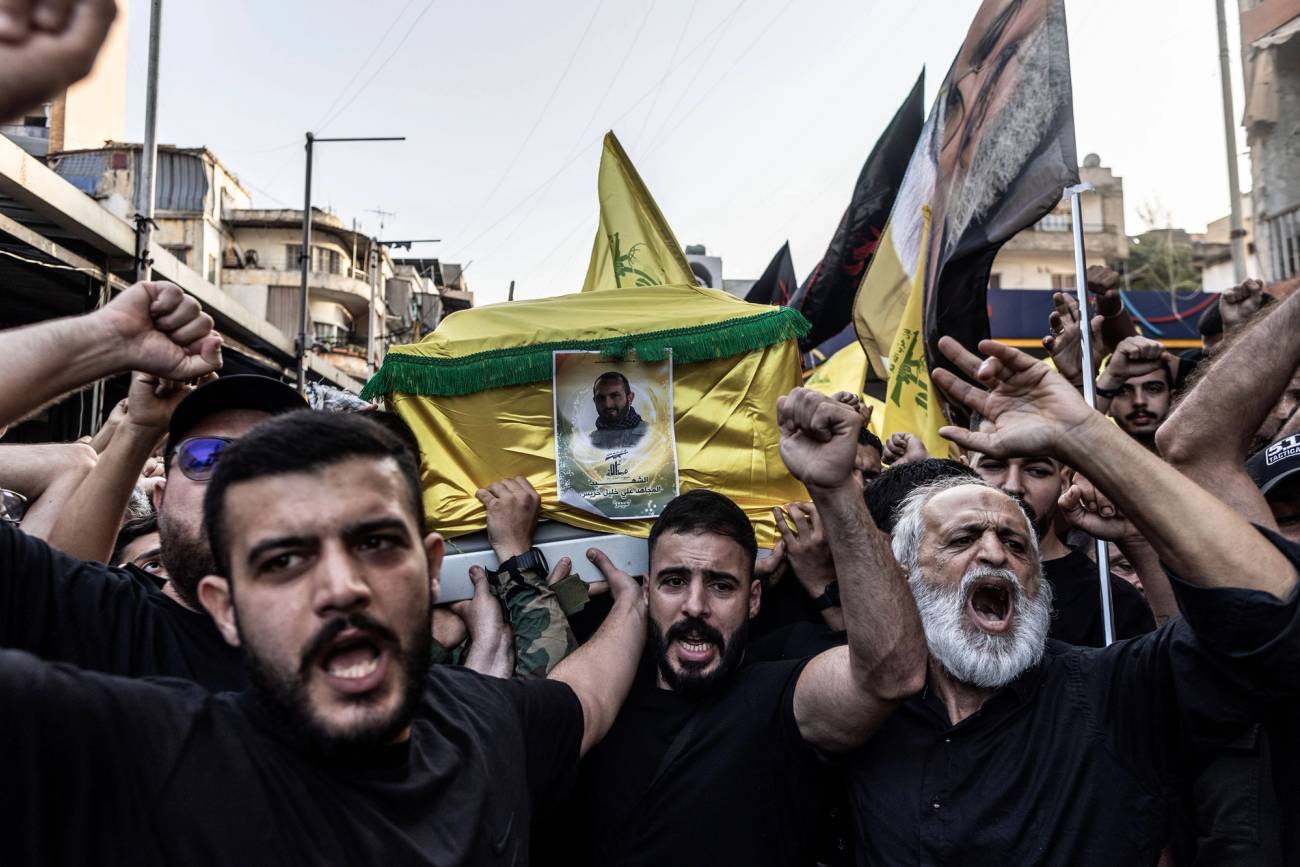
Responding to Hezbollah’s Strategic Offensive


Responding to Hezbollah’s Strategic Offensive

Caroline Glick


.

Hezbollah is burning a swathe through northern Israel. The nature reserves, grazing land, fields and orchards are burning to the ground. Military bases, including several strategic assets, are incurring major damage. More than 1,000 homes have been destroyed. Businesses are bankrupt. And some 80,000 Israelis are living in hotels with no sense of when they may be able to go home.

Hezbollah has significantly increased the pace and lethality of its attacks on the Upper and Western Galilee, and the Golan Heights in recent weeks, as well as extended its attacks to the Mount Carmel area and the Jezreel Valley.

Haifa, Acre and Tiberias have all been subjected to missile, drone and rocket assaults. During Shavuot on Wednesday, Hezbollah shot more than 200 projectiles at Israel. On Thursday, more than 100 more continued and expanded the fires, destruction and mayhem.

The Israel Defense Forces claim that Hezbollah’s actions haven’t broken the mold of tit-for-tat assaults that Hezbollah and Israel have been exchanging for the past eight months. On Tuesday night, the Israeli Air Force carried out an airstrike on the Nasser Unit of Hezbollah’s southern command. The Nasser unit is a division-sized formation responsible for Hezbollah’s operations along the border with Israel.

The unit’s commander, Taleb Sami Abdullah, and three of his senior staff were killed in the raid. The IDF’s claim that Hezbollah’s massive missile, drone and rocket barrages on Wednesday and Thursday, and into Friday, are a tit-for-tat supports Hezbollah’s line that its massive aggression is a legitimate reaction to Abdullah’s assassination.

The IDF’s claim is, to be sure, self-defeating. But that’s not the main problem.

The main problem with the IDF’s assertion is that it ignores the strategic logic of Hezbollah’s operations. Hezbollah isn’t attacking in response to any specific Israeli operation. It is attacking to achieve its strategic goals. Hezbollah isn’t simply abusive; it is waging a strategic war with clear long-term and intermediate strategic objectives.

Hezbollah began shelling Israel with drones, anti-tank rockets and missiles on Oct. 8. It has maintained and slowly escalated its attacks since then. Far from reactive, Hezbollah’s moves are ends-driven. From one assault to the next, Hezbollah learns more about penetrating Israel’s defenses. Its escalatory cycle is a function of its learning curve.

Enabling Hezbollah’s control over Lebanon

What are the goals that Hezbollah uses its projectile campaign to achieve? Hezbollah’s ultimate goal is that of its Iranian overlord: Israel’s annihilation. But it has intermediate goals on the road to final victory. The first is to achieve operational control over northern Israel. Such control, Hezbollah and Iran assess, will force Israel to capitulate on the strategic battlefield. If Hezbollah’s anti-tank rockets, drones and missiles are able to cancel Israel’s ability to defend northern Israel, then Israel will be forced to capitulate on the issue of formal sovereignty at the negotiating table in order to achieve “quiet.”

The specific “deal” Hezbollah seeks involves Israel’s formal surrender of its sovereignty over Mount Dov, a vast area in the Golan Heights that controls all of northern Israel, including the Gulf of Haifa.

Hezbollah is able to advance its operations because it is protected by a series of actors both within Lebanon and in the international arena. As Lebanon affairs expert Tony Badran has argued convincingly for years, Hezbollah is Iran’s Lebanese foreign legion. It is also Lebanon itself.

Hezbollah controls all aspects of politics and security affairs in the country and much of the economy. Lebanon’s official bodies, its state institutions (including the Lebanese Armed Forces), the parliament, the Central Bank and the government are all fig leaves whose purpose is to hide this basic truth. UNIFIL, the U.N. military force mandated to keep Hezbollah away from the border with Israel, operates at Hezbollah’s pleasure. Its personnel live (and die) at Hezbollah’s pleasure. As a result, not only is the agency incapable of carrying out its mandate, but like the LAF, UNIFIL’s continued presence along the border shields Hezbollah forces and assets from the IDF.

Under Hezbollah’s control, Lebanon is not an actual country. It is Iran’s forward military base against Israel that happens to have 5.5 million residents. The job of the residents is to deny that they live in an Iranian missile base.

The United Nations, the United States and the European Union are perfectly capable of recognizing the basic truth. But they obstinately refuse to do so. Instead, they enable Hezbollah’s continued control by joining the Lebanese in maintaining the fiction that Lebanon is still a country with state institutions that operate independently of Hezbollah, are in a position to oppose Hezbollah’s actions, and therefore, worthy of U.S. and international monetary and military support. That position allows them to play-act at diplomacy and mediate Israeli surrender deals to Hezbollah’s genocidal aggression while avoiding direct confrontations with either Hezbollah or Iran themselves.

In the face of Hezbollah’s assaults and the protection it enjoys from supporters both within Lebanon and on the world stage, Israel is left with a dilemma. Permitting Hezbollah to achieve its goals would be national suicide. But in order to block Hezbollah from achieving its goals, Israel will once again need to fight a major war against another enemy protected by the international system.

There is also the military challenge. For the past generation, successive IDF General Staffs have embraced the notion that the era of big conventional wars is over. Based on this false, but popular assessment, for 20 years, the General Staff slashed Israel’s ground forces and placed most of Israel’s resources in the air force and other technology-driven units. These forces were directed not towards developing plans to defeat Hamas and Hezbollah, but towards attacking Iran’s nuclear installations, preferably as part of a U.S.-led force. The notion that Israel could gut its strategic independence in exchange for U.S. strategic guarantees dominated Israel’s national security discourse.

However, since Oct. 7, Israel has found itself in a major conventional war on seven fronts: Gaza, Lebanon, Judea and Samaria, the Red Sea, Iran and Iraq/Syria.

While Israel prepared for the war it wanted to fight—a low-cost, high-tech war fought mainly from air-conditioned operations centers by remote control—its enemies prepared for the war they wanted to fight. Namely, that is their war to eliminate Israel. Israel trained hackers, and Hamas and Hezbollah trained jihadist terror armies of murderers, rapists and squads to launch missiles, drones and rockets.

Fighting these armies with Israel’s high-tech force is proving to be extremely difficult. Israel’s assumption of U.S. support has also taken a major hit. To be sure, Washington is willing to support Israel’s efforts to defend itself from aggression along the seven fronts manned by Iran and its proxies. But it opposes Israeli offensive action and has worked actively to undermine Israel’s ability to carry out prolonged offensive operations. Among other things, the United States refuses to share satellite and other intelligence related to offensive objectives, and is placing embargoes or slowwalking the transfer of offensive munitions for Israel’s ground and air forces.

End Hezbollah’s reign of terror

Given the strategic imperative of defeating Hezbollah and preventing it from achieving operational or strategic control over northern Israel, and in light of Israel’s diplomatic weakness relative to Hezbollah (and Hamas) and its operational weaknesses, the question is how should Israel proceed?

The answer begins with the strategic imperative. Israel must end Hezbollah’s reign of terror over northern Israel. It must degrade Hezbollah’s military capacity to the point that Hezbollah is no longer able to strike Israel at will. To achieve this goal, Israel needs to take control over the Lebanese side of the border, destroy Hezbollah’s forces south of the Litani River and then remain in place in Southern Lebanon for the foreseeable future.

Such a goal is, of course, easy to declare. But it is far more difficult to achieve. Realistically, to accomplish this objective, Israel needs to vastly increase the size of its standing and reserve forces, and possess the military-industrial capacity to arm its forces independently. Israel is already working to achieve both of these objectives. However, industrial independence and the enlargement of military forces take time to achieve. And time is of the essence. The residents of the north now scattered in hotels throughout the country cannot be expected to wait years to return to their homes.

Then-prime minister Ehud Barak’s decision to surrender the security zone in Southern Lebanon to Hezbollah in May 2000 is the reason that the terror organization was able to build its forces to the point where it poses an existential threat to Israel’s survival. By committing itself to reversing his move, Jerusalem will place itself on the road to victory. The government will steel the public for the road ahead, and provide the General Staff and lower echelons of the IDF with the required guidance for developing and carrying out tactical missions that will advance Israel’s ultimate goal.

If Israel invades Lebanon with a corps-sized force, it will unify the U.S.-led international community to rally against it. But if it moves slowly, with discrete battles against specific targets, Israel can remain below the radar screens of hostile Western capitals and global institutions. On the surface, Israel can present its operations as mere responses to Hezbollah’s strikes. But just as Hezbollah uses every missile assault as a means to probe and learn how to penetrate Israel’s defenses to advance its strategic goal, so too, by attaching every action to the strategic objective of restoring the security zone in Southern Lebanon, Israel’s operations will be paving stones on the road to strategic victory.

Each move will make the north safer. And each move will undermine Hezbollah’s goals. By acting slowly and deliberately, Israel can learn as it goes, adapting its operations to the conditions that it discovers on the ground, expanding them when political realities allow and constraining them when those realities are more daunting.

To date, most of Israel’s actions in Lebanon have involved killing Hezbollah military commanders like Abdullah. Yet as the Alma Research and Education Center, which specializes in Hezbollah’s operations and capabilities, noted in an analysis of the operation and others like it: “Everyone has a successor.”

“An attempt to remove top officials can only be a supporting endeavor. It is vital and right, but ultimately it is a tactical endeavor with no strategic significance.”

A slowly escalating operation in Lebanon directed towards the strategic aim of ending Hezbollah’s assault on northern Israel and securing Israel’s sovereignty will enable Israel to gradually escalate its operations as its forces are readied and military-industrial independence expanded. It will provide a means to avoid the worst of the international calumny that Israel will surely suffer in a mass invasion while moving Israel steadily towards a strategic goal capable of securing Israel’s vital interests—and survival.


Zawartość publikowanych artykułów i materiałów nie reprezentuje poglądów ani opinii Reunion’68,
ani też webmastera Blogu Reunion’68, chyba ze jest to wyraźnie zaznaczone.
Twoje uwagi, linki, własne artykuły lub wiadomości prześlij na adres:
webmaster@reunion68.com


Knesset votes against the establishment of a Palestinian state west of the Jordan river

Knesset votes against the establishment of a Palestinian state west of the Jordan river

JERUSALEM POST STAFF / ELIAV BREUER


The proposal calls the establishment of a Palestinian state in the aftermath of October 7 “a reward for terrorism” and that such a reward would only encourage Hamas.

.
Ze’ev Elkin is seen speaking at the Environmental Protection Ministry in Jerusalem, on May 18, 2020. / (photo credit: YONATAN SINDEL/FLASH90)

The Knesset passed a proposal saying that it was opposed to the establishment of a Palestinian state west of the Jordan River late on Wednesday night. The vote passed with 68 in favor of the proposal and 9 against.

The move was put forward by the New Hope-United Right party MK Ze’ev Elkin and was supported by Yisrael Beytenu and The Land of Israel lobby, which has members from across the party spectrum, such as Likud, Shas, and National Unity Party.

The proposal would determine the Knesset’s position on the establishment of a Palestinian state west of the Jordan River.

It says that the establishment of a Palestinian state in “the heart of the Land of Israel” would pose an “existential danger to the State of Israel and its citizens.”

It also says that this would perpetuate the Israeli-Palestinian conflict and would further destabilize the region.

Hamas parade in Gaza (credit: REUTERS/Ahmed Jadallah AJ/TZ)

The proposal also says that a Palestinian state would quickly be taken over by Hamas, which would then use Palestine to launch attacks on Israel.

It calls the establishment of a Palestinian state in the aftermath of October 7 “a reward for terrorism” and that such a reward would only encourage Hamas and other Jihadist groups, who would use it as a prelude to taking over the Middle East.

“We expect members of the Knesset to actively support the proposed resolution, which is intended to express the overwhelming opposition that exists in the people to the establishment of a Palestinian state that would endanger the security of Israel and its future and which is intended to be a step towards its destruction. A broad stance and a clear decision by the Knesset will prove to the international community that pressures to impose a Palestinian state on Israel will be futile,” New Hope MK Gideon Sa’ar said.

Cross-party consensus

Notably, National Unity chairman MK Benny Gantz supported the proposal alongside three other members of his party, which is considered centrist. The three were MKs Michael Biton, Pnina Tameno-Shete, and Chili Tropper.

Gantz said after the vote, “National Unity is committed in any future political scenario, as long as it exists, to preserve the Jewish and democratic identity of the State of Israel, and to stand up for its historical right and security interests.”

The vote does not have legal significance, and is declaratory. However, it came at a sensitive time, just ahead of Netanyahu’s trip to the US, and ahead of an upcoming opinion from the International  Court of Justice over the legality of Israel’s control over the West Bank.

The measure was intended as a way to apply pressure on Netanyahu, since he is likely to face opposite pressure from US officials on a hostage deal that could include future discussions of Palestinian sovereignty.

Netanyahu himself was not present at the vote.

The vote was also notable since Netanyahu blocked a similar measure in February and chose instead to vote on a declaration that Israel opposed “unilateral” Palestinian statehood but did not oppose Palestinian statehood categorically.

Members of the New Hope-United Right Party, Likud, Shas, National Unity Party, United Torah Judaism, Otzma Yehudit, Yisrael Beytenu, and Religious Zionism Party have signed the proposal, although several have requested that their signatures be withdrawn.


Zawartość publikowanych artykułów i materiałów nie reprezentuje poglądów ani opinii Reunion’68,
ani też webmastera Blogu Reunion’68, chyba ze jest to wyraźnie zaznaczone.
Twoje uwagi, linki, własne artykuły lub wiadomości prześlij na adres:
webmaster@reunion68.com


SYSTEM PAMIĘCI

fot. Tomasz Pasternak


SYSTEM PAMIĘCI

KATARZYNA TÓRZ


Public Movement zdemaskowało konwencje społeczne towarzyszące zaangażowaniu. To, co dzieje się w naszych głowach, jest równie ważne jak wielka polityka

Czy przechodząc przez Muranów, można uwierzyć, że kiedyś (w czasach, które pamiętają jeszcze nasi dziadkowie) mieszkali tu – w nie-tym pejzażu i w nie-tej rzeczywistości – zupełnie inni ludzie?

Ten kwartał Warszawy wciąż istnieje, ale na nowo, z inną twarzą i sercem – jakby obumarłym. Przebywa w ukryciu, kipi od podskórnych, stłumionych energii – zapomnianych historii osobistych i spektakularnych bohaterskich czynów, po których pozostały skonwencjonalizowane ślady – tablice wyliczające ilość poległych lub zaaranżowane do celów refleksyjnych zakątki.

Performerzy z Public Movement wzięli ten kontekst pod uwagę na dwa sposoby. Po pierwsze – całkowicie mu się (p)oddali, respektując stacje tej swoistej drogi po męczeństwie getta, którą stale podążają izraelskie wycieczki. Po drugie – podjęli próbę dekonstrukcji tej sztucznej, narzuconej przez system pamięci warstwy. Posługując się pozornie prostymi, amatorskimi narzędziami – dramaturgią podstawowego ruchu, popowego beatu i reżyserowania tłumem – przedzierali się przez palimpsest materii przemilczanej, wypartej i spychanej w pustkę nieuwagi. Był to jednak proces dyskretny i na tyle nieoczywisty, że pozostawiał uczestnikowi-widzowi przestrzeń na własne przeżycie i decyzję o zaangażowaniu.

Niespieszny pochód przecinał ulice Muranowa, niebudzące trwogi w tych, którzy nie wiedzą lub zapomnieli o ich historii: plac Umszlag, bunkier Anielewicza, ulica Miła… W kolejnych punktach-przystankach Public Movement próbowało dotykać stref niewypowiedzianych lub przegadanych jak w heideggerowskiej Gerede (czczej gadaninie).

fot. Mateusz Bala

Izraelscy artyści ubrani w białe spódniczki/spodnie, tenisówki, kurtki – wyglądali trochę jak młodzież ze szkoły, trochę jak dziwni sanitariusze. Za rekwizyt służyła im flaga. Ale nie flaga Izraela, a ustroju artystycznego: Public Movement z poziomymi pasami, niebieskim i białym, przeciętymi czernią żałoby. Wszystko bez zbędnych, natrętnych symboli. Następuje redukcja, tak jakby białe stroje i brak nachalnej scenografii miały wchłaniać niewidzialne, ciężkie oddechy traumy, która pozostała.

Podobnie jak inne części miasta, Muranów zbudowano na gruzach pozostałych po dramacie. Pagórki porośnięte trawą to pozostałości zrujnowanego getta. Mury powstały z przemielonych cegieł starych pożydowskich domów. Świadomość tego faktu nie skłania do moralnej oceny, bezowocna i nieadekwatna pozostanie też postawa pragmatyczna, racjonalizująca. To tylko fakt. I aż fakt. Brutalny i druzgocący, ale zarazem pozwalający historii na dalszy bieg i codzienne ludzkie życie. Jeśli miasto jest przestrzenią doświadczalną, polem drobnych, ale intensywnych zdarzeń, które pozostawiają trwałe ślady w egzystencji i tożsamości jego obywateli, to Public Movement – niczym grupa badaczy – eksperymentuje na tym właśnie polu. Izraelscy artyści w rytmie tandetnych poprockowych przebojów oddają hołd zgładzonym mieszkańcom. Wykonują przy tym uproszczoną, poddaną rygorowi musztry choreografię. Te proste, „małoartystyczne” działania znoszą wzniosłość, budzą wzruszenie – pozbawione melodramatu, oczyszczające. Lekkie – czy to w ogóle możliwe?

Na placu dwóch performerów z megafonami i czerwono-białą izolującą taśmą. Stają się rzecznikami biegunowych komunikatów. Po jednej stronie „prawda”, po drugiej „fałsz”, „kobiety” – „mężczyźni”, „przeszłość” – „przyszłość”. Zgromadzona publiczność powoli zaczyna rozumieć ten system i przemieszcza się w zgodzie z własnymi przekonaniami. Nie po raz pierwszy okazuje się, że w kilkuliterowych tworach zaklęta jest emocja i niekontrolowana myśl. Wypowiadane przez megafon, zaczynają rosnąć: „socjalizm” – „komunizm”, „Auschwitz” – „Oświęcim”, „Polacy kolaborowali z Niemcami” – „Polacy ratowali Żydów”. Na hasło „Izrael” – „Palestyńczycy”, ktoś przeciąga swoje dzieci na właściwą stronę. Z zabawy w „co wybierasz” rodzi się ruch, publiczna deklaracja. Na tym etapie wędrówki Public Movement dobitnie demaskuje podstawowe mikrokonwencje społeczne towarzyszące zaangażowaniu, dokonywaniu wyboru i przyjmowaniu wynikających z niego postaw. To, co dzieje się w naszych zwykłych głowach, jest równie ważne i decydujące jak wielka polityka.

W pamięci pozostaje scena finałowa, w której odegrana pod Pomnikiem Bohaterów Getta uroczysta zmiana warty, zwieńczona złożeniem żałobnego wieńca (z opaską-flagą PM), przekształca się w mechaniczny taniec disco. Rodzi on ambiwalencje – nie jest do końca wyzwolony, swobodny, nie niesie czystej radości. Raczej melancholię, niespełnienie – cokolwiek by się zrobiło, nic już nie ożywi tego, co martwe, przeszłe, zasypane. To, co można zrobić, to stworzyć ruch publiczny.

Francuski filozof Georges Didi-Huberman w książce „Obrazy Mimo Wszystko” (Universitas, Kraków 2008) gwałtownie odrzuca możliwość kapitulacji: „wyrwać obraz temu piekłu, mimo tego wszystkiego? Tak. Trzeba było za wszelką cenę nadać kształt niewyobrażalnemu”. Akcja Public Movement to próba wyrwania z paraliżu niewyobrażenia tych, którzy pozostali i mogą zabrać głos.


KATARZYNA TÓRZ  – (ur. 1982) – absolwentka Filozofii UW. Od 2008 programerka Malta Festival Poznań, pomysłodawczyni tematycznego nurtu Malta – Idiomy. Obecnie pracuje nad monograficzną książką o teatrze Gisèle Vienne. Współpracuje z Gazetą Teatralną „Didaskalia”.

Zawartość publikowanych artykułów i materiałów nie reprezentuje poglądów ani opinii Reunion’68,
ani też webmastera Blogu Reunion’68, chyba ze jest to wyraźnie zaznaczone.
Twoje uwagi, linki, własne artykuły lub wiadomości prześlij na adres:
webmaster@reunion68.com


The Lebanon War Is Coming

The Lebanon War Is Coming

JUDITH MILLER


MANU BRABO/GETTY IMAGES

Whose side will America be on?

Israel faces a conundrum to which there is no easily discernible, sustainable solution: how best to counter the growing strategic threat posed by Hezbollah, the Iranian-backed Shiite terrorist group that runs Lebanon.

On July 4, Hezbollah fired 200 rockets and more than 20 drones into northern Israel—one of its largest attacks to date—after Israel killed yet another of its high-ranking commanders in a drone strike in the Lebanese coastal city of Tyre. Lebanon’s National News Agency said that Muhammad Nimah Nasser, aka Abu Nimah, was killed along with two other passengers in the drone strike on July 3. Nasser, the head of Hezbollah’s Aziz unit, was reportedly responsible for military operations in southwestern Lebanon and for firing hundreds of rockets into Israel.

Nasser is the latest senior Hezbollah commander to be killed since Oct. 7, when Palestinian Hamas slaughtered some 1,200 people in southern Israel and took 240 hostages in the deadliest single attack on Jews since the Holocaust. Since then, Israel has killed seven Hezbollah lieutenant generals and some 360 fighters and commanders overall, according to estimates. For its part, Israel has lost at least 19 soldiers and 12 civilians in rockets fired from Lebanon.

Hezbollah’s latest rocket and drone barrage—part of a total of some 7,000 rockets and missiles that it has fired into Israel since Oct. 7—has increased concern about a possible escalation of the Israeli-Hamas war in Gaza into a full-scale conflict between the two heavily armed foes. With some 45,000 fighters and an arsenal of more than 150,000 rockets, drones, and missiles, many of them precision-guided, Hezbollah has always posed a far greater strategic threat to Israel than Hamas, which has been significantly degraded since Israel’s offensive in Gaza.

The Biden administration’s ongoing effort to broker an agreement between Israel and Hezbollah promises to hand the terror group a major win.

Moreover, while world attention has been focused on the Gaza war to Israel’s south, Prime Minister Benjamin Netanyahu’s focus has been on the north. His government has been under increasing political pressure to find a way to allow the estimated 70,000 Israelis who fled Hezbollah’s missiles and shelling there and have been living in hotels and temporary shelters to return home. The depopulation of the north near Lebanon and parts of southern Israel near Gaza has hurt Israel’s economy and depressed morale. “A 5-kilometer swatch of Israel in the north has effectively been rendered uninhabitable by Israel’s foes without occupation,” said Peter Berkowitz, a fellow at the Hoover Institute who worked in former President Trump’s State Department. “The land of Israel has become so small,” said Smadar Perry, the Arab affairs correspondent for Yediot Ahronoth, Israel’s largest newspaper.

Hezbollah has said it will stop firing rockets and missiles into Israel when there is a cease-fire between Israel and Hamas in Gaza—a position that has been endorsed by the Biden administration and that now serves as the basis for its diplomatic initiative to broker a cease-fire on the Lebanese front. Still, American and Arab negotiators say that while progress has been made in this latest round of talks, such a deal between Israel and Hamas may not be imminent. Nor is it immediately clear that Hezbollah would stop its tit-for-tat strikes.

Even if a cease-fire is negotiated, Israeli analysts say, Hezbollah has repeatedly violated previous agreements with and commitments to Israel. Moreover, the U.S. initiative reportedly adopts the Lebanese side’s insistence that Israel stop all flights over Lebanon, hampering the IDF’s ability to monitor and interdict Hezbollah’s military buildup, something Israeli intelligence would be reluctant to do, and which would put Israel at a strategic disadvantage.

Soon after Oct. 7, Hassan Nasrallah, Hezbollah’s leader, indicated that his “Party of God” did not intend to open a second front when Israel invaded Gaza to decapitate Hamas’ leadership and destroy its ability ever to harm Israelis again. Nasrallah and his patron, Iran, undoubtedly feared jeopardizing the military presence the group has steadily built up since its last major clash with Israel in 2006. During that war, which Hezbollah provoked by killing three and kidnapping two Israeli soldiers, Israel bombed the homes and offices of Hezbollah’s leaders in Beirut’s southern suburbs and decimated the country’s infrastructure.

Nasrallah subsequently expressed regret for the war, which the Lebanese blamed on Hezbollah, saying that he never imagined that the capture of two Israeli soldiers would result in a war “of this magnitude.” Now, as in 2006, Hezbollah prefers the ongoing tempo of contained tit-for-tat strikes, allowing the group to achieve significant tactical and strategic gains without incurring the cost of massive devastation.

The current stalemate suits not only Hezbollah, but also its Iranian patron. Tehran has made good use of Hezbollah and its other proxy militias to keep Israel and its allies on the defensive and to set new precedents that advantage Iran. Attacks on ships in the Red Sea by the Iranian-supported Houthi militants in Yemen have depressed shipping there, giving Iran the de facto ability to obstruct freedom of navigation and global trade.

Yet Tehran’s strategic gains are only partly the result of actions by its regionwide network of proxies. They are also a consequence of a U.S. posture that has failed to punish Iranian-inspired aggression while calling for restraint by Iran’s targets. For months, American forces in Syria and Iraq were forced to protect themselves against repeated attacks by Iranian proxies. In Omani-mediated talks with Iran last March, the Biden administration pleaded with the Iranians to curb these attacks. U.S. ally Jordan, too, continues to fear infiltration from Iranian-backed fighters.

Soon after Oct. 7, Israel, fearing that Hezbollah militants might cross the border and seize Israelis as Hamas did in the south, ordered the removal of some 70,000 people from the country’s northern border area. While Hezbollah’s clashes and rocket attacks have caused few civilian casualties so far, the internally displaced Israelis are furious that the government has not protected their homes, fields, and shops from Hezbollah’s daily rocket and missile strikes. This passivity, too, was the result of American preferences. In December, The Wall Street Journal reported that President Joe Biden pressured Israeli Prime Minister Benjamin Netanyahu to forgo a preemptive strike against Hezbollah days after the Oct. 7 attack.

Nasrallah has made no secret of his desire to raid Israel’s Galilee. In fact, in the months before the Oct. 7 massacre, Hezbollah held a military exercise near the border and released a propaganda video of precisely such raids against Israeli military outposts across the border. This may well have been a diversionary tactic to keep Israel off balance and focused on the northern front while Hamas, whose fighters received training in Lebanon and Tehran for their Oct. 7 attack, planned their assault from Gaza.

Increasingly, there is a growing view in Israel that, given Hezbollah’s enduring enmity and its vast, sophisticated military arsenal, a war with the Party of God and, in effect, with its patron Iran, may be inevitable.

But there remains deep division within Israel’s national security establishment over when such a war should occur. Some analysts say that now is the right moment to strike. The threat from Hamas has been severely degraded, if not neutralized. The north is already evacuated and the Israeli Defense Forces are already mobilized and in fighting mode. Many Israelis, terrified by their country’s obvious vulnerability, favor striking Israel’s enemies sooner rather than later, suggesting that a war with Hezbollah would enjoy strong public support. The assassination of so many senior Hezbollah commanders suggests that Israel’s operational intelligence is far better in Lebanon today than it was in 2006, when the IDF had only 10 days’ worth of targets to strike.

If Israel chooses to go to war with Hezbollah, it would have to strike before October and the start of the rainy season and then winter. In fact, some Israeli analysts believe that the ongoing IDF strikes in Lebanon and targeted assassinations of key Hezbollah commanders are not simply opportunistic but have been methodically shaping the battlefield for an eventual, though not necessarily imminent, ground invasion. Amiad Cohen, an IDF reservist officer who heads the Herut Center, a conservative think tank, recently described what he saw as the IDF strategy over the past eight months: “We’re crushing, mostly with airstrikes, first of all the people running the operations in southern Lebanon, and the second part of it, the infrastructure,” including underground structures.

Cohen told me over the phone that Israel should have invaded southern Lebanon months ago. “In April I said that this was the time to force Hezbollah back behind the Litani River,” he said. “But President Biden’s opposition to escalating the conflict prevented us from doing that.”

Other analysts argue that current conditions are not ideal for a large-scale war, albeit for different reasons. “Not now,” said Tamir Hayman, the former head of Israeli military intelligence who now heads Israel’s Institute for National Security Studies. In an interview with The Wall Street Journal, Hayman said it would be better to wait a couple of years. Israel, he said, now lacked the resources, international legitimacy, or Washington’s approval for such a war. Israel should strike Hezbollah “when we’re ready.”

Although Israel would ultimately win a war with Hezbollah, the price could be horrendous. While Hezbollah rockets and drones now fall on houses in northernmost towns like Metula, and set fields and forests on fire, they may well overwhelm Israel’s air defenses and level villages and parts of cities. Israel’s civilian death toll in such a war could easily dwarf the cost of Oct. 7.

Cohen disagrees. He said that with shelters in almost every Israeli home and a new system of laser defenses against rockets and missiles coming online soon, Israel could win a war with Lebanon and establish a defensible border at the Litani River within two or three months, at an acceptable cost to the Israeli military and civilians.

Analysts in D.C. argue that such a war would require American buy-in. They note that Israel remains dependent on the U.S. for military supplies that would be required for such a war, and President Biden is adamantly opposed to an escalation. His administration, which has publicly criticized Israel’s operations in Gaza and withheld 3,000 bombs and 23,000 munitions, has incentivized Israel’s foes. Moreover, because of its longstanding military aid relationship with the U.S., Israel is now more dependent on American supplies than it was during the last war. The relationship also had the effect of undermining Israel’s defense industry, which has been scrambling to meet demand for ammunition and weapons systems since Oct. 7.

After nine months of fighting in Gaza, “Israel needs to refill its stocks of JDAMs and other critical munitions needed to fight Hezbollah,” said David Schenker, a former assistant secretary of state for Near Eastern affairs who has worked closely on Lebanon policy, including the funding of the Lebanese Armed Forces (LAF). Plus, many reservists are now on their third consecutive rotation. “The IDF badly needs a break,” he said.

The Biden administration’s ongoing effort to broker an agreement between Israel and Hezbollah also risks handing the terror group a win. For months, U.S. envoy Amos Hochstein has been trying to negotiate a de-escalation plan loosely based on United Nations Security Council Resolution 1701, which ended the 2006 war between Hezbollah and Israel. The document called for establishing a zone free of military personnel and weapons save for those of the Lebanese government. However, its critics say, the resolution was predestined to fail, as its implementation relied on Hezbollah’s accomplices and subordinates, the Lebanese government and the LAF, as well as a neutered U.N. force mandated to coordinate its activities with the Lebanese. While UNSCR 1701 may have looked good to Israel’s supporters on paper, its aims were at odds with the realities on the ground, rendering its promises of security practically meaningless. Critics of Hochstein’s talks fear a repetition of this failure and a similar outcome if by some chance his negotiations succeed.

While the need for security has almost always trumped the desire for economic growth for Israelis, a full-scale war with Hezbollah would come at a high economic cost. In the last quarter of 2023, Israel’s economy contracted sharply and its gross domestic product shrank by 20%. By May, however, the economy had rebounded, and first-quarter GDP grew some 14%, demonstrating its resilience.

Israel’s astonishing economic record, however, may have also contributed to its current strategic peril. For too long, Israel’s success as the “startup nation” has blinded the country and its leadership to growing dangers posed by its neighbors. Now, to protect themselves against Hezbollah and its patron Iran, the cost for Israelis has become far higher.


Judith Miller, Tablet Magazine’s theater critic, is a former New York Times Cairo bureau chief and investigative reporter. She is also the author of the memoir The Story: A Reporter’s Journey.


Zawartość publikowanych artykułów i materiałów nie reprezentuje poglądów ani opinii Reunion’68,
ani też webmastera Blogu Reunion’68, chyba ze jest to wyraźnie zaznaczone.
Twoje uwagi, linki, własne artykuły lub wiadomości prześlij na adres:
webmaster@reunion68.com


Jordanian Prince Reiterates Call to Ban Israel From FIFA Tournaments Worldwide Due to Hamas War

Jordanian Prince Reiterates Call to Ban Israel From FIFA Tournaments Worldwide Due to Hamas War

Shiryn Ghermezian


Prince Ali bin Al Hussein (center) is pictured in the stands before a match at the Ahmed bin Ali Stadium in Al Rayyan, Qatar, on February 6, 2024. Photo: REUTERS/Thaier Al-Sudani

Prince Ali Bin Al-Hussein, president of the Jordanian Football Association and half-brother of Jordan’s King Abdullah II, reaffirms his stance on Sunday that the International Federation of Association Football (FIFA) should ban Israel from all international matches due to its military actions during the ongoing Israel-Hamas war.

“The continuation of the status quo without taking decisive steps reinforces double standards and reflects an unfair image of the sports world,” he said on Sunday, according to the Middle East Monitor. He also called on all soccer fans around the world to stand united and pressure FIFA to expel Israel.

Al-Hussein made the statements before FIFA’s board of directors meet later this month to review a legal assessment regarding Israel’s participation in FIFA tournaments. Al-Hussein further expressed support to the Palestinian people amid the Israel-Hamas war, and said he hopes FIFA will prove its commitment to justice and equality by banned Israel for international soccer games.

In February, the Jordanian prince spearheaded a letter by the 12-member West Asian Football Federations that also called on FIFA to expel Israel from participating in global soccer matches. The letter urged FIFA to take a “decisive stand against the atrocities committed in Palestine and the war crimes in Gaza, by condemning the killing of innocent civilians including players, coaches, referees, and officials, the destruction of the football infrastructure, and taking a united front in isolating the Israeli Football Association from all football-related activities until these acts of aggression cease.”

FIFA has faced increasing international pressure to expel Israel since the start of its war against Hamas terrorists controlling the Gaza Strip who were responsible for the Oct. 7 massacre in southern Israel, where 1,200 civilians were killed and about 240 others were taken as hostages.

In March, the Palestinian Football Association (PFA) formally submitted a proposal to FIFA that called for Israel’s removal from the governing body in response to “grave human rights and humanitarian law violations committed by Israel.” The motion also accused the Israel Football Association (IFA) of “providing moral, economic, and practical support to the occupation” of Palestinian territories. The motion garnered widespread support, including from federations representing Algeria, Qatar, Jordan, Syria, Saudi Arabia, the United Arab Emirates, and Yemen.


Zawartość publikowanych artykułów i materiałów nie reprezentuje poglądów ani opinii Reunion’68,
ani też webmastera Blogu Reunion’68, chyba ze jest to wyraźnie zaznaczone.
Twoje uwagi, linki, własne artykuły lub wiadomości prześlij na adres:
webmaster@reunion68.com