
Archives

Time for a New Chapter in German-Israeli Relations

Time for a New Chapter in German-Israeli Relations

Eric Fusfield


Newly elected German Chancellor Olaf Scholz is sworn-in by Parliament President Baerbel Bas during a session of the German lower house of parliament Bundestag, in Berlin, Germany, December 8, 2021. REUTERS/Fabrizio Bensch

German Chancellor Olaf Scholz has taken office, becoming the first Social Democrat born after the end of World War II to head the federal government.

His rise to power comes during a year when thousands of protesters, many of them on the political left, demonstrated against Israel’s defensive operations in Gaza.  Cities across Germany erupted in violence, as rioters burned Israeli flags, while flying Hamas banners.

Last year, Jusos, the Social Democratic Party’s youth wing, passed a resolution declaring its PLO-Fatah counterpart, which has called for Israel’s destruction, its “sister organization.”

Germany’s outgoing Chancellor, Christian Democrat Angela Merkel, repeatedly spoke about the crucial nature of Israel’s existence. But her statements were belied by Germany’s frequent votes in favor of one-sided anti-Israel resolutions at the United Nations. In 2019, German UN Ambassador Christoph Heusgen equated Hamas rockets with Israeli bulldozers at a time when Hamas was firing projectiles at Israeli civilians.

The growing normalization of anti-Israel activity in Germany tends to confirm the fears of Jews, who have long worried that the generational shift taking place in Germany works against the long-term German-Israeli relationship. With new leaders in power who neither lived through World War II nor its immediate aftermath, the lessons of the Holocaust might fade more easily — their resonance with a younger generation diminished or lost altogether.

The false perception of Israel as a colonial occupier in the Middle East, nurtured on the European left since the 1967 Six-Day War, has made German support for the Palestinian cause, and even open hostility toward Israel, increasingly palatable. Gone for some is the once bedrock assumption in German politics that Germany owned a special responsibility for maintaining Israel’s security.

The rise in Muslim immigration to Germany has helped shape this dynamic. Refugees and migrants from the Middle East often bring with them a viewpoint that is decidedly anti-Israel. They consequently resist the sense that they are integrating into a country with a historic responsibility to protect Israel.

Chancellor Scholz has said some encouraging things about the German-Israeli relationship. At an Israel solidarity rally near the Berlin Holocaust memorial in May, he affirmed Merkel’s famous pledge that Israel’s security is Germany’s “reason of state.”

But a look at the coalition agreement the Social Democrats have formed with their governing partners, the Free Democrats and the Greens, reveals some disturbing departures from former pacts. Israel is not referred to as a Jewish state in the document, while language critical of settlements and calling for a return to 1967 borders suggests the West Bank will be a sticking point in bilateral relations. Also, the agreement insists on negotiations with Iran, but does not decry the Iranian nuclear program.

The passage of time and the increasingly casual embrace of anti-Israel public attitudes in the country that gave rise to the Holocaust has hastened the need for the new left-of-center government to reassert Germany’s position as Israel’s leading defender in Europe. The German government should vote against anti-Israel resolutions at the UN, and persuade other European Union countries to follow suit. In a country that refuses nuclear weapons of its own, the government should insist that Iran be barred from acquiring nukes. And Germany should focus its attention on terror, incitement, and the Palestinian Authority’s consistent refusal to negotiate as the biggest obstacles to peace — not Israeli settlements.

Germany’s “reason of state” ethos demands that it take these proactive measures and embrace its historic role as Israel’s principal ally in Europe. With anti-Israel sentiment increasingly morphing into antisemitism, the urgency in rebuking anti-Israel activity — at the UN, within the EU, and among the German public — is greater than ever. Germany’s new government should infuse the German-Israeli relationship with new purpose and vitality. Seventy-six years after the Holocaust, history, and the future, demand it.


The author is B’nai B’rith International’s director of legislative affairs, and deputy director of the B’nai B’rith International Center for Human Rights and Public Policy


Zawartość publikowanych artykułów i materiałów nie reprezentuje poglądów ani opinii Reunion’68,
ani też webmastera Blogu Reunion’68, chyba ze jest to wyraźnie zaznaczone.
Twoje uwagi, linki, własne artykuły lub wiadomości prześlij na adres:
webmaster@reunion68.com

The Jewish Agency: A global Jewish enterprise or Israeli political patronage? – opinion

The Jewish Agency: A global Jewish enterprise or Israeli political patronage? – opinion

DAVID YAARI/JTA


The time has come to ask: Is the role of the Chair of the Jewish Agency to serve as a global Jewish leader, or merely to function as political patronage to solve domestic coalition challenges?

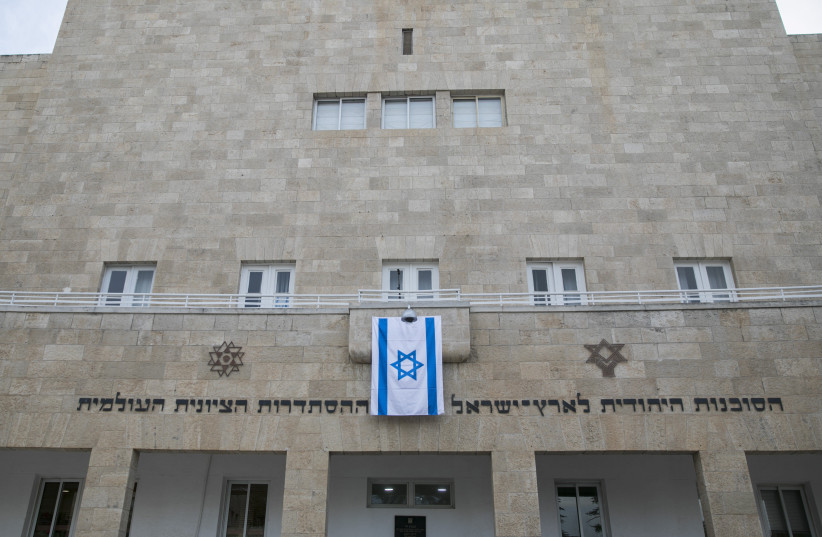
View of the Jewish Agency headquarters in Jerusalem, / (photo credit: YONATAN SINDEL/FLASH 90)

Perhaps one of the most important organizations designed to bridge between Israel and global Jewry is the Jewish Agency. Since its founding by the World Zionist Organization (WZO) in 1929 to settle Jewish immigrants in Israel, the Jewish Agency (JAFI) has evolved to have 50% control by diaspora Jewry with remaining 50% by the WZO.

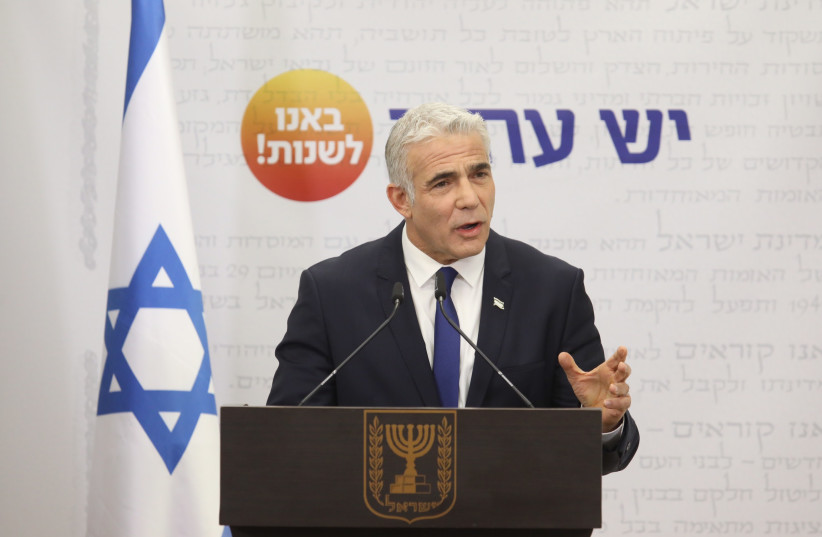
In the past few months, the Jewish Agency has made headlines with an engaging race for the coveted role of its Chair. The position was supposed to have been filled during the JAFI Board of Governors’ meeting in October 2021. Foreign Minister and Alternate Prime Minister, Yair Lapid, rightly requested to delay the nomination to November 17th to give precedence to more pressing issues for the new coalition government.

But that deadline had come and gone and still this important role has not yet been filled. This begs two questions: 1) what is Israel’s view of its relationship and responsibility with global Jewry? and 2) Is the role of the Chair of JAFI to serve as a global Jewish leader or to function as political patronage to solve domestic coalition challenges?

These questions get further traction when one considers that the current Knesset has yet to convene its Aliyah, Absorption and Diaspora committee, nor has a chair for this committee been selected. Both need to be addressed posthaste.

Today, JAFI must not only contend with staying relevant to its audiences but also address how to engage new ones. World Jewry and Israel are facing a wider range of challenges. Around the world, Jewish youth are increasingly disconnected from their identities and from Israel, Zionism is under a frontal attack, and virulent and increasingly violent Anti-Semitic incidents are growing at an alarming rate. In this turbulent environment, a resurgent and confident Jewish Agency is needed to play a pivotal role in stewarding the Jewish future and to reconstitute the notion of peoplehood and Areivut (mutual responsibility).

Foreign Minister Yair Lapid at the Knesset, November 15, 2021. (credit: MARC ISRAEL SELLEM/THE JERUSALEM POST)

To be that steward, the national Zionist Institutions (JAFI among them) cannot continue with business as usual. They must evolve to reflect the Jewish people in all of its diversity. As Chair of the World Confederation of United Zionists, I continue to seek a more inclusive vision and representation to reflect our people’s glorious diversity within our Institutions.

The expanded diversity of candidates must become the norm. The mere fact that we are seeing strong female candidates points to a timely development. Alas, this trend has yet to reach the decision-making level.

Still, 80% of the JAFI selection committee are white men – as are ALL the leaders of our National Institutions. We cannot speak about engaging new audiences when our leadership does not embody that spirit.

To be perfectly clear, no candidate should be selected solely due to their gender or ethnicity, just as no one should be discriminated against on this basis. But the simple fact is that in almost 100 years of existence, there has NEVER been a female Chair of the Jewish Agency.

The old arguments, that not enough qualified women apply, are simply not relevant in this case. In my view, at least three very worthy female candidates have been put forth. One, Irina Nevzlin, has a record of leadership within ANU, the Jewish Peoplehood Museum; the second, Ruth Calderon, the founder of Alma, built a global home for Jewish culture; and the third, Fleur Hassan-Nahoum, is deputy mayor of Jerusalem and cofounder of the UAE-Israel business council. These are three incredibly competent, charismatic, and dynamic female leaders who each bring value and are more than qualified to lead the Jewish Agency as it undergoes the process of reinvigorating its mission and ranks.

As the JAFI selection committee continues its process, they have the opportunity to appoint a uniter, a bridge-builder, one who can represent the Jewish world in its diversity, one who can ensure the financial viability of the organization, one who can engage new cultures, communities and audiences, and one who can also tackle the pressing challenges facing the Jewish people.

I hope that members of the selection committee will recognize the historic opportunity before them. And I hope they will embrace the spirit of change and inclusion that the current Israeli government has promised. It is their time to step up and reprioritize the role of the Chair to lead the reimagination of the Jewish Agency. Rather than a convenient political appointee, it is time that the flagship Jewish organization selects a dynamic female global Jewish leader to usher in a new era of positive Zionist engagement.

If not now, when?


Zawartość publikowanych artykułów i materiałów nie reprezentuje poglądów ani opinii Reunion’68,
ani też webmastera Blogu Reunion’68, chyba ze jest to wyraźnie zaznaczone.
Twoje uwagi, linki, własne artykuły lub wiadomości prześlij na adres:
webmaster@reunion68.com


News From Israel- December 15, 2021

News From Israel- December 15, 2021


ILTV Israel News


Zawartość publikowanych artykułów i materiałów nie reprezentuje poglądów ani opinii Reunion’68,
ani też webmastera Blogu Reunion’68, chyba ze jest to wyraźnie zaznaczone.
Twoje uwagi, linki, własne artykuły lub wiadomości prześlij na adres:
webmaster@reunion68.com


10 stunning Crusader ruins to visit in Israel

10 stunning Crusader ruins to visit in Israel

21see


Come along on our virtual tour of monumental castles and fortresses built in the Holy Land by Christian warriors in the 11th to 13th centuries.


Zawartość publikowanych artykułów i materiałów nie reprezentuje poglądów ani opinii Reunion’68,
ani też webmastera Blogu Reunion’68, chyba ze jest to wyraźnie zaznaczone.
Twoje uwagi, linki, własne artykuły lub wiadomości prześlij na adres:
webmaster@reunion68.com


Miss South Africa Places Third in Eilat Miss Universe Pageant After Rejecting Pressure at Home to Boycott Israel

Miss South Africa Places Third in Eilat Miss Universe Pageant After Rejecting Pressure at Home to Boycott Israel

Shiryn Ghermezian


Lalela Mswane, Miss South Africa 2021, is announced as a Top 3 finalist during the 70th Miss Universe Competition® on December 12, 2021 at the Universe Arena in Eilat, Israel. Photo: Tracy Nguyen/Miss Universe.

Miss South Africa Lalela Mswane was the second-runner up in the 70th Miss Universe pageant that aired live from Eilat, Israel, on Sunday, after facing weeks of pressure in her home country to skip the contest held in the Jewish state.

The South African government announced in November that it would not back the 24-year-old’s participation in the pageant, as a show of support for the Boycott, Divestment and Sanctions movement against Israel. Her success in the competition was also in defiance of calls on social media to boycott the Dec. 12 pageant, which used hashtags including “#NotMyMissSouthAfrica.”

Mswane —  a law school graduate, model and dancer — said on Thursday night, in between rehearsals for the pageant, “My soul would not have been at peace if I skipped it.”

“If I had not come to Israel to compete in the Miss Universe pageant, I think I would have regretted it for the rest of my life,” Mswane told the Jerusalem Post. “I always thought South Africa has the friendliest people on earth but it might be rivaled by Israel.”

Mswane embodied a Dove of Peace in the pageant’s national costume competition on Friday night. Asked as her final question in Sunday’s competition for advice to young women facing pressure in life, she replied, “I would implore young women today to choose courage over comfort every opportunity that they get. I’d also like young women to know that since the beginning of time they have anything, everything rather, within them to achieve anything they’ve wanted. It was unfortunately the world that convinced us that we do not.”

Jewish groups in South Africa applauded Mswane for placing third in the international competition, with the South African Jewish Board of Deputies calling her a “remarkable woman.”

“Lalela you made us so proud. What an achievement,” the group said. “We will remember your insightful words in response to your final question, ‘Choose courage over comfort.’ This you embody.”

The South African Zionist Federation added in a Facebook post, “Congratulations to Miss South Africa Lalela Mswane who refused to listen to BDS and anti-Israel voices who bullied and pressured her. Lalela your stand for peace has not gone unappreciated and unnoticed! Thank you for being a wonderful example and representative of South Africa!”

“You stood up for what you believed in and rejected the hate of #BDS,” said the organization South African Friends of Israel. “Thank you for representing us proudly!”


Zawartość publikowanych artykułów i materiałów nie reprezentuje poglądów ani opinii Reunion’68,
ani też webmastera Blogu Reunion’68, chyba ze jest to wyraźnie zaznaczone.
Twoje uwagi, linki, własne artykuły lub wiadomości prześlij na adres:
webmaster@reunion68.com