Archives

Politico: Israel Alone Standing in Way of ‘Balanced’ US Mideast Policy

Politico: Israel Alone Standing in Way of ‘Balanced’ US Mideast Policy

harles Bybelezer


People hold Hamas flags as Palestinians gather after performing the last Friday of Ramadan to protest over the possible eviction of several Palestinian families from homes on land claimed by Jewish settlers in the Sheikh Jarrah neighbourhood, in Jerusalem’s Old City, May 7, 2021. REUTERS/Ammar Awad

Following the ceasefire agreement that halted May’s Hamas-initiated conflict with Israel, US President Joe Biden told the world that “Palestinians and Israelis equally deserve to live safely and securely and enjoy equal measures of freedom, prosperity and democracy,” adding: “My administration will continue our quiet and relentless diplomacy toward that end.”

It was a statement that many felt reflected a tone of moderation with respect to Washington’s policy towards the Israeli-Palestinian impasse.

Yet, Politico has now cast doubt on Biden’s ability to strike such a balance in an article titled, Biden’s balancing act in the Middle East has a problem: Israel,” in which the outlet details alleged Israeli misdeeds at great length, while glossing over the perpetual issue of Palestinian terrorism and obstructionism.

The piece criticizes Israel for its designation in October of six Palestinian NGOs as terrorist organizations, framing the move as an irritant to Biden’s ‘fairness’ plan. This verdict is clearly colored by the views of Ubai Aboudi, the executive director of one of the affected NGOs, who Politico describes as having been targeted by the “Israeli crackdowns on rights activists.”

Aboudi is quoted as saying that Biden’s commitment to peacemaking must “be reflected by holding human rights violators [i.e. Israel] accountable.”

However, Politico then notes that Aboudu has also “been targeted by the Palestinian Authority [PA], whose attempts to silence dissent also have drawn scrutiny from rights advocates.” Strikingly, though, Politico does not surmise that such actions by the Palestinian leadership have created hurdles for Biden’s foreign policy — apparently only Israel’s have.

Indeed, a prominent theme throughout the entire piece is the whitewashing of the intransigence of the Palestinian Authority (PA) and the effect that Ramallah has on shaping Israel’s domestic policy in this area:

A State Department official insisted that the Biden administration wants both the Israeli government and Palestinian leaders to ‘refrain from unilateral steps that exacerbate tensions.’ That includes ‘providing compensation for individuals imprisoned for acts of terrorism,’ the official said, referring to a controversial Palestinian practice Israeli leaders often decry.”

The so-called “pay-for-slay” policy in which Palestinian terrorists who slaughter Israelis are given monthly salaries is downplayed as little more than a “controversial” practice.

Yet, this policy — and the PA’s obstinate refusal to change it — is absolutely relevant, not least because the “Martyrs’ Fund” has directly led to Israel freezing funds it collects on the PA’s behalf, as well as the United States having previously halted aid payments to Palestinians as per the provisions of the Taylor Force Act.

Israeli Interior Minister Ayelet Shaked is also quoted in the story, telling Politico that Israel is subjected to disproportionate criticism:

Shaked expressed frustration that there was so much questioning of Israeli actions toward Palestinians when Palestinian militants are constantly threatening Israeli lives.

‘The fact that people compare, it’s outrageous,’ said Shaked, who is known for strident views when it comes to Palestinians. ‘Israelis are being murdered for many years by Arabs.’”

Again, the issue that Shaked raises is seemingly glossed over as just par for the course, as opposed to a major obstacle to peace.

However, the ceaseless threat of Palestinian terrorism — including by the US-designated terrorist group Hamas, which is almost entirely ignored Politico’s piece — can be juxtaposed against the supposed egregious sins that Israel is guilty of, according to Politico:

Recent reports of a rise in Israeli settler violence against Palestinians, too, have drawn concern in the Biden administration. Rights groups allege that the settler violence is part of a broader, often state-sanctioned effort to push Palestinians off of more land in the West Bank.”

It is interesting that Politico notes the concerns of organizations that claim alleged acts of violence are part of a “state-sanctioned effort,” but does not bother to report the fact that the “state,” i.e. the government, has explicitly condemned any such actions by Jews living beyond the 1967 borders, including Foreign Minister Yair Lapid who labeled it a form of “terror.”

Politico caps its subtle anti-Israel rhetoric by touching on the Abraham Accords, the historic US-brokered agreements that it acknowledges “have seen a significant growth in diplomatic, economic and other relations between Israel and the United Arab Emirates, Bahrain, Sudan and Morocco.”

But bizarrely, the article suggests that the deal has been another impediment to peace, arguing “the accords have left the Palestinians feeling betrayed by Arab countries they long considered allies.”

While some Palestinians may feel the deals were a mark of disloyalty by those who should support their cause, it is baffling that Politico chooses to ignore the attitude taken by the PA, which could have used the Abraham Accords as a vehicle for peace.

Instead, Ramallah has chosen to stick to its maximalist positions and antagonistic views rather than taking the opportunity to return to the negotiating table with Israel.

In a piece ostensibly about balance, it is a shame that Politico could not have demonstrated some of this quality in its reportage.

Israel is not the fly in Biden’s foreign policy ointment — it is a whole lot more complicated than that.


The author is the Managing Editor of HonestReporting, where a version of this article was first published. Other HonestReporting staffers contributed to this story.


Zawartość publikowanych artykułów i materiałów nie reprezentuje poglądów ani opinii Reunion’68,
ani też webmastera Blogu Reunion’68, chyba ze jest to wyraźnie zaznaczone.
Twoje uwagi, linki, własne artykuły lub wiadomości prześlij na adres:
webmaster@reunion68.com


Mossad agents reportedly flip Iranian nuclear workers- Seth J. Frantzman

Mossad agents reportedly flip Iranian nuclear workers- Seth J. Frantzman

ILTV Israel News


Zawartość publikowanych artykułów i materiałów nie reprezentuje poglądów ani opinii Reunion’68,
ani też webmastera Blogu Reunion’68, chyba ze jest to wyraźnie zaznaczone.
Twoje uwagi, linki, własne artykuły lub wiadomości prześlij na adres:
webmaster@reunion68.com


When will non-Orthodox Jews gather for daily prayer again? – opinion

When will non-Orthodox Jews gather for daily prayer again? – opinion

NEIL KURSHAN / JTA


Many people, religious and not, yearn for places where they can gather, connect and socialize with other people outside of the home and workplace

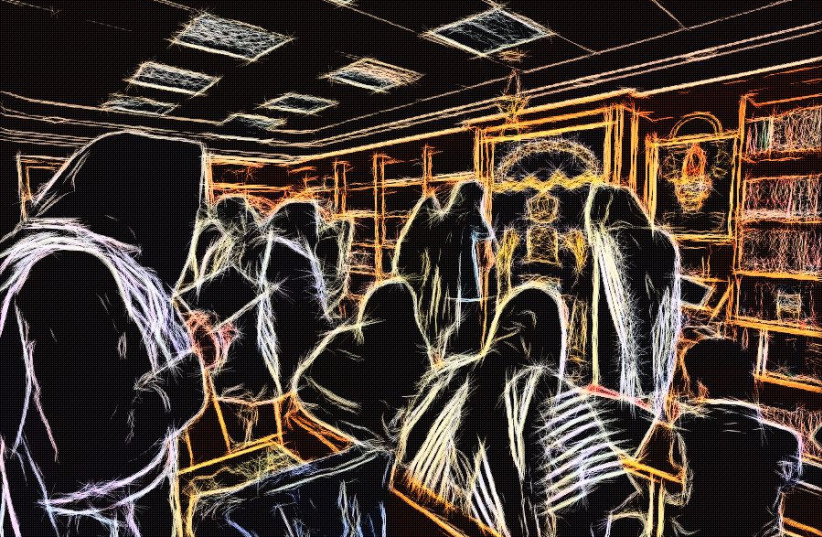
Jewish prayer illustrated. / (photo credit: Jewish Week illustration/Photo by Itamar Grinberg for the Israeli Ministry of Tourism/JTA)

I live in one of the most concentrated Jewish communities in the United States, the Upper West Side of Manhattan, and I no longer have a daily morning minyan to attend in person.

It seems that in my neighborhood, as well as many others, COVID-19 snuffed out the live morning minyan — the daily prayer service that needs a quorum of 10 Jews — in non-Orthodox settings. Pre-pandemic I had a choice of multiple minyans I could attend in a variety of egalitarian Jewish settings — synagogues and schools — but none of them is operating in-person now.

I worry that the minyan muscle has atrophied in my community, and the habit has been lost of rising early in the morning, getting out the door with prayer shawl and tefillin, and making it inside the beit midrash in time for prayer.

It’s not that non-Orthodox Jews in my neighborhood aren’t praying each morning. Many are, both alone and online, where services moved for non-Orthodox Jews last March. Zoom services were a necessary accommodation to a public health crisis, and it is unquestionably easier to tune in to services from home, but it hasn’t worked for me. Fifty disembodied faces on a screen feel less like a community to me than the 15 bodies draped in prayer shawls who huddle around the amud (leader’s table) at a typical in-person minyan. The on-key solo voice of the shaliach tzibur, the leader of the service, inspires me less than the multiple off-key voices of those gathered live for prayers.

As Shabbat and holiday services have resumed, with precautions, in person, I thought the morning minyan would, too. But they have remained resolutely online. I am sympathetic to the reasons why, and to the difficulties of reconstituting the in-person morning minyan. It is hard work in many non-Orthodox synagogues to assure that 10 people will be present early in the morning six days a week. It is much easier and more convenient to get out of bed, hit a button on the computer and be transported instantly to the minyan. And without question Zoom has made it possible for those unable because of physical limitations and other reasons to attend an in-person minyan.

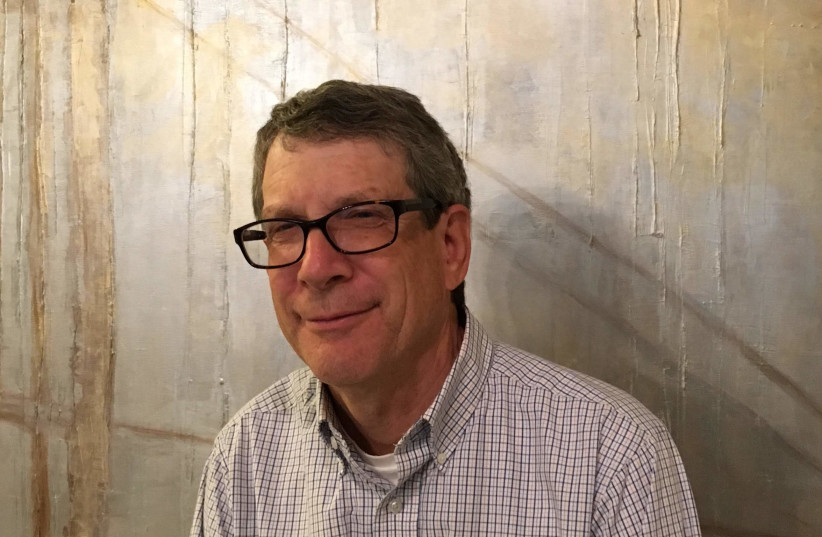
Rabbi Neil Kurshan. (credit: COURTESY/JTA)

Yet there is so much that has been lost and that I miss. I miss my fellow “minyannaire” who each year before Rosh Hashanah brings me honey from the beehives on the rooftop of his apartment.

I miss the frail elderly Russian gentleman who stands to say Kaddish for himself because he is convinced that none of his children will say Kaddish for him after he dies.

I miss the mother and her grown son who start their day together sitting side by side and who kiss one another good-bye as they leave the minyan and go their separate ways.

And I miss the easy banter with my fellow minyannaires with whom I share vacation plans, exploits on the pickleball court and the most recent achievements of my grandchildren. I miss how the in-person morning minyan magically imbued the minute details of the mundane with the significance of the sacred.

But above all I miss what Abba Kovner, the late Jewish resistance fighter, called “the tug on the sleeve.” Kovner would tell the story of going to the Western Wall his first week in Israel after the end of World War II. He was about to leave when he felt a tug on his sleeve as he was asked to join a minyan that was forming for prayer. He tells of being inspired not so much by the prayers but more by the sense of belonging. More than anything else I miss knowing that my physical presence is needed to make a minyan.
For more than 40 years, I was responsible for making the minyan happen in my suburban Long Island synagogue. There were many nights I did not sleep well worrying that 10 people might not show up the next morning, and I took too personally the days when only nine people attended and a mourner was unable to say Kaddish. Looking back at all the worry and frustration, I nevertheless feel that I was engaged in worthy work.

Many people, religious and not, yearn for places where they can gather, connect and socialize with other people outside of the home and workplace. Sociologists call these settings “third places,” and so many of them closed during the pandemic — bars, coffee shops, gyms, libraries — that experts fear the impact on people’s mental health and social well-being. As a psychology professor at the Graduate Center of the City University of New York put it at the height of the pandemic, “What’s lost is the sensory sense of being with other people. I don’t think we know yet what the consequences of that will be, except that I think people are going to remain more fearful and anxious.”

Many years after Abba Kovner was called to be the 10th for a minyan at the Western Wall, a museum known as Beit Hatefutzot, the Museum of the Diaspora, was built on the campus of Tel Aviv University. (It has now been overhauled and renamed Anu — Museum of the Jewish People.) Kovner designed a corner in the museum known as “The Minyan” represented by a variety of figures preparing to pray together. Just before the museum opened its doors for the first time someone noticed that there were only nine figures in the model. The museum frantically reached out to Kovner, but he calmly responded that nine was the correct number: There was supposed to be a missing person. The missing person was a call to each person who visited the museum to become the 10th.

When I do join the Zoom minyan of my synagogue community, I note the faces and names of my fellow participants. When it is a day I am observing a yahrzeit, the anniversary of a loved one’s death, I dutifully tap the “raise hand” button so I can be called upon to mention the name of the person for whom I am saying Kaddish. But I yearn to feel again the tug on my sleeve, and to be told to come inside because there are nine people who need me as the missing tenth.


Zawartość publikowanych artykułów i materiałów nie reprezentuje poglądów ani opinii Reunion’68,
ani też webmastera Blogu Reunion’68, chyba ze jest to wyraźnie zaznaczone.
Twoje uwagi, linki, własne artykuły lub wiadomości prześlij na adres:
webmaster@reunion68.com


News From Israel- December 05, 2021

News From Israel- December 05, 2021

ILTV Israel News


A Palestinian terrorist carries out stabbing attack in Jerusalem, the two officers that neutralized him are under investigation

Israeli Prime Minister Naftali Bennett speaks out against Iran’s nuclear program as first round of talks ended with no progress

The city of Bethlehem lights its giant Christmas tree ahead of the holiday season


Zawartość publikowanych artykułów i materiałów nie reprezentuje poglądów ani opinii Reunion’68,
ani też webmastera Blogu Reunion’68, chyba ze jest to wyraźnie zaznaczone.
Twoje uwagi, linki, własne artykuły lub wiadomości prześlij na adres:
webmaster@reunion68.com


Apple Music Reveals Israel’s Top Hits of 2021

Apple Music Reveals Israel’s Top Hits of 2021

i24 News and Algemeiner Staff


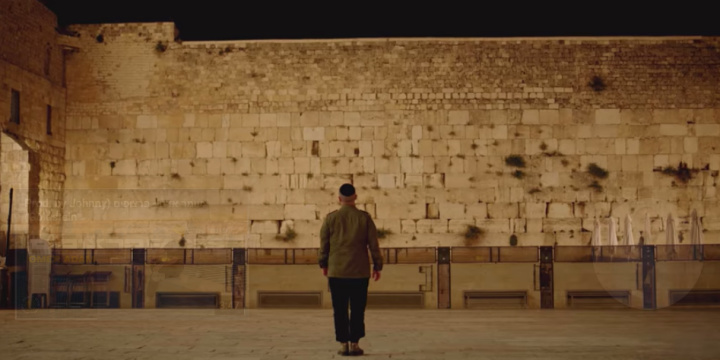
Omer Adam standing in front of the Western Wall in a scene from his music video for “Jerusalem.” Photo: Screenshot.

Apple Music on Wednesday released its annual Top 100 chart, revealing the most played songs of 2021 from their 72 million-strong user base, including the top 100 songs in Israel.

The streaming service also revealed that all of the top 20 songs of the year in Israel are local and created by Israeli musicians.

“This is a major testament to the focus Apple puts on local musicians,” the company said, The Jerusalem Post reported.

The top 10 songs listened to by Israelis in 2021:

1. Shkiot Adumot by Eden Hasson

2. Paskol Hayai by Omer Adam

3. Beit Meshugaim by Ran Danker

4. Resisim by Raviv Kaner

5. Gadal Li Ktzat Zakan by Eden Hasson

6. Barhovot Shel Tel Aviv by Eden Ben Zaken,

7. Rotze Shalom by Raviv Kaner

8. Efes Maamatz by Static, Ben El and Neta

9. Haim Meusharim by Natan Goshen and Eden Ben Zaken

10. Parzufim by Omer Adam

In 2020, there were six non-local musicians on the list, including the top two songs.

Apple Music launched globally in 2015 and reached Israel a year after.

Since then, it curated a significant user base in Israel, according to the Post.

In August of this year, the video and music service worked with some of Israel’s most prominent artists to create exclusive playlists ahead of the Jewish New Year.

Eden Hason – Shkiot Adumot


Zawartość publikowanych artykułów i materiałów nie reprezentuje poglądów ani opinii Reunion’68,
ani też webmastera Blogu Reunion’68, chyba ze jest to wyraźnie zaznaczone.
Twoje uwagi, linki, własne artykuły lub wiadomości prześlij na adres:
webmaster@reunion68.com