Archives

Israel’s Prime Minister Naftali Bennett meets Russian President Vladimir Putin

Israel’s Prime Minister Naftali Bennett meets Russian President Vladimir Putin


WION


Israel’s Prime Minister Naftali Bennett met Russian President Vladimir Putin for the first time today for talks focusing on iran and other regional security issues. The two leaders met at russia’s black sea resort in Sochi.


Zawartość publikowanych artykułów i materiałów nie reprezentuje poglądów ani opinii Reunion’68,
ani też webmastera Blogu Reunion’68, chyba ze jest to wyraźnie zaznaczone.
Twoje uwagi, linki, własne artykuły lub wiadomości prześlij na adres:
webmaster@reunion68.com


2,000-year-old quarry found to supply stones for ancient Jerusalem

2,000-year-old quarry found to supply stones for ancient Jerusalem

ROSSELLA TERCATIN


Archaeologists uncover the site in the hi-tech hub of Har Hotzvim, the Hebrew name for ‘Quarrymen’s Hill.’

.
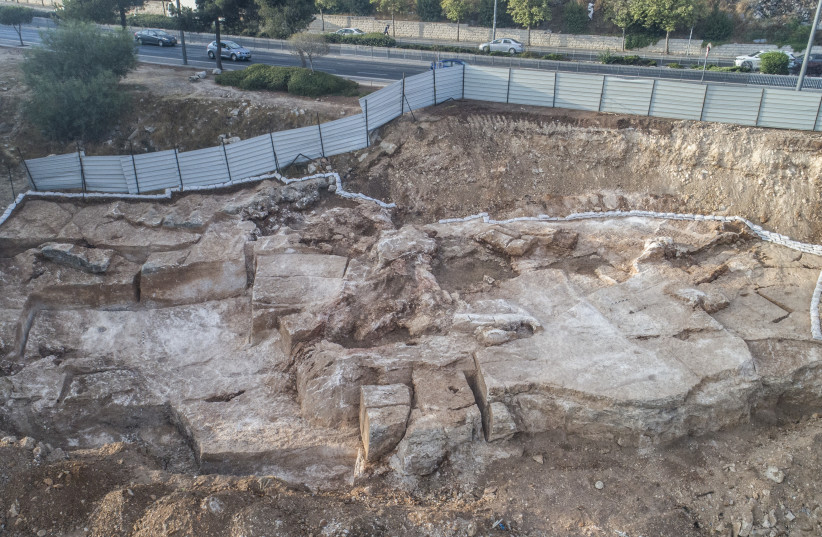
Second Temple Period quarry uncovered in Jerusalem at Har Hotzvim, September 2021. / (photo credit: SHAI HALEVI / ISRAEL ANTIQUITIES AUTHORITY)

Har Hotzvim, one of Jerusalem’s main hi-tech hubs, owes its name, which in Hebrew means “Quarrymen’s Hill,” to a much more ancient industrial activity: It is where archaeologists from the Antiquities Authority have uncovered a quarry dating back some 2,000 years, the IAA revealed Sunday.

The quarry was discovered during a salvage excavation before a new building project was set to begin. According to law, a salvage excavation must accompany all construction projects.

“The large-scale building projects in ancient Jerusalem, such as the Temple Mount, required a vast amount of building materials and the ability to organize and coordinate the quarrying and transportation of thousands of building blocks to the ancient city,” IAA excavation director Moran Hagbi said.
.
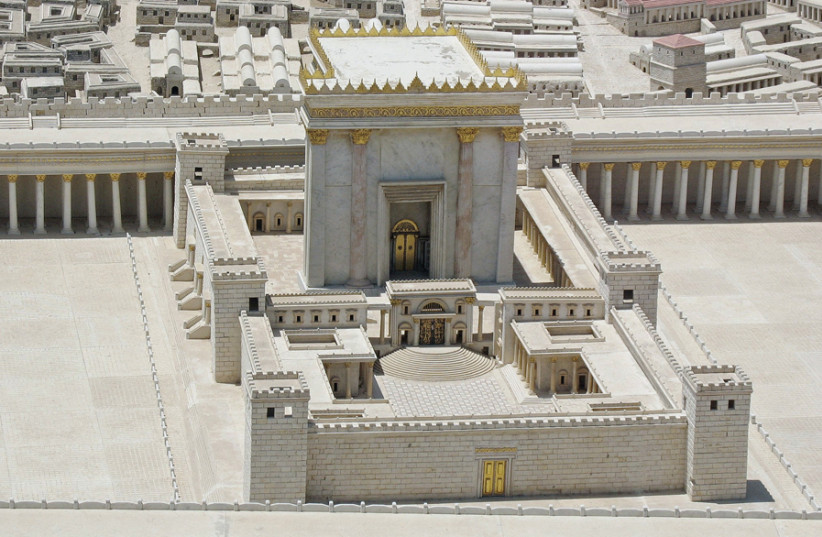
THE SECOND Temple, model in the Israel Museum, 2008. (credit: Wikimedia Commons)

.
“Building blocks in various stages of spadework were discovered in the quarry,” he said. “For example, we uncovered large, cubical blocks of stone about to be detached from the bedrock, prior to being loaded and transported to the ancient city.”

The site has only been partially uncovered. Researchers believe it was two or three times larger than the 600 sq.m. currently exposed.

“For us as archaeologists, this quarry presents a golden opportunity,” Hagbi said. “Because some of the stones were left in situ in this way, we can copy ancient technologies and experiment with them to recreate the processes by which the building stones were quarried.”

To better understand how ancient workers operated, the researchers plan to reproduce tools and techniques known to have been used at the time to test their efficacy.

During the Second Temple period, magnificent construction projects were carried out in Jerusalem. In the first century BCE and up to the destruction of the city at the hands of the Romans, Jerusalem underwent great changes.

The Temple was expanded, and several monumental buildings and other infrastructure were erected. All this work required a lot of building materials.

“In a symbolic way, Jerusalem’s current development boom presents us with an opportunity to excavate and research the great building projects in ancient Jerusalem,” IAA general director Eli Eskozido said. “Before any development project begins in Jerusalem, our archaeologists are called upon to excavate and examine any ancient finds for the sake of future generations.”


Zawartość publikowanych artykułów i materiałów nie reprezentuje poglądów ani opinii Reunion’68,
ani też webmastera Blogu Reunion’68, chyba ze jest to wyraźnie zaznaczone.
Twoje uwagi, linki, własne artykuły lub wiadomości prześlij na adres:
webmaster@reunion68.com


How much alcohol did British soldiers drink while stationed in Israel during WWI?

How much alcohol did British soldiers drink while stationed in Israel during WWI?

JERUSALEM POST STAFF


Hundreds of glass alcohol bottles from a World War I British army camp were uncovered in an archeological dig near Ramle, suggesting that the British soldiers loved their booze.
.
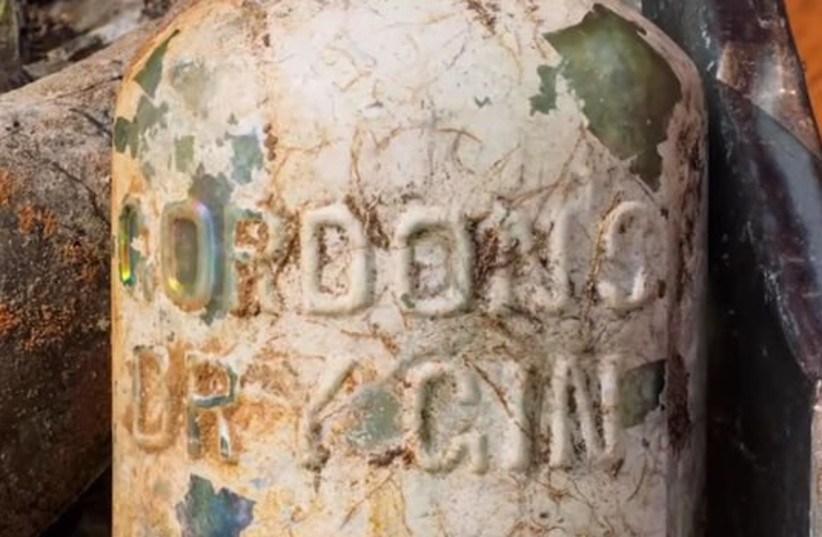
A bottle of Gordon’s Dry Gin found a the site of the archeological dig near Ramle /  (photo credit: IAA)

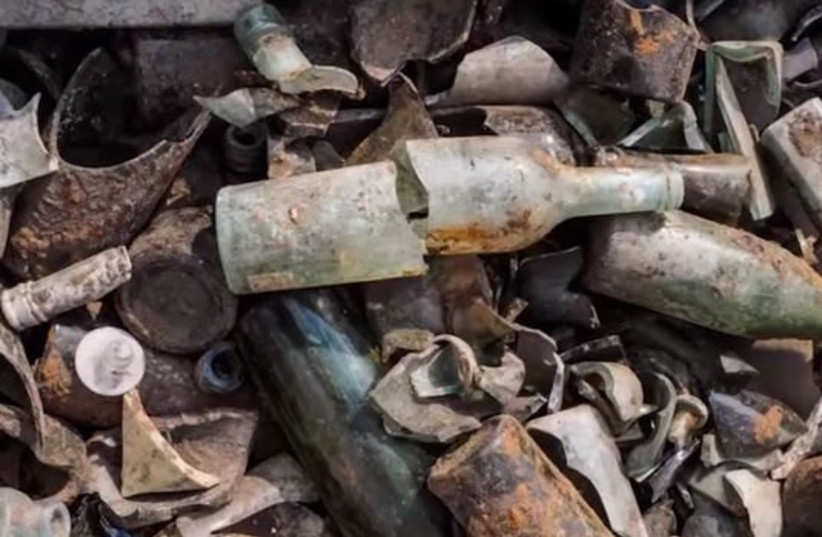
Hundreds of glass alcohol bottles from a World War I British army camp were uncovered in an archeological dig near Ramle, providing a glimpse into the lives of the soldiers during their campaign against Ottoman forces in 1917.

The bottles were found in a building that dates back to the Ottoman Empire but was used by British forces, according to the Israel Antiquities Authority (IAA) Excavation Director Ron Toueg.

A trash pit was found adjacent to the building, and provided a glimpse into the daily lives of the British troops.

Nearly 70% of the waste that was uncovered was glass bottles, which had contained European wine, beer, gin and whiskey. The large amount of alcohol suggests that the soldiers drank extensively, perhaps out of boredom or as a way to cope with the arduous and sometimes terrible experiences of war.

“On November 15, 1917, the Egyptian Expeditionary Force under the command of General Allenby conquered the area around the towns of Lod and Ramle,” explained Sherri Mark, architect, conservator and researcher of the British army in Palestine, in a video uploaded by the IAA.

“Before occupying Jerusalem, the army encamped in the area where the archaeological excavation took place: the headquarters at Bir Salam – Ramle Camp and Sarafand Camp. The Army was based there for about nine months until a decision was made to continue the country’s conquest,” she explained.

Hundreds of bottles of alcohol were found at the archealogical dig at the WWI British encampment near Ramle (credit: IAA)

Some of the findings included parts of uniforms, such as buttons and belts, as well as the tip of a British officer’s swagger stick, which they liked to carry under their armpits. The swagger stick is the first if its kind found in Israeli excavations.

The most prevalent finding, however, was alcohol.


Zawartość publikowanych artykułów i materiałów nie reprezentuje poglądów ani opinii Reunion’68,
ani też webmastera Blogu Reunion’68, chyba ze jest to wyraźnie zaznaczone.
Twoje uwagi, linki, własne artykuły lub wiadomości prześlij na adres:
webmaster@reunion68.com


Archaeologists find 2,700-year-old toilet in luxurious palace in Jerusalem

Archaeologists find 2,700-year-old toilet in luxurious palace in Jerusalem

ROSSELLA TERCATIN


The extraordinary find sheds light on life under the kings of Judah: “Only the rich could afford toilets.”
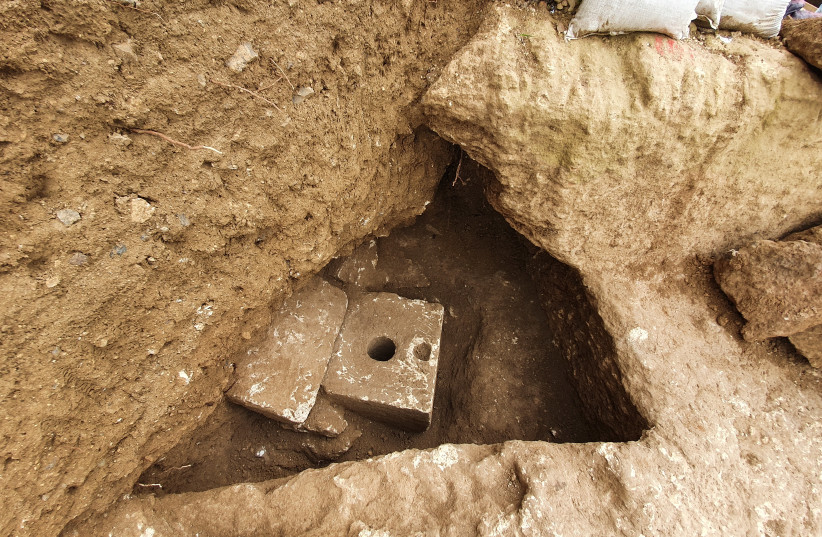
The rare stone toilet is 2700 years old. Most likely used by one of the dignitaries of Jerusalem. / (photo credit: YOLI SCHWARTZ/IAA)

Who lived in the superb palace and enjoyed its spectacular view over the Temple Mount of Jerusalem some 2,700 years ago? Perhaps it was one of the biblical kings of Judah, possibly Hezekiah or Josiah, or other members of the royal families. Or maybe it was just a wealthy individual, a member of the elite.

Whoever the residents of the beautiful structures uncovered by the archaeologists in the neighborhood of Armon Hanatziv were, they enjoyed a unique privilege: a luxurious private toilet.

The facility was recently discovered in an excavation by the Antiquities Authority (IAA) and the City of David, which opened prior to the construction of a new tourist complex on the promenade, the IAA revealed on Tuesday.

“At the time, a private toilet in a house was extremely rare,” said archaeologist Yaakov Billig, director of the excavation on behalf of the IAA. “Most people were just forced to find someplace private to relieve themselves. Around 1,000 years later, a group of rabbis in the Talmud discuss who is to be considered rich. Different rabbis suggest different answers, and one of them, Rabbi Yossi, says, ‘One who has a toilet next to his table’.”
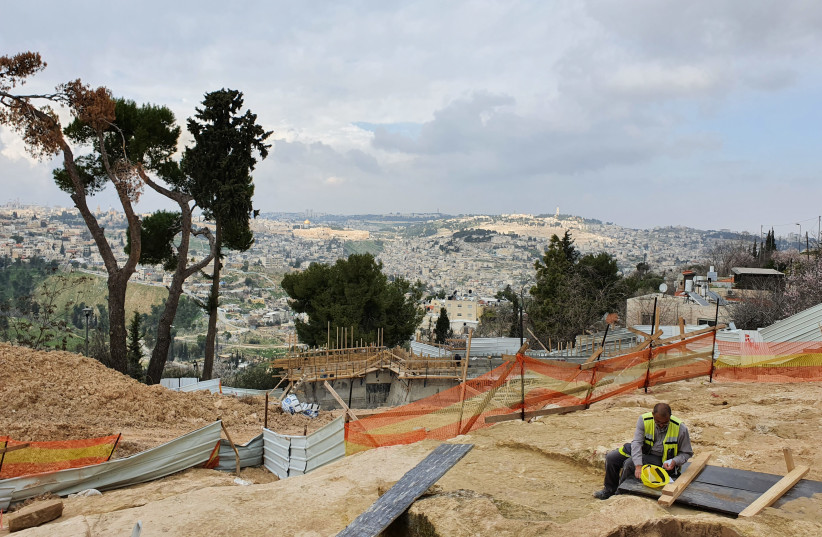
The excavation of the royal estate discovered in Jerusalem. In the background is the City of David and the Temple Mount. (credit: YOLI SCHWARTZ/IAA)

According to Billig, only a handful of toilet remains from the First Temple Period have been found in Israel.

“In many cases, they were not complete toilets, but just toilet seats,” he said.

In the palace of Armon Hanatziv, the cubicle was a rectangular cabin hewn in stone. The toilet seat, with a hole in the center, was designed to be very comfortable. Under the toilet, a tank stood, where remains of pottery, animal bones and soils were collected.
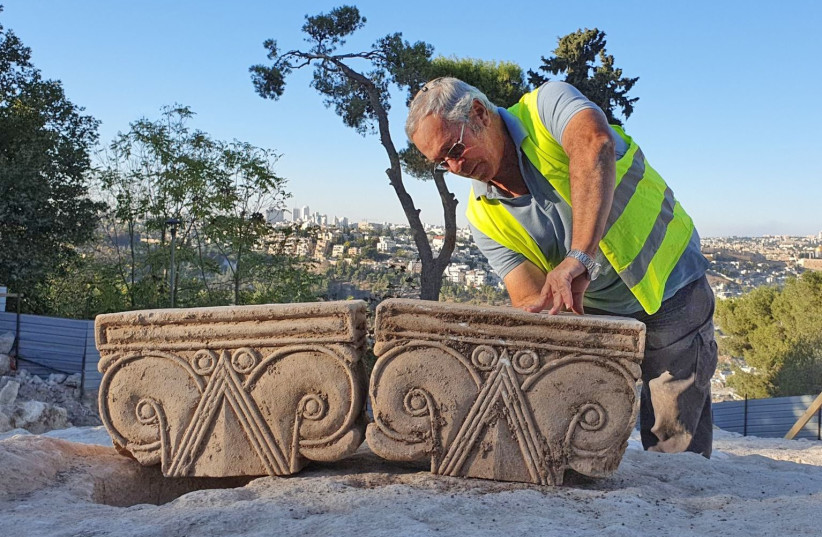
The Director of the excavation, Yaakov Billig, with the capitals. (credit: YOLI SCHWARTZ/IAA)

“At the time, such pits were also used as garbage cans,” Billig noted. “The vast majority of the vessels found were bowls. It could be that they were some kind of disposable dishes, but also that they were used as containers for aromatic oil and were put in the toilet to improve the smell. We hope that some further analysis on the residues will provide answers.”

In addition, the bones will offer information on dietary habits, while the examination of the soil could shed light on parasites and diseases among ancient Judeans.

Only limited ruins of the palace survived, but during the excavations, the archaeologists encountered several artifacts offering an idea of the high status of the building, including remains of decorated stone capitals and small columns. A lush garden was planted around the toilet.

“Unfortunately, Jerusalem was destroyed and rebuilt many times and materials were reused,” said Billig. “However, from the magnificent architectural fragments we found, we can see a structure whose beauty is not matched by anything else from that period found in the country.”

During that period, Jerusalem reached its maximum size, also due to the influx from the neighboring kingdom of Israel after the Assyrian conquest.
“It is fascinating to see how something that is obvious to us today, such as toilets, was a luxury item during the reign of the kings of Judah,” said IAA Director Eli Eskosido. “Jerusalem never ceases to amaze.”

“I am convinced that the glorious past of the city will continue to be revealed to us in the future and will allow us to experience and learn about our past,” he added.

The details of the discovery will be illustrated during the conference “Innovations in the Archaeology of Jerusalem and its Surroundings,” which will take place on Wednesday and Thursday in Jerusalem and online.


Zawartość publikowanych artykułów i materiałów nie reprezentuje poglądów ani opinii Reunion’68,
ani też webmastera Blogu Reunion’68, chyba ze jest to wyraźnie zaznaczone.
Twoje uwagi, linki, własne artykuły lub wiadomości prześlij na adres:
webmaster@reunion68.com


Syrian Agent Allegedly Killed by Israeli Sniper Fire Was Tehran’s ‘Man in the Golan’: Report

Syrian Agent Allegedly Killed by Israeli Sniper Fire Was Tehran’s ‘Man in the Golan’: Report

Sharon Wrobel


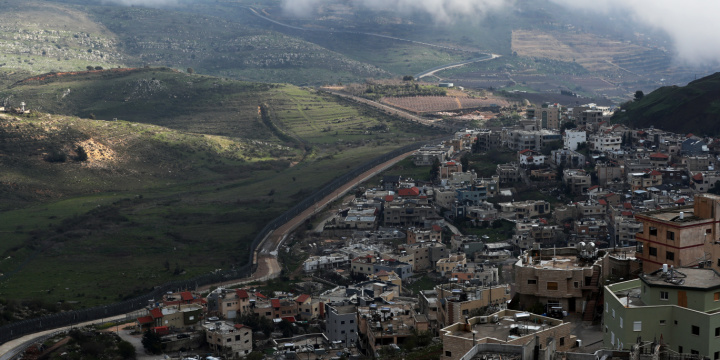
A general view shows the town of Majdal Shams near the ceasefire line between Israel and Syria in the Golan Heights March 25, 2019. REUTERS/Ammar Awad

Syrian official Medhat Al-Saleh was allegedly killed on Saturday by Israeli sniper fire, outside his home situated just a few hundred yards from the shared border between the two countries.

The former Israeli security prisoner is believed to have been recruited by Iranian forces to plot terrorist activities with Iranian senior officials along the border against Israel, according to a report by Israel’s Walla news.

Saleh, who spent 12 years in an Israeli prison on terrorism charges before being released in 1997, was allegedly assassinated in the town of Ein al-Tina, near the border with Israel along the slopes of Mount Hermon. The town is located across the border from Majdal Shams, a Druze village in the Israeli-controlled Golan Heights in which Saleh was born and raised, and where most of his family still lives.

“Saleh is known to us as a prominent activist. He may have worked to carry out a terrorist attack in collaboration with one of the Shiite axis units,” tweeted Maj. (res.) Tal Beeri, head of the research department at the Alma Center.

The former security prisoner’s proximity to Israel and his home’s short distance from Majdal Shams opened up the possibility of shooting and killing him using a sniper, Walla reported, citing unidentified sources.

Following his release from Israeli prison in the late 1990s, Saleh decided to cross the border and flee to Syria, where he continued his involvement in in anti-Israel terror activities while maintaining contact with the Druze community in Israel. A few years later, he was voted into the Syrian parliament representing Golan Heights affairs.

Over the years Saleh was reported to communicate with his family from the so-called shouting hill, where Syrian civilians stand and send shouting messages to the Israeli side, and which is located near a two-story house he built. According to sources cited by Walla, “whoever wanted to take him out didn’t need too many identifying details, as he was almost two meters tall and fat.”


Zawartość publikowanych artykułów i materiałów nie reprezentuje poglądów ani opinii Reunion’68,
ani też webmastera Blogu Reunion’68, chyba ze jest to wyraźnie zaznaczone.
Twoje uwagi, linki, własne artykuły lub wiadomości prześlij na adres:
webmaster@reunion68.com