
Archives

Here’s how Yom Kippur is the holiest ‘meeting’ of the year

Here’s how Yom Kippur is the holiest ‘meeting’ of the year

MICHAEL FRIEDMAN


In 2021, living a Jewish life means more than ritual observance, it means deciding to stand with Israel, her courageous citizens and Jewish destiny.
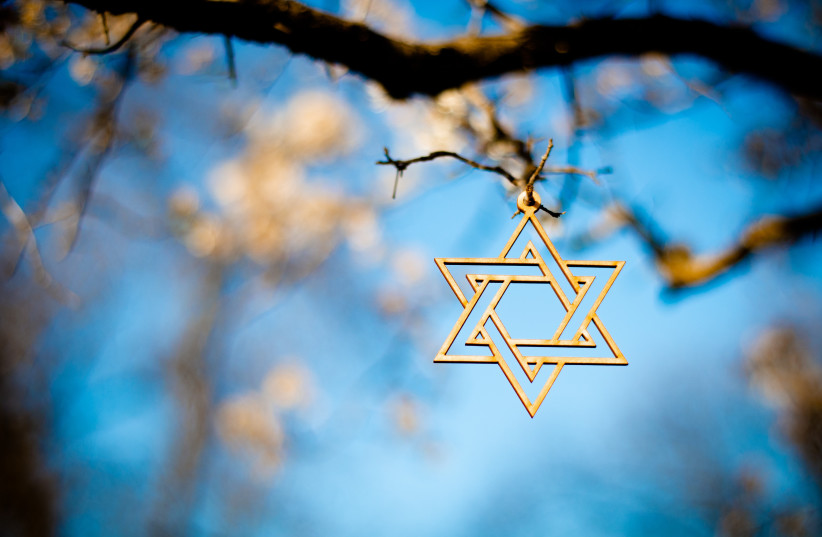
Rosh Hashanah and Yom Kippur act as an anchor for the Jewish people. / (photo credit: David Holifield/Unsplash)
.

Yom Kippur is literally “The Day of Atonement,” but what does “atonement” mean? When was the last time you used “atonement” in a text or casual conversation? The words sound so musty and archaic, like it is a relic of a forgotten epoch.

Kippur, or Kapara, literally means, “cleaning” or “cleansing.” Just as the custom is to wear white, and emulate celestial beings who do not eat, the day itself is one of joyful recharging. Like emerging from a ritual bath we emerge from Yom Kippur anew – with new hope, new potential, and new beginnings open before us.

The Mishna describes how Jews in Israel experienced Yom Kippur two millennia ago. It states that Yom Kippur and Tu Be’av were days of dressing in white and dancing in the fields, inviting new relationships and new ventures. Despite popular associations, the day is not at all morose or oppressive, despite that some places of worship contribute to this misconception.

Every holy day is referred to in the Torah as a mo’ed, which literally means a “meeting.” In English, the phrase “I have a meeting” refers to an appointed time to interface with someone. Therefore, every mo’ed is meant to be relationship-oriented, a time of dedicated love and care. We create the time and space to minimize the flutter of constant notifications and news feeds.

Maimonides codified in Jewish law that God gave festivals to the Jewish people in order that they should enjoy and delight in them. We designate these days to enjoy cherished relationships with our loved ones and friends, whom we are often too busy to focus on and too overprogrammed to prioritize. But how exactly do I focus on relationships while fasting and spending time in the synagogue? How are relationships built with family or community on Yom Kippur if I am focused on pangs of hunger and thirst?

The answer that resonates with me is that Yom Kippur is not just a regular day of divine “meeting.” It is exceptional among holidays. In English, again, a meeting to which we refer that encapsulates the most love and care between people is called a “date.” Curiously, that word also carries the same double meaning.

There is a date on a calendar, as well as a date when romantic partners designate time for one another. If Jewish holy days in general are points of meeting between us and the Creator of the Universe, Yom Kippur is even more intimate.

Metaphorically, it is the ultimate date between each member of the Jewish people and the Holy One.

On Rosh Hashanah, we relate to the King of the Universe, who created the Heavens and the Earth. On Yom Kippur we focus on our relationships, how we make the most of our placement in the world. The amorphous, humongous Creator (as they say here in Israel “anak!”) with billions of creations also cares about my individual choices, hardships and journeys. Astounding!

KNOWING THAT I am accountable for my actions, means that I count. Suddenly this date has infused my life with cosmic significance. That is why Rosh Hashanah is about the collective, the world as a whole, economics and ecology, Jews and non-Jews, always in aggregate. No mention of the individual appears in Rosh Hashanah liturgy. Yom Kippur is about me specifically. I have the opportunity – arguably the imperative – as the worshipper of the day to ask the important questions: What is my contribution to the human enterprise? How will I actualize my destiny as part of the Jewish people?

After aliyah, these questions have new meaning for me. I reaffirm my commitment to being part of the destiny of the Jewish People. We merited to plant our familial roots in the Holy Land (at the buzzer just before shmita, the sabbatical year). This Yom Kippur I can add to my list of introspective queries: “How will I contribute to the rebuilding of Israel?” What unique role do I have in shaping the formation of the Jewish state?
Each mo’ed is a meeting point, or a date with the Divine, the Land of Israel is where we rendezvous. It is home. It holds our family history and destiny. Israel is the heart of our people, as the late Elie Wiesel wrote: “Jerusalem is the heart of our heart.”

According to Jewish sources, there are echelons of holiness in space and in time. Shabbat and the festivals are the pinnacles of sanctified time. The Land of Israel is the pinnacle of sanctified space. To experience Yom Kippur in Israel is to grasp the synergy of the most sanctified point in time and the most sanctified point of space.

The Kabbalah teaches the sanctity of Shabbat in the Diaspora is compared to the holiness of the weekday in the Holy Land. The sanctity of Yom Kippur outside of Israel is compared to the holiness of Shabbat in the Land. But the experience of Yom Kippur in the Land has no equivalent in time and space anywhere else on Earth. In my first Yom Kippur as an Israeli citizen, I look forward to building even more of an intimate relationship with God as “Avinu Malkeinu” – not just the King of Kings but a loving Father.

If I am an intellectually honest student of Jewish history, I can admit that the hatred which is unfolding before our 21st century eyes is not anomalous. Our miraculous return to Zion bespeaks the beginning of the fulfillment of Tanach’s promises and prophecies (the 24 books of the Hebrew Bible). Jewish destiny is bigger than any individual.

A committed relationship demands more than just expressing warmth with a loved one, it means standing up to those who demean and detest her. In 2021, living a Jewish life means more than ritual observance, it means deciding to stand with Israel, her courageous citizens and Jewish destiny. If I don’t stand up for those I love, I will watch destiny proceed without me. In this merit, along with an increase in dedication to mitzvot and good deeds, this Yom Kippur is sure to inspire the greatest resilience within us.


Zawartość publikowanych artykułów i materiałów nie reprezentuje poglądów ani opinii Reunion’68,
ani też webmastera Blogu Reunion’68, chyba ze jest to wyraźnie zaznaczone.
Twoje uwagi, linki, własne artykuły lub wiadomości prześlij na adres:
webmaster@reunion68.com


Seeing Israel through ISRAEL21c’s Eyes

Seeing Israel through ISRAEL21c’s Eyes

21see


Twenty-three men and women from four countries saw Israel in a new light, ISRAEL21c-style, during a one-week trip arranged by ISRAEL21c and Keshet: the Center for Educational Tourism in Israel.

Whether experiencing the cuisine, the history or the startup culture, our visitors on the Journey to Israel trip gained a greater insight into the stories of the “real Israel” we post every day on our website.


Zawartość publikowanych artykułów i materiałów nie reprezentuje poglądów ani opinii Reunion’68,
ani też webmastera Blogu Reunion’68, chyba ze jest to wyraźnie zaznaczone.
Twoje uwagi, linki, własne artykuły lub wiadomości prześlij na adres:
webmaster@reunion68.com


Malfunction or murder? State-witness killed in plane-crash

Malfunction or murder? State-witness killed in plane-crash

ILTV Israel News


A tragedy over Greek airspace sends huge ripples back towards Jerusalem, as two Israelis have been reported dead after their personal aircraft crashed outside the island of Samos on Monday evening. This as their Cessna 182 “encountered a problem on the approach to the island’s airport”, after taking off from Haifa, Israel. The victims were identified as married couple Haim and Esti Garon, there were no other passengers on board.


Zawartość publikowanych artykułów i materiałów nie reprezentuje poglądów ani opinii Reunion’68,
ani też webmastera Blogu Reunion’68, chyba ze jest to wyraźnie zaznaczone.
Twoje uwagi, linki, własne artykuły lub wiadomości prześlij na adres:
webmaster@reunion68.com


Tel Hebron Walking Tour

Tel Hebron Walking Tour

Israel Tours and Heritage with David Ha’ivri


Zawartość publikowanych artykułów i materiałów nie reprezentuje poglądów ani opinii Reunion’68,
ani też webmastera Blogu Reunion’68, chyba ze jest to wyraźnie zaznaczone.
Twoje uwagi, linki, własne artykuły lub wiadomości prześlij na adres:
webmaster@reunion68.com


Cairo Genizah paper may hold key to secrets of Qumran, Dead Sea Scrolls

Cairo Genizah paper may hold key to secrets of Qumran, Dead Sea Scrolls
ROSSELLA TERCATIN

An ancient religious ceremony, described in several Dead Sea Scrolls, could explain the mysteries of the archaeological site of Qumran.

.
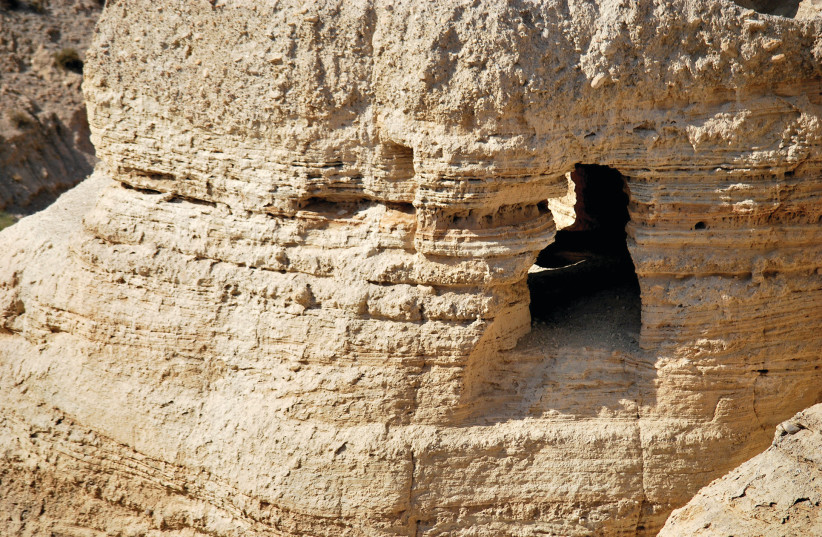
The site of the Qumran Scrolls, known as the Dead Sea Scrolls / (photo credit: HADAR YAHAV)

A mystical religious ceremony described in several Dead Sea Scrolls and in a medieval document from the Cairo Genizah holds the key to understanding the mysteries of the archaeological site of Qumran, new research suggests.

The nature and distinctive characteristics of Qumran, the nearest site to the caves where the legendary 2,000-year-old documents were found, have been debated by scholars for decades. It was thought to be a settlement where the Jewish sect of the Essenes lived; some proposed that its residents were not Essenes but a different community; others said it was wrong to attribute the area to a specific group; while according to some experts, Qumran might have been a fortress.

No matter the interpretation, some puzzling elements remain, according to Dr. Daniel Vainstub of Ben-Gurion University of the Negev, who authored a study recently published in the peer-reviewed, open-access academic journal Religions.

Why have archaeologists only found remains of public buildings and not of private dwellings? How is it possible to explain the presence of thousands of pottery vessels in a place that had a few dozen residents at most? And why did the area feature such a multiplicity of mikvaot ritual baths, including very large ones, for such a small population?

According to Vainstub, Qumran was intimately connected to the Essenes, but rather than a permanent settlement of the group, it was the site where all its members and candidates would flock from communities all over the country to hold their annual celebration of the “passing of the covenant.”
“I looked both at the texts and the archaeological remains, and what I have seen perfectly fits this possibility,” Vainstub said.

The ceremony was modeled after one described in Deuteronomy, chapters 27-28. In the passage, Moses instructs the Israelites on how to proclaim God’s blessings and curses on Mount Ebal and Mount Gerizim after they enter the land, which is subsequently described in the Book of Joshua.

The rules of the Essenes’ version are described in the so-called “Community Rule” manuscripts, as well as in the Damascus Document copied around the year 1,000 CE and retrieved in the Genizah.

However, Vainstub wrote in the paper, “the description of the ceremony in the Damascus Document includes a sentence containing two pieces of information that are of critical importance for our purposes and are missing in the Community Rule: ‘And all [the inhabitants] of the camps shall assemble in the third month and curse anyone who deviates either to the right [or to the left from the] Torah.’”

From that sentence, the scholar pointed out that two elements can be deduced: that the gathering took place in a specific time – the month of Sivan, when the festival of Shavuot falls – and that people from different places (camps) were called to convene in one site.

Excavations at Qumran (SHAI HALEVY/IAA).

Therefore, according to Vainstub, the rules that were previously thought to apply to Essenes’ general lifestyle describe the specific ceremony instead.
“It could be that Qumran was even built for the purpose of this gathering,” he wrote.

Those who convened ahead of Shavuot did not need to be housed in buildings, but rather slept outside or in one of the numerous caves of the areas, where millennia later the manuscripts that came to be known as the Dead Sea Scrolls would be found.

“My theory is also consistent with the fact that the scrolls did not necessarily originate from Qumran, but rather were brought to the caves from all over the country and were left in the caves over the decades,” Vainstub wrote.

The archaeological remains in Qumran, including the number and size of mikvaot, assembly hall and pantry (with thousands of stored vessels), as well as the empty southern esplanade, can also be explained from this perspective, he said.

“Some dozens of permanent residents of Qumran, perhaps with the help of small Essene groups living nearby close to the springs on the shores of the Dead Sea, had to host many hundreds of people at the site once a year in ever-increasing numbers,” Vainstub concluded in the paper. “The site of Qumran, with its facilities, caves and surfaces, accords with the evidence for the annual gathering that emerges from the scrolls. No other known site is suitable for such a purpose.”


Zawartość publikowanych artykułów i materiałów nie reprezentuje poglądów ani opinii Reunion’68,
ani też webmastera Blogu Reunion’68, chyba ze jest to wyraźnie zaznaczone.
Twoje uwagi, linki, własne artykuły lub wiadomości prześlij na adres:
webmaster@reunion68.com