Archives

Six Israeli Artists Create Exclusive Apple Playlists to Celebrate Rosh Hashanah

Six Israeli Artists Create Exclusive Apple Playlists to Celebrate Rosh Hashanah

Shiryn Ghermezian


Omer Adam. Photo: Wikimedia Commons.

Apple Music launched a new project in collaboration with Israeli singers that was inspired by the Jewish holiday Rosh Hashanah.

The music streaming service asked several well-known musicians in Israel to create exclusive playlists composed of their favorite Israeli songs from the last year. The playlists contain between 14 to 25 songs and were curated by Israeli artists Omar AdamNoa KirelElla-Li LahavMiri MesikaRavid Plotnik and Berry Sakharof. The Apple Music playlists will be available from Thursday until after Rosh Hashanah.

“Just as one year ends and a new one begins, we invite you to celebrate the past and look forward to what’s yet to come,” Apple Music said. “To summarize the past Jewish year, we’ve asked six artists we love to share the Israeli songs that made their year. You can also dive into iconic Israeli debut albums, go back to the classics and enjoy the work of trailblazing, innovative artists. Shanah tova!”

Sakharof said, “I’m happy that even during this difficult year, music has won and there’s been a continued release of great songs here. These are some of the songs I loved this year.”

Apple Music also released a playlist titled “Future Generation,” which is dedicated to introducing new talent and “the most promising voices” from the Israeli music scene. The playlist is updated regularly.


Zawartość publikowanych artykułów i materiałów nie reprezentuje poglądów ani opinii Reunion’68,
ani też webmastera Blogu Reunion’68, chyba ze jest to wyraźnie zaznaczone.
Twoje uwagi, linki, własne artykuły lub wiadomości prześlij na adres:
webmaster@reunion68.com


Ancient gold coins looted from archaeological sites found in Bnei Brak home

Ancient gold coins looted from archaeological sites found in Bnei Brak home

ROSSELLA TERCATIN


Hundreds of artifacts from the Hasmonean, Roman, Byzantine and Islamic period were saved from an illegal antique dealer.

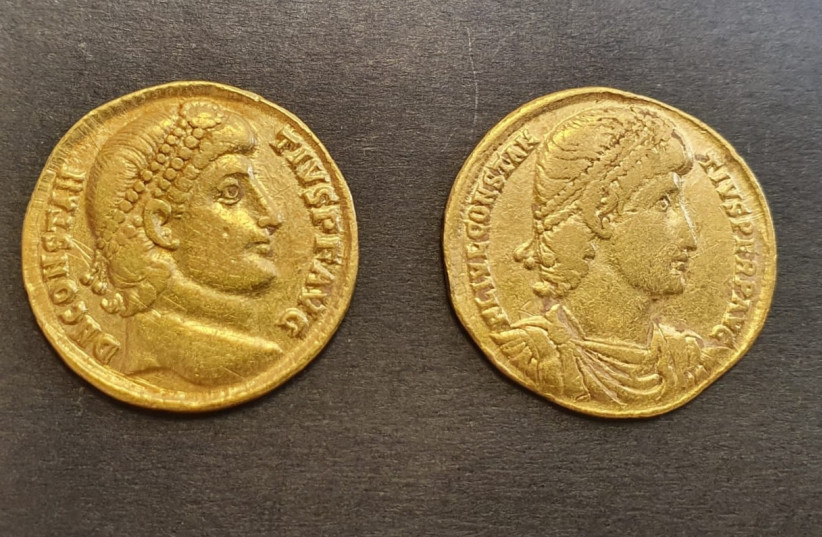
Looted gold coins / (photo credit: ISRAEL ANTIQUITIES AUTHORITY PREVENTING ROBBERY UNIT)

Hundreds of ancient coins looted from archaeological sites were found in a house in Bnei Brak, the Antiquities Authority (IAA) announced Monday.

The artifacts were uncovered during an operation by the IAA’s Robbery Prevention Unit.

Among the coins found were some gold coins from the Byzantine and the Islamic periods, dozens of Hasmonean coins and hundreds of Roman coins.

The suspect worked as an illegal antique dealer trading in artifacts acquired in the legal and illegal markets, as well as smuggled in from abroad.

“Illegal trade in coins and antiquities creates an income opportunity for antiquities looters, and it encourages antiquities robbery and fatal and irreversible damage to sites around the country,” said IAA Trading National Inspector Ilan Hadad.

“The looters, who dig at archaeological sites and destroy them for the sake of greed, cut off the antiquities from their archaeological context and erase entire chapters from the history of the Land of Israel – stories that will never be told again,” he added.

In the past few years, the IAA has been conducting a rescue operation to examine all caves near the shores of the Dead Sea, where the Dead Sea Scrolls were found. The caves have been targeted by looters for decades.

Among others, the archaeologists uncovered some new biblical fragments and a 10,000-year-old woven basket. They found evidence that antiquities looters had probably arrived some 10 cm. from the artifact, but stopped excavating just before reaching it.


Zawartość publikowanych artykułów i materiałów nie reprezentuje poglądów ani opinii Reunion’68,
ani też webmastera Blogu Reunion’68, chyba ze jest to wyraźnie zaznaczone.
Twoje uwagi, linki, własne artykuły lub wiadomości prześlij na adres:
webmaster@reunion68.com


Cryptic 2,700 year-old pig skeleton found in Jerusalem’s City of David

Cryptic 2,700 year-old pig skeleton found in Jerusalem’s City of David

ROSSELLA TERCATIN


The remains of the animal were found in a luxurious First Temple Period building. Was it there to be eaten?
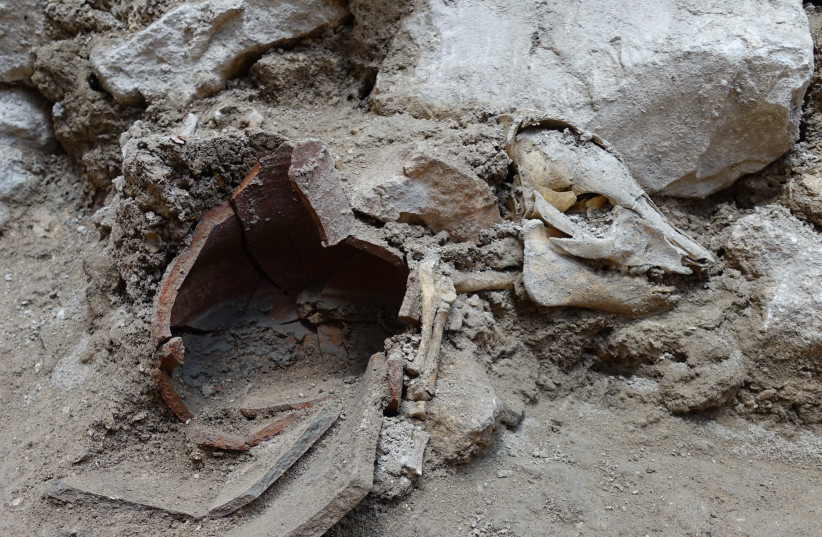
An ancient pig skeleton is seen in Jerusalem, having been discovered in a building dating back to the First Temple. / (photo credit: OSCAR BEJERANO COURTESY OF THE ISRAEL ANTIQUITIES AUTHORITY)

The full skeleton of a pig has been found in a building dating back some 2,700 years, in the City of David in Jerusalem, just a few dozen meters from the Temple Mount, says a new paper published in the latest issue of the academic journal Near Eastern Archaeology. And despite the strong prohibition against consuming pork dictated by Jewish laws, it was most likely there to be eaten, Dr. Joe Uziel, a senior archaeologist at the Israel Antiquities Authority and one of the authors of the study, said.

“We were excavating on the eastern slopes of the City of David, and we uncovered a building dating back to the second half of the Iron Age, also known as the First Temple period,” Uziel said. “We began exposing one of the rooms, where we saw several vessels smashed on the floor and soon we found the skeleton of a small animal wedged between the wall and the vessels.”

At first, the researchers were not sure which type of animal they had encountered.

“We are archaeologists, this is not our expertise,” Uziel said. For this reason, they consulted with Dr. Lidar Sapir-Hen, an archaeozoology expert from Tel Aviv University.

“She was able to tell us that it was a pig just by looking at a picture of a skeleton,” Uziel noted.
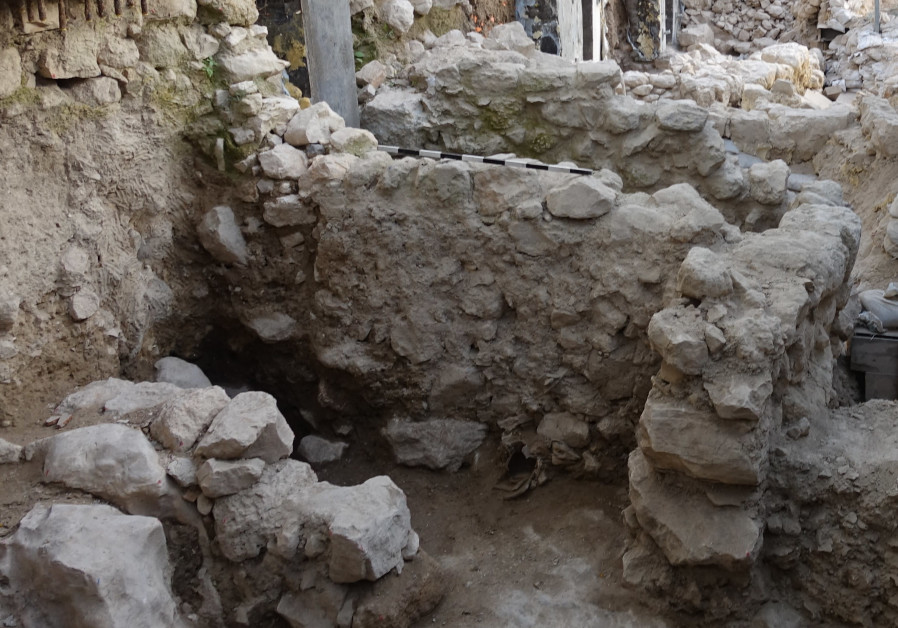
Iron Age buildings exposed in the City of David in Jerusalem, Israel. Photograph Name: ORTAL CHALAF COURTESY OF THE ISRAEL ANTIQUITIES AUTHORITY

The archaeologists found that the room that they had excavated was clearly used for the purpose of processing and preparing food.

Remains of fire were uncovered, as well as a large amount of other animal bones, mostly sheep and some cattle. However, these bones presented clear traces of butchering and cooking. The pig on the other hand, appeared to be still alive when the building collapsed and trapped it to its death – perhaps as a consequence of an earthquake.

Asked whether it is possible that the pig was kept by the building’s residents as a pet, Uziel said it is very unlikely.

“In the Near East pigs were not kept as pets,” he remarked. “While pets were not as common as today, we have evidence of animals kept as pets, and usually they were more likely to be species that we would expect serving this function now, like dogs.”

“Considering where we found the pig, there is no reason to believe it was there for any purpose other than consumption,” he stressed.

In addition, the archaeologist said that there is no reason to believe that the people living in the building were not Judeans.

This find does not represent the first time that pork remains have been located in Jerusalem.

Less than 2% of animal remains found in excavations in the city belonged to pigs, suggesting that while eating pork was not very common, some people did do it, in spite of the biblical prohibition.

The new discovery might suggest that pig presence in First Temple Jerusalem went a step further.
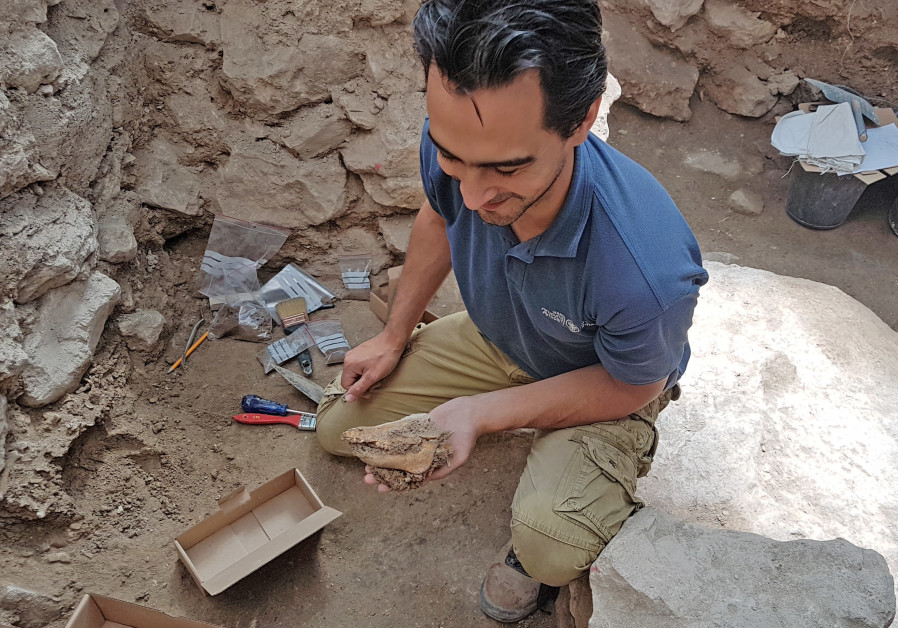
An IAA archeologist is seen holding the pig skeleton in Jerusalem. Photograph Name: JOE UZIEL/ISRAEL ANTIQUITIES AUTHORITY

“Although pork consumption was clearly not preferred in the region of Judah, the presence of an articulated skeleton of a small pig seems to indicate that not only was pork consumed in small amounts (as noted in the sites above), but that pigs were raised for this purpose in the capital of Judah,” the researchers wrote in the paper.

Several elements suggest that the building belonged to wealthy owners, including its position near the Gihon spring and a number of decorative artifacts such as jewelry and an elaborated jar with zoomorphic handles that were unearthed in it.

For this reason, the hypothesis that the animal was raised in a poor context in light of its ability to provide a large amount of food is also not very plausible according to the scholars.

“It appears that this articulated pig may be evidence that although pork was largely not consumed in Judah and Jerusalem, this was not necessarily based on a very strict taboo,” they concluded. “The extent of culinary consumption based on laws of Kashrut in the Iron Age is still debatable.”


Zawartość publikowanych artykułów i materiałów nie reprezentuje poglądów ani opinii Reunion’68,
ani też webmastera Blogu Reunion’68, chyba ze jest to wyraźnie zaznaczone.
Twoje uwagi, linki, własne artykuły lub wiadomości prześlij na adres:
webmaster@reunion68.com


News From Israel- September 01, 2021

News From Israel- September 01, 2021

ILTV Israel News


Some two and a half #million Israelis returning to #school under revised #coronavirus regulations.

The #coalition now preparing the first potential state budget in years, for a vote. But with criticisms mounting from all sides, can the #proposal be passed? Or is the new unity government already facing #collapse?

#Israel outperforming expectations at the #Paralympics in Tokyo. But many arguing that these and the other #victories maybe built on a hollow foundation. So, are the results all a lie? Join us to find out.


Zawartość publikowanych artykułów i materiałów nie reprezentuje poglądów ani opinii Reunion’68,
ani też webmastera Blogu Reunion’68, chyba ze jest to wyraźnie zaznaczone.
Twoje uwagi, linki, własne artykuły lub wiadomości prześlij na adres:
webmaster@reunion68.com


Where did the biblical road from Judea to Edom pass? Experts find answers

Where did the biblical road from Judea to Edom pass? Experts find answers

ROSSELLA TERCATIN


Research led by Ben Gurion University archaeologist Dr. Eli Cohen-Sasson offers new insights on the ancient route through the Judean desert.

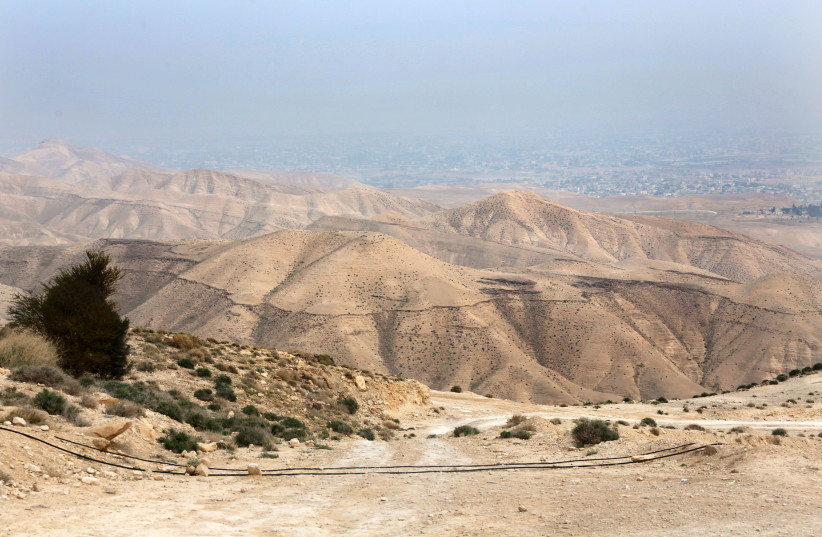
A view of the Judean Desert / (photo credit: MARC ISRAEL SELLEM)

What was the route of the ancient road connecting the Kingdom of Judea to the neighboring nation of Edom as described in the Bible? Recent research by a group of Israeli scholars has shed new light on the issue.

It suggests at least two itineraries existed, as hinted in the biblical text, and reveals the ancient inhabitants of the land of Israel’s deep knowledge of their territory.

“I had been working in the southern Judean Desert on a different road connecting Arad and Jordan in the Early Bronze Age,” said Ben-Gurion University of the Negev archaeologist Dr. Eli Cohen-Sasson, the lead author of the study on the Edom road recently published in the academic journal Palestine Exploration Quarterly.

The Early Bronze Age covers the period between 3300 BCE and 2000 BCE, which is earlier than the setting of most biblical text.

The research sparked an interest in other systems of roads, especially after Cohen-Sasson came across a site that was already known but never properly studied, Nahal Gorer.

Cohen-Sasson and his colleagues noted that pottery artifacts, which experts usually use to date remains, all belonged to the same period – ninth- or eighth-century BCE, during the Iron Age II (1200 BCE-586 BCE) – and started to examine what could have been the nature of the site.

“We read a lot about the road to Edom mentioned in the Bible,” Cohen-Sasson said.

The connections between Israel, Judea and Edom are discussed several times in the biblical text. The road is explicitly cited in the third chapter of the Book of II Kings.

“The king of Moab rebelled against the king of Israel,” reads a passage. “So King Jehoram promptly set out from Samaria and mustered all Israel. At the same time, he sent this message to King Jehoshaphat of Judah: ‘The king of Moab has rebelled against me; will you come with me to make war on Moab?’ He replied, ‘I will go. I will do what you do: my troops shall be your troops, my horses shall be your horses.’ And he asked, ‘Which route shall we take?’ [Jehoram] replied, ‘The road through the wilderness of Edom.’”

According to the Jewish tradition, the Edomites were descendants of Esau (Eisav), son of Judaism’s patriarch Yitzhak and brother of Ya’acov.
The kingdom of Edom extended to an area covering part of modern southern Israel and Jordan. Moab was also located in modern Jordan on the eastern bank of the Dead Sea.

The question of the itinerary of the road had already been explored by archaeologists.

In the 1950s, legendary Israeli archaeologists Yohanan Aharoni and Beno Rothenberg identified two Iron Age sites that they believed were located along the road, connecting the areas of the Negev Desert, the Judean Hills and the Judean Desert, as well as some strongholds located along the Judean border.

But according to Cohen-Sasson, the route they proposed was highly illogical and had unnecessary detours.

“Why would someone spend an extra half day traveling when they did not have to?” he asked.

However, what Cohen-Sasson and his colleagues found in Gorer allowed them to propose an alternative interpretation, also based on the work of Israeli geographer Menahem Markus, who had previously suggested that what Aharoni and Rothenberg found were actually two separate roads.

“When we started our work, we realized that the site proved that there were two roads because Gorer stands exactly at the intersection between them,” Cohen-Sasson said.

The southern Judean Desert presents several sites and fortresses dating back to the Iron Age, which were believed to be connected by the roads.
The structure at Gorer was believed to be about 14 by 14 meters large, with a six- by six-meter tower.

“It was too small to be a fortress,” Cohen-Sasson said. “It was more like an outpost.”

Another important element to consider is that the site was located at a very strategic position that gave a unique opportunity to monitor the surroundings, he said, adding: “This shows us that ancient Judeans had a very good understanding of the topography of their territory.”

That the roads to Edom were in fact more than one should not come as a surprise, Cohen-Sasson said.

“It seems to be already implied in the Bible,” he said. “If the road had been only one, why would the king of Judah ask his fellow king of Israel which one to take?”


Zawartość publikowanych artykułów i materiałów nie reprezentuje poglądów ani opinii Reunion’68,
ani też webmastera Blogu Reunion’68, chyba ze jest to wyraźnie zaznaczone.
Twoje uwagi, linki, własne artykuły lub wiadomości prześlij na adres:
webmaster@reunion68.com