Archives

US holding Iran responsible for Mercer Street attack ‘not a small detail’

US holding Iran responsible for Mercer Street attack ‘not a small detail’

SETH J. FRANTZMAN


The report from US Central Command on the Mercer Street attack is significant and important and lays out in detail the attacks, and it has new information as well..
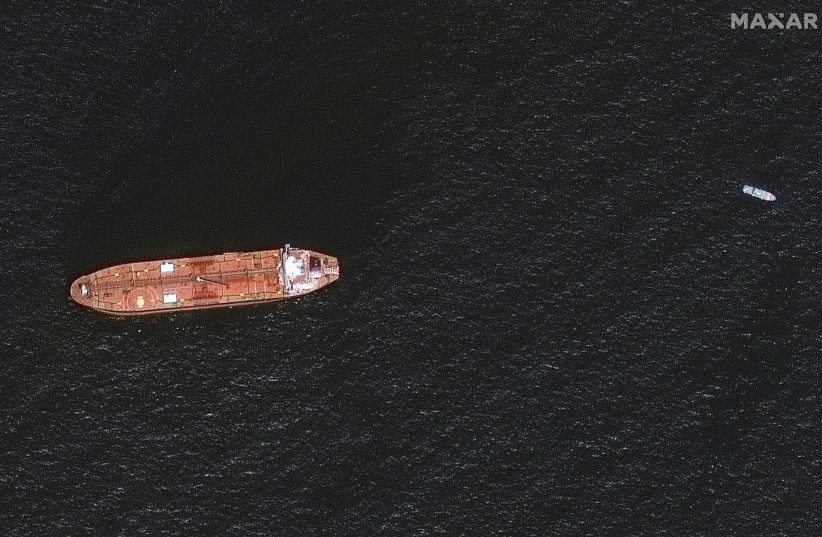
A satellite image shows the damaged Mercer Street Tanker moored off the coast of Fujairah, United Arab Emirates, August 4, 2021.
(photo credit: MAXAR TECHNOLOGIES/HANDOUT VIA REUTERS)

US Central Command has come out with a statement and multi-page investigatory report on the attack on the Mercer Street, the ship that was attacked off the coast of Yemen and has raised tensions between Israel and Iran, as well as the US, UK and Iran. The deadly drone attack was carried out by Iran and involved three drones. The report says “US experts concluded based on the evidence that this UAV was produced in Iran.” Iran has rejected these claims but the US and G-7 countries have said Iran was responsible.

This is not small detail. The report is significant and important and lays out in detail the attacks, and it has new information as well.
The report is titled: “Iranian UAV Attack Against MOTOR TANKER MERCER STREET” and details from it are from US Navy Capt. Bill Urban, the CENTCOM spokesman.

Here is what the team has found. The deadly attack took place on July 30 and involved an explosive unmanned aerial vehicle attack on the tanker. The investigators came from the USS Ronald Reagan, which sent a team to embark on the M/T to examine the evidence and interview the surviving crew members.

The team learned that two drones actually attacked the ship on July 29. “The crew reported the attacks via distress calls on the evening of July 29. Based on crew interviews, the investigative team found credible the reports of the attacks, which impacted the sea near the M/T Mercer Street. Investigators found small remnants of at least one of the UAVs on Mercer Street that the crew had retrieved from the water, corroborating the reports,” reads the report, meaning that the first attack appears to have been a failure.

Iran decided to continue the attacks, although how they guided the drones and where they flew from is not clear. But a moving vessel is difficult to find and strike with drones. Iran has increased its drone attacks throughout the region in recent months. “The investigative team determined that the extensive damage to the Mercer Street…was the result of a third UAV attack on July 30. This UAV was loaded with a military-grade explosive, and caused the death of two crewmembers; the master of the ship, a Romanian citizen, and a United Kingdom national who was part of the security detail.”

A 6-foot diameter hole in the topside of the pilot house was made by the drones which badly damaged the interior. “Explosive chemical tests were indicative of a Nitrate-based explosive and identified as RDX, indicating the UAV had been rigged to cause injury and destruction.” The experts recovered some parts of the UAV, including part of the wing which was “nearly identical to previously-collected examples from Iranian one-way attack UAVs. The distance from the Iranian coast to the locations of the attacks was within the range of documented Iranian one-way attack UAVs. Following an on-scene analysis, some of the material was transferred to US Fifth Fleet headquarters in Manama, Bahrain and subsequently to a US national laboratory for further testing and verification.”

UK explosive experts also came to examine the evidence. “Evidence was shared virtually with Israeli explosive experts.” There is agreement now with the US assessment that the “UAV was produced in Iran.”

A PDF that Central Command put out has more details, and notes that the drone components have “very specific and matching identities to previously exploited (and known) Iranian one-way attack UAVs. The use of Iranian designed and produced one way attack “kamikaze” UAVs is a growing trend in the region. They are actively used by Iran and their proxies against coalition forces in the region, to include targets in Saudi Arabia and Iraq.” This means this is part of the Iranian drone war across the region using this new technology.

We now know that after the first attack on July 29 the US navy sent the USS Ronald Reagan with the USS Mitscher to establish communications with the Mercer Street and assist. “A US drone was also directed to the area to assist. A helicopter from USS Ronald Reagan located the Mercer Street in a remote area of the Arabian Sea. Working through UKMTO and Zodiac, communications were established with Mercer Street; surviving crew confirmed a Ship Master and a Security Officer had been killed.” By July 31 a team had come to the ship and extracted evidence, and another team followed on August 2.

The report says that a delta-wing style UAV was involved in the attack. It shows old images of these drones from 2014 in Iran and notes that a similar type of drone was found in Saudi Arabia, the result of an attack that year. In September 2020 another delta-wing style UAV was seen in Yemen. In January and May Iran showed video of attacks with these UAVs. Photos from the 16-page report show the extent of damage the drone caused on July 30.


Zawartość publikowanych artykułów i materiałów nie reprezentuje poglądów ani opinii Reunion’68,
ani też webmastera Blogu Reunion’68, chyba ze jest to wyraźnie zaznaczone.
Twoje uwagi, linki, własne artykuły lub wiadomości prześlij na adres:
webmaster@reunion68.com



Jewish Actor Josh Peck Teaches Ryan Seacrest Yiddish Word ‘Shvitz’

Jewish Actor Josh Peck Teaches Ryan Seacrest Yiddish Word ‘Shvitz’

Shiryn Ghermezian


Josh Peck during his guest appearance on “Live with Kelly and Ryan.” Photo: Screenshot.

Josh Peck gave talk show host Ryan Seacrest a brief lesson in Yiddish during the Jewish actor’s virtual guest appearance on “Live with Kelly and Ryan” on Monday.

Peck, who stars in the Disney+ show “Turner & Hooch,” was asked by Jewish actress Katie Lowes, the morning show’s guest co-host, what he misses the most about his life before the coronavirus pandemic. Peck replied, “I’m a bit of a ‘shvitz’ guy. I like a good sweat, and you just can’t do that post-COVID. Not right now.”

Lowes then proceeded to explain to a confused Seacrest and the audience that “shvitz” means sweat. She asked Peck to clarify, “So you miss going into a sauna or a steam room or something like that?” and Peck responded that he misses going to a sauna for a “detox.”

Trying to understand, Seacrest repeated the Yiddish word and asked if “shvitz” is a “self-induced sweat” and “What if I go to a hammam? Is that similar?” Lowes then explained to Seacrest the difference between “shvitzing” and “having a shvitz.”


Zawartość publikowanych artykułów i materiałów nie reprezentuje poglądów ani opinii Reunion’68,
ani też webmastera Blogu Reunion’68, chyba ze jest to wyraźnie zaznaczone.
Twoje uwagi, linki, własne artykuły lub wiadomości prześlij na adres:
webmaster@reunion68.com


ARMED “PALESTINIAN ARABS” FROM GAZA BREAK INTO ISRAEL

ARMED “PALESTINIAN ARABS” FROM GAZA BREAK INTO ISRAEL

Micha Gefen


With rhetoric increasing between Israel and Iran as well as Hezbollah preparing an invasion of Northern Israel, Gazans appear ready to take their fight forward

 .
Four Gazan Arabs – three with knives, broke into Southern Israel at two different times. The IDF apprehended the would be invaders rather quickly thanks to surveillance equipment. While this was not a formal invasion or a major terrorist attack there is a subtly warning in the event – Israel’s Gazan border is not perfect.

This message is an important one for the country. Israelis often times relegate the Gaza area as one of rocket fire and not ground invasions. However, it was not too long ago that Gazan terrorists tried to dig their way under Israeli communities. The practice was so widespread, residents did not know where the tunnels were and expected a horde of terrorists from Gaza to ambush them at any time.

The four “palestinian” Arabs are a real reminder that attackers from Gaza are a very real possibility and the government must take heed.


Zawartość publikowanych artykułów i materiałów nie reprezentuje poglądów ani opinii Reunion’68,
ani też webmastera Blogu Reunion’68, chyba ze jest to wyraźnie zaznaczone.
Twoje uwagi, linki, własne artykuły lub wiadomości prześlij na adres:
webmaster@reunion68.com


News From Israel- August 04, 2021

News From Israel- August 04, 2021

ILTV Israel News


#Israel vowing retaliations against #Iran, amidst a series of reported #escalations

Israel’s high court floating a controversial #compromise in the #SheikhJarrah eviction cases

New covid #restrictions, just a couple degrees shy of #lockdown, a full listing of the pending regulations to follow


Zawartość publikowanych artykułów i materiałów nie reprezentuje poglądów ani opinii Reunion’68,
ani też webmastera Blogu Reunion’68, chyba ze jest to wyraźnie zaznaczone.
Twoje uwagi, linki, własne artykuły lub wiadomości prześlij na adres:
webmaster@reunion68.com


Rockets fired from Lebanon toward Israel, IDF responds with artillery fire

Rockets fired from Lebanon toward Israel, IDF responds with artillery fire

ANNA AHRONHEIM, TZVI JOFFRE


The IDF responded shortly after the rocket fire, with tank fire towards the launch site.

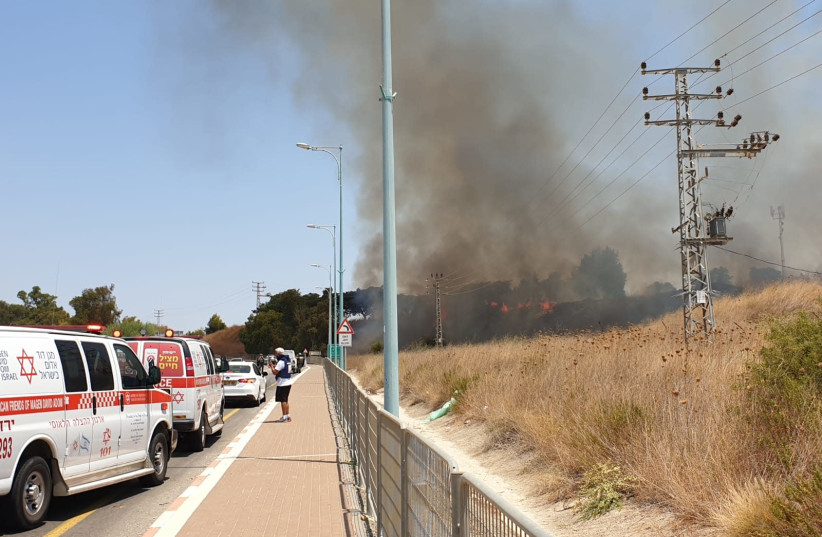
Site where a rocket fell near Kiryat Shmona, August 4, 2021 / (photo credit: ERAN LAPEL/MAGEN DAVID ADOM)

The IDF struck along the entire Lebanese border on Wednesday afternoon after three rockets were fired towards the northern Israeli city of Kiryat Shmona.

Sirens sounded in Kiryat Shmona and the communities of Kfar Giladi and Tel Hai at around noon, sending thousands to bomb shelters. Magen David Adom emergency services said they treated four people for anxiety attacks following the rocket fire.

The IDF said it identified three launches from Lebanon. One failed and fell inside Lebanese territory, while two others hit open areas inside Israel.

Shortly afterwards the IDF retaliated with artillery shells towards the launch sites. Some six artillery shells were fired by the IDF towards an open area in Lebanon located north of Metula, according to Hezbollah-affiliated reporter Ali Shoaib.

The military later carried out large-scale retaliation across the entire border.

Following the rocket fire, the United Nations Interim Force in Lebanon (UNIFIL) released a statement saying that they had received reports of rocket fire from Lebanon towards Israel.

“UNIFIL’s Head of Mission and Force Commander, Maj.-Gen. Stefano Del Col, was in immediate contact with the parties. He urged them to cease fire and to exercise maximum restraint to avoid further escalation, especially on this solemn anniversary,” the statement read, adding that “UNIFIL remains fully engaged with the parties through our liaison and coordination channels and we are working with the Lebanese Armed Forces to ensure immediate follow up on the ground and to reinforce security along the Blue Line.”

Though the city of Kiryat Shmona said it had opened bomb shelters, the military said that there was no change in instructions and that residents near the border could continue with their daily routines.

Prime Minister Naftali Bennett and Defense Minister Benny Gantz were updated about rocket fire from Lebanon while in the Knesset plenum.August 4, 2021. (SCREENSHOT KNESSET CHANNEL).

Gantz also conducted a situational analysis with Kohavi, head of the Political-Military Bureau at the Defense Ministry Zohar Palti, head of the IDF’s Operations Directorate Oded Besiok and head of IDF Intelligence Maj.-Gen. Tamir Heiman.

Gantz ordered that a strict message be sent to UNIFIL concerning the rocket fire, his office said.

It is still unclear who fired the rockets early but it is believed to be the same Palestinian militants who’ve fired close to a dozen rockets since May.

While Hezbollah has full control in south Lebanon, the Shiite terror group is not suspected to be behind any rocket fire. The group is believed to have nevertheless given tacit consent to the group to fire towards Israel.
Twice this week, the IDF fired flares along the border with Lebanon after suspicions of infiltrations were reported along the border fence. No infiltrations into Israeli territory were identified in either incident.
Three weeks ago two rockets were fired towards Israel, setting off incoming rocket sirens in communities along the border including Rosh Hanikra, Shlomi, Kabri and Hanita. One rocket was intercepted by the Iron Dome missile defense system and the other struck an open field.

Gantz said at the time that Lebanon was responsible for the rocket fire.
“The one responsible for the night shooting is the Lebanese state, which allows terrorist acts from inside its territory. The State of Israel will act in the face of any threat to its sovereignty and its citizens and will respond in accordance with its interests, at the relevant time and place,” he warned.

In May, during Operation Guardian of the Walls, a dozen rockets were fired into Israel from the same area in Lebanon, causing several people to be injured while running for shelter.

For the first time since the Second Lebanon War in 2006, incoming rocket sirens were activated in the southern Galilee region, as well as the Haifa suburbs of Kiryat Bialik and Kiryat Motzkin after four rockets were fired.
The IDF fired back toward the source of the rocket launch in Lebanon with some 22 tank and artillery shells.

Several days earlier, six rockets were fired from Rashaya Al Foukhar, north of Kfar Choub in southern Lebanon. All fell short of the border and landed inside Lebanese territory and the IDF fired back toward the source of the rocket launch in Lebanon with some 22 tank and artillery shells.

In a recent interview, Col. Raz Haimlich, Commander of the Artillery Corps Fire Brigade 411th “Keren” Battalion, told The Jerusalem Post that with the Lebanese economy in free-fall, the IDF is concerned that there may be an increase of incidents along its northern border.

“The Lebanese economy is not good, and that can lead to things happening on the border,” he said.

Hezbollah Secretary-General Hassan Nasrallah is set to deliver a speech on Saturday evening to mark the anniversary of the Second Lebanon War.
The rocket fire also comes as tensions remain high in the region after an Israeli-managed tanker was targeted by an Iranian drone strike, killing a British and a Romanian civilian. Officials from the United States, Israel and the United Kingdom have warned that they will respond to the attack. Iran denies any involvement in the incident.

On Tuesday, a tanker was hijacked off the coast of the United Arab Emirates, with the hijackers leaving the vessel on Wednesday.
Wednesday also marks one year since the explosion at the Beirut Port, in which over 200 people were killed and thousands were wounded.


Zawartość publikowanych artykułów i materiałów nie reprezentuje poglądów ani opinii Reunion’68,
ani też webmastera Blogu Reunion’68, chyba ze jest to wyraźnie zaznaczone.
Twoje uwagi, linki, własne artykuły lub wiadomości prześlij na adres:
webmaster@reunion68.com