Archives

Cabinet votes on reinstating ‘green pass’

Cabinet votes on reinstating ‘green pass’

ILTV Israel News


As #Israel continues to struggle with containing the new #DeltaVariant of the #Coronavirus, the cabinet convened on Sunday to discuss new #restrictions and outline clear incentives for Israelis who have gotten #vaccinated.

Several months after #Israel signed an agreement to normalize relations with #Morocco, in an #historic ceremony, both El Al and Israir launched direct #flights to #Marrakesh on Sunday.

The #DeltaVariant continues to sweep across the globe and across Israel, with it now accounting for 90% of new #Coronavirus cases in the country. Israel continues to struggle with containing the spread of the virus, to the point where the government has had to #reintroduce the #greenpass, now the Health Ministry announces that the #vaccines are only #39%effective at preventing infection.


Zawartość publikowanych artykułów i materiałów nie reprezentuje poglądów ani opinii Reunion’68,
ani też webmastera Blogu Reunion’68, chyba ze jest to wyraźnie zaznaczone.
Twoje uwagi, linki, własne artykuły lub wiadomości prześlij na adres:
webmaster@reunion68.com


Hamas Is Abusing Children, and the World Is Complicit

Hamas Is Abusing Children, and the World Is Complicit

David M. Litman


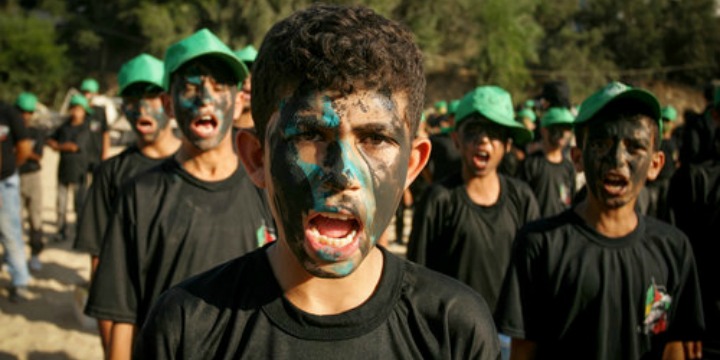
Palestinian youths at a graduation ceremony for a military-style camp organized by the Hamas terror group in Gaza, Aug. 18, 2017. Photo: Abed Rahim Khatib/Flash90.

The immorality of Hamas and Palestinian Islamic Jihad (PIJ) is unsurprising. Terrorist disregard for the welfare of children is nothing unusual. The real story is how the world will once again shrug its shoulders as children are taught to be hateful terrorists.

Their acquiescence makes them complicit.

Take, for example, the United Nations. At a press conference for the Hamas “Vanguard of Liberation” camps, the spokesperson defended teaching children “armed resistance” by referencing a 1990 UN resolution that explicitly justified terrorism.

The UN has since become more subtle. Perhaps it realized the awkwardness of being an organization supposedly committed to “peace and security” while also expressly justifying the deliberate bombing of pizza parlors full of children.

Yet, it still works to provide cover for those terrorists.

The UN Secretary-General produces an annual report on “children and armed conflict.” As the group NGO Monitor has ably demonstrated, the report finds ways to apply unique standards, used nowhere else, to slander Israel (read: Jews) as child killers.

All the while, the annual reports have been almost entirely silent when it comes to the Palestinian terrorist groups’ incitement and recruitment of children.

To be clear, lack of evidence isn’t the problem.

Research analyst Joe Truzman, of the Foundation for Defense of Democracies, has been regularly posting the public statementsimages, and videos (including even music videos) from these summer camps.

The UN’s silence isn’t unique, either. The websites of “human rights” groups like Amnesty International and Human Rights Watch return no results when searching for condemnation of the summer camps.

The game played is particularly cynical, because it victimizes Palestinian children twice, and all just to continue blaming Israel (read: Jews) for the world’s wrongs. They are first victimized when Hamas robs them of a childhood, and places hatred in their hearts and weapons in their hands. They are then victimized a second time when “human rights” actors knowingly divert their gaze elsewhere, so as not to complicate the narrative of “Israel is bad.”

There is also the lame attempt of whataboutery. A favorite of anti-Israel social media users when videos and images of the terrorist camps begin emerging was to reuse old pictures of Israeli children examining weapons during an Independence Day celebration exhibit in 2016. The comparison is obviously silly.

I grew up nearby one of the largest airshows in the world, the EAA AirVenture. Every summer, many hundreds of thousands visit the airshow with their children, where they can get up close and personal with all sorts of military equipment exhibits. Just peruse the airshow’s gallery and you’ll find all sorts of children gawking at weapons as deadly as an F-35.

There’s obviously no moral equivalence between a summer camp that teaches kids how to use weapons and abduct Israelis on the one hand, and bringing children to a military exhibit fit for a history museum on the other.

But then again, it isn’t consideration for the welfare of children that invokes the absurd comparisons, the spreading of modern-day blood libels against Israel, and the willful ignorance towards Hamas’ crimes against children.

Rather, it is the hatred of Israel, and the “human rights” intelligentsia is seemingly more than willing to sacrifice the well-being of Palestinian children to score a few points against the Jewish State.

The harm is not just theoretical, either. Several years ago, I helped prepare a report on the growing trend of Palestinian children being used to carry out terror attacks during the “Knife Intifada.” Dozens of attacks were carried out by Palestinian children, some as young as eight-years-old. Even before then, terrorist groups in Gaza were using children to dig their terror tunnels. At least 160 children reportedly died digging those tunnels even before Operation Protective Edge in 2014.

Or take an example from just a couple of months ago. Muhammad Sabar Ibrahim Suleiman, just 16-years-old, was a Hamas operative who died during the fighting in May alongside his father, a Hamas commander. Subsequently released video shows Muhammad wearing a Hamas uniform, and being trained to use weapons — just like at a Hamas summer camp.

Of course, The New York Times put Muhammad’s picture on its front page, implying he was a victim of Israel, rather than a victim of a terrorist organization and a father who placed a gun in his hands and put him in harm’s way.

All of this illustrates the broader win-win game Hamas plays. Israel either defends itself and loses the PR war, or Israel stands down and innocent Israelis will lose their lives.

By remaining silent amid Hamas and PIJ’s crimes against their own children, while unfailingly condemning Israel for acting in self-defense, organizations like the UN and Human Rights Watch only encourage the terrorists to brainwash and endanger even more children.


David M. Litman is a lawyer who advocates for Israel and human rights.


Zawartość publikowanych artykułów i materiałów nie reprezentuje poglądów ani opinii Reunion’68,
ani też webmastera Blogu Reunion’68, chyba ze jest to wyraźnie zaznaczone.
Twoje uwagi, linki, własne artykuły lub wiadomości prześlij na adres:
webmaster@reunion68.com

Meeting United Hatzalah’s Sanaa Mahameed

Meeting United Hatzalah’s Sanaa Mahameed

United Hatzalah


Sanaa Mahameed is one of 330 Muslim United Hatzalah volunteers who respond to medical emergencies all over Israel.

Each one of them has a unique story and puts their lives on hold to save the lives of others.

*Filmed by United Hatzalah volunteer Moshe Bitton.


Zawartość publikowanych artykułów i materiałów nie reprezentuje poglądów ani opinii Reunion’68,
ani też webmastera Blogu Reunion’68, chyba ze jest to wyraźnie zaznaczone.
Twoje uwagi, linki, własne artykuły lub wiadomości prześlij na adres:
webmaster@reunion68.com


12 books to help you understand Israel’s history

12 books to help you understand Israel’s history

Naama Barak


Check out our recommended reading on the innovation, entrepreneurship, dazzling dreams and desperation of war that all make up Israeli history.
.Young people on their way to work in the fields in pre-state Israel, 1939. Photo by Kluger Zoltan/GPO
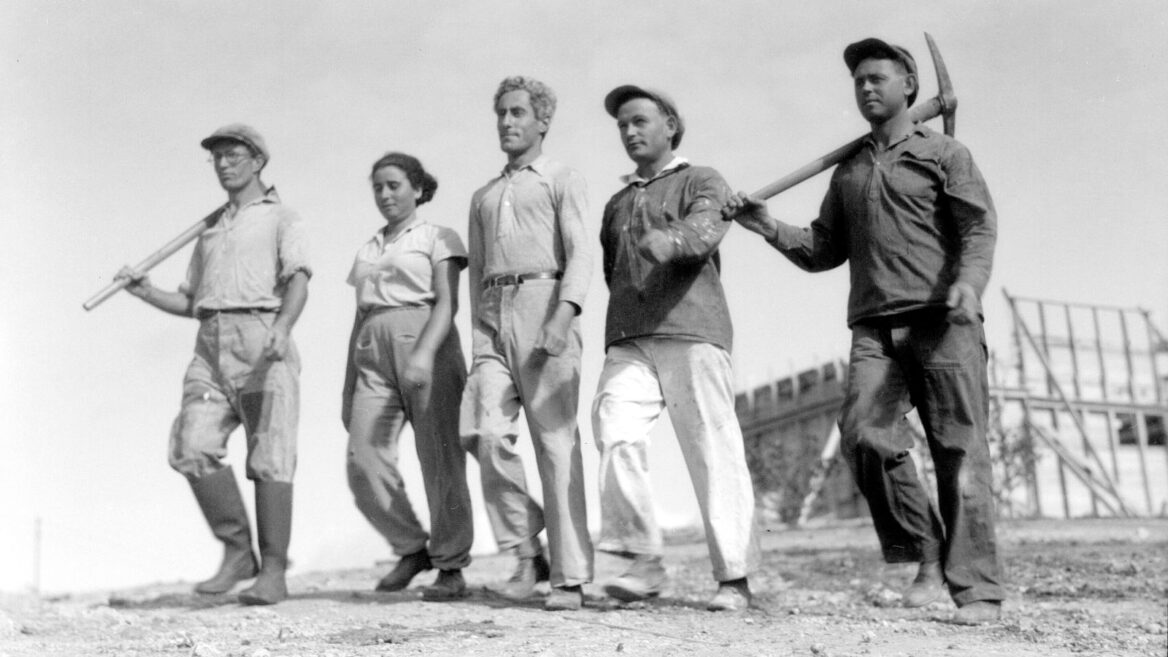
As Israel made headlines across the world in recent weeks, we at ISRAEL21c noticed people’s growing interest in understanding how things got to where they are, the ins and outs of the country’s history and the matters that influence public opinion.

We therefore put together a list of recommended books that tackle multiple facets of Israel’s fascinating history, ranging from the Holocaust and wars and battles to the most famous city on the planet and breakthrough innovation. Enjoy.

1. No Room for Small Dreams: Courage, Imagination, and the Making of Modern Israel by Shimon Peres

Authored by none other than the late Shimon Peres, one of Israel’s legendary presidents, No Room for Small Dreams gives a detailed account of the decisions and events that shaped the country. As a statesman involved in the machinations of the state from the very beginning,

Peres was uniquely positioned to give an insider view of the way Israel became what it is, discussing topics such the country’s nuclear power, the famous Operation Entebbe and the establishment of Start-Up Nation. Fans of the book include former US Presidents Barack Obama, Bill Clinton and George H. W. Bush

2. Israel: A Concise History of a Nation Reborn by Daniel Gordis 

Israeli analyst and author Daniel Gordis’ book does what it says on the cover: offering a concise, brief and accessible view of Israel that at the same time also manages to be thorough and intense

.

A great read for anyone interested in the history of Zionism and the makings of the Israeli state. The author’s passion of the country resonates throughout

3. Israel: A Simple Guide to the Most Misunderstood Country on Earth by Noa Tishby

Israeli actress, producer and public speaker Noa Tishby recently wrote a guide to Israeli history that is intertwined with her history as well as that of her family

.

The result is a fun and funny book that doesn’t skimp on hard facts, difficult questions and hot-button issues, all served in a personal, easy-to-read style. A great choice for those wanting to read up without feeling like they’re in history class

4. Israel: A History by Martin Gilbert

Speaking of history class, this detailed research by prominent British historian Martin Gilbert is a must-read classic. Gilbert starts his history at the beginning of the 20th century, when political Zionism began making waves, and ends it at the first intifada in the 1990s.

In between, he examines events such as Israel’s 1948 War of Independence, mass immigration to the country, the growth the country experienced in the 1960s and the effects of the 1973 Yom Kippur War, all in great and nuanced detail.

5. Jerusalem: The Biography by Simon Sebag Montefiore

British historian Simon Sebag Montefiore’s ambitious biography of Jerusalem is a most comprehensive account of the most famous city in the world: right back from the times of King David and all the way up to the Six-Day War.

He interviewed everyone from historians, archeologists and proud Jerusalemites of all sectors to the Duke of Edinburgh and the Prince of Wales. The result is an impressive and engaging work that resonates a long time after reading.

6. The Israelis: Ordinary People in an Extraordinary Land by Donna Rosenthal 

Donna Rosenthal’s book on the way in which Israelis view themselves and their country has become a classic for anyone trying to understand the often crazy, difficult and clashing realities permeating the land.

She interviewed Jewish, Muslim and Christian Israelis from all walks of life, giving a real sneak peek at communities and issues that don’t often make the headlines but which are newsworthy in their own right.

7. Beaufort by Ron Leshem

The first fiction entry on this list, Beaufort is a bestselling, award-winning novel about a group of soldiers stationed in the Beaufort post in southern Lebanon before Israel’s withdrawal from the region in 2000.

The book, which depicts the troubles, dangers and friendships that made up the world of those stationed on the isolated mountaintop, was later made into an Oscar-nominated film by director Joseph Cedar. As such, it gave its many readers and viewers a glimpse at the complicated, sad and poignant aspects of Israel’s military history, and is an absolute must read.

8. Start-Up Nation: The Story of Israel’s Economic Miracle by Dan Senor and Saul Singer

Perhaps the most famous book on this list, Start-Up Nation addresses the ever-relevant question of how on earth Israel became the entrepreneurial hot spot that it is.

Authors Dan Senor and Saul Singer explore themes such as persistence, order, chaos, immigration and opportunity, giving a well-rounded view of the way Israel pulled itself upward into the high-tech stratosphere.

The two have another book coming out later this year, The Genius of Israel: What One Small Nation Can Teach the World, and chances are it will be just as successful.

9. The Seventh Million: The Israelis and the Holocaust by Tom Segev

It’s a simple truth that no history or understanding of Israel is complete without the Holocaust. Israeli historian Tom Segev’s book deals with the tricky history of the Holocaust as viewed from pre-state Israel and the effects of the Holocaust on the country’s establishment, character and people.

While the book is not free of controversy, and is most definitely not a leisurely read, it is fascinating and thought-provoking and provides yet another important angle on Israel’s history.

10. Israel: A History by Anita Shapira

This award-winning book (by the same name as Martin Gilbert’s) was penned by Anita Shapira, one of Israel’s most prominent historians. Shapira examines the emergence of political Zionism in the late 19th century, immigration to Israel and the wars, political events and cultural shifts that brought the country to where it is today.

Her research is based on extensive archival work, and gives a detailed, thorough and nuanced explanation of Israel through the ages.

11. O Jerusalem! by Larry Collins and Dominique Lapierre

Instead of spanning centuries, Larry Collins and Dominique Lapierre’s book focuses on the space of a little less than two years, when the city became a battleground during the War of Independence.

The two give a multi-dimensional view of the events that shook the city and the people who determined its fate, combining small, personal incidents with larger military and political events that together give a detailed and fascinating account of that time.

12. 1948 by Yoram Kaniuk

Continuing with Jerusalem and 1948, Yoram Kaniuk’s novel 1948 is heart-wrenching account of his military service as a teenage boy in the city. One of Israel’s most celebrated authors, Kaniuk tries to remember what happened to him and his friends in the frenzy and desperation of war, all while noting the blurred lines between reality, memory and oblivion.

While not a history book per se, it nonetheless gives a detailed real-life account of what life was like for the first Israelis and, indirectly, the war’s effects on the country from then on after.


Zawartość publikowanych artykułów i materiałów nie reprezentuje poglądów ani opinii Reunion’68,
ani też webmastera Blogu Reunion’68, chyba ze jest to wyraźnie zaznaczone.
Twoje uwagi, linki, własne artykuły lub wiadomości prześlij na adres:
webmaster@reunion68.com


The new government has severely failed to tackle Arab violence – editorial

The new government has severely failed to tackle Arab violence – editorial

JPOST EDITORIAL


This situation is unacceptable, and the fact that the new government – the first in the county’s history to have Arab members – has yet to address the issue is a disgrace.

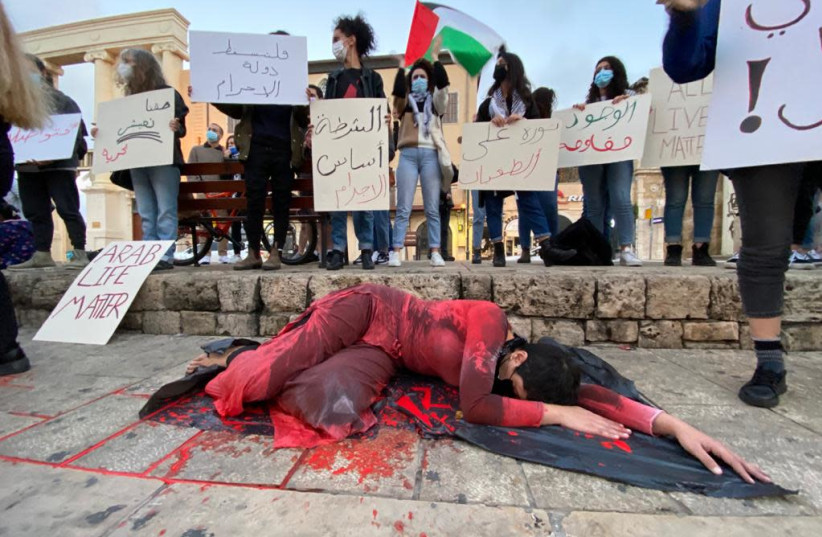
A protest against the rising crime and violence in the Arab sector in Israel, Jaffa, Saturday, February 6, 2021. / (photo credit: SASSONI AVSHALOM)

Another week has gone by and the Arab community in Israel keeps on counting their dead.

According to an Abraham Initiatives track, some 43 Arab citizens of Israel have died in violence-related incidents since the beginning of 2021.

The last one was Ahmad Issa, a 17-year-old teen who was stabbed and then run over by a car in his home village of Kafr Kasim.

Issa was killed right after his high school graduation. His father said at his funeral that he couldn’t believe it when he was told about his son’s death.

“I trusted him totally… I was waiting for him to come back home – and instead, he came back in a coffin. He was so happy at his graduation and we were all happy with him,” he said.

“But this day of joy turned into a deep sorrow that will go with us for the rest of our lives,” he was quoted by Ynet as saying.

The violence plague in the Arab sector is getting out of hand, and it doesn’t seem like its end is anywhere near.

Mafias run the streets in Arab towns and villages, and no one in the new government – just like the old one – seems to be moving in the direction of putting an end to this.

Last week, Channel 12 News reported a senior police source saying that most of the severely violent attacks in Arab society are done by people who cooperate with the Shin Bet (Israel Security Agency) to prevent attacks against Jews.

This, if true, is a troubling revelation. For years, Arab citizens and Arab leaders complained that the police are doing nothing about crime because Jews are not involved, and once the violence will be aimed at Jews, they will interfere.

This report strengthens the notion that the country prefers allowing privileged criminals to continue their activities unfettered, forsaking besieged, law-abiding Arab citizens as long as the lawbreakers are assisting security officials in combating terror against Jews.

However, the Shin Bet denied this report. This raises another question: Did the police leak this quote to the media in order to ditch its responsibility and shift the blame to the security agency?

Either way, the message that has been repeatedly relayed is that Israeli Arab citizens are on their own in combating the scourge of crime and violence in their society.

Some of them have complained in the past that even “normative people” feel the need to carry a gun to protect themselves because the police won’t do it for them.

This situation is unacceptable, and the fact that the new government – the first in the county’s history to have Arab members – has yet to address the issue is a disgrace.

The solution to this situation should be an across-the-board investment in Arab society.

Since martial law was lifted in 1966, Israel’s Arab citizens have suffered discrimination. Despite being equal by law, this minority, which comprises 20% of the population, has never enjoyed the same amount of budget and government investment in its communities.

An intra-ministerial committee submitted recommendations in a variety of fields that would advance Arab society and could potentially break the violence and death cycle. One of the topics mentioned in this document is “inactive young men,” which talks about unemployed, idle men who are naturally drawn into violence and are used by the mafia.

According to this government report, some 40% percent of Arabs aged 18 to 23 are not involved in any kind of work or educational context. The Abraham Initiatives noted in their report earlier this week that out of the 43 Arab citizens who have died in violence-related incidents so far this year, more than half of them were young men under 30. A solution for them would be establishing appropriate programs that keep them gainfully off the streets with a decent income.

This adds to the planning and construction issue, in which Arab municipalities rarely get comprehensive programs approved, which makes it impossible for the town to grow and for its residents to get building permits. This leads many citizens to be denied getting mortgages from the bank, so they turn to the gray market instead, which is a main activity of the mafias.

It is up to Prime Minister Naftali Bennett and Alternative Prime Minister Yair Lapid to affect historic change.


Zawartość publikowanych artykułów i materiałów nie reprezentuje poglądów ani opinii Reunion’68,
ani też webmastera Blogu Reunion’68, chyba ze jest to wyraźnie zaznaczone.
Twoje uwagi, linki, własne artykuły lub wiadomości prześlij na adres:
webmaster@reunion68.com