Archives

News from Israel – July 04, 2021

News from Israel – July 04, 2021

ILTV Israel News


Israeli Defense Forces retaliate against #Hamas as incendiary and explosive balloons continue to float over the southern border.
–
Foreign Minister Yair #Lapid slammed for apparently committing a major faux pas during his recent trip to the UAE.
–
Israel commemorating the incredible rescue mission in #Entebbe, Uganda – on this, the 45th anniversary of the operation


Zawartość publikowanych artykułów i materiałów nie reprezentuje poglądów ani opinii Reunion’68,
ani też webmastera Blogu Reunion’68, chyba ze jest to wyraźnie zaznaczone.
Twoje uwagi, linki, własne artykuły lub wiadomości prześlij na adres:
webmaster@reunion68.com


Israeli Singers Omer Adam, Noa Kirel Release Remix of ‘Hatikvah’ National Anthem in Wake of Gaza War

Israeli Singers Omer Adam, Noa Kirel Release Remix of ‘Hatikvah’ National Anthem in Wake of Gaza War

Shiryn Ghermezian


Noa Kirel. Photo: Courtesy of IDF’s Meitav unit.

Israeli singers Omer Adam and Noa Kirel released on Tuesday a remix of Israel’s national anthem, “Hatikvah” (“Hope”).

In an Instagram post, Adam explained that especially at this moment, with the end of Operation Guardian of the Walls, Israelis must remember not to lose hope.

“So we took our amazing anthem, that fills our heart and soul with pride every time we sing it, and we added some more words of hope to it, in Hebrew and in English, and we also brought in two great international artists, who worked together with us,” Adam said. “We remind you that there is nothing like our people and our soldiers, and that we should not lose hope! God willing, good days will come upon us and we will return to being one nation in one heart.”

The song additionally features artists Scott Storch and rapper LunchMoney Lewis.

Adam also talked about the whirlwind past year, with Israel overcoming the coronavirus pandemic and then the deadly tragedy at Meron, the Israel-Hamas conflict and the rise of antisemitic attacks against Jews around the world. Kirel, who is also an IDF soldier, in her own Instagram post echoed similar sentiments about the difficult year Jews and Israelis have faced, and said she hopes the new song will “lift morale and emphasize our pride” in being Israeli, “in unity, [and] in togetherness.”

She added, “This morning we are amping up the speakers — together with the soldiers, fighters, medical teams, volunteers [and] good people. We are with our heads held high, lifting [our heads] to better times, beautiful days and better news.”

This is first collaboration between Adam and Kirel. All proceeds from the song will go to YAHAD United for Israel’s Soldiers, according to Arutz Sheva.


Zawartość publikowanych artykułów i materiałów nie reprezentuje poglądów ani opinii Reunion’68,
ani też webmastera Blogu Reunion’68, chyba ze jest to wyraźnie zaznaczone.
Twoje uwagi, linki, własne artykuły lub wiadomości prześlij na adres:
webmaster@reunion68.com


Stunning archaeological find: Is there an ‘underworld’ under the earth?

Stunning archaeological find: Is there an ‘underworld’ under the earth?

MAARIV ONLINE


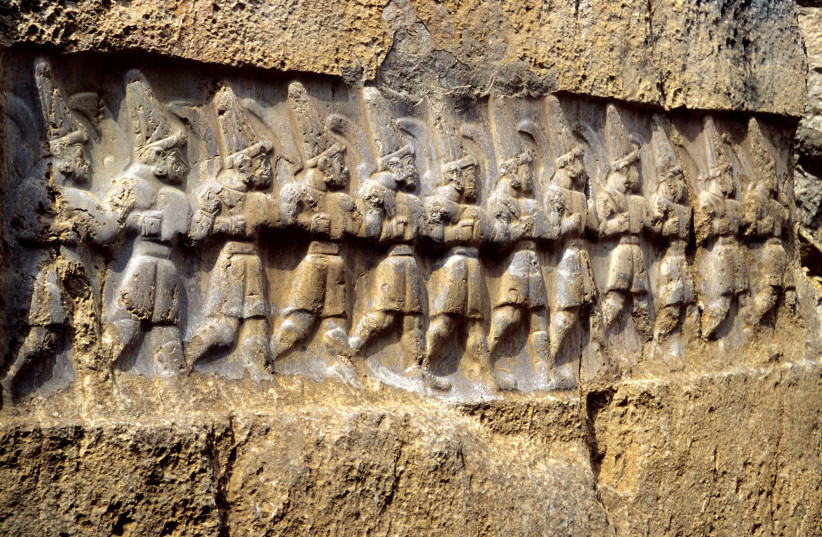
The paintings in the strange stone carvings, which were probably made about 3,200 years ago, include details of an “underworld” sitting beneath the earth.

Relief with the twelve gods of the underworld at Yazılıkaya Rock Temple /  (photo credit: KLAUS-PETER SIMON/WIKIMEDIA COMMONS)
.

Archaeological excavations at the Yazılıkaya Rock Temple in Turkey, which began almost 200 years ago, revealed an ancient calendar and a map of the cosmos that present interesting evidence.

The paintings in the strange stone carvings, which were probably made about 3,200 years ago, include details of an “underworld” sitting beneath the earth. Watch an explanation from Luwian Studies University that researched the subject:
.

.
In the temple, discovered by French archaeologist and historian Charles Texier as early as 1834, limestone carvings depicting more than 90 different figures, including animals, monsters and gods, have been found.
It took almost 200 years to decipher the paintings, but researchers have determined that the representations are of a cosmos that includes the Earth, the sky and the “underworld” that show the vitality of the creation myth.

On one wall there are drawings of the goddess of the sun and the goddess of the storm, where one can see that gods were placed in the painting higher than the other figures. In contrast, on the eastern and western walls of the temple one can see the lesser people, the phases of the moon and the seasons, signifying “cycles and rebirth,” according to the researchers.

According to estimates, scholars estimate that in those days there were about 17 deities, each with a line marking between the gods. Also, in one of the rooms of the temple was a painting dedicated to the “underworld,” with testimonies of the god of the sword.

“We believe the temple fully represents a symbolic image of the universe, including its static levels – earth, sky and underworld, as well as the cyclical processes of renewal – day and night or summer and winter,” one researcher explained in an interview in an article published in the Journal of Skyscape Archaeology.


Zawartość publikowanych artykułów i materiałów nie reprezentuje poglądów ani opinii Reunion’68,
ani też webmastera Blogu Reunion’68, chyba ze jest to wyraźnie zaznaczone.
Twoje uwagi, linki, własne artykuły lub wiadomości prześlij na adres:
webmaster@reunion68.com


News from Israel – June 30, 2021

News from Israel – June 30, 2021

ILTV Israel News


A new economic deal struck and signed by Emirati and Israeli officials during Israeli Foreign Minister Yair Lapid’s landmark trip to the UAE… and ribbons cut at the #AbuDhabi #IsraeliEmbassy
–
Israel still in the green, but racing to prevent a potentially disastrous fourth wave
–
More news from #Surfside, and Israeli responders on the scene talk about their delicate search and rescue method as they work against time in Florida


Zawartość publikowanych artykułów i materiałów nie reprezentuje poglądów ani opinii Reunion’68,
ani też webmastera Blogu Reunion’68, chyba ze jest to wyraźnie zaznaczone.
Twoje uwagi, linki, własne artykuły lub wiadomości prześlij na adres:
webmaster@reunion68.com


Israel sea level rose 2 m. in Hellenistic period, could explain decline

Israel sea level rose 2 m. in Hellenistic period, could explain decline

ROSSELLA TERCATIN, HADASSAH BRENNER


“We do not know of such an increase in history. It is an increase that is recognized only when talking about the end of the ice age and the great melting of glaciers.”
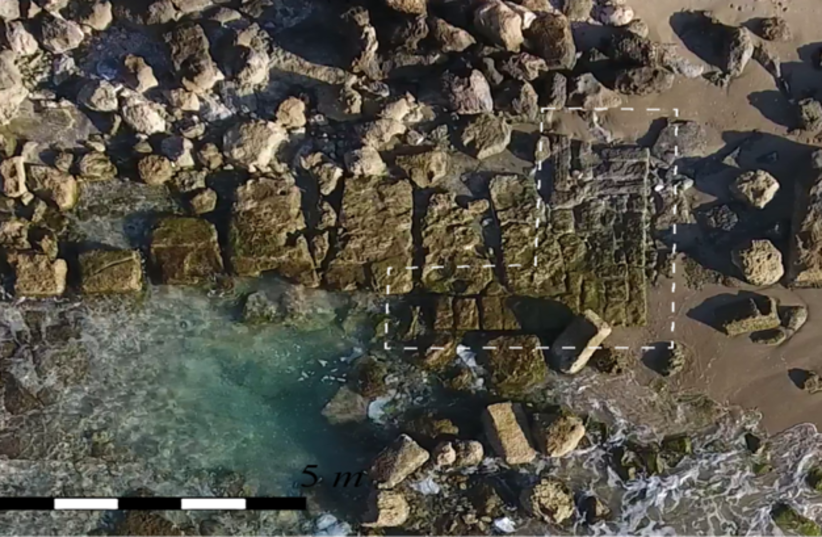
Base of gate from Bronze Age. / (photo credit: ARYEH PESSO)

Some 2,100 years ago Israel experienced a drastic rise in its sea level, which caused the loss of important infrastructure and might have contributed to the decline of some cities in the region, a new study by Israeli and international scholars has shown.

The researchers considered a period of some two millennia, starting from the Middle Bronze Age (2,500 BCE) up to the Roman Period until the 3rd century CE.

“We saw that from the Middle Bronze Age to the end of the Iron Age, a span of some 700 years, the sea rose very slowly, maybe half a meter, but between the Hellenistic period and the Roman period, the sea rose 2 or 2.5 meters within 200 years, which is a lot,” said Mediterranean Archaeology Prof. Assaf Yasur-Landau, head of the Recanati Institute of Marine Studies at the University of Haifa and a co-author of the paper published in the academic journal PLOS ONE last week.

The project to trace water-level rise in Israel’s coastal cities along the Mediterranean Sea, headed by the universities of Haifa and California, San Diego, focused on the data from the site of Dor, some 21 kilometers south of Haifa.

“In the Bronze Age, Dor was a Canaanite city, a port city entertaining contacts with Cyprus, in the Iron Age it was a Phoenician city, with ties with Cyprus and Egypt,” Yasur-Landau said. “In the 9th and 8th centuries it was in the hands of the Israelites and the trade decreased, but later, when the Assyrians conquered the area, they returned the city to the Phoenicians and the commercial exchanges flourished again. From this point we see a rise in the maritime power of Dor all the way into the Persian and Hellenistic period, when Dor reached its peak, an incredibly prosperous center with connections in all the Mediterranean.”

In the context of the history of the Levant, Persian period refers to the time of the domination of the Persian Empire, from mid-6th to the second half of the 4th century BCE, when the Hellenist period began, lasting until the arrival of the Romans in the 1st century BCE.

“During the Roman period, Dor was still important, until the construction of Caesarea which became the main port in the area,” Yasur-Landau noted.
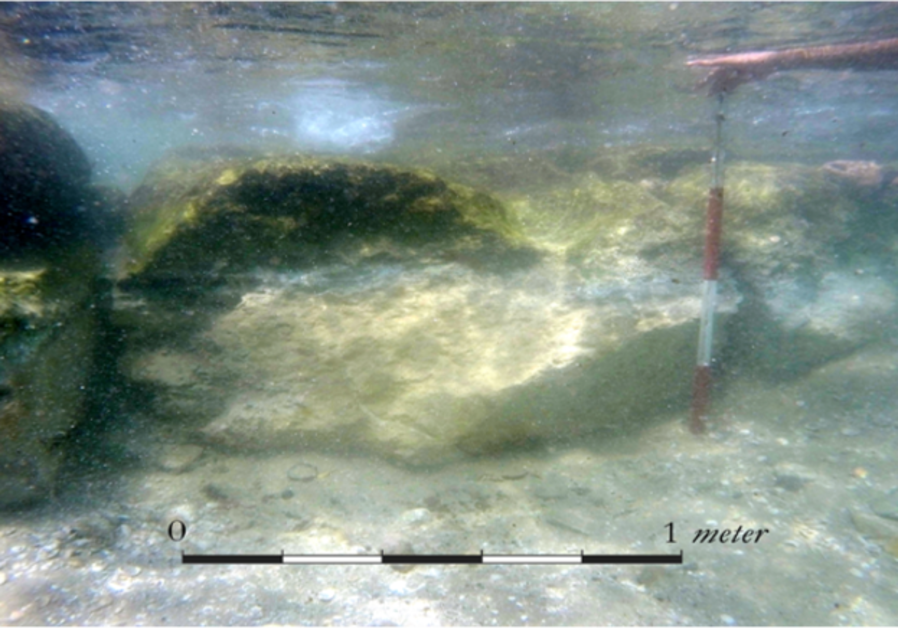
Base of wall from Bronze Age (Photo Credit: EHUD ERKIN SHALEV)

As explained in the paper, the project added nine new relative sea level (RSL) data points, to the 13 which were previously known.

Yasur-Landau said that they found an underwater wall and sea gate from the Bronze Age built on dry land, indicating a lower sea level at the time.
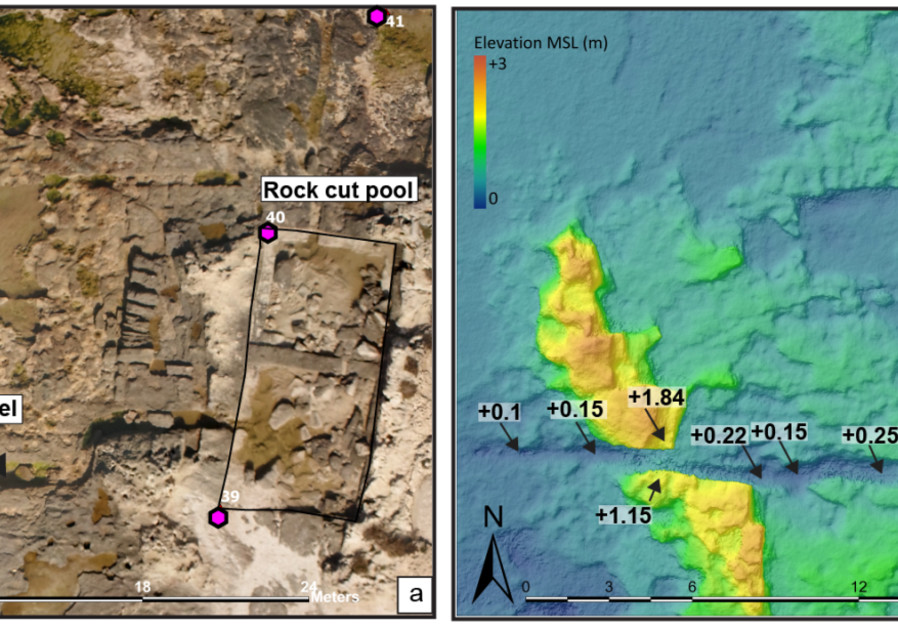
Roman Pool (Photo Credit: ANTHONY TAMBRINO).

“We needed data from the Iron Age and the Hellenistic period to fill the gap between the information we had about the Bronze Age and the Roman time in order to understand how fast the sea rose,” Yasur-Landau said.

What’s more, historical and archaeological evidence of deserted or declining coastal cities supports the theory that a rapid rise saw buildings flooded and coastlines disappearing.

“We have seen similar evidence of a decline in Acre and other Hellenistic coastal cities, and we speculate that the inhabitants of the period, seeing entire buildings gradually covered by the water, recognized the rapid rise in sea level, but in many cases failed to adapt to the new conditions successfully,” Dr. Gil Gambash, a historian from the University of Haifa, noted.

According to the experts, the rise was especially dramatic.
“We do not know of such an increase in [recorded] history. It is an increase that is recognized only when talking about the end of the ice age and the great melting of glaciers,” Professor Thomas Levy of the University of California, San Diego said.

Levy said that as an effect of climate change, the sea level is currently expected to rise of about one meter by the end of the 21st century, stressing how the phenomenon they uncovered was even more drastic.
According to Yasur-Landau, a rise similar to the one that Israel experienced some 2,000 years ago would cause much of the coastline to disappear, as well as recurring flooding in coastal Israeli cities like Tel Aviv.

The researchers do not know what caused the sea-level to rise some two millennia ago, but they hope to find out with further studies. They also attested that the current sea-level is similar to the ones from Roman times.

“The past is not a mirror image of the future,” Yasur-Landau said, when asked if their findings can offer insights into the issue of sea-level rise in our times. “But I would say that the sea-level had a very profound impact on vital infrastructure in the past and it is very likely that a quick rise will have a very severe impact on critical infrastructure in the future, such as drainage, harbors, and coastal aquifers and we should keep it in mind.”


Zawartość publikowanych artykułów i materiałów nie reprezentuje poglądów ani opinii Reunion’68,
ani też webmastera Blogu Reunion’68, chyba ze jest to wyraźnie zaznaczone.
Twoje uwagi, linki, własne artykuły lub wiadomości prześlij na adres:
webmaster@reunion68.com