Archives

News from Israel – June 15, 2021

News from Israel – June 15, 2021

ILTV Israel News


The fledgling Lapid-Bennett #coalition is approaching its first major obstacle on the streets of #Jerusalem.
–
An entire #ecosystem, unique to a tiny plot in Israel under attack.
–
The indoor mask mandate is lifted. Stay tuned for what’s left of Israel’s #coronavirus restrictions.


Zawartość publikowanych artykułów i materiałów nie reprezentuje poglądów ani opinii Reunion’68,
ani też webmastera Blogu Reunion’68, chyba ze jest to wyraźnie zaznaczone.
Twoje uwagi, linki, własne artykuły lub wiadomości prześlij na adres:
webmaster@reunion68.com


News from Israel – June 13, 2021

Your News from Israel – June 13, 2021

ILTV Israel News


*

– Israel’s 36th government to be sworn in today… this, ending Netanyahu’s 12 year term as Israeli premier…

– Then… what do Israelis think of the new unity government?

– And following a Washington Post report, what is the status of Israel’s relations with neighboring Jordan?


Zawartość publikowanych artykułów i materiałów nie reprezentuje poglądów ani opinii Reunion’68,
ani też webmastera Blogu Reunion’68, chyba ze jest to wyraźnie zaznaczone.
Twoje uwagi, linki, własne artykuły lub wiadomości prześlij na adres:
webmaster@reunion68.com


Barak Grossberg – The Golden Rule (Official Music Clip)

Barak Grossberg – The Golden Rule (Official Music Clip)

Barak Grossberg


B”H
A New Song About LOVE

מופע ההשקה החגיגי ביום שלישי ה15.6 בת”א
אורחים מיוחדים: יאיר אלייצור, קובי פרחי (orphend land), דן שפירא ועדי גביסון
כרטיסים אחרונים 👇
https://did.li/ke4Hw


Zawartość publikowanych artykułów i materiałów nie reprezentuje poglądów ani opinii Reunion’68,
ani też webmastera Blogu Reunion’68, chyba ze jest to wyraźnie zaznaczone.
Twoje uwagi, linki, własne artykuły lub wiadomości prześlij na adres:
webmaster@reunion68.com


Ancient Judeans ate non-kosher catfish, sharks

Ancient Judeans ate non-kosher catfish, sharks

ROSSELLA TERCATIN


The biblical prohibition against finless and scaleless sea creatures emerged in spite of this consolidated habit.
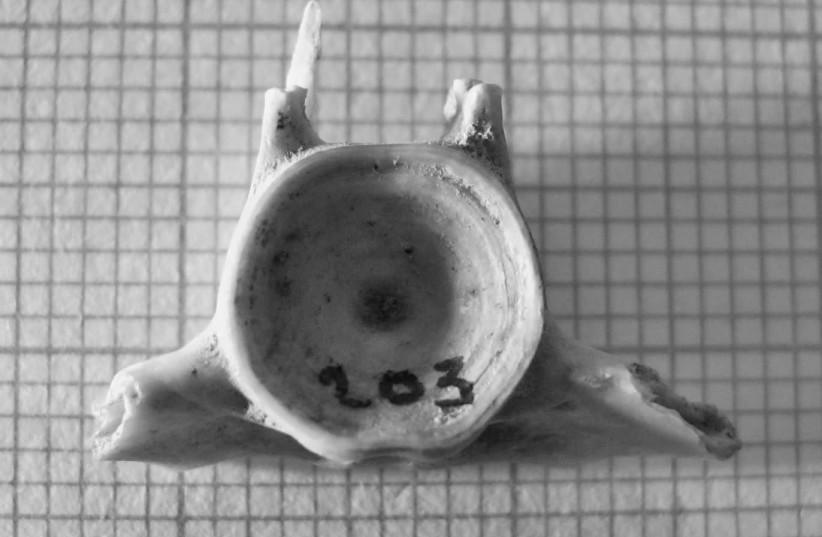
Anterior vertebra of ancient catfish excavated in Jerusalem.
(photo credit: PROF. OMRI LERNAU)

For over a millennium, ancient Judeans ate non-kosher fish and the biblical prohibition against finless and scaleless sea creatures emerged in spite of a consolidated habit, a new study published in the academic journal Tel Aviv on Tuesday showed.

The research is part of a larger project devoted to uncovering the origins of Judaism from an archaeological perspective, as Dr. Yonatan Adler, a senior lecturer at Ariel University and the director of the project, explained.

“The project focuses on exploring from which point in time we have evidence that ancient Judeans knew about the Torah and were keeping its laws,” he said.

As a child, Adler was always bothered by one question: Why do the characters of the Bible not appear more Jewish?

“When we read the stories about King David and King Salomon, the prophets and so on, nothing is ever mentioned about them keeping Shabbat, or immersing in a ritual bath,” Adler said. “However, when I started studying the Mishna and the Talmud, those rabbis – Hillel, Shammai, Rabbi Tarfon – were very Jewish. The contrast bothered me.”

Many years later Adler would start to work on understanding when the shift happened.

“I came to recognize that archaeology is a wonderful tool for discerning human behaviors in the past, to see what people were actually doing,” he said.

“These you may eat of all that live in water: anything in water, whether in the seas or in the streams, that has fins and scales – these you may eat. But anything in the seas or in the streams that has no fins and scales, among all the swarming things of the water and among all the other living creatures that are in the water – they are an abomination for you,” reads verses 9-10 of Leviticus chapter 11.

Adler and the co-author of the study, Haifa University Prof. Omri Lernau, analyzed the data from some 56 fish bones assemblages found in 30 sites throughout the region and dating between the Late Bronze Age through to the end of the Byzantine period (ca. 1550 BCE to 640 CE).

The researchers demonstrated that the consumption of non-kosher fish was very common up until and including the Persian period (586 BCE-332 BCE).
The period of time covers centuries when a great part of the biblical narrative is believed to have taken place, the time of prophets and kings.

The sites chosen by the researchers included Jerusalem, Lachish and Ramat Rachel; ancient settlements that because of their geographic location and because of the material culture they presented, were undoubtedly Judean.
“Ancient Judeans ate a lot of catfish and sharks,” Adler said.
Both species do not present scales and are not kosher.

“This is interesting because what it means is that compilers of the Pentateuch, assuming that they were working in the Persian period which is what most biblical scholars think, legislated a prohibition against eating a scaleless fish at a time when Judeans were eating and had been eating these fish for quite some time,” the researcher explained.

The norm therefore went against a longstanding practice, contrary to what happened with the prohibition of eating pork.

“Pork at that time was not eaten by many populations in the Levant,” he said.

Archaeological findings support the notion that ancient Jews did not eat pork.

Very little evidence remains regarding the dietary habits in Judea during the Hellenistic period (332–63 BCE) – as archaeological remains from those centuries are in general very rare.

In the fish assemblages dating back to the 1st century BCE and later, however, non-kosher fish bones become practically absent, a sign that the Jewish masses by that time were mostly keeping the Torah’s dietary laws.

“We cannot pinpoint the exact time when they started, but by then they were not eating scaleless fish anymore,” Adler said.


Zawartość publikowanych artykułów i materiałów nie reprezentuje poglądów ani opinii Reunion’68,
ani też webmastera Blogu Reunion’68, chyba ze jest to wyraźnie zaznaczone.
Twoje uwagi, linki, własne artykuły lub wiadomości prześlij na adres:
webmaster@reunion68.com


Making aliyah to Israel is a difficult sacrifice – opinion

Making aliyah to Israel is a difficult sacrifice – opinion

DOV LIPMAN


The reality that immigrants, especially new and young olim, won’t be celebrating Passover, weddings, and births with their families, especially for younger olim, is causing anguish.

New Olim at BGA make Aliyah during Corona / (photo credit: YONIT SCHILLER)

‘Making aliyah is not easy, and anyone who tells you otherwise is not telling you the truth.”

I say that line in every speech that I give in which I try to inspire people to move to Israel. Of course, I immediately follow that up by making clear that it’s a worthwhile move, and that everything worthwhile in life comes via challenges and effort. But anyone making aliyah must know that it will not be easy.

Every person or family who moves to Israel experiences their own trials and struggles, but this past year – and this past month in particular – has brought a new collective challenge to Israel’s English-speaking community. Many immigrants would have never made aliyah if they knew it would mean not seeing their parents for well over a year; none would have made aliyah had they known it would mean that parents and siblings could not be present for their weddings or the births of their children. It was all inconceivable a year ago.

The reality that English speaking immigrants, especially new and young olim, won’t be celebrating Passover, weddings, and births with their families, especially for younger olim, is causing significant anguish. The pain is real. The wounds are raw. I hear it in people’s voices on a daily basis.

We, as a community, must recognize this truth, and must do two things collectively to address this painful reality.

First, we must be there for one another. We must become the families that everyone is longing for. We must reach out to assist and provide the love for anyone who planned on being with family for Passover, who needed family and now won’t have them nearby.

We must keep our eyes and ears open to hear the cries of women who are giving birth without their mothers by their sides – in many cases with the knowledge that there could be significant complications during and after the birth.

We have to show up at weddings with the excitement and love that parents would show their children if they were present – not as replacement for their parents, but at the very least to make sure we do our part to make the wedding as joy filled as possible. If we truly are one family, now is the time for all of us to step up and make that as tangible as possible.
Second and perhaps more importantly, we must all take a deep breath and zoom out for a moment and look at the big picture: we are blessed to live in our own state in our own land. With all its flaws and challenges, we are literally living the fulfillment of prophecies.

Our ancestors opened the Bible and read about a future “ingathering of the exiles,” and believed that a time would come when it would transpire. We don’t have to believe it anymore. It’s happening right now, we are living it ourselves. They read biblical passages about an eventual re-flourishing of the Land of Israel, and believed that this miracle would someday occur. But we don’t have to merely read the words. We see it right before our own eyes on a daily basis.

Try to imagine what our great-great-great grandparents would have sacrificed to just breathe the air of Israel for a few minutes. And we are blessed to live here. We are blessed to be living the prayers and dreams of our ancestors – literally. And that should serve as some comfort as we navigate these challenging times.

Jews who have made aliyah from English-speaking countries, who left behind great comfort, who ran to Israel and not from persecution or suffering, demonstrate remarkable ideological convictions and strength of character, with a capacity to deal with whatever comes our way.

The work we are doing trying to push the government to change its policies will continue, especially regarding vaccinated non-Israelis entering the country, and I believe those efforts will soon bear fruit.

In the meantime, let us recognize and remember that making aliyah meant sacrifice, and despite those who at the moment may be questioning their decision to move to Israel, years from now we will look back and be able to say that despite all the painful sacrifices, making aliyah was the best decision we ever made.


The writer served as a member of the 19th Knesset and is the secretary-general of the Confederation of United Zionists.


Zawartość publikowanych artykułów i materiałów nie reprezentuje poglądów ani opinii Reunion’68,
ani też webmastera Blogu Reunion’68, chyba ze jest to wyraźnie zaznaczone.
Twoje uwagi, linki, własne artykuły lub wiadomości prześlij na adres:
webmaster@reunion68.com