
Archives

Report: Hamas Coordinated Gaza War With Iran, Hezbollah in Joint Military Room

Report: Hamas Coordinated Gaza War With Iran, Hezbollah in Joint Military Room

Sharon Wrobel


Palestinian children look on as Islamic Jihad militants stand guard following Israel-Hamas truce, in Gaza May 21, 2021. REUTERS/Ibraheem Abu Mustafa

Senior leaders of the Gaza Strip-ruling Hamas terrorist organization and the Palestinian Islamic Jihad (PIJ) worked reportedly in close coordination with Iran’s Islamic Revolutionary Guard Corps (IRGC) and the Hezbollah to discuss military operations during the 11 days of fighting with Israel.

The editor-in-chief of the Lebanese daily Al-Akhbar, Ibrahim Al-Amin, said during an interview with Hezbollah-operated Al-Manar TV that the IRGC, Hezbollah and Hamas set up a joint military operations room in Beirut during the May hostilities in Israel and the Gaza Strip.

The channel’s report said that Al-Amin claimed “officers from Hezbollah, IRGC, and Hamas coordinated the military confrontation in Gaza” and “the Commander of IRGC’s Al-Quds Force, General Esmail Qaani, visited Lebanon twice to attend the chamber meetings.”

According to a May 27 analysis by the Meir Amit Intelligence and Terrorism Information Center, Qaani discussed the fighting between Israel and the Palestinians in a phone conversation with Hamas head Ismail Haniyeh. The IRGC general praised the acts of “resistance” against the “Zionists” and emphasized Iran’s support for the Palestinians in light of the “aggression and crimes of the Zionist enemy in Jerusalem and Gaza.” Qa’ani also spoke to PIJ secretary general Ziad al-Nakhleh and stressed that Iran is standing by the Palestinians who are defending their land and their rights.

Al-Akhbar’s Al-Amin asserted that the Hezbollah sent weaponry and ammunition to Gaza and helped to move a number of “Palestinian Resistance officers” out of the battle zone during the conflict.

Additionally, the military hub in Beirut provided Palestinian factions with data about the movements of the Israeli military, while drones were used, Al-Amin claimed, to prevent an “ambush” by the “enemy” on Hamas fighters near the Gaza border.

Meanwhile, on May 20, Prime Minister Benjamin Netanyahu showed German Foreign Minister Heiko Maas during his visit to Israel an Iranian drone that had been downed by the Israel Defense Forces in the Beit Shean area, as evidence that “the true backer of much of this aggression is Iran.”

According to Netanyahu, “Iran sent an armed drone from Iraq or Syria,” which Israeli forces intercepted on the border between Israel and Jordan.

The analysis by the Meir Amit Intelligence and Terrorism Information Center also showed that senior Iranian officials have been keeping a close rapport with the leaders of Hamas and the PIJ to express support as the ceasefire with Israel came into effect on May 21.

At the end of the fighting, Qaani sent congratulating messages to Head of Hamas’ military wing, Mohammad Deif, and to PIJ’s Commander of the military wing, Akram al-Ajouri and “proclaimed that through their unity and perseverance, they were able to destroy the pridefulness of the Israeli Army and proved that they are capable of inflicting heavy losses to it, making the enemy experience the taste of horror and defeat.”

Going forward, Qaani reaffirmed that Iran will continue its support for the Palestinians until the destruction of the “Zionist regime.” Others, who congratulated Haniyeh for the Palestinians “victories” included Ali Akbar Velayati, a top adviser to Iran’s supreme leader, Ayatollah Ali Khamenei​.

Hamas’ Haniyeh updated Khamenei on the fighting between Israel and the Palestinians and asked for support to rally the Muslim, Arab and international community to stop the “enemies of the Zionist enemy.”

Following the ceasefire, Khamenei issued a statement to the Palestinians, in which he congratulated them for their “victory of the Zionist regime,” which he claimed “had to concede its defeat.” The Iranian leader urged Muslim governments to provide the Palestinians with military and financial assistance and help them in rebuilding the infrastructure and destruction in Gaza. He warned that “preparation for the fight is ongoing” and that the decision when to start and end the conflicts lies with the Palestinian leadership.


Zawartość publikowanych artykułów i materiałów nie reprezentuje poglądów ani opinii Reunion’68,
ani też webmastera Blogu Reunion’68, chyba ze jest to wyraźnie zaznaczone.
Twoje uwagi, linki, własne artykuły lub wiadomości prześlij na adres:
webmaster@reunion68.com


Is Rabbi Shimon Bar Yochai really buried at Meron? It’s complicated

Is Rabbi Shimon Bar Yochai really buried at Meron? It’s complicated

ROSSELLA TERCATIN


On one hand some rock cut burials dating back to the time of the Mishna are present in Meron. On the other, no archaeological evidence linking them to the Rabbi Shimon Bar Yochai was ever found.

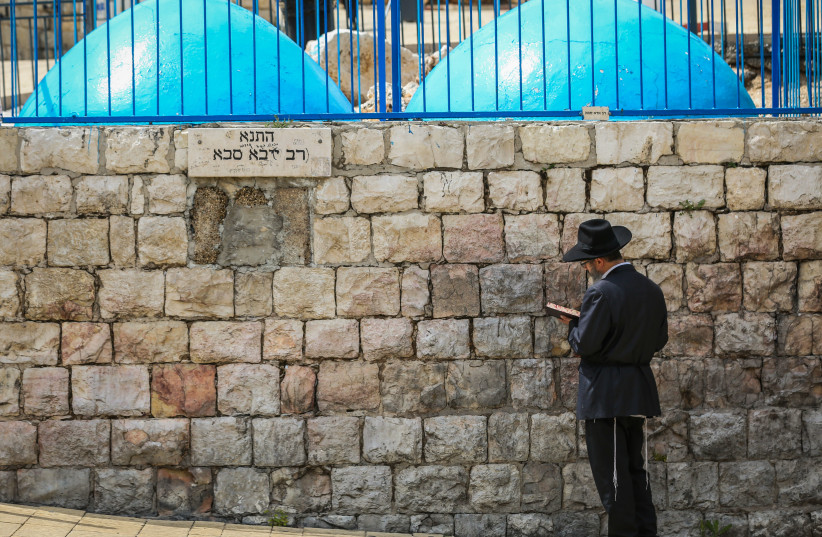
Ultra-Orthodox Jewish man prays outside the Tomb of Rabbi Shimon bar Yochai on Mt. Meron in northern Israel on May 6, 2020 / 
(photo credit: DAVID COHEN/FLASH 90)

Every year tens of thousands flock to Mount Meron to celebrate the festival of Lag Ba’omer at the tomb of 1st century Rabbi Shimon Bar Yochai. Last week, the overcrowding of a site that was never conceived to welcome such numbers resulted in one of the worst civilian catastrophes in the history of Israel, leaving 45 people dead.

But what exactly is the area that is commonly referred to as Mount Meron? And is the great Jewish sage whose figure is deeply connected to Jewish mysticism really buried there?

On the one hand, some rock-cut burials dating to the time of the Mishna are present in Meron. At the same time, no archaeological evidence linking them to the venerated Rabbi Shimon Bar Yochai was ever found, and the known hewn burials are located in a different area from the current mausoleum. Above all, a question remains on whether the true nature of the site matters at all.

“First of all, people in Israel and all over the world call the site where Rabbi Shimon Bar Yochai’s tomb stands Mount Meron, but this is not correct,” said Prof. Mordechai Aviam, director of the Kinneret Institute for Galilean Archaeology at Kinneret College on the Sea of Galilee. “The structure is located at the base of the mountain, not on top, in the modern moshav called Meron. Meron is an ancient Jewish settlement inhabited during the Roman and Byzantine times. We know that it was Jewish because of the remains of a synagogue dating back to this period.”

As often happens in Israel, researchers were able to identify the modern settlement as the same site of ancient Meron not only because of the remains, but also because an Arab village in the area that existed before 1948 carried a very similar name, Maarun.

“The settlement was partly excavated in the Seventies and Eighties,” said Aviam. “A team of American archaeologists dug the area of the synagogue and some private dwellings. A Jewish ritual bath was also uncovered, as well as many typical Jewish stone vessels from the Roman period.”

Jews settled in Galilee beginning in the 2nd century BCE. From the archaeological point of view, Meron is not especially different from many other sites in the region.

“Several dozens of ancient synagogues have been found in Galilee, and Meron is one of them,” Aviam explained. “Everywhere Jews lived, they also died. In every ancient site, we usually also find a cemetery and here we found several burials hewn in the rock.”

According to a medieval tradition, another great Jewish sage was buried in Meron, Hillel.

“A medieval tradition attributed the most prominent grave in the site to Hillel and his students,” the professor explained. “However, from the 12th century on, Rabbi Shimon Bar Yochai’s burial started to become increasingly important and Hillel’s one to be neglected.”

Both he and a spokesperson for the Antiquities Authority said that there is no archaeological evidence that the rabbis are really buried there.
“We do not have any archaeological evidence for any tomb of Rabbi Shimon,” Aviam said. “Moreover, we do not know if the building actually stands on a tomb. It is possible, but we do not know.”

The only tomb dating to the time of the Mishna that has been identified by archaeologists with some certainty is the one of Yehuda Hanassi, the scholar who compiled the Mishna. Researchers found inscriptions in Beit She’arim featuring the names of his two sons and of his servant.

“However, it is important to remember that people do not need archaeological evidence to believe something,” said Aviam. “And nobody is going to pray on the tomb of Yehuda Hanassi, because it was found by archaeologists, it was not brought to light by traditions.”

Ancient Jewish texts do point out that Rabbi Shimon Bar Yochai lived and died in Meron, including Midrash Tanchuma and Pesikta de-Rav Kahana, whose original dating is uncertain but are believed to have been compiled as early as the 5th century.

According to Pesikta de-Rav Kahana, Rabbi Shimon’s son, Rabbi Elazar, was buried in another settlement, Gush Halav, but the people of Meron brought his bones back to be buried with his father.

As explained by the IAA spokesperson, the first to connect the site at Meron with Rabbi Shimon Bar Yochai’s tomb was Rabbi Yaakov ben Netanel Hacohen in the 12th century.

“The basis and sources for determining these ancient traditions – which burial site belonged to which of the rabbis known in Meron – are not known to us today,” said the spokesperson.

It is certain that people living in the settlement maintained a tradition of revering the sages’ memory.

“While the location of the Rabbi Shimon Bar Yochai’s tomb was marked and well-known in the 12th century at the latest, it seems that only in the 16th century was a preliminary structure built on it. The construction is attributed to Rabbi Avraham Galante, an Italian-born Kabbalist from Safed, and a disciple of Rabbi Moshe Cordovero,” said the IAA spokesperson.
The main mausoleum standing on the site today was built in the 19th century.

According to Tel Aviv University historian Prof. Elchanan Reiner, “the tradition identifying the tomb goes back much earlier than the 12th century, maybe the seventh to 10th century. Is it important whether this is Rabbi Shimon Bar Yochai’s real grave? What matters is that Jews believe that place is his burial, and this is much more powerful than any archaeologist saying that they have found evidence linking the site to him.”


Zawartość publikowanych artykułów i materiałów nie reprezentuje poglądów ani opinii Reunion’68,
ani też webmastera Blogu Reunion’68, chyba ze jest to wyraźnie zaznaczone.
Twoje uwagi, linki, własne artykuły lub wiadomości prześlij na adres:
webmaster@reunion68.com

THE TRUTH ABOUT “SHEIKH JARRAH”

THE TRUTH ABOUT “SHEIKH JARRAH”

Micha Gefen


One of the fallacies of the most recent flare up between Gaza and Israel is that Israel sparked the conflict with potential evictions of Arab families living in what is today Sheikh Jarrah.

.

.
The narrative of Sheikh Jarrah is important for the “palestinian” cause, because after all the current successful penetration into the West of the “palestinian” movement is based partly on the trend towards intersectional causes. American youth want to back the “palestinians” because they view them as the poor occupied “indigenous” people. The Jews in America are primarily from European backgrounds and so in the left’s superficial and neo-marxist value system – Jews must be the occupiers.

The problem is that Sheikh Jarrah was originally Jewish – actually three Jewish neighborhoods existed there – the most prominent was and is Shimon HaTzaddik. The nearby small Arab village called Sheikh Jarrah cam after the Jews bought the land in and around the grave of Shimon Hatzaddik in the 1850s.


Zawartość publikowanych artykułów i materiałów nie reprezentuje poglądów ani opinii Reunion’68,
ani też webmastera Blogu Reunion’68, chyba ze jest to wyraźnie zaznaczone.
Twoje uwagi, linki, własne artykuły lub wiadomości prześlij na adres:
webmaster@reunion68.com


UNRWA’s director spoke truth that Israeli strikes were precise- editorial

UNRWA’s director spoke truth that Israeli strikes were precise- editorial

EDITORIAL


“I think the precision was there, but there was unacceptable and unbearable loss of life on the civilian side,” Schmale stated.
.

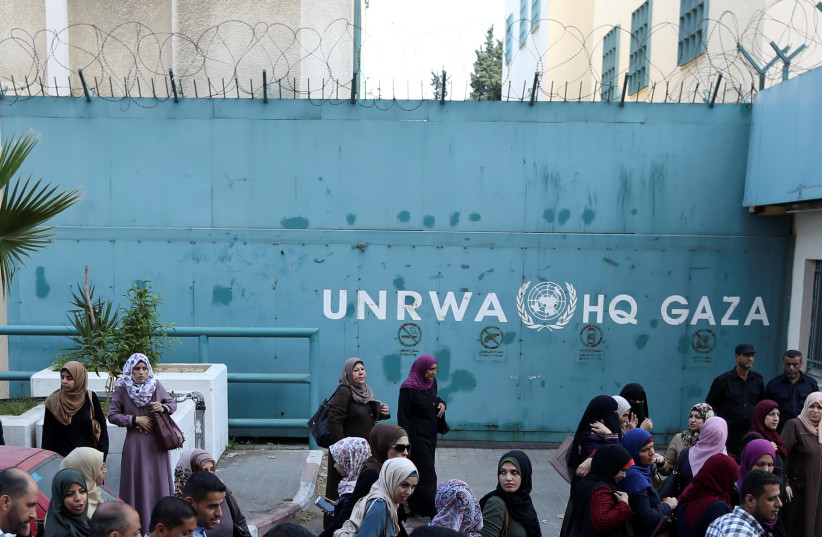
Palestinian employees of United Nations Relief and Works Agency (UNRWA) take part in a protest against job cuts by UNRWA, in Gaza City September 19, 2018. / (photo credit: REUTERS/IBRAHEEM ABU MUSTAFA)

When Matthias Schmale, director of the United Nations Relief and Works Agency (UNRWA) in the Gaza Strip, told Channel 12 on Sunday that Israeli airstrikes during the recent conflagration were “precise” and “sophisticated,” he was simply stating the truth as he saw it.

In the interview with journalist Arad Nir, Schmale was asked about the IDF’s assertion that its military strikes against terrorist targets had been very precise. He responded, “I’m not a military expert, but I would not dispute that. I also have the impression that there is a huge sophistication in the way the Israeli military struck over the last 11 days, so that’s not my issue. I’ve had many colleagues describe to me that they feel that, in comparison with the 2014 war, this time the strikes felt much more vicious in terms of their impact. So yes, they didn’t hit – with some exceptions – civilian targets, but the viciousness, ferocity of the strikes was heavily felt.”

He noted that more than 60 children were killed in Gaza, including 19 who attended an UNRWA school.

“I think the precision was there, but there was unacceptable and unbearable loss of life on the civilian side,” Schmale stated.

It did not take long for Gazans to voice outrage over Schmale’s remarks, accusing him of exonerating Israel and calling for his reprimand and dismissal. In a joint statement, several Palestinian rights groups accused Schmale of “indirectly praising the precision and sophistication of the Israeli Army, when Israel is in fact constantly committing war crimes and crimes against humanity against the Palestinian people.”

Hamas tweeted that it was shocked by the statements, accusing the UNRWA official of pretending to be a “military analyst for the occupation army.”
Hamas said in a statement that the comments were “a complete distortion in favor of the Zionists, including an attempt to exonerate the occupation of the murder of 254 Palestinians, more than 40% of them children, women and the elderly.”

Former IDF spokesman Peter Lerner, on the other hand, thanked Schmale for his “candid interview” and “for sharing your opinion that Israeli strikes were indeed precise, conducted with a huge sophistication.”

In response to Lerner’s tweet, Schmale stressed that “all loss of civilian life (on both sides) is not ‘tragic’ but unacceptable!”
Then, on Tuesday, following the Palestinian outrage, Schmale issued an apology.

“Recent remarks I made on Israeli TV have offended & hurt those who had family members & friends killed & injured during the war that has just ended,” he tweeted. “There is no justification whatsoever for killing civilians. Any civilian killed is one too many. It is simply unbearable that so many innocent people have paid with their lives.”

For the record, the Hamas-run Health Ministry in Gaza, which does not differentiate between terrorists and civilians, said at least 243 Palestinians were killed, including 66 minors, in the Israeli strikes. The IDF stated, however, that it had killed some 200 terrorist operatives and that some of the civilian fatalities were caused by Hamas rockets falling short and landing in the Strip.

Opponents of Israel’s actions during Operation Guardian of the Walls have claimed that Israel intentionally targeted civilians during the operation, but Israeli officials have stressed repeatedly that the IDF did all it could to avoid civilian casualties, including warning civilians ahead of the airstrikes.

Israeli military officials acknowledged that there were civilian casualties as a result of the air campaign’s collateral damage. In one of the worst incidents, the IDF said a missile strike on an underground bunker in the Shati refugee camp inadvertently caused the collapse of two homes, killing 10 people, including eight children.

The IDF said that such casualties were the tragic result of Hamas’s strategy of intentionally operating within densely populated areas and using residents as civilian shields. And here is the crux of the matter: The IDF seeks to be precise and to only target terrorists and military installations. Hamas, on the other hand, fires rockets indiscriminately at Israel, seeking to kill as many Israelis as possible.

This whole affair is evidence of the insanity of Hamas’s stranglehold over the people in Gaza, and over UNRWA. It’s unfortunate that Schmale, after being terrorized on social media, felt the need to backtrack on candid remarks that spoke the truth.


Zawartość publikowanych artykułów i materiałów nie reprezentuje poglądów ani opinii Reunion’68,
ani też webmastera Blogu Reunion’68, chyba ze jest to wyraźnie zaznaczone.
Twoje uwagi, linki, własne artykuły lub wiadomości prześlij na adres:
webmaster@reunion68.com


“PALESTINIAN” WOMAN MAKES VIDEO EXPOSING THE CRIMES OF HER OWN PEOPLE

“PALESTINIAN” WOMAN MAKES VIDEO EXPOSING THE CRIMES OF HER OWN PEOPLE

Leah Rosenberg


Now THIS former “Palestinian” woman is a courageous hero! She didn’t hold back here at all from exposing the truth about her own.
.

.
“Palestinian” Woman Tells the Truth

Wow. This is not a common video to be circulating the internet. She was raised as a “Palestinian” woman but mentions in the video that she is no longer a “Palestinian.” The truth makes sense to her. Everything she says in this video exposes what the “Palestinian” culture is about.

This woman exposes what Ramadan is all about. And what about all the violence that has taken place in Al-Aqsa mosque? She reveals the truth about that as well.

She reveals the child abuse that takes place in the culture she grew up in.

And she doesn’t stop there. She shows how Israel is a peaceful and open democracy. This former “Palestinian” woman definitely knows her facts.

How often do we find a woman making a video like this on the internet? The media is filled with propaganda against Israel. With all the hate going on and all the lies that are being spread about Israel, we need to do our part to spread the truth. And if she can do it, so can we.


Zawartość publikowanych artykułów i materiałów nie reprezentuje poglądów ani opinii Reunion’68,
ani też webmastera Blogu Reunion’68, chyba ze jest to wyraźnie zaznaczone.
Twoje uwagi, linki, własne artykuły lub wiadomości prześlij na adres:
webmaster@reunion68.com