Archives

What do ancient coins tell us about Bar Kochba and the Omer period?

What do ancient coins tell us about Bar Kochba and the Omer period?

ROSSELLA TERCATIN


The symbolism behind the coins is clearly stated in the ornaments they feature.
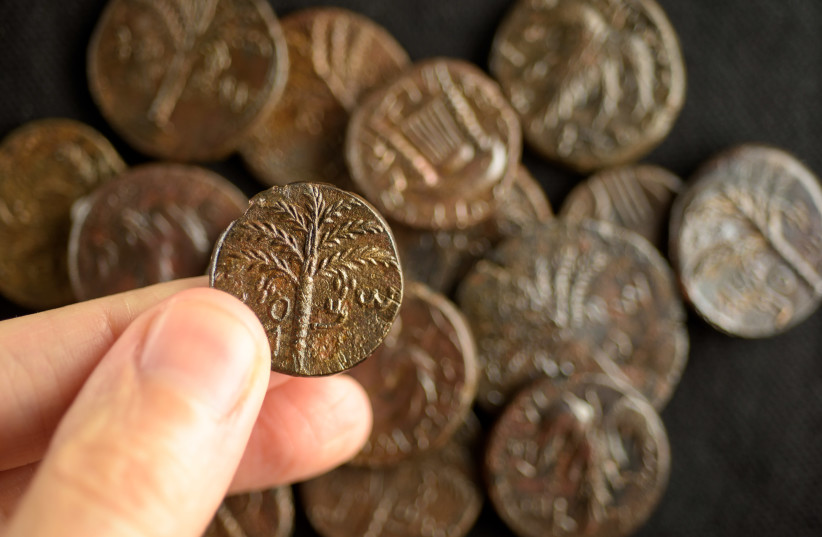
Bar Kochba Coins found in the Judean Desert. / (photo credit: DAFNA GAZIT/ISRAEL ANTIQUITIES AUTHORITY)

What do ancient coins tell us about the Omer period and the time of the Bar-Kochba revolt, when the 49 days between Passover and Shavuot became associated with death and mourning?

According to the Bible, the seven weeks between the two holidays referred to as ‘omer’ – a unit of measure which was used to quantify the amount of produce to offer as a sacrifice to God – was not meant to carry any specific connotation other than its agricultural meaning.

“And from the day on which you bring the sheaf of elevation offering – the day after the sabbath – you shall count off seven weeks. They must be complete: you must count until the day after the seventh week – fifty days; then you shall bring an offering of new grain to the Lord,” reads the 23rd chapter of Leviticus (verses 14-15).

Later on, however, in the decades after the destruction of Jerusalem’s Second Temple at the hands of the Romans in 70 CE, calamity struck; according to the Jewish tradition, during the counting of the omer, some 24,000 students of the great Jewish sage, Rabbi Akiva died, decimated by a plague or killed by the Roman forces during the rebellion led by Simon Bar-Kochba (132-135 CE).

A window into that period and the life in the land of Israel during those years can be opened today through an unexpected means: the ancient coins minted by the rebels.

“Coins were considered an expression of sovereignty,” Donald T. Ariel, head of the Coin Department at the Antiquities Authority (IAI), told The Jerusalem Post. “Minting coins meant to be free.”

The symbolism behind the coins is clearly stated in the ornaments they feature. They include the Temple facade, trumpets, a harp/violin, vine leaves, palm trees – which at the time were considered the ultimate symbol of Judea – as well as writings such as “Year One of the Redemption of Israel” or “Year Two of the Freedom of Israel” and “Jerusalem.”

The revolt – also known as the Third Jewish Revolt – broke over the religious restrictions imposed by the Romans, as well as their decision to build a Roman city over the ruins of Jewish Jerusalem, including a pagan sanctuary where the Temple had stood.

The geographic distribution of the coins found offers important insights into the vicissitudes of the revolt; as much as the insurgents yearn to return to Jerusalem, they were not able to.

“Some 22,000 coins have been excavated in the area of the Old City of Jerusalem. Of those, three were Bar-Kochba coins. Another few were found in other areas of modern Jerusalem. This is important evidence showing that the city was never captured by the rebels,” Ariel said.

Several hundred such coins have been found in excavations around the Land of Israel – mostly in the area that was known as Judea back then – where the insurgents managed to score some important victories over the Romans and establish a brief independent entity.

Some coins were also discovered in the caves in the Judean desert.
The inhospitable environment was considered a safe haven as the war raged. Jews found shelter in the caves and brought what they thought they needed for their new life. In the most recent discovery unveiled in March, the IAA revealed that several coins were found together with the remains of a biblical scroll.

Most Bar-Kochba coins discovered were made out of bronze, and just a couple of dozens out of silver.

“A bronze coin was worth a couple of loaves of bread at the market,” Ariel explained. “Silver coins were much more precious and could be used to pay for things such as military equipment, so the Romans were especially not happy to see someone striking them.”

A very unique characteristic of the Bar-Kochba series is that they were minted using other coins.

“They were struck over other coins, the bronze ones from Ashkelon and Gaza, the silver ones over Roman coins,” Ariel said. “This is the only full series in the ancient world presenting this element.”

The Bar-Kochba revolt was completely suffocated by the Romans, leading to the destruction of all Jewish towns and villages which had participated in the war as well as to thousands of casualties, including Rabbi Akiva himself.

However, this did not mark the last time that coins were minted by Jews in the Land of Israel until modern times.

“In the following years, there were cities where Jews represented the majority of the population which issued coins, such as Sepphoris, Nablus and Tiberias,” Ariel concluded.


Zawartość publikowanych artykułów i materiałów nie reprezentuje poglądów ani opinii Reunion’68,
ani też webmastera Blogu Reunion’68, chyba ze jest to wyraźnie zaznaczone.
Twoje uwagi, linki, własne artykuły lub wiadomości prześlij na adres:
webmaster@reunion68.com


Untold Archaeology of the Temple Mount — Rare Footage

Untold Archaeology of the Temple Mount — Rare Footage


Sergio & Rhoda in Israel


Archaeology at the Temple Mount is strictly forbidden. However, over the past hundred years, the Temple Mount went through many renovations, during which archaeologists were able to document incredible findings. These findings and much more we reveal in this video.
We will enter the Temple Mount through the Moors Gate, walk to the Dome of the Rock and examine where the Ark of the Covenant could have stood, see the Golden Gate, and then peak into the archives of the Al-Aqsa mosque to find out what lies underneath it.
So join us for this adventure as we explore the Temple Mount.


Zawartość publikowanych artykułów i materiałów nie reprezentuje poglądów ani opinii Reunion’68,
ani też webmastera Blogu Reunion’68, chyba ze jest to wyraźnie zaznaczone.
Twoje uwagi, linki, własne artykuły lub wiadomości prześlij na adres:
webmaster@reunion68.com


Arab-Israelis peacefully protest amid PA’s “Day of rage”

Arab-Israelis peacefully protest amid PA’s “Day of rage”

ILTV


While #riots continue across Israel, large sections of the Arab-Israeli public is organizing peaceful protests and strikes as well. Whether you agree with their positions or not, their method of #protest is definitely better comparing to lynchings and indiscriminate attacks perpetrated by the mobs.


Zawartość publikowanych artykułów i materiałów nie reprezentuje poglądów ani opinii Reunion’68,
ani też webmastera Blogu Reunion’68, chyba ze jest to wyraźnie zaznaczone.
Twoje uwagi, linki, własne artykuły lub wiadomości prześlij na adres:
webmaster@reunion68.com


Israeli scholars find millions-year-old human traces in ‘Miracle’ Cave

Israeli scholars find millions-year-old human traces in ‘Miracle’ Cave

ROSSELLA TERCATIN


“We can now say with confidence that our human ancestors were making simple Oldowan stone tools inside the Wonderwerk Cave 1.8 million years ago.“

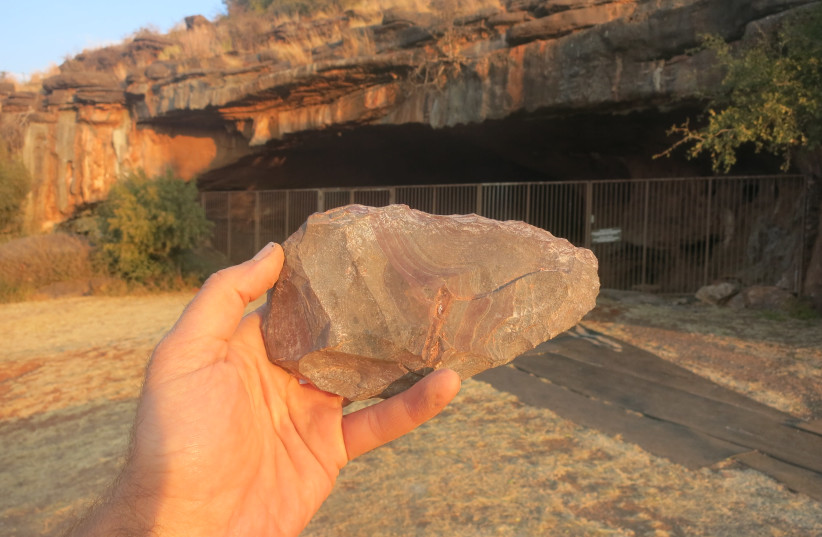
A handaxe from the Achelean layers at Wonderwerk, South Africa. In the background is the cave entrance. / (photo credit: COURTESY OF MICHAEL CHAZAN AND THE WONDERWERK EXCAVATION TEAM)

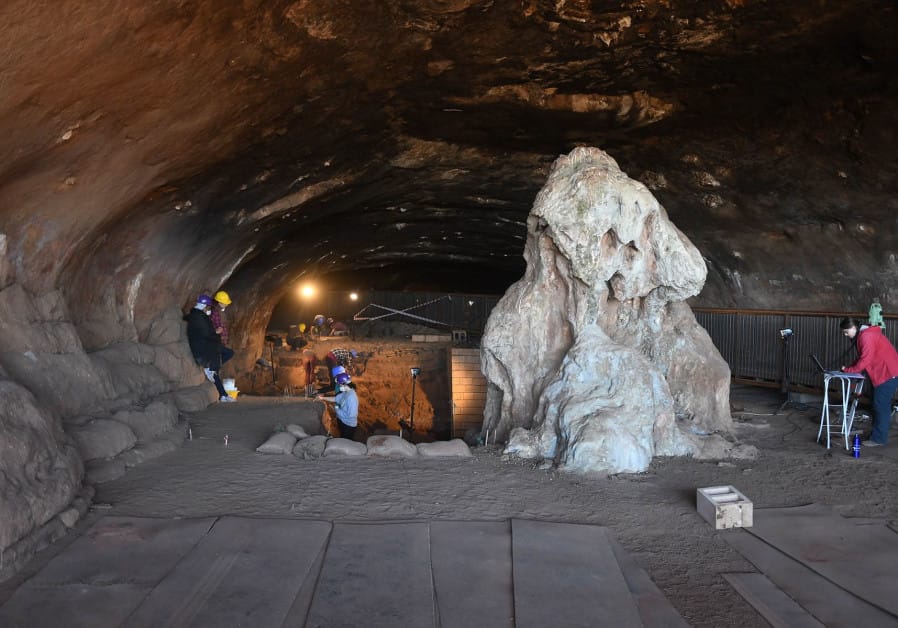
A group of scholars from the Hebrew University of Jerusalem and the University of Toronto has unearthed traces of human activity dating back millions of years in the Wonderwerk Cave in South Africa’s Kalahari Desert. The findings were published in the May issue of the Quaternary Science Reviews.

The cave, whose name means “miracle” in Afrikaans, offers some of the earliest evidence of the use of fire and tool production.

The new study employed paleomagnetism and burial dating to scan 2.5-meter-thick sedimentary layers containing ash and remains of animals, tools and fires.

“We can now say with confidence that our human ancestors were making simple Oldowan stone tools inside the Wonderwerk Cave 1.8 million years ago,” Prof. Ron Shaar of Hebrew University’s Institute of Earth Sciences said in a press release.

Wonderwerk Cave in South Africa. (Credit of Michael Chazan)

Oldowan pebble choppers, scrapers and hand axes are the oldest tools produced by humans. They usually consisted of crudely worked chopping tools whipped in two directions.

“Wonderwerk is unique among ancient Oldowan sites, a tool-type first found 2.6 million years ago in East Africa, precisely because it is a cave and not an open-air occurrence,” Shaar said.

Attributing traces of fires in open-air environments to human activity is more challenging because the influence of natural wildfires cannot be definitely ruled out.

Paleomagnetism is the study of magnetic rocks and sediments to document the history of the earth’s magnetic field, which has implications for a wide range of issues, including climate change and navigation systems.

When objects containing magnetic minerals burn at a very high temperature, the minerals are re-magnetized and record the direction and magnitude of the field at that precise moment.

While the direction of the earth’s magnetic field has pointed to geographic north in the modern era, it used to be completely neutral or even pointing south.

“We carefully removed hundreds of tiny sediment samples from the cave walls and measured their magnetic signal,” Shaar said. “Our lab analysis showed that some of the samples were magnetized to the south instead of the north, which is the direction of today’s magnetic field. Since the exact timing of these magnetic ‘reversals’ is globally recognized, it gave us clues to the antiquity of the entire sequence of layers in the cave.”

The remains offered testimonies of the first deliberate use of fire and production of more sophisticated tools, hand axes, about a million years ago.

They were also analyzed according to a second method to confirm the results.

“Quartz particles in sand have a built-in geological clock that starts ticking when they enter a cave,” said Prof. Ari Matmon, director of Hebrew University’s Institute of Earth Sciences. “In our lab, we are able to measure the concentrations of specific isotopes in those particles and deduce how much time has passed since those grains of sand entered the cave.”

The findings of the study have far-reaching implications for understanding not only more about the vicissitudes of Wonderwerk Cave and ancient human evolution, but also about present-day challenges, the press release said.
“With a timescale firmly established for Wonderwerk Cave, we can continue studying the connection between human evolution and climate change and the evolution of our early human ancestors’ way of life,” the University of Toronto’s Prof. Michael Chazan and Liora Kolska Horwitz of Hebrew University’s National Natural History Collections said in a joint statement.


Zawartość publikowanych artykułów i materiałów nie reprezentuje poglądów ani opinii Reunion’68,
ani też webmastera Blogu Reunion’68, chyba ze jest to wyraźnie zaznaczone.
Twoje uwagi, linki, własne artykuły lub wiadomości prześlij na adres:
webmaster@reunion68.com


Why did Princeton’s Hillel refuse to fly an Israeli flag? – opinion

Why did Princeton’s Hillel refuse to fly an Israeli flag? – opinion

JACOB KATZ


Inclusivity is a two-way street. I, along with many other students, feel excluded by a Hillel that refuses to prominently display the Israeli flag.

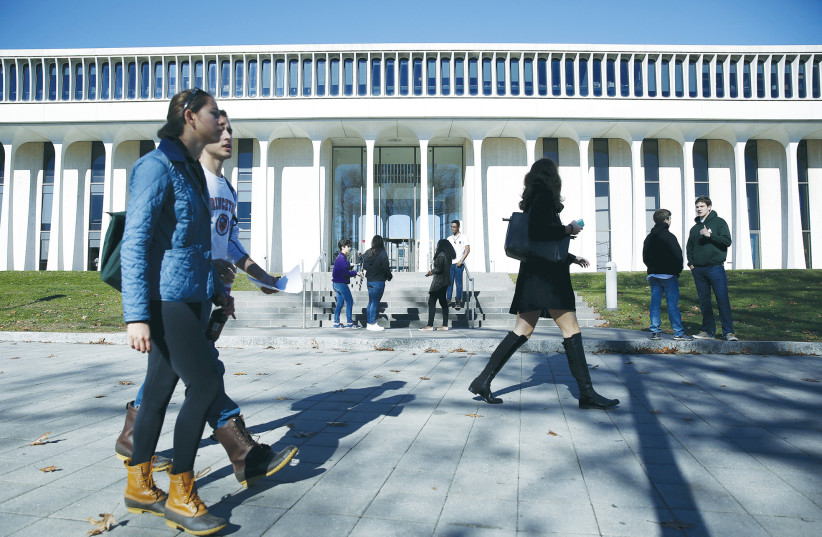
STUDENTS WALK along a path on the Princeton University campus. / (photo credit: DOMINICK REUTER/ REUTERS)

I am a sophomore at Princeton University and a veteran of the IDF. When I recently asked to hang an Israeli flag in Princeton’s Hillel house – also known as the Center for Jewish Life, “CJL” – I was greeted with anything but an enthusiastic yes.

In response to my request, CJL leadership delayed, deliberated and ultimately resolved to hang a flag in the least public “common space” in the entire building. The flag will be visible to anyone visiting the printer, some faculty offices, or the bathroom at the end of the (upstairs) hallway. I repeatedly requested, both during and after deliberations, to fly the flag on the building’s main level, but those requests have been denied.

In February, the CJL advertised an event for Breaking the Silence – a rabidly anti-Israel organization that erroneously characterizes the IDF as evil and lawless. BtS has been widely discredited for presenting false information, exaggerations and conspiracy theories. Nonetheless, the CJL saw it fit to tacitly endorse BtS’s talk on their email server, adding that the program meets the standards of the CJL’s Israel Policy.

Spurred by the BtS event, I asked the CJL to hang an Israeli flag. Though I attended the event in the spirit of promoting difficult dialogues and free expression, I felt alienated and disrespected by the CJL’s endorsement. I wanted a clearer picture of where my Hillel stood on Israel. So, I asked for a flag– the baseline symbol of support for Israel’s existence.

The CJL’s refusal to prominently display the flag is even more perplexing when considering their Israel Policy Statement: “Hillel at Princeton University (CJL) is committed to Israel as a Jewish and democratic state and a homeland of the Jewish people. We support Israel’s existence, legitimacy and security.”

If the CJL truly stands by this policy, why won’t they prominently display the flag of the Jewish people’s homeland?

I reject the supposition that hiding the flag in the upstairs back hallway is a necessary compromise made in the name of inclusivity.

Inclusivity is a two-way street. I, along with many other students, feel excluded by a Hillel that refuses to prominently display the Israeli flag.
The Israeli flag is the flag of the “homeland of the Jewish people.” Jews ought to be able to fly it prominently in a building called “The Center for Jewish Life,” particularly because the CJL is under the auspices of Hillel.
The issue at stake – whether a university Hillel House should refuse to prominently fly an Israeli flag – should be important to Zionists everywhere.

A flag, in its essence, is symbolic. Its placement is a direct reflection of its importance to a community. The CJL’s actions are emblematic of an ideology endemic to America’s college campuses: apologetic Zionism.
Jews today have the privilege and the right to fly our country’s flag with pride. If our Hillel houses are apologetic in their support for Israel, thousands of Jewish students will follow their lead.

I call on the CJL – an organization full of truly wonderful, hardworking people – to correct this misstep and to show its unapologetic support for Israel’s existence. I’ve already ordered the flag and pole. Will you let your actions speak for themselves?

The writer is a student at Princeton University and served as a paratrooper in the IDF before his enrollment.

In response to the above opinion piece, the Center for Jewish Life – Princeton Hillel released the following statement:

“Center for Jewish Life – Princeton Hillel has chosen to hang an Israeli flag in our building as a recognition of our support for Israel as a Jewish and democratic state. CJL is committed to helping Princeton students build a connection to Israeli history, people and culture and its religious significance for the Jewish people.

As part of our mission, the CJL promotes a wide range of trips, lectures, seminars, and hands-on activities to cultivate connections with Israel that are well informed, personal, and transformational. We encourage students to engage with Israel through travel, dialogue, lectures, fellowships, internships, and through meaningful conversations with Israelis on campus, including the CJL Israel Fellow. Students can join one of our Israel-related student groups: Tigers for Israel, J Street U and TAMID, or participate in the Keller Center’s summer internship program in Tel Aviv. They can also participate in travel opportunities through our Birthright Israel trips and Inside Israel, a CJL organized trip led by Daniel Kurtzer, former U.S. Ambassador to Israel and Egypt, as well as the Tiger Trek experience focusing on the high-tech start-up industry.

The Israeli flag will hang on the second floor of the CJL opposite the main offices. This location will complement the existing depictions of the flag in the painting of Ben Gurion in first-floor lounge and a mural of Jerusalem in the CJL Dining Hall – both of which are located on the first floor of our building.”


Zawartość publikowanych artykułów i materiałów nie reprezentuje poglądów ani opinii Reunion’68,
ani też webmastera Blogu Reunion’68, chyba ze jest to wyraźnie zaznaczone.
Twoje uwagi, linki, własne artykuły lub wiadomości prześlij na adres:
webmaster@reunion68.com